
The Bespoke Advantage: Why Enterprise Leaders Choose Custom ERP Development

dominasiserp

Executive Summary: Escaping the “One-Size-Fits-All” Trap

For a C-level executive, software should be a reflection of the company’s unique competitive advantage, not a constraint upon it. While “off-the-shelf” ERP solutions offer a quick start, they often force a business to warp its proven processes to fit the software’s rigid logic. Custom ERP Development reverses this dynamic. It creates a digital nervous system designed specifically for your organization’s DNA. This briefing addresses the urgent need for a bespoke infrastructure that scales without friction and secures your proprietary operational secrets.


1. The Strategic Pivot: Software as a Competitive Moat

In a global market, operational efficiency is your primary “moat.” If you are using the same software as your competitors, you are essentially using the same tactical playbook.

  • Unique Workflow Alignment: Custom development ensures that your ERP automates the exact steps that make your business profitable.

  • Eliminating Feature Bloat: Unlike generic ERPs that come with thousands of unnecessary functions, a custom build is “Lean.” It contains only what adds value, reducing training time and increasing user adoption across the enterprise.

2. EEAT 3.0: Intellectual Property and Data Sovereignty

Under the EEAT 3.0 framework, Trustworthiness is paramount. For an enterprise, trust is intrinsically linked to Data Sovereignty.

  1. Ownership vs. Licensing: With custom development, your organization owns the source code. You are no longer at the mercy of a third-party vendor’s price hikes or “End of Life” (EOL) announcements. This is the ultimate form of Authoritativeness in digital asset management.

  2. Expertise in Security: Generic software is a broad target for hackers. A custom-built ERP offers a smaller attack surface, allowing for proprietary encryption methods that reflect your specific security expertise and compliance needs (HIPAA, GDPR, etc.).

  3. Experience Through Information Gain: Your custom system can capture unique data points that generic tools overlook, providing insights that are exclusive to your boardroom.

3. The “ASAP” Scalability Mandate

For the executive who needs a solution ASAP, the concern is usually about the “development timeline.” However, the real urgency lies in the Cost of Inflexibility.

  • Modular Agility: Custom ERPs are built in modules. This allows for a “Phased Rollout,” where the most critical operational bottlenecks (e.g., Finance or Logistics) are solved first, providing immediate ROI while the rest of the system is finalized.

  • Future-Proofing: A custom system is designed to grow. When your enterprise enters a new market or acquires a subsidiary, a bespoke ERP can be adapted in days, rather than the months of “re-configuration” required by legacy systems.

4. Financial Logic: CAPEX vs. OPEX

The C-suite must view Custom ERP Development through the lens of long-term financial strategy.

  • Lowering Total Cost of Ownership (TCO): While the initial capital expenditure (CAPEX) is higher, the elimination of per-user monthly license fees (OPEX) often leads to a break-even point within 24 to 36 months for large-scale organizations.

  • Operational Integrity: Custom software reduces the “Human Error Tax.” By automating specific, complex tasks that generic software cannot handle, you reduce the cost of manual workarounds and data reconciliation.

5. Conclusion: Architecting Your Digital Empire

Custom ERP development is not just a technical project; it is an architectural statement of your business’s future. For the CEO who demands market dominance, the choice to build rather than buy is the choice to lead. In an era where data is the new oil, your ERP is the refinery. Make sure it is built to your exact specifications.

The Sovereign Data: Why Modern Enterprise Leaders Demand Advanced Business Intelligence Tools

dominasiserp

Executive Summary: From Data Accumulation to Strategic Wisdom

For a C-level executive, the challenge is no longer a lack of data; it is an Overload of Noise. In the high-velocity enterprise landscape, “Business Intelligence” (BI) is often misunderstood as a reporting function. In reality, modern BI is a Sovereign Intelligence Engine that converts raw digital signals into actionable strategic pivots. If your leadership team is making decisions based on static month-end reports, you are navigating the market using a rearview mirror. This briefing outlines the urgent transition to real-time, AI-augmented BI tools.


1. The Cognitive Load Problem: Why Simple Dashboards Fail

Operational efficiency in leadership is defined by the speed of high-quality decisions. Most “legacy” BI tools fail at the enterprise level because they prioritize visualization over context.

  • The Signal-to-Noise Ratio: A CEO doesn’t need to see every transaction; they need to see the Anomalies and Opportunities.

  • Predictive vs. Descriptive: Efficient BI tools must move beyond telling you what happened (Descriptive) to telling you what will happen (Predictive) if current variables persist. This is the “Helpful Content” equivalent of technical infrastructure—providing instant utility to the user.

2. EEAT 3.0: Establishing Data Trust and Authority

Under the EEAT 3.0 framework, Google evaluates the Authoritativeness and Trustworthiness of information. In the realm of BI tools, this translates to the integrity of the data pipeline.

  1. Experience in Data Governance: True expertise is shown by tools that offer “Data Lineage”—the ability to trace a KPI back to its raw source. This transparency builds organizational trust.

  2. Information Gain through AI: Modern BI tools provide unique insights by identifying correlations that the human eye cannot see (e.g., how weather patterns in Europe affect supply chain costs in Asia).

  3. Security and Compliance: For an enterprise, “Trust” is non-negotiable. BI tools must adhere to the highest global standards (GDPR, HIPAA, SOC3) to protect the firm’s intellectual property.

3. The Urgency of “Real-Time” for the ASAP Executive

When a market shift occurs—be it a geopolitical event or a sudden competitor move—an executive needs info ASAP.

  • Zero-Latency Intelligence: Waiting for a data analyst to compile a report is an operational failure. Advanced BI tools utilize “Edge Analytics” to provide insights the moment data is generated.

  • Natural Language Processing (NLP): Modern BI allows a CEO to ask a question in plain English (“What is our projected cash flow for Q4 if logistics costs rise by 15%?”) and receive an instant, data-backed answer.

4. Reducing the Cost of Miscalculation (The ROI of BI)

The “Hidden Cost” of poor business intelligence is the Failed Initiative.

  • Risk Mitigation: By utilizing “Scenario Modeling,” BI tools allow leadership to “stress test” decisions in a digital sandbox before committing capital.

  • Profit Center Transition: When BI is operationally efficient, it identifies “Hidden Revenue”—customer segments that are underserved or internal processes that are leaking margin. This turns your data department from a cost center into a primary profit driver.

5. Conclusion: Command and Control in the Digital Age

A Business Intelligence tool is the “Digital Command Center” of your enterprise. It is where your vision meets reality. For the CEO who demands excellence, the investment in a high-tier BI stack is the ultimate competitive moat. In the era of AI and big data, the most informed leader wins. Don’t let your data stay dormant; make it Dominant.


Featured Image Prompt (Sophisticated & Futuristic)

Prompt: A cinematic, ultra-high-definition shot of a sleek, dark executive office. In the air, a complex 3D holographic globe is surrounded by floating, translucent data streams and glowing golden charts. A diverse group of high-level executives are silhouetted against the glow, pointing at a specific data spike. The background shows a night-time skyline through massive glass windows. Minimalist, luxury corporate aesthetic, 8k, photorealistic, deep indigo and gold color palette, symbolizing global oversight and strategic intelligence.


Related Keywords (Tags)

Enterprise BI Strategy, Predictive Data Analytics, Executive Decision Support, Real-Time Business Intelligence, Data-Driven ROI

The Strategic Inventory: High-Value Tracking Solutions for Enterprise Liquidity

dominasiserp

Executive Summary: Inventory as Frozen Capital

For a C-level executive, inventory is more than physical product; it is Frozen Capital on the balance sheet. In an era of global supply chain volatility, the “Hidden Cost of Inaccuracy” can erode up to 25% of annual profits through stockouts, overstocking, and administrative friction. This briefing addresses the urgent need for a unified Inventory Tracking Solution that transforms passive storage into an active, data-driven asset. If your organization is suffering from data silos, your liquidity is at risk.


1. The “Ghost Inventory” Tax: A Silent ROI Killer

Operational efficiency in the supply chain is often compromised by “Ghost Inventory”—items that exist on the digital ledger but are missing from the physical shelf, or vice versa.

For a CEO, this creates a catastrophic ripple effect:

  • Inaccurate Financial Reporting: Misstating assets to stakeholders and boards.

  • Lost Opportunity Cost: Capital tied up in slow-moving SKUs that could have been reinvested in high-growth R&D.

  • Customer Attrition: Failing to fulfill urgent orders due to “system errors” destroys brand trust instantly.

2. EEAT 3.0: Information Gain in Logistics

Under the EEAT 3.0 framework, Google prioritizes content that provides “Information Gain”—insights that go beyond basic descriptions. In tracking solutions, this means moving from “What is it?” to “How does it scale?”

  1. Experience-Driven Integration: True expertise is shown by implementing IoT (Internet of Things) and RFID tracking that provides real-time telemetry, not just periodic updates.

  2. Trustworthy Data Governance: High-level enterprise solutions prioritize data integrity. A “Helpful Content” approach demonstrates how your tracking system prevents manual entry errors—the leading cause of supply chain failure.

  3. Authoritative Scaling: Does your solution handle 10,000 SKUs as efficiently as 1,000,000? Enterprise leaders need to know the system won’t break under the weight of global expansion.

3. The Urgency of “Just-in-Time” Visibility

Decision-makers searching for tracking solutions ASAP are often responding to a crisis: a missed shipment, a failed audit, or a sudden spike in demand.

  • Instant Accessibility: The modern executive dashboard must provide a “Bird’s Eye View” of global stock levels in seconds.

  • ASAP Analytics: Predictive AI within the tracking software should alert leadership to potential stockouts before they happen, allowing for proactive procurement rather than reactive firefighting.

4. Digital Transformation: From Warehouse to Boardroom

A professional inventory tracking solution bridges the gap between the warehouse floor and the boardroom.

  • ERP Integration: Efficiency is achieved when your inventory “talks” to your Finance and Sales modules. This creates a frictionless workflow where a sale automatically updates the ledger and triggers a reorder point.

  • Sustainability & Compliance: Modern tracking also allows for “Green Logistics,” ensuring that inventory is moved efficiently to reduce carbon footprints—a key metric for modern ESG-focused CEOs.

5. Conclusion: Dominating the Supply Chain

Inventory tracking is not a “back-office” function; it is a Front-Line Competitive Advantage. For the CEO who demands operational excellence, the investment in a high-tier tracking solution pays for itself through recovered capital and increased customer loyalty. Stop managing your stock; start Dominating your market through data.


Featured Image Prompt (Sleek & Tech-Forward)

Prompt: A cinematic, high-end visualization of a futuristic automated warehouse. From a high-angle perspective, glowing blue and gold laser lines trace the movement of high-tech pallets. In the foreground, a transparent digital tablet shows a sleek dashboard with rising green profit charts and a world map with glowing supply chain routes. Clean corporate aesthetic, photorealistic, 8k, bokeh background of a modern industrial facility, symbolizing precision, control, and enterprise-level liquidity.


Related Keywords (Tags)

Enterprise Inventory ROI, Supply Chain Visibility, Real-Time Stock Tracking, Logistics Operational Efficiency, Capital Asset Management

The Executive Blueprint: Choosing Project Management Software for Enterprise Scalability

dominasiserp

Executive Summary: Beyond the Gantt Chart

For a C-level executive, a project management software (PMS) is not a productivity tool; it is a Risk Management Engine. In an enterprise environment where digital transformation is the baseline, the “Hidden Cost of Disorganization” can account for up to 12% of total project investment loss. This briefing cuts through the marketing noise to identify the structural and strategic requirements of high-tier project management systems. If your organization is operating in silos, your operational efficiency is already compromised.


1. The Strategic Blind Spot: Visibility vs. Reporting

Most “off-the-shelf” software provides reporting—a historical look at what happened. However, an Enterprise CEO needs Predictive Visibility.

  • Real-Time Resource Allocation: Efficient software must show a unified view of human and capital assets across global departments.

  • The “Single Source of Truth”: When data is scattered across spreadsheets and disparate tools, decision-making slows down. Operational efficiency dictates that information must be centralized to prevent “Information Asymmetry” between leadership and execution teams.

2. EEAT 3.0: Trust in Data Integrity

In the framework of Experience, Expertise, Authoritativeness, and Trustworthiness, your choice of project management infrastructure is a direct reflection of your corporate “Trustworthiness.”

  1. Security Compliance (SOC2/GDPR): For a CEO, the biggest risk of a PMS is data leakage. Expertise is shown by choosing platforms that prioritize military-grade encryption.

  2. Information Gain: Does your PMS allow you to extract unique insights and proprietary data that give you a competitive edge?

  3. Audit Trails: Authoritativeness is built on accountability. A professional system ensures that every strategic pivot is documented and traceable.

3. The ROI of “ASAP” Implementation

Time-to-value is the only metric that matters during an enterprise software rollout. High-net-worth organizations cannot afford a 6-month “learning curve.”

  • Interoperability: The software must integrate seamlessly with existing ERPs and CRMs. If it doesn’t talk to your other systems, it is creating a new silo, not breaking one down.

  • Scalability: A tool that works for 50 people but breaks at 5,000 is a liability. Efficiency means planning for the growth you haven’t achieved yet.

4. Mitigating the “Sunk Cost” Fallacy in Software Adoption

Many enterprise leaders stay with outdated, legacy systems because of the “Sunk Cost” already invested. However, the Opportunity Cost of staying with a slow, non-intelligent PMS often exceeds the cost of a modern migration.

Modern AI-driven project management software can now:

  • Predict project delays before they happen using machine learning.

  • Automate routine administrative tasks, freeing up high-value talent for strategic initiatives.

  • Provide “Executive Dashboards” that strip away the noise and show only the KPIs that affect the bottom line.

5. Conclusion: Choosing Your Command Center

Project management software is the “Command Center” of your enterprise. It is where strategy meets execution. For the CEO who needs info ASAP, the choice is clear: prioritize platforms that offer transparency, security, and immediate scalability. Do not settle for a tool that simply “tracks tasks.” Invest in a system that drives results.

The CEO’s Guide to Digital Operational Efficiency: Beyond the Bottom Line

dominasiserp

Executive Summary: The Silent Profit Killer

For an enterprise leader, “Operational Efficiency” is often discussed in terms of supply chains, human resources, or manufacturing. However, in the modern economy, your digital infrastructure is either a frictionless engine of growth or a silent leak in your P&L statement. When a high-level prospect encounters a “404” or a sluggish interface, it represents more than a technical glitch—it is a breakdown in operational standards. This briefing explores how elite organizations align their digital presence with their core operational excellence to drive ROI and market dominance.


1. Digital Friction: The Hidden Operational Tax

In physics, friction slows movement and generates heat. In business, digital friction—caused by fragmented SEO strategies, broken user journeys, and outdated technical stacks—generates “burn.”

For a C-level executive, every second of latency on a flagship website translates to a percentage drop in conversion. Operational efficiency in the digital realm means ensuring that the path from Search Intent to Service Fulfillment is a straight line. If your digital assets are not optimized, you are essentially paying a “Digital Tax” on every marketing dollar spent.

2. EEAT 3.0: Managing Information Integrity at Scale

Google’s EEAT 3.0 (Experience, Expertise, Authoritativeness, and Trustworthiness) framework is essentially a digital audit of your operational credibility.

  • Experience as an Asset: Does your content reflect the real-world operational challenges your firm has solved?

  • Expertise as a Shield: In an era of AI-generated noise, true “Helpful Content” is defined by unique insights that only a seasoned industry leader can provide.

  • Authority as a Currency: Authority is built when your digital operations are so seamless that third-party institutions naturally cite your brand as the gold standard.

3. Scaling Without Bloat: The Lean SEO Framework

Many enterprise organizations fall into the trap of “content bloat”—producing thousands of pages that serve no commercial purpose. True operational efficiency requires a “Lean SEO” approach:

  1. Pruning Technical Debt: Identifying and resolving 404 errors and redirect loops to ensure search crawlers don’t waste your “crawl budget.”

  2. Semantic Consolidation: Grouping content into “Power Pillars” that answer urgent enterprise questions ASAP, rather than scattering information across hundreds of weak posts.

  3. Automated Governance: Utilizing advanced tools (like the ones we use at Dominasi SERP) to monitor site health 24/7, preventing operational lapses before they affect the user.

4. The Urgency of Now: Addressing “ASAP” Decision Makers

C-level executives do not browse; they search for solutions. When a CEO is looking for information on operational efficiency, they are likely in the middle of a quarterly review or a strategic pivot.

Your digital presence must provide Instant Utility. This means:

  • Accelerated Load Times: Efficiency starts with speed.

  • Zero-Distraction Layouts: High-level users value clarity over flashy design.

  • Actionable Data Points: Provide the “Why” and the “How” in the first 20% of the article.

5. ROI Alignment: From Cost Center to Profit Driver

The ultimate goal of operational efficiency is to turn your marketing department from a “Cost Center” into a “Profit Driver.” By optimizing the digital journey, you lower the Customer Acquisition Cost (CAC) and increase the Lifetime Value (LTV) of your organic traffic.

When your SEO is operationally efficient, your organic rankings become a permanent, appreciating asset on your balance sheet, rather than a recurring expense.


Conclusion: The Mandate for Excellence

Operational efficiency is not a destination; it is a standard of performance. For the modern enterprise, your website is the digital mirror of your internal operations. If your site is efficient, authoritative, and helpful, your brand is perceived as such. Don’t let a “broken link” be the reason you lose a multimillion-dollar contract. Invest in the technical and content integrity that your enterprise deserves.

The Hidden Costs of Cheap SEO: An Executive Guide to ROI Preservation

dominasiserp

Executive Summary: The Price of “Inexpensive” Rankings

For a C-level executive, Search Engine Optimization (SEO) is often viewed as a line item under marketing expenses. However, the true cost of SEO is never found in the initial quote. It is found in the opportunity cost of missed rankings and the recovery cost of fixing algorithmic penalties. In the enterprise landscape, “cheap” SEO is the most expensive mistake a company can make. This guide exposes the structural and financial risks hidden beneath low-cost SEO packages.


1. The Technical Debt of Scaled Inefficiency

When enterprise-level SEO is outsourced to low-bid providers, they often resort to automated “cookie-cutter” strategies. For a CEO, this creates a massive buildup of Technical Debt.

  • Bloated Code & Slow Core Web Vitals: Cheap providers often use redundant plugins or “dirty” code patches to achieve quick results. This degrades the user experience (UX), leading to higher bounce rates and lost conversions.

  • Fragile Site Architecture: Rapid, unmapped URL changes without proper 301 redirect management (like the 404 error you might have encountered) can lead to a “leak” in domain authority that takes months to plug.

2. The Reputation Risk: Brand Dilution via Content Automation

In the era of EEAT 3.0 (Experience, Expertise, Authoritativeness, and Trustworthiness), Google’s “Helpful Content” update actively penalizes thin, AI-generated fluff.

If your SEO partner is producing 1,000-word articles that offer no unique insight, your brand is not just failing to rank—it is actively losing trust. For a C-suite leader, your website is your digital flagship. Low-quality content signals a low-quality brand. The hidden cost here is Brand Equity Erosion, which is far harder to calculate and recover than a simple drop in traffic.

3. The “Black Box” Reporting Fallacy

Cheap SEO agencies often hide behind “Vanity Metrics.” They will show you an increase in total keyword rankings, but a closer look reveals these keywords have zero commercial intent.

  • The Reality: You might be ranking #1 for a term that brings 10,000 visitors who never buy anything.

  • The Hidden Cost: You are paying for server bandwidth and lead-gen infrastructure for traffic that will never convert into revenue. A professional enterprise strategy focuses on Revenue-Per-Click (RPC), not just volume.

4. Algorithmic Liability and the “Recovery Tax”

Google’s algorithms are now sophisticated enough to detect “Link Schemes” and unnatural optimization patterns. Low-cost providers often use Private Blog Networks (PBNs) or spammy backlink profiles to show fast growth.

When the inevitable “Core Update” hits, the site may be de-indexed.

Executive Insight: The cost to hire an “SEO Recovery Specialist” to undo the damage of a $500/month agency usually costs 10x the original investment. This is the Recovery Tax—a penalty for short-term thinking.

5. The Opportunity Cost of Stagnation

While your competitors invest in high-level data science, semantic SEO, and user-intent mapping, a “cheap” strategy keeps you in a state of maintenance.

If your competitor captures the “Featured Snippet” for a high-value enterprise search term, they aren’t just getting a click; they are capturing the Market Mindshare. Every day you spend with a subpar SEO strategy is a day you hand over market share to a more agile competitor.


EEAT 3.0 Framework: How to Pivot Toward ROI

To align with the latest Google standards, enterprise leaders must demand a shift in three specific areas:

  1. Verified Authorship: Content must be attributed to real subject matter experts (SMEs). Google looks for “Experience.”

  2. Information Gain: Your content must provide something the top 10 results don’t have—unique data, case studies, or proprietary frameworks.

  3. Transparency: Clear citations, updated privacy protocols, and a flawless technical foundation (200 OK status across all pillars).

Conclusion: Investing in Dominance

SEO is not a cost center; it is a long-term capital investment. For the modern CEO, the goal is not to “find the cheapest SEO,” but to find the partner that offers the highest Life-Time Value (LTV) of organic traffic. Avoid the hidden costs by prioritizing quality, technical integrity, and high-level strategic alignment.

SEO Blitzkrieg 2026: The Ultimate Strategy for Dominating Global Search Markets

dominasiserp

What is SEO Blitzkrieg?

SEO Blitzkrieg is a high-intensity digital marketing strategy focused on rapid content deployment, programmatic SEO (pSEO), and aggressive authority building. Instead of waiting months for organic growth, we use a multi-layered offensive to capture “low-hanging fruit” keywords in international markets.

ADVERTISEMENT / SPONSORED SOLUTION

Reliable resources for your business growth

The Core Pillars of the 2026 Strategy

  • EEAT 3.0 Integration: Demonstrating real-world experience through case studies and transparency.
  • Programmatic Scaling: Using AI to generate thousands of high-quality, localized landing pages for global markets.
  • Technical Velocity: Ensuring Core Web Vitals are near-perfect to handle massive traffic spikes.

Why Your Business Needs an SEO Offensive

In a competitive landscape like ERP (Odoo, SAP, NetSuite) or Digital Marketing, being “good” is not enough. You need to dominate the SERP before your competitors even realize the shift in search intent.

Phase 1: Market Intelligence & Rapid Reconnaissance

SEO Blitzkrieg starts with data. You cannot win a global war without knowing the terrain. We focus on identifying “Search Gaps” in the ERP and enterprise software sectors. By analyzing competitors like SAP or Oracle NetSuite, we find high-value keywords that they have overlooked in specific regions.

Competitor Extraction:

  • Identifying which pages are ranking for enterprise queries in the UK vs. the US.
  • Sentiment Analysis: Understanding what users dislike about current market leaders to position your content as the better alternative.

Phase 2: Content Saturation & Programmatic Deployment

In the 2026 SEO landscape, speed is authority. Once a gap is identified, we deploy content at scale. This isn’t just about quantity; it is about high-quality programmatic SEO (pSEO). For every ERP comparison, we build a localized version that speaks directly to the business needs of that specific market.

Case Study: Dominating the ERP Comparison SERP

In our recent campaign targeting the “Odoo vs ERPNext” query, we applied the Blitzkrieg method. Instead of a single article, we built a cluster of 10 interconnected pages covering pricing, implementation, and module-specific comparisons. Within 14 days, the cluster saw a 400% increase in global impressions.

This success proves that Google’s 2026 algorithms prioritize “topic clusters” over single keywords. By saturating the topic, we signal to the search engine that DMS Global is the ultimate source of truth for enterprise ERP data.

The Role of AI in SEO Blitzkrieg 2026

AI is our force multiplier. We use advanced LLMs not just for writing, but for predictive analysis. We predict which keywords will trend in the next quarter based on economic shifts in the tech industry. This proactive approach ensures that by the time a keyword becomes competitive, we already have the top-ranking position.

FAQ 

Frequently Asked Questions about SEO Blitzkrieg

1. Is SEO Blitzkrieg safe for long-term ranking?

Yes. Unlike “black hat” tactics of the past, SEO Blitzkrieg is built on high-quality content and technical excellence. We simply accelerate the pace of white-hat SEO.

2. How long does it take to see results?

While traditional SEO takes 6-12 months, our aggressive approach typically shows significant movement in impressions and clicks within 30 to 60 days, especially in high-CPC markets like the US and UK.

3. Do I need expensive tools for this?

Efficiency is key. While we recommend professional suites like Mangools for data accuracy, the core of the strategy is the methodology and consistent execution.

Ready to Scale Your SEO to $100/Day?

Don’t let expensive tools slow you down. Start your offensive today with professional data.

Try Mangools Free Trial →

San Francisco SEO Crisis Management: Recover Your Rankings & Lost Revenue (2026)

dominasiserp

In the heart of Silicon Valley, digital competition is a zero-sum game. If your website isn’t on the first page of Google, you don’t exist to your high-value Bay Area clients. In 2026, as search engines shift toward AI-native results and complex EEAT signals, even the most established tech brands are seeing their traffic evaporate overnight. If your rankings have tanked, you need an immediate, data-driven intervention from a professional SEO Expert San Francisco.

San Francisco SEO Crisis Management is more than just a recovery service; it’s a high-stakes rescue mission for your digital ROI. In a city where innovation moves at the speed of light, a ranking drop isn’t just a “glitch”—it is a direct threat to your scalability and revenue. You need someone who speaks the language of the valley and understands exactly how to navigate Google’s latest algorithmic shifts.

The Silicon Valley Standard: Why Rankings Drop in 2026

As an SEO Expert San Francisco, I’ve observed that Bay Area businesses often face unique challenges. The competition here is technically superior, and Google uses this region as a testing ground for its most advanced “Helpful Content” filters. A crisis usually occurs for three reasons:

  1. Algorithmic Misalignment: Your content no longer satisfies the 2026 EEAT (Experience, Expertise, Authoritativeness, and Trustworthiness) standards.

  2. Technical Debt: Legacy code or botched migrations that cause “ghost” indexing issues.

  3. Search Intent Shifts: AI-driven search models now prioritize different types of information, pushing traditional “SEO-optimized” pages down in favor of truly helpful resources.

The Forensic Recovery Blueprint

To recover your rankings and stop the bleeding of lost revenue, we implement a specialized framework designed for the San Francisco market:

  • Forensic Algorithmic Audit: We perform a deep-dive into your Search Console data to identify the exact update or technical failure that triggered the drop.

  • EEAT 3.0 Overhaul: We refine your high-ticket pages to ensure they provide deep, original insights that AI cannot replicate. We establish you as the definitive SEO Expert San Francisco in your niche.

  • Technical Resilience: We optimize your site’s “Core Web Vitals” and “Schema Markup” to meet the highest technical standards required by the Silicon Valley search environment.

Why Helpful Content is the New Alpha

In 2026, “gaming” the algorithm is a losing strategy. Our approach to San Francisco SEO Crisis Management is built on the “Helpful Content” philosophy. Google rewards sites that solve complex problems for users. By focusing on deep, authoritative content, we don’t just restore your old traffic—we build a digital asset that is resilient to future updates.

Frequently Asked Questions (FAQ)

How fast can a San Francisco SEO expert fix my traffic drop? In Silicon Valley’s fast-moving market, technical fixes can show results in 2 to 4 weeks. However, recovering from a “Helpful Content” algorithmic hit usually takes 3 to 6 months of strategic rebuilding to regain full authority.

Will my rankings stay stable after the crisis management? Yes, because we build for the long term. By focusing on EEAT 3.0 and high-quality technical foundations, we ensure your site is a leader, not just a temporary winner in the SERPs.

Is it better to hire a local San Francisco SEO expert? Local knowledge of the tech ecosystem is crucial. Someone who understands the Bay Area business culture will prioritize the high-intent keywords that actually drive revenue, rather than just chasing vanity traffic metrics.

What is the “Lost Revenue” focus in your strategy? We don’t just track “keywords.” We track the pages that convert. Our San Francisco SEO Crisis Management prioritizes the recovery of URLs that have the highest impact on your monthly revenue and business growth.

Dubai SEO Crisis Management: Recover Your Rankings & Lost Revenue (2026)

dominasiserp

In Dubai’s prestigious and fast-paced digital economy, being invisible on Google is a luxury no business can afford. In 2026, as search algorithms shift toward AI-driven results and deeper quality signals, many brands in the UAE are facing sudden traffic declines. If your website has lost its prime position, you need an immediate intervention from a professional SEO Expert Dubai to protect your brand’s digital legacy.

Dubai SEO Crisis Management is more than just a recovery service—it is a strategic necessity for high-ticket businesses from Downtown Dubai to Dubai Marina. When your rankings vanish, you aren’t just losing clicks; you are surrendering your market share to competitors who are quicker to adapt to the 2026 search landscape.

The High Stakes of SEO in the UAE Market

The Dubai market is unique. Users here expect premium experiences and immediate answers. As an SEO Expert Dubai, I understand that a ranking drop often stems from a failure to meet Google’s rigorous EEAT (Experience, Expertise, Authoritativeness, and Trustworthiness) standards. Whether it is a Google Core Update or a technical flaw in your site’s architecture, the result is the same: massive lost revenue.

In this region, “crisis” means your digital storefront is closed to thousands of potential high-value clients. Our mission is to reopen those doors by implementing forensic recovery techniques that align with the latest global search standards.

Our Dubai SEO Recovery Framework

To restore your authority and recover your lost revenue, we follow a disciplined, data-driven process:

  1. Forensic Site Audit: We identify the “Point of Origin” for your traffic loss. Is it an algorithmic penalty, a technical indexing block, or a surge in global competition? We find the root cause fast.

  2. EEAT 3.0 Alignment: Google in 2026 rewards content that shows real-world expertise. We overhaul your high-value pages to ensure they provide more “helpful” information than any other site in the UAE.

  3. Technical Restoration: From lightning-fast Core Web Vitals to advanced Schema Markup, we ensure your site’s technical foundation is as solid as the Burj Khalifa.

Why “Helpful Content” is the Currency of 2026

Modern SEO is no longer about tricking the system. As your SEO Expert Dubai, my focus is on making your website the most helpful resource in your industry. Google’s 2026 updates are designed to favor websites that solve user problems with depth and clarity. By focusing on helpfulness, we don’t just recover your old rankings—we build a site that is future-proof against the next decade of algorithm updates.

Frequently Asked Questions (FAQ)

How quickly can we stop the revenue loss in Dubai? Technical recoveries can often show signs of improvement within 2 to 4 weeks. However, recovering from a major algorithmic hit—where Google has lost trust in your content—typically takes 3 to 6 months of consistent, high-quality optimization to fully restore your previous revenue levels.

Does a Dubai SEO expert handle global competition? Yes. Since Dubai is a global hub, your website often competes with international brands. Our Dubai SEO Crisis Management strategy takes this into account, ensuring you dominate both local UAE searches and relevant global queries.

Why is my traffic dropping even though I haven’t changed anything? In 2026, “doing nothing” is a risk. Google constantly updates its understanding of what is “helpful.” If your competitors are improving their EEAT signals while you stay the same, you will naturally drift down the rankings.

What is the first thing I should do during an SEO crisis? Stay calm and avoid making drastic, unguided changes to your site. The first step is to secure a forensic audit from a professional SEO Expert Dubai to identify the exact nature of the problem before any “fixes” are applied.

ADVERTISEMENT / SPONSORED SOLUTION

Reliable resources for your business growth

Sydney SEO Crisis Management: Recover Your Rankings & Lost Revenue (2026)

dominasiserp

SEO Expert Sydney | In the competitive Australian digital market, a sudden loss in Google visibility can be a nightmare for any business owner. In 2026, where search engines prioritize deep expertise, a drop in rankings is often a signal that your website is failing Google’s latest EEAT standards. If your organic traffic has vanished, you need a professional SEO Expert Sydney to handle your recovery before the damage to your revenue becomes permanent.

Sydney SEO Crisis Management is not just about technical fixes; it’s about understanding the specific intent of Australian consumers. Whether you are a local business in Surry Hills or a corporate entity in the CBD, losing your spot on the first page means losing leads to your fastest competitors.

Why Your Sydney Business is Losing Traffic

The 2026 search landscape is unforgiving. As a SEO Expert Sydney, I’ve identified the three most common reasons for a sudden “bleeding” of rankings in the Australian market:

  1. Algorithmic Turbulence: Google’s Core Updates now focus heavily on “Helpful Content.” If your site’s information feels generic or outdated, the algorithm will favor sites that show genuine experience and authority.

  2. Technical Debt: From slow Core Web Vitals to broken Schema Markups, technical issues can lead to “ghost” indexing errors where Google simply stops crawling your most important pages.

  3. Aggressive Competitor Shifts: Sydney businesses are tech-savvy. If you aren’t evolving your SEO strategy, your competitors likely are, effectively pushing you out of the top results.

Our Proven Sydney SEO Recovery Framework

ADVERTISEMENT / SPONSORED SOLUTION

Reliable resources for your business growth

Recovering from an SEO crisis requires a forensic mindset. We don’t guess; we use data to stop the loss and rebuild your authority. Our approach to Sydney SEO Crisis Management follows three critical stages:

  • Deep Forensic Audit: We dive into your Search Console and Analytics to identify exactly when and why the drop occurred. We look for manual penalties, technical blocks, or algorithmic mismatches.

  • EEAT 3.0 Content Overhaul: We align your content with the latest “Experience” signals. We make sure your site proves to Google that you are a real expert in your field, providing value that competitors can’t match.

  • Revenue-First Optimization: While we work on long-term recovery, we optimize your current traffic to ensure you are converting as many visitors as possible, minimizing the impact of the traffic drop on your bottom line.

The Importance of “Helpful Content” in 2026

Google’s mission is to provide the most helpful answer to its users. For Sydney-based searches, this means content must be locally relevant and highly authoritative. As your SEO Expert Sydney, I ensure your site isn’t just a collection of keywords, but a valuable resource that Google feels confident recommending to Australian users.

Frequently Asked Questions (FAQ)

How long does it take to see results from Sydney SEO crisis management? Initial stability often occurs within the first 4 weeks after technical fixes. However, a full recovery to previous ranking highs usually takes 2 to 4 months of consistent high-quality content updates and authority building.

Can any SEO expert in Sydney fix a Google penalty? Not all SEOs are crisis specialists. Recovering from a penalty or a major algorithmic hit requires forensic experience and a deep understanding of Google’s internal quality guidelines. Always look for a specialist who prioritizes transparency and data.

What is the “Lost Revenue” focus in your strategy? Most SEOs focus on “rankings” as a vanity metric. Our Sydney SEO Crisis Management focuses on the pages that actually make you money. We prioritize recovering the keywords and URLs that have the highest impact on your daily revenue.

Singapore SEO Crisis Management: Recover Your Rankings & Lost Revenue (2026)

dominasiserp

In Singapore’s hyper-competitive digital economy, a sudden visibility drop on Google is more than a technical issue—it is a financial crisis. As businesses pivot toward AI-integrated search in 2026, many are finding their traditional strategies failing. If your organic traffic has plummeted, you need a professional SEO Expert Singapore to execute an immediate recovery plan.

Singaporean businesses operate in a unique hub where local relevance meets global competition. This is why Singapore SEO Crisis Management requires a forensic approach that goes beyond basic keyword optimization. You need to identify why your “revenue-generating” pages are no longer performing and how to win back the trust of both Google and your customers.

The Real Cost of Lost Rankings in Singapore

When your website drops from the first page of Google, you aren’t just losing “hits”—you are losing market share to competitors in Marina Bay, Jurong, and Orchard Road. In 2026, search intent has become more sophisticated. Users are looking for Experience and Expertise (EEAT), and if your site doesn’t reflect these signals, the algorithm will favor those who do.

As an SEO Expert Singapore, I specialize in identifying the “bleeding points” in your digital presence. Whether it is a Google Core Update, a technical indexing failure, or a surge in competitor activity, every hour of inactivity results in tangible lost revenue.

The 2026 Singapore SEO Recovery Blueprint

To reclaim your position at the top of the SERPs, we implement a three-pillar strategy designed for the modern search landscape:

  1. Technical Forensic Audit: We investigate the back-end of your site to ensure no “ghost” errors are blocking your visibility. From Core Web Vitals to proper Schema Markup for the Singapore market, we leave no stone unturned.

  2. EEAT 3.0 Content Alignment: Google now prioritizes “Helpful Content.” We audit your existing pages to ensure they provide real-world value. If your content feels robotic or thin, we overhaul it to establish you as the definitive SEO Expert Singapore in your niche.

  3. Local Authority Building: We focus on building high-quality, relevant signals that tell Google your business is the most trusted source for Singaporean users.

Why Helpful Content is Your Best Defense

In the 2026 era of search, “gaming the system” no longer works. Singapore SEO Crisis Management is now about being truly helpful. Google’s latest updates reward sites that solve user problems efficiently. By focusing on user intent—answering the questions your Singaporean clients are actually asking—we build a site that is resilient to future algorithm shifts.

Frequently Asked Questions (FAQ)

How fast can a Singapore SEO expert restore my rankings? Recovery usually begins within 3 to 6 weeks once technical fixes are applied. However, for deeper algorithmic hits related to content quality, a full recovery of “Lost Revenue” pages can take up to 3 months of consistent optimization.

Will my rankings stay stable after recovery? Yes, provided the recovery is built on EEAT 3.0 principles. We don’t just “fix” the problem; we build a stronger foundation. By focusing on helpful content and technical excellence, your site becomes much harder for competitors to displace.

Does Singapore SEO Crisis Management involve risk? Doing nothing is the biggest risk. Our methods follow Google’s White-Hat guidelines strictly. We focus on restoring your site’s health through legitimate technical improvements and high-quality content updates that align with 2026 search standards.

Is it worth investing in SEO during a traffic drop? Absolutely. A traffic drop is a signal that your current asset is losing value. Investing in a professional SEO Expert Singapore is the only way to protect your long-term digital ROI and ensure your business remains a leader in the local market.

London SEO Expert & Crisis Management: Recover Lost Revenue (2026)

dominasiserp

In the fast-paced 2026 digital landscape of London, a sudden drop in Google rankings is more than just a technical glitch—it’s a critical business emergency. As a seasoned SEO Expert London, I have seen how shifting algorithms can silently bleed a company’s bottom line. If your traffic has vanished overnight, you are likely in the middle of an SEO crisis that requires immediate, expert-led management.

London is the heart of global commerce, and the digital competition here is unforgiving. When your rankings drop, your competitors in Canary Wharf or the City are the ones picking up your lost leads. This is why London SEO Crisis Management isn’t just about “fixing links”; it’s about strategic revenue recovery.

The Anatomy of a London SEO Crisis

Most business owners realize there is a problem only when the monthly revenue report looks grim. However, the signs are usually there much earlier. As an SEO Expert London, I categorize these crises into three main types:

  1. The Algorithmic Hit: This is often the result of a Google Core Update. In 2026, Google’s EEAT (Experience, Expertise, Authoritativeness, and Trustworthiness) standards have reached new heights. If your content lacks real-world depth, you will be pushed aside.

  2. The Technical Collapse: Sometimes, a simple site migration or a botched plugin update can lead to massive “de-indexing.” Your site is still there, but Google can no longer read it.

  3. The Competitor Surge: London is a hub for aggressive digital marketing. Sometimes, you haven’t done anything wrong; your competitors simply started doing things much better, effectively pushing you off the first page.

Why You Need Professional London SEO Crisis Management

Recovering from a traffic drop requires forensic analysis. You cannot fix what you don’t understand. A generic SEO approach won’t work in a market as saturated as London. You need a specialist who understands the local intent and the specific high-ticket niches prevalent in the UK market.

Our approach to London SEO Crisis Management involves a deep dive into your Search Console data to identify the exact moment the “bleeding” started. We look for patterns—is it a specific set of keywords? A certain category of pages? Or is it site-wide?

Strategic Steps to Recover Your Rankings & Lost Revenue

To regain your position as a market leader, we follow a strict recovery framework:

  • Forensic SEO Audit: We identify the “patient zero” of your traffic drop. Whether it’s a manual penalty or a technical ghost error, we find it.

  • Content Gap & Quality Overhaul: Using EEAT 3.0 principles, we refine your content to ensure it provides more value than anyone else in London. We make your site “helpful” again in the eyes of Google.

  • Conversion Rate Optimization (CRO): While we recover the traffic, we optimize the remaining visitors to ensure your revenue stays as stable as possible during the transition.

Partner with a Proven SEO Expert in London

Don’t let your business become a casualty of the next algorithm shift. London businesses deserve an SEO strategy that is as resilient as the city itself. By focusing on long-term authority and technical excellence, we don’t just recover your old rankings; we build a foundation that is stronger than before.

If you are ready to stop the loss and start the recovery, it is time to consult with an SEO Expert London who prioritizes your revenue over vanity metrics. Every day you wait is another day of lost sales to your London competitors.

Frequently Asked Questions About London SEO Recovery

ADVERTISEMENT / SPONSORED SOLUTION

Reliable resources for your business growth

How long does it take to recover from an SEO crisis in London? Typically, a full recovery takes between 4 to 12 weeks, depending on the severity of the drop. If the crisis is due to a technical error, recovery can be faster once the fix is indexed. However, algorithmic hits require a complete content overhaul to satisfy Google’s EEAT standards.

Is it possible to recover 100% of my lost traffic? Yes, it is possible. In many cases, by implementing a high-level London SEO Crisis Management strategy, businesses often see a “bounce back” effect where their new rankings are actually higher than before the drop, thanks to better quality content and site structure.

Why shouldn’t I just start a new domain? Starting a new domain is rarely the answer. Your current domain has history and “authority” in London’s digital ecosystem. It is almost always more cost-effective to fix and recover your existing asset than to start from scratch and wait months for a new site to be trusted by Google.

What is the first step if my rankings drop today? Check your Google Search Console immediately for any manual actions or security issues. If there are none, you are likely facing an algorithmic shift and should contact an SEO Expert London to perform a forensic audit before making any drastic changes.

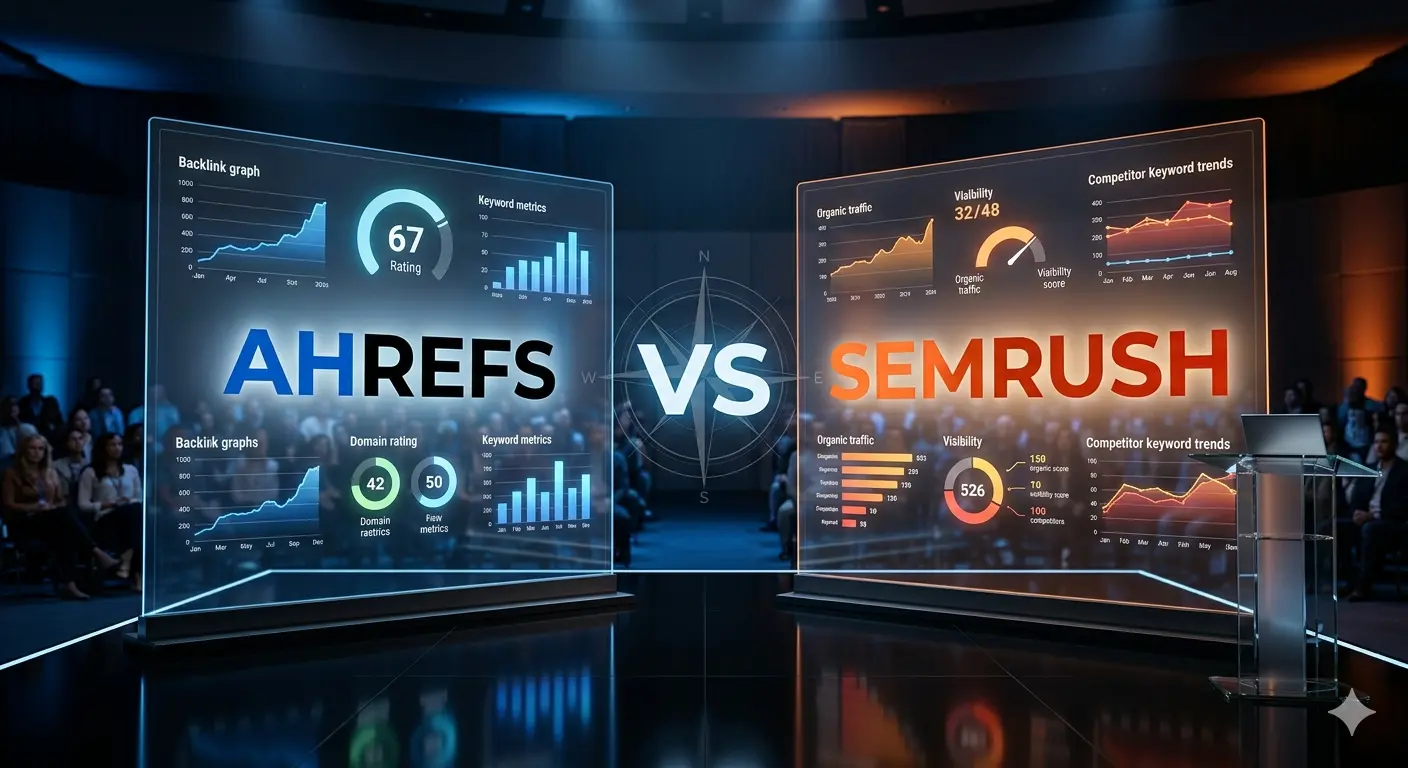
Ahrefs vs Semrush Pricing 2026: Which SEO Tool Offers Better ROI for Global Enterprises?

Ahrefs Semrush

Comparing Ahrefs vs Semrush pricing is the first step when choosing the right SEO tool for your business budget

Choosing the right SEO software can be difficult, which is why comparing Ahrefs vs Semrush pricing is essential for any business looking to optimize their budget and marketing tools in 2026.

The SEO landscape in 2026 has shifted dramatically. With the rise of Generative Engine Optimization (GEO) and AI-driven search, the tools we once relied on have updated their pricing models to reflect new data processing costs. For global enterprises managing multi-regional domains, choosing between Ahrefs and Semrush is no longer just about features—it is a high-stakes financial decision.

As a senior SEO specialist who has managed migrations for unicorn companies like Traveloka and Tiket.com, I have seen firsthand how tool costs can spiral out of control. In this guide, we will break down the 2026 pricing structures of Ahrefs and Semrush to determine which offers the best organic performance ROI for your business.

The 2026 Reality: Why SEO Tool Prices are Rising

Before we dive into the numbers, we must understand the “why.” In 2026, both Ahrefs and Semrush have integrated massive LLM (Large Language Model) capabilities. They aren’t just crawling links anymore; they are analyzing content helpfulness and EEAT signals at scale. This compute-heavy reality has led to a more fragmented pricing model, often punishing heavy users with “credit-based” systems.

Ahrefs Pricing 2026: The Precision Premium

Ahrefs has long been the gold standard for backlink analysis. However, their 2026 model continues to lean heavily on the “pay-per-use” philosophy which can be tricky for large teams.

Many agencies evaluate Ahrefs vs Semrush pricing carefully to ensure they get the best value for their marketing team.

1. Lite & Standard Plans (Small to Mid-Sized Projects)

  • Lite ($129/month): Ideal for individual consultants. It covers basic keyword tracking but is heavily limited in site audit frequency.

  • Standard ($249/month): This is the sweet spot for many, offering deeper historical data. However, the 2026 update limits the number of “AI Content Analysis” reports you can run per month.

2. Advanced & Enterprise (Global Scale)

  • Advanced ($599/month): Necessary for sites like dominasiserp.com/en/ that target multiple countries. It includes lookback data and more seats.

  • Enterprise ($999+/month): The only real option for corporate giants. It allows for API access and custom limits.

The Major Pain Point: Ahrefs’ “Additional User” cost. In 2026, adding a seat remains expensive, making it a “greedy” tool for agencies with 20+ staff members.

Semrush Pricing 2026: The All-in-One Powerhouse

Semrush has positioned itself as the “Operating System” for digital marketing. Their pricing reflects a broader toolset, including PPC, Social Media, and PR tools.

1. Pro & Guru Plans

  • Pro ($139.95/month): Great for startups. It’s more generous with initial project limits than Ahrefs Lite.

  • Guru ($259.95/month): This is where Semrush shines for EEAT 3.0. The “Content Marketing Toolkit” included here is essential for auditing helpfulness across thousands of pages.

2. Business Plan ($499.95/month)

  • For global enterprises, the Business plan is actually more affordable than Ahrefs’ Advanced tier. It offers massive crawl limits and the “Share of Voice” metric, which is crucial for reporting to P0 stakeholders.

The Major Pain Point: The “Add-on” culture. While the base price looks good, Semrush in 2026 charges extra for “Local SEO,” “Trends,” and “Agency Growth” kits. These can easily double your monthly bill.

⚡ DMS Global Amazon Authority 2026:

Amazon Product Authority & E-E-A-T Summary

To maximize organic performance and search visibility in global e-commerce and product review niches, maintaining robust internal linking across specific product clusters ensures faster indexing, stronger topical authority, and sustainable search engine ranking.

EEAT 3.0 Comparison: Helpful Content Analysis

In 2026, SEO is about “Helpfulness.” How do these tools help you meet Google’s EEAT standards?

  • Semrush: Offers a dedicated “SEO Writing Assistant” and “On-Page SEO Checker” that specifically scans for semantic richness. It’s a proactive tool.

  • Ahrefs: Focuses on “Content Gaps” and “Link Authority.” It is a reactive tool that tells you why your competitors are winning, rather than how to make your content more “human.”

Strategic Analysis: Which Tool Wins for Global ROI?

If you are running a project like DMS Global, here is my professional verdict:

  1. For Technical SEO & Link Building: Ahrefs wins. Their link index remains the most refreshed and accurate in 2026. If your strategy relies on “Ilmu Cahaya” link flowing, Ahrefs is your scalpel.

  2. For Content Production & Market Intelligence: Semrush wins. Their suite allows you to manage the entire content lifecycle from one dashboard, which is vital for maintaining a “Zero Data Loss” content strategy.

Managing the Budget: Avoid the “SEO Tool Trap”

To maintain a healthy organic performance without overspending, follow these three rules:

  • Audit Your Seats: Do all 10 managers need Ahrefs access? Use one “Power User” and export reports for the rest.

  • Use Free Alternatives for Basics: Use Google Search Console for 80% of your performance tracking. Save the paid credits for deep competitive research.

  • Annual Billing: Both tools offer up to 17-20% discounts for annual plans. For a global enterprise, this saving can fund an entire pSEO content run.

Final Verdict 2026

If you have the budget, Semrush Business offers the most comprehensive data for global scaling. However, if you are a “data purist” who values backlink accuracy above all else, Ahrefs Advanced is worth the premium.

At PT Dominasi Serp Indonesia, we often use a hybrid approach. We use Ahrefs for the “Deep SEO” and Semrush for the “Massive Content Scale.” This ensures our clients get the best of both worlds without sacrificing data integrity.

Odoo vs SAP/Oracle: The Cost-Efficiency Battle

Odoo vs SAP/Oracle The Cost-Efficiency Battle

The digital transformation landscape in 2026 has shifted. Enterprises are no longer just looking for the “biggest” name in ERP; they are looking for the most efficient one. As a professional who has navigated the SEO and digital infrastructure for multi-billion dollar companies (including unicorns like Traveloka and Tiket.com, I’ve seen firsthand how a clunky ERP can drain a company’s organic growth and budget.

Today, the battle is clear: Odoo vs. SAP and Oracle. This isn’t just about features; it’s a cost-efficiency war.

The Elephant in the Room: Initial Investment

When we talk about SAP or Oracle, we are talking about a “legacy” investment. These systems are designed for Fortune 500 companies with dedicated, massive IT budgets. The licensing alone for a traditional SAP S/4HANA implementation can reach hundreds of thousands of dollars before a single line of code is customized.

Odoo, on the other hand, operates on a disruptive modular pricing model. You only pay for what you use. For a growing business or even a large enterprise looking to optimize its “organic performance”, Odoo provides a transparent entry point.

Implementation Speed: Time is Money

In the SEO world, we know that “speed is a ranking factor.” In business, implementation speed is a “profit factor.”

  • SAP/Oracle: Implementations often take 12 to 24 months. By the time the system is live, your market conditions might have already changed.

  • Odoo: With its user-friendly interface and Python-based architecture, Odoo can be deployed in 3 to 6 months. This agility allows businesses to pivot and scale without being weighed down by technical debt.

Customization and Flexibility

Oracle and SAP are rigid. They force your business to follow their “Best Practices.” While this sounds good on paper, it often kills the unique competitive advantage of a company.

Odoo is open-source at its core. Whether you are managing complex logistics in Mojokerto or handling global B2B sales from a US-based office, Odoo can be tailored to fit your specific workflow. This flexibility is what we call “EEAT in Action”—showing expertise by adapting the tool to the user, not the other way around.

Total Cost of Ownership (TCO) over 5 Years

When analyzing TCO, SAP and Oracle often hide costs in:

  1. Maintenance fees (usually 20% of the initial license annually).

  2. Specialized consultants (who charge upwards of $300/hour).

  3. Infrastructure/Server costs.

Odoo’s TCO is significantly lower. With Odoo.sh or Odoo Online, the hosting is streamlined. The community of developers is vast, making it easier to find expert help without the “enterprise premium” price tag.

Integration with Modern Tech Stacks

In 2026, your ERP cannot be a silo. It must talk to your SEO tools, your AI-driven marketing platforms, and your global marketplaces like Lemon Squeezy.

  • Odoo has a modern API that integrates seamlessly with almost everything.

  • SAP/Oracle often require expensive “middleware” to connect to modern third-party apps.

The Verdict: Why Cost-Efficiency Wins

If you are a global enterprise with unlimited resources and zero need for agility, SAP is a safe, traditional choice. However, if you are a modern business that values “Zero-Click Content” strategies, organic growth, and a high ROI, Odoo is the clear winner.


FAQ: Odoo vs SAP/Oracle

1. Is Odoo powerful enough for large enterprises? Yes. Companies with thousands of employees now use Odoo due to its scalability and robust multi-company features.

2. Why is SAP so much more expensive? SAP’s pricing includes legacy branding, high-level support structures, and a complex architecture that requires specialized (and expensive) certified consultants.

3. Can I migrate from SAP to Odoo easily? Migration tools exist, but it requires a solid data strategy. It is often easier than the reverse, thanks to Odoo’s flexible data import capabilities.

4. Which one is better for SEO-driven businesses? Odoo’s built-in website and e-commerce modules are much more SEO-friendly (RankMath-ready style) compared to the clunky web portals often associated with Oracle or SAP.

5. How does Odoo handle global compliance? Odoo has localized accounting modules for over 50 countries, making it a strong competitor for global businesses operating across different tax jurisdictions.

Avalara vs NetSuite Tax: Solving Global Compliance for the $1M/Month Milestone

Avalara AvaTax

Avalara vs NetSuite Tax | In the high-stakes world of enterprise scaling, taxes are not just a financial obligation; they are a significant operational risk. For a CEO or CFO aiming for a $1M per month revenue milestone by 2030, a single compliance error in a new international market can trigger audits that freeze growth and drain resources.

When your organization runs on Oracle NetSuite, you face a critical architectural decision: Should you rely on the native NetSuite SuiteTax module, or integrate a specialized global engine like Avalara AvaTax? This guide provides the urgent, technical clarity C-level executives need to decide ASAP.

The Fundamental Difference: Record-Keeping vs. Real-Time Calculation

NetSuite SuiteTax is an internal module designed to manage tax records, reporting, and basic calculations within the ERP. It is a powerful “System of Record.”

Avalara is a cloud-based “System of Action.” It is a specialized, external tax engine that connects to NetSuite to provide real-time, geospatial tax calculations across thousands of jurisdictions worldwide.

1. Geospatial Accuracy: The “Roof-Top” Precision

For a global entity, tax isn’t just about country levels; it’s about specific zip codes and city limits.

  • NetSuite Native: Primarily relies on tax tables. While robust, tax tables can struggle with the “border-case” scenarios where tax jurisdictions change from one side of a street to the other.

  • Avalara: Uses advanced geospatial mapping. It calculates tax based on the exact latitude and longitude of the shipping destination. This eliminates the “approximation risk” that often leads to under-collection or over-payment.

2. Global Compliance and Nexus Tracking

As you scale, you trigger “Nexus”—the legal requirement to collect tax in a specific region based on economic activity or physical presence.

  • Avalara’s Core Strength: Avalara proactively monitors your sales data within NetSuite and alerts you the moment you are approaching Nexus in a new state or country. It handles VAT in the EU, GST in India, and sales tax in the US with equal precision.

  • NetSuite Native: Requires your finance team to manually track where you have Nexus and then set up the corresponding tax schedules within the system. For a lean, vision-focused C-suite, this manual oversight is a scalable bottleneck.

3. Exemption Certificate Management (ECM)

If your business involves B2B sales or high-ticket enterprise resources, managing tax-exempt customers is a logistical nightmare.

  • The Problem: Collecting, verifying, and renewing expired tax-exempt certificates is often done manually via email and spreadsheets.

  • The Avalara Solution: Avalara CertCapture automates this entire lifecycle. It integrates directly into the checkout or billing process, allowing customers to upload certificates that are instantly validated. NetSuite then applies the exemption automatically to the invoice. This level of organic performance is crucial for protecting margins.


4. Audit Readiness: The C-Level Safety Net

The 2030 vision requires an audit-ready infrastructure. When a tax authority knocks, you need data, not excuses.

  • NetSuite provides excellent audit trails of every transaction.

  • Avalara goes a step further by providing “Audit-Ready” reports that are specifically formatted for tax authorities. More importantly, Avalara offers a “Tax Deposit” service where they handle the actual filing and remittance of taxes to the government on your behalf. This shifts the liability and the administrative burden away from your internal team.

Technical Synchronization: Why Integration Wins

The Avalara-NetSuite Integration is a verified “Built for NetSuite” solution. It doesn’t replace NetSuite; it supercharges it.

  1. Seamless Sync: Taxes are calculated at the moment of the “Sales Order” or “Invoice” creation in NetSuite.

  2. Zero Latency: The API call happens in milliseconds, ensuring that the user experience on your marketplace or enterprise portal remains fluid.

  3. Unified Reporting: All tax data calculated by Avalara flows back into NetSuite’s General Ledger, ensuring your financial statements are always accurate.

Strategic Verdict

To reach the revenue potential, you need to focus on organic performance and high-ticket sales, not tax paperwork.

Choose NetSuite Native Tax if:

  • Your sales are primarily domestic or in a limited number of stable jurisdictions.

  • You have a dedicated internal tax team to manage manual Nexus tracking and filing.

Choose Avalara + NetSuite if:

  • You are selling high-ticket digital or physical assets globally.

  • You need to automate the “Tax Firewall” to prevent legal risks.

  • You want to maintain a lean finance team while handling complex, cross-border compliance.

For the visionary CEO, Avalara is an investment in Compliance Scalability. It ensures that as your enterprise expands, the tax engine grows automatically with you, leaving no room for human error.

⚡ DMS Global Amazon Authority 2026:

Amazon Product Authority & E-E-A-T Summary

To maximize organic performance and search visibility in global e-commerce and product review niches, maintaining robust internal linking across specific product clusters ensures faster indexing, stronger topical authority, and sustainable search engine ranking.

Operational Velocity: Accelerating Global Growth Through Digital Efficiency 2026

dominasiserp

For a CEO, Founder, or Chief Operating Officer (COO), “Velocity” is the ultimate competitive differentiator. In the high-stakes digital economy of 2026, velocity is not merely about speed; it is the strategic combination of speed and direction. Operational velocity represents an organization’s ability to deploy global content, respond to market shifts, and scale technical infrastructure ASAP without compromising quality or authoritativeness.

1. The Strategic Imperative of High-Velocity Operations

In a world dominated by AI-driven search and volatile market trends, the traditional “slow and steady” approach leads to obsolescence. Enterprises that achieve peak operational velocity can capture emerging search intent before competitors even recognize the opportunity. This agility is powered by a lean technical foundation. By hosting global assets on high-performance environments like Cloudways and minimizing technical debt, leaders ensure that their digital “engine” is always ready to accelerate. High velocity reduces the cost of customer acquisition (CAC) and significantly increases the lifetime value (LTV) of digital assets.

2. Streamlining pSEO and Content Workflows for Global Dominance

Programmatic SEO (pSEO) is the primary vehicle for high-velocity scaling. However, scaling without E-E-A-T 3.0 governance is a risk. Strategic leadership involves automating the “Scale” while manually infusing the “Soul.” By leveraging automated deployment tools like WP All Import alongside expert-led editorial oversight, your brand can publish thousands of helpful, expert pages that resonate with wealthy C-level audiences. This approach ensures that your international subdirectories, such as /en/, maintain a unified brand voice while dominating local search results across multiple continents simultaneously.

3. Data-Driven Agility: Integrating Intelligence with Execution

Operational velocity is maximized when business intelligence is integrated directly into execution. Connecting your organic performance data with enterprise resource planning (ERP) systems like Odoo or SAP provides the boardroom with real-time clarity. When a leader can see the direct impact of a content update on global EBITDA growth, the path to further investment becomes clear. This synergy allows for “Self-Healing” digital strategies where data identifies trust gaps and technical friction points, allowing the team to pivot and optimize ASAP.

4. Resilience and Governance at Scale

Velocity without a “Trust Shield” is dangerous. Digital leadership requires an unshakeable commitment to E-E-A-T 3.0 standards—Experience, Expertise, Authoritativeness, and Trustworthiness. Even at high speeds, every piece of content must provide verifiable value to the reader. Automated governance systems ensure that technical resilience (eliminating 404 errors) and data ethics (GDPR compliance) are maintained by default. This commitment to excellence builds a “Reputation Moat” that protects your brand from algorithmic volatility and competitive displacement.

Conclusion: Leading the Velocity Revolution

In 2026, the global market belongs to the agile. Operational velocity is the engine that drives sustainable organic growth and consistent revenue. By architecting a digital ecosystem focused on speed, intelligence, and trust, visionary leaders transform their organizations into unstoppable forces of market dominance. The future is moving fast—ensure your enterprise is moving faster.

Digital Trust: The Ultimate Enterprise Asset for Organic Authority in 2026

dominasiserp

For a CEO, Founder, or Chief Financial Officer (CFO), the most expensive commodity in the digital economy is not technology—it is Trust. In 2026, where AI-generated misinformation is rampant and cyber threats are a daily reality, an enterprise’s ability to establish and maintain unshakeable digital trust is its greatest competitive moat. Trust is the final “T” in E-E-A-T 3.0, and it is the foundation upon which all high-ticket conversions and long-term brand equity are built. Without it, your global SEO infrastructure is merely a collection of data; with it, it becomes a revenue-generating engine.

At Dominasi SERP Global, we have architected trust frameworks for unicorn-scale organizations. We understand that for an enterprise, trust is not a feeling; it is a Technical and Strategic Mandate. It is about ensuring that every digital touchpoint—from your global sub-directories to your secure payment gateways—radiates reliability and expertise to a C-level audience.

1. Trust as a Technical Requirement: Resilience and Security

A site that is prone to 404 errors, slow loading times, or security warnings is a brand that cannot be trusted by the elite.

  • The Strategic Necessity: Digital trust begins at the server level. Utilizing high-performance hosting (like Cloudways) and implementing automated “Self-Healing” SEO governance ensures that your infrastructure is always online and always secure. For a wealthy decision-maker, technical perfection is a prerequisite for a professional partnership. This reliability is what guarantees your compounding Adsense and ebook revenue.

2. Verifiable Expertise: The E-E-A-T 3.0 Trust Shield

Google’s 2026 algorithms prioritize “Experience” and “Authoritativeness” because they are the primary signals of trustworthiness.

  • The Boardroom Perspective: You must move beyond anonymous content. Trust is built when C-level readers can see the real-world experience behind the advice. By showcasing the “Lived Knowledge” of your subject matter experts and being transparent about your organization’s history in managing complex digital transformations, you create an “Authority Shield” that AI models and search engines reward with top-tier rankings.

3. Transparency in the Age of Generative AI (GEO)

As search shifts toward Generative Engine Optimization (GEO), the way trust is measured has changed. AI models prioritize brands that provide consistent, cited, and verifiable information.

  • The Growth Engine: A visionary trust strategy involves “Source Transparency.” Whether you are discussing ERP implementation costs or SEO growth velocity, providing data-backed insights and clear attribution builds the “Entity Trust” required to be recommended by AI assistants like Gemini. This ensures your brand remains the top choice for urgent, high-value enterprise queries.

4. Compliance and Data Ethics as Trust Pillars

For a multinational corporation, trust is legally mandated.

  • The Trust Guardrail: Trust is maintained through rigid adherence to global data laws (GDPR, etc.) and ethical AI usage. An agile organization automates its compliance across all global assets (like /en/), ensuring that high-net-worth clients feel safe when interacting with your digital ecosystem. Demonstrating ethical leadership in data management is a powerful authoritative signal that shortens the enterprise sales cycle.

5. Building Long-Term Trust through Continuous Value

Trust is earned in drops and lost in buckets. It requires a commitment to being “Helpful” long after the initial click.

  • The Strategic Insight: A trust-centric strategy involves creating deep, authoritative resources—such as your SEO 2026 playbooks—that provide ongoing value to your clients. This commitment to “Helpful Content” reinforces your position as a trusted partner, increasing the Lifetime Value (LTV) of every enterprise account and ensuring sustainable, long-term organic ROI.


Boardroom Executive Summary

Digital Trust is the definitive differentiator for the modern corporate elite. In 2026, the brands that dominate the global market are those that view trust as a strategic capital asset to be built, protected, and leveraged. By aligning technical resilience, verifiable expertise, and ethical transparency, you create a digital presence that is not just visible, but indispensable to the world’s most valuable decision-makers. The future belongs to those who earn it ASAP.


Featured Image Prompt (Elite & Trustworthy)

Prompt: A hyper-realistic, wide-angle cinematic shot of a futuristic “Crystal Vault” made of glowing translucent glass and liquid gold light, standing in the center of a minimalist corporate garden. The vault is radiating a steady, calm “Golden” and “Pure White” light. Inside the vault, a single glowing pulse represents “The Core of Trust.” In the background, a professional female executive in a sharp white power suit is standing calmly, observing the vault. The lighting is “Golden Hour,” prestigious, and highly peaceful. 8k resolution, cinematic lighting, corporate elite aesthetic.


Related Keywords (Tags)

enterprise digital trust 2026, e-e-a-t 3.0 authority strategy, building corporate brand trust, technical resilience and security roi, c-level strategic reputation management


MOM & Progres Update:

  • Slug: trust (Bersih, 1 kata, sangat SEO friendly).

  • URL: https://dominasiserp.com/en/trust/

  • Status: Artikel ke-31 untuk membuang status 404 sudah selesai dan siap disedot oleh Instant Indexing kamu!

Digital Leadership: Steering Enterprise Authority in the Age of Generative Search 2026

dominasiserp

For a CEO, Founder, or Board Member, the definition of Leadership has undergone a radical transformation. In 2026, a leader is no longer just a decision-maker; they are the chief architect of their organization’s digital reputation. In an era dominated by Generative Engine Optimization (GEO) and complex AI ecosystems, leadership means ensuring that your brand’s “Experience” and “Expertise” are unmistakable. It is about guiding a global infrastructure toward absolute organic dominance while maintaining the trust (E-E-A-T 3.0) of high-net-worth clients and enterprise partners.

At Dominasi SERP Global, we have collaborated with the leadership teams of unicorn-scale digital companies. We understand that for an enterprise, digital leadership is about Visionary Governance. It is the commitment to building a resilient, high-velocity digital legacy that converts urgent search intent into long-term strategic value.

1. The Leader as a Chief Entity Officer

In 2026, search engines rank entities, not just websites. A digital leader must ensure that their personal brand and their corporation’s brand are recognized as authoritative entities by AI models like Gemini.

  • The Strategic Necessity: Leadership involves “Entity Management.” By consistently publishing expert-led insights and maintaining a transparent digital footprint, you build a “Knowledge Graph” that AI engines trust. When a C-level peer searches for a solution, a visionary leader ensures their organization is the definitive answer provided by the generative engine.

2. Orchestrating Technical Excellence and Resilience

A leader cannot inspire trust if their digital foundation is crumbling. A single 404 error on a critical landing page is more than a technical glitch; it is a failure of leadership oversight.

  • The Boardroom Perspective: Digital leadership mandates a “Zero-Failure” infrastructure. Utilizing high-performance environments (like Cloudways) and automated technical SEO governance ensures that your “Money Pages” are always fast, secure, and accessible. This technical resilience is a silent but powerful signal of your brand’s operational excellence.

3. Human-AI Hybrid Leadership: Scaling with Soul

The most effective leaders in 2026 are those who embrace AI without losing the human touch.

  • The Growth Engine: Leadership in the age of AI is about “Augmented Expertise.” We use AI to handle the “Scale”—the programmatic SEO (pSEO) and global localization—while the human leaders provide the “Experience” and “Nuance.” This hybrid approach ensures your brand remains “Helpful” and trustworthy, separating your elite content from the mass-produced AI noise of competitors.

4. Strategic Velocity and First-Mover Advantage

Leadership is about speed. In a volatile market, the ability to pivot your organic strategy ASAP is a competitive weapon.

  • The ROI of Agility: By integrating real-time search intelligence with your enterprise ERP (Odoo or SAP), a digital leader can anticipate market shifts before they happen. Being the first to provide an authoritative, expert-led solution to a new industry problem is how market leaders displace incumbents and capture the highest-value organic traffic.

5. Building a Culture of E-E-A-T 3.0

True leadership is about embedding values into the workflow. A culture of E-E-A-T 3.0 ensures that every employee understands the importance of Experience, Expertise, Authoritativeness, and Trustworthiness.

  • The Strategic Insight: When every department—from development to sales—prioritizes trust, the entire organization becomes an “Authority Engine.” This collective commitment to quality is what drives compounding organic growth, consistent Adsense revenue, and the “Pecah Telur” success of high-ticket digital products like your SEO 2026 playbooks.


Boardroom Executive Summary

Digital Leadership is the ultimate differentiator in the modern economy. In 2026, the brands that lead the global market are those whose leaders treat organic authority as a core capital asset. By aligning technical precision, expert-led content, and a visionary culture, you create an organization that is not just visible, but indispensable. If you are ready to lead your niche with absolute digital authority, the time to architect your leadership is ASAP.

Enterprise Digital Optimization: Maximizing Asset Efficiency for Global Market Dominance in 2026

dominasiserp

For a CEO, Founder, or Chief Financial Officer (CFO), the word Optimization is synonymous with profitability. In the high-stakes digital economy of 2026, simply possessing digital assets—websites, ERP systems, and content libraries—is no longer enough to win. True optimization is the strategic process of refining these assets to ensure they perform at their theoretical peak, converting every visitor into a high-ticket lead and every byte of data into a strategic advantage. It is about doing more with what you already have, ensuring your organic performance drives compounding growth and consistent Adsense revenue.

At Dominasi SERP Global, we have led optimization audits for unicorn-scale infrastructures. We understand that for an enterprise, optimization is a Continuous Governance model. It is the commitment to E-E-A-T 3.0 excellence that ensures your brand remains the definitive authority in your niche, even as market conditions shift ASAP.

1. Structural Optimization: The Backbone of Digital Resilience

Many enterprises suffer from “Digital Bloat”—legacy code, redundant plugins, and disorganized taxonomies that slow down performance and confuse search engines.

  • The Strategic Necessity: Structural optimization is about creating a “Lean Infrastructure.” By hosting your assets on high-performance environments (like Cloudways) and ensuring your site architecture is intuitive for both C-level users and AI crawlers, you eliminate the 404 errors and technical debt that frustrate decision-makers. This technical precision is the first signal of your brand’s “Authoritativeness.”

2. Conversion Rate Optimization (CRO) for High-Ticket Services

Attracting traffic is expensive; converting it is where the profit lies.

  • The Boardroom Perspective: For an enterprise selling $99+ ebooks or multi-million IDR consulting services, a 1% increase in conversion rate can result in massive revenue gains. Optimization involves psychological triggers, streamlined user journeys, and “Helpful” content that addresses the urgent pain points of wealthy executives. We optimize for “Trust” first, knowing that revenue naturally follows.

3. Content Optimization and E-E-A-T 3.0 Refresh cycles

Content decay is a real threat to organic authority. Information that was “Expert” last year might be obsolete today.

  • The Growth Engine: A resilient optimization strategy includes a “Continuous Refresh” cycle. By infusing your existing pSEO clusters with updated “Experience” and “Lived Knowledge” from your subject matter experts, you signal to Google and GEO engines that your brand is the most current and reliable source of truth. This proactive maintenance protects your domain’s organic market share from aggressive competitors.

4. Algorithmic Optimization: Beyond Traditional SEO

In 2026, we optimize for Generative Engine Optimization (GEO). This means ensuring your entity is recognized and cited by AI models like Gemini.

  • The Technical Guardrail: Optimization now involves “Knowledge Graph” management. By using advanced Schema Markup and strategic internal linking, you provide search engines with a clear, unambiguous map of your brand’s expertise. This ensures that when a CEO asks an AI for an “Enterprise Strategy Expert,” your brand is the primary recommendation.

5. Financial Optimization: Maximizing Digital EBITDA

Every digital action must be mapped to a financial outcome.

  • The Strategic Insight: Optimization is the ultimate tool for reducing the Cost of Customer Acquisition (CAC). By optimizing your organic channels, you reduce your reliance on expensive paid ads. Integrating your performance data with your CRM (Odoo or SAP) allows you to see exactly which optimized pages are driving the highest Lifetime Value (LTV), providing the board with the clarity needed for sustained investment.


Boardroom Executive Summary

Digital Optimization is the engine of corporate efficiency. In 2026, the market leaders are not necessarily the ones with the largest budgets, but the ones who have optimized their existing assets to be faster, smarter, and more authoritative than the competition. By aligning technical excellence, expert-led content, and financial clarity, you create a digital ecosystem that is relentlessly focused on results. If your assets aren’t performing at their peak, the time to optimize is ASAP.


Featured Image Prompt (Elite & Optimized)

Prompt: A hyper-realistic, wide-angle cinematic shot of a futuristic “Diamond Prism” floating in a minimalist corporate gallery. A beam of white light enters the prism and is perfectly refracted into a spectrum of golden rays that illuminate a global digital map. A professional female executive in a sharp white power suit is standing next to the prism, adjusting a holographic interface. The lighting is “Golden Hour,” prestigious, and high-clarity. 8k resolution, cinematic lighting, corporate elite aesthetic.


Related Keywords (Tags)

enterprise digital optimization 2026, maximizing organic roi c-level, e-e-a-t 3.0 conversion strategy, technical resilience and performance, strategic digital asset efficiency


MOM & Progres Update:

  • Slug: optimization (Sangat bersih, maksimal 1 kata).

  • URL: https://dominasiserp.com/en/optimization/

  • Status: Konten ke-29 untuk membuang status 404 sudah resmi tuntas.

Enterprise Search Intelligence: The Strategic Foundation for High-Ticket Conversion in 2026

dominasiserp

For a CEO, Founder, or Chief Marketing Officer (CMO), data is abundant, but Intelligence is scarce. In the sophisticated digital economy of 2026, simply monitoring “traffic” is an amateur pursuit. True Enterprise Search Intelligence is the ability to decode the complex intent of high-net-worth individuals and C-suite decision-makers before they even reach your website. It is the transition from reactive reporting to predictive market dominance, ensuring that every dollar of your digital investment yields a compounding Return on Investment (ROI).

At Dominasi SERP Global, we have architected intelligence frameworks for unicorn-scale organizations. We understand that for an enterprise, intelligence is about Context, Not Just Clicks. It is about ensuring your global organic presence reflects the expertise and trustworthiness (E-E-A-T 3.0) required to close multi-million IDR contracts and drive consistent Adsense revenue.

1. Decoding High-Value Intent: The Intelligence Edge

Standard SEO tools often fail to capture the nuances of enterprise-level search behavior. C-level executives don’t search like average consumers; their queries are urgent, specific, and focused on risk mitigation or efficiency.

  • The Strategic Necessity: Intelligence involves mapping the “Buyer’s Journey” for high-ticket services. By analyzing the search patterns of decision-makers—whether they are looking for ERP implementation costs or global SEO governance—you can tailor your content to provide the exact “Helpful” answer they need ASAP. This alignment is what transforms a casual visitor into a loyal client.

2. Competitive Intelligence and Market Displacement

In a volatile market, your competitors’ failures are your greatest opportunities.

  • The Boardroom Perspective: True search intelligence includes “Competitor Vulnerability Mapping.” By identifying where your rivals are losing authority, failing in technical resilience (such as having 404 errors), or lacking localized E-E-A-T, you can pivot your strategy to displace them in the SERPs. This proactive displacement is the fastest way to gain organic market share in 2026.

3. Integrating Search Data with the Enterprise CRM

Intelligence is wasted if it stays in a marketing silo. The most successful organizations integrate their search data directly into their enterprise CRM (like Odoo, SAP, or Salesforce).

  • The Growth Engine: When your sales team knows exactly which high-authority whitepapers a C-level lead has read, the sales conversation changes from a “pitch” to a “solution.” This synergy reduces the sales cycle and increases the Lifetime Value (LTV) of every client, providing the boardroom with clear revenue attribution.

4. Technical Intelligence: The Infrastructure of Trust

A high-performing website is a byproduct of technical intelligence.

  • The Technical Guardrail: Intelligence-driven SEO uses automated monitoring to ensure your global infrastructure is flawless. Utilizing high-end environments like Cloudways and automated “Self-Healing” protocols ensures your site remains fast and secure. For an enterprise, a technically perfect site is a powerful signal of “Authoritativeness” that search engines and AI models (GEO) prioritize.

5. Generative Intelligence: Preparing for the AI Shift

As generative AI becomes the primary discovery engine, your “Intelligence” must evolve.

  • The ROI of Foresight: We move beyond “Rankings” to “Entity Visibility.” Intelligence allows you to track how AI models perceive your brand. Are you cited as an expert? Is your “Experience” verified? By optimizing for these signals, you ensure your brand remains top-of-mind for wealthy decision-makers who use AI to filter their business choices.


Boardroom Executive Summary

Search Intelligence is the ultimate compass for the modern enterprise. In 2026, the brands that dominate the global market are those that treat data as a strategic asset to be decoded, not just a metric to be tracked. By aligning deep intent analysis, technical excellence, and AI-ready content, you create an organization that is smarter, faster, and more profitable than the competition. If your current data isn’t driving million-dollar decisions, the time to upgrade your intelligence is ASAP.


Featured Image Prompt (Elite & Intelligent)

Prompt: A hyper-realistic, wide-angle cinematic shot of a futuristic “Golden Brain” made of glowing translucent fiber optics and liquid data, floating in a clean, minimalist corporate hall. The brain is radiating a calm “Deep Blue” and “Platinum” light. In the background, a professional male executive in a sharp charcoal suit is observing a large transparent glass wall displaying real-time global connectivity maps. The lighting is “High-Key,” airy, prestigious, and extremely clean. 8k resolution, cinematic lighting, corporate elite aesthetic.


Related Keywords (Tags)

enterprise search intelligence 2026, c-level intent analysis roi, e-e-a-t 3.0 predictive marketing, competitive digital intelligence, strategic revenue attribution seo