
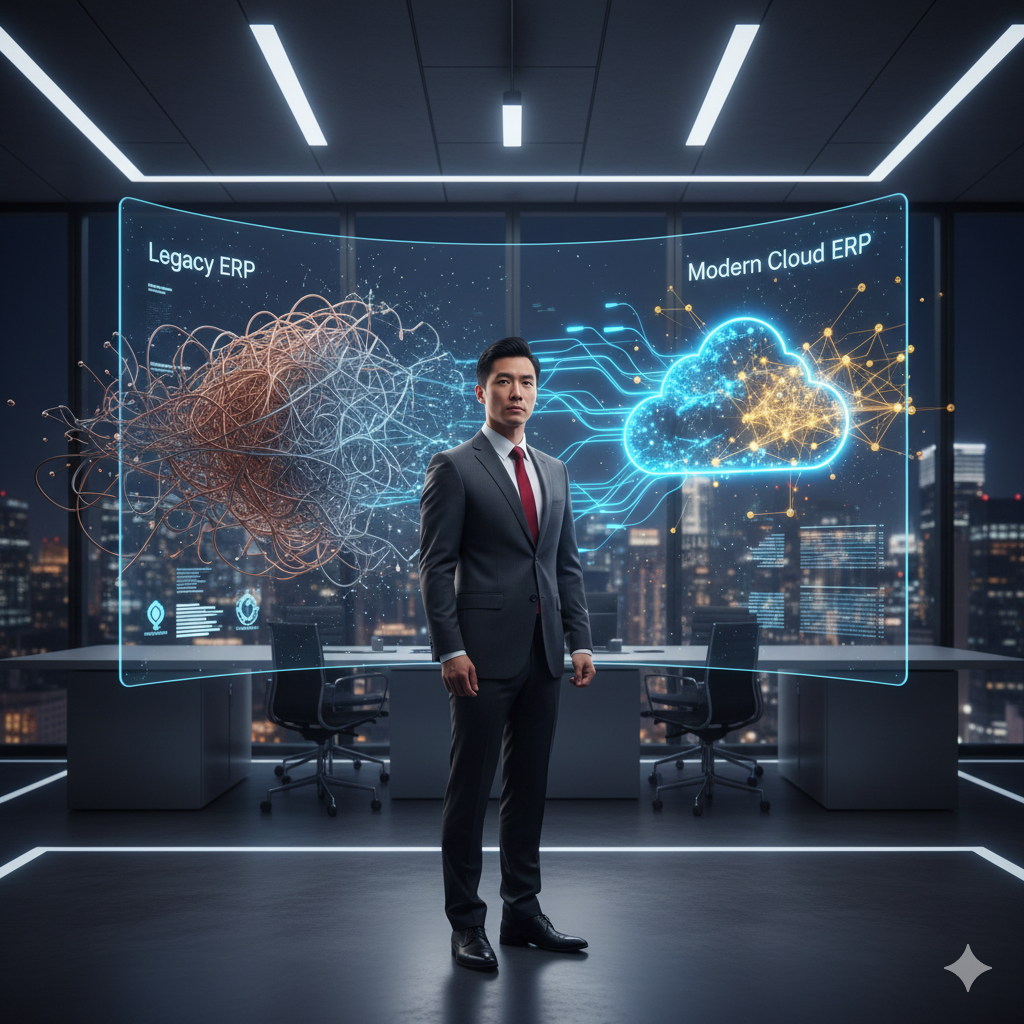
For a CEO or CTO, the phrase “Legacy ERP” can evoke a mix of familiarity and dread. While these systems have been the backbone of operations for decades, they are increasingly becoming a costly bottleneck. In an era where agility dictates market leadership, delaying Legacy ERP Modernization is no longer a cost-saving measure; it’s a strategic liability. This isn’t just an IT upgrade; it’s a critical investment in your company’s future competitiveness.
The Hidden Costs of Sticking to the Past
Maintaining an aging ERP system often seems cheaper on paper, but the true Total Cost of Ownership (TCO) is significantly higher. These hidden costs include:
-
Skyrocketing Maintenance Fees: Obsolete hardware, custom patches, and dwindling expert support drive up operational expenses.
-
Security Vulnerabilities: Legacy systems are prime targets for cyberattacks, posing existential risks to data integrity and compliance.
-
Lack of Integration: Inability to connect with modern cloud applications, AI tools, or IoT devices, creating data silos and operational inefficiencies.
-
Limited Scalability: Struggling to adapt to new business models, market expansions, or increased transaction volumes, hindering growth.
-
Talent Attrition: Younger, tech-savvy employees are less likely to work with outdated systems, leading to high turnover in IT departments.
Modernization Paths: Not One-Size-Fits-All
There are generally three strategic approaches to modernizing a legacy ERP, each with its own risk-reward profile for the C-Suite:
-
“Lift and Shift” to Cloud (IaaS/PaaS):
-
Description: Moving your existing ERP application and database from on-premise servers to a cloud infrastructure (like AWS, Azure, Google Cloud) without significant code changes.
-
Pros: Faster deployment, reduced infrastructure costs, improved disaster recovery.
-
Cons: Doesn’t address core functional limitations or technical debt of the original software.
-
Best For: Companies needing quick infrastructure relief or with highly customized legacy systems where a full replacement is too disruptive initially.
-
-
ERP Replacement (Replatforming/SaaS):
-
Description: Migrating to a completely new, modern Cloud ERP solution (e.g., Oracle NetSuite, Odoo Enterprise, SAP S/4HANA Cloud). This involves data migration, re-engineering business processes, and comprehensive change management.
-
Pros: Access to cutting-edge features, enhanced scalability, superior integration capabilities, reduced TCO long-term, improved security.
-
Cons: Higher upfront cost, significant project management effort, potential for business disruption if not managed meticulously.
-
Best For: Organizations with severe functional gaps, those seeking a complete digital transformation, or companies prioritizing future agility and innovation.
-
-
Hybrid Approach (Incremental Modernization):
-
Description: Keeping core legacy functions while integrating modern cloud-based modules for specific areas (e.g., CRM, HR, Analytics). This can involve building integration layers or adopting a “two-tier ERP” strategy.
-
Pros: Less disruptive, allows for phased adoption, leverages existing investments.
-
Cons: Can lead to complex integration challenges, potential for data inconsistencies between old and new systems.
-
Best For: Companies with critical, highly stable legacy modules that are too risky to replace entirely, but need to enhance specific business functions quickly.
-
The Executive Checklist: Mitigating Risks for a Smooth Transition
For C-level executives, the priority is minimizing operational disruption and maximizing strategic upside.
-
Define Clear KPIs: What quantifiable improvements are you targeting (e.g., 20% reduction in closing time, 15% lower inventory costs)?
-
Robust Change Management: Invest heavily in training and communication to ensure employee adoption and mitigate resistance.
-
Phased Rollout Strategy: Consider a modular or geographic rollout to test, learn, and minimize risk before a full deployment.
-
Vendor Partnership: Choose an ERP vendor and implementation partner with a proven track record in your industry and a deep understanding of your specific challenges.
-
Data Migration Plan: A meticulous plan for data extraction, cleansing, and loading is non-negotiable for success.
Conclusion: Modernize or Be Left Behind
Legacy ERP Modernization is not merely an IT project; it is a strategic necessity for enterprises aiming to sustain growth and competitive advantage in the digital age. The decision to modernize—and how—will define your organization’s agility, data intelligence, and resilience for the next decade
Executive Deep-Dive
Scaling Beyond Traffic to Revenue
Most enterprises fail because they chase clicks instead of trust. While building your global presence, ensure your EEAT 3.0 signals are synchronized across all regions.
Recommended for you:
→ The Shift from Traffic to Trust: A New KPI for Enterprise SEOLooking for a simpler alternative? While traditional ERPs are powerful, many teams prefer a more visual and intuitive approach. Monday.com offers the perfect balance between project management and business automation without the complex setup of Odoo or SAP.
Last Updated on 5 months ago by dudung
Exclusive Early Access: Q1 2026
The Global SEO Blueprint for C-Suite
We are finalizing an exclusive strategic framework for global enterprise scaling. Join the elite waitlist for early-bird pricing.
Secure Your Priority Spot