
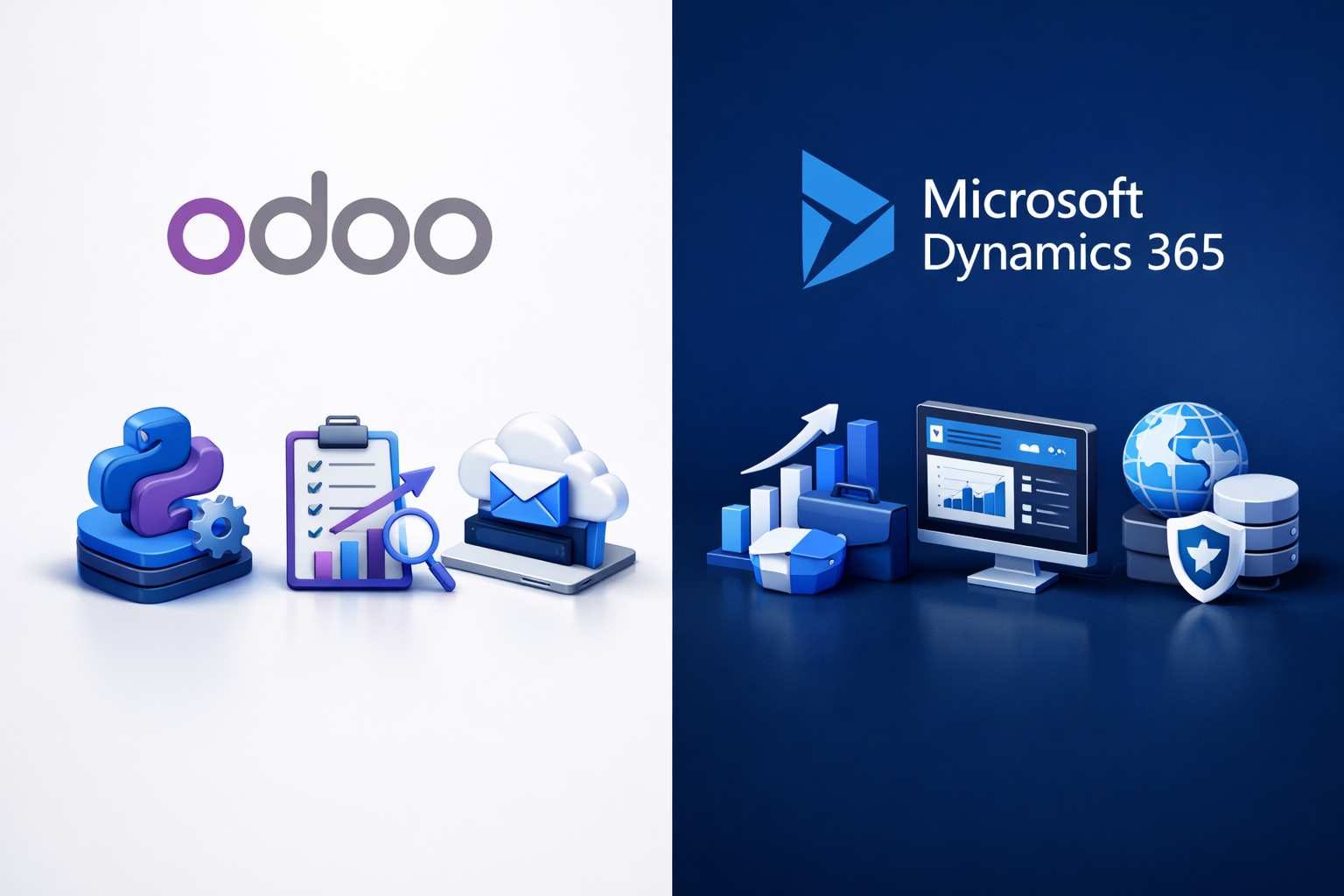
Odoo vs Microsoft Dynamics 365: Which ERP Scaled Better in 2026?
In the rapidly evolving business landscape of 2026, selecting an Enterprise Resource Planning (ERP) system is no longer just about managing data—it’s about business agility. Having spent years optimizing digital infrastructures for global unicorn companies like Traveloka and Tiket.com, I have seen firsthand how the right ERP can either be a launchpad for growth or a technical anchor that slows you down.
Today, the debate centers on two giants: Odoo, the modular open-source disruptor, and Microsoft Dynamics 365, the enterprise-grade powerhouse. To reach a Top 3 ranking in 2026, a business must choose a system that aligns with both its operational needs and its technical SEO performance.
Technical Comparison: Odoo vs Microsoft Dynamics 365 (2026)
-
Tech Stack and Language Odoo: Built on Python. Highly agile, modern, and supported by a massive global community of developers. Dynamics 365: Built on the .NET framework and SQL Server. Deeply integrated into the Microsoft ecosystem but requires specialized Microsoft-certified engineers.
-
Customization and Flexibility Odoo: Uses a modular, “app-based” approach. You can customize almost any part of the system without breaking the core engine. Dynamics 365: Offers “Power Platform” for low-code customization, but deep backend modifications are often more rigid and time-consuming.
-
Integration Ecosystem Odoo: Features a native, open API (JSON-RPC/XML-RPC) that connects seamlessly with modern marketing and SEO tools. Dynamics 365: Native integration with Office 365, Power BI, and Azure. Excellent for Microsoft-centric organizations but can be “walled-in.”
-
Implementation Speed Odoo: Agile deployment often allows for a functional “Phase 1” within 3 to 6 months. Dynamics 365: Typically requires a longer implementation cycle, often spanning 9 to 18 months for full enterprise rollout.
-
Licensing and TCO Odoo: Simple, transparent pricing per user. Thousands of community modules are available for free. Dynamics 365: Complex, tiered licensing that often includes high minimum-seat requirements and additional costs for specialized modules.
Strategic Insights for Scaling
Microsoft Dynamics 365 is a formidable choice for established corporations already reliant on the Microsoft stack. However, for “Unicorn-style” scaling where speed and digital agility are paramount, Odoo provides a significant edge. In our SEO Modern 2030 framework, the lightweight nature of Odoo’s frontend often results in better Core Web Vitals compared to the heavier portals typically associated with legacy Dynamics setups.
Frequently Asked Questions (FAQ)
-
Is Odoo as secure as Microsoft Dynamics 365? Yes. While Microsoft leverages Azure’s massive security infrastructure, Odoo Enterprise provides high-level security protocols suitable for banks and global logistics firms.
-
Can I migrate data from Dynamics to Odoo? Absolutely. Odoo’s data import tools and flexible API make it easier to migrate legacy data than many other enterprise systems.
-
Which ERP is better for international business? Both support multi-company, multi-currency, and localized accounting. Odoo is often easier to localize for emerging markets due to its open-source nature.
-
How does the ERP choice affect SEO? Your ERP powers your backend. If your ERP’s API is slow, your customer portal or e-commerce storefront will be slow. Odoo is generally perceived as more “lightweight,” which helps maintain the high Core Web Vitals needed for Top 3 rankings.
Why Odoo is Winning the “Agility” War
For businesses looking to scale like a “Unicorn,” Odoo offers a significant advantage. Its modular approach—built with a LEGO-like philosophy—allows companies to start with only what they need (e.g., CRM and Accounting) and add modules as they grow. This prevents the “system bloat” that often plagues legacy ERP implementations.
Executive Deep-Dive
Scaling Beyond Traffic to Revenue
Most enterprises fail because they chase clicks instead of trust. While building your global presence, ensure your EEAT 3.0 signals are synchronized across all regions.
Recommended for you:
→ The Shift from Traffic to Trust: A New KPI for Enterprise SEOFrom an SEO Modern 2030 perspective, Odoo’s modern web library and clean API integration mean your customer-facing portals load faster and stay more responsive—a direct ranking factor in today’s competitive SERP.
Why Microsoft Dynamics 365 Remains the Corporate Standard
If your organization is a multinational corporation with rigid regulatory requirements and a heavy reliance on the Microsoft stack (Excel, Teams, Azure), Dynamics 365 is the safer bet. It offers “Standardized Flow” and enterprise-grade compliance that Odoo’s open-source nature sometimes lacks without heavy customization.
Strategic Verdict
Choose Odoo if you prioritize speed, customization, and a lower total cost of ownership. Choose Microsoft Dynamics 365 if you require deep integration with Microsoft’s corporate ecosystem and have the budget for long-term specialized maintenance.
Frequently Asked Questions (FAQ)
1. Is Odoo cheaper than Microsoft Dynamics 365? Yes. In 2026, Odoo remains significantly more affordable, especially for SMEs, with transparent pricing that often costs 3x to 4x less than a comparable Dynamics 365 setup.
2. Which ERP has better AI capabilities? Microsoft Dynamics 365 leads with native Copilot AI integration. However, Odoo’s open-source nature allows businesses to integrate any modern LLM (Large Language Model) more flexibly than Microsoft’s proprietary system.
3. Can I migrate from Dynamics to Odoo? Absolutely. Many businesses are migrating to Odoo to escape “vendor lock-in.” Odoo’s flexible API makes data migration more straightforward for modern engineering teams.
4. How does the ERP choice affect SEO? Your ERP powers your backend. If your ERP’s API is sluggish, your e-commerce speed drops. Odoo is generally perceived as more “lightweight,” which helps maintain the high Core Web Vitals needed for Top 3 rankings.
Last Updated on 3 months ago by dudung
Exclusive Early Access: Q1 2026
The Global SEO Blueprint for C-Suite
We are finalizing an exclusive strategic framework for global enterprise scaling. Join the elite waitlist for early-bird pricing.
Secure Your Priority Spot