
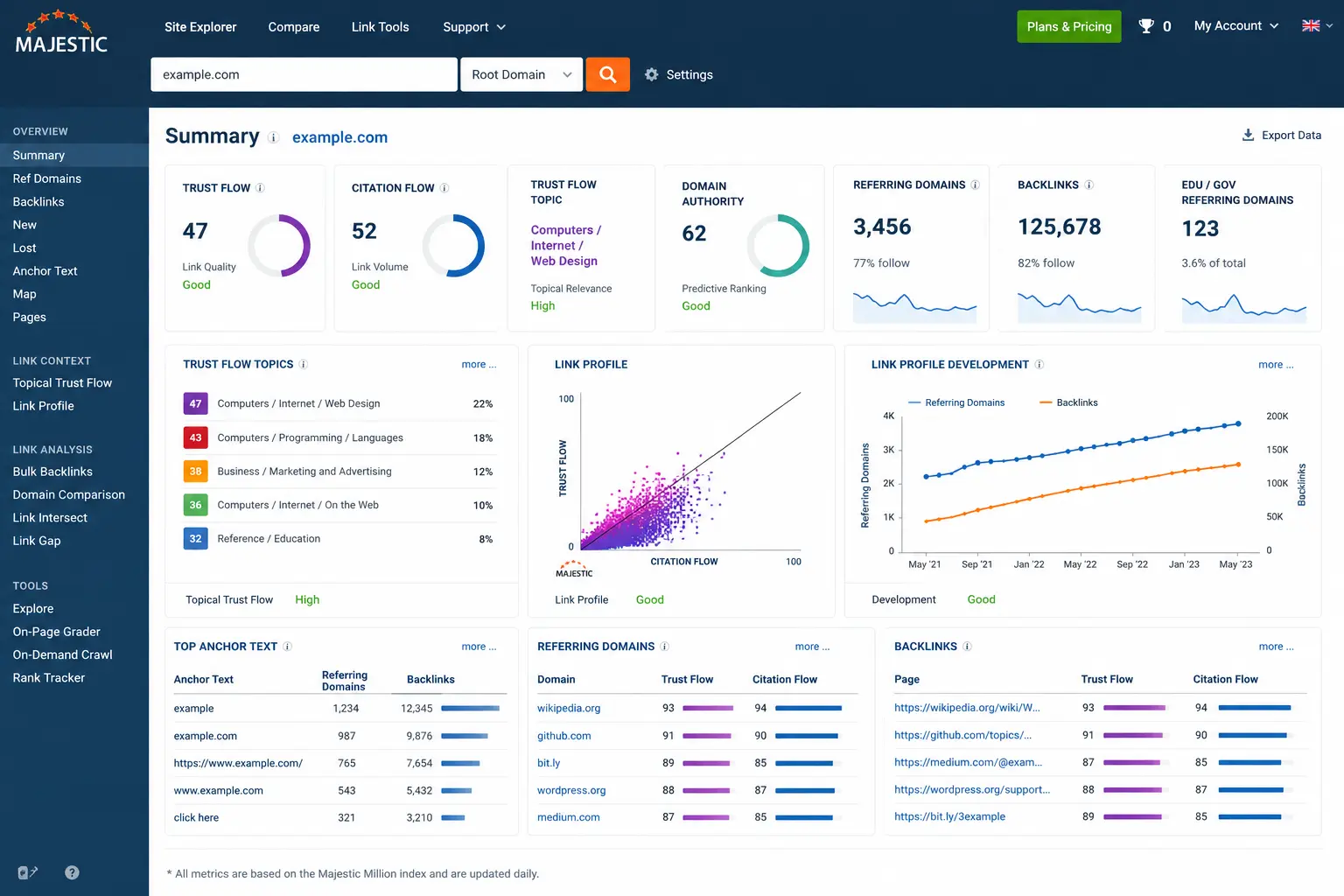
Trust Flow vs Citation Flow
In the evolving landscape of Search Engine Optimization (SEO), understanding the health and authority of a website is paramount. For digital marketers and SEO specialists, tools like Majestic have become industry standards. Central to Majestic’s analysis are two primary metrics: Trust Flow (TF) and Citation Flow (CF). This guide explores the critical differences between these metrics, why they matter, and how to optimize them to drive meaningful traffic and revenue for your digital assets.

Top Rated Odoo vs SAP Analysis
Explore the most recommended ERP implementations based on our 2026 data matrix:
Need custom ERP consulting? Contact our experts.
What is Citation Flow (CF)?
Citation Flow is a proprietary metric developed by Majestic that predicts how influential a URL might be based on how many sites link to it. Think of it as a quantitative measure of your link profile. A higher Citation Flow indicates that your page has a significant number of incoming links. It is a volume-based metric, meaning it tracks the “popularity” of your link profile without necessarily measuring the quality of the sources.
Executive Deep-Dive
Scaling Beyond Traffic to Revenue
Most enterprises fail because they chase clicks instead of trust. While building your global presence, ensure your EEAT 3.0 signals are synchronized across all regions.
Recommended for you:
→ The Shift from Traffic to Trust: A New KPI for Enterprise SEOWhat is Trust Flow (TF)?
Trust Flow is arguably the more critical metric. It measures the quality of the links pointing to your site. Majestic calculates Trust Flow by analyzing how closely a site is linked to trusted “seed” sites—highly authoritative, vetted websites across the internet. If your site is linked to by trusted sources, your Trust Flow increases, signaling to search engines that your content is credible. This is a qualitative metric, often considered the “gold standard” for determining how much “link juice” is actually passing to your domain.
DMS Global Enterprise Solution
Advertisement - Continue reading below
The Relationship: The Trust-to-Citation Ratio
The magic happens when you analyze the ratio between the two. A healthy, authoritative website typically maintains a balance between TF and CF. By evaluating the relationship between these two metrics, you can diagnose the health of your site’s backlink profile.
| Ratio | Interpretation | Actionable SEO Strategy |
| High TF, Low CF | Exceptional quality, niche authority. | Continue content expansion, focus on brand building. |
| Balanced (Near 1:1) | Natural, healthy link profile. | Maintain current momentum and monitoring. |
| Low TF, High CF | “Spammy” profile, potential link farm signals. | Disavow toxic links, focus on acquiring high-quality backlinks. |
Executive Deep-Dive
Scaling Beyond Traffic to Revenue
Most enterprises fail because they chase clicks instead of trust. While building your global presence, ensure your EEAT 3.0 signals are synchronized across all regions.
Recommended for you:
→ The Shift from Traffic to Trust: A New KPI for Enterprise SEOWhy E-E-A-T Demands Quality Links
Google’s E-E-A-T (Experience, Expertise, Authoritativeness, and Trustworthiness) guidelines emphasize that high-quality backlinks are a primary indicator of trust. Relying on sheer volume (high CF) without quality (high TF) is a dangerous strategy that risks manual penalties or algorithmic suppression. To build a sustainable digital marketing strategy, you must focus on acquiring links from industry-leading, contextually relevant sources. E-E-A-T is not just a concept; it is the backbone of modern search rankings.
Optimizing for AdSense Revenue
Building high authority doesn’t just improve rankings; it improves monetization. Sites with strong TF/CF ratios are better positioned to rank for high-paying keywords, which in turn leads to better ad placements and higher RPMs. When your site is seen as an authority, advertisers are more willing to pay a premium to appear on your pages.
Key Strategies to Boost Authority:
-
Content-First Outreach: Create deep, comprehensive guides that industry experts naturally want to reference.
-
Technical Health: Ensure your sitemap and internal linking structures are optimized, preventing crawl errors.
-
Targeted Backlink Acquisition: Focus on quality over quantity. One link from a high-TF source is worth more than a hundred from low-quality domains.
How to Improve Your Metrics
Improving these metrics requires a shift in mindset from “link building” to “authority building.” Start by auditing your current profile using Majestic. Identify domains that have high Trust Flow and reach out to them with content that adds value to their audience. Avoid purchasing links from low-quality farms that artificially inflate Citation Flow but do nothing for your Trust Flow.
Remember, consistency is key. Authority is built over time, not overnight. Regularly monitoring these metrics ensures you are always aligned with the best practices of the SEO industry.
Conclusion
Understanding Trust Flow vs. Citation Flow is more than an academic exercise—it is the foundation of programmatic SEO and long-term site stability. By shifting your focus from volume-based linking to trust-based authority, you protect your site’s future and maximize its commercial potential through platforms like AdSense. Stay consistent, track your metrics, and ensure your link building aligns with the gold standard of quality.
[post_bottom_conversion]
[fast-index-hook]
Last Updated on 1 month ago by dudung
Exclusive Early Access: Q1 2026
The Global SEO Blueprint for C-Suite
We are finalizing an exclusive strategic framework for global enterprise scaling. Join the elite waitlist for early-bird pricing.
Secure Your Priority Spot