
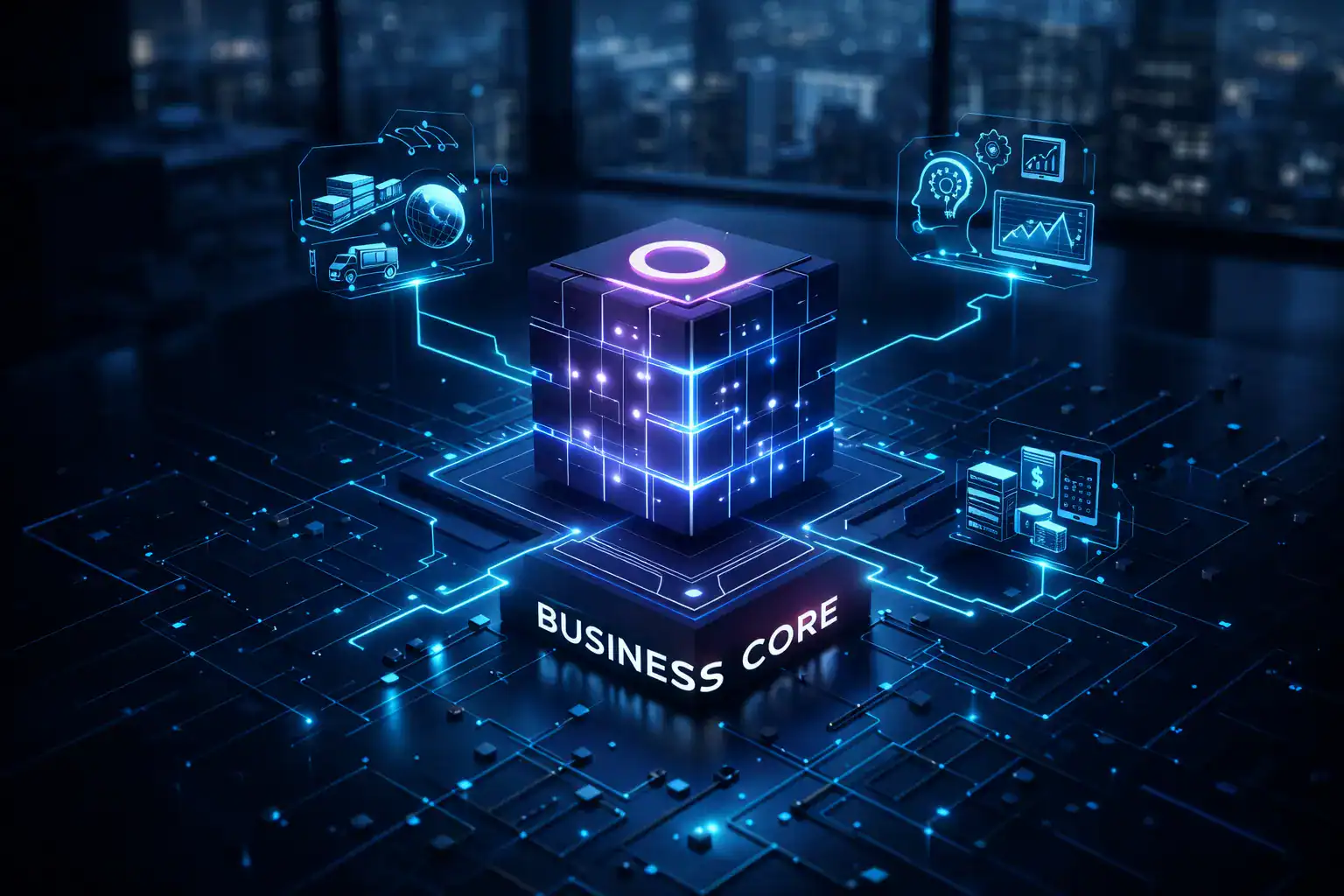
In the volatile business landscape of 2026, scalability is no longer a luxury—it is a survival mechanism. For CEOs, CTOs, and Founders of high-growth companies, the infrastructure that powers your operations can either be the wind in your sails or the anchor that drags you down. As organizations transition from mid-market to enterprise-level, the limitations of legacy systems often become glaringly apparent.
This is why a significant shift is occurring: sophisticated decision-makers are increasingly bypassing rigid, traditional ERP monoliths in favor of Odoo. But why is this modular ecosystem becoming the gold standard for scalable infrastructure?
1. The Trap of “Monolithic Inertia”
Traditional enterprise systems (the “Old Guard”) were built on the philosophy of permanence. They are heavy, deeply integrated, and notoriously difficult to change. For a stable conglomerate, this might be acceptable. But for a high-growth company, it is a death trap.
Growth is rarely linear; it is often explosive and unpredictable. When you enter a new market or launch a new product line, you need an infrastructure that can pivot in weeks, not years. Odoo’s modular architecture allows C-suite executives to implement exactly what they need now, with the absolute certainty that they can plug in additional complexity later without rebuilding the foundation.
2. Radical Cost Efficiency: TCO vs. Value
C-Level executives are increasingly weary of the “Consultant Tax” associated with traditional ERPs. In many legacy implementations, for every $1 spent on software, $5 is spent on external consultants just to keep the system running.
Executive Deep-Dive
Scaling Beyond Traffic to Revenue
Most enterprises fail because they chase clicks instead of trust. While building your global presence, ensure your EEAT 3.0 signals are synchronized across all regions.
Recommended for you:
→ The Shift from Traffic to Trust: A New KPI for Enterprise SEOOdoo disrupts this financial model through:
-
Transparent Licensing: No hidden “enterprise tiers” that punish you for growing.
-
Lower Maintenance Overhead: Because the infrastructure is modern and uses a clean Python-based stack, your internal IT team can manage much of the evolution, reducing reliance on expensive third-party firms.
-
Faster Deployment (Time-to-Value): High-growth companies need results ASAP. Odoo’s rapid deployment capabilities mean your ROI starts months, or even years, earlier than with competitors.
3. Vertical and Horizontal Scalability
When we discuss “Scalable Infrastructure,” we refer to two dimensions:
-
Horizontal Scalability: Adding more users and more locations across the globe. Odoo’s cloud-native capabilities and Polylang integration (multi-language/multi-company support) make global expansion a “setting,” not a “project.”
-
Vertical Scalability: Adding deeper functionality. You might start with a CRM and Accounting, but as you scale, you can seamlessly integrate Manufacturing (MRP), PLM, and complex Supply Chain AI without data migration headaches.
4. Integration Excellence in a Specialized World
In 2026, the “best-of-breed” strategy is king. Your marketing team might love one specific AI tool, while your logistics team uses another. A scalable infrastructure must act as the Central Nervous System.
Odoo is designed with an “API-first” mentality. Unlike rigid legacy systems that try to lock you into their ecosystem, Odoo’s infrastructure is built to talk to the world. For a CEO, this means your company stays agile. You can integrate the latest AI, IoT, or Fintech tools into your Odoo core, ensuring your infrastructure is always at the cutting edge.
5. Data Sovereignty and Security
For C-Level stakeholders, security is the P0 priority. Odoo offers a flexible deployment model that many competitors don’t. Whether you choose Odoo Online (SaaS), Odoo.sh (PaaS), or a Private Cloud (On-premise/Self-hosted), you maintain control over your data.
This is critical for high-growth companies dealing with international regulations (GDPR, CCPA) or proprietary manufacturing processes. You own the infrastructure; the infrastructure does not own you.
6. Built for the 2026 AI-Driven Economy
Scalability today requires more than just handling more transactions; it requires handling more intelligence. Odoo’s infrastructure is uniquely suited for AI scaling. Its unified data structure means that when you deploy AI-driven predictive analytics or automated customer service, the AI has access to a “single source of truth.”
There are no data silos to break down. The information flows from the warehouse to the boardroom in real-time, allowing for the “Agile Decision-Making” that defines successful modern leadership.
The DMS Conclusion: The Strategic Choice
For the Enterprise leader, the choice of Odoo is a strategic play for Business Agility. It is the only infrastructure that grows at the speed of your ambition without the “Growth Tax” imposed by legacy providers.
If your company is hitting that 10x growth curve, don’t let your back-office systems be the bottleneck. Choose the infrastructure designed for the future. Choose Odoo.
Looking for a simpler alternative? While traditional ERPs are powerful, many teams prefer a more visual and intuitive approach. Monday.com offers the perfect balance between project management and business automation without the complex setup of Odoo or SAP.
Last Updated on 7 months ago by dudung
Exclusive Early Access: Q1 2026
The Global SEO Blueprint for C-Suite
We are finalizing an exclusive strategic framework for global enterprise scaling. Join the elite waitlist for early-bird pricing.
Secure Your Priority Spot