
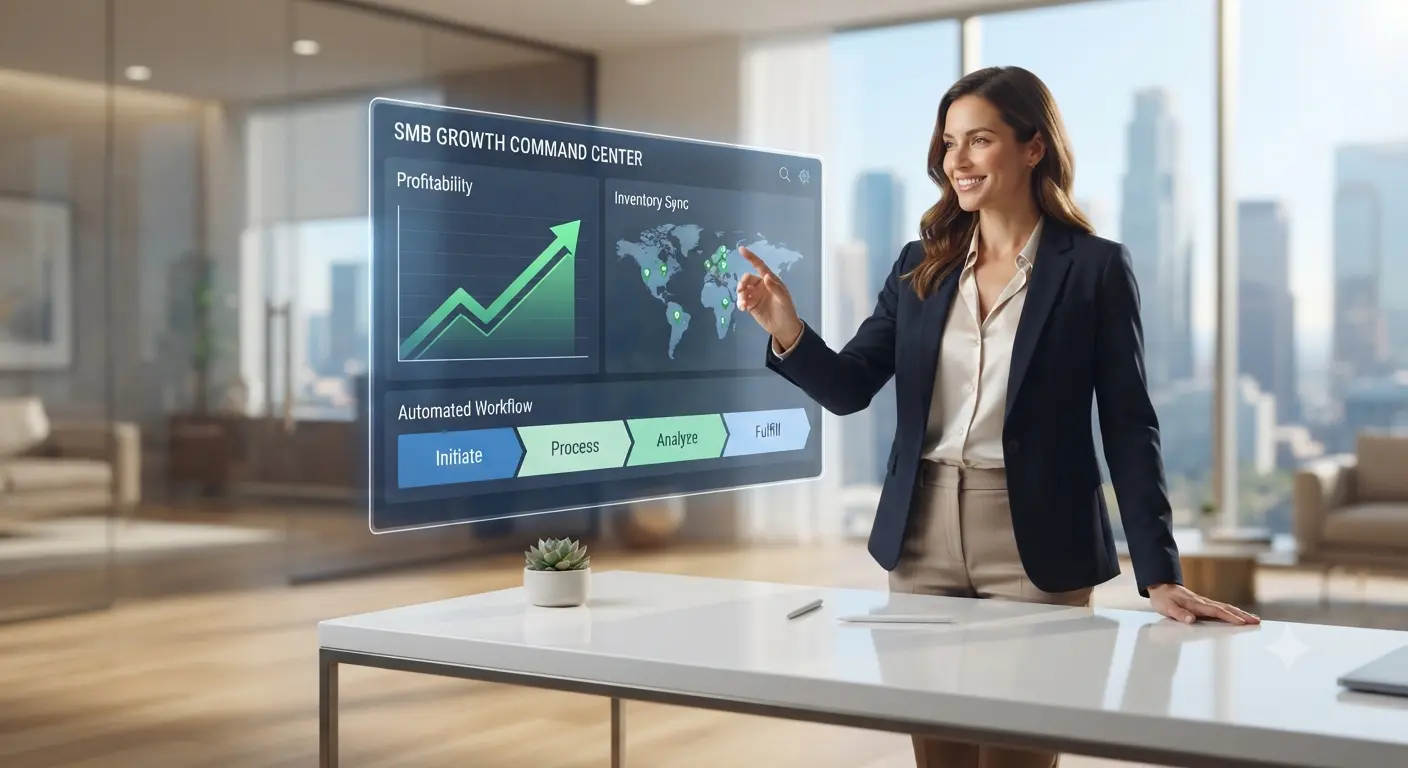
Best ERP Software for Small Businesses: Complete Buyer’s Guide 2026
As we navigate the fiscal landscape of 2026, small businesses are no longer looking for mere “accounting tools”—they are seeking integrated ecosystems that drive growth. Scaling a business in today’s economy requires real-time data, automated workflows, and a single source of truth. Selecting the right Enterprise Resource Planning (ERP) software is the most critical infrastructure decision your leadership team will make this year. This guide leverages deep industry expertise to help you evaluate, implement, and succeed with a modern ERP solution tailored for the SMB sector.
—
The Strategic Benefits of Modern ERP for Small Businesses
In 2026, the gap between “growing” and “stagnant” businesses is defined by data agility. Implementing a robust ERP system provides more than just organization; it delivers a competitive moat through three primary pillars:
- Unified Financial Intelligence: Gone are the days of manual reconciliations. Modern ERPs offer automated accounts payable (AP) and accounts receivable (AR), providing a real-time view of cash flow. This allows for proactive capital allocation rather than reactive firefighting.
- Operational Efficiency & Automation: By integrating inventory, sales, and human resources, businesses can eliminate up to 40% of manual data entry errors. Predictive analytics can now forecast stock requirements with 90% accuracy, drastically reducing carrying costs and stockouts.
- Scalability Without Friction: A cloud-native ERP allows you to add new modules—such as field service or advanced manufacturing—without overhauling your entire IT stack. This “Lego-block” approach to software ensures your technology grows at the same pace as your revenue.
—
How to Evaluate ERP Solutions: Key Selection Criteria
Choosing an ERP is a high-stakes investment. To ensure a high Return on Investment (ROI), look for these non-negotiable features in 2026:
Executive Deep-Dive
Scaling Beyond Traffic to Revenue
Most enterprises fail because they chase clicks instead of trust. While building your global presence, ensure your EEAT 3.0 signals are synchronized across all regions.
Recommended for you:
→ The Shift from Traffic to Trust: A New KPI for Enterprise SEO- Industry-Specific Functionality: Avoid “one-size-fits-all” platforms. If you are in manufacturing, you need MTO (Make to Order) and ETO (Engineer to Order) capabilities. If you are in distribution, multi-warehouse replenishment is essential.
- Mobile-First Architecture: Your team isn’t always at a desk. Ensure the ERP offers a native mobile experience for field technicians, warehouse staff, and remote executives.
- AI-Driven Insights: Look for software that doesn’t just store data but analyzes it. Modern systems use AI to identify procurement anomalies, suggest route optimizations, and flag potential compliance risks before they become audits.
- Low Total Cost of Ownership (TCO): Beyond the subscription fee, evaluate implementation costs, training requirements, and support levels. Look for vendors offering transparent, per-user pricing models.
—
The Step-by-Step ERP Implementation Roadmap
A successful ERP rollout is 20% technology and 80% process management. Follow this 2026 industry-standard roadmap for a seamless transition:
- Discovery & Audit: Conduct a thorough audit of your current workflows. Identify bottlenecks and document exactly how data moves from a quote to an invoice.
- Data Cleansing: An ERP is only as good as the data you feed it. Cleanse your existing databases of duplicates and outdated records before migration.
- Phased Rollout: Rather than a “big bang” launch, implement core modules first (Finance and CRM), followed by specialized modules (Manufacturing or Rental management) once the foundation is stable.
- User Acceptance Testing (UAT): Involve end-users early. Their feedback during the testing phase is critical for high adoption rates and minimizing resistance to change.
- Continuous Optimization: Post-launch, schedule quarterly reviews to refine workflows and leverage new software updates.
—
Why Choose DMS Global for Your 2026 ERP Transformation?
In a crowded market of generic providers, DMS Global stands out as the premier partner for small to mid-sized businesses that manufacture, supply, or service. Our DMS ERP platform is engineered to solve the specific pain points of modern SMBs through a modular, high-performance architecture.
- Deep Industry Expertise: We don’t just sell software; we understand the intricacies of oilfield services, manufacturing, and complex distribution. Our consultants speak your language.
- The Accounting Backbone: Our Accounting Module is the industry gold standard, acting as a single source of truth that powers every other aspect of your business—from inventory to field service ticketing.
- Proven ROI: DMS Global clients report significantly faster billing cycles and improved job visibility within the first 90 days of implementation.
- Unmatched Support: We pride ourselves on a partnership model. Our team ensures you are never “stranded,” providing continuous updates and expert guidance as your business evolves.
Ready to future-proof your operations? Contact DMS Global today for a personalized demo and discover why we are the leading choice for small business ERP in 2026.
Best ERP Software for Small Businesses: Complete Buyer’s Guide 2026
As we navigate the fiscal landscape of 2026, small businesses are no longer looking for mere “accounting tools”—they are seeking integrated ecosystems that drive growth. Scaling a business in today’s economy requires real-time data, automated workflows, and a single source of truth. Selecting the right Enterprise Resource Planning (ERP) software is the most critical infrastructure decision your leadership team will make this year. This guide leverages deep industry expertise to help you evaluate, implement, and succeed with a modern ERP solution tailored for the SMB sector.
—
The Strategic Benefits of Modern ERP for Small Businesses
In 2026, the gap between “growing” and “stagnant” businesses is defined by data agility. Implementing a robust ERP system provides more than just organization; it delivers a competitive moat through three primary pillars:
- Unified Financial Intelligence: Gone are the days of manual reconciliations. Modern ERPs offer automated accounts payable (AP) and accounts receivable (AR), providing a real-time view of cash flow. This allows for proactive capital allocation rather than reactive firefighting.
- Operational Efficiency & Automation: By integrating inventory, sales, and human resources, businesses can eliminate up to 40% of manual data entry errors. Predictive analytics can now forecast stock requirements with 90% accuracy, drastically reducing carrying costs and stockouts.
- Scalability Without Friction: A cloud-native ERP allows you to add new modules—such as field service or advanced manufacturing—without overhauling your entire IT stack. This “Lego-block” approach to software ensures your technology grows at the same pace as your revenue.
—
How to Evaluate ERP Solutions: Key Selection Criteria
Choosing an ERP is a high-stakes investment. To ensure a high Return on Investment (ROI), look for these non-negotiable features in 2026:
- Industry-Specific Functionality: Avoid “one-size-fits-all” platforms. If you are in manufacturing, you need MTO (Make to Order) and ETO (Engineer to Order) capabilities. If you are in distribution, multi-warehouse replenishment is essential.
- Mobile-First Architecture: Your team isn’t always at a desk. Ensure the ERP offers a native mobile experience for field technicians, warehouse staff, and remote executives.
- AI-Driven Insights: Look for software that doesn’t just store data but analyzes it. Modern systems use AI to identify procurement anomalies, suggest route optimizations, and flag potential compliance risks before they become audits.
- Low Total Cost of Ownership (TCO): Beyond the subscription fee, evaluate implementation costs, training requirements, and support levels. Look for vendors offering transparent, per-user pricing models.
—
The Step-by-Step ERP Implementation Roadmap
A successful ERP rollout is 20% technology and 80% process management. Follow this 2026 industry-standard roadmap for a seamless transition:
- Discovery & Audit: Conduct a thorough audit of your current workflows. Identify bottlenecks and document exactly how data moves from a quote to an invoice.
- Data Cleansing: An ERP is only as good as the data you feed it. Cleanse your existing databases of duplicates and outdated records before migration.
- Phased Rollout: Rather than a “big bang” launch, implement core modules first (Finance and CRM), followed by specialized modules (Manufacturing or Rental management) once the foundation is stable.
- User Acceptance Testing (UAT): Involve end-users early. Their feedback during the testing phase is critical for high adoption rates and minimizing resistance to change.
- Continuous Optimization: Post-launch, schedule quarterly reviews to refine workflows and leverage new software updates.
—
Why Choose DMS Global for Your 2026 ERP Transformation?
In a crowded market of generic providers, DMS Global stands out as the premier partner for small to mid-sized businesses that manufacture, supply, or service. Our DMS ERP platform is engineered to solve the specific pain points of modern SMBs through a modular, high-performance architecture.
- Deep Industry Expertise: We don’t just sell software; we understand the intricacies of oilfield services, manufacturing, and complex distribution. Our consultants speak your language.
- The Accounting Backbone: Our Accounting Module is the industry gold standard, acting as a single source of truth that powers every other aspect of your business—from inventory to field service ticketing.
- Proven ROI: DMS Global clients report significantly faster billing cycles and improved job visibility within the first 90 days of implementation.
- Unmatched Support: We pride ourselves on a partnership model. Our team ensures you are never “stranded,” providing continuous updates and expert guidance as your business evolves.
Ready to future-proof your operations? Contact DMS Global today for a personalized demo and discover why we are the leading choice for small business ERP in 2026.
Last Updated on 5 months ago by dudung
Exclusive Early Access: Q1 2026
The Global SEO Blueprint for C-Suite
We are finalizing an exclusive strategic framework for global enterprise scaling. Join the elite waitlist for early-bird pricing.
Secure Your Priority Spot