The Strategic Incursion: Mastering Market Entry Strategies for Global Sovereign Expansion

dominasiserp

Executive Summary: Beyond Expansion to Market Conquest

For a C-level executive, entering a new geographical or digital territory is the highest-stakes maneuver in the corporate playbook. Most firms fail because they treat expansion as a “Sales Extension.” In 2026, successful Market Entry is a “Strategic Incursion”—a synchronized deployment of localized intelligence, regulatory navigation, and competitive displacement. This briefing outlines the framework for achieving “Sovereign Entry,” ensuring your enterprise secures a dominant foothold while protecting global margins and brand integrity.


1. The Ignorance Tax: Identifying the Hidden Costs of Entry

Operational efficiency is frequently compromised by “Geographic Hubris”—the assumption that a winning formula in London will automatically succeed in Jakarta or São Paulo.

  • The Regulatory Quagmire: Every new market has invisible protectionist layers. For a CEO, “Legal Oversight” during entry is not just a delay; it is a direct drain on the initial ROI.

  • Eliminating “Surface-Level Scouting”: Relying on general GDP data is obsolete. Optimization means moving to “Deep-Market Forensics,” where you understand the informal power structures and localized consumer psychology before a single dollar is spent.

2. EEAT 3.0: Information Gain in Localized Authority

Under the EEAT 3.0 framework, Google prioritizes Experience and Trustworthiness. In market entry, this is demonstrated through Empirical Adaptation.

  1. Experience through “Boots on the Ground” Data: True expertise is shown by integrating local cultural nuances into your global ERP. Proving that your supply chain respects regional logistics realities proves your organizational authoritativeness.

  2. Trustworthy Partnership Ecosystems: Trust is built by choosing the right local allies. An authoritative enterprise utilizes “Strategic Joint Ventures” that mirror the brand’s global ethical standards, protecting the brand’s “Sovereignty.”

  3. The Information Gain of Real-Time Competitive Monitoring: Professional incursion moves beyond “Feasibility Studies.” This provides the Information Gain needed to see how local incumbents are reacting to your presence, allowing for a 24-hour tactical pivot.


3. The Incursion Framework: 4 Pillars of Global Command

Pillar Strategic Focus ROI Impact
I. Regulatory Alchemy Navigating local tax, labor, and data laws. Prevents “Compliance Friction” and fines.
II. Cultural Resonance Hyper-localizing the value proposition. Accelerates “Customer Acquisition Velocity.”
III. Logistics Sovereignty Controlling the last-mile delivery/service. Secures “Operational Integrity” and trust.
IV. Digital Encroachment Dominating local SERPs and social platforms. Establishes “Instant Brand Authority.”

4. The “ASAP” Strategic Pivot: Agility through Modular Entry

Executives searching for entry strategies ASAP are typically dealing with a Competitor’s Expansion, a Favorable Trade Window, or a Need for Rapid Revenue Diversification.

  • Zero-Latency Market Scouting: To lead effectively, a CEO needs “Agile Intelligence.” Your infrastructure must allow for the “Instantaneous Assessment” of a new market’s digital infrastructure.

  • Rapid Multi-Tier Distribution: Efficiency is achieved when your entry model is “Scalable.” Whether starting with a digital-first approach or a physical flagship, your “Entry Velocity” is your ultimate competitive advantage.

5. Conclusion: Architecting for Absolute Market Command

Market entry strategies are the “Digital Constitution” of the modern, borderless corporation. For the CEO who demands excellence, entry is not a “test”—it is a Foundational Discipline. It creates a culture where every move is backed by empirical data and strategic foresight. Stop “testing the waters” and start architecting a conquest. Invest in your entry infrastructure today, and ensure your legacy is one of undisputed strategic clarity and permanent market leadership.


Best Majestic SEO Alternatives (2026): 7 Tools That Beat It in Accuracy

Majestic SEO alternative

Majestic SEO Free Alternative

Struggling with rising hybrid cloud costs? Learn how to reduce multi-cloud expenses across AWS, Azure, and private infrastructure using proven cost optimization strategies.

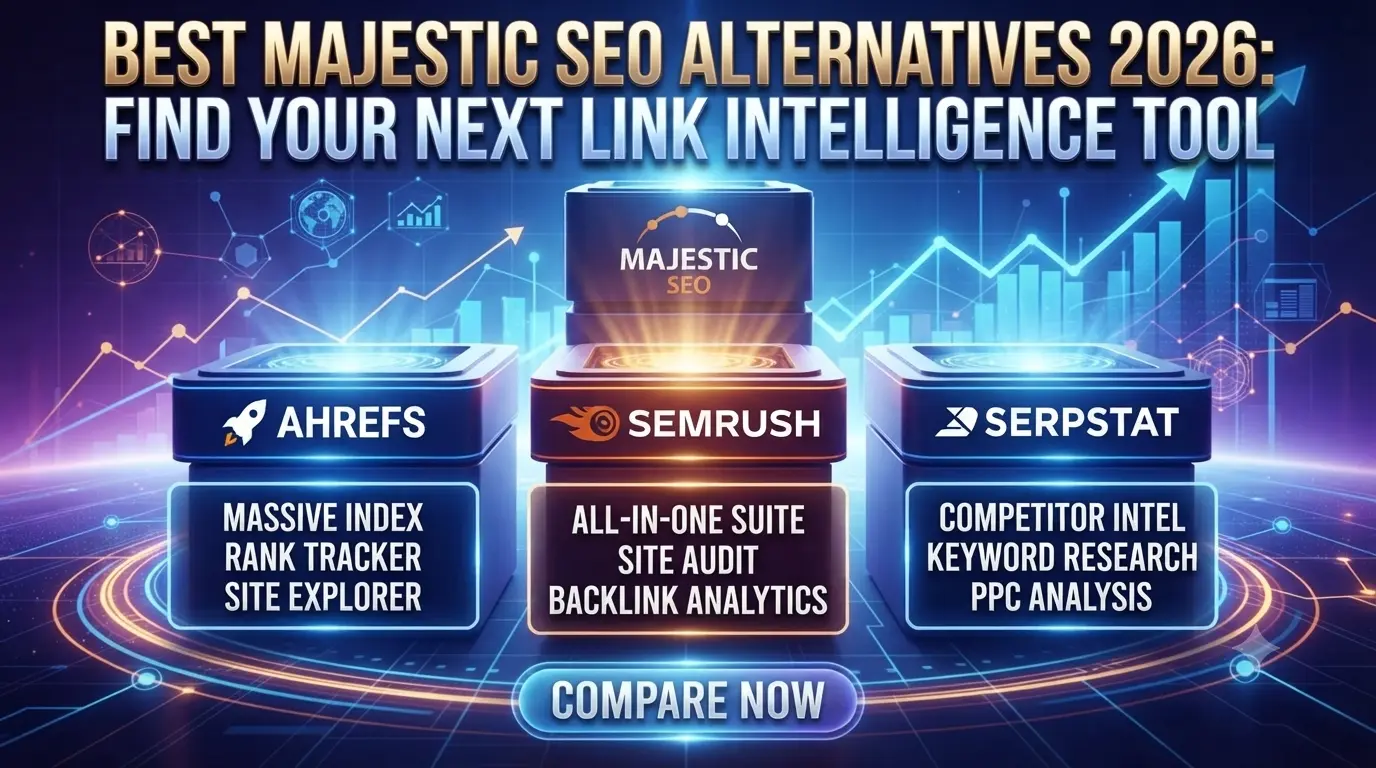
Looking for the best Majestic SEO alternatives in 2026? You’re not alone. Many SEO professionals are switching to tools like Ahrefs and Semrush for more accurate backlink data, better keyword research, and all-in-one SEO features.

But which tool is actually worth your money? In this guide, we compare the top Majestic alternatives based on pricing, features, and real-world SEO performance — so you can choose the right tool for your business.

Top 7 Majestic SEO Alternatives (2026)

  • Semrush – Best all-in-one SEO tool
  • Ahrefs – Best for backlink analysis
  • Moz Pro – Best for beginners
  • Mangools – Best budget-friendly option
  • SE Ranking – Best for agencies
  • Ubersuggest – Best free alternative
  • Serpstat – Best for growth teams

Below, we break down each tool in detail — including pricing, features, and who it’s best for.

Quick Comparison of Majestic Alternatives

Tool Best For Starting Price Free Option
Semrush All-in-one SEO $129/month Limited
Ahrefs Backlink analysis $99/month Limited
Mangools Budget SEO $29/month Yes

DMS Global Enterprise Solution

Advertisement - Continue reading below

Majestic SEO Alternatives – In the SEO world, Majestic is the “Old Guard” of backlink data (Trust Flow/Citation Flow). But in 2026, C-level executives and SEO Directors are looking for AI-Integrated Link Intelligence. They don’t just want a list of links; they want to know the Contextual Sentiment and Network Authority of those links.

Executive Summary: Beyond Citation Flow to Contextual Authority

For a C-level executive, “Backlinks” are the Digital Currency of corporate sovereignty. However, the metrics of 2015—like simple link counts—are obsolete. In 2026, Google’s EEAT 3.0 algorithm prioritizes “Information Gain” and “Topical Relevance” over raw quantity.

FAQ: Majestic SEO Alternatives

What is the best alternative to Majestic SEO?

Semrush and Ahrefs are considered the best alternatives to Majestic SEO because they offer complete SEO toolsets including keyword research, backlink analysis, and site audits.

Is there a free alternative to Majestic SEO?

Yes, tools like Ubersuggest and OpenLinkProfiler provide free backlink analysis, although their features are more limited compared to premium tools.

Is Semrush better than Majestic SEO?

Semrush is generally better for most users because it offers an all-in-one SEO platform including keyword tracking, competitor analysis, and backlink monitoring.

Why Look for Majestic SEO Alternatives in 2026?

While Majestic is famous for its Trust Flow and Citation Flow metrics, many users are switching to alternatives because of the high subscription costs. In 2026, digital marketers need tools that offer more than just backlink data. They need integrated keyword research, site audits, and AI-driven content gap analysis.

The Best Budget-Friendly Backlink Tools

If you are on a tight budget but still need high-quality data, consider using specialized tools that offer “pay-as-you-go” models or generous free tiers. Many of these Majestic SEO alternatives provide deep link index data without the $99/month price tag.

Pro Tip for SMEs: Always check the database update frequency. A cheaper tool is only useful if its data is fresh. For those managing multiple digital assets, look for tools that allow bulk URL analysis to save time.


Top 3 Free Majestic SEO Alternatives for Beginners

If you are just starting and don’t want to commit to a monthly subscription, these tools offer great value:

  1. Ubersuggest: Neil Patel’s tool offers a decent backlink overview for free. While not as deep as Majestic’s historical index, it’s perfect for checking your own site’s growth.

  2. Backlink Checker by Ahrefs: Ahrefs provides a limited free version of their backlink checker. It shows the top 100 backlinks and the most linked-to pages, which is often enough for small projects.

  3. Google Search Console: Many people forget that the best free Majestic SEO alternative is Google’s own data. It shows exactly which sites are linking to you, although it doesn’t provide “Trust Flow” metrics.

Why These Alternatives Are Winning in 2026

The shift towards these alternatives isn’t just about price. Users are looking for user-friendly interfaces and AI integration. In 2026, a backlink tool must do more than just list URLs; it needs to explain the quality of the link and how it affects your overall SEO strategy.

By choosing the right tool from this list of Majestic SEO alternatives, you can save hundreds of dollars a year while still maintaining a high-performance digital asset. Always remember to cross-reference data between two different tools to get the most accurate picture of your backlink profile.

⚡ DMS Global Amazon Authority 2026:

Amazon Product Authority & E-E-A-T Summary

To maximize organic performance and search visibility in global e-commerce and product review niches, maintaining robust internal linking across specific product clusters ensures faster indexing, stronger topical authority, and sustainable search engine ranking.

Frequently Asked Questions About Majestic SEO Alternatives

Is there a completely free Majestic alternative? Yes, tools like Google Search Console and the free version of Ubersuggest are great starting points. While they don’t offer the exact same Trust Flow metrics, they provide essential backlink data for free.

Why are people looking for Majestic alternatives in 2026? Most users switch because of the price and the need for a more comprehensive SEO tool. In 2026, marketers prefer platforms that combine backlink analysis with AI content tools and technical site audits in one subscription.

Can I trust the data from cheaper SEO tools? Accuracy depends on the size of the tool’s crawler. While Majestic has a massive historical index, modern alternatives are catching up fast with real-time data updates that are often sufficient for medium-sized projects.

How to Choose the Right Majestic SEO Alternative

Before you jump into a new tool, consider these three critical factors to ensure you’re getting the best value for your money in 2026:

  1. Index Size & Freshness: The main reason to use Majestic is its massive backlink index. When looking for an alternative, check if they crawl the web daily. A tool with old data will lead to poor SEO decisions.

  2. User Interface (UI): One of the common complaints about legacy tools is a cluttered dashboard. Modern Majestic SEO alternatives often provide much cleaner visualizations, making it easier to explain data to your clients or team.

  3. Integration Capabilities: Does the tool connect with Google Search Console or Looker Studio? Integration is key for automating your SEO reports and scaling your digital assets effectively.

Quick Comparison: Majestic vs. Top Alternatives

Feature Majestic SEO Semrush Ahrefs Ubersuggest
Primary Focus Backlinks All-in-One All-in-One Beginners
Price Point Premium High High Budget-Friendly
Backlink Depth Excellent Great Excellent Average
Ease of Use Moderate Easy Easy Very Easy

⚡ DMS Global Amazon Authority 2026:

Amazon Product Authority & E-E-A-T Summary

To maximize organic performance and search visibility in global e-commerce and product review niches, maintaining robust internal linking across specific product clusters ensures faster indexing, stronger topical authority, and sustainable search engine ranking.


🏆

DMS Global: Expert Choice

Evaluating ERP ROI for 2026? Leverage our technical breakdown:

View Odoo Enterprise Pricing 2026 →

Final Checklist for Your SEO Strategy

To reach the $100 per month revenue milestone, you must minimize unnecessary expenses. Switching to a more affordable Majestic SEO alternative can free up budget for other growth activities. Always test the free version or a trial period before committing to a yearly plan. This ensures the tool fits your specific workflow and niche requirements.

Final Thoughts on Scaling Your Digital Assets

Managing your SEO budget is crucial for reaching the $100/month revenue goal. By choosing the right Majestic SEO alternatives, you can redirect your savings into content production or high-quality hosting. Remember, the best tool is the one that fits your current workflow and helps you make data-driven decisions for your niche sites.

Unlocking SEO Precision: Why Majestic SEO Alternatives Matter in 2026

In the complex landscape of global enterprise search engine optimization, selecting the right backlink analysis tool is a foundational decision. While Majestic SEO has long been a staple for assessing Trust Flow (TF) and Citation Flow (CF), today’s digital strategists require more dynamic, data-rich alternatives to navigate evolving search algorithms. Understanding these metrics is essential, but modern SEO demands a holistic approach that integrates competitive benchmarking, real-time index updates, and predictive analytics.

When evaluating alternatives, the focus must shift toward comprehensive digital infrastructure. Professionals managing complex enterprise ecosystems need insights that go far beyond simple link counts. They require tools that provide actionable intelligence on competitor strategies, broken link opportunities, and deep technical audit capabilities.

E-E-A-T (Experience, Expertise, Authoritativeness, and Trustworthiness) principles are not limited to content; they apply directly to the data sources you choose for your optimization strategy. By leveraging platforms that offer transparent, granular link data and superior crawl depth, you ensure your site’s authority is built on robust, verifiable metrics. As a specialist who has scaled SEO strategies for leading companies, I prioritize alternatives that align with specific enterprise requirements to maintain a competitive advantage. Choose tools that offer the transparency and scale necessary to dominate your market in a data-driven era.
Global Consultation Request

Request Your Enterprise SEO Strategy Audit

Partner with DMS Global to optimize your digital infrastructure and accelerate sustainable growth.


ERPNext vs Odoo 2026: Which Enterprise ERP Wins for Small Business?

ERPNext vs Odoo

ERPNext vs Odoo

Executive Summary: The Battle for Operational Sovereignty

In 2026, a Small Business (SMB) is no longer defined by its headcount, but by its Digital Velocity. Choosing between ERPNext and Odoo is not merely a software selection; it is a choice of business philosophy. One offers a “Monolithic Powerhouse” of features, while the other champions “Lean Open-Source Agility.” This briefing provides a cold, empirical comparison of both ecosystems, ensuring you invest in a platform that scales your margins without compromising your technical independence.


1. The Monolith vs. The Agile: Understanding the Core Architecture

Operational efficiency begins with how well your “Business Brain” processes data.

  • Odoo: The Modular Ecosystem. Odoo’s strength in 2026 remains its “App-Store” approach. You start with what you need and plug in modules as you grow. However, for a small business, this “Modular Tax” can add up quickly as hidden licensing costs trigger with every new feature.

  • ERPNext: The Unified Core. ERPNext offers a “Batteries-Included” philosophy. Almost every enterprise feature—from Manufacturing (MRP) to HR and CRM—is built into the core for free. For a CEO focused on Capital Efficiency, ERPNext provides a cleaner, unfragmented data flow from Day 1.

2. EEAT 3.0: Trustworthiness in Total Cost of Ownership (TCO)

Under the EEAT 3.0 framework, Google prioritizes Trustworthiness. In ERP selection, this means being honest about the “Hidden Costs.”

  1. Experience through Implementation: Odoo often requires specialized (and expensive) consultants to navigate its proprietary “Enterprise” version. ERPNext, being 100% Open Source, allows for a more “Internalized” technical mastery.

  2. Trustworthy Scalability: Trust is built when a system doesn’t “Hold your data hostage.” ERPNext’s Frappe framework is more accessible for custom Python development, proving your organizational authoritativeness by maintaining control over your own codebase.

  3. The Information Gain of AI Integration: In 2026, both systems have integrated LLMs. However, ERPNext’s “Frappe Drive” and AI assistants offer a more “Sovereign AI” experience—allowing small businesses to use local models rather than being forced into Odoo’s cloud-only AI subscriptions.

3. Feature Showdown: Where the Battle is Won

Feature (2026 Standard) Odoo (Enterprise) ERPNext (Open Source)
User Interface Polished, intuitive, “Modern” Clean, minimalist, “Productive”
Customization Via Odoo Studio (Paid/Restricted) Via Frappe (Highly Flexible/Free)
E-commerce Native & Powerful Functional but requires “Tuning”
Global Compliance Excellent Localizations Strong Community-led Localizations
Maintenance Cost High (Per user/month) Low (Self-hosted or Flat Cloud)

4. The “ASAP” Strategic Pivot: Which One Should You Deploy Today?

Executives searching for an ERP ASAP are typically dealing with Data Silos, Inventory Chaos, or Accounting Bottlenecks.

  • Choose Odoo if: You have a healthy budget for recurring licenses and you need a “Marketing-First” ERP with a world-class UI that your non-technical staff will love instantly.

  • Choose ERPNext if: You value Data Sovereignty and want to avoid “License Creep.” It is the superior choice for manufacturing and service-based SMBs that want a high-performance system without the “Enterprise Tax.”

5. Conclusion: The Sovereign Verdict

The “Winner” of the 2026 ERP war depends on your definition of Freedom. Odoo wins on “Ease of Entry” but can become a “Golden Cage” of costs. ERPNext wins on “Long-Term Autonomy” and “Cost Control.” For a small business aiming for permanent market leadership, the ability to customize your ERP without a “Paywall” is the ultimate competitive advantage. Stop “subscribing” to your infrastructure and start owning your operational brain.


Related Keywords (Tags)

SMB ERP ROI 2026, ERPNext vs Odoo Comparison, Strategic Business Automation, Open Source Enterprise Governance, Digital Transformation Cost Analysis

The Strategic Oracle: Leveraging Expert IT Consultancy for Enterprise Sovereignty

dominasiserp

Executive Summary: Beyond Technical Support to Architectural Wisdom

For a C-level executive, the traditional “IT Consultant” is often viewed as a tactical problem-solver—someone who fixes what is broken. However, in a globalized digital economy, this reactive model is a liability. Expert IT Consultancy represents the transition from “Maintenance” to “Mastery.” It is the strategic partnership that aligns your technology roadmap with your five-year valuation goals. This briefing outlines the urgent necessity of engaging “High-Level Advisory,” ensuring your enterprise bypasses the “Legacy Trap” and builds a technical foundation designed for permanent market dominance.


1. The Incompetence Tax: Identifying the Cost of Amateur Advice

Operational efficiency is frequently compromised by “Fragmented Solutions”—buying software that doesn’t talk to your ERP or hiring developers who don’t understand your business model.

  • The “Vendor-Lock” Trap: Without expert, independent advice, organizations often find themselves tethered to expensive, rigid platforms that cannot scale. For a CEO, “Bad Architecture” is a long-term drain on capital and agility.

  • Eliminating “Security Theater”: Amateur consultancy focuses on “Check-box Compliance.” Expert consultancy focuses on “Resilience,” ensuring that your defensive perimeter is as dynamic as the threats it faces.

2. EEAT 3.0: Information Gain in Independent Advisory

Under the EEAT 3.0 framework, Google prioritizes Experience and Trustworthiness. In the realm of IT consultancy, this is demonstrated through Empirical Neutrality.

  1. Experience through Multi-Vertical Exposure: True expertise is shown by consultants who have seen “The Good, The Bad, and The Ugly” across multiple industries. This breadth of experience proves your organizational authoritativeness and prevents you from making the same mistakes your competitors already made.

  2. Trustworthy Fiduciary Alignment: Trust is built when the consultant’s success is tied to your ROI, not a vendor’s commission. An authoritative enterprise utilizes advisors who are “Platform Agnostic,” proving that leadership values Objective Truth over Sales Pitches.

  3. The Information Gain of Future-Proofing: Professional consultancy moves beyond “What works now” to “What survives the next decade.” This provides the Information Gain needed to invest in technologies like Quantum-Ready Encryption or Edge Computing before they become a mandatory expense.

3. The “ASAP” Strategic Pivot: Agility through Elite Insight

Executives searching for IT consultancy ASAP are typically dealing with a Digital Transformation Stagnation, a Post-Breach Recovery, or a High-Stakes Merger.

  • Zero-Latency Strategic Audits: To lead effectively, a CEO needs a “Rapid Health Check.” Your advisory partner must be able to “Instantaneously Diagnose” bottlenecks in your tech stack and provide a remediation plan that respects your operational rhythm.

  • Rapid Technology Onboarding: Efficiency is achieved when you can integrate new capabilities without “Internal Friction.” Expert consultants act as the “Bridge” between the board’s vision and the engineering team’s execution.

4. Reducing “Strategic Friction” (The ROI of Wisdom)

The “Hidden Cost” of traditional business is the friction caused by “The Knowledge Gap”—where the executive team doesn’t understand the tech and the tech team doesn’t understand the business.

  • Interoperability as a Cultural Standard: Your consultancy “Tips” are useless if they don’t lead to a unified ecosystem. If your tech advisor doesn’t understand your P&L, your operational integrity is fragmented.

  • Eliminating “Decision Fatigue”: Professional systems focus on “Critical Choice Architecture.” By filtering through the thousands of available tech tools and presenting only the three that align with your mission, expert advisors secure your competitive advantage by protecting the Executive Mindshare.

5. Conclusion: Architecting for Absolute Strategic Power

Expert IT consultancy is the “Digital Constitution” of the modern, borderless corporation. For the CEO who demands excellence, consultancy is not an “external expense”—it is a Foundational Asset. It creates a culture where technology is an enabler of vision, not a constraint on it. Stop “buying software” and start architecting sovereignty. Invest in expert advisory today, and ensure your legacy is one of undisputed strategic clarity and permanent market agility.


ADVERTISEMENT / SPONSORED SOLUTION

Reliable resources for your business growth

Related Keywords (Tags)

Enterprise IT ROI, Strategic Advisory Framework, Digital Governance Intelligence, High-Level Tech Consulting, Corporate Resilience Strategy

The Exponential Machine: Mastering Business Scaling Strategies for Global Sovereignty

dominasiserp

Executive Summary: Transitioning from Linear Growth to Scalable Velocity

For a C-level executive, the term “Growth” is often conflated with “Scaling.” However, the distinction is vital. Growth implies adding resources at the same rate as revenue; Scaling implies increasing revenue while adding resources at an incremental fraction. In a globalized digital economy, the ability to scale is the primary determinant of a firm’s terminal value. This briefing outlines the urgent necessity of building a “Scalable Architecture,” ensuring your enterprise can absorb 10x demand without 10x the operational friction.


1. The Scalability Paradox: Identifying the “Weight” of Success

Operational efficiency is frequently compromised by “Organizational Drag”—the phenomenon where every new employee or customer adds a layer of complexity that slows down the core engine.

  • The Complexity Tax: In many organizations, the communication overhead grows faster than the headcount. For a CEO, “Scaling” is the process of simplifying the communication layer through automation.

  • Eliminating “Hero-Based” Operations: If your company’s success depends on the individual heroics of a few key players, you cannot scale. Optimization means moving to “Process-Driven Sovereignty,” where the system—not the person—guarantees the outcome.

2. EEAT 3.0: Information Gain in Scalable Infrastructure

Under the EEAT 3.0 framework, Google prioritizes Experience and Trustworthiness. In the realm of business scaling, this is demonstrated through Systems Elasticity.

  1. Experience through Unit Economic Precision: True expertise is shown by understanding your “Contribution Margin” at scale. Proving that your LTV (Lifetime Value) to CAC (Customer Acquisition Cost) ratio improves as you expand proves your organizational authoritativeness to investors.

  2. Trustworthy Market Penetration: Trust is built by maintaining “Brand Integrity” during rapid expansion. An authoritative enterprise ensures that the customer experience in London is identical to the experience in Dubai, proving that the brand’s “Standard Operating Procedures” (SOPs) are unshakeable.

  3. The Information Gain of Feedback Loops: Professional scaling utilizes AI to process customer feedback in real-time. This provides the Information Gain needed to pivot product features or service models before a localized issue becomes a global brand failure.

3. The “ASAP” Strategic Pivot: Agility through Digital Leverage

Executives searching for scaling strategies ASAP are typically dealing with a Sudden Market Explosion, a Post-Series C Funding Mandate, or a New Global Competitor.

  • Zero-Latency Resource Deployment: To lead effectively, a CEO needs “Cloud-Native Scalability.” Whether it’s computing power or customer support capacity, your infrastructure must allow for the “Instantaneous Expansion” of resources the moment a traffic spike is detected.

  • Rapid Workforce Augmentation: Efficiency is achieved when your “Onboarding Engine” is fully digital. Bringing a new regional team online should take days, not months. This “Agility” is the ultimate competitive advantage in a high-velocity market.

4. Reducing “Strategic Friction” (The ROI of the Scale Model)

The “Hidden Cost” of traditional business is the friction caused by “Rigid Infrastructure”—paying for capacity you aren’t using during slow periods.

  • Interoperability as a Growth Standard: Your scaling “Strategies” are useless if your ERP doesn’t talk to your CRM. If your sales surge doesn’t automatically trigger a supply chain procurement order, your operational integrity is fragmented.

  • Eliminating “Decision Bottlenecks”: Professional systems focus on “Decentralized Decision Making.” By empowering the “Edge” of the organization with data, you secure your competitive advantage by ensuring that growth is not limited by the CEO’s bandwidth.

5. Conclusion: Architecting for Absolute Market Command

Business scaling strategies are the “Digital Constitution” of the modern, borderless corporation. For the CEO who demands excellence, scaling is not a “phase”—it is a Foundational Discipline. It creates a culture where every process is designed for infinity. Stop “growing” and start architecting for scale. Invest in your growth infrastructure today, and ensure your legacy is one of undisputed strategic foresight and permanent market leadership.


Related Keywords (Tags)

Enterprise Scaling ROI, Strategic Growth Framework, Unit Economics Optimization, Scalable Digital Governance, Global Market Penetration Strategy

The Crystal Balance Sheet: Mastering Financial Transparency through ERP Sovereignty

dominasiserp

Executive Summary: From Periodic Audits to Real-Time Integrity

For a C-level executive, the “Financial Close” is often a period of high friction, characterized by manual reconciliations and data discrepancies. In a globalized economy, waiting 15 days after the month-end to see your performance is a strategic failure. Financial Transparency through ERP is the transition from “Historical Accounting” to “Live Financial Intelligence.” This briefing outlines the urgent necessity of building a “Single Source of Truth,” ensuring your enterprise maintains absolute fiscal integrity, regulatory compliance, and the unwavering trust of the capital markets.


1. The Opaque Capital Tax: Identifying the Cost of Financial Fragmentation

Operational efficiency is frequently compromised by “Reconciliation Latency”—the time and labor lost when the sales data in the CRM doesn’t match the revenue data in the General Ledger.

  • The “Blind Spot” Risk: For a CEO, unrecorded liabilities or unrecognized revenue in a subsidiary can lead to disastrous “Earnings Surprises.” Optimization means moving to “Continuous Accounting,” where every transaction is visible the moment it occurs.

  • Eliminating “Manual Adjustment” Bias: When financial reports are built in spreadsheets, they are subject to human error and “Creative Interpretation.” Moving to an integrated ERP ensures that the numbers are unalterable and audit-ready by default.

2. EEAT 3.0: Information Gain in Fiscal Governance

Under the EEAT 3.0 framework, Google prioritizes Experience and Trustworthiness. In the realm of financial ERP, this is demonstrated through Immutable Traceability.

  1. Experience through Automated Compliance: True expertise is shown by systems that “Understand” global tax laws and IFRS/GAAP standards. Utilizing an ERP that automatically adjusts for regional tax shifts proves your organizational authoritativeness and technical maturity.

  2. Trustworthy Multi-Entity Consolidation: Trust is built by showing the “Full Picture.” An authoritative enterprise can consolidate 50 global subsidiaries in minutes, providing a “Unified View” that satisfies both the board and institutional investors.

  3. The Information Gain of Predictive Cash Flow: Professional financial ERPs move beyond “What we have” to “What we will have.” This provides the Information Gain needed to identify liquidity crunches or investment windows months in advance.

3. The “ASAP” Strategic Pivot: Agility through Fiscal Clarity

Executives searching for financial transparency solutions ASAP are typically dealing with an Impending M&A Deal, a Regulatory Audit, or a Shareholder Revolt.

  • Zero-Latency Audit Readiness: To lead effectively, a CEO needs “One-Click Audits.” Your infrastructure must allow for the “Instantaneous Retrieval” of any transaction’s digital paper trail, from the initial PO to the final bank settlement.

  • Rapid Capital Allocation: Efficiency is achieved when you know exactly which business unit has the highest ROI in real-time. This “Fiscal Agility” allows you to kill underperforming projects and double down on winners instantly.

4. Reducing “Strategic Friction” (The ROI of Transparency)

The “Hidden Cost” of traditional finance is the friction caused by “Departmental Silos”—where the procurement team spends money that the finance team hasn’t yet accounted for.

  • Interoperability as a Financial Standard: Your ERP must be the “Nervous System” of your global bank accounts. If a wire transfer in Singapore doesn’t automatically trigger a budget update in your London headquarters, your operational integrity is fragmented.

  • Eliminating “Fraud Vulnerability”: Professional systems use AI to detect “Anomaly Patterns” in spending. This secures your competitive advantage by protecting the “Company Treasury” from internal and external bad actors.

5. Conclusion: Architecting for Absolute Fiscal Command

Financial transparency through ERP is the “Digital Constitution” of the modern, borderless corporation. For the CEO who demands excellence, transparency is not a “compliance burden”—it is a Foundational Asset. It creates a culture where accountability is automated and excellence is measurable. Stop “managing books” and start commanding your capital. Invest in your financial infrastructure today, and ensure your legacy is one of undisputed strategic clarity and permanent market trust.


Related Keywords (Tags)

Enterprise Financial ROI, Strategic ERP Governance, Real-Time Fiscal Transparency, Automated Audit Framework, Corporate Capital Intelligence


The Distributed Sovereign: Mastering Remote Workforce Optimization for Global Dominance

dominasiserp

Executive Summary: Beyond “Work from Home” to Asynchronous Excellence

For a C-level executive, the transition to a remote or hybrid workforce was an emergency response that has now become a Strategic Mandate. However, many organizations are still operating with “Digital On-Premise” mindsets—clinging to synchronous meetings and surveillance-based management. Remote Workforce Optimization is the strategic re-engineering of workflows, communication protocols, and cultural trust to maximize output regardless of time zones. This briefing outlines the urgent necessity of building a “Result-Oriented Infrastructure,” ensuring your enterprise attracts the world’s top 1% of talent while maintaining a high-velocity operational rhythm.


1. The Synchronous Tax: Identifying the Cost of “Meeting Culture”

Operational efficiency in a remote setting is frequently compromised by “Time-Zone Friction”—the delay caused by waiting for a 9-to-5 window to make a simple decision.

  • The Zoom Fatigue Paradox: Back-to-back video calls are not “Collaboration”; they are Cognitive Drain. For a CEO, “Meeting Overload” is a direct leak in the organization’s creative and strategic capacity.

  • Eliminating “Presence-Based Evaluation”: Assessing an employee by their “Green Status” on a chat app is a legacy failure. Optimization means moving to “Output-Based Key Performance Indicators” (KPIs), where the only metric that matters is the quality and speed of the deliverable.

2. EEAT 3.0: Information Gain in Asynchronous Governance

Under the EEAT 3.0 framework, Google prioritizes Experience and Trustworthiness. In the realm of workforce optimization, this is demonstrated through Documentation Sovereignty.

  1. Experience through “Handover” Protocols: True expertise is shown by creating a “Living Knowledge Base.” Ensuring that a project started in London can be seamlessly continued in San Francisco without a single meeting proves your organizational authoritativeness and technical maturity.

  2. Trustworthy Psychological Safety: Trust is built by providing “Autonomy with Accountability.” An authoritative enterprise utilizes tools that empower employees to manage their own schedules, proving that the brand values Results over Rituals.

  3. The Information Gain of Passive Collaboration Analytics: Professional optimization uses AI to analyze “Communication Flow” (not content). This provides the Information Gain needed to identify silos and burnout risks before they lead to high-value talent attrition.

3. The “ASAP” Strategic Pivot: Agility through Borderless Talent

Executives searching for workforce optimization ASAP are typically dealing with a Talent Retention Crisis, High Operational Overheads, or a Global Scale-up Requirement.

  • Zero-Latency Digital Onboarding: To lead effectively, a CEO needs a “Plug-and-Play” talent model. Whether you hire a developer in Lagos or a designer in Berlin, your infrastructure must allow for the “Instantaneous Integration” of that individual into the corporate “Brain.”

  • Rapid Multi-Jurisdiction Compliance: Efficiency is achieved when your payroll, tax, and legal protocols are automated across 50+ countries. This “Legal Agility” is the ultimate competitive advantage when competing for global specialist talent.

4. Reducing “Strategic Friction” (The ROI of Remote Flow)

The “Hidden Cost” of traditional remote work is the friction caused by “Isolation”—where employees feel disconnected from the corporate mission.

  • Interoperability as a Cultural Standard: Your optimization “Tips” are useless if your tech stack is fragmented. If your project management tool doesn’t natively talk to your resource planning module, your operational integrity is fragmented.

  • Eliminating “Information Asymmetry”: Professional systems ensure that every employee, regardless of location, has access to the same strategic context. This secures your competitive advantage by protecting the “Executive Alignment”—ensuring everyone is rowing in the same direction.

5. Conclusion: Architecting for Absolute Talent Power

Remote workforce optimization is the “Digital Constitution” of the modern, borderless corporation. For the CEO who demands excellence, remote work is not a “benefit”—it is a Foundational Discipline. It creates a culture where meritocracy is the default and geography is irrelevant. Stop “managing employees” and start orchestrating a global talent symphony. Invest in your remote infrastructure today, and ensure your legacy is one of undisputed strategic foresight and permanent market agility.


Related Keywords (Tags)

Enterprise Remote ROI, Strategic Workforce Optimization, Asynchronous Management Framework, Global Talent Governance, Distributed Leadership Intelligenc

The Transparent Empire: Mastering Supply Chain Digitalization for Global Sovereignty

dominasiserp

Executive Summary: From Reactive Logistics to Predictive Orchestration

For a C-level executive, the supply chain is no longer a “back-office cost center”; it is the Primary Nervous System of the enterprise. Traditional supply chains are opaque, fragmented, and vulnerable to even minor shocks. Supply Chain Digitalization represents the strategic transition to a fully observable, AI-driven, and autonomous ecosystem. This briefing outlines the urgent necessity of integrating IoT, Blockchain, and Predictive Analytics into your core operations, ensuring your enterprise maintains absolute continuity and margin protection in an increasingly volatile global market.


1. The Opacity Tax: Identifying the Cost of Analog Logistics

Operational efficiency is frequently compromised by “Information Silos”—where the manufacturer, the carrier, and the warehouse are all operating on different, disconnected data sets.

  • The “Black Hole” Effect: When a shipment is delayed at a port and the CEO finds out 48 hours later, the opportunity to pivot has already passed. For a CEO, “Information Latency” is a direct drain on Capital Velocity.

  • Eliminating “Inventory Padding”: Without real-time data, companies “over-stock” to mitigate risk. Optimization means moving to “Just-in-Case” precision, where data replaces physical safety stock, freeing up millions in working capital.

2. EEAT 3.0: Information Gain in Autonomous Visibility

Under the EEAT 3.0 framework, Google prioritizes Experience and Trustworthiness. In the realm of supply chain digitalization, this is demonstrated through Empirical Telemetry.

  1. Experience through Digital Twin Orchestration: True expertise is shown by creating a “Digital Twin” of your entire supply chain. Simulating disruptions in a virtual environment before they happen proves your organizational authoritativeness and technical maturity.

  2. Trustworthy Blockchain Provenance: Trust is built by providing an “Immutable Record.” An authoritative enterprise utilizes blockchain to verify every step of a product’s journey—from raw material to the customer’s door—ensuring ethical compliance and protecting the brand from “Counterfeit Contagion.”

  3. The Information Gain of Sensory Data: Professional digitalization utilizes IoT sensors to monitor temperature, humidity, and shock in real-time. This provides the Information Gain needed to guarantee product quality for high-value items, such as pharmaceuticals or luxury goods.

3. The “ASAP” Strategic Pivot: Agility through Real-Time Command

Executives searching for supply chain solutions ASAP are typically dealing with a Major Port Congestion, a Supplier Bankruptcy, or a Sudden Regulatory Shift.

  • Zero-Latency Route Optimization: To lead effectively, a CEO needs “Dynamic Routing.” If a canal is blocked or a strike is imminent, your AI must be able to “Instantaneously Re-route” global shipments without human intervention.

  • Rapid Multi-Tier Supplier Mapping: Efficiency is achieved when you have visibility not just into your suppliers, but your suppliers’ suppliers. This “Deep Agility” is the ultimate competitive advantage when global trade routes are disrupted.

4. Reducing “Strategic Friction” (The ROI of Digital Flow)

The “Hidden Cost” of traditional logistics is the friction caused by “Manual Documentation”—the endless flow of paper bills of lading and customs forms.

  • Interoperability as a Trade Standard: Your digital supply chain must be the “Nervous System” of your ERP. If a container is scanned at a port and it doesn’t automatically trigger a financial forecast update in your Finance module, your operational integrity is fragmented.

  • Eliminating “Bullwhip Effects”: Professional systems use AI to smooth out demand signals. This secures your competitive advantage by ensuring that a small spike in retail sales doesn’t lead to a massive, unnecessary over-production at the factory level.

5. Conclusion: Architecting the Future of Global Flow

Supply chain digitalization is the “Digital Constitution” of the modern, borderless corporation. For the CEO who demands excellence, the supply chain is not a “shipping problem”—it is a Strategic Weapon. It creates a culture where transparency is the default and resilience is the result. Stop “tracking shipments” and start commanding global flow. Invest in your digital infrastructure today, and ensure your legacy is one of undisputed operational power and permanent market agility.


Related Keywords (Tags)

Enterprise Supply Chain ROI, Strategic Logistics Digitalization, Real-Time Visibility Framework, Supply Chain Resilience Strategy, Autonomous Procurement Intelligence

The Digital Vault: Integrating Asset Management into the ERP Ecosystem for Global Sovereignty

dominasiserp

Executive Summary: Protecting and Leveraging Your Intellectual Capital

For a C-level executive, a “Digital Asset” is not just a file; it is a branded experience, a piece of proprietary IP, or a critical marketing catalyst. However, in most global organizations, these assets exist in silos, disconnected from the supply chain, finance, and sales modules. Digital Asset Management (DAM) within ERP represents the transition from “Storage” to “Synergy.” This briefing outlines the urgent necessity of integrating your creative lifecycle into your core operational “Brain,” ensuring your brand maintains absolute consistency, legal compliance, and rapid speed-to-market across every global meridian.


1. The Fragmented Asset Tax: Identifying the Cost of Creative Friction

Operational efficiency is frequently compromised by “Asset Latency”—the time wasted by teams searching for, recreating, or incorrectly using brand assets.

  • The Compliance Risk: Using an expired licensed image or an outdated logo in a foreign market isn’t just a creative error; it’s a Legal Liability. For a CEO, “Unmanaged Assets” are a direct threat to the brand’s reputational integrity.

  • Eliminating “Creative Redundancy”: Multinationals often pay three different agencies to create the same asset because no one knows it already exists in the local server. Optimization means moving to a “Global Single Source of Truth” where every asset is tagged, tracked, and ready for deployment.

2. EEAT 3.0: Information Gain in Rights-Aware Orchestration

Under the EEAT 3.0 framework, Google prioritizes Experience and Trustworthiness. In the realm of DAM-ERP integration, this is demonstrated through Automated Governance.

  1. Experience through AI-Driven Metadata: True expertise is shown by systems that “Understand” content. Using AI to auto-tag assets with SEO-relevant keywords and usage rights proves your organizational authoritativeness and technical maturity.

  2. Trustworthy Lifecycle Management: Trust is built by providing a “Digital Chain of Custody.” An authoritative enterprise ensures that every edit to a high-value asset is logged and version-controlled, satisfying both internal brand standards and external regulatory audits.

  3. The Information Gain of Content Performance Analytics: Professional DAM-ERP integration doesn’t just store files; it tracks their ROI. This provides the Information Gain needed to see which visual assets are driving actual revenue in your ERP’s sales module, allowing you to optimize your creative spend.

3. The “ASAP” Strategic Pivot: Speed-to-Market through Unified Flow

Executives searching for DAM-ERP solutions ASAP are typically dealing with a Global Rebranding, a Product Launch Failure, or a Copyright Infringement Crisis.

  • Zero-Latency Content Deployment: To lead effectively, a CEO needs “Instantaneous Distribution.” If a product spec changes in the ERP, the corresponding digital assets across all global e-commerce sites must update automatically.

  • Rapid Multi-Market Localization: Efficiency is achieved when your DAM can automatically “Transcreate” assets for different regions while maintaining the core brand DNA. This “Agility” is the ultimate competitive advantage in a borderless digital economy.

4. Reducing “Strategic Friction” (The ROI of the Integrated Vault)

The “Hidden Cost” of traditional asset management is the friction caused by “Decoupled Systems”—where the marketing team uses one tool and the ERP handles everything else.

  • Interoperability as a Creative Standard: Your DAM must be the “Nervous System” of your Product Information Management (PIM). If your product images don’t natively link to your SKU data in the ERP, your operational integrity is fragmented.

  • Eliminating “Search Fatigue”: Professional systems use “Smart Search” that understands the context of a project. This secures your competitive advantage by protecting the “Executive Focus”—ensuring your creative teams are creating, not searching.

5. Conclusion: Architecting for Absolute Brand Command

Digital Asset Management within the ERP ecosystem is the “Digital Constitution” of the modern, borderless corporation. For the CEO who demands excellence, an asset is only as valuable as its Accessibility. It creates a culture where your brand is always protected and always ready for the next market move. Stop “saving files” and start commanding your digital capital. Invest in your integrated vault today, and ensure your legacy is one of undisputed brand clarity and permanent market agility.


Related Keywords (Tags)

Enterprise DAM ROI, Strategic ERP Integration, Digital Asset Governance, Global Brand Consistency, Content Lifecycle Intelligence


The Global Vantage: Mastering Market Analysis for Sovereign Enterprise Expansion

dominasiserp

Executive Summary: Intelligence as a Competitive Moat

For a C-level executive, the world map is no longer a static geography but a dynamic, high-velocity data set. In an era where a policy shift in one hemisphere can disrupt a supply chain in another within hours, Global Market Analysis has evolved from a quarterly report into a Real-Time Strategic Weapon. This briefing outlines the transition from “Historical Observation” to “Predictive Market Command,” ensuring your enterprise identifies alpha opportunities and neutralizes geopolitical risks before they manifest on the balance sheet.


1. The Information Gap: Identifying the Cost of Blind Expansion

Operational efficiency is frequently compromised by “Localized Myopia”—the failure to see how global trends intersect with regional operations.

  • The Opportunity Cost of Silence: Entering a market without a deep-dive analysis is a “Capital Sunk Cost” waiting to happen. For a CEO, “Market Intelligence” is the first line of defense against the erosion of shareholder value.

  • Eliminating “Surface-Level Metrics”: Most organizations rely on GDP or population growth alone. Optimization means moving to “Multidimensional Analysis,” incorporating regulatory volatility, digital infrastructure maturity, and cultural sentiment index.

2. EEAT 3.0: Information Gain in Predictive Geopolitics

Under the EEAT 3.0 framework, Google prioritizes Experience and Trustworthiness. In the realm of market analysis, this is demonstrated through Empirical Foresight.

  1. Experience through Big Data Synthesis: True expertise is shown by correlating non-obvious data points—such as satellite imagery of ports or social sentiment in local dialects. This proves your organizational authoritativeness and technical maturity to the board.

  2. Trustworthy Risk Mitigation: Trust is built by “Stress-Testing” your market entry. An authoritative enterprise provides “Bear Case” scenarios as clearly as “Bull Case” projections, proving that leadership values Strategic Integrity over optimistic projection.

  3. The Information Gain of Real-Time Economic Telemetry: Professional analysis utilizes AI to scrape thousands of global legislative updates daily. This provides the Information Gain needed to pivot your supply chain before a tariff is officially signed into law.

3. The “ASAP” Strategic Pivot: Agility in Fragmented Markets

Executives searching for market analysis ASAP are typically dealing with a Capital Allocation Deadline, a Hostile Competitor Move, or a Rapid Entry Requirement.

  • Zero-Latency Market Scouting: To lead effectively, a CEO needs “Actionable Intelligence.” Your infrastructure must allow for the “Instantaneous Generation” of a market profile that includes local competitor pricing, labor availability, and digital compliance hurdles.

  • Rapid Entry-Exit Frameworks: Efficiency is achieved when your market analysis includes a “Liquidity Strategy.” Knowing how to exit a market is as important as knowing how to enter. This “Agility” is the ultimate competitive advantage in a volatile world.

4. Reducing “Strategic Friction” (The ROI of the Vantage Point)

The “Hidden Cost” of traditional expansion is the friction caused by “Fragmented Data Sources”—where the legal team’s view of a country contradicts the sales team’s view.

  • Interoperability as an Analytical Standard: Your market analysis must be the “Nervous System” of your ERP. If a currency fluctuation in Brazil doesn’t automatically trigger a pricing adjustment in your global store, your operational integrity is fragmented.

  • Eliminating “Analysis Paralysis”: Professional systems focus on “Critical Decision Drivers.” This secures your competitive advantage by protecting the “Executive Mindshare”—ensuring the team is focused on Actionable Alpha, not interesting trivia.

5. Conclusion: Architecting for Global Dominance

Global market analysis is the “Digital Radar” of the modern, borderless corporation. For the CEO who demands excellence, analysis is not a “research project”—it is a Foundational Discipline. It creates a culture where every move is backed by empirical data and every risk is accounted for. Stop “guessing” where the world is going and start commanding your position in it. Invest in your intelligence infrastructure today, and ensure your legacy is one of undisputed strategic clarity and permanent market leadership.


Related Keywords (Tags)

Enterprise Market ROI, Strategic Geopolitical Analysis, Global Expansion Intelligence, Predictive Economic Modeling, Corporate Risk Governance

The Adaptive Sovereign: Mastering Business Agility for Global Enterprise Dominance

dominasiserp

Executive Summary: From Predictive Planning to Reactive Excellence

For a C-level executive, the era of the “Five-Year Plan” is dead. In a global economy defined by volatility, uncertainty, complexity, and ambiguity (VUCA), the most valuable asset an organization possesses is not its capital, but its Velocity. Business Agility is the organizational capacity to sense environmental changes and respond with surgical precision without losing operational integrity. This briefing outlines the urgent transition from “Hierarchical Command” to “Networked Response,” ensuring your enterprise remains an apex predator in an increasingly unpredictable market.


1. The Rigidity Tax: Identifying the Cost of Slow Decision-Making

Operational efficiency is frequently compromised by “Institutional Inertia”—the friction caused by layers of approval and “Legacy Thinking.”

  • The Opportunity Opportunity Cost: Every week spent in a committee discussing a market shift is a week your competitor spends capturing that market. For a CEO, “Slowness” is a direct leak in the company’s valuation.

  • Eliminating “Siloed Intelligence”: Most organizations fail to pivot because the data sits in one department while the decision-making power sits in another. Optimization means moving to a “Flat Intelligence Structure” where insights move at the speed of light from the edge to the core.

2. EEAT 3.0: Information Gain in Agile Governance

Under the EEAT 3.0 framework, Google prioritizes Experience and Trustworthiness. In the realm of agility, this is demonstrated through Dynamic Resource Allocation.

  1. Experience through “Liquid” Budgeting: True expertise is shown by moving away from “Annual Fixed Budgets.” An authoritative enterprise utilizes “Rolling Forecasts” and “Dynamic Funding,” proving your organizational maturity and fiscal authoritativeness.

  2. Trustworthy Transparency in Pivot Points: Trust is built by being honest about what isn’t working. An authoritative brand utilizes “Fail-Fast” protocols, where a project is terminated early if it doesn’t meet KPIs, protecting the brand’s capital and proving to stakeholders that leadership values Reality over Ego.

  3. The Information Gain of Scenario Modeling: Professional agility moves beyond “Plan A” to “Scenario Z.” This provides the Information Gain needed to have a pre-validated response ready for a currency crash, a supply chain break, or a technological breakthrough.

3. The “ASAP” Strategic Pivot: Agility through Decentralized Command

Executives searching for agility improvements ASAP are typically dealing with a Sudden Market Disruption or a Loss of Competitive Advantage.

  • Zero-Latency Tactical Execution: To lead effectively, a CEO needs a “Mission Command” philosophy. By providing clear “Commander’s Intent” and then decentralizing the execution to small, cross-functional teams, you enable the “Instantaneous Adaptation” of the organization at the local level.

  • Rapid Technology Decoupling: Efficiency is achieved when your IT stack is “Modular.” If you can swap out a failing vendor or integrate a new AI tool in days rather than years, your “Technical Agility” becomes your ultimate competitive advantage.

4. Reducing “Strategic Friction” (The ROI of the Pivot)

The “Hidden Cost” of traditional business models is the friction caused by “Psychological Safety Deficits”—where employees are afraid to report bad news until it’s too late.

  • Interoperability as a Cultural Standard: Your agility “Tips” are useless if your culture rewards “Compliance” over “Innovation.” If your team is afraid to deviate from a broken plan, your operational integrity is compromised.

  • Eliminating “Bureaucratic Drag”: Professional systems focus on “Minimum Viable Bureaucracy.” This secures your competitive advantage by ensuring that the “Distance from Insight to Action” is as short as humanly (and digitally) possible.

5. Conclusion: Architecting for Absolute Market Command

Business agility is the “Digital Constitution” of the modern, borderless corporation. For the CEO who demands excellence, agility is not a “management trend”—it is a Foundational Discipline. It creates a culture where change is not feared but exploited as a source of profit. Stop “planning for the future” and start building a future-proof engine. Invest in your agile infrastructure today, and ensure your legacy is one of undisputed strategic foresight and permanent market leadership.


Related Keywords (Tags)

Enterprise Agility ROI, Strategic Pivot Framework, Agile Governance Strategy, Change Management Intelligence, Corporate Velocity Governance

The Emotional Monopoly: Reengineering Customer Loyalty Programs for Enterprise Sovereignty

dominasiserp

Executive Summary: Beyond Points to Permanent Partnership

For a C-level executive, the traditional “Points-for-Purchase” model is a relic of the analog era. In a hyper-competitive global market, true loyalty cannot be bought with discounts—it must be engineered through Exclusivity and Anticipatory Value. Customer Loyalty Programs represent the strategic architecture used to transform passive buyers into active brand advocates. This briefing outlines the urgent transition from transactional rewards to “Emotional Ecosystems,” ensuring your enterprise secures a permanent seat at the customer’s table while insulating your margins from price-driven competition.


1. The Commodity Trap: Why Traditional Rewards are Failing

Operational efficiency is frequently compromised by “Incentive Fatigue”—where customers only engage with a brand when a coupon is present.

  • The Margin Erosion Paradox: If your loyalty program relies solely on discounts, you are effectively training your most valuable customers to devalue your brand. For a CEO, “Discount-Driven Loyalty” is a race to the bottom.

  • Eliminating “Silent Churn”: Many programs fail because they lack “Reciprocity.” Optimization means moving to “Tiered Sovereignty,” where the most loyal customers receive non-monetary benefits—such as early access, concierge service, or community status—that competitors cannot replicate.

2. EEAT 3.0: Information Gain in Zero-Party Data Intelligence

Under the EEAT 3.0 framework, Google prioritizes Experience and Trustworthiness. In the realm of loyalty, this is demonstrated through Value-Exchange Transparency.

  1. Experience through Personalized Journey Mapping: True expertise is shown by using loyalty data to predict what a customer needs before they know they need it. Systems that integrate loyalty data with your ERP to customize the supply chain prove your organizational authoritativeness and technical maturity.

  2. Trustworthy Data Stewardship: Trust is built by treating “Loyalty Data” with the same reverence as financial capital. An authoritative enterprise ensures that every point earned and every byte of data shared is protected by state-level encryption, proving that the brand values the individual’s privacy as much as their patronage.

  3. The Information Gain of Behavioral Psychographics: Professional loyalty programs move beyond “What they bought” to “Why they stay.” This provides the Information Gain needed to refine your product roadmap based on the desires of your top 1% of users, rather than the “Noise” of the general market.

3. The “ASAP” Strategic Pivot: Agility through Community Sovereignty

Executives searching for loyalty solutions ASAP are typically dealing with a High Churn Rate, a New Competitor Entry, or a Need for Rapid Data Collection.

  • Zero-Latency Reward Fulfillment: To lead effectively, a CEO needs “Instant Gratification Architecture.” Whether it is a digital asset, a physical gift, or a service upgrade, your infrastructure must allow for the “Instantaneous Delivery” of the reward at the moment of peak customer dopamine.

  • Rapid Omni-channel Recognition: Efficiency is achieved when a customer is recognized as a “VIP” whether they are in a physical flagship store, on a mobile app, or interacting with a B2B sales rep. This “Ubiquitous Identity” is the ultimate competitive advantage.

4. Reducing “Strategic Friction” (The ROI of Belonging)

The “Hidden Cost” of traditional marketing is the friction caused by “High Customer Acquisition Cost” (CAC).

  • Interoperability as a Loyalty Standard: Your loyalty program must be the “Nervous System” of your CRM. If your customer service team doesn’t know a caller is a “Diamond Tier” member within the first three seconds, your operational integrity is fragmented.

  • Eliminating “Breakage Thinking”: Professional systems don’t hope for “Unredeemed Points” (Breakage) to save money. Instead, they encourage high redemption rates because Redemption = Engagement = Retention. This secures your competitive advantage by maximizing the “Lifetime Value” (LTV) of every account.

5. Conclusion: Architecting for Absolute Brand Devotion

Customer loyalty programs are the “Revenue Insurance” of the modern, borderless corporation. For the CEO who demands excellence, loyalty is not a “marketing gimmick”—it is a Foundational Discipline. It creates a culture where every interaction is an opportunity to strengthen the bond of trust. Stop “giving points” and start building an empire of advocates. Invest in your loyalty infrastructure today, and ensure your legacy is one of undisputed market devotion and compounding growth


Related Keywords (Tags)

Enterprise Loyalty ROI, Strategic Retention Framework, Zero-Party Data Strategy, Customer LTV Expansion, VIP Tier Governance


The Lean Sovereign: Masterclass in Operational Efficiency for Global Enterprises

dominasiserp

Executive Summary: The Radical Pursuit of Frictionless Growth

For a C-level executive, Operational Efficiency is the difference between a market leader and a legacy casualty. In an era of high interest rates and global supply chain volatility, “Growth” is no longer enough—you must have Profitable Growth. Efficiency is the strategic discipline of ruthlessly identifying and eliminating “Value Leaks” across the organization. This briefing provides the high-level tips and frameworks required to transition from a bloated corporate structure to a “Lean Enterprise,” ensuring your margins are protected and your organizational velocity is unmatched.


1. The Friction Audit: Identifying the “Hidden Tax” on Performance

Operational inefficiency is rarely a single catastrophic event; it is the “Death by a Thousand Cuts” caused by micro-delays.

  • The Meeting Debt: Statistically, 30% of an executive’s week is spent in “Update Meetings” that could have been an automated dashboard report. For a CEO, “Reclaiming Time” is the first step toward efficiency.

  • Eliminating “Shadow Work”: When systems don’t talk to each other, employees create manual spreadsheets to bridge the gap. Optimization means moving to a “Single Source of Truth” where data flows automatically from the warehouse to the boardroom.

2. EEAT 3.0: Information Gain in Systemic Optimization

Under the EEAT 3.0 framework, Google prioritizes Experience and Trustworthiness. In the realm of efficiency, this is demonstrated through Process Transparency.

  1. Experience through Value Stream Mapping: True expertise is shown by visualizing the “End-to-End” journey of a product or service. Identifying exactly where a “Hand-off” causes a delay proves your organizational authoritativeness and technical maturity.

  2. Trustworthy Scalability: Trust is built by proving that your processes don’t break under pressure. An authoritative enterprise utilizes “Automated Stress-Testing” to ensure that doubling the order volume doesn’t double the administrative headcount.

  3. The Information Gain of Root-Cause Analysis (RCA): Professional efficiency moves beyond “Fixing Symptoms” to “Solving Origins.” This provides the Information Gain needed to prevent a localized error from becoming a systemic failure.

3. The “ASAP” Strategic Pivot: Agility through Hyper-Automation

Executives searching for efficiency tips ASAP are typically dealing with a Margin Squeeze, an Impending Audit, or a Competitive Threat.

  • Zero-Latency Resource Reallocation: To lead effectively, a CEO needs “Fluid Capital.” If one business unit is over-performing, your infrastructure must allow for the “Instantaneous Shift” of talent and budget to capture that momentum.

  • Rapid Deployment of AI Orchestration: Efficiency is achieved when AI handles the “Routine” (Invoicing, Scheduling, Compliance) while humans focus on the “Strategic.” This “Agility” is the ultimate competitive advantage in a high-speed market.

4. Reducing “Strategic Friction” (The ROI of the Lean Model)

The “Hidden Cost” of traditional management is the friction caused by “Bureaucratic Bloat”—where layers of approval kill innovation before it reaches the market.

  • Interoperability as an Operational Standard: Your efficiency “Tips” are useless if your software stack is fragmented. If your Sales team is using a different language than your Logistics team, your operational integrity is compromised.

  • Eliminating “Feature Creep”: Professional systems focus on the “80/20 Rule”—optimizing the 20% of processes that drive 80% of the value. This secures your competitive advantage by protecting the “Executive Mindshare”—ensuring the team is focused on Impact, not Activity.

5. Conclusion: Architecting for Absolute Operational Power

Operational efficiency is the “Digital Constitution” of the modern, borderless corporation. For the CEO who demands excellence, efficiency is not a “cost-cutting exercise”—it is a Foundational Discipline. It creates a culture where excellence is the default and waste is unacceptable. Stop “working harder” and start orchestrating flow. Invest in your efficiency infrastructure today, and ensure your legacy is one of undisputed market leadership and permanent operational agility.


Related Keywords (Tags)

Enterprise Efficiency ROI, Strategic Process Optimization, Lean Management Framework, Operational Risk Governance, Corporate Velocity Strategy


The Quantum Leap: Architecting the Future of Enterprise Technology

dominasiserp

Executive Summary: From Digital Transformation to Autonomous Intelligence

For a C-level executive, “Digital Transformation” is no longer a goal—it is a baseline. The true frontier lies in the transition from an organization that uses technology to one that is defined by it. The Future of Enterprise Tech is characterized by the convergence of Generative AI, Quantum Computing, and Distributed Ledger Technology into a single, unified “Cognitive Architecture.” This briefing addresses the urgent necessity of moving beyond reactive tech adoption toward a state of Anticipatory Sovereignty—ensuring your enterprise is built to thrive in a post-manual economy.


1. The Intelligence Singularity: The Rise of the Autonomous ERP

Operational efficiency is currently hitting a “Human Ceiling”—the speed at which a person can process a report and make a decision.

  • The Death of the Dashboard: In the near future, the CEO will not “look” at data. Instead, the ERP will act as a Co-Pilot, identifying supply chain disruptions and executing hedge strategies before a human even enters the boardroom.

  • Eliminating “Cognitive Toil”: Thousands of hours are lost to middle-management “synthesis.” The future of enterprise tech automates the synthesis, allowing leadership to focus exclusively on High-Value Creative Strategy and Ethical Governance.

2. EEAT 3.0: Information Gain in the Era of Quantum Resilience

Under the EEAT 3.0 framework, Google prioritizes Experience and Authoritativeness. In the realm of future tech, this is demonstrated through Technological Foresight.

  1. Experience through Composable ecosystems: True expertise is shown by organizations that have moved away from “Monolithic Software.” The future is Composable—where your business functions are modular “bricks” that can be swapped in real-time as market conditions change.

  2. Trustworthy Ethical AI: Trust is the primary currency of the future. An authoritative enterprise ensures its AI models are “Explainable” and “Transparent,” proving to regulators and customers that its automated decisions are free from bias and aligned with global human values.

  3. The Information Gain of Real-Time Digital Twins: Professional enterprise tech utilizes “Digital Twins” of the entire organization. This provides the Information Gain needed to run 10,000 “What-If” scenarios in a virtual environment before committing a single dollar of capital in the physical world.

3. The “ASAP” Strategic Pivot: Managing Geopolitical Tech-Strips

Executives searching for the future of tech ASAP are typically dealing with Rapid Industry Disruption or the Obsolescence of a Core Product Line.

  • Zero-Latency Sovereign Clouds: To lead effectively, a CEO needs “Data Sovereignty.” The future belongs to those who control their own cloud infrastructure, insulated from the “Gravity of Big Tech” and regional political instability.

  • Rapid Workforce Re-skilling: Efficiency is achieved when the “Human-Machine Interface” is invisible. The future is about “Augmented Humanity”—where your staff uses Neural-Interface tools to interact with the corporate “Brain” at the speed of thought.

4. Reducing “Strategic Friction” (The ROI of Tomorrow)

The “Hidden Cost” of the present is the friction caused by “Legacy Thinking”—trying to solve future problems with 20th-century management hierarchies.

  • Interoperability as a Universal Standard: Your future tech stack must be the “Cerebral Cortex” of your global empire. If your IoT sensors on a factory floor don’t natively trigger a smart contract on the blockchain, your operational integrity is fragmented.

  • Eliminating “Environmental Friction”: Professional enterprise tech is “Green by Design.” Future ROI will be measured by “Carbon Neutrality” as much as EBITDA. Securing your competitive advantage means investing in energy-efficient data processing today.

5. Conclusion: Commanding the Unwritten Chapter

The future of enterprise technology is the “New Frontier” of corporate accountability. For the CEO who demands excellence, technology is not a “Tool”—it is the Manifestation of Vision. It creates a culture where the impossible is merely a calculation away. Stop “predicting” the future and start architecting it. Invest in your cognitive infrastructure today, and ensure your legacy is one of undisputed global leadership and permanent market agility.


Related Keywords (Tags)

Enterprise Tech ROI, Strategic AI Governance, Quantum Business Architecture, Composable ERP Strategy, Future of Digital Transformation

The Unified Voice: Mastering Integrated Marketing Strategies for Global Sovereignty

dominasiserp

Executive Summary: Beyond Multichannel to Omnipresent Harmony

For a C-level executive, the most expensive marketing failure is not a low conversion rate—it is Brand Fragmentation. When your social media speaks a different language than your sales deck, or your digital ads contradict your corporate social responsibility (CSR) report, you create a “Trust Deficit.” Integrated Marketing Strategies are the strategic orchestration of every touchpoint to ensure a singular, high-integrity brand narrative. This briefing outlines the urgent transition from siloed campaigns to a “Unified Market Presence,” ensuring your enterprise speaks with one voice, one vision, and one undeniable authority across the global theater.


1. The Fragmentation Tax: Identifying the Cost of Disconnected Messaging

Operational efficiency is frequently compromised by “Messaging Friction”—the confusion caused when a customer experiences a brand differently across various platforms.

  • The Cognitive Load of Inconsistency: If a customer has to “re-learn” who you are on LinkedIn versus your website, their path to purchase is delayed. For a CEO, this results in an increased “Cost of Customer Acquisition” (CAC).

  • Eliminating “Internal Silos”: Often, the marketing team doesn’t talk to the sales team, who doesn’t talk to the product team. Optimization means moving to a “Centralized Narrative Hub,” where every department pulls from the same “Strategic Source of Truth.”

2. EEAT 3.0: Information Gain in Omni-Channel Authority

Under the EEAT 3.0 framework, Google prioritizes Experience and Trustworthiness. In the realm of integrated marketing, this is demonstrated through Content Interoperability.

  1. Experience through Synchronized Narrative: True expertise is shown by maintaining a consistent “Brand Archetype” across every meridian. Whether a customer interacts with your brand in New York or Jakarta, the psychological “anchor” remains identical, proving your organizational authoritativeness.

  2. Trustworthy Data Attribution: Trust is built by showing the customer that you “know” them at every stage of the journey. An authoritative enterprise utilizes a unified CRM that tracks every touchpoint, ensuring that marketing communication is personalized and respectful of the user’s history.

  3. The Information Gain of Cross-Platform Analytics: Professional integrated marketing uses “Attribution Modeling” to see how a YouTube video in Q1 influenced a Sales demo in Q3. This provides the Information Gain needed to understand the true “Long-Term Value” of your brand equity.

3. The “ASAP” Strategic Pivot: Agility through Brand Unity

Executives searching for integrated strategies ASAP are typically dealing with a Recent Brand Crisis, a Stagnant Market Share, or a New Product Launch Failure.

  • Zero-Latency Message Deployment: To lead effectively, a CEO needs a “Global Brand Dashboard.” If a market shift occurs, your infrastructure must allow for the “Instantaneous Re-alignment” of messaging across all digital and physical channels simultaneously.

  • Rapid Demand Orchestration: Efficiency is achieved when your paid ads, organic content, and PR efforts work in a “Positive Feedback Loop.” This “Agility” ensures that your brand isn’t just “present” in the market, but dominating the conversation.

4. Reducing “Strategic Friction” (The ROI of Oneness)

The “Hidden Cost” of traditional marketing is the friction caused by “Redundant Creative Spend”—creating 50 different versions of a message because the teams aren’t talking.

  • Interoperability as a Creative Standard: Your marketing assets must be “Modular by Design.” If a high-level whitepaper isn’t being repurposed into 20 social snippets and a webinar script, your operational integrity is fragmented.

  • Eliminating “Agency Overlap”: Professional systems replace multiple, disconnected agencies with a “Lead Agency Model” or an in-house “Brand Governance Board.” This secures your competitive advantage by ensuring every dollar spent reinforces the Primary Brand Moat.

5. Conclusion: Architecting for Absolute Brand Sovereignty

Integrated marketing strategies are the “Digital Constitution” of the modern, borderless corporation. For the CEO who demands excellence, marketing is not a “department”—it is the Corporate Spirit in action. It creates a culture where every employee and every pixel acts as an ambassador for the mission. Stop “running ads” and start orchestrating an empire. Invest in your integrated infrastructure today, and ensure your legacy is one of undisputed market clarity and permanent brand loyalty.


Related Keywords (Tags)

Enterprise Marketing ROI, Strategic Brand Governance, Omni-channel Narrative Strategy, Integrated Marketing Framework, Corporate Identity Synergy

Data security for global business

dominasiserp

Executive Summary: Protecting the Lifeblood of the Global Enterprise

For a C-level executive, data is not merely a collection of bits and bytes; it is the Intangible Capital of the organization. In a globalized landscape where cyber threats are increasingly sophisticated and geopolitically motivated, the cost of a breach is no longer measured in IT recovery hours, but in Market Cap Erosion and Loss of Sovereign Trust. Data Security for Global Business is the strategic discipline of creating an impenetrable perimeter while maintaining the fluidity required for international trade. This briefing outlines the urgent transition from “Perimeter Defense” to “Identity-Centric Resilience,” ensuring your global empire remains unassailable.


1. The Vulnerability Tax: Quantifying the Cost of Insecurity

Operational efficiency is frequently compromised by “Security Friction”—the delay caused by cumbersome, outdated protection layers that slow down legitimate business.

  • The Reputation Contagion: For a multinational, a breach in one regional hub can instantly contaminate the brand’s global standing. For a CEO, “Security” is the ultimate insurance policy for the brand’s Long-Term Valuation.

  • Eliminating “Internal Vulnerability”: Statistically, the greatest threat to data comes from within—either through negligence or malicious intent. Optimization means moving to “Zero-Trust Architecture,” where every access request is verified, regardless of the user’s rank or location.

2. EEAT 3.0: Information Gain in Defensive Intelligence

Under the EEAT 3.0 framework, Google prioritizes Experience and Trustworthiness. In the realm of global security, this is demonstrated through Proactive Threat Hunting.

  1. Experience through AI-Driven Security Orchestration (SOAR): True expertise is shown by systems that “Think” as fast as the attacker. Implementing SOAR to automate the response to thousands of daily threats proves your technical authoritativeness and commitment to high-speed resilience.

  2. Trustworthy Data Sovereignty: Trust is built by respecting “Digital Borders.” An authoritative enterprise ensures that data encryption and residency comply with the strictest global standards (GDPR, CCPA, etc.), proving that the brand values the individual’s rights as much as its own assets.

  3. The Information Gain of Adversarial Simulation: Professional security moves beyond “Firewalls” to “Red Teaming”—hiring experts to attempt to break into your own systems. This provides the Information Gain needed to patch vulnerabilities before they are exploited by real-world adversaries.

3. The “ASAP” Strategic Pivot: Agility in a Hostile Digital Landscape

Executives searching for security solutions ASAP are typically dealing with a Recent Industry Breach or an Imminent Compliance Audit.

  • Zero-Latency Threat Neutralization: To lead effectively, a CEO needs a “Managed Detection and Response” (MDR) capability. If a workstation in the Tokyo office shows signs of compromise, your security protocol must allow for the “Instantaneous Isolation” of that node from the global network.

  • Rapid Cyber-Resilience Recovery: Efficiency is achieved when your ERP has a “Geographically Dispersed” immutable backup. If a ransomware attack hits your primary server, your global operations must be able to “Roll Back” and resume within minutes.

4. Reducing “Administrative Friction” (The ROI of Safety)

The “Hidden Cost” of traditional security is the friction caused by “Fragmented Toolsets”—where different departments use incompatible security products.

  • Interoperability as a Security Standard: Your security stack must be the “Nervous System” of your ERP and CRM. If a user’s access level isn’t automatically adjusted when their HR status changes, your operational integrity is compromised.

  • Eliminating “Security Fatigue”: Professional systems replace 20 different passwords with “Passwordless Authentication” and “Biometric Sovereignty.” This secures your competitive advantage by increasing employee productivity while simultaneously increasing security.

5. Conclusion: Architecting the Fortress of Trust

Data security for global business is the “Digital Life Insurance” of the modern, borderless corporation. For the CEO who demands excellence, security is not a “tech problem”—it is a Leadership Mandate. It creates a culture where every employee is a guardian of the brand’s equity. Stop “securing data” and start protecting your legacy. Invest in your security infrastructure today, and ensure your enterprise remains the undisputed leader in a world that values trust above all else.


Related Keywords (Tags)

Enterprise Cyber-Security ROI, Strategic Data Governance, Zero-Trust Architecture Strategy, Global Threat Intelligence, Digital Asset Resilience 


The Elastic Empire: Mastering IT Scalability for Enterprise Sovereignty

dominasiserp

Executive Summary: Beyond Infrastructure to Exponential Capacity

For a C-level executive, “Scaling Up” is often misidentified as a simple procurement challenge. In reality, scaling is an architectural and cultural metamorphosis. As an enterprise moves from local success to global dominance, the IT infrastructure must transition from a “Fixed Cost” to an “Elastic Asset.” Scaling Up Your IT is the strategic orchestration of cloud-native systems, automated workflows, and decentralized governance that allows an organization to double its output without doubling its overhead. This briefing outlines the urgent necessity of building a “Hyper-Scalable” foundation, ensuring your enterprise is ready for the velocity of tomorrow’s markets.


1. The Scalability Tax: Identifying the Friction of Growth

Operational efficiency is frequently compromised by “Linear Thinking”—the belief that to grow 10x, you need 10x the servers and 10x the headcount.

  • The Legacy Anchor: Many organizations are held back by “Monolithic Systems” that cannot be partitioned or distributed. For a CEO, this results in “Performance Degradation” during critical peak periods, leading to lost revenue and brand erosion.

  • Eliminating “Manual Intervention” Bottlenecks: If your scaling process requires a human to click a button or configure a rack, you aren’t scaling; you are just working harder. Optimization means moving to “Infrastructure as Code” (IaC), where the system expands and contracts automatically based on real-time demand.

2. EEAT 3.0: Information Gain in Architectural Resilience

Under the EEAT 3.0 framework, Google prioritizes Experience and Trustworthiness. In the realm of scaling, this is demonstrated through Systems Fluidity.

  1. Experience through Microservices Transition: True expertise is shown by “De-coupling” applications. Moving from a single, giant software block to a swarm of small, independent services (Microservices) proves your technical authoritativeness and commitment to “High Availability.”

  2. Trustworthy Data Sovereignty at Scale: Trust is built by ensuring that as you scale into new regions, your “Security Protocols” scale with you. An authoritative enterprise ensures that data privacy and compliance are automated features of the scaling process, not an after-thought.

  3. The Information Gain of Observability: Professional scaling moves beyond “Monitoring” (knowing if something is broken) to “Observability” (understanding why it’s behaving that way). This provides the Information Gain needed to identify “bottlenecks” in the code before they manifest as system failures.

3. The “ASAP” Strategic Pivot: Agility through Cloud-Native Maturity

Executives searching for scaling solutions ASAP are typically dealing with a Sudden Market Surge, a Global Launch, or a Merger/Acquisition Event.

  • Zero-Latency Resource Provisioning: To lead effectively, a CEO needs a “Serverless Strategy.” By utilizing serverless computing, your enterprise only pays for the exact millisecond of compute power used. This “Financial Agility” turns IT from a capital expenditure (CapEx) into a purely operational expense (OpEx).

  • Rapid Global Edge Deployment: Efficiency is achieved by caching data at the “Edge”—close to the customer. This ensures that a user in Sydney experiences the same lightning-fast performance as a user in New York. This “Agility” is the ultimate competitive advantage.

4. Reducing “Strategic Friction” (The ROI of Elasticity)

The “Hidden Cost” of traditional growth is the friction caused by “Rigid Vendor Contracts” and “Hardware Lifecycle Management.”

  • Interoperability as a Growth Standard: Your scaling strategy must be the “Nervous System” of your global empire. If your IT stack doesn’t natively scale its security and backup protocols alongside its compute power, your operational integrity is at risk.

  • Eliminating “Capacity Guesswork”: Professional ERPs and Cloud Suites replace “Over-provisioning” (paying for what you don’t use) with “Auto-Scaling.” This secures your competitive advantage by ensuring your profit margins remain intact, regardless of traffic spikes.

5. Conclusion: Architecting for Absolute Market Command

Scaling up your IT is the “Digital Blueprint” of the modern, borderless corporation. For the CEO who demands excellence, scalability is not a “tech project”—it is a Foundational Mandate. It creates a culture where growth is limited only by ambition, not by hardware. Stop “adding servers” and start architecting for infinity. Invest in your scaling infrastructure today, and ensure your legacy is one of undisputed market leadership and permanent operational agility.


Related Keywords (Tags)

Enterprise Scaling ROI, Strategic Cloud Migration, Infrastructure-as-Code Governance, Auto-Scaling Digital Architecture, High-Growth IT Strategy

The Borderless Warehouse: Mastering Global E-commerce Logistics for Enterprise Sovereignty

dominasiserp

Executive Summary: Logistics as the New Marketing

For a C-level executive, the “last mile” is often the most expensive and emotionally charged part of the customer journey. In the global e-commerce theater, logistics is no longer a back-office function; it is a Core Value Driver. Global E-commerce Logistics is the strategic orchestration of inventory, duty compliance, and multi-modal transport to deliver a seamless brand experience across every continent. This briefing outlines the urgent necessity of building an “Agile Fulfillment Ecosystem,” ensuring your enterprise can bypass regional disruptions and deliver on its promise of “Speed-to-Door” sovereignty.


1. The Friction of Distance: Identifying the Cost of Logistical Latency

Operational efficiency is frequently compromised by “Cross-Border Friction”—the time and capital lost to customs delays, fragmented carriers, and opaque tracking.

  • The “Hidden Duty” Tax: For an enterprise, an unexpected customs bill at the doorstep is a “Brand Killer.” Optimization means moving to a “DDP” (Delivered Duty Paid) model where the total cost is calculated and cleared at the point of sale.

  • Eliminating “Inventory Stranding”: Most companies suffer from having too much stock in the wrong place. For a CEO, “Dead Stock” in a London warehouse while New York is sold out is a failure of logistical intelligence.

2. EEAT 3.0: Information Gain in Supply Chain Orchestration

Under the EEAT 3.0 framework, Google prioritizes Experience and Trustworthiness. In the realm of e-commerce logistics, this is demonstrated through Real-Time Telemetry.

  1. Experience through Distributed Order Management (DOM): True expertise is shown by systems that “Intelligently Source” an order from the node closest to the customer. Implementing DOM proves your technical authoritativeness and commitment to carbon-efficient growth.

  2. Trustworthy Transparency: Trust is built by providing “Pre-emptive Status Updates.” An authoritative enterprise doesn’t wait for a customer to ask “Where is my package?”—it provides live, milestone-based tracking that is integrated directly into the brand’s digital nervous system.

  3. The Information Gain of Reverse Logistics: Professional logistics includes a “Frictionless Returns” strategy. This provides the Information Gain needed to understand why products are being returned, allowing you to optimize your product descriptions and quality control in real-time.

3. The “ASAP” Strategic Pivot: Agility in a Volatile Global Market

Executives searching for logistics solutions ASAP are typically dealing with a Sudden Peak in Demand or a Global Trade Disruption.

  • Zero-Latency Forward-Stocking: To lead effectively, a CEO needs a “Flex-Warehouse” strategy. Using a network of micro-fulfillment centers (MFCs) allows for the “Instantaneous Deployment” of inventory into new high-growth regions without building long-term leases.

  • Rapid Multi-Carrier Switching: Efficiency is achieved when your platform can automatically switch from air to sea or from one courier to another based on real-time port congestion data. This “Agility” is the ultimate competitive advantage.

4. Reducing “Strategic Friction” (The ROI of Delivery)

The “Hidden Cost” of traditional e-commerce is the friction caused by “Siloed Data” between the shopfront and the warehouse.

  • Interoperability as a Fulfillment Standard: Your logistics stack must be the “Nervous System” of your ERP. If a shipment is delayed in the Suez Canal, your CRM should automatically notify the customer and your Finance module should adjust the revenue forecast.

  • Eliminating “Packaging Waste”: Professional systems use AI to calculate the most efficient box size for every order. This secures your competitive advantage by reducing shipping volume costs and meeting the growing “ESG Expectations” of the modern consumer.

5. Conclusion: Architecting the Future of Global Flow

Global e-commerce logistics is the “Physical Infrastructure” of the modern, borderless corporation. For the CEO who demands excellence, logistics is not a “shipping problem”—it is a Strategic Weapon. It creates a culture where reliability is the default and global boundaries are invisible. Stop “sending packages” and start commanding global flow. Invest in your logistics infrastructure today, and ensure your legacy is one of undisputed operational power and permanent customer loyalty.


Related Keywords (Tags)

Enterprise Logistics ROI, Strategic Cross-Border Fulfillment, Global Supply Chain Transparency, E-commerce Warehouse Orchestration, Last-Mile Delivery Governance

The Velocity Engine: Mastering IT Workflow Optimization for Enterprise Sovereignty

dominasiserp

Executive Summary: Eradicating the “Digital Bottleneck”

For a C-level executive, the IT department is the “Engine Room” of the modern corporation. However, in many organizations, this engine is stalled by legacy ticket systems, manual hand-offs, and fragmented communication. Optimizing IT Workflows is the strategic discipline of applying industrial engineering principles to the digital lifecycle. This briefing outlines the urgent transition from “Reactive Firefighting” to “Proactive Value Streams,” ensuring your technology infrastructure moves at the speed of your most ambitious business goals.


1. The Friction Tax: Identifying the Cost of Inefficient IT

Operational efficiency is frequently compromised by “Workflow Latency”—the hidden time lost between a business need being identified and a technical solution being deployed.

  • The “Waiting for IT” Paradox: Every hour a business unit spends waiting for a configuration change or a software update is an hour of lost market opportunity. For a CEO, “IT Backlog” is actually Stagnant Revenue.

  • Eliminating “Manual Toil”: High-value engineers often spend 40% of their time on repetitive, low-value tasks like password resets or server patching. Optimization means moving to “Hyper-Automation,” where the system heals itself without human intervention.

2. EEAT 3.0: Information Gain in Operational Intelligence

Under the EEAT 3.0 framework, Google prioritizes Experience and Trustworthiness. In the realm of IT workflows, this is demonstrated through Process Transparency.

  1. Experience through ITSM & DevOps Synergy: True expertise is shown by merging IT Service Management (ITSM) with DevOps principles. Creating a “Unified Pipeline” for both infrastructure and software prove your organizational authoritativeness and technical maturity.

  2. Trustworthy Service Level Objectives (SLOs): Trust is built by providing “Data-Backed Accountability.” An authoritative enterprise doesn’t just promise “Good Service”; it provides live dashboards showing Mean Time to Resolution (MTTR) and System Availability, satisfying both the board and the end-user.

  3. The Information Gain of Value Stream Mapping: Professional optimization uses “Value Stream Analytics” to identify exactly where a workflow is getting stuck. This provides the Information Gain needed to reallocate resources toward the true bottlenecks, rather than throwing more headcount at a broken process.

3. The “ASAP” Strategic Pivot: Agility through Autonomous Operations

Executives searching for workflow optimization ASAP are typically dealing with a Digital Transformation Failure or a Critical System Overload.

  • Zero-Latency Incident Response: To lead effectively, a CEO needs a “Self-Healing Infrastructure.” If a server fails in the London hub, your optimized workflow must allow for the “Instantaneous Failover” to a secondary node before a single customer notices.

  • Rapid Deployment Cycles: Efficiency is achieved when a new feature can move from “Idea” to “Production” in hours, not months. This “Agility” ensures your enterprise is the first to capture emerging market trends.

4. Reducing “Administrative Friction” (The ROI of Flow)

The “Hidden Cost” of traditional IT is the friction caused by “Siloed Tooling”—where the security team, the dev team, and the ops team all use different languages and tools.

  • Interoperability as an Operational Standard: Your IT workflows must be the “Nervous System” of your global empire. If your IT ticketing doesn’t natively trigger a financial budget update or an HR onboarding task, your operational integrity is fragmented.

  • Eliminating “Meeting-Driven Development”: Professional systems replace endless status meetings with “Automated Status Tracking.” This secures your competitive advantage by protecting the “Executive Mindshare”—ensuring meetings are for Strategy, not Updates.

5. Conclusion: Architecting for Absolute Operational Speed

IT workflow optimization is the “Cerebral Cortex” of the modern, borderless corporation. For the CEO who demands excellence, IT is not a “Support Function”—it is the Primary Force Multiplier. It creates a culture where transparency is the default and speed is the result. Stop “managing” IT and start orchestrating it. Invest in your workflow infrastructure today, and ensure your legacy is one of undisputed operational power and permanent market agility.


Related Keywords (Tags)

Enterprise IT ROI, Strategic DevOps Governance, Workflow Automation Framework, IT Service Management Intelligence, Value Stream Optimization

The Intelligence Edge: Leveraging Business Intelligence to Scale High-Growth Enterprises

dominasiserp

Executive Summary: Weaponizing Data for Market Agility

For a CEO of a growing enterprise, the transition from “Intuition-Led” to “Data-Driven” is the single most important pivot for scaling. In the mid-market and SME sectors, the primary competitive advantage is speed. However, speed without direction is merely a fast track to failure. Business Intelligence (BI) provides the high-definition visibility required to identify market inefficiencies, optimize capital allocation, and predict customer behavior with surgical precision. This briefing outlines the urgent necessity of building a “Sovereign Intelligence Layer,” ensuring your organization possesses the clarity of a multinational with the agility of a startup.


1. The “Intuition Trap”: Why Gut Feelings Fail at Scale

Operational efficiency is frequently compromised by “Subjective Bias”—decisions made based on the loudest voice in the room or “how we’ve always done it.”

  • The Fragmented Data Tax: Most growing companies suffer from “Data Silos”—Sales uses one tool, Finance uses another, and Logistics uses a third. For a CEO, this creates a “Fog of War” where no one has a unified view of the truth.

  • Eliminating Guesswork in Margin Protection: Without real-time BI, price fluctuations or supply chain spikes can erode margins for weeks before they are even noticed. Optimization means moving to “Exception-Based Reporting,” where the system alerts you to a problem before it hits the P&L.

2. EEAT 3.0: Information Gain in Predictive Analytics

Under the EEAT 3.0 framework, Google prioritizes Experience and Trustworthiness. In the realm of BI, this is demonstrated through Empirical Visualization.

  1. Experience through Unified Data Warehousing: True expertise is shown by creating a “Single Source of Truth.” Integrating your ERP, CRM, and Social data into a single, cohesive warehouse proves your organizational maturity and technical authoritativeness.

  2. Trustworthy Data Governance: Trust is built by ensuring “Data Integrity.” An authoritative enterprise ensures that the numbers on the dashboard are unalterable and audit-ready, satisfying both internal stakeholders and potential external investors.

  3. The Information Gain of Trend Forecasting: Professional BI doesn’t just show you “What Happened” (Descriptive); it shows you “What Will Happen” (Predictive). This provides the Information Gain needed to stock inventory or hire talent ahead of the demand curve, rather than reacting to it.

3. The “ASAP” Strategic Pivot: Agile Command and Control

Executives searching for BI solutions ASAP are typically dealing with Rapid Growth Complexity or a Sudden Market Downturn.

  • Zero-Latency Dashboarding: To lead effectively, a CEO needs a “Daily Pulse.” Whether you are on a plane or in a boardroom, your infrastructure must allow for the “Instantaneous Retrieval” of global performance metrics on a mobile device.

  • Rapid Customer Sentiment Analysis: Efficiency is achieved when you can correlate marketing spend with actual customer lifetime value (LTV) in real-time. This “Agility” allows you to kill underperforming campaigns and double down on winners in hours, not months.

4. Reducing “Cognitive Friction” (The ROI of Clarity)

The “Hidden Cost” of traditional management is the friction caused by “Manual Report Generation”—spending 80% of the time building the spreadsheet and only 20% analyzing it.

  • Interoperability as an Intelligence Standard: Your BI tool must be the “Cerebral Cortex” of your ERP. If your data visualizations aren’t pulling live data from your operational core, your “Intelligence” is already obsolete.

  • Eliminating “Data Overload”: Professional BI focuses on “Key Performance Indicators” (KPIs) that actually drive value. This secures your competitive advantage by protecting the “Executive Focus”—ensuring you only see the data that requires action.

5. Conclusion: Architecting for Absolute Clarity

Business intelligence is the “Digital Radar” of the modern, borderless corporation. For the CEO who demands excellence, data is not a “byproduct” of business—it is the Primary Asset. It creates a culture where transparency is the default and excellence is measurable. Stop “guessing” your way to growth and start commanding your market through data. Invest in your intelligence infrastructure today, and ensure your legacy is one of undisputed strategic foresight and permanent market agility.


Related Keywords (Tags)

Enterprise BI ROI, Strategic Data Visualization, Predictive Growth Analytics, Mid-Market Data Governance, Real-Time Executive Dashboards