
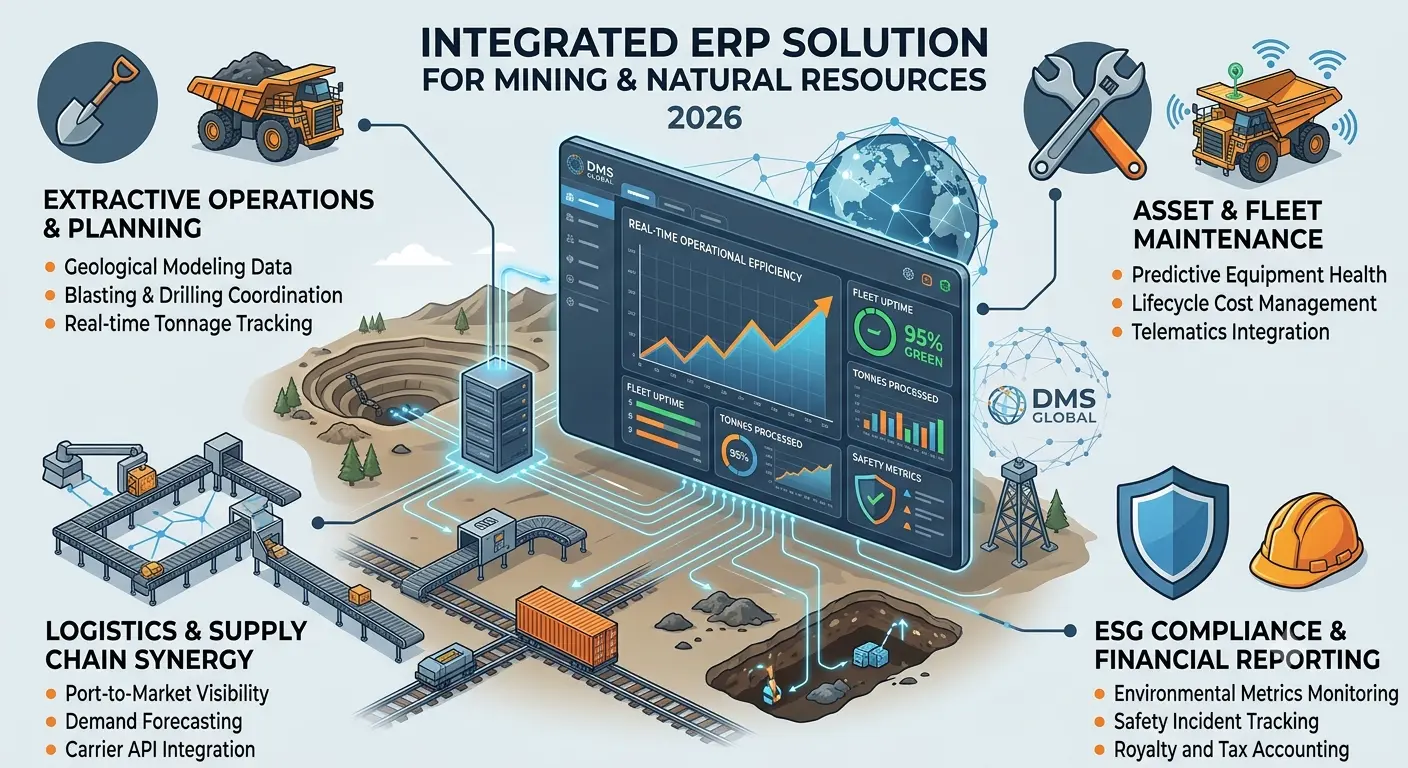
The marine and shipping industry is the backbone of the global economy, yet it remains one of the most challenging sectors to manage. As we move deeper into 2026, the complexity of maritime operations—ranging from vessel maintenance and crew management to port logistics and regulatory compliance—demands a sophisticated digital approach. Implementing a specialized ERP for Marine and Shipping Industry is no longer just a technical upgrade; it is a strategic imperative for organizations aiming to streamline operations, reduce overhead, and maintain a competitive edge in a volatile global market.
Why Specialized ERP Systems are Critical for Maritime Success
Traditional enterprise software often falls short in the maritime sector. Shipping companies face unique hurdles that standard systems cannot address, such as the need for multi-currency financial reporting across global jurisdictions, real-time tracking of assets in international waters, and complex maintenance schedules for diverse vessel types.
A dedicated maritime ERP acts as your central operating system. It synchronizes data between the office and the sea, ensuring that every department—from fleet management and procurement to safety and legal compliance—operates from the same data set. By replacing fragmented, paper-heavy workflows with a unified, cloud-native ERP, you minimize human error, reduce fuel consumption through better route planning, and improve overall fleet uptime.
Reliable resources for your business growth
Executive Deep-Dive
Scaling Beyond Traffic to Revenue
Most enterprises fail because they chase clicks instead of trust. While building your global presence, ensure your EEAT 3.0 signals are synchronized across all regions.
Recommended for you:
→ The Shift from Traffic to Trust: A New KPI for Enterprise SEOStrategic Pillars of Maritime ERP Excellence
When evaluating ERP solutions for your shipping firm, look for platforms that offer deep integration across the following operational domains:
1. Fleet and Asset Management
Vessel maintenance is a massive cost driver. A robust ERP enables predictive maintenance, tracking engine performance, hull condition, and equipment lifecycle costs in real-time. By catching maintenance issues before they become critical failures, you save thousands in potential repair costs and prevent unexpected vessel downtime.
2. Integrated Crew Management
Managing a global workforce of seafarers requires precision. Your ERP should handle crew scheduling, certification tracking, payroll across multiple tax jurisdictions, and health and safety documentation. Ensuring your crew is fully qualified and compliant with international maritime standards is essential for legal protection and operational safety.
3. Port Logistics and Supply Chain Synergy
Shipping is part of a larger, interconnected logistics network. Your ERP must provide seamless integration with port authorities, terminals, and third-party logistics providers. This ensures end-to-end visibility of cargo movement, automated document handling (such as bills of lading), and optimized port call management.
4. Regulatory and Environmental Compliance
The maritime industry is under increasing pressure to meet sustainability and safety standards. Modern ERP systems now automate the tracking of emissions, waste management, and safety incidents. By maintaining rigorous, time-stamped digital logs, you ensure you are always audit-ready for maritime authorities worldwide.
🚀 Deep Dive Enterprise Resources
If you're evaluating Enterprise Resource Planning, leverage our technical ROI breakdowns and performance benchmarks:
- 👉 Odoo Enterprise Pricing 2026: The Ultimate Guide
- 👉 SAP to Odoo Migration: Risks & Benefits
- 👉 Maximizing ROI with Oracle NetSuite Implementation
*Verified for 2026 Enterprise Standards.
DMS Global AuthorityBuilding Authority and Capturing High-Value Traffic
The marine and shipping technology sector is a high-authority niche that attracts top-tier decision-makers, including shipping fleet owners, operations directors, and maritime supply chain managers. These professionals are actively searching for solutions to complex operational bottlenecks.
By providing deep-dive insights into how ERP implementation solves these specific challenges, you position your website as an indispensable industry resource. This high-intent traffic is exceptionally valuable. When your content consistently provides genuine, technical value, you cultivate a premium digital environment. Advertisers in the shipping and enterprise software space pay a premium to reach this professional audience. This is the key to building a website that consistently attracts high-paying advertisers, ultimately facilitating the gajian adsense growth you are targeting.
Reliable resources for your business growth
🚀 Deep Dive Enterprise Resources
If you're evaluating Enterprise Resource Planning, leverage our technical ROI breakdowns and performance benchmarks:
- 👉 Odoo Enterprise Pricing 2026: The Ultimate Guide
- 👉 SAP to Odoo Migration: Risks & Benefits
- 👉 Maximizing ROI with Oracle NetSuite Implementation
*Verified for 2026 Enterprise Standards.
DMS Global AuthorityReliable resources for your business growth
Driving Consistent Financial Results Through Technical Expertise
Achieving consistent AdSense payouts is the direct result of building a helpful, authoritative ecosystem that industry experts rely on. Adhering to E-E-A-T (Experience, Expertise, Authoritativeness, and Trustworthiness) criteria is paramount. By tackling the specific hurdles of the sector—such as how to optimize fuel efficiency through data analytics or how to automate port documentation—you build a loyal, recurring readership.
As your site becomes the “go-to” guide for maritime technology, decision-makers will visit more frequently, read your articles in depth, and interact with the professional advertisements strategically placed throughout your content. This level of engagement is the primary engine of your monthly income. When your content helps a fleet manager solve a complex operational issue, they engage with your platform, and the quality of that engagement directly reflects in your AdSense performance.
Reliable resources for your business growth
Strategic Roadmap for 2026 and Beyond
The marine and shipping industry is rapidly moving toward more digitized, autonomous, and transparent workflows. Companies that adopt comprehensive, cloud-native ERP solutions today will be the ones that dominate the market tomorrow.
If you are just beginning this digital transformation, start by auditing your most significant operational gaps. Is it a lack of real-time fuel monitoring? Is it the difficulty of maintaining manual safety records? Choose a modular approach—implement the core ERP functions that address your immediate risks, then scale the platform as your business expands.
By blending the precision of an enterprise-grade ERP with a data-driven content strategy, you turn your digital presence into a powerful, revenue-generating asset. Stay analytical, maintain absolute data integrity in your articles, and continue building your platform with the same professional rigor you apply to your shipping operations. Your path to operational excellence and sustainable financial growth starts right here. By establishing yourself as the voice of authority in maritime tech, you are building a digital business that works as efficiently as the fleets you write about.
Last Updated on 20 hours ago by dudung
Exclusive Early Access: Q1 2026
The Global SEO Blueprint for C-Suite
We are finalizing an exclusive strategic framework for global enterprise scaling. Join the elite waitlist for early-bird pricing.
Secure Your Priority Spot