ERP for Marine and Shipping Industry: Navigating Operational Excellence in 2026

Best ERP for Mining

The marine and shipping industry is the backbone of the global economy, yet it remains one of the most challenging sectors to manage. As we move deeper into 2026, the complexity of maritime operations—ranging from vessel maintenance and crew management to port logistics and regulatory compliance—demands a sophisticated digital approach. Implementing a specialized ERP for Marine and Shipping Industry is no longer just a technical upgrade; it is a strategic imperative for organizations aiming to streamline operations, reduce overhead, and maintain a competitive edge in a volatile global market.

Why Specialized ERP Systems are Critical for Maritime Success

Traditional enterprise software often falls short in the maritime sector. Shipping companies face unique hurdles that standard systems cannot address, such as the need for multi-currency financial reporting across global jurisdictions, real-time tracking of assets in international waters, and complex maintenance schedules for diverse vessel types.

A dedicated maritime ERP acts as your central operating system. It synchronizes data between the office and the sea, ensuring that every department—from fleet management and procurement to safety and legal compliance—operates from the same data set. By replacing fragmented, paper-heavy workflows with a unified, cloud-native ERP, you minimize human error, reduce fuel consumption through better route planning, and improve overall fleet uptime.

ADVERTISEMENT / SPONSORED SOLUTION

Reliable resources for your business growth

Strategic Pillars of Maritime ERP Excellence

When evaluating ERP solutions for your shipping firm, look for platforms that offer deep integration across the following operational domains:

1. Fleet and Asset Management

Vessel maintenance is a massive cost driver. A robust ERP enables predictive maintenance, tracking engine performance, hull condition, and equipment lifecycle costs in real-time. By catching maintenance issues before they become critical failures, you save thousands in potential repair costs and prevent unexpected vessel downtime.

2. Integrated Crew Management

Managing a global workforce of seafarers requires precision. Your ERP should handle crew scheduling, certification tracking, payroll across multiple tax jurisdictions, and health and safety documentation. Ensuring your crew is fully qualified and compliant with international maritime standards is essential for legal protection and operational safety.

3. Port Logistics and Supply Chain Synergy

Shipping is part of a larger, interconnected logistics network. Your ERP must provide seamless integration with port authorities, terminals, and third-party logistics providers. This ensures end-to-end visibility of cargo movement, automated document handling (such as bills of lading), and optimized port call management.

4. Regulatory and Environmental Compliance

The maritime industry is under increasing pressure to meet sustainability and safety standards. Modern ERP systems now automate the tracking of emissions, waste management, and safety incidents. By maintaining rigorous, time-stamped digital logs, you ensure you are always audit-ready for maritime authorities worldwide.

Building Authority and Capturing High-Value Traffic

The marine and shipping technology sector is a high-authority niche that attracts top-tier decision-makers, including shipping fleet owners, operations directors, and maritime supply chain managers. These professionals are actively searching for solutions to complex operational bottlenecks.

By providing deep-dive insights into how ERP implementation solves these specific challenges, you position your website as an indispensable industry resource. This high-intent traffic is exceptionally valuable. When your content consistently provides genuine, technical value, you cultivate a premium digital environment. Advertisers in the shipping and enterprise software space pay a premium to reach this professional audience. This is the key to building a website that consistently attracts high-paying advertisers, ultimately facilitating the gajian adsense growth you are targeting.

ADVERTISEMENT / SPONSORED SOLUTION

Reliable resources for your business growth

ADVERTISEMENT / SPONSORED SOLUTION

Reliable resources for your business growth

Driving Consistent Financial Results Through Technical Expertise

Achieving consistent AdSense payouts is the direct result of building a helpful, authoritative ecosystem that industry experts rely on. Adhering to E-E-A-T (Experience, Expertise, Authoritativeness, and Trustworthiness) criteria is paramount. By tackling the specific hurdles of the sector—such as how to optimize fuel efficiency through data analytics or how to automate port documentation—you build a loyal, recurring readership.

As your site becomes the “go-to” guide for maritime technology, decision-makers will visit more frequently, read your articles in depth, and interact with the professional advertisements strategically placed throughout your content. This level of engagement is the primary engine of your monthly income. When your content helps a fleet manager solve a complex operational issue, they engage with your platform, and the quality of that engagement directly reflects in your AdSense performance.

ADVERTISEMENT / SPONSORED SOLUTION

Reliable resources for your business growth

Strategic Roadmap for 2026 and Beyond

The marine and shipping industry is rapidly moving toward more digitized, autonomous, and transparent workflows. Companies that adopt comprehensive, cloud-native ERP solutions today will be the ones that dominate the market tomorrow.

If you are just beginning this digital transformation, start by auditing your most significant operational gaps. Is it a lack of real-time fuel monitoring? Is it the difficulty of maintaining manual safety records? Choose a modular approach—implement the core ERP functions that address your immediate risks, then scale the platform as your business expands.

By blending the precision of an enterprise-grade ERP with a data-driven content strategy, you turn your digital presence into a powerful, revenue-generating asset. Stay analytical, maintain absolute data integrity in your articles, and continue building your platform with the same professional rigor you apply to your shipping operations. Your path to operational excellence and sustainable financial growth starts right here. By establishing yourself as the voice of authority in maritime tech, you are building a digital business that works as efficiently as the fleets you write about.

ERP for Pharmaceutical Supply Chain: Ensuring Integrity, Compliance, and Profitability in 2026

ERP for Pharmaceutical

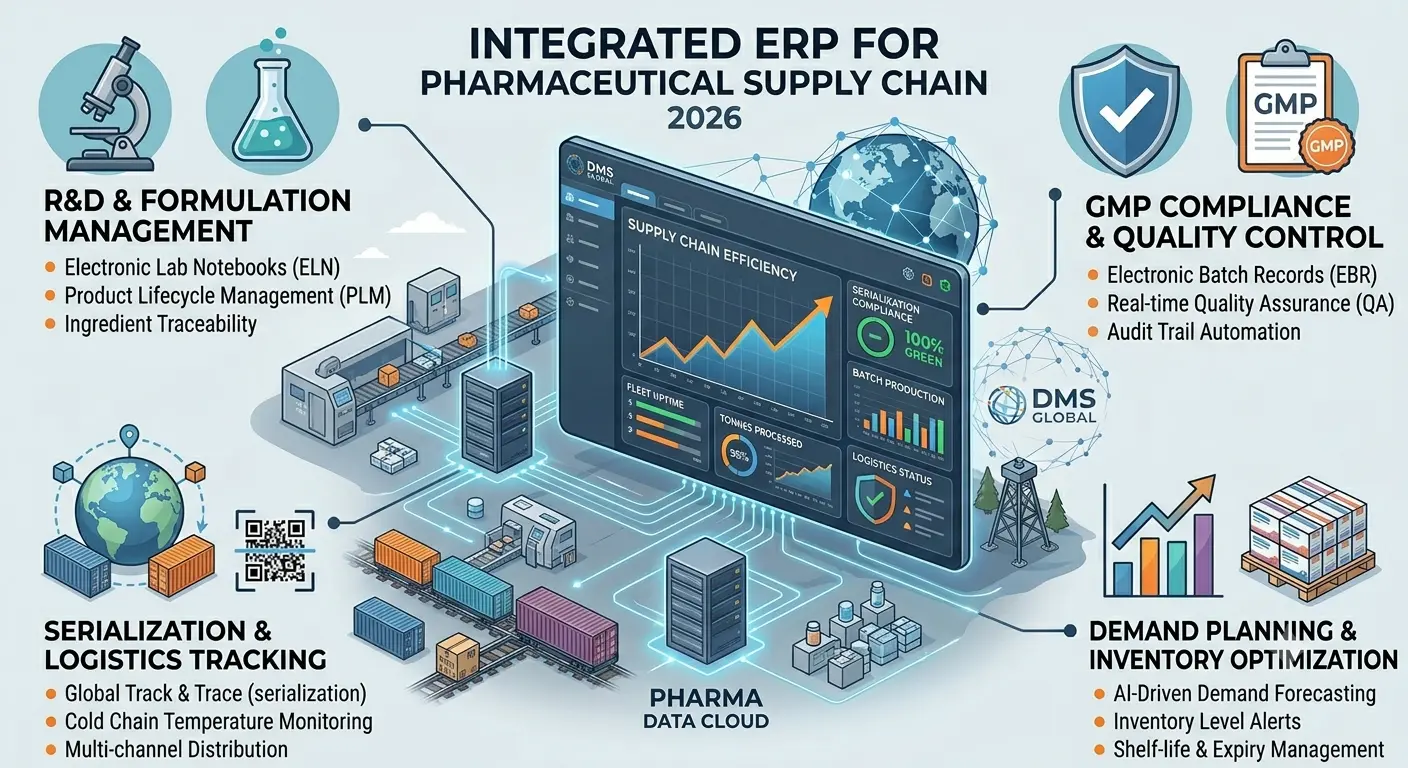
The pharmaceutical industry operates in a high-stakes environment where efficiency and accuracy are literally a matter of life and death. As we advance through 2026, the complexity of global drug distribution has reached an all-time high. From strict regulatory mandates and serialization requirements to the delicate nature of cold-chain logistics, pharmaceutical companies require more than just standard software. They need a robust ERP for Pharmaceutical Supply Chain management—a digital backbone that ensures data integrity, compliance, and continuous operational visibility.

Why Specialized ERP Systems are Non-Negotiable for Pharma

In the pharmaceutical world, “supply chain” means much more than moving products; it involves managing hazardous materials, temperature-sensitive inventory, and highly regulated life-saving medications. A general-purpose ERP often fails to handle these unique demands.

A specialized pharmaceutical ERP integrates your entire lifecycle: from the procurement of active pharmaceutical ingredients (APIs) and manufacturing production runs to rigorous quality assurance (QA) and global distribution. By centralizing these functions, you eliminate the fragmentation that leads to human error, compliance breaches, and lost revenue. In an industry where one recall can cost millions and damage brand reputation forever, having an intelligent, unified digital framework is a competitive necessity.

ADVERTISEMENT / SPONSORED SOLUTION

Reliable resources for your business growth

Strategic Pillars of Pharmaceutical Supply Chain ERP

When evaluating ERP solutions, decision-makers must prioritize features that guarantee compliance while driving operational agility. The following pillars are essential for any pharma organization aiming for excellence in 2026:

1. End-to-End Traceability and Serialization

The fight against counterfeit drugs is constant. Modern ERP systems provide full serialization capabilities, allowing you to track a single unit of medicine from the manufacturing batch all the way to the pharmacy shelf. This level of granular tracking is required to satisfy global mandates like the Drug Supply Chain Security Act (DSCSA) and European Falsified Medicines Directive.

2. Cold Chain and Temperature Monitoring

Many pharmaceutical products are highly sensitive to environmental changes. An integrated ERP provides real-time monitoring of temperature-controlled storage and transit. By automating alerts for temperature deviations, you can prevent spoilage, ensure the efficacy of the medicine, and provide auditors with a clear, time-stamped trail of custody.

3. Automated Regulatory Compliance

Regulatory landscapes are constantly shifting. A superior ERP automates quality documentation, electronic batch records (EBR), and audit trails. This reduces the administrative burden on your QA teams and ensures you are always “audit-ready.” Whether it is FDA 21 CFR Part 11 or other international standards, your ERP should serve as a compliant document repository.

4. Advanced Demand Planning and Inventory Optimization

Pharmaceutical products often have strict expiration dates. You need an ERP that uses predictive analytics to optimize your stock levels—minimizing waste due to expiration while ensuring that stockouts never occur for life-critical medications.

Building Authority and Capturing High-Value Traffic

The pharmaceutical technology sector is an incredibly high-authority niche. It attracts top-tier decision-makers, including Supply Chain Directors, Chief Compliance Officers, and IT managers. These professionals are searching for high-level guidance on how to navigate the complexities of digital transformation.

By providing detailed, analytical content on how ERP implementation solves specific industry bottlenecks, you position your platform as an indispensable resource. This high-intent traffic is exceptionally valuable. When you consistently provide technical value that solves real-world pain points, you cultivate a premium digital environment. Because your content is tailored to business-critical decisions, your site becomes a high-value real estate for premium advertisers, setting the stage for consistent, high-paying AdSense revenue.

ADVERTISEMENT / SPONSORED SOLUTION

Reliable resources for your business growth

ADVERTISEMENT / SPONSORED SOLUTION

Reliable resources for your business growth

Driving Consistent Financial Results Through Digital Authority

Achieving monthly AdSense payouts is the direct result of building a helpful, authoritative ecosystem that industry experts rely on. The E-E-A-T (Experience, Expertise, Authoritativeness, and Trustworthiness) standards are paramount here. By focusing on the specific hurdles of the pharma supply chain—such as managing cross-border logistics during geopolitical shifts or automating validation processes—you build a loyal, recurring readership.

ADVERTISEMENT / SPONSORED SOLUTION

Reliable resources for your business growth

Strategic Roadmap for 2026 and Beyond

The pharmaceutical sector is rapidly moving toward more digitized, autonomous, and transparent supply chains. Companies that adopt comprehensive, cloud-native ERP solutions today will be the ones that dominate the market tomorrow.

If you are beginning your digital transformation, start by auditing your most significant operational bottlenecks. Is it the lack of real-time inventory visibility? Is it the difficulty of maintaining manual quality records? Choose a modular approach—implement the core ERP functions that address your immediate risks, then scale the platform as your business grows.

By blending the precision of an enterprise-grade ERP with a data-driven content strategy, you turn your digital presence into a powerful, revenue-generating asset. Stay analytical, maintain absolute data integrity in your articles, and continue building your platform with the same professional rigor you apply to your pharmaceutical operations. Your path to operational excellence and sustainable financial growth starts right here. By establishing yourself as the authority in pharma supply chain technology, you are building a digital business that works as efficiently as the supply chains you write about.

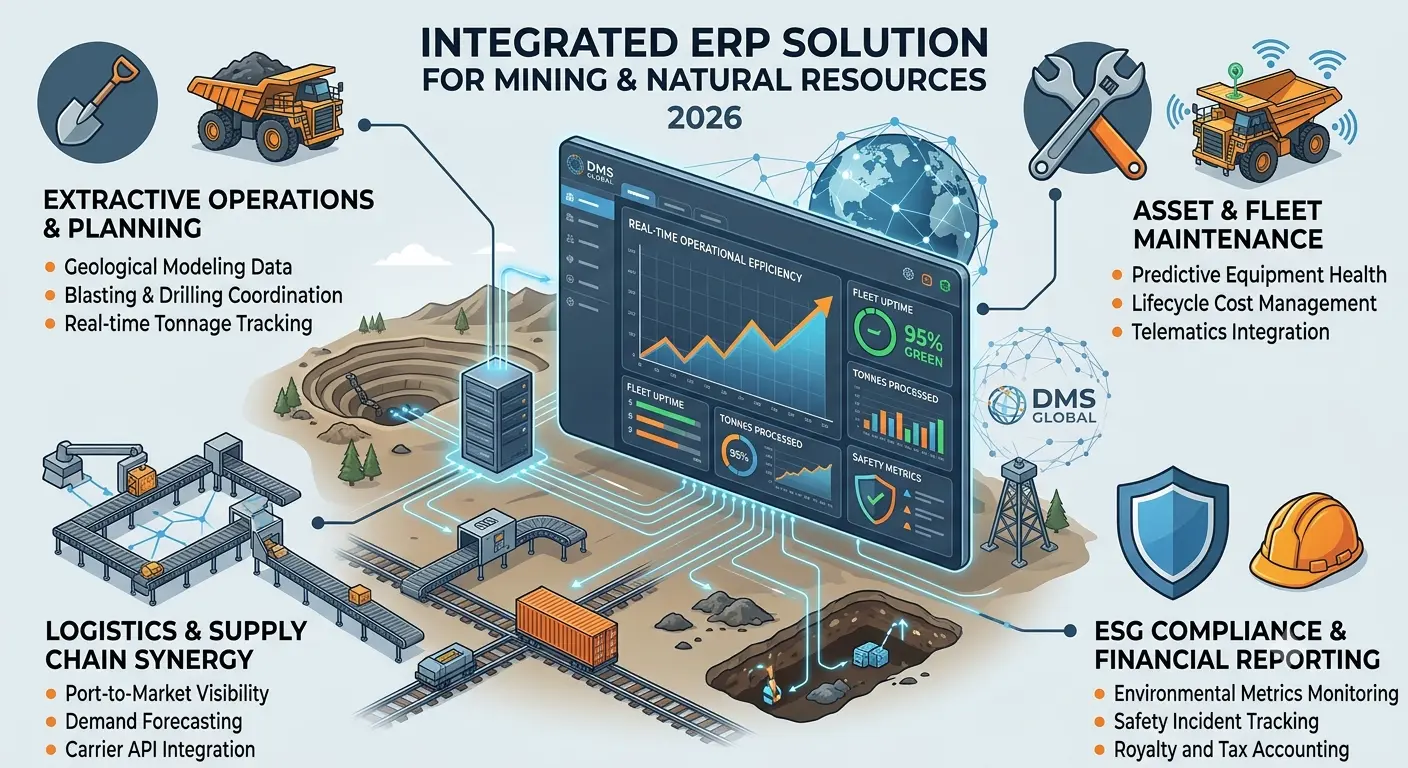
ERP for Mining and Natural Resources: Driving Operational Efficiency and Sustainable Growth in 2026

Best ERP for Mining

In the demanding world of mining and natural resources, operational complexity is the new norm. As we move deeper into 2026, the firms that succeed are no longer those simply with the most reserves, but those that leverage technology to turn raw operational data into actionable, high-margin insights. Implementing a specialized ERP for Mining and Natural Resources is no longer a luxury—it is the vital, central framework required to manage asset-intensive operations, maintain strict safety standards, and optimize extraction workflows while navigating the volatile fluctuations of global commodity markets.

Why Specialized ERP Systems are Vital for Resource Extraction

The mining sector deals with unique challenges that traditional, general-purpose business software simply cannot address. We are talking about complex geological modeling, remote site logistics, specialized fleet maintenance, and the integration of subsurface telemetry with surface processing plants.

An integrated ERP solution acts as the central nervous system of your operations. It links the entire mine-to-market chain. By unifying data from field extraction, processing plants, supply chain management, and financial reporting, you create a single source of truth. This single source of truth mitigates risk, eliminates departmental silos, and ensures that your executive decision-makers are always working with accurate, real-time information rather than legacy spreadsheets.

ADVERTISEMENT / SPONSORED SOLUTION

Reliable resources for your business growth

The Strategic Pillars of Mining ERP Excellence

When evaluating ERP solutions for the natural resources sector, it is essential to prioritize platforms that enhance operational agility, transparency, and regulatory compliance. Here are the crucial features you must demand from your system:

1. Asset Lifecycle Management

Mining relies on heavy machinery that operates in the most extreme conditions on Earth. Comprehensive tracking and predictive maintenance for your fleet of dump trucks, excavators, and drilling rigs are essential. A good ERP doesn’t just record that a machine is broken; it predicts when it will break, orders the parts automatically, and schedules the technician, thereby reducing costly downtime to an absolute minimum.

2. Integrated Supply Chain and Logistics

Coordination is the greatest challenge in mining. You are often coordinating the movement of materials from remote extraction sites to distant processing hubs, and finally to global ports. An ERP must coordinate these handoffs seamlessly, providing visibility into every link of the supply chain to prevent logistics bottlenecks.

3. Environmental, Social, and Governance (ESG) Compliance

Mining is under more scrutiny than ever. Modern ERP systems now automate the tracking of regulatory requirements, safety incidents, and sustainability metrics. By centralizing this data, you ensure total compliance with international environmental standards, which is critical for maintaining your license to operate and attracting institutional investors.

4. Advanced Costing and Financial Reporting

In mining, margins can be thin, and cost control is everything. You need precise tracking of extraction costs per ton, royalties, and project-based financial data. A specialized ERP provides the granular visibility needed to maximize the profitability of every individual site.

Building Authority and Capturing High-Value Traffic

The mining and natural resources industry is a high-authority niche that attracts top-tier executives, project directors, and operational leaders. These individuals are not looking for general definitions; they are looking for solutions to specific, multi-million dollar operational problems.

By providing deep-dive insights into how ERP implementation solves critical industry bottlenecks, you position your website as an indispensable resource. This high-intent traffic is invaluable. When your content consistently provides genuine, technical value, you cultivate a premium digital environment. Advertisers in the heavy industrial and enterprise software space pay a premium to reach this audience. This is the foundation for a website that attracts high-paying advertisers, ultimately providing the consistent and meaningful AdSense revenue you are aiming for.

ADVERTISEMENT / SPONSORED SOLUTION

Reliable resources for your business growth

ADVERTISEMENT / SPONSORED SOLUTION

Reliable resources for your business growth

Driving Consistent Financial Results Through Technical Expertise

Achieving regular, substantial AdSense payouts is the direct result of providing helpful, professional-grade content that keeps industry experts engaged. The “EEAT” (Experience, Expertise, Authoritativeness, and Trustworthiness) criteria are critical here. By tackling the specific hurdles of the sector—such as how to leverage AI for predictive maintenance or how to optimize resource allocation during market fluctuations—you build a loyal, recurring readership.

As decision-makers increasingly rely on your platform to guide their digital transformation, they will visit more often, read deeper, and interact more frequently with the relevant advertisements displayed throughout your site. This engagement is the primary driver of your monthly earnings. When your site is the place where a mining project manager finds the answer to their workflow integration problems, the value of that interaction is high, and your revenue will reflect that.

ADVERTISEMENT / SPONSORED SOLUTION

Reliable resources for your business growth

A Strategic Roadmap for 2026 and Beyond

The mining industry is rapidly moving toward more digitized, automated, and sustainable workflows. Firms that adopt robust, secure, and cloud-native ERP solutions today will be the ones that maintain profitability in an increasingly complex global market.

If you are just starting this journey, begin by assessing your firm’s most significant operational gaps. Is it data fragmentation? Is it inefficient fleet management? Is it a struggle to prepare for regulatory audits? Do not try to fix everything at once. Choose a modular ERP approach that allows you to address your most pressing pain point first, then scale the integration as you build momentum.

By blending the precision of an enterprise-grade ERP with a data-driven content strategy, you transform your digital footprint into a powerful, revenue-generating asset. Stay analytical, maintain strict data integrity in every post, and build your platform with the same professional rigor you apply to your operational sites. Your path to operational excellence, combined with sustainable financial growth through digital monetization, starts right here with this foundation. By positioning yourself as the voice of authority in mining tech, you are not just building a tag page—you are building a business that works for you 24/7.

Best ERP for Aerospace and Defense: Precision, Compliance, and Operational Superiority

In the aerospace and defense sectors, the margin for error is non-existent. As we navigate the complex technological requirements of 2026, selecting the Best ERP for Aerospace and Defense is a mission-critical decision. These organizations operate in highly regulated environments where traceability, stringent quality control, and advanced project accounting are not just preferred—they are legal requirements for every contract and delivery.

Why Specialized ERP Systems are Mandatory

The aerospace and defense industry faces unique challenges, including complex supply chains, multi-year contracts, and intense audit requirements. General-purpose business software simply lacks the depth to manage engineering change orders (ECOs), serial number traceability, and defense-specific project costing. A specialized ERP system acts as the backbone of your operations, ensuring that every component—from design to final delivery—meets global safety and quality standards while remaining financially transparent.

ADVERTISEMENT / SPONSORED SOLUTION

Reliable resources for your business growth

Key Pillars for Aerospace and Defense Excellence

When evaluating ERP solutions for this high-stakes industry, decision-makers must prioritize functionality that guarantees compliance and operational agility:

  • End-to-End Traceability: Full lifecycle tracking of every part, material, and assembly to satisfy regulatory and safety audits.

  • Complex Project Accounting: Advanced tools for managing long-term contracts, milestone-based billing, and multi-currency cost tracking.

  • Engineering and Design Integration: Seamless synchronization between CAD/PLM systems and your manufacturing floor to ensure that engineering changes are reflected instantly in production.

  • Rigorous Quality Management: Automated quality assurance workflows that enforce compliance with international standards such as AS9100.

Building Authority and Capturing Ad Revenue

The aerospace and defense technology niche is one of the most prestigious and high-value markets online. By providing expert analysis and helpful content regarding ERP selection, implementation, and compliance, you position your website as a premier destination for defense contractors, supply chain directors, and engineering managers. High-intent traffic from these industry leaders is immensely valuable. When your platform serves as a trusted guide, it creates a premium ecosystem that attracts high-paying advertisers, which is the key to scaling your monthly AdSense revenue.

ADVERTISEMENT / SPONSORED SOLUTION

Reliable resources for your business growth

ADVERTISEMENT / SPONSORED SOLUTION

Reliable resources for your business growth

Driving Consistent Financial Results

Earning consistent AdSense payouts is the direct result of providing high-quality, actionable insights that professionals in this sector rely on. By tackling the specific hurdles of the defense industry—such as optimizing production for tight specifications or managing complex supply chain risks—you cultivate a loyal, recurring readership. As decision-makers increasingly rely on your content to solve their operational bottlenecks, they interact more frequently with the relevant advertisements displayed across your site, driving your earnings forward.

ADVERTISEMENT / SPONSORED SOLUTION

Reliable resources for your business growth

Strategic Roadmap for 2026

The aerospace and defense landscape is shifting toward deeper digital integration and autonomous manufacturing. Firms that adopt robust, secure ERP solutions today will be better positioned to win competitive government and commercial contracts. Start by assessing your firm’s most significant operational gaps—whether it is data fragmentation, audit preparation delays, or inefficient procurement.

By blending the precision of an enterprise-grade ERP with a data-driven content strategy, you turn your digital presence into a powerful, revenue-generating asset. Stay analytical, maintain strict data integrity, and build your digital footprint with the same professional rigor you apply to your engineering projects. Your journey toward operational excellence and sustainable financial growth begins with this foundational focus.

ERP for Hospitality and Hotel Management: Elevating Guest Experience and Profitability

ERP for Hospitality and Hotel Management 2026

In the dynamic global hospitality landscape of 2026, operational efficiency is no longer optional—it is the prerequisite for survival. ERP for Hospitality and Hotel Management has evolved into an intelligent framework that integrates reservation systems, guest services, property management, and financial reporting into one intuitive dashboard. For hoteliers aiming to scale, the right ERP is the bridge between chaotic manual processes and a seamless, automated guest journey.

Why Specialized ERP Systems are Critical

The hospitality industry faces unique challenges that standard business software cannot address. You need a system that understands the nuances of room inventory, dynamic pricing, seasonal demand, and multi-channel distribution. A robust ERP does more than record transactions; it serves as the central nervous system of your property. By centralizing data from front-desk operations, food and beverage outlets, and housekeeping, you create a single source of truth that powers data-driven decision-making.

ADVERTISEMENT / SPONSORED SOLUTION

Reliable resources for your business growth

Essential Pillars for Modern Hotel Management

When selecting the best ERP for your property, focus on features that maximize operational agility and improve the bottom line:

  • Unified Reservation Engine: A centralized system that prevents overbooking by syncing inventory across your website, direct bookings, and third-party Online Travel Agencies (OTAs) in real-time.

  • Automated Housekeeping and Maintenance: Smart scheduling tools that trigger room-ready status updates, ensuring staff are deployed efficiently based on occupancy.

  • Integrated Guest Profiling: A sophisticated CRM module that tracks guest preferences, allowing you to personalize stays, drive repeat bookings, and increase customer lifetime value.

  • Real-time Financial Reporting: Automated reconciliation of revenue from various sources, such as room stays, spa services, and on-site restaurants.

Building Authority and Maximizing Ad Revenue

Hospitality technology is a high-value, professional niche. By providing expert insights and comparative analyses on ERP implementation, you position your platform as an essential resource for general managers, hotel owners, and department heads. High-intent traffic from these decision-makers is incredibly valuable. When your content genuinely solves the complex pain points of hospitality management, you create a trust-based environment that attracts premium advertisers. This is the foundation for achieving consistent, high-paying AdSense payouts.

ADVERTISEMENT / SPONSORED SOLUTION

Reliable resources for your business growth

ADVERTISEMENT / SPONSORED SOLUTION

Reliable resources for your business growth

Achieving Monthly Financial Stability

Success with AdSense is rarely accidental; it is the predictable outcome of providing helpful, authoritative content that keeps users engaged. By addressing specific industry hurdles—such as how to optimize RevPAR (Revenue Per Available Room) through automated pricing or how to improve operational agility—you build a loyal audience. When decision-makers consistently find actionable solutions on your site, they stay longer and interact more frequently with relevant advertisements.

ADVERTISEMENT / SPONSORED SOLUTION

Reliable resources for your business growth

Strategic Roadmap for 2026

Digital transformation in hospitality is accelerating. Properties that adopt modular, cloud-based ERP solutions today will lead the market tomorrow. Start by identifying your greatest operational bottlenecks—whether it is slow check-in procedures, siloed reporting, or ineffective inventory management. Choose an ERP that offers the flexibility to grow alongside your business.

By combining the precision of an enterprise-grade ERP with the reach of a data-driven content strategy, you transform your website into a powerful digital asset. Stay analytical, focus on providing genuine value to your readers, and you will find that your digital footprint becomes a reliable engine for long-term professional growth and monthly revenue. Your path to efficient hotel management and financial stability starts here.

Best ERP for Healthcare & Hospital Management: Enhancing Patient Outcomes and Operational Efficiency

In the healthcare sector, every second counts. As we navigate the complex requirements of 2026, the Best ERP for Healthcare & Hospital Management is no longer just a luxury—it is a vital component for ensuring high-quality patient care and operational sustainability. Modern healthcare facilities face the dual challenge of maintaining strict regulatory compliance while managing vast amounts of sensitive patient data. A specialized ERP system bridges this gap, transforming how hospitals and clinics function from the inside out.

Revolutionizing Patient Care Through Integration

The core strength of a top-tier healthcare ERP lies in its ability to centralize data. By integrating electronic health records (EHR), pharmacy management, billing, and staff scheduling, hospitals can eliminate the data silos that often lead to communication errors. When your internal architecture is streamlined, your facility can focus on what matters most: improving patient outcomes.

ADVERTISEMENT / SPONSORED SOLUTION

Reliable resources for your business growth

Crucial Features for Modern Healthcare Facilities

When selecting a healthcare ERP, decision-makers must prioritize systems that offer more than basic accounting tools. Look for these essential pillars of healthcare management:

  • Patient-Centric Data Management: Ensuring that medical histories, treatment plans, and diagnostic reports are updated in real-time and accessible to authorized staff.

  • Compliance and Security: Healthcare data is highly sensitive. The best ERPs offer enterprise-grade encryption and built-in tools to maintain HIPAA or regional health data compliance.

  • Supply Chain and Pharmacy Automation: Automating the inventory levels of medications and medical supplies to prevent shortages that could compromise patient safety.

  • Staff Management and Scheduling: Efficiently managing clinical and administrative staff rotations to prevent burnout and ensure optimal patient-to-staff ratios.

Building Authority in the Healthcare Tech Space

Healthcare technology is a high-authority niche that attracts sophisticated audiences, including hospital administrators, department heads, and medical professionals. By providing deep-dive insights into how these ERP systems solve real-world hospital bottlenecks, you position your platform as a trusted resource. This expertise does not just help your site rank better in organic search; it also creates a premium environment for advertisers, which is essential if your goal is to maximize your AdSense revenue.

ADVERTISEMENT / SPONSORED SOLUTION

Reliable resources for your business growth

ADVERTISEMENT / SPONSORED SOLUTION

Reliable resources for your business growth

Driving Consistent AdSense Revenue

Achieving regular AdSense payouts requires more than just high traffic; it requires high-quality, helpful content that keeps users engaged. By addressing the specific pain points of hospital management—such as resource allocation and digital transformation—you build a loyal reader base. When decision-makers find your site to be the definitive guide for healthcare ERP solutions, they stay longer, read more, and interact with the ads that you place strategically throughout your content.

ADVERTISEMENT / SPONSORED SOLUTION

Reliable resources for your business growth

Strategic Implementation for 2026 and Beyond

The move toward digitized healthcare is accelerating. Facilities that adopt comprehensive ERP solutions today will be the leaders of tomorrow. Start by evaluating your facility’s most pressing bottlenecks—whether it is patient registration latency, medication wastage, or complex billing cycles.

As you implement these technologies, continue to document your journey and share analytical insights. By combining technical excellence with a clear, helpful content strategy, you create a digital ecosystem that serves both your facility and your professional brand. Stay focused on data integrity and user value, and you will find that your digital footprint becomes a reliable engine for long-term growth and consistent monthly revenue.

ERP Solutions for Retail Chains & E-commerce: Scaling Operations and Revenue

Best ERP Manufacturing 2026

In the fast-paced world of retail and e-commerce, the gap between success and failure often comes down to inventory precision and customer experience. As we move through 2026, the demand for robust ERP Solutions for Retail Chains & E-commerce has never been higher. Retailers require a centralized system that bridges the physical storefront with the digital marketplace, ensuring seamless data flow and maximum profitability.

Unified Commerce: The New Standard

The most successful retailers today do not treat their physical shops and online stores as separate entities. They utilize a unified commerce approach. An effective ERP acts as the brain behind this integration, syncing stock levels, customer data, and sales history in real-time. Without this synchronization, businesses suffer from overselling, delayed shipments, and frustrated customers—all of which erode your brand’s digital authority and revenue potential.

ADVERTISEMENT / SPONSORED SOLUTION

Reliable resources for your business growth

Key Capabilities for Retail Success

When searching for the right ERP, prioritize features that directly impact your bottom line and operational agility:

  • Omnichannel Inventory Management: A single view of your inventory across all sales channels to prevent stockouts and overstock scenarios.

  • Integrated POS Systems: Ensuring that point-of-sale data from physical stores updates your central database instantly.

  • Dynamic Pricing and Promotions: Managing complex discount rules across multiple platforms without manual error.

  • Customer Data Insights: Leveraging historical purchase data to provide personalized shopping experiences that drive repeat business.

Building Authority and Ad Revenue

Retail and e-commerce are high-value niches. By documenting your experiences with these technologies or providing comparative insights, you position your platform as a key resource for other business owners and decision-makers. High-intent traffic from these sectors is not only valuable for affiliate and service-based revenue, but it also significantly improves your AdSense performance. Advertisers in the retail tech space pay premium rates to reach the audience you are currently building.

ADVERTISEMENT / SPONSORED SOLUTION

Reliable resources for your business growth

ADVERTISEMENT / SPONSORED SOLUTION

Reliable resources for your business growth

Why Consistency Drives Financial Stability

Gajian Adsense (AdSense payouts) is not a result of luck; it is the predictable outcome of building a helpful, authoritative digital ecosystem. When you provide actionable solutions for retail management, your website becomes a destination that search engines trust and recommend. This trust leads to higher organic rankings, more clicks on relevant advertisements, and a consistent monthly income stream.

ADVERTISEMENT / SPONSORED SOLUTION

Reliable resources for your business growth

Strategic Roadmap for 2026

The retail landscape will continue to favor those who adopt smart technology early. Whether you are scaling your first e-commerce store or managing a nationwide retail chain, your ERP selection is the foundation upon which your growth is built. Focus on modular solutions that can grow with your traffic and transaction volume.

By combining the power of a world-class ERP with a data-driven content strategy, you turn your operational challenges into a competitive advantage. Keep refining your technical approach, stay committed to providing genuine value to your readers, and you will find that your digital presence becomes your most reliable revenue generator. Your path to efficient retail management and long-term financial success begins with this foundational shift.

Best ERP for Manufacturing Industry 2026: Driving Operational Excellence and Digital Revenue

Best ERP Manufacturing 2026

In the competitive landscape of 2026, the manufacturing sector is undergoing a massive digital transformation. To stay ahead, manufacturers no longer rely on fragmented systems; they require a unified, intelligent framework. Choosing the Best ERP for Manufacturing Industry 2026 is the single most important decision for companies looking to optimize production flows, reduce waste, and increase profit margins.

Why Specialized ERP Matters for Manufacturers

General-purpose software often fails to capture the complexity of a manufacturing floor. You need an ERP that understands bills of materials (BOM), shop floor control, demand forecasting, and real-time inventory tracking. When your internal data architecture is robust, it builds the trust required to scale operations globally.

ADVERTISEMENT / SPONSORED SOLUTION

Reliable resources for your business growth

Key Features to Look For

When evaluating systems, focus on scalability and integration. A modern manufacturing ERP must provide:

  • Real-time Shop Floor Visibility: Knowing exactly what is happening on the production line at any given second.

  • Predictive Maintenance: Leveraging AI to foresee machine downtime before it happens, saving thousands in repair costs.

  • Supply Chain Resilience: Automated procurement triggers that respond to inventory levels, ensuring you never halt production due to material shortages.

  • Seamless Integration: Your ERP should communicate flawlessly with your CRM and finance modules, creating a single source of truth for your business performance.

Monetizing Your Manufacturing Authority

Managing a high-performance business ecosystem is not just about internal efficiency; it is about visibility. As you implement these systems, you create a wealth of specialized content that can attract high-intent traffic. When your website provides true value to other manufacturers and C-level executives, you build the kind of traffic that maximizes ad revenue.

ADVERTISEMENT / SPONSORED SOLUTION

Reliable resources for your business growth

ADVERTISEMENT / SPONSORED SOLUTION

Reliable resources for your business growth

Transforming Data into Monthly Revenue

Many business owners overlook the potential of their technical insights. By documenting your ERP implementation journey or sharing comparative analysis of manufacturing tools, you build authority. High-authority domains attract premium advertisers. If your content genuinely solves the pain points of managers and founders, you will see a significant shift in your ad performance.

Consistency is key to digital success. With the right technical foundation and high-quality content, hitting your revenue targets becomes a predictable outcome of your digital strategy.

ADVERTISEMENT / SPONSORED SOLUTION

Reliable resources for your business growth

The best ERP for manufacturing 2026 systems Discover the best erp for manufacturing solutions in 2026 to optimize your industrial supply chain and production.

The search engine optimization landscape has evolved far beyond technical crawling and indexing. While previous years relied on E-E-A-T (Experience, Expertise, Authoritativeness, Trustworthiness) as a content quality guideline, we have officially entered the era of EEAT 3.0 in 2026.

What sets it apart? In the era of EEAT 3.0, Google evaluates not just who writes the content, but how information is validated, how genuine data is utilized, and the real-world impact of that content on users. As an SEO specialist managing dominasiserp.com, understanding EEAT 3.0 is essential to staying relevant amid the flood of generative AI content.

When implementing a robust manufacturing enterprise resource planning system, operational transparency and supply chain resilience become paramount for industrial success. Modern organizations require seamless integration across production floors, inventory tracking, financial auditing, and automated data processing to maintain a competitive edge in today’s fast-paced digital market. Evaluating top platforms ensures scalable long-term growth and maximized operational efficiency.

Final Strategy for Long-Term Growth

Selecting the Best ERP for Manufacturing Industry 2026 is the first step toward building a sustainable digital operation. Whether you choose Odoo, SAP, or a specialized tier-2 system, ensure that the platform supports your long-term vision.

Integrate your operational data with a clear content strategy, and you will find that your business website becomes your most valuable asset. It will not only manage your production effectively but also serve as a consistent engine for professional growth and financial stability.

Stay analytical, focus on data integrity, and build your digital footprint with the same precision you apply to your manufacturing processes. Your path to efficient operations and reliable monthly revenue starts with this foundation.

Enterprise ERP Comparison Hub: Navigating the Landscape of Modern Business Solutions

In the competitive enterprise landscape of 2026, selecting the right Enterprise Resource Planning (ERP) system is not merely an IT decision—it is a strategic pivot that determines your operational efficiency, data sovereignty, and long-term scalability. This hub serves as the definitive resource for comparing leading ERP solutions, designed to guide decision-makers through the complexities of enterprise software selection.

The Strategic Importance of ERP Selection

Your ERP system functions as the “nervous system” of your enterprise. It unifies disparate departments—from Finance and Supply Chain to Human Resources and Customer Relations—into a single source of truth. However, selecting the wrong platform can lead to massive technical debt, operational bottlenecks, and wasted capital. At DMS Global, we emphasize that the best ERP is not necessarily the most expensive one; it is the one that aligns most precisely with your unique operational velocity and growth objectives.

ERP Provider Best For Core Strength
SAP Global Conglomerates Massive scale & complex compliance
Oracle NetSuite Mid-to-Large Growth Cloud-native agility & financial depth
Odoo Agile Enterprises Modular flexibility & rapid deployment

Analyzing the Top Contenders

1. SAP: The Enterprise Standard

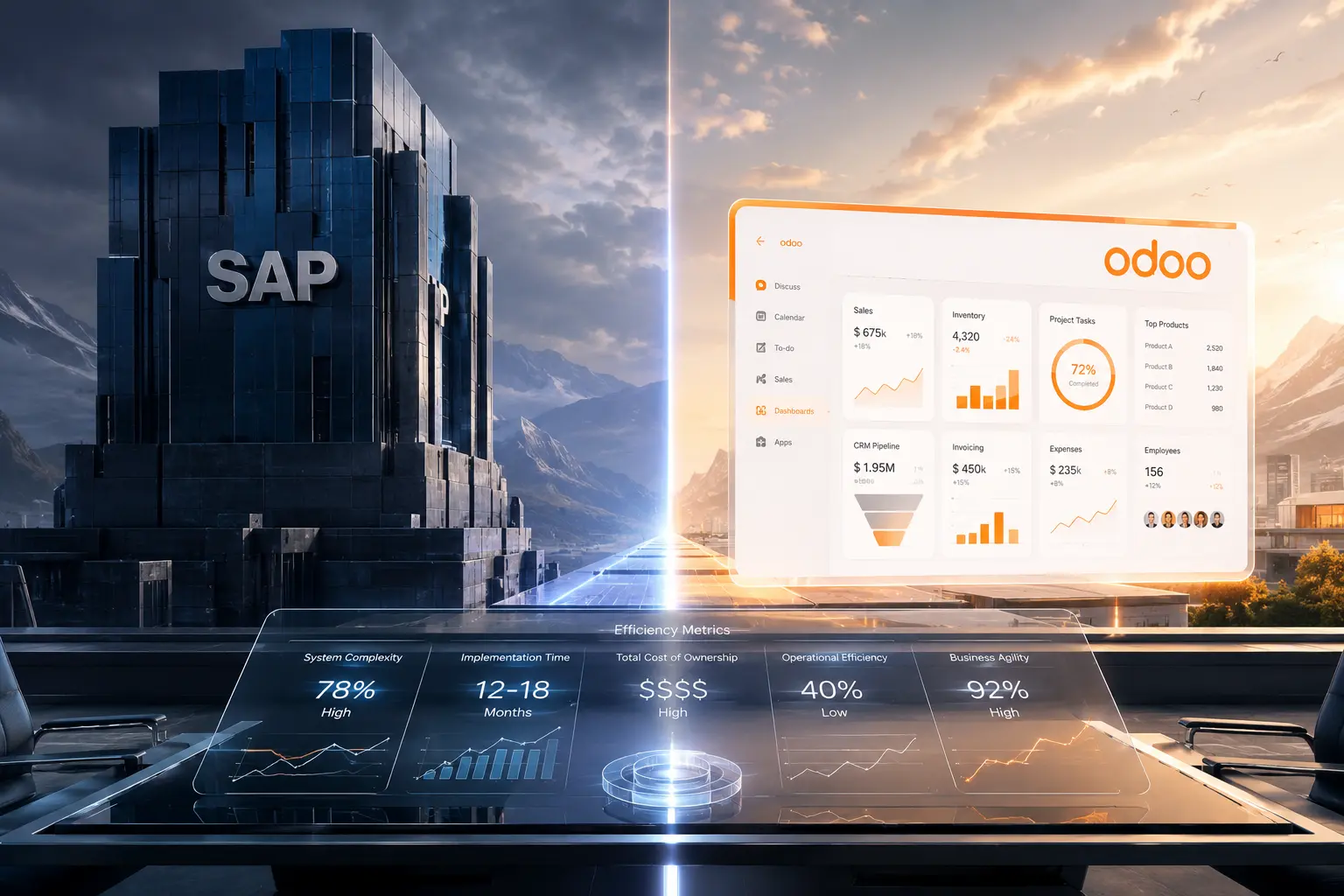
SAP remains the undisputed heavyweight for global organizations. It excels in environments where business processes are highly standardized, heavily regulated, and demand extreme computational power. However, its implementation cycle is notoriously lengthy, often requiring dedicated teams and high capital expenditure.

2. Oracle NetSuite: The Cloud Challenger

Oracle NetSuite provides a robust, cloud-native ERP experience. It is particularly effective for organizations that are outgrowing entry-level systems but are not yet prepared for the complexity of a full SAP environment. Its strength lies in unified financial management and global business consolidation.

3. Odoo: The Agile Disruption

Odoo has redefined the market by shifting the focus from rigid, all-encompassing suites to flexible, modular applications. For 2026, Odoo is the preferred choice for enterprises that value speed-to-market. By utilizing only the modules you need, you can significantly reduce your system bloat while maintaining the ability to scale seamlessly as your business enters new territories.

enterprise software

DMS Global’s Methodology: Choosing Your Path

Navigating these choices requires a data-driven approach. We follow a rigorous framework to ensure your selection is future-proof:

  • Operational Audit: Before looking at vendors, we map your current business processes. We identify where you are losing time and where your current technology creates friction.

  • Total Cost of Ownership (TCO) Analysis: We go beyond the license fee. We include implementation services, data migration costs, training requirements, and long-term maintenance in our assessment.

  • Integration Readiness: An ERP does not exist in a vacuum. We evaluate how each platform interacts with your existing stack—CRM, E-commerce, BI tools, and custom AI applications.

  • User Adoption Strategy: Technology is only as effective as the team using it. We prioritize platforms that offer intuitive interfaces, reducing the training burden and speeding up organizational change management.

enterprise bi solutions

Mitigating Risk: The Hidden Costs of ERP Failure

Enterprise ERP projects are notorious for budget overruns and scope creep. At DMS Global, we mitigate these risks through:

  1. Iterative Deployment: Instead of a high-risk “Big Bang” rollout, we advocate for modular implementation. This keeps the project manageable and provides immediate wins for the business.

  2. Data Quality Assurance: A new ERP will only be as good as the data you migrate. We enforce strict data cleansing protocols to ensure your new system starts with a clean slate.

  3. Vendor Neutrality: Our primary loyalty is to your operational efficiency, not to any single vendor. We provide objective assessments based on your specific enterprise architecture.

Frequently Asked Questions (FAQ)

Which ERP is best for a rapidly growing company?

For growth-stage enterprises, Odoo is often the superior choice due to its modular architecture, which allows you to pay only for the functionality you currently need and scale later.

How do I transition from SAP to a more agile system?

Transitioning requires a careful audit of your data structure and a phased migration strategy. Our SAP to Odoo Migration Hub provides detailed guidance on this specific process.

Does “open-source” mean less secure?

Quite the opposite. Open-source solutions like Odoo benefit from a global community of developers who constantly audit, patch, and improve the code, often leading to faster vulnerability remediation than closed-source proprietary systems.

Conclusion

Selecting an enterprise ERP is a balancing act between stability, cost, and agility. Whether you choose the stability of SAP, the cloud power of Oracle NetSuite, or the modular flexibility of Odoo, the goal remains the same: transforming your operational backbone into a competitive advantage.

Ready to determine the best path for your enterprise?

Don’t let the complexity of choice paralyze your growth. Contact DMS Global today for a comprehensive ERP assessment and let us help you build a digital foundation designed for the future.

What is Enterprise ERP? 2026 Guide to Scalable Business Systems

Enterprise ERP

Understanding the Enterprise ERP system is essential for large organizations looking to scale in 2026.

Introduction

enterprise ERP
enterprise ERP

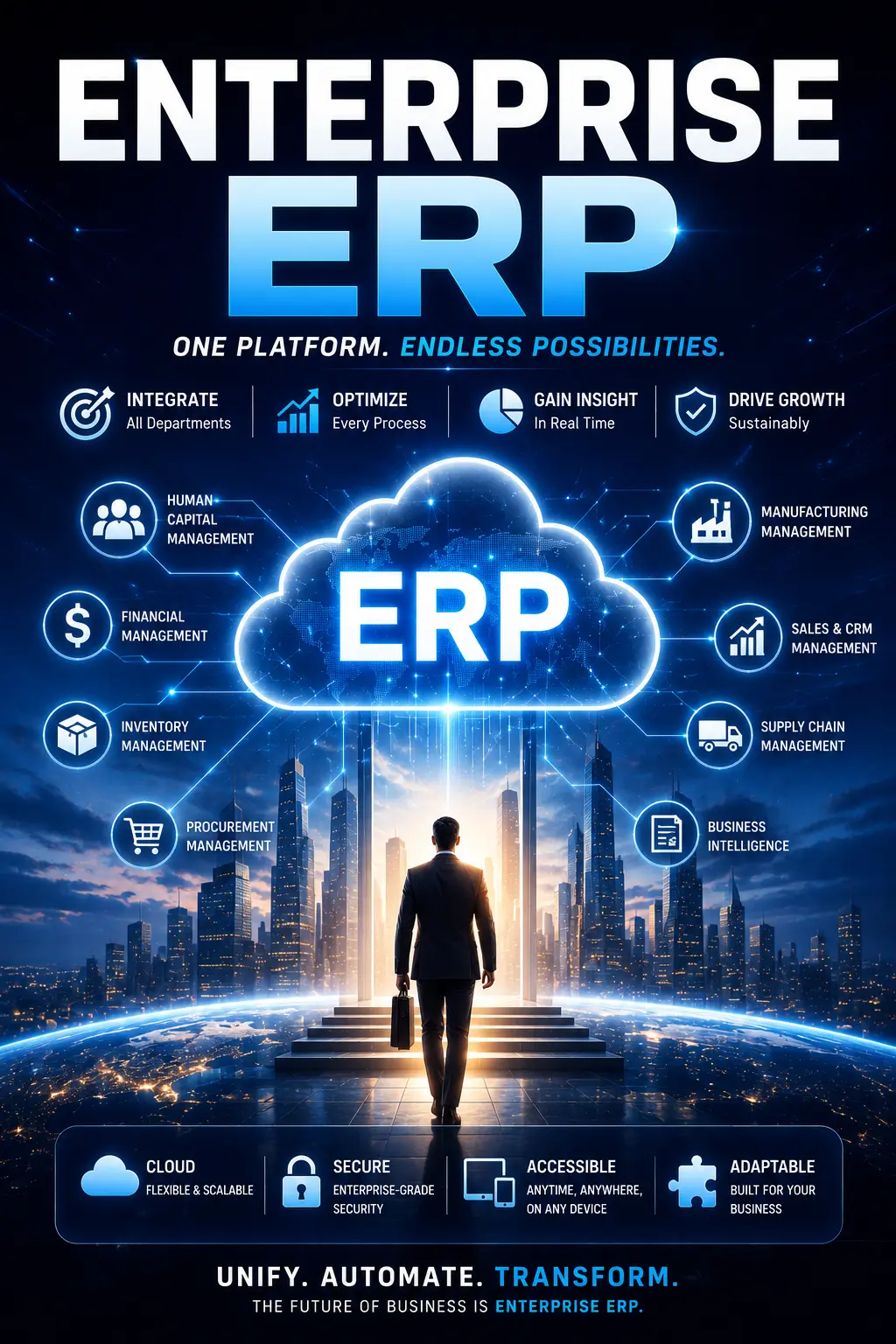
In the fast-paced digital landscape of 2026, a standard software solution is no longer enough for large-scale organizations. This is where Enterprise ERP (Enterprise Resource Planning) comes into play. But what exactly makes an ERP “Enterprise-grade”? Unlike software meant for small businesses, Enterprise ERP is designed to handle complex global operations, multi-currency transactions, and massive data sets across various departments.

What Defines a True Enterprise ERP System?

To achieve “Status 200” in your business efficiency, you need a system that offers more than just accounting. A true Enterprise ERP must include:

  • Seamless Integration: It connects Finance, HR, Supply Chain, and Sales into a single source of truth.

  • Advanced Analytics: Utilizing AI-driven insights to predict market trends and operational bottlenecks.

  • Global Compliance: The ability to handle different tax laws, languages, and regional regulations automatically.

Key Benefits of Implementing Enterprise ERP in 2026

  1. Operational Excellence: By automating routine tasks, your team can focus on high-growth strategies.

  2. Data Security: Large enterprises are prime targets for cyber threats. Enterprise ERP providers like SAP and Oracle invest billions in security infrastructure.

  3. Scalability: As DMS Global expands, an Enterprise ERP scales with you, adding new modules or users without disrupting the core system.

Top Enterprise ERP Vendors to Consider

  • SAP S/4HANA: The gold standard for large-scale digital transformation.

  • Oracle NetSuite: Ideal for high-growth businesses looking for a cloud-native platform.

  • Microsoft Dynamics 365: Perfect for organizations already deep in the Microsoft ecosystem.

  • Odoo Enterprise: A flexible, modular alternative that is gaining massive traction in 2026.

The Cost of Enterprise ERP Implementation

Implementing Enterprise ERP is a significant investment. Based on our ERP Comparison Matrix, costs are typically broken down into:

  • Software Licensing: Usually based on user count or Full Usage Equivalents (FUE).

  • Consultancy Fees: Expert implementation partners to map your business processes.

  • Infrastructure: Hosting costs on hyperscalers like AWS or Azure.

Common Implementation Challenges

Many projects fail not because of the software, but because of:

  • Poor Data Migration: Garbage in, garbage out. Cleaning legacy data is mandatory.

  • Resistance to Change: Employees must be trained to embrace the new system.

  • Lack of Clear Objectives: Define your ROI targets before you start the installation.

Strategic ERP Implementation Methodologies

Choosing the right software is only half the battle. The methodology used to deploy your Enterprise ERP will determine whether you hit a “Status 200” success or end up with a project failure.

  • Big Bang Adoption: All modules are launched simultaneously across the entire organization. This is high-risk but ensures a faster transition to the new digital infrastructure.

  • Phased Rollout: Departments or locations are migrated one by one. This is much safer and allows for continuous learning and adjustment, which is ideal for complex B2B environments.

  • Parallel Running: Keeping the old legacy system active alongside the new ERP for a set period. This provides a safety net but significantly increases the total implementation cost due to double data entry requirements.

The Role of AI and Machine Learning in 2026 ERPs

As we move further into 2026, Enterprise ERP systems are no longer just passive databases. They are becoming active participants in business strategy.

  • Generative AI for Reporting: Imagine asking your ERP, “Show me our highest-growth business systems for Q2,” and receiving a full visual report instantly.

  • Automated Risk Mitigation: AI algorithms can now flag unusual transactions or supply chain disruptions before they become critical issues.

  • Hyper-Personalized User Experiences: Modern ERPs use machine learning to adapt their interfaces based on individual user behavior, improving productivity across the board.

Security and Compliance in a Global Market

For an entity like DMS Global, data security is non-negotiable.

  • Cybersecurity Protocols: Top-tier Enterprise ERP providers implement multi-factor authentication, end-to-end encryption, and regular automated security audits.

  • Regulatory Compliance: Whether it is GDPR in Europe or local tax regulations in Southeast Asia, your ERP must be able to update its compliance logic automatically as laws change.

Conclusion: Future-Proofing Your Business

Choosing an Enterprise ERP is a long-term commitment. In 2026, the focus is on agility and intelligence. By selecting the right platform, you aren’t just buying software; you are building the digital backbone of your future empire.

ERP Comparison Matrix: SAP vs Odoo vs Oracle NetSuite (2026 Guide)

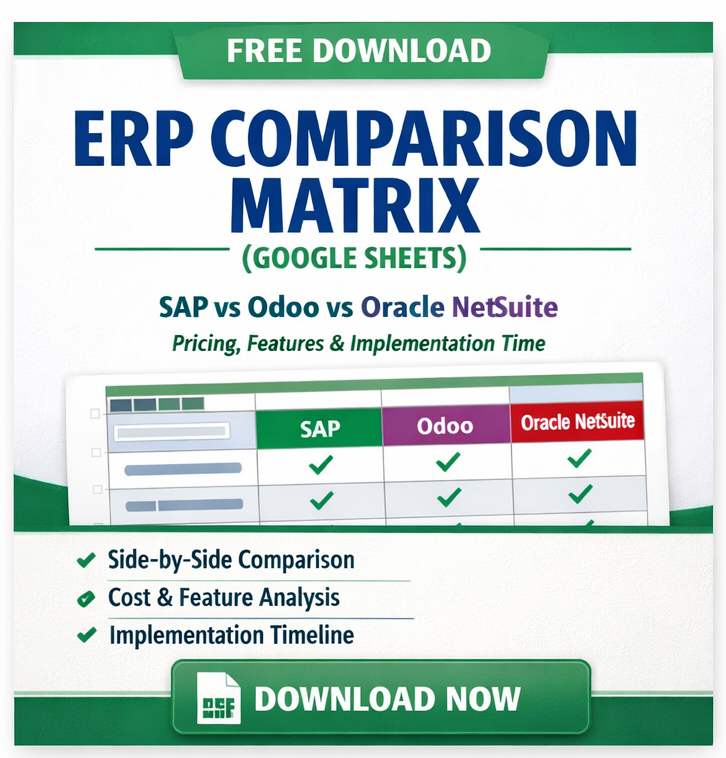
ERP Comparison Matrix SAP vs Odoo vs Oracle NetSuite

ERP Comparison Matrix 2026: Choosing the Right Infrastructure for Your Business

Introduction: Selecting the right Enterprise Resource Planning (ERP) system is a critical decision for global business scalability. This comparison matrix provides a deep dive into three market leaders: SAP, Odoo, and Oracle NetSuite, helping executive-level stakeholders make data-driven decisions.

🏆

DMS Global: Expert Choice

Evaluating ERP ROI for 2026? Leverage our technical breakdown:

View Odoo Enterprise Pricing 2026 →


Side-by-Side Comparison: Feature & Implementation Analysis

Feature SAP (S/4HANA) Odoo (Enterprise) Oracle NetSuite
Best For Large Enterprises SME to Mid-Market Global Cloud-First Co.
Flexibility Rigid / High Standard Highly Modular Balanced / Scalable
Implementation 12 – 24 Months 3 – 9 Months 6 – 12 Months
Cost Structure High CapEx Modular / Affordable Subscription-based

Strategic Insights for Decision Makers

  • Cost & Feature Analysis: Odoo offers the highest modular flexibility for growing businesses, while SAP remains the gold standard for global manufacturing compliance.

  • Implementation Timeline: Minimize downtime by selecting an ERP that aligns with your technical infrastructure readiness.

  • Risk & Budget Control: Ensure your ERP project stays on track by utilizing our implementation checklist below.

ERP Comparison Matrix 2026: Feature Breakdown

Feature SAP S/4HANA Odoo Enterprise Oracle NetSuite
Target Market Large Enterprise SME to Large Mid-market & Global
Pricing Model High/Perpetual/SaaS Modular/Subscription User-based/Subscription
Customization Complex (ABAP) Flexible (Python) High (SuiteScript)
Deployment On-premise/Cloud Cloud/Self-hosted Cloud-native
Best For Global Manufacturing Scalable Startups B2B SaaS & Services

ADVERTISEMENT / SPONSORED SOLUTION

Reliable resources for your business growth

Why Choose SAP for Global Operations?

SAP remains the gold standard for global infrastructure. With its robust financial consolidation and supply chain management, it’s built for businesses that need absolute precision. However, the total cost of ownership (TCO) is higher compared to modular systems like Odoo.

The Versatility of Odoo Success Pack

Odoo has disrupted the ERP market with its open-source core and “Success Pack” consultancy model. It allows digital-first companies to start small and scale their modules—from CRM to Inventory—without the heavy upfront costs of legacy systems.

Oracle NetSuite: The Cloud-Native Leader

For businesses focused on rapid scalability and multi-currency reporting, Oracle NetSuite offers a seamless cloud environment. It’s particularly effective for B2B SaaS companies that require real-time data visualization and automated billing cycles.

Which System Fits Your 2026 Roadmap?

Choosing the right infrastructure depends on your business goals. If you require deep customization and have a dedicated IT department, SAP is unbeatable. For agility and rapid deployment, Odoo is often the preferred choice. Meanwhile, Oracle NetSuite bridges the gap for mid-market companies aiming for an IPO or global expansion.


Frequently Asked Questions (FAQ)

1. Which ERP is best for global scalability in 2026?

SAP S/4HANA is widely considered the best for large-scale global operations due to its deep compliance features across multiple countries.

2. Is Odoo cheaper than SAP for mid-sized businesses?

Yes, Odoo’s modular pricing and implementation via the Odoo Success Pack generally result in a lower TCO compared to SAP’s enterprise licensing.

3. Does Oracle NetSuite support multi-currency consolidation?

Absolutely. Oracle NetSuite is designed for global businesses, providing automated multi-currency and multi-tax reporting in real-time.


🏆

DMS Global: Expert Choice

Evaluating ERP ROI for 2026? Leverage our technical breakdown:

View Odoo Enterprise Pricing 2026 →

ADVERTISEMENT / SPONSORED SOLUTION

Reliable resources for your business growth

ADVERTISEMENT / SPONSORED SOLUTION

Reliable resources for your business growth

ADVERTISEMENT / SPONSORED SOLUTION

Reliable resources for your business growth


ERP Comparison Matrix

DOWNLOAD THE FULL MATRIX (GOOGLE SHEETS)


Pro Tip: To visualize this data, check our Looker Studio SEO Dashboard Templates.

What Is an ERP System? The Truth Behind Business Software (2026 Guide)

erp
ADVERTISEMENT / SPONSORED SOLUTION

Reliable resources for your business growth

In today’s fast-moving digital economy, businesses are under constant pressure to operate faster, smarter, and more efficiently. Yet many companies still rely on disconnected tools—spreadsheets, accounting apps, CRM platforms—that don’t communicate with each other.

This is where ERP systems come in.

But what exactly is an ERP system—and why are companies investing millions into it?

In this 2026 guide, we break down what ERP really is, how it works, and why it has become the backbone of modern businesses.


What Is an ERP System?

ERP stands for Enterprise Resource Planning. It is a centralized software platform that integrates all core business processes into one unified system.

Instead of using separate tools for finance, inventory, HR, and operations, an ERP system connects everything into a single database.

This means:

  • Real-time data across departments
  • Improved collaboration
  • Better decision-making

Popular ERP platforms include systems like Odoo, SAP, and Oracle NetSuite, each designed to help businesses scale efficiently.


Why ERP Systems Matter in 2026

The role of ERP has evolved dramatically over the years. In 2026, ERP is no longer just a back-office tool—it’s a strategic growth engine.

Businesses today deal with:

  • Global operations
  • Remote teams
  • Complex supply chains
  • Real-time customer expectations

Without a centralized system, managing all these moving parts becomes chaotic.

ERP solves this by creating a single source of truth for the entire organization.


How ERP Systems Work

ADVERTISEMENT / SPONSORED SOLUTION

Reliable resources for your business growth

At its core, an ERP system operates through integrated modules.

Each module focuses on a specific business function:

  • Finance & Accounting
  • Inventory Management
  • Human Resources
  • Sales & CRM
  • Procurement & Supply Chain

All modules share the same database, meaning any update in one area is instantly reflected across the system.

For example:
When a sale is made:

  • Inventory is updated
  • Revenue is recorded
  • Financial reports are adjusted

All automatically.

This level of automation reduces manual work and eliminates costly errors.


Key Benefits of ERP Systems

1. Centralized Data

ERP eliminates data silos by bringing everything into one place. This ensures consistency and accuracy across all departments.

2. Improved Efficiency

Automation reduces repetitive tasks, allowing teams to focus on higher-value work.

3. Better Decision-Making

With real-time analytics, leaders can make faster and more informed decisions.

4. Scalability

As your business grows, ERP systems can scale with you—adding new modules and users as needed.

5. Cost Savings Over Time

While ERP requires upfront investment, it often reduces operational costs in the long run.


Real-World Example: How Businesses Use ERP

Imagine a growing eCommerce company.

Before ERP:

  • Orders tracked manually
  • Inventory often inaccurate
  • Financial reports delayed

After ERP implementation:

  • Orders processed automatically
  • Inventory updated in real time
  • Reports generated instantly

The result? Faster operations, fewer errors, and higher profitability.


ERP Pricing: What You Should Know

One of the most common questions businesses ask is:

How much does an ERP system cost?

The answer depends on several factors:

  • Number of users
  • Modules required
  • Customization level
  • Implementation complexity

Some ERP systems offer flexible pricing models, while others require large upfront investments.

If you’re considering ERP for your business, it’s crucial to understand the real cost breakdown, including hidden fees and long-term ROI.

👉 For a detailed analysis, check our full guide:
Odoo Pricing Guide 2026: Real Cost & Hidden Fees Explained

(This is where most companies underestimate their actual ERP budget.)


Common ERP Mistakes to Avoid

Even though ERP offers massive benefits, many projects fail due to poor planning.

Here are the most common mistakes:

  • Choosing the wrong ERP system
  • Underestimating implementation time
  • Lack of user training
  • Ignoring customization needs

Avoiding these pitfalls can save companies thousands—or even millions—of dollars.


Is ERP Worth It for Your Business?

The short answer: Yes—if implemented correctly.

ERP is not just software; it’s a long-term investment in your company’s efficiency and growth.

However, it’s important to:

  • Choose the right system
  • Plan implementation carefully
  • Align ERP with business goals

When done right, ERP becomes a powerful competitive advantage.


Final Thoughts

ERP systems have become essential for businesses that want to scale in today’s competitive environment.

They bring structure, efficiency, and visibility to complex operations—turning chaos into clarity.

If you’re still relying on disconnected tools, now is the time to consider a unified solution.

Because in 2026, the question is no longer:
“Do you need ERP?”

But rather:
“Can your business survive without it?”

Project Management Tools 2026: Driving Enterprise Profitability and Strategic Execution

For C-Level executives, “Project Management Tools” are far more than just task trackers; they are the digital arteries that pump life into strategic initiatives and ultimately, profitability. In 2026, the urgency to select the right platform is critical. A fragmented tool ecosystem or an underperforming solution can derail multi-million dollar projects, impacting market share and investor confidence.

The C-Suite Imperative: From Chaos to Controlled Growth

Every CEO knows that uncontrolled projects are cost centers. The goal isn’t merely project completion, but efficient, on-budget, and on-time delivery that aligns directly with enterprise objectives. This requires tools that offer visibility, control, and predictive analytics at scale.

1. Beyond Task Management: Orchestrating Enterprise Portfolios

Modern project management tools for enterprises must support Program and Portfolio Management (PPM). This means:

  • Strategic Alignment: Linking individual project KPIs directly to overarching corporate goals (e.g., increased market penetration, new product launch revenue).

  • Resource Optimization: Allocating high-value human capital across multiple initiatives without burnout or bottlenecks. Tools with advanced AI can predict resource needs and flag potential overloads.

  • Risk Mitigation: Proactively identifying project risks, not just at a task level, but across an entire portfolio. This includes financial, operational, and reputational risks.

2. The ROI Equation: Justifying Your Technology Stack

For the CFO, any investment in project management software must demonstrate a clear Return on Investment (ROI). Key metrics include:

  • Reduced Overhead: By automating reporting, eliminating manual data entry, and streamlining workflows.

  • Improved Project Success Rates: Leading to fewer cost overruns and faster time-to-market.

  • Enhanced Decision-Making: Providing real-time, consolidated data to C-Level dashboards for quick, informed strategic adjustments.

3. Integration is Non-Negotiable: The Enterprise Ecosystem

In 2026, standalone tools are liabilities. A top-tier project management solution must seamlessly integrate with your existing ERP (like Oracle NetSuite or SAP S/4HANA), CRM, HR, and financial systems. This ensures:

  • Unified Data View: Avoiding information silos that lead to delayed reporting and inaccurate forecasts.

  • Automated Data Flow: From project billing to resource allocation, data should flow effortlessly across departments.

  • Scalability: The ability to add new projects, teams, or global offices without complex reconfigurations.

4. AI & Predictive Analytics: The Future of Project Foresight

The most advanced project management platforms are now leveraging Artificial Intelligence to offer:

  • Predictive Scheduling: Forecasting project timelines with greater accuracy by analyzing historical data and potential bottlenecks.

  • Budgetary Forecasting: Alerting teams to potential cost overruns long before they occur, allowing for proactive intervention.

  • Performance Benchmarking: Comparing project performance against industry best practices and internal historical data.

5. Vendor Selection: More Than Just Features

Choosing the right project management tool is a strategic decision. Executives should look for:

  • Vendor Stability: A partner with a proven track record and a clear product roadmap.

  • Implementation Support: A robust support system for migration, training, and ongoing optimization.

  • Security & Compliance: Meeting international data security standards (e.g., GDPR, CCPA) crucial for global enterprises.

Executive Insight

Scale Your Business Globally with Dominasi SERP

Integrated ERP and SEO strategies to dominate international markets in the AI era.

Looking for a simpler alternative? While traditional ERPs are powerful, many teams prefer a more visual and intuitive approach. Monday.com offers the perfect balance between project management and business automation without the complex setup of Odoo or SAP.

Conclusion: Your Gateway to Strategic Excellence

In the competitive landscape of 2026, project management tools are strategic assets. They empower your enterprise to execute complex initiatives with precision, optimize resource utilization, and ultimately, drive sustainable profitability. The time to upgrade your project management capabilities is not a choice, but a strategic imperative for global leadership.

Looking for a simpler alternative? While traditional ERPs are powerful, many teams prefer a more visual and intuitive approach. Monday.com offers the perfect balance between project management and business automation without the complex setup of Odoo or SAP.

Feature SAP S/4HANA Odoo Monday.com
Best For Large Enterprises Mid-sized Businesses Fast-growing Teams
Implementation Very Long (Years) Moderate (Months) Instant (Days)
Ease of Use Steep Curve Moderate High (Intuitive)
Customization Very High High (Modular) No-Code Flex
Cost Very Expensive Pay-per-module Affordable