
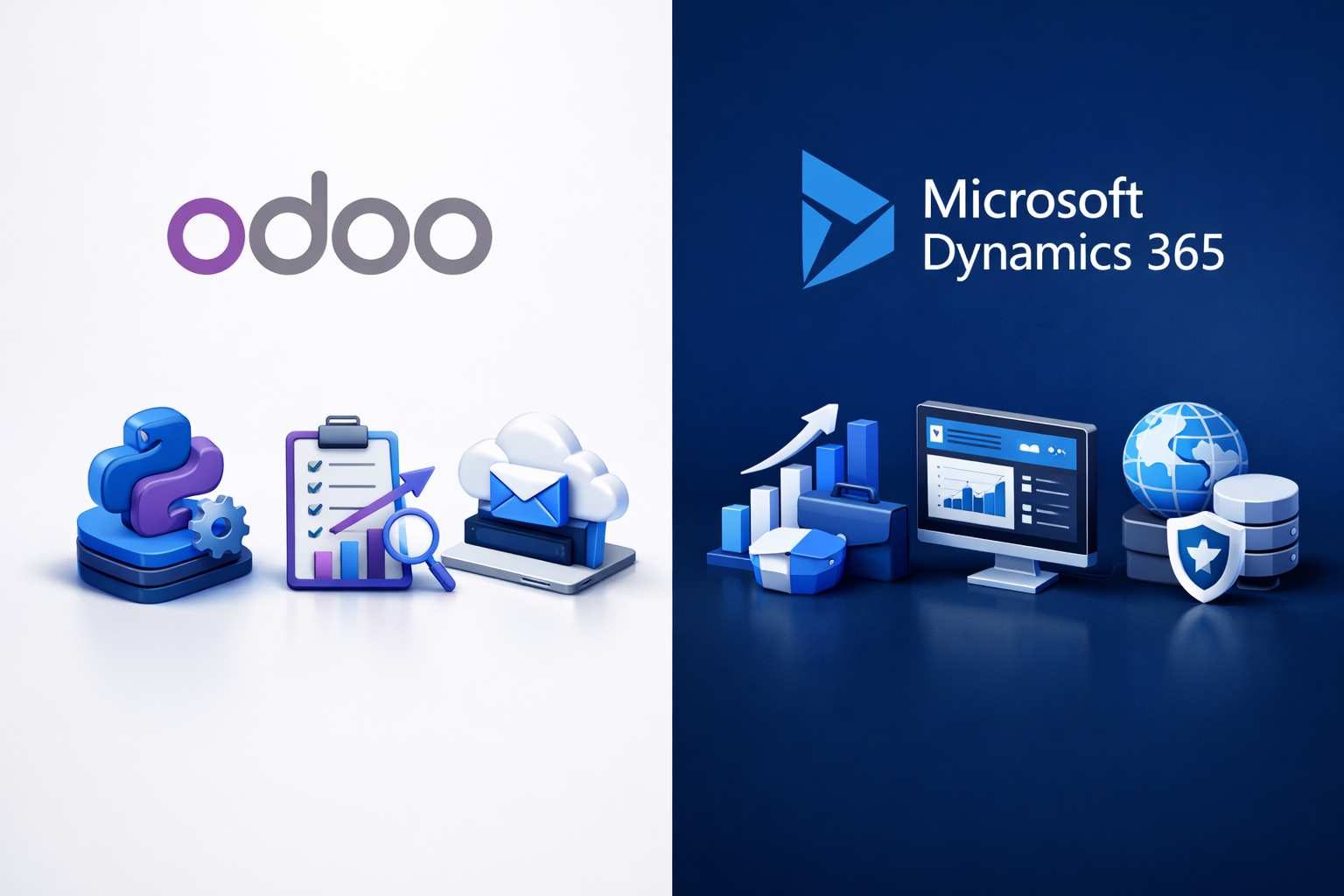
odoo crm vs salesforce
In the battle of odoo crm vs salesforce, choosing the right platform can define your sales team’s success for years to come. Salesforce has long been the gold standard for enterprise CRM, but Odoo CRM has emerged as a formidable challenger, especially for businesses that value integration and cost-efficiency.
1. Understanding the Core Philosophy
When looking at odoo crm vs salesforce, you are looking at two different philosophies. Salesforce is a “best-of-breed” CRM, meaning it focuses deeply on sales and marketing automation. Odoo CRM, however, is part of an all-in-one ERP ecosystem. This means if you use Odoo, your CRM is natively connected to your accounting, inventory, and project management.
Executive Deep-Dive
Scaling Beyond Traffic to Revenue
Most enterprises fail because they chase clicks instead of trust. While building your global presence, ensure your EEAT 3.0 signals are synchronized across all regions.
Recommended for you:
→ The Shift from Traffic to Trust: A New KPI for Enterprise SEO2. Pricing and Total Cost of Ownership (TCO)
The most obvious difference in odoo crm vs salesforce is the price tag.
-
Salesforce: Known for high per-user pricing and hidden costs for additional features or API access.
-
Odoo CRM: Offers a much simpler and more affordable pricing model. For many SMEs, the cost of Odoo for the entire company is often less than the cost of Salesforce for just the sales team.
3. User Experience and Interface
Salesforce offers a massive array of features, but this can lead to a cluttered interface that requires extensive training. Odoo CRM has focused heavily on a clean, modern UI in 2026. The Kanban view in Odoo is intuitive, allowing sales reps to drag and drop leads through the pipeline with ease.
4. Customization and Flexibility
Salesforce uses a proprietary language called Apex. While powerful, finding Salesforce developers can be expensive. Odoo is built on Python, one of the most popular programming languages in the world. This makes customizing odoo crm vs salesforce much more accessible for businesses that want to tailor the system to their unique workflows.
5. AI Capabilities in 2026
Both platforms have heavily invested in AI. Salesforce has Einstein, while Odoo has integrated advanced AI assistants into its 2026 version. Both can help with lead scoring and predictive analytics, but Odoo’s AI often feels more seamlessly integrated into the daily user flow without requiring expensive add-ons.
6. Implementation Speed
If you need a CRM up and running quickly, Odoo often wins. Because of its modular nature, you can activate the CRM module in minutes and start importing leads. Salesforce implementations, especially for larger teams, can take months of configuration.
Detailed Comparison: Integration vs. Specialization
DMS Global Enterprise Solution
Advertisement - Continue reading below
When debating odoo crm vs salesforce, the decision often comes down to your technical infrastructure. Salesforce is a specialist; it provides the most advanced CRM features globally but requires connectors (like Zapier or MuleSoft) to talk to your accounting or warehouse software. This adds another layer of cost and potential points of failure.
In contrast, Odoo CRM is an “all-in-one” generalist. Because it lives inside the same database as your other business apps, the flow of information is instantaneous. When a salesperson closes a deal in Odoo, the invoice is automatically generated in the accounting module, and the stock is reserved in the warehouse. This level of native integration is something Salesforce simply cannot match without significant third-party investment.
Furthermore, for companies focusing on localized growth in 2026, Odoo’s open-source nature allows for much faster adaptation to local regulations and languages compared to the more rigid structure of Salesforce.
SugarCRM vs Odoo: Expanding Your CRM Horizons
While the debate between Odoo and Salesforce often dominates the CRM conversation, businesses must also consider SugarCRM as a specialized alternative.
SugarCRM: Deep Customization & Flexibility
SugarCRM is highly regarded for its flexibility, specifically for businesses that need to tailor their CRM deeply to unique sales processes.
-
Key Strength: Highly adaptable architecture that allows for complex workflow automation.
-
Best For: Organizations that require granular control over their sales data and have specific, non-standard business requirements that “out-of-the-box” solutions struggle to handle.
Odoo: The Unified Advantage
Odoo offers a distinct edge over SugarCRM through its ecosystem approach.
-
Unified Ecosystem: Unlike SugarCRM, which focuses primarily on the CRM layer, Odoo integrates seamlessly with Sales, Accounting, Inventory, and Marketing within one single platform.
-
Total Cost of Ownership (TCO): Odoo typically offers a more streamlined cost structure, especially when businesses need to scale beyond just CRM functions into full ERP capabilities.
Comparison Summary
-
If you need a standalone, highly customizable CRM: SugarCRM offers great depth for specific sales-centric needs.
-
If you want a unified business suite: Odoo is the superior choice, as it eliminates the need for complex middleware and integrations to connect your CRM with other business departments.
Conclusion: Which One Should You Choose?
The winner of odoo crm vs salesforce depends on your scale. If you are a Fortune 500 company with a massive budget and complex global requirements, Salesforce remains a powerhouse. However, for growing businesses that need a powerful, integrated, and cost-effective CRM, Odoo CRM is the superior choice in 2026.
Last Updated on 3 months ago by dudung
Exclusive Early Access: Q1 2026
The Global SEO Blueprint for C-Suite
We are finalizing an exclusive strategic framework for global enterprise scaling. Join the elite waitlist for early-bird pricing.
Secure Your Priority Spot