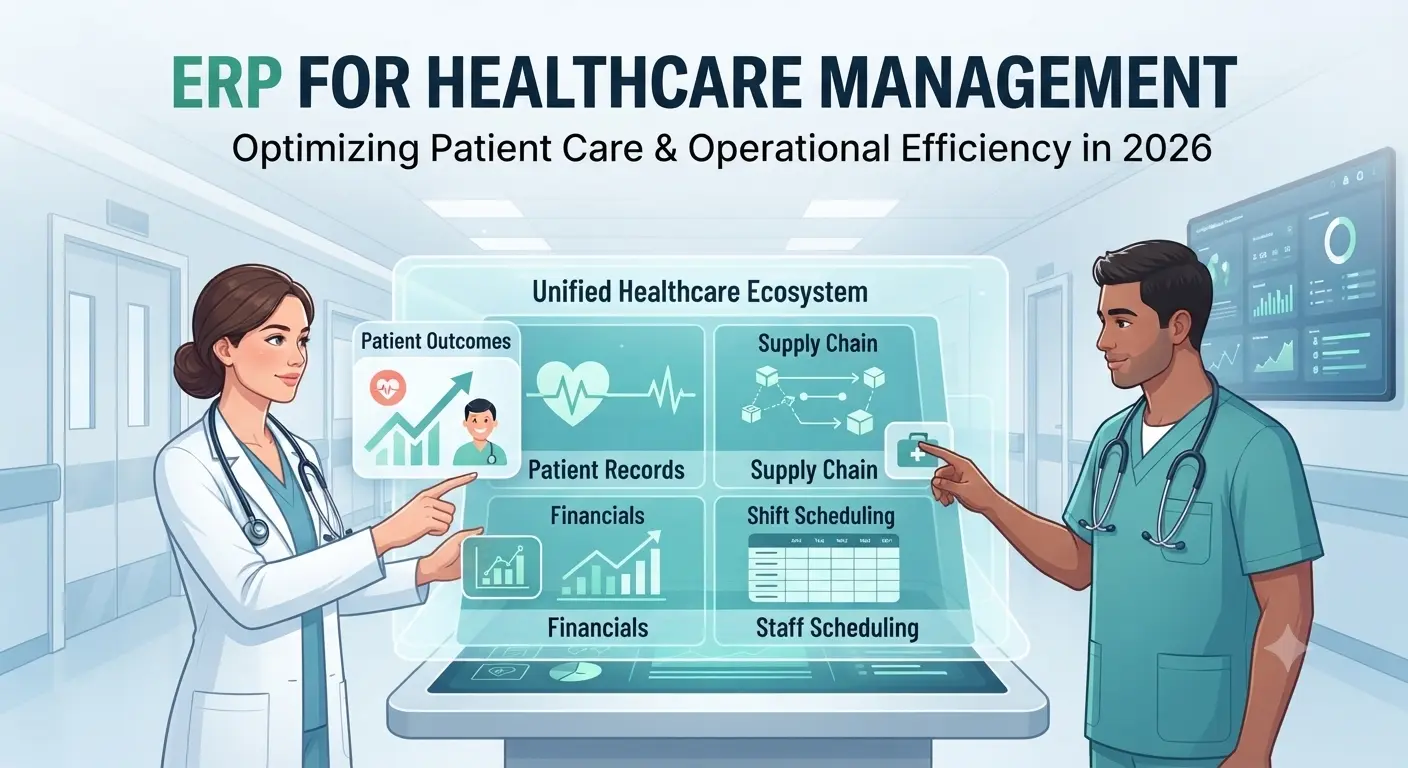
ERP for Healthcare Management: Optimizing Patient Care & Operational Efficiency in 2026
ERP for healthcare systems have become the backbone of modern medical facilities, bridging the gap between clinical excellence and administrative precision. As we navigate through 2026, the demand for integrated software that can handle the complexities of patient data, financial reporting, and supply chain logistics has never been higher. For healthcare providers, choosing the right digital infrastructure is no longer just about convenience; it is about survival in a competitive, data-driven market.
The Digital Transformation of the Medical Sector
Digital transformation in healthcare is about more than just moving paper files to a digital format. It involves creating a unified ecosystem where every department—from the emergency room to the billing office—operates on a single source of truth. By implementing a robust ERP for healthcare, administrators can eliminate data silos, reduce human error, and provide healthcare professionals with the insights they need to make life-saving decisions in real-time.
Why Healthcare Organizations Struggle with Fragmented Systems
Before adopting a comprehensive ERP for healthcare, many clinics and hospitals operate using disconnected software. This leads to:
-
Information Silos: Medical records that are inaccessible to the billing department cause payment delays.
-
Operational Inefficiencies: Staff spend hours manually reconciling inventory instead of focusing on patient care.
-
Regulatory Risks: Inconsistent data logging makes it difficult to pass audits and maintain compliance with international health standards.
Core Features That Define an Advanced Healthcare ERP
When you are evaluating potential platforms, ensure they contain these essential modules:
-
Unified Patient Records: A secure, centralized database that integrates seamlessly with existing laboratory and diagnostic tools.
-
Automated Supply Chain: Inventory management for pharmaceuticals and equipment that uses predictive analytics to prevent stockouts.
-
Advanced Financial Compliance: Automated, audit-ready financial reporting that ensures total transparency in billing cycles.
-
Scalability: A flexible system that grows with your facility, whether you are managing a local clinic or an international hospital chain.
Driving ROI: The Financial Argument for Integration
Many stakeholders ask about the Return on Investment (ROI) when shifting to a sophisticated ERP for healthcare. The ROI manifests in several ways:
-
Increased Staff Productivity: Automation handles the repetitive administrative tasks, allowing medical professionals to focus on direct patient interaction.
-
Optimized Resource Utilization: Using data-driven insights to manage bed occupancy, operating room schedules, and staffing levels.
-
Reduced Overhead: Lower administrative costs through the consolidation of disparate software licenses into one single platform.
Expertise & Authority: The Role of Strategic Planning
Implementation is not just a technical challenge; it is a strategic one. As seen in our SAP Business One Pricing guide, the true value of an ERP comes from how well it is customized to the specific workflow of your organization. Healthcare leaders must prioritize vendors who bring proven expertise in medical compliance and data security.
Implementation Roadmap: A Step-by-Step Guide
-
Requirement Audit: Identify the specific bottlenecks in your current patient and administrative flow.
-
Compliance Review: Ensure that any potential ERP for healthcare solution meets all local and international data protection regulations.
-
Pilot Testing: Roll out the system in a controlled department before a full-scale deployment to ensure clinical operations are not disrupted.
-
Continuous Training: Invest heavily in staff training to ensure high adoption rates across all levels of your organization.
Conclusion: Future-Proofing Your Facility in 2026
The healthcare landscape is evolving rapidly. By integrating a specialized ERP for healthcare, your organization gains the agility to handle future challenges, from sudden surges in patient volume to new medical regulatory requirements. Now is the time to optimize your infrastructure.
For those interested in how these solutions compare to other industry-standard software, we recommend reviewing our deep-dive analysis on Odoo vs SAP ERP to see which path best suits your long-term operational strategy.