In the competitive enterprise landscape of 2026, selecting the right Enterprise Resource Planning (ERP) system is not merely an IT decision—it is a strategic pivot that determines your operational efficiency, data sovereignty, and long-term scalability. This hub serves as the definitive resource for comparing leading ERP solutions, designed to guide decision-makers through the complexities of enterprise software selection.
The Strategic Importance of ERP Selection
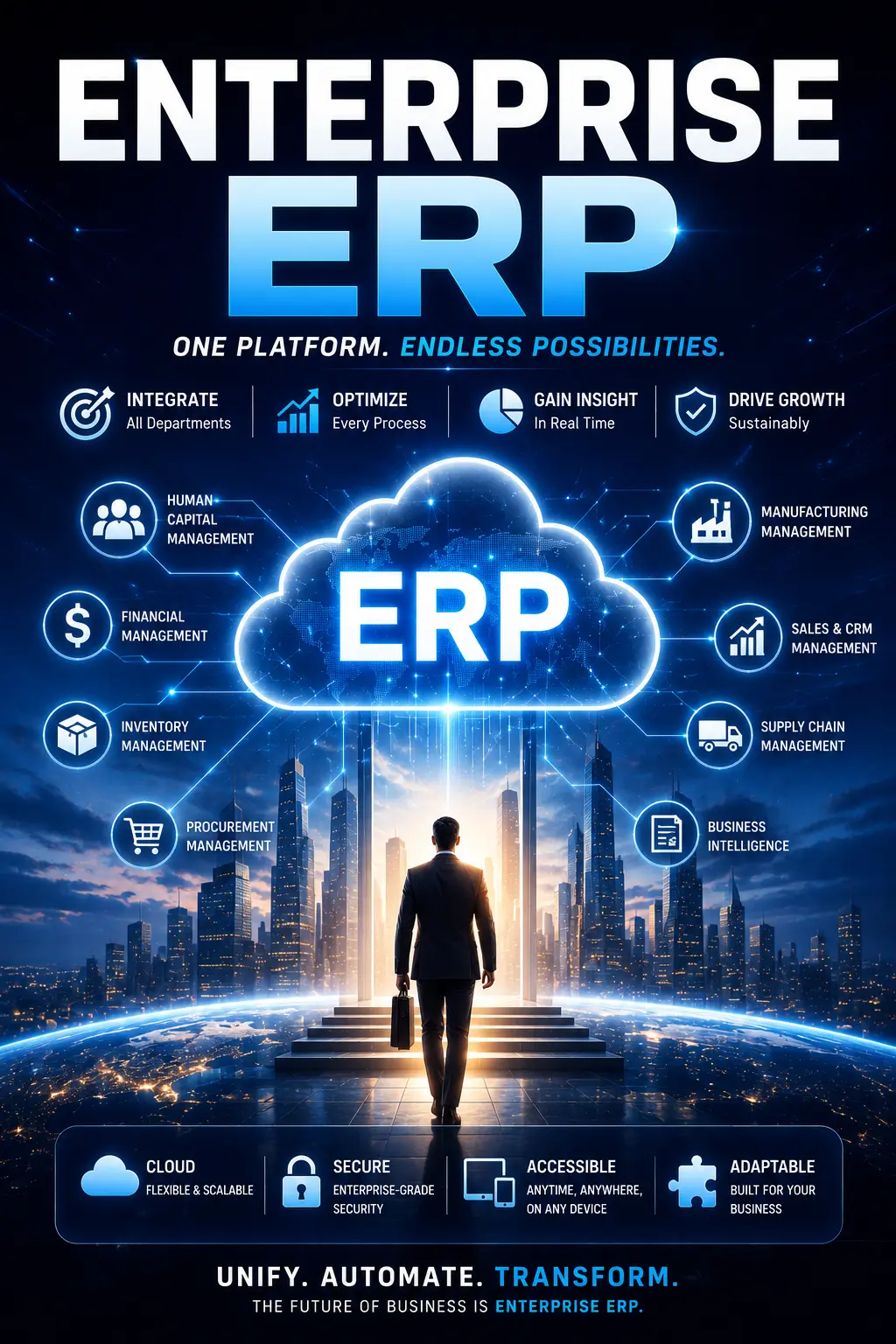
Your ERP system functions as the “nervous system” of your enterprise. It unifies disparate departments—from Finance and Supply Chain to Human Resources and Customer Relations—into a single source of truth. However, selecting the wrong platform can lead to massive technical debt, operational bottlenecks, and wasted capital. At DMS Global, we emphasize that the best ERP is not necessarily the most expensive one; it is the one that aligns most precisely with your unique operational velocity and growth objectives.
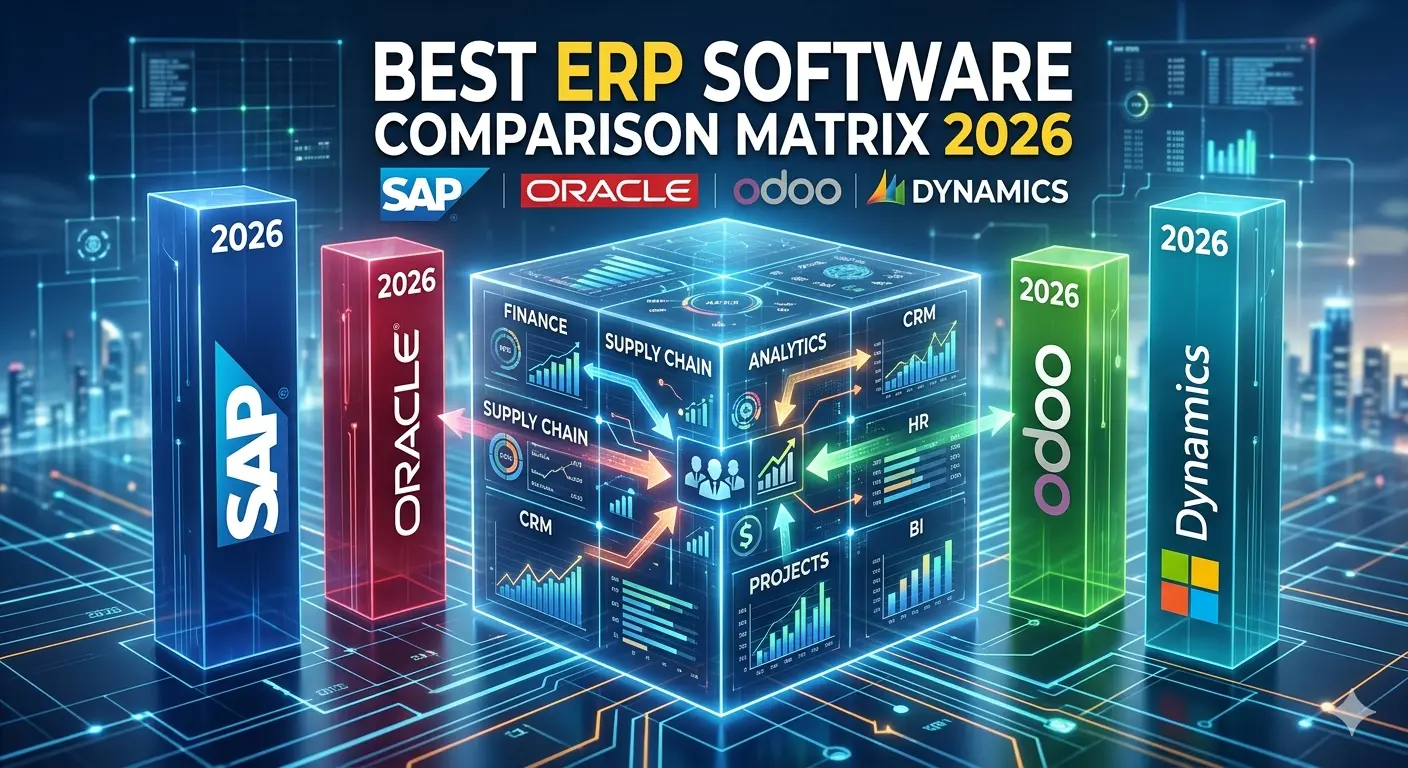
| ERP Provider | Best For | Core Strength |
| SAP | Global Conglomerates | Massive scale & complex compliance |
| Oracle NetSuite | Mid-to-Large Growth | Cloud-native agility & financial depth |
| Odoo | Agile Enterprises | Modular flexibility & rapid deployment |
Analyzing the Top Contenders
1. SAP: The Enterprise Standard
SAP remains the undisputed heavyweight for global organizations. It excels in environments where business processes are highly standardized, heavily regulated, and demand extreme computational power. However, its implementation cycle is notoriously lengthy, often requiring dedicated teams and high capital expenditure.
2. Oracle NetSuite: The Cloud Challenger
Oracle NetSuite provides a robust, cloud-native ERP experience. It is particularly effective for organizations that are outgrowing entry-level systems but are not yet prepared for the complexity of a full SAP environment. Its strength lies in unified financial management and global business consolidation.
3. Odoo: The Agile Disruption
Odoo has redefined the market by shifting the focus from rigid, all-encompassing suites to flexible, modular applications. For 2026, Odoo is the preferred choice for enterprises that value speed-to-market. By utilizing only the modules you need, you can significantly reduce your system bloat while maintaining the ability to scale seamlessly as your business enters new territories.
DMS Global’s Methodology: Choosing Your Path
Navigating these choices requires a data-driven approach. We follow a rigorous framework to ensure your selection is future-proof:
-
Operational Audit: Before looking at vendors, we map your current business processes. We identify where you are losing time and where your current technology creates friction.
-
Total Cost of Ownership (TCO) Analysis: We go beyond the license fee. We include implementation services, data migration costs, training requirements, and long-term maintenance in our assessment.
-
Integration Readiness: An ERP does not exist in a vacuum. We evaluate how each platform interacts with your existing stack—CRM, E-commerce, BI tools, and custom AI applications.
-
User Adoption Strategy: Technology is only as effective as the team using it. We prioritize platforms that offer intuitive interfaces, reducing the training burden and speeding up organizational change management.
enterprise bi solutions
Mitigating Risk: The Hidden Costs of ERP Failure
Enterprise ERP projects are notorious for budget overruns and scope creep. At DMS Global, we mitigate these risks through:
-
Iterative Deployment: Instead of a high-risk “Big Bang” rollout, we advocate for modular implementation. This keeps the project manageable and provides immediate wins for the business.
-
Data Quality Assurance: A new ERP will only be as good as the data you migrate. We enforce strict data cleansing protocols to ensure your new system starts with a clean slate.
-
Vendor Neutrality: Our primary loyalty is to your operational efficiency, not to any single vendor. We provide objective assessments based on your specific enterprise architecture.
Frequently Asked Questions (FAQ)
Which ERP is best for a rapidly growing company?
For growth-stage enterprises, Odoo is often the superior choice due to its modular architecture, which allows you to pay only for the functionality you currently need and scale later.
How do I transition from SAP to a more agile system?
Transitioning requires a careful audit of your data structure and a phased migration strategy. Our SAP to Odoo Migration Hub provides detailed guidance on this specific process.
Does “open-source” mean less secure?
Quite the opposite. Open-source solutions like Odoo benefit from a global community of developers who constantly audit, patch, and improve the code, often leading to faster vulnerability remediation than closed-source proprietary systems.
Conclusion
Selecting an enterprise ERP is a balancing act between stability, cost, and agility. Whether you choose the stability of SAP, the cloud power of Oracle NetSuite, or the modular flexibility of Odoo, the goal remains the same: transforming your operational backbone into a competitive advantage.
Ready to determine the best path for your enterprise?
Don’t let the complexity of choice paralyze your growth. Contact DMS Global today for a comprehensive ERP assessment and let us help you build a digital foundation designed for the future.