
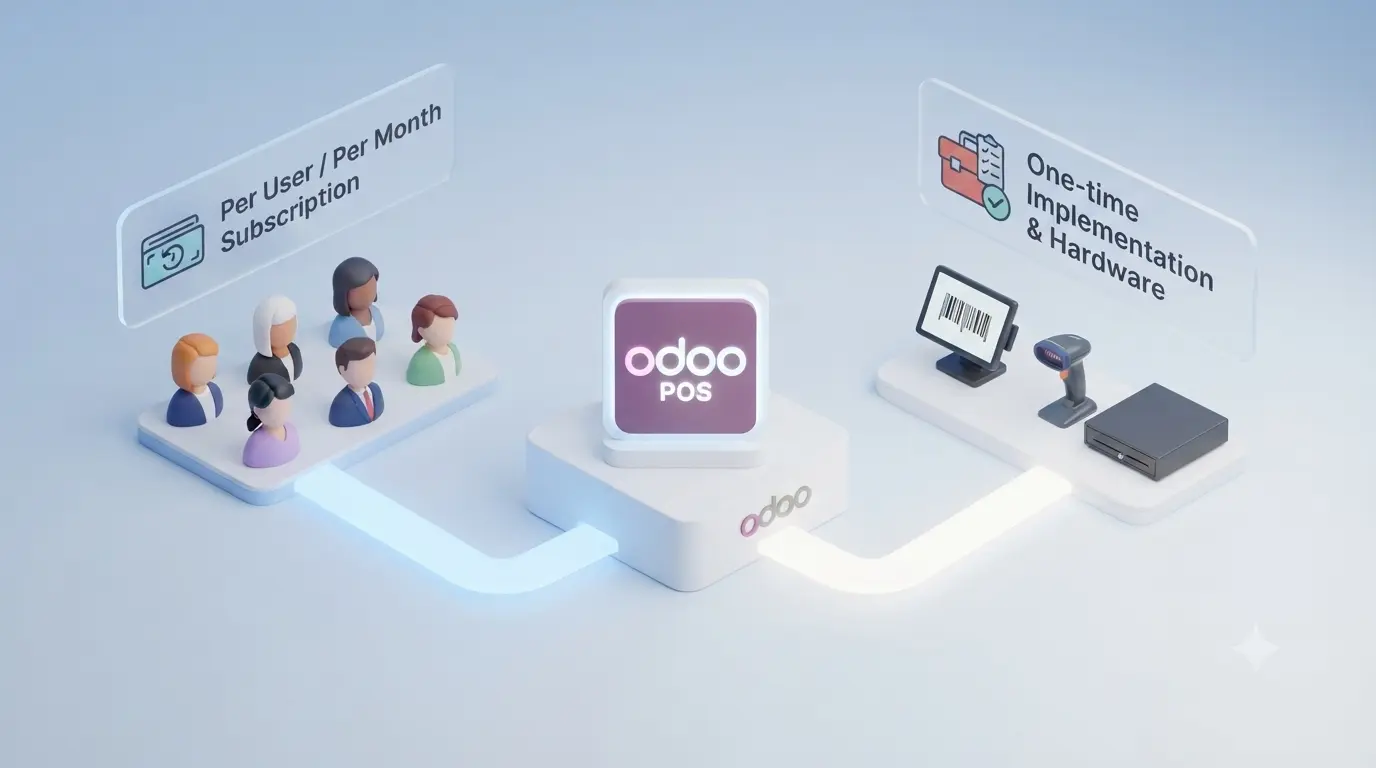
For retailers and hospitality businesses, the Point of Sale (POS) system is the heartbeat of daily operations. Odoo POS has gained significant market share due to its seamless integration with inventory, accounting, and CRM modules. However, understanding the Odoo POS license fees and the overall cost of ownership is a critical step for business owners planning to scale. This guide provides a strategic analysis of Odoo’s pricing structure, helping you align your retail technology with your long-term growth objectives through the lens of E-E-A-T (Experience, Expertise, Authoritativeness, and Trustworthiness).
[dms-category-hub]
The Value of an Integrated POS Ecosystem
Unlike standalone POS systems that require complex third-party integrations to talk to your accounting software, Odoo POS is part of a unified suite. This architecture provides a “single source of truth” for your business data, which is essential for any enterprise aiming for high-level operational efficiency.
Why Integration Drives Authority
-
Real-Time Inventory: When a sale is made at the POS, your inventory is updated instantly across your e-commerce and warehouse modules.
-
Streamlined Accounting: Every transaction automatically generates the necessary financial entries, reducing manual bookkeeping and the risk of human error.
-
Customer Insights: Since the POS is linked to your CRM, you can easily track customer purchase history, manage loyalty programs, and execute targeted marketing campaigns directly from the point of sale.
[adsense-conversion-winner]
Decoding Odoo POS License Fees
Odoo’s pricing model is fundamentally different from traditional legacy POS providers. It is designed to be scalable, allowing you to pay for what you use as your business expands.
Executive Deep-Dive
Scaling Beyond Traffic to Revenue
Most enterprises fail because they chase clicks instead of trust. While building your global presence, ensure your EEAT 3.0 signals are synchronized across all regions.
Recommended for you:
→ The Shift from Traffic to Trust: A New KPI for Enterprise SEOKey Factors in Your Cost Structure
-
Subscription Model: Odoo typically operates on a per-user, per-month subscription basis. Depending on the version (Odoo Online or Odoo.sh), the license fee covers the core application.
-
Modular Add-ons: One of the greatest strengths of Odoo is its modularity. You only pay for the apps you need. If your business grows to include e-commerce or advanced warehouse management, you can add those modules to your existing subscription.
-
User Roles: It is important to audit your user access levels. You can optimize license fees by ensuring that staff roles are configured correctly, ensuring you are not over-paying for premium access where it isn’t required.
[post_middle_engagement]
Building E-E-A-T into Your Retail Operations
Google’s E-E-A-T guidelines emphasize that trust and authority are built on reliable processes. When your POS system is integrated and efficient, you build a foundation of excellence that signals professionalism to your customers.
-
Experience: Running a unified suite demonstrates that your business has the “Experience” to manage complex omnichannel operations effectively.
-
Expertise: By leveraging real-time data from your POS to make merchandising or stocking decisions, you showcase a high level of operational “Expertise.”
-
Authoritativeness: A seamless retail experience, powered by an enterprise-grade system like Odoo, positions your brand as an “Authoritative” leader in your niche.
-
Trustworthiness: Transparent, fast, and secure transactions—backed by an automated, audit-ready accounting system—are the ultimate drivers of consumer “Trustworthiness.”
Maximizing ROI for Your POS Investment
To ensure your Odoo POS investment serves as a profit engine, focus on these strategic best practices:
-
Optimize Workflow: Use Odoo’s reporting tools to identify your highest-margin products and train your staff to focus on those items at the POS.
-
Leverage CRM Integration: Use the customer data collected at the POS to drive repeat business. A loyalty program is only as good as the data powering it.
-
Continuous Training: The Odoo platform is rich in features. Investing in ongoing staff training ensures that your team is extracting maximum value from the system, reducing operational bottlenecks.
[inlink-tag]
The AdSense Advantage: B2B Authority
Content regarding Odoo POS license fees is high-intent, attracting business owners, retail managers, and IT procurement officers. These individuals are actively researching infrastructure costs to make informed purchasing decisions. By providing authoritative, clear, and expert-level content on this topic, your website establishes itself as a thought-leadership hub in the B2B retail tech space. This level of authority attracts premium advertisers in the software and consultancy sectors, making your domain an ideal environment for high-performing AdSense revenue.
Conclusion
Understanding the Odoo POS license fees is not just about calculating monthly costs; it is about evaluating the long-term potential of your retail infrastructure. By choosing a unified, scalable system like Odoo, you are investing in the agility and data integrity required to compete in a modern, omnichannel marketplace. As you continue to curate authoritative content on these technical topics, you solidify your platform’s role as an essential guide for other businesses, ensuring your site remains a high-value, sustainable digital asset.
[post_bottom_conversion] [fast-index-hook]
Last Updated on 3 months ago by dudung
Exclusive Early Access: Q1 2026
The Global SEO Blueprint for C-Suite
We are finalizing an exclusive strategic framework for global enterprise scaling. Join the elite waitlist for early-bird pricing.
Secure Your Priority Spot