
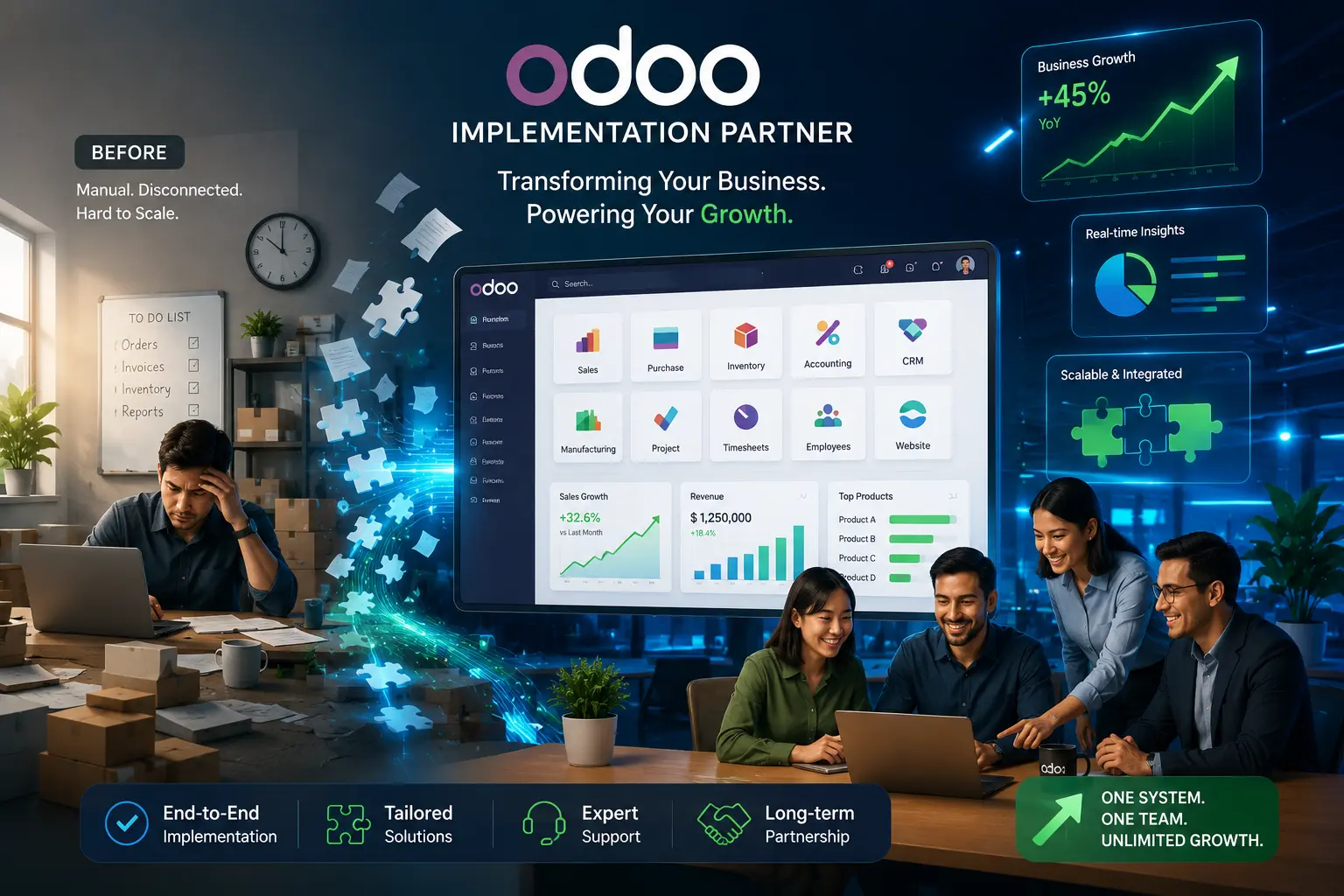
Odoo pricing per user
In the landscape of modern ERP solutions, Odoo has distinguished itself by offering a unique, user-centric pricing model that stands in stark contrast to the monolithic, high-cost licensing structures of legacy systems. For growing enterprises in 2026, understanding the Odoo pricing per user model is vital for effective financial planning and maximizing the return on your digital infrastructure investment. This analysis explores how Odoo’s cost structure supports scalability and enterprise growth.
1. The Core Philosophy of User-Based Pricing
Unlike traditional ERPs that often charge exorbitant fees based on complex module bundles or organization-wide licensing, Odoo’s pricing is fundamentally tied to the number of active users.
-
Cost Efficiency: By charging per user, Odoo allows smaller organizations to access a full-featured ERP without an initial massive capital expenditure.
-
Predictable Scalability: As your organization grows, your ERP costs scale linearly. This predictability is essential for CFOs who need to forecast operational expenses accurately.
-
Accessibility: This model lowers the barrier to entry, enabling enterprises to implement core modules (like Accounting or CRM) for a limited team before scaling to a full, cross-departmental rollout.
2. Navigating Odoo Editions: One vs. Multi-App
Odoo’s pricing strategy is further simplified by its edition-based approach.
-
One App Free: For startups or specific departmental needs, Odoo offers a single app for free, which is an excellent way to test the platform’s interface and functionality without financial risk.
-
Standard/Custom Pricing: The “per user” price varies based on the plan selected. Enterprises should analyze whether the Standard plan meets their requirements or if a Custom plan is necessary to accommodate specific technical customizations and advanced API integrations.
3. Strategic Considerations for Enterprise Scalability
When evaluating Odoo pricing, enterprises must look beyond the base per-user fee to identify the true Total Cost of Ownership (TCO):
Executive Deep-Dive
Scaling Beyond Traffic to Revenue
Most enterprises fail because they chase clicks instead of trust. While building your global presence, ensure your EEAT 3.0 signals are synchronized across all regions.
Recommended for you:
→ The Shift from Traffic to Trust: A New KPI for Enterprise SEO-
User Roles and Requirements: Not every employee needs full access. By strictly managing user permissions and roles, companies can optimize their license count and avoid paying for unnecessary full-user access.
-
Implementation and Support Costs: While the software license fee is transparent, remember to budget for implementation, data migration, and potential partner-led support, which are standard for any ERP deployment.
-
Odoo.sh vs. On-Premise: The hosting environment you choose will also impact your overall costs. Odoo.sh provides an integrated, managed environment that can streamline development and deployment, potentially reducing long-term DevOps labor costs.
- 🚀 Amazon Review: Bentgo Kids Lunch Box Review
- 📊 Product Comparison: Best Lunch Boxes for Kids
- ⚔️ Gear Selection: Cute Lunch Boxes Aesthetic Choices
- 🏢 Top Insulated: Top Insulated Bento Box
- 💡 Daily Commutes: Insulated Lunch Box Options
- 💰 Brand Alternatives: Lunch Boxes Target Alternatives
- 🔍 Shopping Guide: Bento Boxes Online Deals
- 📈 Food Ideas: Creative Bento Box Lunch Ideas
- ⚙️ Kids Gear: Stylish Lunch Boxes for Girls
Amazon Product Authority & E-E-A-T Summary
To maximize organic performance and search visibility in global e-commerce and product review niches, maintaining robust internal linking across specific product clusters ensures faster indexing, stronger topical authority, and sustainable search engine ranking.
4. Maximizing ROI in the 2026 Business Climate
To ensure that your Odoo investment provides maximum value, integrate the following strategies into your deployment:
-
Phased Rollout: Start with high-impact departments to demonstrate quick wins and ROI before expanding to the entire organization.
-
Continuous Training: Ensure your staff is properly trained. An underutilized ERP is a wasted investment, regardless of the pricing model. High adoption rates are the primary driver of ROI in user-based systems.
-
Regular Audits: Perform quarterly reviews of your user licenses. Ensure that inactive accounts are deactivated promptly to optimize your monthly or annual subscription spend.
Conclusion
Odoo pricing per user offers a refreshing, transparent, and scalable alternative for enterprises navigating the digital transformation demands of 2026. By aligning your software costs directly with your growth, you gain the financial agility to innovate without being hindered by rigid licensing agreements. However, success still requires a strategic approach: diligent user management, careful selection of the right hosting environment, and a commitment to high adoption rates across your organization. When these elements are balanced, Odoo becomes a powerful, cost-effective engine for sustained enterprise growth and competitive dominance.
Last Updated on 2 months ago by dudung