
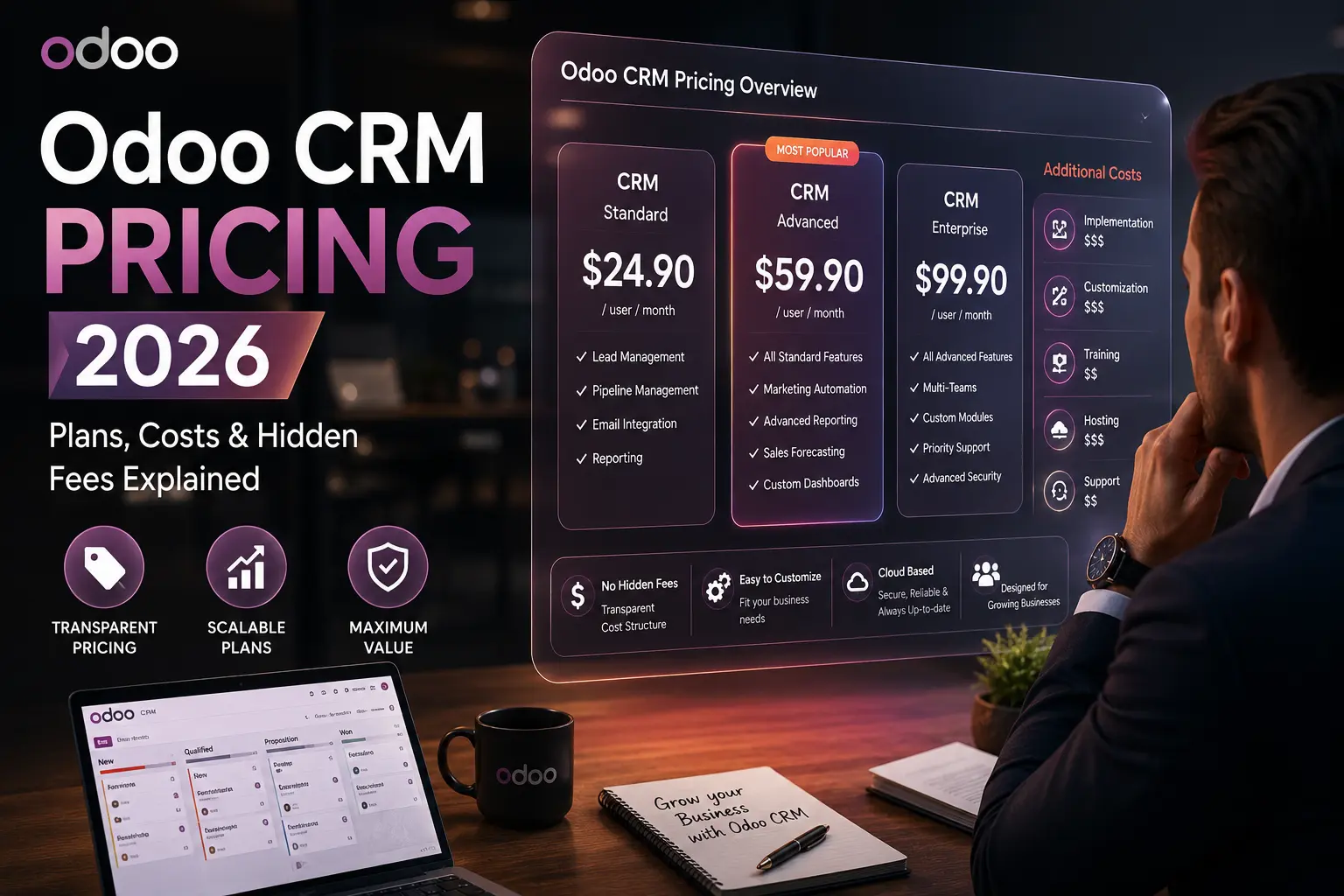
For Small to Medium Enterprises (SMEs) evaluating ERP solutions, the decision often boils down to one critical factor: transparency in cost. In 2026, Odoo continues to lead the market with its unique, modular pricing model, yet many businesses still find its licensing structure complex to navigate. This guide provides a comprehensive breakdown of Odoo’s pricing strategy, helping you to make an informed investment that aligns with your operational budget and long-term growth objectives.
The Odoo Philosophy: Modularity at Its Core
Unlike legacy ERP systems that bundle all features into a massive, expensive license, Odoo’s architecture is built on the “Apps” model. This means you only pay for the specific functionalities you require, such as CRM, Inventory, Accounting, or Manufacturing.
This modularity is the cornerstone of Odoo’s affordability. It allows startups to begin with a minimal footprint and scale seamlessly as their business processes evolve, ensuring that you are not paying for “bloatware” that you do not need.
Understanding the Subscription Tiers
Odoo generally offers two main subscription paths, which are critical to understand before planning your implementation:
-
Odoo Online: This is the SaaS (Software as a Service) offering. It is hosted on Odoo’s own cloud infrastructure. It is ideal for businesses that want a turnkey solution with minimal IT maintenance. The pricing is typically structured on a per-user basis, granting access to all enterprise apps.
-
Odoo.sh: This is a PaaS (Platform as a Service) offering. It provides a more robust environment for companies that require custom development, staging branches, and more control over their infrastructure. It includes the benefits of Odoo Online but adds advanced developer tools.
-
Odoo On-Premise: For enterprises with strict data sovereignty or specific compliance requirements, Odoo can be hosted on your own local servers. This requires internal IT expertise but offers the highest level of control over the environment.
The Cost Factors You Must Anticipate
While the base licensing cost is transparent, your Total Cost of Ownership (TCO) will depend on several variables:
Executive Deep-Dive
Scaling Beyond Traffic to Revenue
Most enterprises fail because they chase clicks instead of trust. While building your global presence, ensure your EEAT 3.0 signals are synchronized across all regions.
Recommended for you:
→ The Shift from Traffic to Trust: A New KPI for Enterprise SEO1. The Per-User Fee
Odoo transitioned to a “One App Free” and then a per-user pricing model to simplify costs. In most enterprise plans, you pay a flat fee per user for the entire suite of apps. It is essential to conduct an audit of your actual user count versus “view-only” participants, as some plans distinguish between these access levels.
2. Hosting and Infrastructure
If you choose the On-Premise or Odoo.sh path, remember to account for the hidden costs of server maintenance, SSL certificates, and backup storage. Even though these are not “licensing” fees, they are mandatory operational expenses that must be part of your ERP budget.
3. Implementation and Consultancy
Licensing is only part of the equation. Most SMEs will require an implementation partner to assist with data migration, workflow configuration, and team training. These are typically one-time costs, but they can significantly impact your Year 1 budget. Ensure your contract clearly defines the scope of support versus development.
Customization vs. Standardization: Managing License Growth
A frequent pitfall for SMEs is the over-customization of their Odoo instance. While Odoo is open-source and highly flexible, every custom feature you develop is a potential “technical debt” that must be maintained.
-
Standard Configuration: Utilizing native Odoo features is always the most cost-effective path. It ensures smooth updates and lower maintenance costs over time.
-
Custom Development: While sometimes necessary for unique competitive advantages, custom code requires testing and potential refactoring whenever you upgrade your Odoo version. Always prioritize “configuration over customization” to keep your licensing and support costs predictable.
E-E-A-T Perspective: Expert Strategy for Selection
From our position as a consultancy, we have identified three best practices for managing your Odoo licensing investment:
-
Start Lean: Begin your deployment with the core apps (e.g., Accounting and CRM) and stabilize your processes before adding complex modules like MRP or PLM.
-
Audit Your User Access: Regularly review your active users. You may find that some employees only require limited access, which could potentially be managed through specific user roles or external portal access to optimize costs.
-
Invest in Training: The cost of a license is wasted if your team does not know how to extract value from the software. A well-trained team uses the system more efficiently, reducing the need for constant, costly external support.
Making the Final Decision
Odoo’s pricing structure is designed to be as agile as the businesses it serves. By decoupling the cost of the software from your specific feature needs, Odoo allows for a more personalized ERP experience.
However, the “right” price is not just the lowest monthly fee; it is the license that offers the best balance of features, stability, and support for your current and future business model. Before you sign, map your critical business processes against the available app tiers to ensure that your chosen plan provides the necessary ROI for your 2026 growth strategy.
By aligning your ERP strategy with a clear understanding of Odoo’s modular licensing, you can transform your digital infrastructure from a cost center into a powerful engine for competitive advantage.
Exclusive Early Access: Q1 2026
The Global SEO Blueprint for C-Suite
We are finalizing an exclusive strategic framework for global enterprise scaling. Join the elite waitlist for early-bird pricing.
Secure Your Priority Spot