
For many website owners, starting with a shared hosting plan is a logical and cost-effective decision. It allows you to get your content online quickly without a significant financial investment. However, as your website grows, gains more traffic, and requires more complex functionalities, you will inevitably reach a point where shared hosting can no longer keep up with your demands. Understanding the fundamental differences between shared hosting and Virtual Private Server (VPS) hosting is essential for any business owner planning for long-term growth.
The Limitations of Shared Hosting
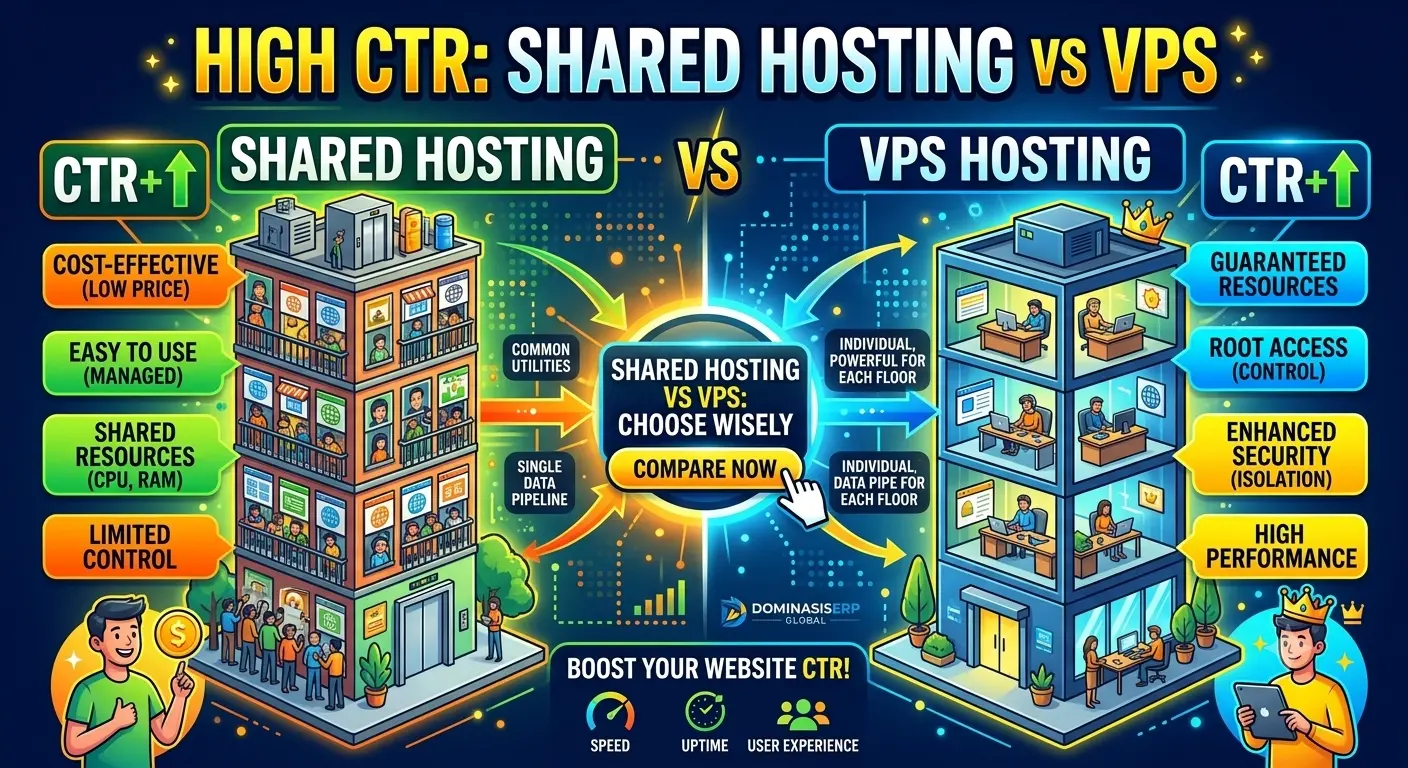
Shared hosting is essentially a communal living environment for websites. You share the server’s resources—CPU, RAM, and bandwidth—with hundreds, sometimes thousands, of other websites. While this keeps costs low, it creates several inherent limitations:
-
Resource Contention: If one “neighbor” on your server experiences a massive traffic spike, it can consume the majority of the available resources, leading to slower load times or even downtime for your site.
-
Limited Control: You have very little say over the server environment. You cannot install custom software, modify server-level configurations, or implement advanced caching mechanisms that might significantly boost performance.
-
Security Risks: Since you share an environment with many other users, your site’s security is only as strong as the weakest site on the server. If a neighbor is compromised, it can potentially impact your security.
The Power of VPS Hosting
A Virtual Private Server (VPS) takes the concept of shared hosting but adds a layer of virtualization. While you are still on a physical server with other users, a VPS creates a “virtual” environment that is entirely isolated from others. You are allocated dedicated portions of the server’s CPU, RAM, and storage, which remain yours regardless of what other sites on the server are doing.
Key Benefits of Upgrading to VPS:
-
Guaranteed Resources: Unlike shared hosting, your allocated resources are guaranteed. This ensures consistent performance, regardless of traffic spikes or server load from other users.
-
Full Root Access: With a VPS, you have “root” or administrative access. This means you can install any software, customize the operating system, and configure the server exactly to your specific needs.
-
Enhanced Security: Isolation is the primary security benefit of VPS. Because your site operates in its own container, you are protected from the actions of other users on the physical server, and you can implement customized security protocols tailored to your application.
-
Improved Scalability: VPS environments are designed to be scalable. If you notice your site’s traffic growing steadily, you can quickly and easily upgrade your resources without the need for a complex migration process.
When Is It Time to Upgrade?
How do you know when it is time to move beyond shared hosting? Watch for these common signs:
-
Consistent Performance Issues: If your site consistently takes more than 2-3 seconds to load despite your best efforts to optimize, it may be a resource limitation issue.
-
Frequent Downtime: If you find that your site goes down during peak hours, it is a clear indicator that your current plan cannot handle your concurrent user count.
-
Requirement for Custom Software: If your development team needs specific modules or server-side software that cannot be installed on a shared environment, a VPS is mandatory.
-
High-Volume E-commerce: For online stores, reliability and speed are directly linked to revenue. The improved stability of a VPS is a strategic investment for any e-commerce business.
Making the Transition
Moving to a VPS can seem intimidating, but for a growing brand, it is a milestone. Many managed VPS providers—such as those we recommend at DMS Global—offer assistance in migrating your existing site, ensuring minimal downtime and a seamless transition. By prioritizing your infrastructure now, you are building a solid foundation for the future success of your website.
Executive Deep-Dive
Scaling Beyond Traffic to Revenue
Most enterprises fail because they chase clicks instead of trust. While building your global presence, ensure your EEAT 3.0 signals are synchronized across all regions.
Recommended for you:
→ The Shift from Traffic to Trust: A New KPI for Enterprise SEOIn conclusion, while shared hosting is a perfect starting point, it is not meant for the long term. The transition to VPS hosting is a natural and necessary step toward creating a professional, fast, and secure digital experience for your users.
related tags: vps hosting, shared vs vps, website performance, server migration, hosting upgrade
Exclusive Early Access: Q1 2026
The Global SEO Blueprint for C-Suite
We are finalizing an exclusive strategic framework for global enterprise scaling. Join the elite waitlist for early-bird pricing.
Secure Your Priority Spot