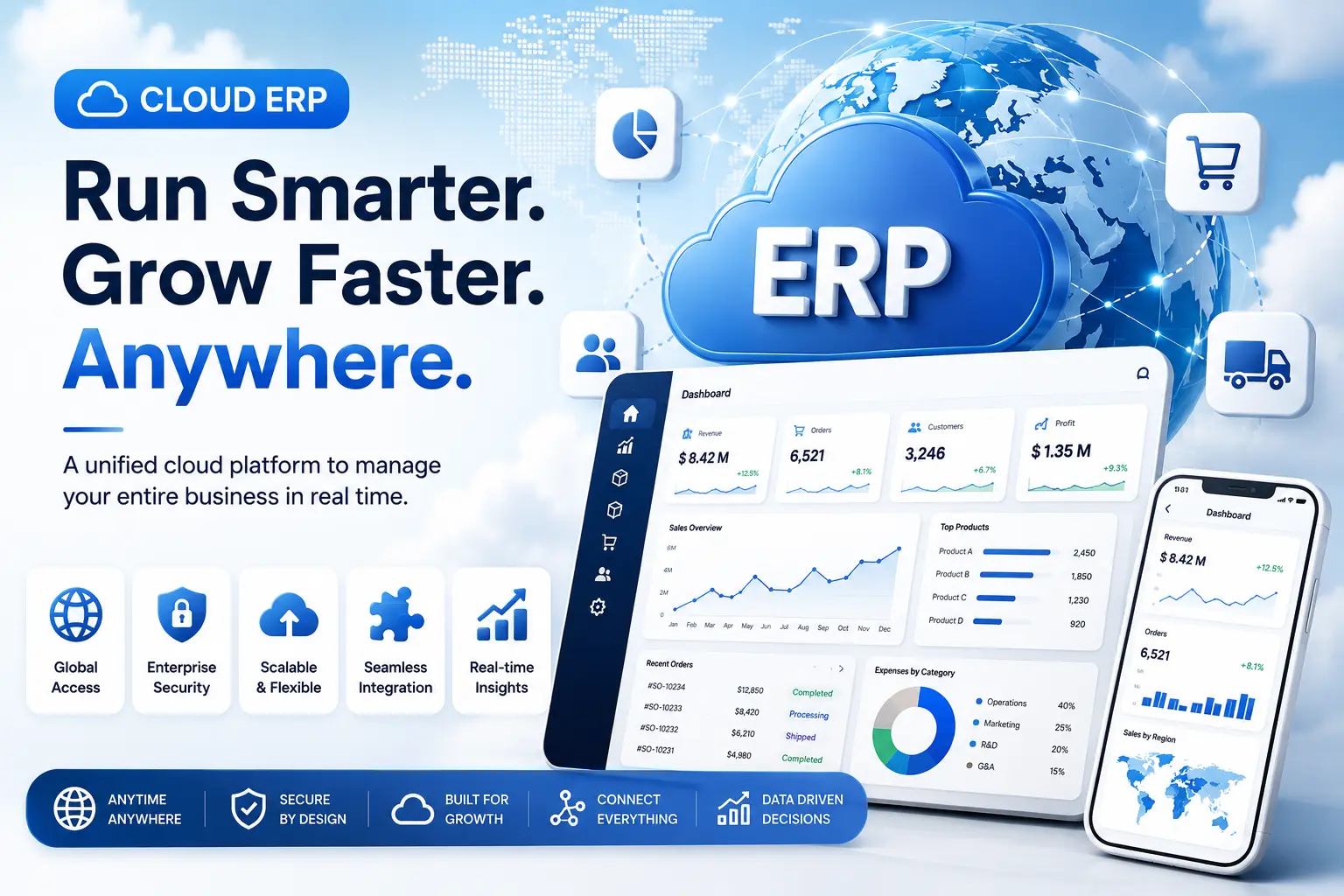
In the modern enterprise, the cloud is the primary engine of innovation and agility. However, the move to cloud-native architectures—while offering unmatched scalability—often brings the challenge of “cloud sprawl” and unpredictable monthly expenditures. Effective Cloud Cost Management is no longer merely an IT task; it is a critical business strategy that impacts profitability, operational efficiency, and long-term viability. For leadership teams, mastering the balance between cloud performance and financial discipline is a definitive demonstration of E-E-A-T (Experience, Expertise, Authoritativeness, and Trustworthiness).
Top Rated Odoo vs SAP Analysis
Explore the most recommended ERP implementations based on our 2026 data matrix:
Need custom ERP consulting? Contact our experts.
The Strategic Anatomy of Cloud Finance
The transition from Capital Expenditure (CapEx) to Operating Expenditure (OpEx) is one of the most significant shifts in the history of enterprise computing. While this shift offers flexibility, it also requires a new management mindset. Cloud cost management, often referred to as FinOps, is the practice of bringing financial accountability to the variable spend model of the cloud.
Why Cost Control Powers Strategic Success
-
Operational Profitability: Cloud costs can scale faster than your revenue if left unmanaged. Disciplined cost control ensures that your margins remain protected as you grow.
-
Predictable Budgeting: By implementing forecasting and rightsizing, you transform “surprise invoices” into predictable, manageable operational costs.
-
Resource Efficiency: Proper cost management inevitably leads to better architecture. When you audit your cloud spend, you often find “zombie” resources, redundant services, and inefficient configurations that can be decommissioned or optimized.
DMS Global Enterprise Solution
Advertisement - Continue reading below
Building E-E-A-T Through Financial Transparency
Google’s E-E-A-T framework highlights that trustworthiness is built on reliability and transparency. In the enterprise landscape, these principles are the bedrock of fiscal responsibility.
-
Experience: Implementing a successful FinOps strategy proves that your organization has the “Experience” to manage complex, multi-environment cloud architectures without losing sight of the bottom line.
-
Expertise: Utilizing modern cost-optimization tools, automated tagging, and AI-driven predictive modeling demonstrates your team’s technical “Expertise” in navigating modern SaaS economics.
-
Authoritativeness: A company that can demonstrate granular visibility into every cloud dollar spent is viewed as an “Authoritative” market leader, earning the confidence of investors and internal stakeholders.
-
Trustworthiness: Trust is a function of consistency. By aligning cloud consumption with clear business value, you demonstrate to your board and investors that your IT leadership is a trustworthy steward of corporate capital.
Executive Deep-Dive
Scaling Beyond Traffic to Revenue
Most enterprises fail because they chase clicks instead of trust. While building your global presence, ensure your EEAT 3.0 signals are synchronized across all regions.
Recommended for you:
→ The Shift from Traffic to Trust: A New KPI for Enterprise SEOStrategic Frameworks for Cloud Optimization
To regain control and maximize ROI, organizations should adopt these fundamental layers of cloud cost governance:
-
Granular Visibility: You cannot manage what you cannot see. Implement automated tagging policies for every cloud resource. When you know who is spending what and why, optimization becomes objective rather than speculative.
-
Automated Rightsizing: Public cloud providers often incentivize over-provisioning. Use AI-driven monitoring tools that automatically identify underutilized instances and recommend—or execute—a downgrade to the appropriate resource tier.
-
Commitment-Based Savings: For workloads that are steady-state, shift from “on-demand” pricing to reserved instances or savings plans. This can often result in significant reductions in monthly spend without any change in performance.
-
Decentralized Accountability: Move away from a “central IT bill” mindset. By charge-backing costs to specific departments, you incentivize team leaders to be as diligent with their cloud budget as they are with their physical equipment budgets.
Maximizing Strategic ROI
Cloud cost management is an investment that pays for itself through increased liquidity and reduced operational waste. To drive maximum impact:
-
Integrate Finance and IT: Break down the silos. When engineers understand the cost impact of their infrastructure choices, they naturally innovate in ways that are more fiscally responsible.
-
Focus on Total Cost of Ownership (TCO): Look beyond the monthly bill. Account for the cost of engineering time, security overhead, and integration complexity.
-
Continuous Feedback Loops: Your cloud strategy is a living document. Conduct quarterly reviews to ensure your cost-management policies are evolving with your business goals and the changing pricing models of your cloud vendors.
🚀 Deep Dive Enterprise Resources
If you're evaluating Enterprise Resource Planning, leverage our technical ROI breakdowns and performance benchmarks:
- 👉 Odoo Enterprise Pricing 2026: The Ultimate Guide
- 👉 SAP to Odoo Migration: Risks & Benefits
- 👉 Maximizing ROI with Oracle NetSuite Implementation
*Verified for 2026 Enterprise Standards.
DMS Global AuthorityThe AdSense Advantage: High-Value B2B Engagement
Content addressing Cloud Cost Management attracts a high-value audience: IT Directors, System Architects, and CFOs who are actively seeking strategies to optimize enterprise-level expenses. By providing expert, deep-dive content, you build a site with high “Topical Authority.” This authority is what search engines reward with high rankings and what B2B advertisers covet. A site that manages to attract this high-intent professional audience in a critical sector like cloud finance is in the perfect position to generate premium-tier AdSense revenue.
Conclusion
Cloud cost management is the definitive discipline for the modern, efficient enterprise. By choosing tools and processes that prioritize visibility, automation, and cross-departmental accountability, you ensure that your organization remains lean and agile as it scales. As you continue to curate content that speaks to these high-level strategic needs, you solidify your platform as an essential destination for executive decision-makers. You are not just building a blog; you are creating a high-authority digital asset that thrives on providing the expert clarity that modern leaders demand to navigate the complex world of cloud economics.
Exclusive Early Access: Q1 2026
The Global SEO Blueprint for C-Suite
We are finalizing an exclusive strategic framework for global enterprise scaling. Join the elite waitlist for early-bird pricing.
Secure Your Priority SpotRelated Enterprise Insights: