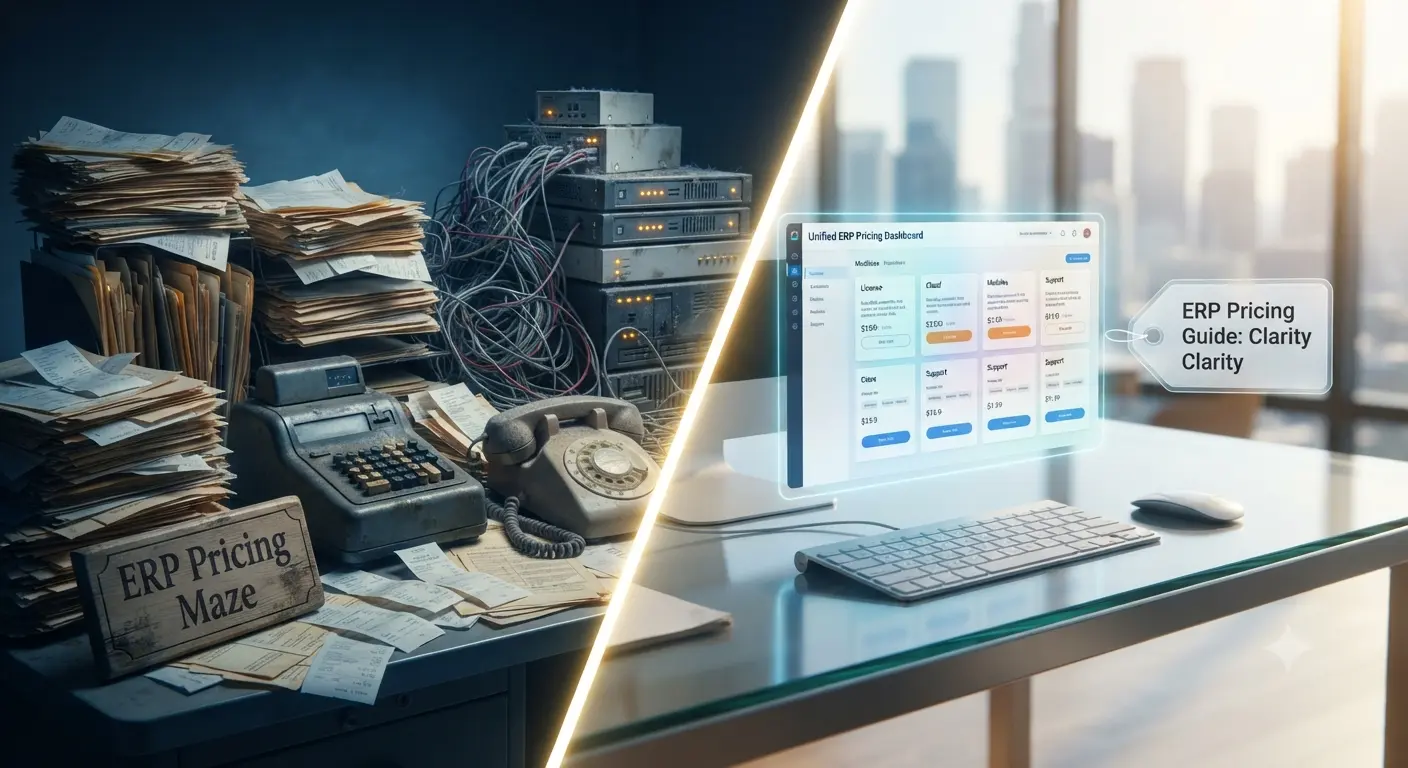
Choosing an ERP system is not just about features — it’s about cost transparency. In 2026, ERP pricing has become more complex due to cloud models, subscriptions, and customization layers.
This guide explains the real ERP pricing structure so businesses can make smarter investment decisions.
💰 What Determines ERP Pricing?
ERP pricing is not a fixed number. It depends on several key factors:
- Number of users
- Type of ERP (cloud or on-premise)
- Modules used (finance, HR, inventory, CRM)
- Level of customization
- Implementation complexity
- Vendor pricing model
🏷️ ERP Pricing Models in 2026
1. Subscription (SaaS Model)
You pay monthly or yearly per user.
Example: Odoo, NetSuite, SAP Cloud
2. Perpetual License
One-time license fee + maintenance cost.
Mostly used in legacy ERP systems.
3. Hybrid Model
Combination of license + subscription + services.
📊 Average ERP Cost Breakdown
- Small Business ERP: $5,000 – $25,000/year
- Mid-Sized ERP: $25,000 – $150,000/year
- Enterprise ERP: $150,000 – $1M+
⚠️ Hidden Costs in ERP Pricing
- Implementation consulting fees
- Data migration cost
- Training employees
- System integration
- Annual maintenance & support
🧠 Why ERP Pricing Varies So Much
Two companies using the same ERP (like SAP or Odoo) can have completely different costs because:
- Different business complexity
- Different number of users
- Different customization needs
📈 ERP Pricing vs ROI (Important Insight)
Low ERP price does not always mean better value. What matters is ROI.
That’s why ERP ROI Calculator is important:
🔗 Related ERP Guides
- ERP Implementation Cost Guide
- ERP ROI Calculator
- SAP vs Oracle ERP Comparison
- Odoo vs NetSuite Pricing
🧠 Final Takeaway
ERP pricing in 2026 is not about “cheap or expensive”, but about value alignment.
The real question is:
Does the ERP generate more value than it costs?
If yes → it is a good investment.