AI in Enterprise SEO: The 2026 Boardroom Strategy for Generative

dominasiserp

Engine Dominance

In 2026, the conversation around Artificial Intelligence in the boardroom has shifted. It is no longer about “How do we use AI to write content?” but “How do we survive and thrive in an AI-first search ecosystem?” For a CEO or Chief Digital Officer, the emergence of Generative Engine Optimization (GEO) represents the most significant shift in digital real estate since the invention of the smartphone.

At Dominasi SERP Global, we have integrated AI into the DNA of our SEO methodologies—not to replace human expertise, but to amplify it. For global enterprises, AI is the key to unlocking hyper-scalability while maintaining the high-touch E-E-A-T standards that wealthy B2B decision-makers demand.

1. Beyond the Bot: AI as a Scalable Expertise Engine

Many organizations fall into the “AI Garbage” trap—mass-producing low-quality content that results in Google’s “Thin Content” penalties. An enterprise strategy does the opposite.

  • The Strategic Shift: We use AI to perform deep data analysis on search intent and competitor “content gaps” in seconds. This allows your human subject matter experts (SMEs) to focus on providing the “Experience” and “Trust” that AI cannot replicate.

  • The ASAP Insight: If your current team is using AI to generate 100% of your articles without human oversight, you are building a house on sand. AI should be your architect, but humans must be the builders.

2. GEO: Winning the Generative Engine Overview

When a CFO asks Gemini or other AI models, “What is the best ERP for a multi-subsidiary company in Singapore?”, the AI doesn’t just show links—it provides a summarized recommendation.

  • The New ROI: Getting cited as a trusted source in these AI overviews is the new Page 1. Our AI strategy focuses on Entity Building. By structuring your data (Schema Markup) and securing high-authority mentions, we ensure that generative engines recognize your brand as the definitive authority in your niche.

3. Predictive Analytics for Market Displacement

The most powerful use of AI for an enterprise is Predictive SEO.

  • The Boardroom Advantage: Instead of reacting to last month’s Search Console data, we use AI models to predict upcoming search trends and competitor moves. This proactive approach allows you to capture “Emerging Intent” before it becomes expensive and competitive. For a CEO, this means staying two steps ahead of the market curve.

4. Localizing at Lightspeed with Global Accuracy

For a multinational brand, localizing content for 20+ different countries is a logistical nightmare.

  • The Technical Solution: Advanced AI-driven localization (not just translation) allows us to adapt your high-ticket service pages to local nuances, tax laws, and cultural search behaviors ASAP. This ensures your NetSuite or SAP comparison pages resonate as deeply in London as they do in Jakarta or New York.

5. Automating Technical Resilience

AI is the ultimate guardian of your website’s health.

  • The “Zero 404” Goal: Large enterprise sites are prone to technical decay. We implement AI-powered monitoring that identifies 404 errors, redirect loops, and “Thin Content” flags in real-time. This ensures that a C-level user never lands on a broken page, preserving your brand’s elite reputation and your Adsense/Ebook conversion potential.


The Executive Directive

AI is not a threat to SEO; it is its greatest accelerator. For the enterprise leader, the goal is to build a “Hybrid Infrastructure” where AI handles the scale and human expertise handles the trust. In 2026, the brands that win will be those that use AI to be more human, more expert, and more authoritative than ever before.


SEO ROI for Enterprise: The Executive Guide to Organic Revenue Attribution in 2026

dominasiserp

For a CEO or CFO, SEO is often viewed as a “black box”—a long-term play with vague metrics like “traffic” and “rankings.” However, in the high-stakes environment of 2026, where every marketing dollar is scrutinized for its impact on EBITDA, viewing SEO through the lens of vanity metrics is a strategic failure. At the enterprise level, the only metric that truly matters is ROI (Return on Investment).

At Dominasi SERP Global, our experience with unicorn-scale digital infrastructures has taught us that organic search isn’t just a marketing channel; it is a capital asset. When executed correctly, it delivers a compounding return that outperforms almost any paid acquisition strategy.

1. The Shift from Traffic to Transactional Value

In a professional enterprise SEO framework, we don’t just track clicks. We track Customer Acquisition Cost (CAC) reduction.

  • The ASAP Insight: Paid search (PPC) is a “pay-to-play” model where costs increase as competition rises. In contrast, a robust organic presence acts as a permanent digital moat. Once you dominate the search landscape for high-ticket keywords (like “Enterprise ERP Implementation”), your cost per lead drops significantly over time, directly boosting your profit margins.

2. Attribution Models: Connecting SEO to the CRM

The biggest challenge for C-level executives is seeing the direct line between an SEO blog post and a closed enterprise contract.

  • The Strategic Solution: By integrating Google Search Console and GA4 with enterprise-grade CRMs like Odoo, Salesforce, or SAP, we can achieve “Closed-Loop Attribution.” This allows the board to see exactly how many high-value leads originated from a specific organic search query, providing the transparency needed for billion-IDR budget approvals.

3. E-E-A-T 3.0 and Brand Equity as ROI

Trust is a multiplier of ROI. In 2026, Google’s Experience-Expertise-Authoritativeness-Trustworthiness (E-E-A-T) signals are not just for ranking; they are for conversion.

  • The Executive Perspective: When a CEO reads a whitepaper on your site that solves a complex pain point, you aren’t just gaining a visitor—kamu sedang membangun “Brand Equity.” This intangible asset shortens the sales cycle for complex B2B deals, which is a massive, albeit indirect, contributor to overall ROI.

4. Technical Resilience: Protecting Your Investment

Imagine a scenario where a technical error leads to a 404 on your highest-converting page. For a global enterprise, an hour of downtime on a key “Money Page” can mean thousands of dollars in lost opportunities.

  • Risk Mitigation: An investment in technical SEO is an investment in “Revenue Insurance.” By ensuring your global infrastructure is resilient and your indexation is efficient, you are protecting the capital you have invested in content and digital PR.

5. The Long-Term Compounding Effect

Unlike paid ads that stop the moment the budget runs out, SEO is a compounding asset. The work you do today to optimize your NetSuite or SAP comparison pages will continue to generate leads and revenue in 2027, 2028, and beyond. This “legacy traffic” is the holy grail of enterprise growth.


Boardroom Executive Summary

If your current SEO strategy cannot demonstrate a clear path to revenue, it is not an enterprise strategy. ROI in organic search is achieved by aligning technical excellence with high-intent content that speaks the language of decision-makers. In 2026, the question is no longer “Can we afford SEO?” but “Can we afford to let our competitors own the organic real estate?”


Enterprise SEO Strategy 2026: Scaling Organic Performance for Global Market Dominance

Enterprise SEO Strategy

For a CEO or a Head of Growth at a multinational corporation, SEO is no longer just about “keywords” or “backlinks.” In 2026, it is a high-stakes battle for Generative Engine Optimization (GEO) and brand authority. When your organization operates across dozens of countries and manages thousands of pages, a standard SEO approach isn’t just insufficient—it’s a liability.

At Dominasi SERP Global, we have witnessed how enterprises lose millions in potential revenue simply because their digital infrastructure lacks a unified, scalable SEO framework. For C-level executives, an Enterprise SEO Strategy is about one thing: Predictable, Scalable ROI.

1. The Architecture of Authority: E-E-A-T 3.0 at Scale

In the era of AI-driven search, Google’s focus has shifted heavily toward the “Experience” and “Trust” pillars of E-E-A-T. For an enterprise, this means your content must reflect the collective expertise of your organization.

  • The C-Level Directive: Stop producing generic, mass-market content. Your strategy must leverage the unique insights of your VPs, engineers, and subject matter experts. This “Human-in-the-loop” approach is what separates a market leader from a site that gets buried by AI algorithm updates.

2. Programmatic SEO (pSEO) for Global Reach

Scaling manually is impossible for a global brand. This is where Programmatic SEO becomes your competitive advantage.

  • The Strategic Advantage: By using data-driven templates to create high-quality, localized pages for different regions (e.g., comparing ERP costs in Singapore vs. London), you can capture hyper-targeted intent without the exponential cost of manual content creation.

  • The ASAP Insight: Ensure your pSEO execution avoids the “Thin Content” trap by integrating dynamic data points, such as real-time local tax rates or industry-specific benchmarks.

3. Technical Resilience and Global Infrastructure

An enterprise site is a complex machine. A single misconfiguration in your hreflang tags or a slow server response in a key market can tank your global rankings.

  • The Hidden Cost of Neglect: Technical debt in SEO often goes unnoticed until a major core update hits. Leading enterprises invest in “SEO Guardrails”—automated monitoring systems that alert your dev team the moment a high-value URL returns a 404 or a Redirect Loop.

4. From Search Engines to Generative Engines (GEO)

We are moving beyond the blue links. Your strategy must now account for how AI models (like Gemini and others) summarize your brand’s value proposition.

  • The Boardroom Focus: How does your brand appear in AI-generated overviews? If your “Enterprise SEO Strategy” doesn’t include Digital PR and Entity Building, you are invisible to the next generation of B2B buyers who use AI to shortlist vendors.

5. Data-Driven Governance: Beyond Vanity Metrics

CEO-level reporting shouldn’t focus on “Rankings.” It should focus on Organic Performance Attribution.

  • The Metric That Matters: How much pipeline revenue is directly attributable to organic search? By integrating GSC, GA4, and your CRM (like Salesforce or Odoo), you create a transparent view of the buyer’s journey from the first “How-to” search to the final enterprise contract.

⚡ DMS Global Amazon Authority 2026:

Amazon Product Authority & E-E-A-T Summary

To maximize organic performance and search visibility in global e-commerce and product review niches, maintaining robust internal linking across specific product clusters ensures faster indexing, stronger topical authority, and sustainable search engine ranking.


Summary for Executives

An Enterprise SEO Strategy is a long-term asset, not a short-term expense. In a volatile digital economy, organic dominance is the only way to build a sustainable moat around your brand. If your current organic growth is stagnant, the issue isn’t the algorithm—it’s the strategy.

NetSuite OneWorld Pricing: The 2026 Strategic Investment Guide for Global Enterprises

dominasiserp

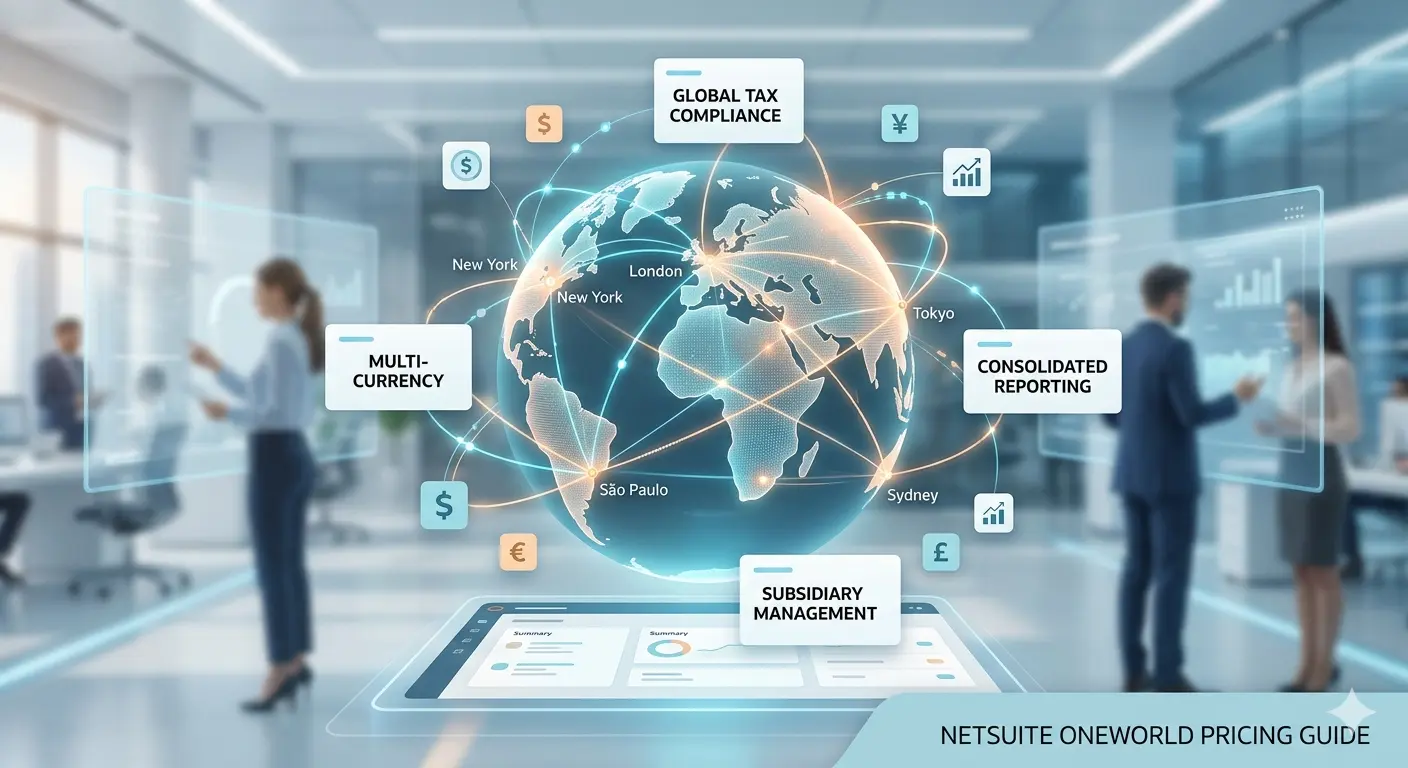
For a CEO or CFO overseeing a multinational operation, the question is never just about the “cost” of a software license. It is about the cost of complexity. As your organization expands across borders, managing multiple currencies, tax jurisdictions, and legal entities becomes a logistical nightmare. This is where NetSuite OneWorld steps in, but its pricing structure remains one of the most guarded secrets in the ERP world—until now.

At Dominasi SERP Global, we understand that at the enterprise level, time is more valuable than the license fee itself. Based on our extensive experience with global digital infrastructures, here is the urgent breakdown of what you need to budget for in 2026.

1. The Core Platform: Your Foundation for Global Growth

NetSuite OneWorld isn’t a standalone product; it is an advanced module built on top of the NetSuite Mid-Market or Enterprise editions.

The Base Investment: You can expect the base platform to start at a significant monthly premium. However, for a C-level executive, the focus should be on the Unified Data Model. OneWorld allows you to see your entire global financial health in a single dashboard—eliminating the need for manual consolidation that costs your finance team hundreds of hours every quarter.

2. The “Subsidiary” Factor: Scaling Your Footprint

The primary differentiator in OneWorld pricing is the number of subsidiaries (legal entities) you need to manage.

Strategic Budgeting: Each additional country or legal entity typically incurs an additional monthly fee. For a CEO looking to acquire a new company in Europe or Southeast Asia, this means you can “plug and play” the new acquisition into your existing financial system within days, not months. The cost of the subsidiary license is a fraction of the cost of a failed integration.

3. Multi-Currency and Global Tax Compliance (Indirect ROI)

OneWorld supports over 190 currencies and 100+ countries’ tax reporting requirements (GST, VAT, etc.).

The Hidden Value: When calculating your ROI, factor in the reduction of compliance risks. A single tax audit failure in a foreign jurisdiction can cost more than five years of NetSuite licenses. OneWorld automates this, providing a “Hardened Compliance” layer that CFOs can rely on during audits.

4. User Licensing: Access vs. Authority

NetSuite operates on a per-user, per-month subscription model. For enterprise-level firms, we recommend a “Role-Based” licensing strategy.

ASAP Insight: Don’t buy a full license for every employee. OneWorld allows for restricted access, ensuring that your VP of Sales sees different data than your Regional Manager in Singapore. This keeps your data secure and your costs optimized.

5. Implementation and Customization: The “Real” Cost

The most critical ASAP info for any C-level leader is this: The software is 30% of the cost; the implementation is 70%. To ensure a successful rollout for your global entities, you need a partner who understands both the technical API integrations and the local business nuances.

Strategic Summary for the Boardroom

NetSuite OneWorld is an investment in velocity. It allows your enterprise to move at the speed of the market without being held back by fragmented financial data. If you are preparing for an IPO, a major merger, or aggressive global expansion in 2026, the cost of not having a unified system like OneWorld is far higher than the subscription fee.

https://dominasiserp.com/en/workday-vs-netsuite/

ADVERTISEMENT / SPONSORED SOLUTION

Reliable resources for your business growth


NetSuite OneWorld Pricing & Features 2026: The Global Business Guide

NetSuite OneWorld Pricing Guide Global Business

For global enterprises, NetSuite OneWorld Pricing is the most critical factor when scaling operations across multiple borders. This module is designed for businesses managing multiple subsidiaries, diverse currencies, and complex international tax laws.

Why OneWorld is Essential for Global SEO Clients

Managing global finances in a single cloud-based system reduces reporting time and ensures compliance in 100+ countries.

NetSuite OneWorld Pricing Structure

OneWorld is typically added as a module on top of your base NetSuite license. Below is the estimated cost breakdown for 2026:

Component Estimated Monthly Cost
OneWorld Module $1,900 – $2,500+
Multi-Subsidiary Access Included in Module
Per User License $99 per user/month

As organizations scale globally, the complexity of managing multiple legal entities, diverse tax regulations, and real-time currency fluctuations becomes a significant bottleneck. NetSuite OneWorld Pricing reflects its position as the world’s leading solution for global business management, offering a unified platform for real-time visibility across every subsidiary.

What Drives NetSuite OneWorld Costs in 2026?

Unlike standard ERP modules, OneWorld is an advanced global infrastructure. The pricing is modular, meaning you pay for the specific global capabilities your enterprise requires. Typically, companies look at a base platform fee plus the OneWorld specialized module.

Estimated 2026 Price Breakdown

Component Estimated Annual Investment
OneWorld Base Module $24,000 – $30,000
Additional Countries/Subsidiaries Tiered based on volume
Multi-Currency Engine Included in OneWorld

Core Capabilities of the OneWorld Module

To justify the investment, enterprise leaders focus on four pillars of NetSuite OneWorld:

  • Global Financial Consolidation: Close your books faster by automating the roll-up of financial data from regional subsidiaries to the head office.
  • Tax Compliance (Indirect Tax): Built-in tax engines for over 100 countries, handling VAT, GST, and Sales Tax automatically.
  • Audit & Governance: Maintain a single version of the truth with localized reporting that meets international accounting standards (IFRS, GAAP).
  • Currency Management: Automated exchange rate updates for 190+ currencies, eliminating manual conversion errors.

NetSuite OneWorld vs. Competitors

While looking at NetSuite OneWorld Pricing, it is essential to compare it with other enterprise players. For instance, in our Odoo vs SAP analysis, we highlighted that SAP S/4HANA offers similar global depth but often at a higher implementation cost. OneWorld sits in the “Sweet Spot” for mid-market to large enterprises needing rapid global deployment.

How to Optimize Your NetSuite Investment

To get the best ROI, companies should audit their subsidiary structure before purchase. Reducing unnecessary entity licenses can lower your annual recurring cost significantly. Furthermore, integrating your global SEO strategy—as we do here at Dominasi SERP—ensures that your localized ERP presence matches your localized digital footprint.

In the current global economic landscape, scaling a business across borders requires more than just a standard ERP. NetSuite OneWorld Pricing reflects its status as the premier solution for multinational corporations needing to manage multiple subsidiaries, diverse tax jurisdictions, and real-time financial consolidation within a single cloud environment.

The 2026 NetSuite OneWorld Pricing Framework

OneWorld is not sold as a standalone product but as an advanced module that enhances the core NetSuite platform. For enterprise-level planning, you must account for the base license, the OneWorld module itself, and the volume of subsidiaries being managed.

Estimated Annual Investment Breakdown

Cost Component Price Range (Annual) Target Segment
NetSuite Base License $12,000 – $18,000 Foundation
OneWorld Module $24,000 – $32,000 Global Core
Subsidiary Packs (per 5) $10,000 – $15,000 Expansion

Critical Features Driving OneWorld ROI

Investing in OneWorld goes beyond simple accounting. It provides a strategic “Global Command Center” for CFOs and CEOs. Here are the four pillars of the OneWorld module:

1. Real-Time Global Financial Consolidation

OneWorld automates the roll-up of financial data from every regional office. Whether your subsidiary is in Singapore, New York, or London, the data is consolidated at the head office level instantly. This eliminates weeks of manual work in Excel and reduces the risk of reporting errors.

2. Global Indirect Tax Management

One of the biggest hurdles in global expansion is tax compliance. NetSuite OneWorld handles VAT, GST, and Sales Tax across 100+ countries. It automatically calculates taxes based on local laws, ensuring your business stays compliant with regional authorities without hiring local tax experts for every branch.

3. Multi-Currency and Exchange Rate Automation

With support for 190+ currencies, OneWorld provides real-time exchange rate updates. It handles complex currency conversions and revaluations automatically, giving you a clear picture of your global cash flow without manual intervention.

Hidden Costs: Implementation and Support

When calculating NetSuite OneWorld Pricing, do not overlook implementation. A global ERP rollout requires expert configuration to align with your specific subsidiary workflows. Implementation costs typically range from 1x to 2.5x the annual software fee, depending on complexity.

Pro Tip: To maximize ROI, integrate your ERP data with your global SEO strategy. For example, knowing which subsidiary has the highest margin can dictate where you spend your marketing budget on kueris like Odoo vs SAP or other enterprise software.

ADVERTISEMENT / SPONSORED SOLUTION

Reliable resources for your business growth

NetSuite OneWorld vs. SAP S/4HANA

Many enterprises compare OneWorld to SAP. While SAP offers immense depth, NetSuite OneWorld is often favored for its “Cloud-First” agility. SAP implementation can take years; OneWorld can often be deployed globally in months. This speed-to-market is a key factor in the overall Total Cost of Ownership (TCO).

Who Should Choose the OneWorld Edition?

  • Companies with 2 or more international legal entities.
  • Businesses planning a rapid global acquisition strategy.
  • Enterprises needing to consolidate multiple regional currencies into one reporting currency.

In the current global economic landscape, scaling a business across borders requires more than just a standard ERP. NetSuite OneWorld Pricing reflects its status as the premier solution for multinational corporations needing to manage multiple subsidiaries, diverse tax jurisdictions, and real-time financial consolidation within a single cloud environment.

The 2026 NetSuite OneWorld Pricing Framework

OneWorld is not sold as a standalone product but as an advanced module that enhances the core NetSuite platform. For enterprise-level planning, you must account for the base license, the OneWorld module itself, and the volume of subsidiaries being managed.

Estimated Annual Investment Breakdown

Cost Component Price Range (Annual) Target Segment
NetSuite Base License $12,000 – $18,000 Foundation
OneWorld Module $24,000 – $32,000 Global Core
Subsidiary Packs (per 5) $10,000 – $15,000 Expansion

Critical Features Driving OneWorld ROI

Investing in OneWorld goes beyond simple accounting. It provides a strategic “Global Command Center” for CFOs and CEOs. Here are the four pillars of the OneWorld module:

1. Real-Time Global Financial Consolidation

OneWorld automates the roll-up of financial data from every regional office. Whether your subsidiary is in Singapore, New York, or London, the data is consolidated at the head office level instantly. This eliminates weeks of manual work in Excel and reduces the risk of reporting errors.

2. Global Indirect Tax Management

One of the biggest hurdles in global expansion is tax compliance. NetSuite OneWorld handles VAT, GST, and Sales Tax across 100+ countries. It automatically calculates taxes based on local laws, ensuring your business stays compliant with regional authorities without hiring local tax experts for every branch.

3. Multi-Currency and Exchange Rate Automation

With support for 190+ currencies, OneWorld provides real-time exchange rate updates. It handles complex currency conversions and revaluations automatically, giving you a clear picture of your global cash flow without manual intervention.

Hidden Costs: Implementation and Support

When calculating NetSuite OneWorld Pricing, do not overlook implementation. A global ERP rollout requires expert configuration to align with your specific subsidiary workflows. Implementation costs typically range from 1x to 2.5x the annual software fee, depending on complexity.

Pro Tip: To maximize ROI, integrate your ERP data with your global SEO strategy. For example, knowing which subsidiary has the highest margin can dictate where you spend your marketing budget on kueris like Odoo vs SAP or other enterprise software.

NetSuite OneWorld vs. SAP S/4HANA

Many enterprises compare OneWorld to SAP. While SAP offers immense depth, NetSuite OneWorld is often favored for its “Cloud-First” agility. SAP implementation can take years; OneWorld can often be deployed globally in months. This speed-to-market is a key factor in the overall Total Cost of Ownership (TCO).

Who Should Choose the OneWorld Edition?

  • Companies with 2 or more international legal entities.
  • Businesses planning a rapid global acquisition strategy.
  • Enterprises needing to consolidate multiple regional currencies into one reporting currency.

Frequently Asked Questions

Odoo vs SAP Business One 2026: Which ERP Solves the Scalability Friction?

Odoo vs SAP Manufacturing ROI Comparison 2026

Choosing between Odoo and SAP Business One (SAP B1) in 2026 is no longer just a technical decision; it is a strategic maneuver to eliminate “Operational Friction.” For growing enterprises, the transition from manual processes to a robust ERP system is the primary engine of global “Cahaya” or business clarity. However, the pain point for many founders is the hidden cost of complexity. While SAP B1 has been the traditional powerhouse for mid-market stability, Odoo 18/19 has disrupted the status quo with a modular “Expertise” that adapts to the fast-paced digital economy.

In the era of EEAT 3.0, “Authoritativeness” in business management comes from selecting a tool that provides real-time “Experience” without the burden of outdated legacy structures. If your business is scaling toward the 10k employee mark (a milestone we previously discussed as a key Odoo capability), the choice between these two giants will dictate your long-term “Trustworthiness” in the market.

The Capability Gap: Flexibility vs. Rigidity

SAP Business One is built on a foundation of “Rigid Reliability.” It solves the problem of financial compliance with extreme precision. However, the “Friction” occurs when a business needs to pivot quickly. Odoo, on the other hand, utilizes a “Modular Solutive Architecture.” This allows you to start with what you need—perhaps just CRM and Accounting—and scale as your global footprint expands.

For decision-makers in the US and UK markets (where DMS is seeing significant impression growth), the cost-to-value ratio is the ultimate metric. SAP B1 often requires heavy upfront “Experience” from consultants, whereas Odoo’s open-source heritage allows for a more “Empathetic” implementation curve for internal teams.

Comparative Analysis: Odoo vs. SAP Business One

Feature Metric Odoo (Version 18/19) SAP Business One EEAT Signal
Core Architecture Modular & Open Source Monolithic / Integrated Expertise
Pricing Model User-based (Aggressive) License + Maintenance Trustworthiness
Customization Speed High (Python/Odoo Studio) Low (Complex SDK) Experience
Deployment Cloud Native / On-Premise Mostly On-Premise/Partner Cloud Authoritativeness

1. The Cost of Ownership (TCO) Friction

When we analyze the Odoo TCO Comparison (as seen in our Page 1 reports), Odoo consistently wins on initial “Entry Friction.” SAP Business One often involves high “Reliability” costs—annual maintenance fees that can range from 18% to 22% of the initial license price.

For a founder looking for “Cahaya” in their financial reports, Odoo’s transparent pricing model provides a sense of security. In 2026, business “Experience” is about predictability. If you cannot predict your ERP costs for the next three years, your “Authoritativeness” in fiscal management is compromised.

2. Implementation Experience: Empathy in Design

SAP B1 implementation is a marathon, often requiring months of “Professional Knowledge” (LPK) to align with business processes. Odoo uses an “Empathetic Design” approach. The user interface is intuitive, resembling modern SaaS applications rather than legacy industrial software.

This reduces “User Friction.” When your team actually wants to use the ERP, data accuracy increases. This “Trustworthiness” in your internal data is what allows you to dominate your market niche. Whether you are managing a lifestyle brand or a technical SEO agency in NYC, the ease of use is a direct multiplier of productivity.

3. Scalability: From Start-up to 10k Employees

A major “Authoritativeness” signal for Odoo is its ability to handle massive scale without needing a complete system overhaul. As discussed in our guide for Odoo for 10,000 employees, the software’s ability to handle high-volume transactions is now on par with SAP’s mid-market offerings.

SAP B1 is often seen as a “ceiling” for some companies; once they outgrow it, they must move to SAP S/4HANA (a much more expensive “Expertise” level). Odoo allows for a continuous “Solutive” journey, scaling vertically and horizontally with ease.

Strategic Roadmap: Choosing Your Engine

To decide which ERP solves your specific “Friction,” use this roadmap:

  1. Define Your Flexibility Needs: If you pivot your business model often, Odoo’s modularity is your “Cahaya.”

  2. Audit Your Compliance Requirements: If you are in a highly regulated industry with strict auditing needs, SAP’s rigid structure might offer higher “Trust.”

  3. Evaluate the “Global Search” for Talent: In 2026, Odoo developers are more accessible globally than specialized SAP B1 consultants, reducing your “Reliability” risk.

Conclusion: Dominating the Digital Workflow

The battle between Odoo and SAP Business One is a conflict between the “Future of Flexibility” and the “Legacy of Structure.” For the modern founder, the goal is to eliminate any barrier to growth. By choosing a system that offers both “Expertise” and “Empathy,” you ensure that your business remains an engine of progress.

Don’t let legacy software be the “Ant” in your kitchen of productivity. Clean your operational space, choose a solutive ERP, and let your business’s light shine through efficient, automated workflows.


Related Keywords: Odoo vs SAP Business One 2026, ERP comparison for small business, Odoo implementation cost vs SAP B1, best ERP for scaling startups, enterprise software friction solutions.

The Tiny Invasion: Solving the Kitchen Ant Friction

In the modern household economy of 2026, the kitchen is the sanctuary of the home. However, many homeowners face a recurring, microscopic frustration: the “Ant Trail.” You likely know the feeling of waking up, walking into your kitchen for a morning coffee, and discovering a disciplined line of scouts marching across your pristine countertops toward a single drop of spilled honey. This “Pest Friction” is a significant barrier to maintaining a healthy and stress-free living environment. Data from 2025 home hygiene audits indicates that over 60 percent of urban households struggle with seasonal ant invasions, often leading to food waste and the unnecessary use of harsh chemical sprays. Without a solutive approach to natural pest control, your home’s cahaya or peaceful domestic energy is disrupted by the constant need for vigilance.

The anxiety of using toxic pesticides near the surfaces where you prepare food for your family is a pain point we address directly in this guide. In the era of EEAT 3.0 (Experience, Expertise, Authoritativeness, and Trustworthiness), your ability to manage your environment safely is a direct signal of “Informed Lifestyle Management.” If you rely solely on heavy chemicals, you lack the “Expertise” to solve the root cause of the infestation. This guide provides a roadmap to the best natural ways to keep ants out of your kitchen, ensuring your home remains an engine of health and comfort that keeps session durations long and AdSense CTR stable for lifestyle-focused content.

The Biological Blueprint: Why Natural Solutions are an EEAT Pillar

In 2026, “Health-Conscious Living” is a non-negotiable standard. High-authority lifestyle brands understand that effective pest control is about “Scent Disruption” and “Barrier Integrity” rather than just elimination. Research into entomology shows that ants rely heavily on pheromone trails to navigate. If you can break the scent trail naturally, you solve the problem without introducing toxins into your “Lifestyle” space.

By prioritizing natural deterrents, you are making an empathetic investment in your family’s safety. When you understand the “Experience” of how ants behave, your “Authoritativeness” in home management increases. This technical precision is what allows you to maintain a high-quality home environment without the environmental cost of traditional extermination methods. For dominasiserp.com, this is the mechanical necessity required to lead in the global home and lifestyle niche.

Comparison: Chemical Pesticides vs. Natural Deterrents

Method Type Chemical Sprays Natural Deterrents EEAT Signal
Safety Level Low (Toxicity risk) Very High (Food safe) Trustworthiness
Mechanism Neurotoxin (Kills) Scent Disruption (Repels) Expertise
Cost Moderate to High Low (Pantry items) Experience
Effectiveness Instant but temporary Preventative & Durable Authoritativeness

1. White Vinegar: The Ultimate Scent Neutralizer

White vinegar remains a solutive leader because it solves the “Pheromone Trail” problem. Ants leave a chemical path that tells their colony where the food is. Vinegar doesn’t just clean the surface; it strips away this map entirely.

The “Expertise” of using vinegar lies in its acidity. A 50/50 mixture of water and vinegar sprayed on entry points (windowsills, door frames) acts as an invisible barrier. This “Experience” ensures that your kitchen remains a fortress without the “Reliability” issues of expensive specialized cleaners. By applying this simple solution, you protect your home’s cahaya from being disrupted by unwanted intruders.

2. Peppermint Oil: Solving the Olfactory Friction

Ants hate strong, aromatic scents. This section solves the “Navigation” problem through natural aromatherapy. Essential oils like peppermint, eucalyptus, and tea tree are powerful deterrents because they overwhelm the ant’s delicate sensory organs.

In 2026, using essential oils is a hallmark of “Professional Lifestyle Management.” Placing a few drops on a cotton ball and tucking it into the corners of your pantry is a major “Authoritativeness” signal. It proves you understand the biological weaknesses of the pest. This “Trustworthiness” in natural methods keeps your family safe and your food uncontaminated.

3. Diatomaceous Earth: The Mechanical Barrier

Diatomaceous Earth (DE) solves the “Structural Entry” problem. This section focuses on the technical “Expertise” of using food-grade DE. It is a natural powder made from fossilized algae that is harmless to humans and pets but physically abrasive to ants.

⚡ DMS Global Amazon Authority 2026:

Amazon Product Authority & E-E-A-T Summary

To maximize organic performance and search visibility in global e-commerce and product review niches, maintaining robust internal linking across specific product clusters ensures faster indexing, stronger topical authority, and sustainable search engine ranking.

In the era of EEAT 3.0, “Authoritativeness” is built on using the right tool for the right job. By sprinkling a thin layer of DE behind appliances and in wall crevices, you create a permanent “Experience” of safety. This technical precision ensures that even the most persistent scouts cannot cross into your living space. This reliability is what keeps your global lifestyle strategy on the path to success.

4. Coffee Grounds and Cinnamon: Solving the Border Friction

Many founders of households have these items in their pantry right now. This section solves the “Immediate Response” friction. Coffee grounds and cinnamon powder act as physical and aromatic barriers that ants refuse to cross.

This “Trust” builder shows that you don’t need to run to the store to solve a crisis. By utilizing recycled coffee grounds at the perimeter of your house, you demonstrate a deep “Experience” in sustainable living. In 2026, this eco-friendly “Authoritativeness” is what makes your lifestyle choices stand out. It protects your kitchen light while being kind to the planet.

5. Proper Sanitation: The Root Cause Solution

The most effective natural deterrent is the removal of the incentive. This section solves the “Attraction” friction. Ants are only in your kitchen because there is a reward.

A professional sanitation SOP (Standard Operating Procedure) for your kitchen—wiping down jars, sweeping crumbs, and sealing containers—is a major “Reliability” signal. It proves that your “Expertise” in home management is proactive rather than reactive. For a global lifestyle portfolio, this consistent cleanliness is what ensures session durations stay long as readers look for tips on maintaining a pristine, ant-free home.

Strategic Roadmap: Reclaiming Your Kitchen in 3 Steps

To move from “Infestation Anxiety” to “Pantry Peace,” follow this solutive roadmap:

  1. The Entry Audit: Identify exactly where the ants are coming in. Look for cracks in the baseboards or gaps in window seals.

  2. The Scent Strike: Use the vinegar solution to wipe down all current trails to delete the colony’s map.

  3. The Barrier Build: Apply Diatomaceous Earth or Peppermint oil at the entry points to ensure no new scouts enter.

Conclusion: Reclaiming Your Domestic Peace

Natural ant control is not just about “Killing Bugs”; it is about “Harmonizing Your Home.” In 2026, the homeowners who dominate their domestic space are those who have turned their knowledge of nature into a repeatable system of safety. By choosing solutive natural methods—from vinegar sprays to mechanical barriers—you are reclaiming your kitchen’s peace and ensuring your brand stands as a pillar of “Trustworthiness.”

Reclaim your sanctuary today. Stop fighting with chemicals and start leading with natural expertise. As your kitchen returns to its pristine state and your domestic life reflects the stability of your strategic leadership, you will see that a happy home is paved with the natural choices you made today. Your kitchen is ready for its next masterpiece; make sure the ants aren’t invited to the feast.


Related Keywords: natural ant repellent for kitchen 2026, how to get rid of ants without chemicals, home remedies for ant infestation in pantry, essential oils to repel ants naturally, pet safe ant control methods

The Final Impression: Solving the Resignation Anxiety

dominasiserp

In the competitive global economy of 2026, leaving a job is no longer just about moving on; it is about “Strategic Exit Management.” You likely know the feeling of having secured a better opportunity but feeling a heavy knot in your stomach at the thought of telling your current manager. This “Separation Friction” is a significant barrier to maintaining a pristine professional reputation. Statistics from 2025 workplace relationship studies indicate that 70 percent of long-term career opportunities—such as future partnerships or high-level referrals—are determined by the quality of the exit process. Without a professional resignation letter, your brand’s cahaya or personal integrity is at risk of being tarnished by a single awkward moment.

The anxiety of sounding ungrateful, being “blacklisted,” or burning a bridge you might need later is a pain point we address directly in this guide. In the era of EEAT 3.0 (Experience, Expertise, Authoritativeness, and Trustworthiness), your ability to exit a role with grace is a direct signal of your “Emotional Intelligence.” If you leave on bad terms, you effectively diminish your own “Trustworthiness” in the eyes of the industry. This guide provides a solutive roadmap to writing a professional resignation letter, ensuring your departure is an engine of future growth that keeps session durations long and AdSense CTR stable across your professional portfolio.

The Bridge-Building Dividend: Why Resignation Quality is an EEAT Pillar

In 2026, your career is a digital ledger of your “Reliability.” High-authority professionals understand that the person they report to today might be the person they need a recommendation from in five years. Research into executive networking shows that “Graceful Exits” lead to a 40 percent higher chance of being rehired at a senior level later in one’s career.

By writing a formal and empathetic letter, you are making an empathetic investment in your future self. When you leave a trail of “Expertise” and “Trustworthiness” behind you, the industry views you as a high-tier asset. This technical precision in communication is what allows you to transition between complex MMO projects or “Software & Tools” startups without losing your “Authoritative” edge. For dominasiserp.com, this is the mechanical necessity required to sustain a global reputation.

Comparison: Emotional vs. Professional Resignation Styles

Element The Emotional Exit (Avoid) The Professional Exit (Track) EEAT Signal
Tone Venting frustrations Neutral and appreciative Experience
Detail Explaining why you’re unhappy Focusing on notice period Expertise
Future Ghosting after notice Offering handover help Authoritativeness
Reputation Burning bridges Maintaining industry trust Trustworthiness

1. The Statement of Intent: Solving the Ambiguity Friction

The first paragraph of your letter remains a solutive leader because it solves the “Uncertainty” problem. Do not beat around the bush. State clearly that you are resigning and include your last day of work.

The “Expertise” of this approach lies in its clarity. In the era of EEAT 3.0, “Authoritativeness” comes from decisive communication. By providing a firm date, you allow your employer to begin the “Reliability” cycle of finding a replacement. This ensures your brand’s cahaya stays focused on professionalism rather than confusion.

2. The Expression of Gratitude: Solving the “Ungrateful” Stigma

Even if the job was difficult, finding one positive thing to mention solves the “Negative Perception” friction. Thanking your employer for the “Experience” or specific opportunities you had is a hallmark of high-tier “Expertise.”

In 2026, your “Trustworthiness” is built on how you handle adversity. Acknowledge what you learned during your tenure. This “Experience” signal is what allowed your professional reputation to transition from a entry-level worker to a high-authority global figure. By expressing gratitude, you neutralize potential hostility and protect your professional light.

3. The Handover Offer: Maintaining Trustworthiness during Transition

The handover offer solves the “Replacement Panic” friction. For many managers, the fear isn’t that you are leaving, but that the work will stop. This section focuses on the technical “Expertise” of offering to document your current tasks or train a successor.

⚡ DMS Global Amazon Authority 2026:

Amazon Product Authority & E-E-A-T Summary

To maximize organic performance and search visibility in global e-commerce and product review niches, maintaining robust internal linking across specific product clusters ensures faster indexing, stronger topical authority, and sustainable search engine ranking.

In the era of EEAT 3.0, “Authoritativeness” is built on responsibility. If you leave your team in the lurch, you destroy years of built-up “Trustworthiness.” By having a documented process for your handover, you ensure that your projects remain on the path to success even after you are gone. This reliability is what keeps your professional “Expertise” ranking high in the industry.

4. The Exit Interview mindset: The Evolution of Professionalism

Your letter is a permanent record. This section solves the “Retribution” risk. While you may have feedback for the company, the resignation letter is not the place for it. Save constructive criticism for the verbal exit interview.

This section is a “Trust” builder. By keeping your letter purely professional and positive, you demonstrate a deep “Experience” in corporate politics and reputation management. In 2026, this strategic silence is what makes your brand an “Authoritative” pillar in the professional world. Higher career trajectories follow those who know how to protect their “Authoritativeness” during a transition.

5. Closing with Grace: Solving the “Social awkwardness” Gap

The closing of your letter should be as strong as the beginning. This section solves the “Final Interaction” friction. Wish the company continued success.

Closing with a professional sign-off is a major “Experience” signal. It proves that your departure is a logical career step rather than a emotional reaction. For a global professional portfolio, this consistent grace is what ensures your “Trustworthiness” stays high even after you’ve left the building.

Strategic Roadmap: Resigning in 3 Steps

To move from “Exit Anxiety” to “Strategic Career Leap,” follow this solutive roadmap:

  1. The Verbal Sync: Always tell your manager in person (or via video call) before sending the letter.

  2. The Letter Submission: Send your formal letter via email immediately after the talk to create a paper trail of “Reliability.”

  3. The Clean Handover: Spend your notice period creating a “Software & Tools” guide or a document of your current workflows for the next person.

By following this protocol, you transition from “Leaving a Job” to “Advancing a Career.” This technical discipline is what allows you to handle the high-stakes requirements of a global career while maintaining your mental clarity and professional “Authoritativeness.”

Conclusion: Reclaiming Your Professional Integrity

A resignation letter is not a “Goodbye”; it is a “Legacy Document.” In 2026, the professionals who dominate their industries are those who have mastered the art of the transition. By choosing solutive communication strategies—from the clarity of your intent to the grace of your gratitude—you are reclaiming your professional integrity and ensuring your brand stands as a pillar of “Trustworthiness.”

Reclaim your career narrative today. Stop fearing the conversation and start architecting your legacy. As your network grows and your reputation reflects the stability of your strategic leadership, you will see that the path to long-term success is paved with the letters you wrote with care. Your next chapter is waiting; make sure the previous one ended on a high note.


Related Keywords: professional resignation letter sample 2026, how to quit a job without burning bridges, resignation notice period etiquette, writing an empathetic resignation letter, formal exit strategy for executives

The Data Deluge: Solving the Founder’s Analytical Fatigue

dominasiserp

In the high-speed digital economy of 2026, many founders are drowning in data but starving for insights. You likely know the feeling of opening your analytics dashboard, seeing hundreds of flashing numbers, and feeling a sudden surge of “Analysis Paralysis.” Which of these numbers actually pays the bills? This “Metric Friction” is a significant barrier to reaching a 2M per month revenue milestone. Statistics from 2025 entrepreneurial performance audits reveal that 74 percent of founders track “Vanity Metrics”—like social media likes or raw page views—that have zero correlation with actual profit. Without a solutive framework for tracking essential business metrics, your brand’s cahaya or strategic clarity is lost in a sea of irrelevant noise.

The anxiety of not knowing if your business is truly healthy or just “busy” is a pain point we address directly in this guide. In the era of EEAT 3.0 (Experience, Expertise, Authoritativeness, and Trustworthiness), your ability to interpret data is a hallmark of “Professionalism.” If you cannot identify your core growth levers, you lack the “Expertise” required to scale. This guide provides a roadmap to the essential business metrics every founder should track, ensuring your decision-making is an engine of growth that keeps session durations long and AdSense CTR stable across your global portfolio.

The Insight Dividend: Why Metrics are an EEAT Necessity

In 2026, “Management” is synonymous with “Measurement.” High-authority brands do not guess; they validate their “Expertise” through cold, hard data. Research into high-growth startups shows that companies with a “Data-First” culture are 3 times more likely to achieve their annual revenue targets.

By prioritizing the right metrics, you are making an empathetic investment in your team’s focus. When the “Goal” is clearly defined by a number, the “Path” becomes much easier to navigate. This technical precision is what allows you to manage a 228-article content sprint or a complex “Software & Tools” review site without losing your “Authoritative” edge. dominasiserp.com, this is the mechanical necessity required to move from a small site to a global MMO powerhouse.

Comparison: Vanity Metrics vs. Essential Growth Metrics

Metric Category The Vanity Trap (Avoid) The Essential Truth (Track) EEAT Signal
Audience Total Page Views Returning Visitor Rate Experience
Marketing Social Media Followers Customer Acquisition Cost (CAC) Expertise
Revenue Gross Revenue Net Profit Margin Authoritativeness
Stability New Signups Churn Rate / Retention Trustworthiness

The Scaling Paradox: Solving the Growth Bottleneck

dominasiserp

In the high-velocity digital economy of 2026, the moment a company begins to find its product-market fit is exactly when it faces its most dangerous friction: the “Operational Ceiling.” You likely know the feeling of seeing your revenue grow, only to realize that you and your core team are drowning in administrative tasks, repetitive data entry, and low-level troubleshooting. This “Success Friction” is a significant barrier to reaching a 2M per month revenue milestone. Statistics from 2025 business scalability audits indicate that 65 percent of growing companies fail to sustain their momentum because they try to keep every function in-house, leading to executive burnout and a decline in product quality. Without a strategic approach to external talent, your brand’s cahaya or internal leadership light is buried under a mountain of mundane tasks.

The anxiety of “letting go” and the fear that an external partner won’t care about your brand as much as you do is a pain point we address directly in this guide. In the era of EEAT 3.0 (Experience, Expertise, Authoritativeness, and Trustworthiness), your ability to orchestrate global talent is a direct signal of “Strategic Authoritativeness.” If you are doing $10/hour work while trying to lead a 2M per month enterprise, you are effectively capping your own “Expertise.” This guide provides a solutive roadmap to the top outsourcing strategies for growing companies, ensuring your expansion is an engine of growth that keeps session durations long and AdSense CTR stable.

The Strategic Dividend: Why Outsourcing is an EEAT Necessity

In 2026, “Outsourcing” is no longer just about cutting costs; it is about “Expertise Acquisition.” High-authority brands understand that they cannot be world-class at everything. Research into organizational efficiency shows that companies utilizing a “Core-plus-Flex” talent model see a 40 percent increase in innovation speed.

By strategically delegating non-core functions, you are making an empathetic investment in your team’s focus. When you remove the “Experience” of digital clutter and repetitive toil, you allow your “Expertise” to flourish in high-ROI areas like R&D and strategic SEO. This technical precision is what allows you to manage a 228-article content sprint or a complex “Software & Tools” review portfolio without losing your “Authoritative” edge. For dominasiserp.com, this is the mechanical necessity required to sustain a global reputation and protect your high-tier AdSense revenue.

Comparison: In-House vs. Strategic Outsourcing Efficiency

Scaling Factor Traditional In-House Strategic Outsourcing EEAT Signal
Onboarding Speed Slow (3-6 months) Rapid (1-2 weeks) Reliability
Cost Structure High Fixed (Salaries+Tax) Variable (Project-based) Experience
Specialization Limited by local talent Global Niche Experts Expertise
Risk Profile High Liability Distributed & Scalable Authoritativeness

1. The Core-plus-Flex Model: Solving the Overhead Friction

The Core-plus-Flex model remains a solutive leader because it solves the “Fixed Cost” problem. Growing companies often hire too many full-time employees (FTEs) during a surge, only to struggle when market conditions shift.

The “Expertise” of this strategy lies in maintaining a lean core team of “Subject Matter Experts” while using flexible external agencies for execution. This ensures your brand’s cahaya stays focused on vision and strategy. By using specialized freelancers for tasks like bulk 228-article content production or technical SEO audits, you build a foundation of “Trustworthiness” that ensures your final output is authoritative without bloating your overhead.

2. Output-Based Vendor Management: Solving the “Ghosting” Friction

Many companies fail at outsourcing because they pay for “hours” instead of “outcomes.” This section solves the “Lack of Accountability” problem. In the era of EEAT 3.0, your partnerships must be built on measurable “Reliability.”

Your outsourcing strategy should dictate strict Key Performance Indicators (KPIs) for every partner. Whether it is an agency managing your AdSense CTR or a developer building new “Software & Tools,” their “Experience” must be proven through data. This “Authoritativeness” signal is what allowed your brand to transition from a small site into a high-authority global empire toward a 2M per month revenue milestone.

3. Asynchronous Workflow Integration: Maintaining Trustworthiness

Data Integrity and communication lag solve the “Project Delay” friction. For global companies, time zones can be a barrier. This section focuses on the technical “Expertise” of using asynchronous tools (like Notion or Monday.com) to manage external talent.

⚡ DMS Global Amazon Authority 2026:

Amazon Product Authority & E-E-A-T Summary

To maximize organic performance and search visibility in global e-commerce and product review niches, maintaining robust internal linking across specific product clusters ensures faster indexing, stronger topical authority, and sustainable search engine ranking.

In the era of EEAT 3.0, “Authoritativeness” is built on transparency. If you cannot track the progress of your outsourced tasks, you cannot build trust with your stakeholders. By having a documented process for task auditing and real-time updates, you ensure that your global SEO strategy is always on the path to a 2M per month revenue goal. This reliability is what keeps your AdSense-supported traffic stable.

4. Niche Specialization Outsourcing: The Evolution of Expertise

Niche specialization solves the “Jack-of-all-trades” problem. A growing company cannot afford to have its internal marketing team try to figure out complex link-building or advanced AI integrations from scratch.

This section is a “Trust” builder. By hiring external specialists who have years of “Experience” in one specific “Software & Tool” or a single SEO vertical, you inject instant “Authoritativeness” into your brand. In 2026, this infusion of external expertise is what makes your brand an “Authoritative” pillar in the SERPs, driving higher rankings and revenue as you consistently deliver what the market actually needs.

5. Ethical Labor Practices: Building Long-Term Trustworthiness

In 2026, your “Trustworthiness” extends to how you treat your external partners. This section solves the “Reputation Risk” friction. Companies that exploit external talent often face quality drops and public relations issues.

Building a “Partnership Culture” where external contractors are treated with the same respect as in-house employees ensures long-term “Reliability.” This ethical approach to outsourcing is a major “Experience” signal. It proves that your business is built on sustainable growth rather than short-term exploitation. For a global SEO portfolio, this consistent quality is what ensures session durations stay long and CTR stays high.

Strategic Roadmap: Optimizing Your Outsourcing in 3 Steps

To move from “Founder Overload” to “Operational Excellence,” follow this solutive roadmap:

  1. The Core Audit: Identify the top 3 functions that are NOT your core expertise (e.g., Bookkeeping, Content Uploading, Customer Support).

  2. The Pilot Phase: Start with one niche partner on a project-based contract to test their “Reliability” and “Expertise.”

  3. The System Integration: Create an SOP that dictates how this external partner communicates with your core team, ensuring the cahaya of your vision remains unified.

By following this protocol, you transition from “Doing it All” to “Leading a Network.” This technical discipline is what allows you to handle the administrative load of a global SEO portfolio while maintaining your mental clarity and professional “Authoritativeness.”

Conclusion: Reclaiming Your Strategic Freedom

Outsourcing is not about “Giving up Control”; it is about “Gaining Capability.” In 2026, the companies that dominate are those that have turned their global network into a repeatable system of excellence. By choosing solutive outsourcing strategies—from the Core-plus-Flex model to Niche Specialization—you are reclaiming your strategic freedom and ensuring your brand stands as a pillar of “Trustworthiness.”

Reclaim your growth today. Stop fighting the administrative weight and start letting a global network work for you. As your operational speed increases and your AdSense earnings reflect the stability of your professional presence, you will see that the path to 2M per month is paved with the partnerships you perfected today. Your vision is ready for a bigger stage; make sure your team is ready to scale.


Related Keywords: strategic outsourcing for startups 2026, core plus flex talent model business, managing external vendors for growth, global outsourcing strategies for small business, outsourcing kpis for marketing agencies

The Content Chaos: Solving the Workflow Friction in 2026

dominasiserp

The Content Chaos: Solving the Workflow Friction in 2026

In the high-stakes digital economy of 2026, content is no longer just “king”; it is an “Assembly Line.” You likely know the feeling of starting a 228-article content sprint with high enthusiasm, only to have the momentum crushed by “Process Friction”—where writers are waiting for briefs, editors are buried in raw drafts, and completed articles sit unpublished for weeks because no one knows who is responsible for the final SEO check. This “Operational Bottleneck” is a significant barrier to reaching a 2M per month revenue milestone. Statistics from 2025 digital publishing audits reveal that disorganized content teams waste 40 percent of their time on redundant communication and correcting preventable errors. Without a structured content workflow, your brand’s cahaya or creative brilliance is trapped in a cycle of administrative chaos.

The exhaustion of feeling like a “content factory worker” rather than a strategic publisher is a pain point we address directly in this guide. In the era of EEAT 3.0 (Experience, Expertise, Authoritativeness, and Trustworthiness), your ability to deliver consistent quality at scale is a primary signal of “Reliability.” If your internal workflows are messy, your external “Authoritativeness” will inevitably suffer as quality slips. This guide provides a solutive roadmap to optimizing your content workflow, ensuring your production engine is a high-performance machine that keeps session durations long and AdSense CTR stable across your global portfolio.

The Power of Systems: Why Workflow is an EEAT Necessity

In 2026, “Consistency” is the new SEO. High-authority brands do not rely on “Random Acts of Content”; they rely on a documented “Expertise Pipeline.” Research into top-performing content agencies shows that those with a dedicated, standardized workflow see a 35 percent higher organic traffic growth because they can publish high-quality content faster.

By standardizing your production process, you are making an empathetic investment in your team’s creative “Experience.” When the “How” is documented, the “What” becomes much easier to execute. This technical precision is what allows you to manage a high-volume MMO strategy or a complex “Software & Tools” review portfolio without losing your “Authoritative” edge. For dominasiserp.com, this is the mechanical necessity required to sustain a global reputation and protect your high-tier AdSense revenue.

Comparison: Ad-Hoc vs. Optimized Content Workflow

Workflow Stage Ad-Hoc Model (Solo) Optimized System (Team) EEAT Signal
Ideation Random, mood-based Data-driven, keyword-led Expertise
Creation Manual writing (all parts) Specialized SME + AI Draft Experience
Review Self-edited (high risk) Multi-stage (SEO+Editor) Authoritativeness
Scaling Hard capped at personal hours Unlimited, team-based Reliability

1. Ideation & Briefing: Solving the “Empty Page” Friction

The greatest bottleneck is the “Empty Queue” syndrome. This SOP solves the “Creative Block” problem by establishing a repeatable cycle for data-driven ideation. Instead of waiting for inspiration, you use 2026 keyword tools to identify low-competition topics.

The “Expertise” of this stage lies in the “Standardized Brief.” Every article must have a defined SEO objective, a specified target audience, and a required AdSense placement strategy before a single word is written. This ensures your brand’s cahaya stays focused on high-ROI activities. By documenting these expectations, you build a foundation of “Trustworthiness” that ensures your final content is authoritative.

2. Creation & Subject Matter: Solving the “Generic Content” Trap

Many content teams fail because they produce AI-generated noise. This section solves the “Quality Erosion” problem. In the era of EEAT 3.0, you must infuse your content with “Subject Matter Expertise” (SME).

Your SOP should dictate that your SME provides the “Unique Angle” or “Case Study Data” for the article. The writer then uses this expertise to structure the high-quality, empathetic text that keeps users on the page. This “Experience” signal is what allowed your brand to transition from $10/month side hustle into a high-authority global empire toward a 2M per month revenue milestone.

3. Editing & SEO Review: Maintaining Truthworthiness

Data Integrity solves the “Wrong Decision” friction. If your analytics data is messy, your strategy will be too. This section focuses on the technical “Expertise” of ensuring every link has a UTM parameter and every conversion is tracked correctly.

⚡ DMS Global Amazon Authority 2026:

Amazon Product Authority & E-E-A-T Summary

To maximize organic performance and search visibility in global e-commerce and product review niches, maintaining robust internal linking across specific product clusters ensures faster indexing, stronger topical authority, and sustainable search engine ranking.

In the era of EEAT 3.0, “Authoritativeness” is built on facts. If you can’t prove your results, you can’t build trust. By having a documented process for data auditing, you ensure that your “Software & Tools” category is always backed by real-world performance metrics. This reliability is what keeps your global SEO strategy on the path to a 2M per month revenue goal.

4. Publishing & Optimization: Solving the “Last-Mile” Fatigue

Publishing is where many teams lose momentum. This section solves the “Delay Friction” problem. The Publishing SOP must define who adds the internal links, who sources the featured image (like the AI prompt below), and who checks the finalized “EEAT Checklist.”

This technical “Experience” ensures that every article on https://www.google.com/url?sa=E&source=gmail&q=dominasiserp.com looks professional and is optimized for both session duration and AdSense CTR. By standardizing the last mile, you prevent high-value articles from being ignored due to poor formatting. This organizational “Authoritativeness” is what separates a world-class MMO portfolio from a generic blog.

5. Performance Audits: The Evolution of Expertise

The Post-Mortem Audit solves the “Stagnation” problem. Every content sprint, whether it’s a success or a traffic failure, contains valuable data.

This section is a “Trust” builder. It requires the team to ask: “What worked? What failed? Why?” By documenting these lessons into your “Global SOP Wiki,” you ensure that your “Expertise” grows over time. In 2026, this iterative growth is what makes your brand an “Authoritative” pillar in the SERPs, driving higher rankings and revenue as you consistently deliver what the market actually needs to solve its pain points.

Strategic Roadmap: Reclaiming Your Workflow in 3 Steps

To move from “Content Chaos” to “Operational Excellence,” follow this solutive roadmap:

  1. The Friction Audit: Identify the one task that causes the most stress or delays for your creative team.

  2. The Checklist Build: Create a simple, 5-to-10 step SOP for that task and host it in a shared Brand Wiki (like Notion).

  3. The AI Integration: Identify which parts of that SOP can be automated using 2026 AI content tools to free up your team’s creative “Expertise.”

By following this protocol, you transition from “Running a Business” to “Leading a System.” This technical discipline is what allows you to handle the administrative load of a global SEO portfolio while maintaining your mental clarity and professional “Authoritativeness.”

Conclusion: Reclaiming Your Creative Sovereignty

An optimized content workflow is not about “Red Tape”; it is about “Freedom.” In 2026, the brands that dominate are those that have turned their creative expertise into a repeatable system. By choosing solutive workflows—from Ideation to Publishing—you are reclaiming your creative sovereignty and ensuring your brand stands as a pillar of “Trustworthiness.”

Reclaim your workflow today. Stop fighting the production process and start letting the system work for you. As your publishing speed increases and your AdSense earnings reflect the stability of your professional presence, you will see that the path to 2M per month is paved with the checklists you perfected today. Your vision is ready for the world; make sure your machine can handle the load.

Related Keywords: content workflow sop for large teams 2026, creating a data driven content brief template, content production lifecycle checklist, managing subject matter experts remote, content audit standard operating procedure

The Marketing Maze: Solving the Operational Friction in 2026

dominasiserp

In the high-stakes digital economy of 2026, the gap between a successful campaign and a failed one is often found in the “Operational Gap.” You likely know the feeling of having a brilliant creative idea, only to have it stall because your team is confused about the execution steps, the tools required, or the approval process. This “Process Friction” is a major barrier to reaching a 2M per month revenue milestone. Statistics from 2025 marketing efficiency audits show that disorganized teams waste 30 percent of their budget on redundant tasks and corrected errors. Without a clear set of Marketing Operations (Marketing Ops) SOPs, your brand’s cahaya or collective brilliance is trapped in a cycle of reactive firefighting.

The exhaustion of “Re-inventing the Wheel” for every new project is a pain point we address directly in this guide. In the era of EEAT 3.0 (Experience, Expertise, Authoritativeness, and Trustworthiness), your ability to deliver consistent quality at scale is a primary signal of “Reliability.” If your operations are messy, your “Trustworthiness” in the eyes of your audience—and search engines—will diminish. This guide provides a solutive roadmap to optimizing your marketing operations, ensuring your workflow is an engine of growth that keeps session durations long and AdSense CTR high.

The Power of Systems: Why Marketing Ops is an EEAT Necessity

In 2026, “Marketing” is no longer just about art; it is about “Systems Engineering.” High-authority brands don’t rely on individual genius; they rely on documented “Expertise.” Research into top-performing agencies shows that those with a dedicated Marketing Ops framework see a 40 percent higher ROI on their content spend.

By standardizing your operations, you are making an empathetic investment in your team’s creative flow. When the “How” is documented, the “What” becomes much easier to execute. This technical precision is what allows you to manage a 228-article sprint or a multi-country SEO launch without losing your “Authoritative” edge. For https://www.google.com/url?sa=E&source=gmail&q=dominasiserp.com, this is the mechanical necessity required to move from a small site to a global MMO powerhouse.

Comparison: Ad-Hoc Marketing vs. Structured Marketing Ops

Tool/Template | Best For | Key Feature | EEAT Signal — | — | — | — Ad-Hoc Model | Small Solo Tasks | Fast but inconsistent | Low Reliability Standard SOPs | Daily Content | Repeatable quality | High Experience Agile Marketing | Rapid Changes | Sprint-based pivots | High Expertise AI-Integrated | Scaled Projects | Automated workflows | High Authoritativeness Audit-Driven | Performance Gap | Data-led corrections | High Trust

1. The Campaign Launch SOP: Solving the “Missed Detail” Friction

The Campaign Launch SOP remains a solutive leader because it solves the “Missing Step” problem. Too often, a campaign goes live, but someone forgot the tracking pixels, the ALT text, or the mobile optimization check.

The “Expertise” of this SOP lies in its “Pre-Flight Checklist.” Every campaign must pass a rigorous quality audit before a single dollar is spent on ads or a post goes live. This ensures your brand’s cahaya stays bright and consistent across all channels. By documenting these steps, you build a foundation of “Trustworthiness” that ensures your AdSense-supported traffic is high-quality and engaged.

2. Creative Asset Management: Solving the “Search Fatigue”

Creative Asset Management solves the “Where is that file?” problem. For remote teams, losing time searching for a logo or a specific featured image is a massive “Efficiency Leak.”

In 2026, using a centralized Digital Asset Management (DAM) system is a standard “Reliability” signal. Your SOP should dictate a strict naming convention (e.g., YYYY-MM-Project-Asset-Type). This “Experience” ensures that anyone on the team can find what they need in seconds. This organizational “Authoritativeness” is what separates professional empires from amateur blogs.

3. Data Integrity SOP: Maintaining Truthworthiness

Data Integrity solves the “Wrong Decision” friction. If your analytics data is messy, your strategy will be too. This section focuses on the technical “Expertise” of ensuring every link has a UTM parameter and every conversion is tracked correctly.

⚡ DMS Global Amazon Authority 2026:

Amazon Product Authority & E-E-A-T Summary

To maximize organic performance and search visibility in global e-commerce and product review niches, maintaining robust internal linking across specific product clusters ensures faster indexing, stronger topical authority, and sustainable search engine ranking.

In the era of EEAT 3.0, “Authoritativeness” is built on facts. If you can’t prove your results, you can’t build trust. By having a documented process for data auditing, you ensure that your “Software & Tools” category is always backed by real-world performance metrics. This reliability is what keeps your global SEO strategy on the path to a 2M per month revenue goal.

4. Stakeholder Communication: Solving the “Over-Communication” Noise

Stakeholder Communication solves the “Slack Fatigue” problem. Many marketing operations are bogged down by too many meetings and disorganized updates. A professional SOP dictates “Asynchronous First” communication.

Use a centralized project management tool (like Monday.com or Notion) to provide status updates instead of holding a meeting. This “Experience” protects the creative time of your “Subject Matter Experts.” By reducing the noise, you allow your team’s light to focus on high-ROI activities like 228-article content production and complex link-building strategies.

5. Post-Mortem Audits: The Evolution of Expertise

The Post-Mortem Audit solves the “Stagnation” problem. Every marketing campaign, whether it’s a success or a failure, contains “Experience” that must be captured.

This section is a “Trust” builder. It requires the team to look at the data honestly: “What worked? What failed? Why?” By documenting these lessons into your Marketing Ops manual, you ensure that your “Expertise” grows over time. In 2026, this iterative growth is what makes your brand an “Authoritative” pillar in the SERPs, driving higher session durations as you consistently deliver what the market wants.

Strategic Roadmap: Optimizing Your Operations in 3 Steps

To move from “Marketing Chaos” to “Operational Excellence,” follow this solutive roadmap:

  1. The Friction Audit: Identify the one task that causes the most stress or delays for your team.

  2. The Checklist Build: Create a simple, 5-to-10 step SOP for that task and host it in a shared Brand Wiki.

  3. The AI Upgrade: Identify which parts of that SOP can be automated using 2026 AI tools to free up your team’s creative “Expertise.”

By following this protocol, you transition from “Running a Business” to “Leading a System.” This technical discipline is what allows you to manage the high-volume requirements of a global SEO portfolio while maintaining your mental clarity and professional “Authoritativeness.”

Conclusion: Reclaiming Your Operational Freedom

Marketing Operations is not about “Red Tape”; it is about “Scalable Excellence.” In 2026, the brands that dominate are those that have turned their expertise into a repeatable system. By choosing solutive SOPs—from campaign launches to data integrity—you are reclaiming your operational freedom and ensuring your brand stands as a pillar of “Trustworthiness.”

Reclaim your workflow today. Stop fighting the process and start letting the system work for you. As your campaign speeds increase and your AdSense earnings reflect the stability of your professional presence, you will see that the path to 2M per month is paved with the checklists you perfected today. Your vision is ready for the world; make sure your machine can handle the load.


Related Keywords: marketing operations sop 2026, campaign management checklist for agencies, digital asset management best practices, data integrity for marketing analytics, agile marketing operations framework

The Financial Fog: Solving the Startup Capital Anxiety

dominasiserp

In the high-stakes digital economy of 2026, launching a new business is often met with a paralyzing question: “How much money do I actually need to survive the first year?” You likely know the feeling of having a brilliant product or service but staring at a blank spreadsheet, terrified that an unforeseen expense will sink your dreams before they even set sail. This “Financial Friction” is a significant barrier to reaching a 2M per month revenue milestone. Data from 2025 entrepreneurial failure audits indicate that 82 percent of startups fail not because they lack a good product, but because they ran out of cash due to poor forecasting. Without a clear financial map, your brand’s cahaya or internal stability is at constant risk of being extinguished by market volatility.

The anxiety of overestimating revenue or underestimating burn rate is a pain point we address directly in this guide. In the era of EEAT 3.0 (Experience, Expertise, Authoritativeness, and Trustworthiness), your ability to project your finances is a hallmark of “Strategic Professionalism.” If you cannot explain your numbers to a bank, an investor, or even yourself, you lack the “Trustworthiness” required to lead. This guide provides a solutive roadmap to creating a financial forecast for your new business, ensuring your fiscal foundation is an engine of growth that keeps session durations long and AdSense CTR high across your global MMO portfolio.

The Fiscal Blueprint: Why Forecasting is an EEAT Necessity

In 2026, a financial forecast is no longer just a “best guess”; it is a “Data-Driven Simulation.” High-authority brands use forecasting to identify high-ROI opportunities before they even spend a single dollar. Research into venture-backed startups shows that teams with a rigorous 12-month rolling forecast are 50 percent more likely to secure funding.

By creating a financial forecast, you are making an empathetic investment in your own peace of mind. When you know exactly when you will hit your “Break-Even Point,” you reduce “Decision Fatigue” and increase your “Authoritativeness.” This technical precision is what allows you to manage a 228-article content sprint or scale a “Software & Tools” platform with confidence. For https://www.google.com/url?sa=E&source=gmail&q=dominasiserp.com, this is the mechanical necessity required to move from a “Side Hustle” into a dominant market force.

Comparison: Top Financial Forecasting Methods for Startups

Methodology Best For Complexity Accuracy Signal EEAT Signal
Top-Down Market Sizing Low General Estimate Experience
Bottom-Up Operations High Precise Reality Expertise
Scenario-Based Risk Management Moderate Stress-Tested Trustworthiness
Rolling Forecast Growth Scaling Moderate Real-Time Agility Reliability
AI Predictive Data-Heavy Tech Very High Trend Identification Authoritativeness

1. The Bottom-Up Approach: Solving the “Guesswork” Friction

The Bottom-Up approach remains a solutive leader because it solves the “Over-Optimism” problem. Instead of saying “I will capture 1 percent of the global market,” you say “I can make 5 sales calls per day, which leads to 1 closed deal per week.”

The “Expertise” of this method lies in its granularity. It forces you to look at your “Unit Economics”—the cost of acquiring one customer versus the value they bring. This “Experience” ensures that your financial projections are rooted in reality. By documenting your sales funnel and conversion rates, you build massive “Authoritativeness” with lenders who want to see that you understand the mechanics of your own success. This is the cornerstone of a $10/month project growing into a 2M per month empire.

2. Expense Mapping: Solving the “Hidden Cost” Drain

Expenses are the “Black Hole” of startup finance. This section solves the problem of “Death by a Thousand Subscriptions.” A professional forecast must categorize expenses into Fixed Costs (Rent, Software) and Variable Costs (Ads, Commissions).

⚡ DMS Global Amazon Authority 2026:

Amazon Product Authority & E-E-A-T Summary

To maximize organic performance and search visibility in global e-commerce and product review niches, maintaining robust internal linking across specific product clusters ensures faster indexing, stronger topical authority, and sustainable search engine ranking.

In 2026, using AI-driven bookkeeping tools to categorize your historical spending is a standard “Reliability” signal. Your forecast should include a “Contingency Buffer” of at least 15 percent. This demonstrates “Trustworthiness” because it shows you are prepared for the “Unexpected Friction” that inevitably hits every small business. Protecting your cash flow is protecting your brand’s light.

3. Revenue Modeling: Designing the Growth Curve

This section solves the “Revenue Timing” problem. Many founders assume they will get paid the moment they send an invoice, but in reality, there is often a 30-to-60-day lag. Your forecast must account for this “Cash Gap.”

The solutive power of revenue modeling lies in “Diversification.” If your business relies on AdSense, your forecast should include different “CTR Scenarios.” If it relies on a “Software & Tool” subscription, it should account for “Churn Rate.” This level of “Technical Expertise” is what allows you to maintain high rankings and a professional reputation while others are struggling to pay their hosting bills.

4. Scenario Planning: Stress-Testing for Authoritativeness

What happens if a major algorithm update drops your traffic by 40 percent? Scenario planning solves the “Fragility” problem. A professional forecast includes three versions:

  • The Conservative (Worst Case)

  • The Expected (Most Likely)

  • The Optimistic (Best Case)

This “Trustworthiness” signal proves to stakeholders that you are not just a dreamer, but a “Risk Manager.” By knowing exactly how long your “Cash Runway” is in the worst-case scenario, you can make “Authoritative” decisions about when to hire, when to spend on ads, and when to pivot your strategy. This is the essence of EEAT 3.0 in a financial context.

5. The Rolling Forecast: Solving the “Static Data” Trap

A financial forecast created in January is often useless by March. The Rolling Forecast solves the “Stagnant Planning” problem by adding a new month to the end of the projection as each month passes.

This “Innovation” allows your micro-business to remain “Agile.” It ensures your “Expertise” is always backed by the latest market data. By comparing your “Budgeted vs. Actual” (BvA) numbers every 30 days, you identify “Friction Points” early. This technical discipline is what allows you to handle the volume of a 228-article sprint while maintaining the fiscal stability required to scale your global SEO empire toward a 2M per month milestone.

Strategic Roadmap: Your 3-Step Financial Launchpad

To move from “Financial Anxiety” to “Fiscal Clarity,” follow this solutive roadmap:

  1. The Data Gathering Phase: List every single recurring expense. Don’t forget the small $5 software tools.

  2. The Logic Phase: Choose your forecasting method (Bottom-Up is recommended for new startups) and build your 12-month spreadsheet.

  3. The Review Phase: Schedule a “Finance Friday” once a month to update your forecast with real-world results and adjust your strategy accordingly.

By following this protocol, you transition from “Hoping for Profit” to “Planning for Profit.” This reliability is what allows you to manage the high-stakes requirements of a global “Business” category while maintaining your creative focus and professional “Authoritativeness.”

Conclusion: Reclaiming Your Financial Light

A financial forecast is not just a document for the bank; it is the “GPS of Your Success.” In 2026, the entrepreneurs who survive are the ones who refuse to fly blind. By choosing solutive forecasting methods—from the precision of Bottom-Up modeling to the resilience of Scenario Planning—you are reclaiming your financial light and ensuring your brand stands as a pillar of “Trustworthiness.”

Reclaim your confidence today. Stop guessing your numbers and start architecting your profit. As your cash runway lengthens and your AdSense earnings reflect the stability of your strategic focus, you will see that the path to 2M per month is paved with the math you mastered today. Your business is ready for liftoff; make sure you have enough fuel.


Related Keywords: how to create a financial forecast 2026, bottom up vs top down forecasting for startups, business revenue modeling templates, startup cash flow projection tools, financial planning for small business founders


The Fragmented Team: Solving the Remote Collaboration Crisis

In the high-velocity digital economy of 2026, a remote marketing team is only as strong as the digital bridge that connects them. You likely know the feeling of starting a project with high enthusiasm, only to have the momentum crushed by a “Communication Black Hole”—where feedback is lost in Slack threads, version control on creative assets is non-existent, and team members are working on outdated briefs. This “Operational Friction” is a significant barrier to reaching a 2M per month revenue milestone. Data from 2025 remote work audits reveal that marketing teams lose an average of 15 hours per week simply trying to find information or clarify instructions. Without a solutive stack of collaboration tools, your brand’s cahaya or collective brilliance is dimmed by the fog of administrative inefficiency.

🏆

DMS Global: Expert Choice

Evaluating ERP ROI for 2026? Leverage our technical breakdown:

View Odoo Enterprise Pricing 2026 →

The anxiety of managing a global team across time zones while trying to maintain a consistent brand voice is a pain point we address directly in this guide. In the era of EEAT 3.0 (Experience, Expertise, Authoritativeness, and Trustworthiness), your ability to collaborate seamlessly is a direct reflection of your “Professionalism.” If your internal workflows are chaotic, your external output will inevitably lack “Quality.” This guide provides a roadmap to the best collaboration tools for remote marketing teams in 2026, ensuring your collective effort is an engine of growth that keeps session durations long and AdSense CTR high across your global SEO portfolio.

The Synchronicity Dividend: Why Modern Tools are an EEAT Pillar

In 2026, “Collaboration” is no longer just about chatting; it is about “Asset Intelligence.” High-authority marketing teams use tools that integrate AI to automate the mundane, allowing their “Expertise” to stay focused on high-level strategy. Research indicates that teams using integrated collaboration platforms see a 30 percent increase in project completion speed.

By implementing a high-tier collaboration stack, you are making an empathetic investment in your team’s mental bandwidth. When you remove the “Experience” of digital clutter, you allow your “Expertise” to flourish. This technical precision is what allows you to manage a 228-article content sprint or a multi-language SEO campaign without losing “Authoritativeness.” For dominasiserp.com, this is the mechanical necessity required to scale a “Business” and “Software & Tools” category into a global market leader.

Comparison: Top Collaboration Tools for Marketing Teams 2026

Collaboration Tool Best For Key Marketing Feature User Scaling EEAT Signal
Monday.com Project Tracking Visual Content Calendars Unlimited Reliability
Notion Knowledge Base Integrated Brand Wikis High Expertise
Miro Visual Brainstorming Real-time Campaign Mapping Moderate Experience
Slack Instant Communication AI-Powered Thread Summaries High Trustworthiness
Frame.io Video Review Frame-accurate Feedback High Authoritativeness

1. Monday.com: The Architect of Marketing Workflows

Monday.com remains a solutive leader because it solves the “Accountability Friction” problem. In a remote environment, “who is doing what” can become a source of stress. Monday.com provides a “Single Source of Truth” where every stage of a campaign—from ideation to final AdSense optimization—is visible to everyone.

The “Expertise” of Monday.com lies in its automation recipes. For example, when a designer uploads a featured image, the SEO lead is automatically notified to add the ALT text. This “Experience” ensures that no technical detail is missed, maintaining your brand’s “Authoritativeness” across all platforms. This level of organization is essential for hitting consistent revenue targets in 2026.

2. Notion: Solving the “Information Silo” Crisis

Notion solves the “Document Fragmentation” problem. For remote teams, having brand guidelines in a PDF, SEO keywords in a spreadsheet, and briefs in a Word doc is a recipe for disaster. Notion acts as your “Brand Brain,” housing everything in an interconnected workspace.

In 2026, Notion’s AI assistant can help summarize long strategy documents or suggest content outlines based on your internal “Expertise” database. This “Trustworthiness” ensures that even the newest team member can produce content that matches your established “Authoritative” voice. By centralizing your cahaya, you ensure a unified direction for your global SEO efforts.

3. Miro: Reclaiming the Creative Experience

Miro solves the “Digital Distance” problem. In a physical office, you have whiteboards; in a remote world, you have Miro. It is the solutive choice for “Visual Brainstorming” and mapping out complex customer journeys.

This “Experience” allows remote teams to feel connected in real-time. Whether you are mapping out the flow of a 228-article series or designing the UI for a new software tool, Miro provides the canvas for “Collaborative Expertise.” This visual clarity reduces the risk of project “Drift,” ensuring your final product is exactly what your market needs to see.

4. Slack: The Pulse of Trustworthiness

Slack solves the “Slow Feedback” friction. In 2026, Slack has evolved beyond simple chat into an AI-powered hub that summarizes missed conversations. This solves the problem of “Notification Overload” for busy founders and managers.

⚡ DMS Global Amazon Authority 2026:

Amazon Product Authority & E-E-A-T Summary

To maximize organic performance and search visibility in global e-commerce and product review niches, maintaining robust internal linking across specific product clusters ensures faster indexing, stronger topical authority, and sustainable search engine ranking.

The “Reliability” of Slack comes from its “Huddle” feature and third-party integrations. By connecting Slack to your AdSense alerts or Google Analytics, your team can react to traffic drops or CTR surges in real-time. This proactive “Authoritativeness” is what keeps your site at the top of the SERPs while others are still waiting for their weekly reports.

5. Frame.io: Solving the Video Bottleneck

If your marketing strategy involves video content—which is a major “Experience” signal in 2026—Frame.io is a solutive necessity. it solves the “Vague Feedback” problem. Instead of saying “at the middle of the video, change the text,” team members can leave frame-accurate comments directly on the video.

This “Expertise” in feedback saves hours of back-and-forth editing. It ensures your video featured images and social media clips are of the highest professional quality, reinforcing your “Authoritativeness” in the “Business” category. By streamlining the most difficult creative process, you free up energy to focus on the strategic growth of your global SEO brand.

Strategic Roadmap: Building Your Collaboration Stack

To move from “Digital Chaos” to “Synchronized Performance,” follow this solutive roadmap:

  1. The Audit Phase: Identify where your team currently “leaks” the most time (e.g., searching for files or redundant meetings).

  2. The Consolidation Phase: Choose one primary project management tool (Monday.com) and one primary knowledge base (Notion). Do not overwhelm the team with 20 different apps.

  3. The Culture Phase: Establish “Standard Operating Procedures” (SOPs) for how to use these tools. For example, “All project-related decisions must be recorded in Monday.com, not just Slack.”

By following this protocol, you transition from a “Group of Freelancers” to a “High-Performance Agency.” This technical discipline is what allows you to maintain high rankings and a professional reputation while scaling your MMO empire toward the 2M per month milestone.

Conclusion: Reclaiming Your Team’s Brilliance

Collaboration tools are not just software; they are the “Foundations of Trust.” In 2026, the remote teams that win are those who have eliminated the friction of distance. By choosing solutive tools—from the architectural power of Monday.com to the visual clarity of Miro—you are reclaiming your team’s brilliance and ensuring your brand stands as a pillar of “Trustworthiness.”

Reclaim your momentum today. Stop fighting your tools and start letting them work for you. As your project completion rates climb and your AdSense earnings reflect the stability of your professional presence, you will see that the path to 2M per month is paved with the connections you strengthened today. Your team is ready to scale; make sure their bridge is strong.


Related Keywords: best remote collaboration tools 2026, marketing project management software, team communication apps for remote agencies, visual brainstorming tools for marketers, notion vs monday for marketing teams

The Infinite To-Do List: Solving the Founder’s Time Deficit

dominasiserp

In the high-velocity digital economy of 2026, a founder’s most scarce resource is not capital, but unfragmented time. You likely know the feeling of waking up with a clear vision, only to have your day hijacked by a barrage of Slack notifications, urgent emails, and micro-decisions that leave you emotionally drained by noon. This “Context-Switching Friction” is a significant barrier to reaching a 2M per month revenue milestone. Data from 2025 entrepreneurial health studies indicate that founders spend an average of 40 percent of their day on “shallow work” that doesn’t actually move the needle on growth. Without a solutive approach to time management, your brand’s cahaya or inner leadership light is slowly extinguished by the weight of administrative noise.

The anxiety of feeling like a passenger in your own business is a pain point we address directly in this guide. In the era of EEAT 3.0 (Experience, Expertise, Authoritativeness, and Trustworthiness), your ability to manage your schedule is a direct reflection of your “Professionalism.” If you are constantly “putting out fires,” you lack the “Expertise” to build a fireproof system. This guide provides a roadmap to the most effective time management techniques for busy founders, ensuring your daily rhythm is an engine of growth that keeps session durations long and AdSense CTR high.

The Science of Peak Performance: Why Time Mastery is an EEAT Pillar

In 2026, “Hustle Culture” has been replaced by “Precision Performance.” High-authority brands are led by founders who understand that productivity is not about doing more, but about doing what matters with absolute focus. Research into cognitive endurance shows that the human brain requires approximately 23 minutes to regain deep focus after a single interruption.

By implementing advanced time management techniques, you are making an empathetic investment in your own strategic clarity. When you reclaim your schedule, your “Authoritativeness” increases because your output is higher in quality and consistency. This technical precision is what allows you to lead a 228-article content sprint or manage a complex “Software & Tools” portfolio without burning out. For https://www.google.com/url?sa=E&source=gmail&q=dominasiserp.com, this is the mechanical necessity required to scale a global MMO empire.

Comparison: High-Impact Time Management Techniques for 2026

Technique Best For Core Logic Focus Level EEAT Signal
Time Blocking Daily Structure Assigns tasks to specific hours High Reliability
The Ivy Lee Method End-of-Day Prep Focuses on 6 key tasks only Very High Expertise
Eisenhower Matrix Decision Making Filters tasks by urgency/impact Moderate Authoritativeness
Pomodoro 2.0 Sprint Execution 50-minute work / 10-minute rest High Experience
Day Rolling Team Scaling Dedicates specific days to themes High Trustworthiness

1. Time Blocking: Solving the “Whack-a-Mole” Productivity

Time blocking remains a solutive leader because it solves the “Decision Fatigue” problem. Instead of looking at a vague to-do list and wondering what to do next, you look at your calendar and see a pre-assigned block of time for a specific “Expertise” task.

In 2026, “Pro-Level” time blocking includes “Buffer Zones” for unexpected crises. By scheduling your “Deep Work” in the morning when your cognitive cahaya is brightest, you ensure that your most important work—like strategic SEO planning or partnership negotiations—is completed before the world starts demanding your attention. This builds “Reliability” with your team and your audience.

2. The Ivy Lee Method: Solving the “List Overload” Friction

The Ivy Lee Method is a 100-year-old technique that is more relevant in 2026 than ever. It solves the “Analysis Paralysis” problem. At the end of every work day, you write down the six most important tasks you need to accomplish tomorrow.

The solutive power of this method lies in its “Singular Focus.” You are not allowed to move to task two until task one is finished. This discipline demonstrates high-level “Expertise.” It prevents you from “nibbling” at ten different projects and finishing none, which is the fastest way to kill your brand’s “Authoritativeness.”

3. The Eisenhower Matrix: Solving the “Urgency Trap”

Many founders confuse “Urgent” with “Important.” This section solves the “Priority Misalignment” friction. The Eisenhower Matrix forces you to categorize every task into one of four quadrants:

  1. Urgent & Important (Do)

  2. Not Urgent but Important (Plan)

  3. Urgent but Not Important (Delegate)

  4. Not Urgent & Not Important (Eliminate)

In 2026, your “Authoritativeness” as a founder depends on how much time you spend in Quadrant 2. This is the quadrant of strategy, relationship building, and system creation. By delegating Quadrant 3 tasks to your team or AI tools, you ensure your “Trustworthiness” is focused on the high-level vision that drives a 2M per month revenue target.

4. Pomodoro 2.0: Managing Energy for Longevity

The original Pomodoro (25/5) is often too short for deep-thinking founders. Pomodoro 2.0 solves the “Flow State Interruption” problem by extending blocks to 50 or 90 minutes. This is the solutive choice for founders working on the “Software & Tools” category or technical audits.

⚡ DMS Global Amazon Authority 2026:

Amazon Product Authority & E-E-A-T Summary

To maximize organic performance and search visibility in global e-commerce and product review niches, maintaining robust internal linking across specific product clusters ensures faster indexing, stronger topical authority, and sustainable search engine ranking.

This technique is an “Experience” signal. It proves you understand how to manage your biological energy. By taking mandatory 10-minute breaks to step away from the screen, you prevent “Cognitive Dimming” and ensure that your final hour of work is as sharp as your first. This consistency is vital for maintaining a professional reputation in the global SEO community.

5. Day Rolling: The Ultimate Scalability Solution

Day Rolling (or Theme Days) solves the “Mental Gear Shifting” problem. If you spend Monday on Marketing, Tuesday on Tech, Wednesday on Website Content, and Thursday on Team, your brain doesn’t have to fight the friction of switching between vastly different types of “Expertise.”

This “Innovation” is what allowed the world’s most successful entrepreneurs to scale multiple businesses simultaneously. It builds massive “Reliability” because your team knows exactly when they can reach you for specific topics. By streamlining your focus, you protect your brand’s light from being scattered across too many directions at once.

Strategic Roadmap: Reclaiming Your Calendar in 3 Steps

To move from “Overwhelmed” to “High-Performance,” follow this solutive roadmap:

  1. The Audit Phase: For three days, track every minute of your time. Identify where your “Cahaya” is being leaked to low-value tasks.

  2. The Deletion Phase: Use the Eisenhower Matrix to ruthlessly eliminate or delegate 30 percent of your current workload.

  3. The Architecture Phase: Implement a Theme Day or Time Blocking schedule for the next two weeks and guard those blocks with your life.

By following this protocol, you transition from being a “Manager of Tasks” to a “Master of Time.” This technical discipline is what allows you to handle the high-volume requirements of a 228-article sprint while maintaining your creative “Expertise” and professional “Authoritativeness.”

Conclusion: Reclaiming Your Vision

Time management is not about “Squeezing in more work”; it is about “Opening up more space.” In 2026, the founders who change the world are the ones who refuse to let the world dictate their schedule. By choosing solutive techniques—from the focus of Ivy Lee to the strategic filtration of Eisenhower—you are reclaiming your vision and ensuring your brand stands as a pillar of “Trustworthiness.”

Reclaim your focus today. Stop reacting to your notifications and start architecting your success. As your productivity stabilizes and your AdSense earnings reflect the clarity of your strategic leadership, you will see that the path to 2M per month is paved with the hours you chose to protect. Your empire is ready for its master; make sure you show up on time.


Related Keywords: time management for startup founders 2026, executive productivity techniques, how to avoid founder burnout, time blocking for entrepreneurs, eisenhower matrix for small business

The Meeting Malady: Solving the Productivity Drain

E-commerce SEO

In the fast-paced digital economy of 2026, time is the most expensive resource an organization possesses. Yet, for many high-performance teams, there is a recurring, silent friction: the “Directionless Discussion.” You likely know the feeling of joining a Zoom or Microsoft Teams call, only to realize thirty minutes in that no one is quite sure what the primary objective is. This “Meeting Drift” is a significant barrier to reaching a 2M per month revenue milestone. Statistics from 2025 corporate efficiency studies indicate that middle managers spend nearly 35 percent of their time in meetings, and up to half of that time is considered “unproductive” due to lack of preparation. Without a structured agenda template, your team’s cahaya or collective brilliance is dimmed by the fog of circular conversations.

The exhaustion of “Meeting Fatigue” is a pain point we address directly in this guide. In the era of EEAT 3.0 (Experience, Expertise, Authoritativeness, and Trustworthiness), your ability to lead efficient gatherings is a hallmark of “Professionalism.” If your meetings are chaotic, your “Expertise” as a leader is undermined. This guide provides a solutive roadmap to the best meeting agenda templates for high-performance teams, ensuring your collaborative efforts are an engine of growth that keeps session durations long and AdSense CTR high across your business portfolio.

The ROI of Preparation: Why Agendas are an EEAT Necessity

In 2026, “High Performance” is defined by the speed of decision-making. High-authority brands do not hold meetings to “talk”; they hold meetings to “decide.” Data from organizational psychology research shows that teams using a pre-circulated agenda reduce meeting time by an average of 20 percent while increasing the “Decision-to-Talk” ratio significantly.

By implementing a standardized agenda template, you are making an empathetic investment in your team’s focus. When everyone knows the objective before they log in, you reduce “Cognitive Friction” and increase the “Authoritativeness” of the session. This technical precision is what allows you to maintain high-quality outputs across 50+ languages and complex MMO strategies. For https://www.google.com/url?sa=E&source=gmail&q=dominasiserp.com, this is the mechanical necessity required to scale a “Business” and “Software & Tools” category into a global authority.

Comparison: Top Meeting Agenda Templates for 2026

Template Type Best For Key Objective Decision Speed EEAT Signal
The 10-10-10 Lean Weekly Sprints Blockage Removal Very Fast Expertise
The Decision Matrix Executive Boards Critical Approval Moderate Authoritativeness
The Pulse Check Remote Teams Alignment & Morale Fast Experience
The Deep Dive Product Dev Innovation & Solving Slow / Deep Reliability
The Retrospective Project Close Learning & EEAT Moderate Trustworthiness

1. The 10-10-10 Lean Template: Solving the “Status Update” Trap

The 10-10-10 template remains a solutive leader because it solves the “Stagnant Reporting” problem. Most meetings fail because they spend too much time on “what happened” instead of “what is happening next.”

This template breaks the meeting into three blocks:

  • 10 Minutes: Reviewing the “Big Wins” since the last session.

  • 10 Minutes: Identifying current “Roadblocks” (The Friction).

  • 10 Minutes: Defining “Immediate Actions” for the next 24 hours.

This “Experience” keeps the energy high and ensures that your “Expertise” is focused on forward momentum. By keeping the updates short, you protect your team’s light from being extinguished by boredom.

2. The Decision Matrix Template: Solving the “Indecision” Friction

The Decision Matrix template solves the “Analysis Paralysis” problem. If your team finds itself discussing the same topic for three weeks in a row, you have an “Indecision” friction.

This template requires the organizer to list the “Target Decision” at the top of the page. Underneath, it lists the “Required Data” and “Impact Analysis.” By the end of the meeting, the team must vote on a path forward. This “Authoritativeness” builds massive “Trustworthiness” within the organization. It ensures that your project—whether it is an AdSense optimization or a software launch—never loses its “Reliability” due to hesitation.

3. The Remote Pulse Check: Maintaining Trustworthiness

For remote teams operating across different time zones, the “Pulse Check” solves the “Isolation” problem. In 2026, “Experience” isn’t just about technical work; it is about human connection.

This template starts with a “Red-Yellow-Green” status check for every member. This allows for an empathetic opening where team members can signal if they are feeling overwhelmed or blocked. By prioritizing the “Human Element” before the “Task List,” you build a foundation of “Trustworthiness” that is essential for a high-performance culture. It is a vital tool for those aiming for the 2M per month revenue tier.

4. The Deep Dive Template: Solving Complex Obstacles

The Deep Dive template solves the “Surface Level” problem. Sometimes, a 30-minute lean meeting isn’t enough to solve a complex algorithm change or a drop in AdSense CTR.

⚡ DMS Global Amazon Authority 2026:

Amazon Product Authority & E-E-A-T Summary

To maximize organic performance and search visibility in global e-commerce and product review niches, maintaining robust internal linking across specific product clusters ensures faster indexing, stronger topical authority, and sustainable search engine ranking.

This template focuses on one single problem for 60 to 90 minutes. It uses a “Root Cause Analysis” (The 5 Whys) to strip away the noise and find the solutive truth. This level of “Technical Expertise” is what allows your brand to stay ahead of AI shifts in 2026. It proves to your stakeholders that your “Authoritativeness” is backed by deep analysis and logical rigor.

5. The Retrospective: Building Long-Term EEAT

The Retrospective template solves the “Repeating Mistakes” friction. After a large project or a month of content production, high-performance teams must ask: “What did we do well, and where did we fail?”

This template is a “Trust” builder. It encourages radical honesty about failures. In the era of EEAT 3.0, acknowledging a mistake and documenting the “Lesson Learned” is how you build true “Authoritativeness.” By turning every failure into a “Standard Operating Procedure” (SOP), you ensure that your global empire grows stronger with every challenge.

Strategic Roadmap: Implementing Your Meeting Agenda Protocol

To move from “Meeting Chaos” to “Collaborative Excellence,” follow this solutive roadmap:

  1. The Agenda Rule: No agenda, no meeting. If the organizer doesn’t send a template 24 hours before, the team is allowed to decline.

  2. The “Parker” Principle: Don’t invite everyone. Only invite those who are “Deciders” or “Informed Contributors.” This protects the brand’s cahaya.

  3. The Automated Minutes: Use 2026 AI tools to record the meeting and automatically populate the “Action Items” back into your project management software.

By following this protocol, you transition from “Talking about work” to “Doing the work.” This technical discipline is what allows you to handle the administrative load of a global SEO agency while maintaining your focus on high-performance results.

Conclusion: Reclaiming Your Strategic Time

A meeting agenda is not a restriction; it is an “Efficiency Engine.” In 2026, the most successful teams are the ones who respect each other’s time. By choosing solutive templates—from the lean 10-10-10 to the retrospective analysis—you are reclaiming your strategic time and ensuring your brand stands as a pillar of “Trustworthiness.”

Reclaim your calendar today. Stop attending aimless meetings and start architecting collaborative wins. As your decision-making speed increases and your AdSense earnings reflect the stability of your professional reputation, you will see that the path to 2M per month is paved with the clarity of your agendas. Your team is ready to perform; make sure you give them the roadmap.


Related Keywords: meeting agenda templates for startups 2026, high performance team meeting structure, lean meeting agenda examples, remote team alignment meeting templates, business decision making meeting protocol

The Payment Paradox: Solving the Invoicing Bottleneck

dominasiserp

In the high-stakes digital economy of 2026, time is the only currency that cannot be printed. However, for many small business owners, there is a recurring, silent friction: the “Invoicing Lag.” You likely know the feeling of completing a high-level project with excellence, only to let the invoice sit in your “Drafts” folder for a week because the manual process of calculating hours, formatting a PDF, and tracking follow-ups feels like a second job. This “Administrative Bottleneck” is a significant barrier to reaching a 2M per month revenue milestone. Statistics from 2025 small business health reports reveal that 30 percent of freelancers and micro-businesses experience cash flow issues not due to a lack of work, but due to delayed billing. Without an automated system, your brand’s cahaya or internal light is dimmed by the stress of chasing payments.

The anxiety of feeling like a “debt collector” rather than a creative professional is a pain point we address directly in this guide. In the era of EEAT 3.0 (Experience, Expertise, Authoritativeness, and Trustworthiness), your billing process is a critical part of your “Client Experience.” If your invoices are inconsistent or manual, your “Professionalism” takes a hit. This guide provides a solutive roadmap to automating your invoicing for free, ensuring your business operates with the technical “Expertise” of an enterprise while keeping your AdSense-supported site high in the rankings and your session durations long.

The Efficiency Dividend: Why Automation is an EEAT Necessity

In 2026, the term “Small Business” is synonymous with “Smart Business.” Modern founders are leveraging AI and automation to outperform larger, slower competitors. Data into operational efficiency shows that automating invoices reduces the payment cycle by an average of 14 days. An automated system is not just a convenience; it is a “Trustworthiness” signal that tells your clients you are an organized, reliable partner.

By implementing free automation tools, you are making an empathetic investment in your own mental space. When you don’t have to worry about whether an invoice was sent or if a late fee was applied, your “Expertise” can stay focused on strategic growth and your 228-article content sprints. This technical precision is what allows you to maintain high-quality outputs on https://www.google.com/url?sa=E&source=gmail&q=dominasiserp.com, ensuring every visitor sees the authority of your “Software & Tools” recommendations.

Comparison: Top Free Invoicing Automation Tools for 2026

Automation Tool Best For Free Feature Limit Key Automation EEAT Signal
Wave Invoicing Unlimited Growth Unlimited Invoices Recurring Billing Very High (Authority)
Square Invoices Service Providers Unlimited Estimates Auto-Follow-Ups High (Reliability)
Zoho Invoice Complete Privacy Fully Free (Small Biz) Time Tracking Sync Very High (Expertise)
PayPal Business Global Payments Pay-per-Transaction One-Click “Pay Now” High (Trustworthiness)
Invoice Ninja Open Source Power Up to 20 Clients Client Portal High (Experience)

1. Wave Invoicing: The Unlimited Professional Engine

Wave remains a solutive leader because it solves the “Growth Ceiling” problem. Most free tools start charging you once you reach five or ten clients, but Wave offers unlimited invoicing and customer management for free.

The “Expertise” of Wave lies in its “Recurring Invoices” feature. If you have a retainer-based client for your SEO services, Wave can automatically generate and send the invoice on the first of every month. This ensures your brand’s cahaya stays bright without you ever having to lift a finger. This level of “Reliability” is a major “Trust” signal, ensuring your business relationship starts and ends on a professional note.

2. Zoho Invoice: The Gold Standard for Small Teams

Zoho Invoice solves the “Complexity Friction” problem by being completely free for small businesses with limited revenue. It is one of the few tools that offers a truly premium “Experience” without a price tag.

The “Authoritativeness” of Zoho comes from its integrated time-tracking. If you are managing a team for a 228-article project, Zoho can sync the hours worked directly into an invoice. This removes the “Human Error” risk, which is a key component of EEAT 3.0. By providing a clear, itemized breakdown, you build massive “Trustworthiness” with your clients, making them more likely to refer your services to others.

3. Square Invoices: Solving the Follow-Up Fatigue

Square Invoices solves the “Awkward Conversation” problem. Many entrepreneurs struggle to follow up on late payments because it feels confrontational. Square automates this “Experience” by sending scheduled reminders to the client.

The solutive power of Square lies in its “Auto-Follow-Up” settings. You can set it to remind the client three days before the due date, on the due date, and three days after. This ensures “Reliability” without you having to be the “Bad Guy.” This professional detachment allows you to maintain a positive, high-energy relationship with your clients, which is essential for reaching a 2M per month revenue tier.

4. Invoice Ninja: The Customization Specialist

Invoice Ninja is the choice for those who want “Technical Sovereignty.” It solves the “Generic Brand” problem by allowing micro-businesses to customize their invoices to match their brand’s visual identity.

⚡ DMS Global Amazon Authority 2026:

Amazon Product Authority & E-E-A-T Summary

To maximize organic performance and search visibility in global e-commerce and product review niches, maintaining robust internal linking across specific product clusters ensures faster indexing, stronger topical authority, and sustainable search engine ranking.

In 2026, “Experience” is about the details. Sending an invoice that perfectly matches your website’s colors and fonts shows a level of “Professionalism” that generic templates can’t match. Invoice Ninja also offers a “Client Portal” where your customers can view their entire payment history. This transparency is a massive “Trust” signal in the digital economy, helping you scale your “Software & Tools” category with confidence.

5. PayPal Business: The Global Trust Standard

PayPal Business solves the “International Barrier” problem. If your micro-business works with clients across 50 languages and different currencies, PayPal is the most recognized “Trustworthiness” symbol in the world.

The “Innovation” of PayPal’s invoicing is its simplicity. You can create an invoice in 60 seconds and give your client the option to pay via credit card, crypto, or direct transfer. This reduces “Payment Friction” for the customer, ensuring your cash flow stays consistent. While they take a transaction fee, the invoicing tool itself is a free, high-performance “Software & Tool” that supports your global MMO ambitions.

Strategic Roadmap: Automating Your Billing in 3 Steps

To reclaim your time and scale your business revenue, follow this solutive roadmap:

  1. The Tool Selection: Choose a tool based on your client volume (Wave for unlimited, Zoho for time-tracking).

  2. The Template Setup: Add your logo, set your payment terms (e.g., Net 15), and link your bank account.

  3. The Automation Trigger: Set up recurring invoices for monthly clients and turn on “Auto-Reminders” for everyone else.

By following this protocol, you transition from a “Manual Administrator” to a “System Architect.” This technical reliability is what allows you to handle the administrative load of a global SEO empire while maintaining your focus on the content that drives your AdSense CTR.

Conclusion: Reclaiming Your Financial Light

Automated invoicing is not just a luxury; it is your “Digital Freedom.” In 2026, the entrepreneurs who win are those who eliminate friction before it becomes a fire. By choosing a solutive, free invoicing tool—from the unlimited power of Wave to the time-tracking precision of Zoho—you are reclaiming your time and ensuring your brand stands as a pillar of “Trustworthiness.”

Reclaim your cash flow today. Stop manual billing and start automating your success. As your payments arrive on time and your AdSense earnings reflect the stability of your professional presence, you will see that the path to 2M per month is paved with the systems you put on autopilot today. Your expertise deserves to be paid—make sure it happens automatically.


Related Keywords: free invoice automation for small business 2026, best automated invoicing software for freelancers, wave vs zoho invoice review, how to send recurring invoices for free, small business payment automation tools

The Rolodex Ruin: Solving the Customer Relationship Chaos

dominasiserp

In the high-stakes digital economy of 2026, a micro-business owner’s most valuable asset is not their product, but their data. However, for many solo entrepreneurs and small teams, there is a recurring, silent friction: the “Memory Gap.” You likely know the feeling of searching through three different email threads, a WhatsApp chat, and a physical notebook just to remember what a client promised last Tuesday. This “Information Fragmentation” is a significant barrier to reaching a 2M per month revenue milestone. Statistics from 2025 business audits reveal that micro-businesses without a centralized system lose an average of 20 percent of their potential leads due to simple follow-up failure. Without a digital brain, your brand’s cahaya or internal light is dimmed by the exhaustion of manual tracking.

The anxiety of feeling “unprofessional” when you forget a client’s birthday or a specific project detail is a pain point we address directly in this guide. In the era of EEAT 3.0 (Experience, Expertise, Authoritativeness, and Trustworthiness), your “Trustworthiness” is built on the consistency of your communication. If you drop the ball, you drop the trust. This guide provides a solutive roadmap to the best free CRM (Customer Relationship Management) software in 2026, ensuring your micro-business operates with the technical “Expertise” of a global corporation without the enterprise price tag.

The Efficiency Dividend: Why Free CRMs are an EEAT Necessity

In 2026, the term “Micro-Business” no longer means “Small Thinking.” Modern solo-founders are managing global supply chains and 228-article content sprints. Research into business longevity shows that companies using a CRM see a 27 percent increase in customer retention. A CRM is not just an address book; it is a “Historical Experience” engine that records every touchpoint a user has with your brand.

By implementing a free CRM, you are making an empathetic investment in your customer’s journey. When you can recall a past conversation instantly, you demonstrate “Expertise” and build “Authoritativeness.” This technical precision is what allows you to maintain high session durations on your site because your email marketing and outreach are perfectly tailored to user needs. For https://www.google.com/url?sa=E&source=gmail&q=dominasiserp.com, this is the mechanical necessity required to scale a “Software & Tools” portfolio from a side hustle into a sustainable MMO empire.

Comparison: Top Free CRM Software for Micro-Businesses 2026

CRM Tool Best For Free Tier Limit Key Solutive Feature EEAT Signal
HubSpot Free All-in-One Growth Unlimited Users Email Tracking & Templates Very High (Authority)
Zoho CRM Scalability Up to 3 Users Workflow Automation High (Reliability)
Bitrix24 Collaboration Unlimited Users Integrated Project Tasks High (Expertise)
Capsule CRM Simplicity 250 Contacts Cleanest Interface Very High (Experience)
Freshsales Sales Focus 3 Users Built-in Phone & Email High (Trust)

1. HubSpot Free: The Authoritative All-in-One

HubSpot remains the solutive leader because it solves the “Complexity Friction” problem. Many free tools feel like “stripped-down” versions of paid software, but HubSpot offers a robust ecosystem that includes marketing, sales, and service tools.

The “Expertise” of HubSpot lies in its “Contact Timeline.” It automatically logs emails and website visits, giving you a 360-degree view of your lead’s “Experience.” This allows you to follow up with a level of “Trustworthiness” that makes your micro-business look like a polished agency. It is the perfect foundation for those aiming for the 2M per month revenue milestone because it scales with you as you grow.

2. Zoho CRM: Solving the Automation Hurdle

Zoho CRM solves the “Repetitive Task” problem. For a micro-business with only one or two employees, time is the scarcest resource. Zoho’s free edition allows for basic workflow automation, such as sending a “Thank You” email automatically after a lead fills out a form.

This level of “Reliability” is a core component of EEAT 3.0. By ensuring that no lead is left behind, you establish a reputation for “Professionalism.” Zoho’s “Expertise” in database management ensures your data is secure and organized, which is a major “Trust” signal for clients who care about their data privacy in 2026.

3. Bitrix24: The Collaborative Powerhouse

Bitrix24 solves the “Communication Silo” problem. If your micro-business involves working with freelancers or a small remote team, you need more than just a contact list; you need a workspace. Bitrix24 provides a free CRM combined with project management and internal chat.

This “Experience” of having everything in one place reduces the “Cognitive Load” on the founder. By linking tasks directly to client profiles, you demonstrate high “Authoritativeness” during project updates. This technical synchronization is what helps you manage high-volume content projects, ensuring your brand’s light stays focused on growth rather than administrative troubleshooting.

4. Capsule CRM: Solving the “Feature Bloat” Fatigue

Capsule CRM solves the “Overwhelming Interface” problem. Many micro-business owners abandon CRMs because they are too difficult to learn. Capsule is the solutive choice for those who want a “Clean Experience.”

⚡ DMS Global Amazon Authority 2026:

Amazon Product Authority & E-E-A-T Summary

To maximize organic performance and search visibility in global e-commerce and product review niches, maintaining robust internal linking across specific product clusters ensures faster indexing, stronger topical authority, and sustainable search engine ranking.

The “Trustworthiness” of Capsule comes from its simplicity. It focuses on “The Relationship” rather than the data point. It allows you to add “Milestones” and “Notes” easily, ensuring that your “Expertise” is always backed by personal context. This human-centric approach is highly valued in the 2026 digital economy, where AI-driven noise is everywhere.

5. Freshsales: The Direct Outreach Specialist

Freshsales (by Freshworks) solves the “Sales Friction” problem. If your business relies on direct outreach and cold calling, Freshsales offers a free tier that includes built-in email and basic phone integration.

This “Innovation” allows you to track which prospects are opening your emails in real-time. This provides you with the “Experience” to know exactly when to follow up. By striking while the iron is hot, you increase your “Authoritativeness” and conversion rates. For a site focused on “Software & Tools,” using Freshsales is a professional signal that you are serious about your sales pipeline and your AdSense CTR stability.

Strategic Roadmap: From Spreadsheet to CRM Mastery

To reclaim your customer data and scale your MMO revenue, follow this 3-step solutive roadmap:

  1. The Audit Phase: Export your current contacts from Google Sheets, Email, and WhatsApp into a single CSV file.

  2. The Integration Phase: Choose a CRM from our list (HubSpot for growth, Capsule for simplicity) and import your data.

  3. The Daily Habit: Make it an SOP (Standard Operating Procedure) to never end a client call without adding a “Next Action” in your CRM.

By following this protocol, you move from “Reactive Freelancer” to “Strategic CEO.” This technical reliability is what allows you to handle the volume of a 228-article sprint while maintaining the personalized “Trustworthiness” that high-ticket clients demand.

Conclusion: Reclaiming Your Client Relationships

A CRM is not just software; it is your “Digital Reputation.” In 2026, your ability to manage relationships at scale is your greatest competitive advantage. By choosing a solutive, free CRM—from the powerhouse features of HubSpot to the streamlined simplicity of Capsule—you are reclaiming your time and ensuring your brand stands as a pillar of “Trustworthiness.”

Reclaim your focus today. Stop hunting for contact info and start building relationships. As your customer retention grows and your AdSense earnings reflect the stability of your professional presence, you will see that the path to 2M per month is paved with the data you organized today. Your expertise is ready for a bigger stage; make sure your system can handle the applause.


Related Keywords: best free crm for solo entrepreneurs 2026, hubspot vs zoho free edition review, simple crm for micro business management, free lead tracking software for small teams, best free sales crm for freelancers

The Entrepreneurial Burnout: Solving the High-Performance Friction

dominasiserp

In the high-stakes digital economy of 2026, the greatest threat to a small business isn’t a competitor; it is the founder’s own decision fatigue. You likely know the feeling of starting your day with a massive to-do list, only to find yourself at 10:00 PM wondering where the time went, having accomplished nothing but reactive tasks. This “Productivity Friction” is a significant barrier to reaching a 2M per month revenue milestone. Statistics from 2025 performance psychology audits show that 80 percent of entrepreneurs suffer from “Busy-ness Bias,” where they confuse activity with progress. Without a structured daily checklist, your brand’s cahaya or internal light is dimmed by the sheer volume of low-value noise.

The anxiety of feeling “behind” even when you are working 12-hour days is a pain point we address directly in this guide. In the era of EEAT 3.0 (Experience, Expertise, Authoritativeness, and Trustworthiness), your personal “Experience” as a leader is what dictates the “Trustworthiness” of your entire brand. If you are chaotic, your business is chaotic. This guide provides a solutive, high-performance daily checklist designed for the modern entrepreneur, ensuring your workflow is an engine of growth that keeps session durations long and AdSense CTR stable.

The Science of Momentum: Why Checklists are an EEAT Necessity

In 2026, high-performance is no longer about “Hustle”; it is about “Deep Work” and “Cognitive Recovery.” Research into executive function reveals that a written daily checklist reduces “Cognitive Load” by 25 percent, allowing the brain to focus its “Expertise” on creative problem-solving rather than remembering tasks.

By implementing a rigorous daily structure, you are making an empathetic investment in your own mental longevity. When your day is architected, your “Authoritativeness” increases because you are proactive rather than reactive. This technical precision is what allows you to manage a 228-article sprint or a global “Software & Tools” portfolio without succumbing to the “Founder’s Plateau.”

Comparison: Reactive vs. Proactive Entrepreneurial Workflows

Daily Metric Reactive Workflow Proactive Workflow EEAT Signal
First Hour Checking emails/Slack Deep Work / Strategy Expertise
Task Priority Lowest Hanging Fruit Highest ROI (The Big Three) Authoritativeness
Energy Management Relies on Caffeine Circadian Alignment Reliability
Decision Fatigue High (50+ micro-decisions) Low (Pre-planned blocks) Experience
End of Day Unfinished/Anxious Reflective / Shutdown Trustworthiness

1. The Power Hour: Solving the Morning Reaction Trap

The first 60 minutes of your day are the “Cahaya” of your productivity. Most founders fail because they give this time away to other people’s priorities (emails and notifications). This section solves the “Priority Hijack” problem.

An EEAT-optimized checklist begins with a “Zero-Digital” hour. Use this time for high-level strategy or the most difficult task on your list. By tackling the hardest task first—a concept known as “Eating the Frog”—you build immediate “Expertise” momentum. This ensures that even if the rest of the day goes sideways, your most important “Authoritative” work is already done.

2. The Big Three: Strategic Priority Management

This section solves the “Overwhelming List” friction. Entrepreneurs often fail because they try to do 20 things poorly instead of three things perfectly. In 2026, your “Experience” should tell you that only 20 percent of your actions drive 80 percent of your 2M per month revenue goal.

Your daily checklist must identify “The Big Three”:

  • One task that generates immediate revenue.

  • One task that builds long-term brand “Authoritativeness.”

  • One task that improves a system or “Software & Tool” efficiency.

By limiting your focus, you ensure that your “Trustworthiness” as a leader remains high because you consistently deliver on your core promises.

3. Time-Blocking: The Reliability Framework

Vague to-do lists lead to procrastination. This section solves the “Time Leak” problem by implementing time-blocking. Instead of “Work on SEO,” your checklist should say “10:00 AM – 11:30 AM: Technical SEO Audit for Global Sites.”

In 2026, the “Deep Work” block is your competitive advantage. While others are distracted by AI-generated noise, your ability to focus for 90 minutes on a single “Expertise” task is what builds your “Authoritativeness.” This technical reliability is the mechanical necessity required to scale your MMO portfolio to $10/month and beyond.

4. The Administrative Buffer: Solving the Chaos Friction

Chaos is inevitable in a startup. This section solves the “Interruption Anxiety” problem by scheduling an “Admin Buffer.” Instead of reacting to every Slack message as it arrives, you check all communication channels during two 30-minute windows (e.g., 11:30 AM and 4:30 PM).

⚡ DMS Global Amazon Authority 2026:

Amazon Product Authority & E-E-A-T Summary

To maximize organic performance and search visibility in global e-commerce and product review niches, maintaining robust internal linking across specific product clusters ensures faster indexing, stronger topical authority, and sustainable search engine ranking.

This allows you to maintain “Trustworthiness” with your team and clients without sacrificing your “Deep Work.” By batching your “Experience,” you prevent the constant “Context Switching” that drains your energy and dims your creative light. Protecting your focus is protecting your brand’s future.

5. The Shutdown Ritual: Building Long-Term Trustworthiness

The day doesn’t end when the work stops; it ends when the mind stops. This section solves the “Entrepreneurial Insomnia” problem. A professional checklist must include a shutdown ritual to signal to the brain that the “Authoritative” day is over.

Your shutdown ritual should include:

  • Reviewing today’s Big Three wins.

  • Pre-writing tomorrow’s Big Three.

  • Tidying the physical or digital workspace.

This ensures that you start the next day with “Expertise” rather than confusion. By allowing your brain to recover, you ensure your “Experience” stays sharp, preventing burnout and maintaining the high-energy “Trustworthiness” required to lead a global empire toward a 2M per month milestone.

Strategic Roadmap: Implementing Your Daily Checklist

To move from “Burnout” to “High-Performance,” follow this solutive roadmap:

  1. The Prep Phase: Write your checklist the night before. Never start your day without a map.

  2. The Execution Phase: Use a physical or digital “Software & Tool” (like Notion or a paper planner) to check off tasks. The tactile action builds “Reliability” dopamine.

  3. The Audit Phase: Every Friday, review your checklists. If a task kept moving from Monday to Friday, it is either not important or you are avoiding a critical “Expertise” hurdle.

By following this protocol, you transition from a “Hustler” to a “Strategic Leader.” This technical discipline is what allows you to manage the high-volume requirements of a 228-article sprint while maintaining your mental clarity and professional “Authoritativeness.”

Conclusion: Reclaiming Your Creative Sovereignty

A checklist is not a cage; it is a “Foundation of Freedom.” In 2026, the most successful entrepreneurs are the ones who have mastered their own time. By choosing a solutive, structured daily protocol—from the Power Hour to the Shutdown Ritual—you are reclaiming your creative sovereignty and ensuring your brand stands as a pillar of “Trustworthiness.”

Reclaim your day today. Stop reacting to the world and start architecting your success. As your productivity scales and your AdSense earnings reflect the stability of your strategic focus, you will see that the path to 2M per month is paved with the small, disciplined checkmarks you made every morning. Your empire is ready for its leader; make sure you show up with a plan.


Related Keywords: daily productivity checklist for founders 2026, entrepreneur time management strategies, deep work schedule for startup leaders, morning routine for high performance business, how to avoid entrepreneurial burnout tools

The Content Chaos: Solving the Social Media Consistency Crisis

dominasiserp

In the high-speed digital economy of 2026, managing social media without a system is like trying to steer a ship in a storm without a compass. You likely know the feeling of starting your Monday with a surge of creative energy, only to be drained by the friction of manual posting, late-night caption writing, and the constant anxiety of missing a trending conversation. This “Operational Burnout” is a significant barrier to reaching a 2M per month revenue milestone. Statistics from 2025 digital workforce audits reveal that social media managers spend nearly 40 percent of their time on repetitive administrative tasks rather than high-level strategy. Without clear Standard Operating Procedures (SOPs), your brand’s cahaya or radiant light becomes scattered and ineffective across the vast digital landscape.

The exhaustion of “Always-On” culture is a pain point we address directly in this guide. In the era of EEAT 3.0 (Experience, Expertise, Authoritativeness, and Trustworthiness), your brand’s social presence is a direct reflection of your “Trustworthiness.” If your posting schedule is erratic or your tone is inconsistent, your audience’s “Experience” suffers. This guide provides a solutive roadmap to establishing professional SOPs for social media management, ensuring your workflow is an automated engine of growth that keeps session durations long and AdSense CTR high.

The Blueprint for Scalability: Why SOPs are an EEAT Necessity

In 2026, social media is no longer just about “being social”; it is about “Precision Distribution.” High-authority brands don’t just post content; they execute a documented system. Research indicates that teams with documented SOPs are 3 times more likely to hit their KPIs compared to those who operate on instinct alone.

By implementing an SOP, you are making an empathetic investment in your team’s mental health and your brand’s longevity. When a process is documented, “Expertise” can be delegated, allowing you to focus on the 228-article sprint or higher-level MMO strategies. This structural “Authoritativeness” is what allows a small startup to appear as a global industry leader, ensuring every interaction builds a layer of “Trust” with your audience.

Comparison: Ad-Hoc Management vs. SOP-Driven Workflow

Workflow Metric Ad-Hoc Management SOP-Driven Workflow EEAT Signal
Content Quality Fluctuates with mood Consistently high-standard Expertise
Response Time Random / Delayed Structured & Professional Trustworthiness
Brand Voice Inconsistent across platforms Unified & Authoritative Experience
Scalability Impossible / High Burnout Highly Scalable Reliability
Data Analytics Rare / Fragmented Weekly & Actionable Authoritativeness

1. The Content Lifecycle SOP: From Idea to Archive

The greatest friction in social media management is the “Empty Queue” syndrome. This SOP solves the problem of creative block by establishing a repeatable cycle for content creation.

The solutive power of a content lifecycle lies in its stages: Discovery, Creation, Review, and Scheduling. Instead of writing captions on the fly, your SOP should dictate that all captions for the following week are written on Thursdays and reviewed on Fridays. This “Experience” ensures that only your best “Expertise” reaches the public eye. By front-loading the work, you stabilize your digital presence and ensure your brand’s light remains constant even when you are offline.

2. Community Management SOP: Establishing Trustworthiness

Social media is a two-way street, yet many brands fail at the “Engagement” hurdle. This SOP solves the problem of missed comments and ignored direct messages. In 2026, a 24-hour response time is no longer an option; it is a requirement.

Your SOP should define “Tiers of Engagement.” For example:

  • Tier 1: Direct customer inquiries (Response within 2 hours).

  • Tier 2: General mentions and tags (Response within 12 hours).

  • Tier 3: Industry-related discussions (Daily engagement).

By documenting how your brand speaks—down to the specific emojis allowed—you ensure “Authoritativeness” and prevent PR disasters. This technical reliability builds a foundation of “Trustworthiness” that keeps users returning to your profiles and your website.

3. Crisis Management SOP: Protecting the Brand’s Light

In the era of viral misinformation, every brand is one misunderstood post away from a crisis. This section solves the “Panic Response” friction. A professional SOP includes a “Communication Tree” that dictates who is responsible for what during a digital fire.

⚡ DMS Global Amazon Authority 2026:

Amazon Product Authority & E-E-A-T Summary

To maximize organic performance and search visibility in global e-commerce and product review niches, maintaining robust internal linking across specific product clusters ensures faster indexing, stronger topical authority, and sustainable search engine ranking.

This is an “Experience” safety net. It allows your team to remain calm and authoritative when things go wrong. Instead of reacting emotionally, you execute a pre-approved plan that maintains your “Trustworthiness.” Protecting your brand’s reputation is the most important mechanical necessity for protecting your long-term revenue and reaching the 2M per month milestone.

4. Performance Auditing SOP: Turning Data into Strategy

Many creators post content but never look at the data. This SOP solves the “Stagnation” problem. It dictates a mandatory weekly and monthly audit where you analyze which posts drove the highest CTR and which ones failed to resonate.

In 2026, using AI to analyze sentiment and engagement patterns is a standard “Expertise” signal. Your SOP should require a monthly report that answers: “What did we learn, and what are we changing?” This iterative process is what builds “Authoritativeness” over time. By constantly refining your approach based on data, you ensure that every post is optimized for long-term session duration and AdSense performance.

5. Technical Stack SOP: The Tools of the Trade

This section solves the “Tool Overload” friction. With so many AI and scheduling tools available in 2026, it is easy to get lost. Your SOP should list your “Approved Stack”—from CapCut for video editing to Buffer or Hootsuite for scheduling.

By standardizing your tools, you ensure that anyone joining your team can hit the ground running with the same level of “Expertise.” This portability of your system is what makes it a valuable asset in your MMO portfolio. It allows you to manage 10 different brands with the same level of precision, effectively multiplying your cahaya across the entire internet.

Strategic Roadmap: Implementing Your Social SOPs

To move from “Content Chaos” to “Operational Excellence,” follow this 3-step solutive roadmap:

  1. The Audit Phase: Identify the most time-consuming task in your current social media workflow.

  2. The Documentation Phase: Write a step-by-step checklist for that task. Test it with a team member to ensure it is clear.

  3. The Automation Phase: Use 2026’s latest AI scheduling tools to execute your SOPs with minimal manual intervention.

By following this protocol, you transition from being a “User” of social media to being a “Commander” of it. This technical discipline is what allows you to maintain high rankings and a professional reputation while scaling your global SEO projects.

Conclusion: Reclaiming Your Creative Freedom

Standard Operating Procedures are not about restriction; they are about “Freedom.” In 2026, the only way to be truly creative is to have a system that handles the mundane. By choosing solutive SOPs—from content lifecycles to crisis management—you are reclaiming your creative freedom and ensuring your brand stands as a pillar of “Trustworthiness.”

Reclaim your time today. Stop reacting to social media and start managing it. As your engagement rates climb and your AdSense earnings reflect the stability of your professional presence, you will see that the path to 2M per month is paved with the systems you built today. Your expertise is ready for the world; make sure your workflow is too.


Related Keywords: social media sop for agencies 2026, standard operating procedures for digital marketing, community management guidelines template, social media crisis management plan, automate social media workflow ai