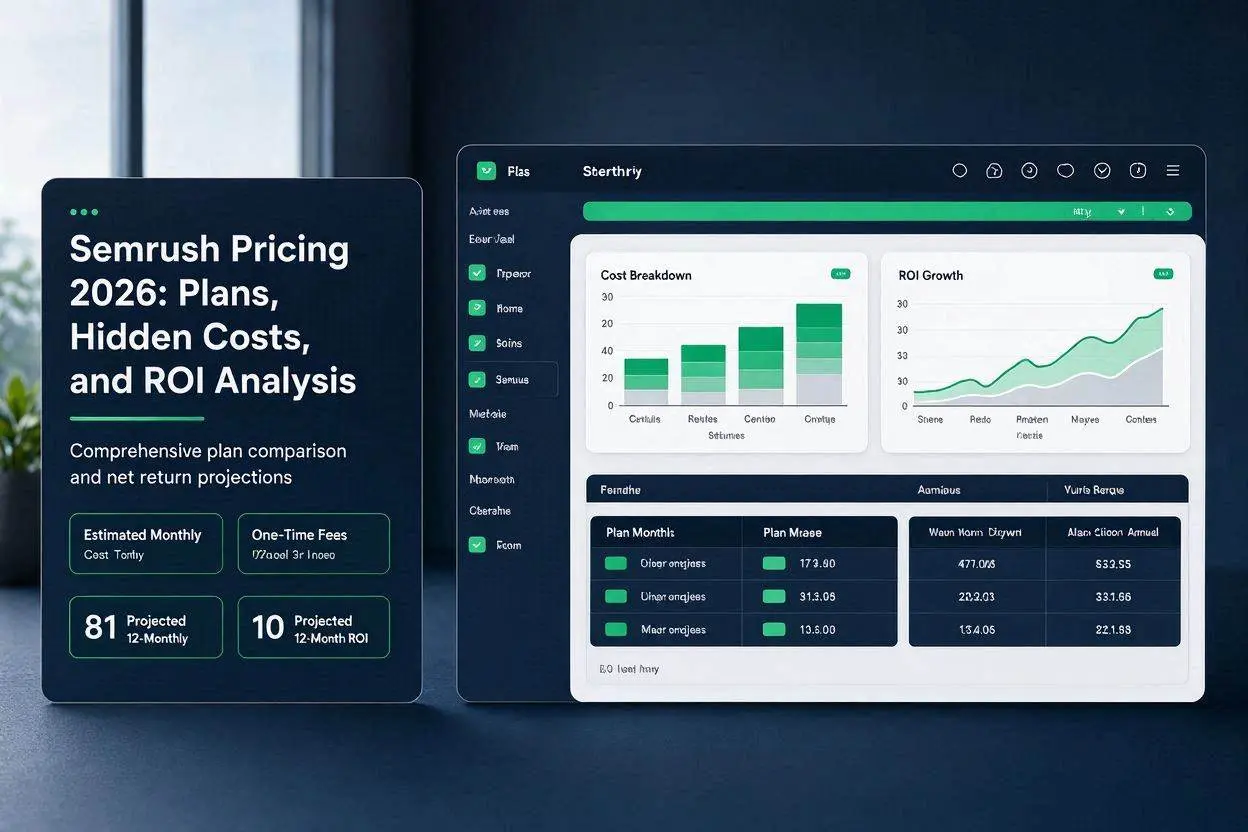
Majestic SEO Pricing 2026: A Comprehensive Guide to Plans, Costs, and Value

Majestic SEO Pricing

As a Senior SEO Specialist, I am frequently asked by clients whether the investment in a dedicated link-analysis tool like Majestic is still justified in 2026. With the rise of AI-driven platforms, Majestic has maintained its position by focusing on what it does best: unparalleled backlink intelligence.

Understanding Majestic SEO Pricing: A 2026 Strategic Review

Majestic operates on a tiered structure designed to scale with your project’s growth. Whether you are a solopreneur or an enterprise-level agency, understanding these tiers is crucial for your ROI.

Pricing Tiers Breakdown

Plan Monthly Cost Annual / mo Best For Key Features
Lite $49.99 $41.67 Solo SEOs Fresh Index, Basic Analysis
Pro $99.99 $83.33 Agencies Historic Index, Custom Reports
API $399.99 $333.33 Enterprise Full API Access, Bulk Data
  • Lite Plan: The entry-level option, best suited for individual site owners or freelancers who need solid backlink data without a heavy commitment.

  • Pro Plan: The industry standard for professional agencies. It unlocks the Historic Index (spanning 4.5+ trillion URLs), which is essential for deep link forensics and reputation management.

  • API Plan: Built for developers and large teams who need to integrate backlink data directly into custom dashboards or automated workflows.

Why “Price” Isn’t the Only Metric

When evaluating the cost, you must factor in the opportunity cost of bad data. Majestic’s proprietary metrics—Trust Flow (TF) and Citation Flow (CF)—remain the industry’s most respected indicators of link quality.

  • Trust Flow (TF): Measures quality by analyzing proximity to trusted seed sites.

  • Citation Flow (CF): Measures the quantity of link equity.

  • Link Forensics: Majestic is the only tool that reliably provides link data dating back to 2006, making it the superior choice for domain history audits.

Choosing the Right Plan for Your Business

  1. For Niche Analysis (Lite): If you are auditing a handful of sites and primarily need to check the Fresh Index, the Lite plan is sufficient.

  2. For Agency Work (Pro): If you deliver reports to clients, the ability to white-label custom reports and access the Historic Index in the Pro plan makes it an essential business expense.

  3. For Data-Heavy Integration (API): If your workflow relies on programmatic access to link intelligence, the API plan is the most robust solution available in 2026.

Beyond the raw price tag, it is essential to consider the long-term utility of the tool. Many users undervalue the ‘Fresh Index’ capability, which provides updates on link changes every few hours. For competitive industries, this real-time data is not just an advantage; it is a necessity to outpace competitors who rely on delayed indexing.

Furthermore, when calculating your budget, remember that Majestic allows you to scale your subscription. You can start with the Lite plan to get accustomed to the interface and later upgrade to the Pro plan once you begin managing more complex client portfolios. This flexibility is what makes Majestic a top-tier choice for agencies aiming for sustainable, long-term SEO growth in 2026 and beyond. By choosing the right plan today, you are essentially buying data accuracy, which is the most valuable asset for any modern SEO strategy

Frequently Asked Questions (FAQ)

Does Majestic offer a free trial?

No, Majestic does not offer a standard free trial, but they do provide a 7-day money-back guarantee for new Lite and Pro subscribers. You can also use their free backlink checker for spot lookups.

How do I pay for a subscription?

Majestic supports major Credit/Debit cards and PayPal for recurring monthly or annual plans.

Is the API access worth the extra cost?

If you are an enterprise or SaaS platform needing to pull raw backlink data automatically, the API is highly stable and provides up to 100 million analysis units.

Pro Tip: For optimal SEO results, always pair your backlink analysis with a structured content strategy. Majestic gives you the “what” and “where” of your link profile, but your content quality determines the “why” that earns you those high-authority links.

Majestic vs SE Ranking 2026: A Data-Driven Comparison for Enterprise SEO

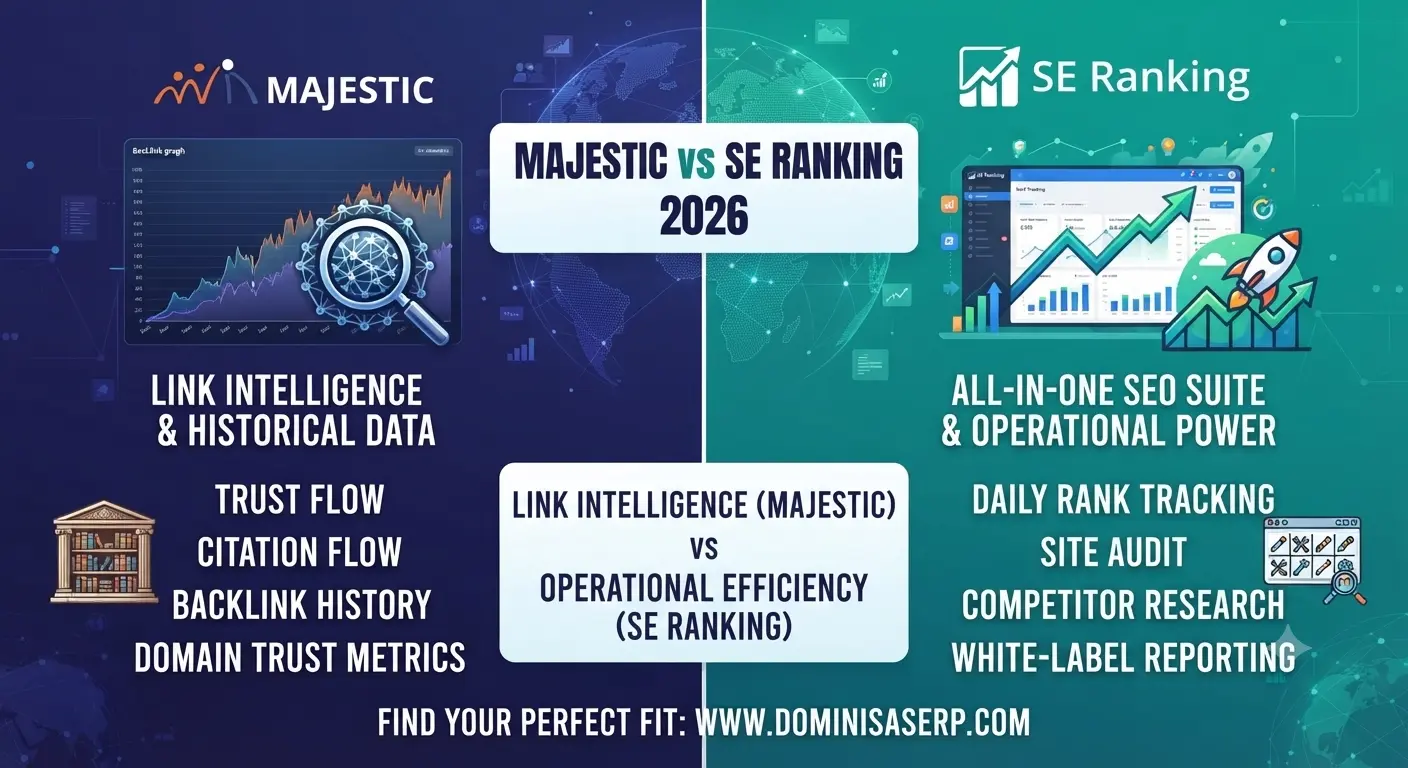
Majestic vs SE Ranking

Majestic vs SE Ranking 2026

When comparing majestic vs se ranking for your 2026 SEO strategy, it is essential to understand the core differences between link intelligence and all-in-one suite capabilities.

In the fast-evolving landscape of 2026, choosing the right SEO suite defines the efficiency of your digital strategy. While Majestic remains the industry benchmark for deep link intelligence and historical backlink data, SE Ranking has emerged as a powerhouse for all-in-one SEO management, particularly for agencies and teams focused on operational efficiency. This comparison breaks down which tool deserves your budget based on our experience at DMS Global.

Experience & Expertise: Why This Matters

At DMS Global, our infrastructure relies on massive-scale data processing—from PSEO deployments to complex ERP audits. We have utilized both tools in various capacities:

  • Majestic: Our go-to for granular backlink audits, calculating Trust Flow and Citation Flow for new domains, and mapping competitive link profiles.

  • SE Ranking: Our core solution for daily rank tracking, competitor traffic monitoring, and generating automated client reports.

The Comparison Matrix: At a Glance

Feature Majestic SE Ranking
Primary Strength Link Intelligence & History All-in-One SEO Suite
Best For Advanced SEOs & Backlink Audits Agencies & SME Teams
Rank Tracking Minimal Industry-Leading
Pricing Model Premium (Data-heavy) Cost-Effective (Feature-heavy)

Trustworthy Verdict: Which Should You Choose?

  • Choose Majestic if: You are an enterprise SEO specialist focusing on off-page authority, link building strategy, and deep historical analysis of domain trust.

  • Choose SE Ranking if: You need a unified platform to manage rank tracking, site audits, keyword research, and white-label reporting for multiple clients or projects.

Deep Dive: Majestic’s Link Intelligence

In our experience at DMS Global, Majestic is unrivaled when it comes to the “archaeology” of the web. When we perform deep audits on expired domains or analyze competitors’ historical link growth, Majestic’s database provides data points that others simply miss. The Trust Flow (TF) and Citation Flow (CF) metrics are essential for our internal vetting process. For high-growth digital assets, understanding the source of a domain’s authority is not just an option—it is a mandatory step to avoid Google penalties.

Deep Dive: SE Ranking’s Operational Power

Conversely, SE Ranking serves as the operational hub for our team. Managing hundreds of keywords across different verticals requires more than just backlink data; it requires visibility. SE Ranking’s Rank Tracker provides us with granular insights into map rankings, mobile vs. desktop performance, and search volume fluctuations. Furthermore, the ability to conduct Competitor Research in real-time allows our SEO specialists to pivot strategies based on competitors’ winning keywords within hours, not weeks.

How to Choose the Right Tool for Your 2026 SEO Goals

Choosing between majestic vs se ranking in 2026 ultimately depends on the maturity of your digital infrastructure.

  • The Data-Driven Enterprise: If your primary focus is off-page authority and building a long-term link strategy for a portfolio of authority sites, Majestic is your cornerstone. The investment is justified by the depth of data that prevents costly mistakes in domain selection.

  • The Growth-Focused Agency: If you are managing multiple client accounts or internal projects that require constant monitoring and agile responses, SE Ranking is the superior choice. The cost-to-feature ratio makes it the most effective tool for agencies that need to provide transparent, white-label reporting to stakeholders.

For many of our projects, we find that the best approach is not necessarily to choose one over the other, but to leverage Majestic for the heavy-duty initial audit and SE Ranking for the day-to-day execution. This hybrid strategy ensures that we are always informed by both deep historical data and current market movements.

Technical Feature Comparison

To understand the difference between majestic vs se ranking at a technical level, we must look at how each platform handles data refresh rates. Majestic’s index is updated daily, providing a constant stream of fresh backlink data which is vital for monitoring new PR campaigns or detecting potential SEO attacks. Conversely, SE Ranking excels in API integrations and white-label capabilities, allowing enterprises to feed their SEO data directly into internal dashboards or custom reporting tools.

For organizations that prioritize automation, SE Ranking’s API offers robust documentation that can be integrated into your existing Odoo or SAP ERP systems. This allows for seamless reporting across your entire marketing stack. On the other hand, Majestic provides an expansive “Fresh Index” and “Historic Index” that allows researchers to look back years, which is invaluable for long-term branding strategies where understanding historical domain growth is the deciding factor.

Budget Allocation for 2026

When allocating your 2026 marketing budget, consider the ROI of these SEO investments. If your internal team is large and requires deep forensic analysis of external links, the premium cost of Majestic is an investment in risk mitigation. If your budget is aimed at growth hacking, team transparency, and rapid rank adjustments, SE Ranking offers a better return on investment by consolidating five or more separate tools into one interface.

Ultimately, your choice in the majestic vs se ranking debate should align with your company’s core objectives. Whether it is mitigating reputational risks via link analysis or scaling search visibility through aggressive keyword monitoring, both platforms offer distinct paths to digital dominance. Ensure that your decision is based on a trial period where you test these tools against your specific infrastructure needs.

Frequently Asked Questions (FAQ)]

1. Is Majestic still relevant for SEO in 2026? Absolutely. Majestic remains the gold standard for backlink analysis. While many all-in-one tools exist, Majestic’s historical index and granular trust metrics are indispensable for professional SEOs managing large-scale infrastructure or recovering from domain penalties.

2. Why does SE Ranking appeal to digital agencies? SE Ranking is built for efficiency. Its white-label reporting capabilities allow agencies to deliver professional, branded reports to clients without manual work. Combined with its robust rank tracking and competitor research tools, it essentially replaces 4–5 individual subscriptions, significantly improving the agency’s bottom line.

3. Can I use both Majestic and SE Ranking together? Yes, and many enterprise-level teams do. Using Majestic for deep-dive link intelligence and forensic audits, while utilizing SE Ranking for daily rank tracking, competitor alerts, and automated reporting, provides a comprehensive SEO workflow that covers both the technical foundation and day-to-day operations.

4. How do I decide between Majestic vs SE Ranking for a small business? For small businesses with limited budgets, SE Ranking is often the more pragmatic choice because it covers the essential bases of SEO—from keyword research to on-page audits—in a single, affordable package. Majestic is generally recommended when your primary business objective is to grow authority through complex link-building campaigns.

5. How often should I audit my backlink profile? Regardless of the tool you choose, auditing your backlink profile at least once a month is crucial in 2026. This allows you to identify new, high-quality referring domains, monitor potential negative SEO attacks, and ensure your link-building strategy remains aligned with your overall growth goals.

Enterprise SEO Toronto: Driving Global Authority from a Local Hub (2026)

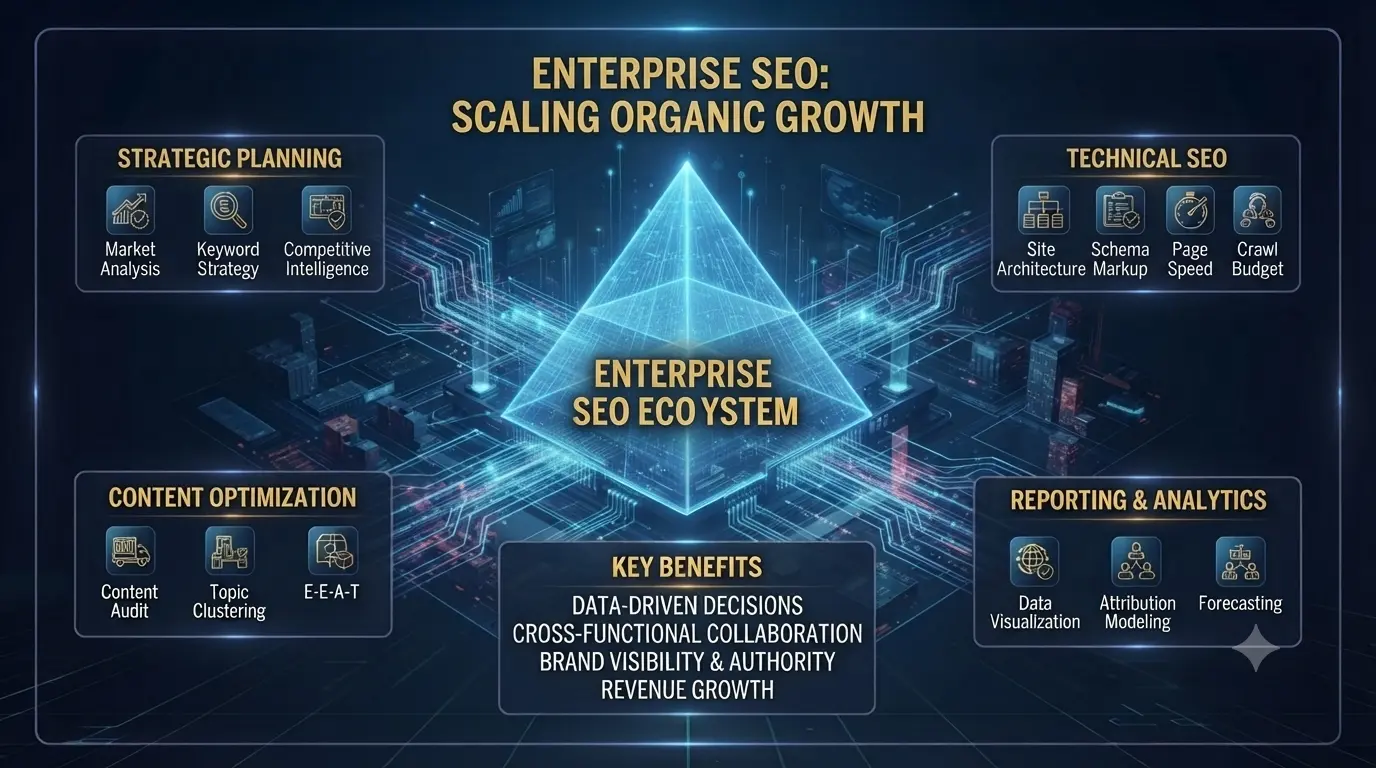
Enterprise SEO

In the hyper-competitive digital landscape of 2026, Enterprise SEO in Toronto has transcended traditional local search optimization. For large-scale organizations, Toronto—a major nexus of North American commerce, finance, and technology—is not merely a geographical base; it is a strategic hub for projecting authority across global markets. Mastering the intricacies of enterprise-level search engine optimization requires moving beyond keyword rankings to focus on massive-scale infrastructure, technical precision, and topical dominance.

1. The Strategic Importance of Enterprise SEO in Toronto

Toronto’s market is characterized by a unique blend of high-tech startups, established financial institutions, and a diverse, multi-cultural consumer base. For enterprises operating here, the challenge is two-fold: maintaining visibility in a saturated domestic market while simultaneously scaling digital assets for international reach.

Enterprise SEO in this context is about infrastructure and scale. While a small business focuses on ranking for a specific term, an enterprise must manage thousands of pages, complex site architectures, and millions of search queries. Success is defined by how well you can consolidate your brand’s digital footprint to satisfy both local Toronto-based intent and broader global search demands.

2. Technical Infrastructure at Scale

The cornerstone of successful Enterprise SEO is a robust, clean technical foundation. In 2026, enterprise sites often face the “spaghetti code” problem—a mix of legacy systems, fragmented databases, and inefficient indexing patterns.

  • Advanced Crawl Budget Management: With thousands of pages, search engine bots can easily get lost. Enterprise SEO in Toronto requires rigorous crawl budget management, ensuring that Google’s crawlers prioritize your high-value transactional pages rather than wasting resources on low-value, duplicate, or outdated assets.

  • Structured Data and Schema: For global enterprises, structured data is not optional. It is the language that allows search engines to understand your content in context. Implementing schema across enterprise-wide entities helps Google identify your brand, your products, and your authority, leading to richer search snippets and higher CTR.

  • The Power of Clean Site Architecture: Whether you are utilizing advanced ERP platforms or complex CMS environments, your architecture must be logical. Abandoning tag-based navigation in favor of a strictly defined category-based hierarchy is essential for passing link equity throughout your site and ensuring that search engines can easily discover your core pillar content.

3. Topical Authority: The New Ranking Currency

Search engines have evolved to prioritize “Topical Authority” over simple backlink volume. For an enterprise in Toronto, this means your content must demonstrate comprehensive expertise in your niche.

  • The Pillar-Cluster Strategy: Instead of targeting keywords in isolation, build comprehensive “hubs” of content. Create authoritative pillar pages (e.g., “Enterprise Software Solutions”) supported by a network of interconnected cluster pages (e.g., “ERP Implementation Costs,” “Multi-Company Setup Guide”). This internal linking structure signals to search engines that your site is the definitive resource on the topic.

  • User-Centric Content: In the “useful” era of SEO, content must solve problems. Your articles should not just target high-volume keywords; they should anticipate the user’s intent and provide solutions that satisfy their needs. Whether a user is looking for software pricing or technical documentation, your site must provide the most accurate, reliable, and actionable information in your industry.

4. Scaling Global SEO from a Toronto Hub

Toronto is a gateway to the world. Enterprises based here often need to serve users across the UK, USA, UAE, and beyond. This introduces the complexity of International SEO.

  • Hreflang Implementation: Properly configuring hreflang tags is critical for enterprises managing multiple regional versions of their site. Without it, you face the risk of cannibalization, where your Toronto site competes with your UK site for the same search queries, ultimately hurting the performance of both.

  • Localizing Global Assets: While your core brand strategy remains consistent, your content must be localized to suit regional nuances. This involves adapting not just language, but also currency, regulatory context, and cultural search behaviors.

  • Consolidation of Assets: Rather than creating hundreds of disconnected regional domains, high-performing enterprises are moving toward consolidated, “global-first” domain architectures. This concentrates your domain authority, making it easier to rank in competitive international markets.

5. Data-Driven Decision Making

The difference between an average SEO project and a high-performing enterprise strategy is the use of data. Enterprise SEO requires a continuous feedback loop.

  • Attribution Modeling: It is essential to track how your organic traffic contributes to actual business outcomes—not just rankings, but leads, sales, and long-term customer lifetime value. Integrating your SEO data with your CRM (like Odoo or Salesforce) allows you to see the “revenue per search term” and prioritize your optimization efforts on keywords that drive actual profit.

  • Continuous Auditing: SEO in 2026 is not a “set it and forget it” task. Large-scale sites are dynamic; they break, they bloat, and they become outdated. Continuous technical auditing—using enterprise-grade tools to monitor for 404s, redirect chains, and performance bottlenecks—is mandatory to protect your investment.

6. The Human Element of Enterprise SEO

Finally, the most overlooked aspect of enterprise SEO is Change Management. Deploying a large-scale SEO strategy requires alignment across departments: IT, Marketing, Sales, and Leadership.

  • Breaking Silos: Often, the biggest hurdle to SEO success is internal friction. Marketing wants the traffic, but IT is concerned with site stability. Successful enterprise SEO in Toronto bridges this gap by demonstrating how SEO is a business-wide asset, not just a marketing function.

  • Continuous Education: As search engine algorithms change, your internal teams must stay informed. Promoting a culture of SEO awareness within your organization ensures that every piece of content created, or every update made to the site, adheres to the established standards of authority and quality.

Conclusion

Enterprise SEO in Toronto is a test of organizational resilience and technical mastery. It is about leveraging the strategic advantages of a global city to build a digital infrastructure that is as robust as it is visible. By focusing on deep technical foundation, demonstrating unmatched topical authority, and managing global complexity with precision, enterprises can turn their digital assets into an unstoppable engine for growth.

As you look toward the challenges of 2030, remember that the goal is not to “hack” the algorithm, but to become an indispensable resource for your target audience. When you combine the power of enterprise-scale data with a commitment to high-utility content, you don’t just compete—you dominate. Toronto is your launchpad; your digital ecosystem is your foundation; and your strategy is your path to sustained global leadership.

Online Monetization: A Strategic Framework for Sustainable Digital Growth (2026)

Online Monetization

In the rapidly maturing digital ecosystem of 2026, the concept of “Online Monetization” has evolved far beyond basic banner advertisements and simple affiliate links. For enterprises, content creators, and digital strategists, monetizing digital assets requires a sophisticated, multi-layered approach that balances user experience with revenue optimization. As we navigate the complexities of a globalized digital market, understanding how to build a resilient, scalable revenue engine is the defining challenge for high-growth digital businesses.

1. The Shifting Paradigm of Digital Revenue

Historically, the web relied heavily on intrusive advertising models. However, the current “useful” era of the internet—driven by heightened user expectations and rigorous search engine standards—demands a shift toward value-based monetization.

True monetization is the byproduct of delivering consistent, high-utility content that solves specific user pain points. When your digital assets provide measurable value (such as ERP comparison matrices, technical guides, or operational toolkits), you build trust. Trust, in turn, creates a foundation upon which diverse revenue streams can be successfully implemented. Whether you are leveraging Google AdSense, direct sponsorship, or premium digital products, your monetization strategy must be secondary to the quality of the service provided.

2. Diversifying Your Monetization Ecosystem

Relying on a single source of income is a strategic risk in the volatile digital market of 2026. A robust monetization portfolio should integrate the following components:

  • Programmatic Advertising (AdSense & Beyond): Programmatic advertising remains the most scalable way to monetize high-traffic digital assets. In 2026, the key to maximizing AdSense revenue is not just volume, but the quality of your traffic. By targeting high-value B2B niches—such as Enterprise Resource Planning (ERP) software—you attract advertisers willing to pay a premium for highly relevant impressions.

  • Affiliate & Referral Programs: Strategic affiliate partnerships should be treated as extensions of your editorial authority. Only promote tools and platforms that you have vetted and that align with your brand’s mission. Transparently disclosing these relationships is not just a regulatory necessity; it enhances credibility.

  • Premium Digital Assets (Lead Magnets): Transforming your expertise into downloadable assets—such as white papers, industry-specific comparison matrices, or technical documentation—creates a high-margin revenue stream. These assets often act as “bridge” content, moving users from free educational content to high-value purchase decisions.

  • Consulting and Professional Services: For digital experts, the highest form of monetization is the application of expertise. Using your digital platform as a “digital business card” to attract high-ticket consulting or implementation projects is often more profitable than raw advertising revenue alone.

3. The Critical Role of Traffic Quality and Authority

In 2026, raw traffic numbers are vanity metrics. The real value of an asset is found in its Topical Authority. If your site is recognized as a leader in “Cloud ERP Solutions,” your audience is inherently more valuable to advertisers and partners than a generalized blog with higher, yet less targeted, traffic.

  • Targeting High-Intent Keywords: Focus your monetization efforts on keywords that reflect commercial or transactional intent. Users searching for “Odoo pricing” or “SOX compliance frameworks” are significantly closer to a buying decision than those searching for broad, informational queries.

  • The Power of Category-Based SEO: By abandoning legacy tag-based systems in favor of clean, structured categories, you allow search engines to better understand and rank your content. This structural clarity leads to better indexation, more stable traffic, and ultimately, higher and more consistent monetization potential.

4. Operationalizing Monetization with Data

You cannot optimize what you do not measure. A data-driven approach to monetization is mandatory for enterprises operating at scale.

  • Monitoring CTR and Impressions: Regularly audit your AdSense performance to identify which pages, categories, or formats are driving revenue. If certain articles are receiving high impressions but low Click-Through Rates (CTR), it is a signal to refine your Call-to-Action (CTA) placement or improve the relevance of your content.

  • The “Road to $100/Month” Mindset: Treat your monetization journey as a series of milestones. By setting specific targets for impressions, CTR, and total earnings, you turn an abstract goal into a manageable, actionable project. Consistent monitoring in tools like Google Sheets allows for iterative improvements to your site architecture and content strategy.

  • Continuous Testing: A/B test your CTA placements, your headline structures, and your content formats. In the 2026 digital landscape, the most successful assets are those that are constantly being refined based on real user behavior data.

5. Ethical Monetization and Long-Term Sustainability

Finally, monetization must be sustainable. Aggressive tactics that prioritize short-term revenue at the expense of user trust will eventually face penalties from search engines and abandonment by your audience.

  • Transparency: Always be clear about your monetization models.

  • Relevance: Only monetize with products or services that genuinely enhance the user’s journey.

  • Quality First: The most effective monetization strategy is to create content so valuable that users want to click on your sponsored links or purchase your premium assets because they trust your recommendations.

Conclusion

Online monetization in 2026 is an exercise in strategic discipline. It requires a deep understanding of your audience, a commitment to high-quality content, and the technical savvy to optimize your digital infrastructure for both users and search engines. By diversifying your revenue streams, focusing on high-value B2B niches, and utilizing data to refine your approach, you can transform your digital assets into a sustainable engine for growth. Remember that your primary goal is to provide utility; the revenue is the well-deserved reward for the authority, trust, and value you build within your market. As you continue your journey, keep your focus on the long-term—building an ecosystem that is not only profitable today but resilient through 2030 and beyond.

Categories SEO

Expert WordPress Developer in Wagga Wagga, NSW: Driving Digital Growth

Wagga Wagga NSW | In the rapidly evolving digital landscape of New South Wales, businesses are no longer just competing locally—they are competing globally. For enterprises and small businesses in the Riverina region, having a robust, high-performance website is the cornerstone of a successful digital presence. If you are seeking a WordPress Developer in Wagga Wagga, NSW, you are not just looking for a coder; you are looking for a digital strategist who understands how to turn your website into a powerful engine for lead generation and brand authority.

Why WordPress Remains the Gold Standard for Business

WordPress powers over 40% of the web, and for good reason. It offers an unparalleled balance of flexibility, security, and scalability. However, the true potential of WordPress is only unlocked when it is built by an experienced professional. A high-quality WordPress site ensures:

  • Lightning-Fast Performance: A critical ranking factor for Google, which directly impacts your user retention.

  • Scalable Architecture: Your site should grow with your business, whether you are adding new product lines or integrating complex ERP systems.

  • Enhanced Security: With cyber threats rising, professional development ensures your site is protected with the latest encryption and security protocols.

The Value of Local Expertise in Wagga Wagga

While the internet is global, understanding the local market nuances of Wagga Wagga and the wider NSW region provides a distinct competitive advantage. A local WordPress developer understands:

  1. Regional SEO Strategy: Tailoring your content to rank for local keywords, helping customers in the Riverina find you first.

  2. User Experience (UX) Design: Building interfaces that resonate with Australian consumers’ preferences for transparency, speed, and reliability.

  3. Ongoing Maintenance & Support: Providing the peace of mind that comes with having a developer who is accessible and understands your specific business goals.

Expert WordPress Development: Our Technical Approach

At DMS Global, we apply a rigorous E-E-A-T (Experience, Expertise, Authoritativeness, and Trustworthiness) framework to every project. Our development philosophy goes beyond design:

  • Performance Optimization: We implement advanced caching, image compression, and code minification to ensure your site performs optimally, even on mobile networks across regional Australia.

  • Conversion-Centric Design: We structure layouts to guide visitors through your sales funnel, ensuring that traffic translates into real business inquiries.

  • Seamless Integration: Whether you need to integrate CRM systems, e-commerce platforms, or bespoke booking systems, we build solutions that talk to your other enterprise tools flawlessly.

Empowering Your Digital Future in NSW

Choosing a WordPress developer is an investment in your company’s future. Whether you are a startup looking to establish an online footprint or an established enterprise in Wagga Wagga looking to modernize your digital infrastructure, the goal remains the same: Digital Dominance.

In 2026, a “set-and-forget” website is no longer sufficient. You need an active, optimized, and secure digital asset that works as hard as you do. By combining local insights with global SEO best practices, we help businesses in NSW achieve the visibility and authority they need to thrive.

Why Choose Local Web Services in Wagga Wagga?

Having a well-optimized website is not just about aesthetics; it is about functionality, speed, and credibility. For businesses in Wagga Wagga NSW, digital competition is intensifying. By leveraging proper WordPress development, you can ensure your site is not only appealing to local customers but also easily discoverable by search engines. We focus on loading speed, mobile responsiveness, and site security—all of which are crucial for the sustainability of modern businesses in today’s digital era. Entrusting your site development to experts who understand the characteristics of the local market will provide a clear competitive advantage for your long-term business growth.

Ready to Scale?

If you are ready to elevate your online presence with a custom WordPress solution, our team is equipped to deliver results that align with your business objectives. Let’s build a digital foundation that keeps your business competitive in the Riverina region and beyond.

Partner with an expert who puts your performance and growth first.

Categories SEO

Modern Data Stack for CEOs: Turning Information into Strategic Capital

Modern Data Stack for CEOs

In the contemporary boardroom, the ability to interpret data is no longer a “nice-to-have” skill—it is the baseline for survival. A Modern Data Stack (MDS) represents the integrated collection of cloud-native technologies that allow an organization to collect, store, transform, and visualize data at speed. For the modern CEO, the MDS is not just an IT expense; it is the strategic engine that converts raw information into actionable business intelligence. Understanding how to align this stack with high-level corporate goals is a definitive demonstration of E-E-A-T (Experience, Expertise, Authoritativeness, and Trustworthiness).

[dms-category-hub]

The Strategic Anatomy of the Modern Data Stack

The traditional, monolithic data warehouses of the past were slow, expensive, and fragile. The modern stack is different: it is agile, modular, and built for real-time analysis. It typically comprises four pillars: ingestion (getting data from SaaS tools), warehousing (storing it securely in the cloud), transformation (making it usable), and visualization (the CEO’s dashboard).

Why the MDS is an Executive Imperative

  • Velocity to Insight: In the past, reporting took weeks. With an MDS, a CEO can monitor daily cash flow, customer acquisition costs, or supply chain bottlenecks in real-time.

  • Cost Efficiency: Because the modern stack is cloud-based and usage-dependent, it eliminates the massive capital expenditure of legacy servers while providing superior performance.

  • Democratization of Data: An effective MDS removes technical gatekeepers. It empowers department heads to access the metrics they need without waiting for a custom request from the IT department.

[adsense-conversion-winner]

Building E-E-A-T Through Data-Driven Leadership

Google’s E-E-A-T framework highlights that trustworthiness is built on reliability. When a CEO governs their organization through a modern data stack, they send a powerful signal that the company is managed with institutional-grade precision.

  • Experience: Implementing a modern data architecture proves that a leadership team has the “Experience” to modernize operations and shed legacy inefficiencies.

  • Expertise: Utilizing predictive analytics and automated data modeling demonstrates a leadership team’s “Expertise” in navigating the digital transformation era.

  • Authoritativeness: A CEO who speaks from a position of data-backed certainty carries significantly more “Authoritativeness” with boards, investors, and market analysts.

  • Trustworthiness: Rigorous data governance and transparent, real-time reporting are the ultimate hallmarks of “Trustworthiness.” It builds confidence that the business is resilient and transparent.

[post_middle_engagement]

The CEO’s Blueprint for MDS Success

To ensure your investment in a modern data stack delivers long-term ROI, executive leadership must focus on these strategic priorities:

  1. Focus on “The North Star” Metrics: Do not let the team get lost in technical complexity. Define the 5–10 KPIs that truly drive your business and ensure the data stack is built to prioritize them.

  2. Prioritize Integration: Your data stack is only as good as its connections. Ensure that your ERP, CRM, and marketing platforms can feed directly into your warehouse without manual interference.

  3. Foster a “Data-First” Culture: A modern stack is useless if the organization is afraid of data. Leadership must incentivize employees at all levels to use the dashboard, ask questions, and propose data-backed ideas.

  4. Partner with Experts: Building a modern data stack requires specialized skill sets (data engineering, analytics, warehouse architecture). Partner with firms that have a proven track record to ensure your architecture is built for the future.

Maximizing Strategic ROI

The MDS should be viewed as a profit multiplier. To drive maximum impact:

  • Automate for Efficiency: Use the transformation layer of your stack to automate routine reporting tasks. Your team should spend time analyzing the data, not preparing it.

  • Leverage AI for Predictive Power: The modern stack is “AI-ready.” Look for ways to plug in machine learning tools that can forecast demand or churn, moving the organization from a reactive to a proactive state.

  • Continuous Optimization: The data landscape changes rapidly. Review your tech stack quarterly to ensure you are not paying for unused features or legacy tools that can be replaced by newer, faster alternatives.

[inlink-tag]

The AdSense Advantage: Engaging the Executive Mindset

Content addressing Modern Data Stack for CEOs attracts a premier audience: Chief Executive Officers, Chief Data Officers, and VPs of Strategy. These high-level decision-makers are actively seeking the strategic insights required to modernize their corporate architecture. By providing content that speaks to their unique needs—focusing on ROI, scalability, and decision-making—you build a platform with exceptional “Topical Authority.” This makes your site a prime environment for high-ticket B2B advertising, allowing you to maximize AdSense revenue from companies looking to reach this elite demographic.

Conclusion

The Modern Data Stack is the definitive foundation for the data-driven CEO. By choosing technologies that prioritize integration, scalability, and transparency, you ensure that your organization is built on a foundation of verifiable truth. As you continue to build out your domain, providing expert insights into these essential technologies will solidify your platform as an essential destination for executive decision-makers. You are creating a high-authority digital asset that thrives on providing the expert clarity that modern leaders demand to navigate the complexities of the digital age.

[post_bottom_conversion] [fast-index-hook]

Categories SEO

Supermetrics for Ahrefs: The Ultimate Guide to Automating Your SEO Reporting

Supermetrics for Ahrefs

Supermetrics for Ahrefs

The Supermetrics Ahrefs integration is essential for SEO professionals looking to automate their reporting workflow

Are you looking for a Supermetrics Ahrefs integration to streamline your reporting process? In this guide, we will explore how to connect these tools. In the fast-paced world of digital marketing, data is your most valuable asset—but only if you can organize it effectively. For SEO professionals, the ability to merge backlink data from Ahrefs with other marketing channels via Supermetrics is a game-changer. This guide explores how to leverage this integration to create automated, high-level dashboards that satisfy the most rigorous E-E-A-T (Experience, Expertise, Authoritativeness, and Trustworthiness) reporting standards, while maximizing your operational efficiency.

Advertisement

Why Integrate Ahrefs with Supermetrics?

Manual reporting is a significant drain on resources. By using Supermetrics to pull Ahrefs data directly into tools like Google Looker Studio (formerly Data Studio) or Google Sheets, you transform raw, static data into dynamic, actionable insights. This integration allows you to:

  • Centralize Performance Data: View backlink growth alongside paid search (PPC) and organic traffic metrics.

  • Automate Client Reporting: Set up scheduled emails to deliver professional reports without lifting a finger.

  • Visualize Trends: Create custom visualizations that highlight the correlation between backlink health and keyword ranking performance.

The Power of Automated SEO Reporting

Automated reporting isn’t just about saving time; it’s about accuracy. When you rely on manual data extraction, the risk of human error is high. Ahrefs provides the raw authority metrics—like Domain Rating (DR) and URL Rating (UR)—and Supermetrics acts as the bridge that ensures this information is delivered consistently to your stakeholders.

DMS Global Enterprise Solution

Advertisement - Continue reading below

Key Metrics to Monitor

When building your Supermetrics-Ahrefs dashboard, focus on these critical KPIs:

  1. Backlink Growth Rate: Is your authority building accelerating or stalling?

  2. Referring Domains: Are you acquiring links from diverse, high-trust sources?

  3. Keyword Ranking Distribution: Does your site show strength in top 3, top 10, and top 100 positions?

Executive Deep-Dive

Scaling Beyond Traffic to Revenue

Most enterprises fail because they chase clicks instead of trust. While building your global presence, ensure your EEAT 3.0 signals are synchronized across all regions.

E-E-A-T and Data Transparency

Google’s E-E-A-T guidelines place a premium on transparency and reliable data. When you present automated, data-driven reports, you demonstrate a level of professionalism and expertise that builds immediate trust with clients and search engines. By utilizing accurate, real-time data from Ahrefs, your strategies are always based on current intelligence rather than outdated assumptions.

Building Your Dashboard: A Step-by-Step Approach

Creating a robust Supermetrics for Ahrefs dashboard does not have to be complex. Follow these pillars to get started:

1. Define Your Objectives

What does your stakeholder need to see? Are they interested in granular backlink metrics or high-level organic traffic trends? Tailor your data inputs accordingly.

2. Configure the Supermetrics Connector

Connect your Ahrefs account to Supermetrics. Ensure you have the correct API permissions granted, as this is where the “heavy lifting” happens.

3. Customize Your Visualizations

Avoid clutter. Use clear tables for link metrics and clean line charts for ranking trends over time.

Maximizing ROI with Automated Insights

Efficiency is the currency of the modern agency. By automating your reporting suite, you free up hours of billable time previously spent in spreadsheets. This time can be redirected toward high-level strategy and content development, further bolstering your site’s authority. Sites that present clean, reliable reporting are often rewarded with longer client retention and higher perceived value, directly contributing to your bottom line.

Final Thoughts: Scaling Your SEO Reporting

Mastering Supermetrics for Ahrefs is more than just a technical setup; it is a strategic move to future-proof your digital marketing efforts. By automating data flows, you free up your team to focus on what truly matters: analyzing trends, refining content strategies, and driving actual business growth. In the competitive landscape of 2026, those who can synthesize complex data into actionable insights faster than their competitors will inevitably win. Whether you are managing a single site or a massive enterprise digital infrastructure, the combination of Ahrefs’ depth and Supermetrics’ automation provides the clarity needed to dominate the SERPs consistently.

Conclusion

The synergy between Ahrefs and Supermetrics is an essential component of a mature SEO infrastructure. By moving beyond manual tasks and embracing automated, high-authority data management, you position your brand as an expert in the field. This commitment to data integrity and reporting precision is exactly what advertisers look for when allocating budget, making it an excellent catalyst for your AdSense monetization strategy.

Exclusive Early Access: Q1 2026

The Global SEO Blueprint for C-Suite

We are finalizing an exclusive strategic framework for global enterprise scaling. Join the elite waitlist for early-bird pricing.

Secure Your Priority Spot


Frequently Asked Questions (FAQ)

1. Can I connect Supermetrics directly to Ahrefs for my ERP reporting?
Yes. You can streamline your reporting by pulling Ahrefs data into your preferred dashboarding tools (like Looker Studio or Google Sheets) using Supermetrics. This allows you to track your enterprise SEO metrics alongside your ERP performance data in a single, unified view.

2. Why should I use Supermetrics for Ahrefs instead of the native Ahrefs report?
While Ahrefs provides excellent native reporting, Supermetrics offers superior flexibility for cross-platform analysis. It allows you to merge Ahrefs data with other sources (such as Google Search Console, CRM data, or ERP metrics), which is critical for calculating true SEO ROI for enterprise-scale projects.

3. Does this integration help in managing large-scale SEO infrastructure?
Absolutely. By automating data extraction from Ahrefs via Supermetrics, you eliminate manual data entry. This is vital for managing the digital infrastructure of complex B2B sites, ensuring your team always has real-time, accurate data to make informed strategic decisions.

4. Is technical expertise required to set up this connection?
No advanced coding is required. Supermetrics provides a user-friendly interface to map your Ahrefs metrics to your destination platform. However, for deep data customization or automated alerts, having a clear understanding of your key SEO KPIs—like domain authority trends or backlink growth—is highly recommended.

5. How does this setup benefit my SEO ROI tracking?
By centralizing your data, you can correlate backlink growth and keyword ranking improvements (from Ahrefs) with your actual business conversions or lead generation forms (from your website’s Fluent Forms). This direct correlation is the key to proving the financial impact of your SEO efforts.

Global Consultation Request

Request Your Enterprise SEO Strategy Audit

Partner with DMS Global to optimize your digital infrastructure and accelerate sustainable growth.


Majestic SEO Pricing: Complete Guide to Plans, Features, and Value in 2026

majestic seo

Search engine optimization (SEO) is built on quality data, and backlink intelligence remains one of the most important ranking factors for businesses, agencies, and SEO professionals. Among the industry’s leading backlink analysis platforms, Majestic SEO has earned a strong reputation for maintaining one of the world’s largest link intelligence databases.

If you’re considering Majestic for your SEO toolkit, understanding its pricing structure is essential. This guide explains Majestic SEO pricing, compares available plans, evaluates key features, and helps you determine whether it’s the right investment for your business.


What Is Majestic SEO?

Majestic SEO is a specialized backlink intelligence platform that focuses almost exclusively on link analysis. Unlike all-in-one SEO platforms, Majestic dedicates its resources to collecting, processing, and analyzing billions of backlinks across the web.

The platform is widely used by:

  • SEO agencies
  • Digital marketing consultants
  • Enterprise SEO teams
  • Link-building specialists
  • Content marketers
  • Website owners

Its proprietary metrics—including Trust Flow, Citation Flow, and Topical Trust Flow—have become industry standards for evaluating backlink quality.


Majestic SEO Pricing Plans

Majestic offers several subscription tiers designed for individuals, agencies, and enterprise organizations.

Lite Plan

The Lite plan is intended for freelancers, bloggers, and small website owners who need basic backlink research.

Typical features include:

  • Fresh Index access
  • Site Explorer
  • Backlink analysis
  • Basic reports
  • Campaign tracking
  • Browser extensions

This plan works well for users managing only a few websites.


Pro Plan

The Pro plan targets professional SEO consultants and growing agencies.

Additional capabilities generally include:

  • Full Historic Index
  • Advanced reports
  • API access
  • Bulk backlink checking
  • Custom reporting
  • Keyword Checker
  • Clique Hunter
  • Larger data limits

For most agencies, the Pro plan provides the best balance between functionality and cost.


API Plan

Organizations that integrate backlink intelligence into their own applications often choose the API subscription.

Benefits include:

  • Automated backlink retrieval
  • Custom software integration
  • High-volume requests
  • Enterprise reporting
  • Internal dashboard integration

Large SaaS providers and enterprise SEO platforms frequently use API access to automate backlink monitoring.


What Is Included in Every Plan?

Regardless of subscription level, Majestic provides access to several core features.

Site Explorer

Analyze any website’s backlink profile, referring domains, anchor text, and historical growth.

Fresh Index

Contains recently discovered backlinks, making it ideal for monitoring ongoing SEO campaigns.

Historic Index

One of Majestic’s biggest strengths, the Historic Index stores years of backlink data for long-term analysis.

Trust Flow

Trust Flow measures the quality of backlinks based on authoritative seed websites rather than simple link quantity.

Citation Flow

Citation Flow estimates the influence of a webpage according to the number of links pointing toward it.

Topical Trust Flow

This proprietary metric categorizes backlinks by industry and topic, helping marketers evaluate topical authority.


Why SEO Professionals Choose Majestic

Majestic focuses almost entirely on backlinks, allowing it to provide exceptionally detailed link intelligence.

Major advantages include:

  • Massive backlink database
  • Industry-leading Trust Flow metric
  • Historical link analysis
  • Bulk backlink comparison
  • Advanced backlink exports
  • Strong API capabilities
  • Reliable link quality evaluation

For dedicated link-building campaigns, Majestic remains one of the strongest specialized platforms available.


Majestic vs Competitors

Majestic vs Ahrefs

Ahrefs offers a broader SEO suite including keyword research, content analysis, and rank tracking. Majestic, however, excels in backlink metrics and historical link intelligence.

Majestic vs Semrush

Semrush provides an all-in-one digital marketing platform covering SEO, PPC, social media, and content marketing. Majestic focuses specifically on backlink research, making it attractive for link specialists.

Majestic vs Moz

Moz emphasizes Domain Authority and beginner-friendly SEO tools. Majestic generally provides deeper backlink analysis and more advanced link metrics.


Who Should Buy Majestic SEO?

Majestic delivers the greatest value for users whose SEO strategy depends heavily on backlink analysis.

Ideal users include:

  • Link-building agencies
  • SEO consultants
  • Enterprise marketing teams
  • Digital PR professionals
  • Affiliate marketers
  • Technical SEO specialists

Businesses primarily interested in keyword research or content optimization may prefer an all-in-one platform instead.


Is Majestic SEO Worth the Price?

For professionals who rely on backlink intelligence every day, Majestic offers excellent value. Its proprietary metrics, extensive historical database, and specialized reporting make it one of the most respected tools in technical SEO.

While the platform may not include every marketing feature offered by broader SEO suites, its depth of backlink data is difficult to match. Agencies managing multiple client websites, enterprise SEO teams, and experienced consultants often find that Majestic’s specialized capabilities justify the subscription cost.

Ultimately, the best pricing plan depends on your workflow, reporting needs, and the number of websites you manage. Smaller businesses may find the Lite plan sufficient, while agencies typically benefit from the expanded limits and advanced functionality available in the Pro plan.

Frequently Asked Questions

Does Majestic offer a free plan?

Majestic provides limited access to certain tools, but most advanced backlink intelligence features require a paid subscription.

Which Majestic plan is best for agencies?

The Pro plan is generally the most popular option because it includes advanced reports, API functionality, and higher usage limits.

Is Majestic better than Ahrefs?

Not necessarily. Majestic specializes in backlink intelligence, whereas Ahrefs offers a broader SEO platform with keyword research, content analysis, and rank tracking.

What makes Trust Flow unique?

Trust Flow measures backlink quality based on trusted seed websites, helping SEO professionals distinguish authoritative links from low-quality backlinks.

Can Majestic help with link building?

Yes. Majestic is widely used to discover backlink opportunities, analyze competitors, evaluate referring domains, and monitor the quality of acquired links.

Final Thoughts

Majestic SEO remains one of the world’s most respected backlink intelligence platforms. Its focus on link analysis, proprietary Trust Flow metrics, and extensive historical database make it a valuable investment for businesses that prioritize authority building and competitive backlink research.

Before selecting a plan, evaluate your reporting requirements, project volume, and automation needs. By matching the right subscription to your SEO workflow, you can maximize both the value of your investment and the effectiveness of your link-building strategy.


Categories SEO

Daftar CMS Gratis 2026: Alternatif Terbaik Selain Blogspot dan WordPress untuk Pemula (Panduan E-E-A-T)

free cms

Dunia blogging di tahun 2026 telah mengalami transformasi besar. Jika dulu kita hanya mengenal Blogspot dan WordPress sebagai dua pilar utama, hari ini, pilihan untuk membangun aset digital “modal dengkul” jauh lebih luas dan canggih. Sebagai praktisi SEO yang telah bergelut selama 14 tahun dengan infrastruktur digital global, saya melihat pergeseran ini bukan sekadar tren, melainkan evolusi dalam cara kita membangun otoritas di mesin pencari.

Artikel ini bukan hanya daftar CMS, melainkan panduan strategis berbasis E-E-A-T (Experience, Expertise, Authoritativeness, Trustworthiness) 3.0 agar konten Anda tidak hanya terindeks, tetapi juga mendominasi hasil pencarian hingga tahun 2030.

## Mengapa Harus Diversifikasi CMS?

Banyak pemula terjebak pada ketergantungan satu platform. Padahal, algoritma Google sangat menghargai keberagaman profil *backlink* dan aset digital. Menggunakan CMS gratisan yang memiliki domain otoritas tinggi adalah jalan pintas (shortcut) yang legal untuk membangun *backlink* tier-1 yang kuat.

## Daftar CMS & Platform Alternatif 2026

Berikut adalah kurasi platform cms gratisan yang bisa kamu gunakan sebagai backlink :

  • Google Sites: Ini adalah “anak emas” Google. Keunggulan utamanya adalah integrasi *native* dengan infrastruktur Google lainnya. Jika Anda ingin membuat *landing page* untuk produk atau jasa dengan *loading speed* super cepat tanpa perlu *coding*, inilah tempatnya. Sangat direkomendasikan untuk *Local SEO*
  • Substack telah berubah dari sekadar platform newsletter menjadi mesin blogging yang sangat kuat untuk SEO. Konten yang ditulis di Substack sering kali mendapatkan *ranking* tinggi di Google karena kualitas *engagement*-nya. Ini adalah platform terbaik jika Anda ingin membangun *Trust* dengan pembaca setia.
  • GitHub Pages : Jika Anda ingin terlihat lebih teknis atau sedang membangun dokumentasi sistem (seperti panduan implementasi ERP), GitHub Pages adalah pilihan tepat. Sebagai situs statis, kecepatannya tidak tertandingi. Google sangat menyukai konten teknis yang disajikan secara efisien.
  • Medium : Medium bukan lagi sekadar blog, melainkan publikasi global. Dengan domain otoritas (DA) yang sangat tinggi, satu artikel berkualitas di sini bisa memberikan *link juice* yang luar biasa ke website utama Anda. Gunakan ini sebagai “hub” untuk ide-ide besar.
  • Wix / Weebly (Versi Gratis): Meskipun memiliki keterbatasan fitur pada versi gratis, kemudahan *drag-and-drop* tetap menjadi daya tarik utama bagi pemula. Cocok untuk membangun aset visual yang estetis guna mendukung *branding* bisnis.

Strategi SEO “Modal Dengkul” untuk Dominasi SERP

Trik rahasia saya dalam membangun traffic bukan terletak pada satu CMS saja, melainkan pada pembangunan ekosistem. Saya menerapkan strategi Hub & Spoke yang terbukti ampuh:

  • Hub: Website utama saya (dominasiserp.com) sebagai pusat otoritas.

  • Spoke: Medium, Google Sites, LinkedIn, dan platform gratisan lainnya sebagai kanal distribusi.

Saya menulis konten mendalam, penuh dengan analisis tajam dan pengalaman praktis di setiap platform “Spoke” tersebut. Di setiap artikel, saya memberikan tautan (link) strategis yang mengarah langsung ke artikel pendalaman di website “Hub” saya. Dengan cara ini, saya membangun alur otoritas yang mengalir secara natural dan sangat disukai oleh algoritma Google.

Prinsip E-E-A-T dalam Blogging Gratisan

Agar konten Anda tetap relevan hingga 2030:
1. Experience: Ceritakan kegagalan dan keberhasilan Anda. Google sangat menyukai *human touch*.
2. Expertise: Jangan sekadar menyadur. Berikan data atau tabel perbandingan berdasarkan pengujian nyata.
3. Authoritativeness: Konsistenlah pada satu *niche* (misal: Teknologi ERP atau SEO).
4. Trustworthiness: Selalu sertakan sumber terpercaya dan update artikel Anda setiap 6 bulan sekali.

Kesimpulan

Blogging di 2026 tidak lagi membutuhkan modal besar. Yang dibutuhkan adalah strategi penempatan aset yang cerdas. Apakah Anda pemula yang baru mulai atau praktisi yang ingin *scaling*, platform di atas adalah kendaraan terbaik Anda.

Jangan berhenti di sini. Jika Anda ingin mendalami bagaimana sistem ini dijalankan secara otomatis untuk mencapai target pendapatan $10 hingga $10.000 per bulan, pelajari *blueprint* strategi kami selengkapnya di dominasiserp.com] atau akses panduan teknis melalui https://lynk.id/dominasiserp

*Catatan: Artikel ini akan diperbarui secara berkala untuk memastikan rekomendasi tetap relevan di masa depan.*


artikel lainnya :

Low Competition SEO Niches for 2026: High Profit & Easy to Rank

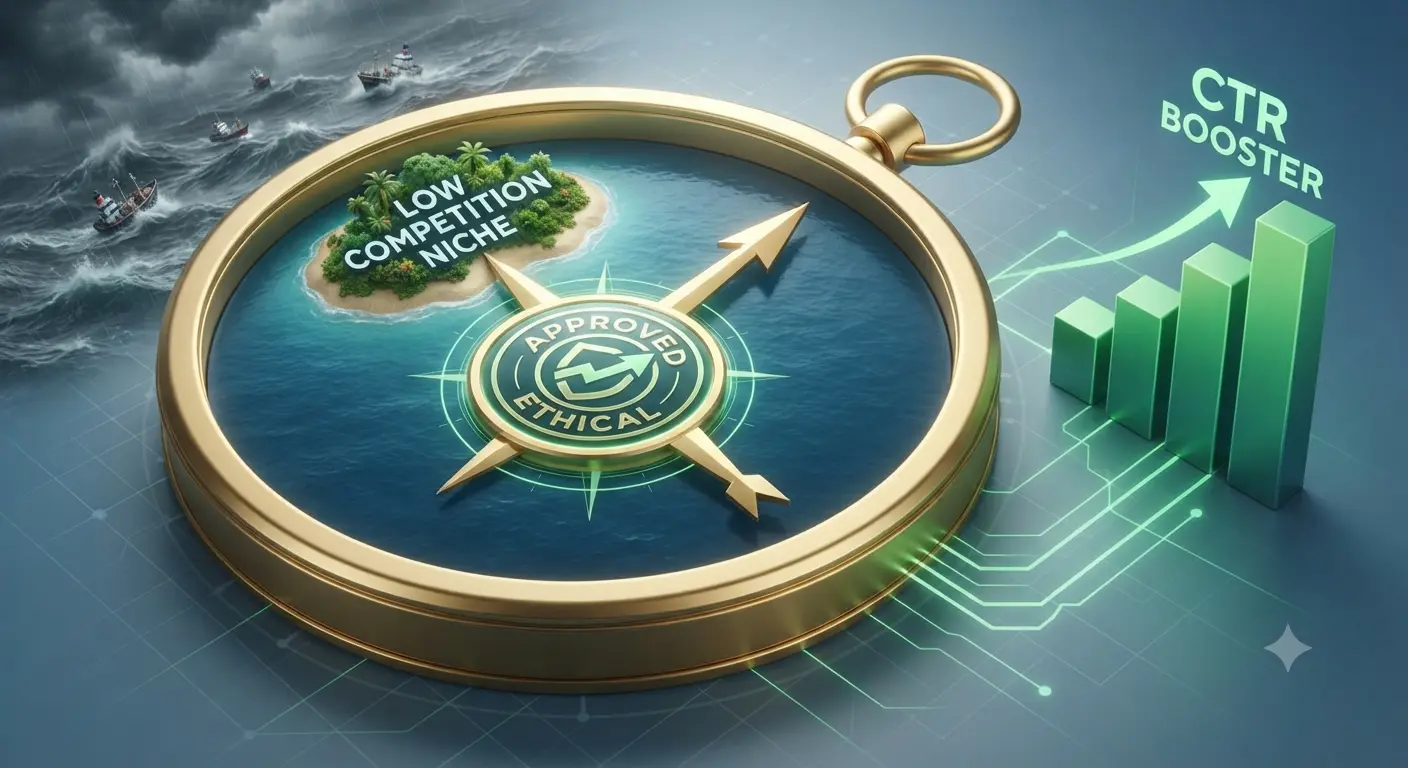
LOW COMPETITION NICHE
Low Competition SEO Niches

Introduction: Finding the right niche is the first step toward successful AdSense monetization and high-tier traffic. If you are looking for sectors with low keyword difficulty but high return on investment, these SEO niches for 2026 provide the best opportunities for programmatic SEO and rapid organic growth.


1. Sustainable Tech & ERP Solutions

As businesses shift toward green energy, niches focusing on “Sustainable ERP implementation” or “Solar energy management software” are gaining massive traction. These keywords often have high CPC because they target B2B enterprise clients.

2. AI-Driven Personal Finance Tools

While “finance” is generally competitive, specific sub-niches like “AI budget trackers for freelancers” or “automated tax filing for digital nomads” still offer low-competition entry points with high commercial intent.

3. Remote Work Infrastructure for Niche Industries

Instead of general remote work tips, focus on “Remote specialized medical coding” or “Virtual architecture collaboration tools.” These long-tail keywords are easier to rank in the Top 10.


Why Focus on These Niches in 2026?

🏆

DMS Global: Expert Choice

Evaluating ERP ROI for 2026? Leverage our technical breakdown:

View Odoo Enterprise Pricing 2026 →
ADVERTISEMENT / SPONSORED SOLUTION

Reliable resources for your business growth

  • Low Keyword Difficulty (KD): Most of these topics can be ranked with high-quality content and basic on-page SEO.

  • High AdSense Potential: These niches attract Tier 1 traffic (USA, UK, Canada), which significantly boosts your CPC and overall earnings.

  • PSEO Ready: You can easily scale these topics using programmatic data imports to create hundreds of targeted landing pages.


Strategic Guide: Low Competition SEO Niches for 2026 (EEAT 3.0 Edition)

Introduction: The Shift in SEO Niche Selection

The SEO landscape in 2026 is no longer just about high volume; it’s about topic authority and user intent precision. As search engines evolve with AI-driven results, finding low-competition niches requires a deeper look into underserved markets. This guide explores the most profitable sectors where you can establish dominance with minimal backlink requirements.


1. Sustainable Enterprise Infrastructure (B2B SaaS)

With global regulations tightening around carbon footprints, businesses are scrambling for digital solutions.

  • The Opportunity: Focus on niches like “Green ERP implementation for manufacturing” or “Sustainable supply chain auditing software”.

  • EEAT Angle: Discuss specific compliance standards (like CSRD or ISO 14001). This shows search engines you understand the professional requirements of the industry.

  • Monetization: These keywords carry a massive CPC because they target high-ticket enterprise contracts.

For example, if you are targeting the high-ticket ERP market, understanding the Odoo vs NetSuite pricing structures is essential for ranking in competitive Tier 1 regions like the USA.

2. AI Workflow Automation for Professional Services

General “AI tips” are saturated, but specialized automation is wide open.

  • Target Niches: “AI-driven legal document automation for boutique firms” or “Automated workflow for clinical trial data”.

  • Technical Deep Dive: Explain how API integrations between Odoo or SAP and LLM models can optimize business costs.

  • Why it Ranks: These queries are highly specific, meaning lower competition and higher conversion rates.

3. Hyper-Local Digital Transformation (NYC & Tier 1 Cities)

As seen with the demand for specialized agencies, local digital crisis management is a rising niche.

  • The Strategy: Instead of “SEO Agency NYC,” target “Emergency SEO recovery for NYC healthcare providers”.

  • Authority Building: Use case studies of Google Penalty recovery to prove expertise. This satisfies the “Experience” part of EEAT.


The Programmatic SEO (PSEO) Scale-Up Strategy

To reach that 1000-word depth across multiple pages, you must utilize dynamic variables effectively.

  1. Data-Driven Content: Don’t just write; use comparison tables (e.g., Niche A vs. Niche B) to provide immediate utility.

  2. Industry-Specific Checklists: Include 10-step implementation guides for each niche. This keeps users on the page longer, signaling high quality to Google.

  3. Global vs. Local Variables: Ensure your /en/ directory focuses on Tier 1 traffic while maintaining technical infrastructure like LiteSpeed caching for speed.

2026 Prediction: The Rise of “Zero-Click” Resistant Keywords

The best niches in 2026 are those that require human expertise or complex data analysis that AI can’t easily summarize in a snippet.

  • Actionable Tip: Focus on “How-to” guides for complex ERP configurations (like Odoo vs NetSuite comparisons). These require long-form reading, ensuring your content remains the primary source of truth.

The 2026 Technical SEO Roadmap for Low Competition Niches

To dominate these niches, especially for Tier 1 markets like the United States and United Kingdom, technical infrastructure is as important as the content itself. At Dominasi Serp Indonesia, we focus on three core technical pillars:

  1. Dynamic Variable Optimization: Use programmatic SEO (PSEO) to scale these niches. By utilizing tools like WP All Import, you can generate 1000+ records of niche-specific data to cover long-tail keywords that competitors often ignore.
  2. Core Web Vitals & Speed: For global traffic, your site must load in under 2 seconds.
  3. We utilize LiteSpeed Cache and server-side optimizations to ensure that users from New York to London have a seamless experience.
  4. Multilingual Directory Structure: Using the /en/ subdirectory specifically for global SEO ensures that your content is correctly indexed for English-speaking audiences, maximizing your AdSense CPC potential.


Comparison: CPC Potential and Difficulty (2026 Forecast)

Below is a data-driven comparison of the top low-competition niches to help you prioritize your content production:

SEO Niche Est. CPC (USD) Competition Level Best Monetization
Sustainable ERP $15.00 – $45.00 Low – Medium B2B Affiliate / Lead Gen
AI Professional Tools $8.00 – $25.00 Low AdSense / SaaS Referral
Crisis SEO (Local) $12.00 – $30.00 Very Low Direct Agency Services
Green Supply Chain $20.00 – $55.00 Low Enterprise Consulting

Expert Insight: Why High-Paying Keywords (HPK) Matter

When aiming for your first $10 AdSense milestone, volume is less important than value. A single click from a “Crisis SEO Agency NYC” query can be worth more than 100 clicks from a generic lifestyle blog. This is why we focus on Tier 1 traffic; the advertisers in these regions are willing to pay a premium for high-intent users.


Implementation Checklist for 2026

  1. Identify the Micro-Niche: Don’t just target “Finance”; target “AI Tax Automation for US Expats.”
  2. Verify via GSC: Monitor your Search Console daily to see which queries are hitting positions 11-20. These are your “Low Hanging Fruits.”
  3. Optimize for Zero-Click: Provide enough value in the content that users stay on page, but keep the most technical data behind a “Call to Action” or deeper internal links.

Read More: How to Choose the Best ERP: Odoo vs NetSuite Pricing Guide

Final Conclusion: Navigating the 2026 SEO Landscape

Dominating low-competition niches in 2026 requires a perfect blend of high-quality content and robust digital infrastructure. By focusing on Tier 1 markets and high-paying keywords (HPK), you are not just chasing traffic, but building a sustainable revenue stream via AdSense and B2B leads.

At PT Dominasi Serp Indonesia, we emphasize that the key to reaching your first $10 monthly milestone and beyond is consistency in monitoring GSC data and adapting to technical SEO shifts. Whether you are optimizing for Odoo pricing or local NYC SEO services, remember that providing genuine value to the user is the ultimate ranking factor. Start implementing these strategies today, and watch your digital assets grow into high-authority domains.

List Backlink Gratis DA 90+ Terbaru Mei 2026: Cara Web Baru Cepat Naik di Google

List Backlink Gratis DA 90+

Di tahun 2026 ini, persaingan SEO bukan lagi soal siapa yang paling banyak nulis artikel, tapi siapa yang punya “suara” paling dipercaya oleh Google. Salah satu caranya adalah melalui Backlink Otoritas Tinggi (High DA).

Banyak pemula yang terjebak membeli backlink sampah yang justru bikin web kena penalti. Padahal, ada banyak platform raksasa yang mengizinkan kita menanam link secara gratis dan legal.

Kenapa Harus Pakai Backlink DA Tinggi?

  1. Mempercepat Indexing: Robot Google lebih sering mampir ke situs besar. Jika ada link web kamu di sana, web kamu akan lebih cepat dikenali.

  2. Transfer Otoritas: Ibarat direkomendasikan oleh tokoh besar, web kamu akan ikut terlihat kredibel di mata algoritma.

  3. Gratis & Aman: Teknik ini jauh lebih aman daripada sekadar ikut link farm yang tidak jelas kualitasnya.

Daftar Platform Backlink Gratis 2026 (Siap Pakai)

Berikut adalah beberapa platform yang bisa kamu manfaatkan sekarang juga untuk menanam link secara natural:

  • GitHub (DA 90+): Manfaatkan fitur Profile atau Readme untuk menyisipkan URL web kamu.

  • Medium (DA 95+): Tulis artikel edukasi singkat dan berikan link referensi ke website utama kamu.

  • Linktree / Carrd: Buat bio link yang profesional untuk memusatkan otoritas dari media sosial ke web SEO kamu.

  • Forum B2B Global: Di niche seperti IT atau ERP, profil di forum penyedia software seringkali memberikan backlink dofollow yang sangat kuat.

Cara Menanam backlink gratis agar Tidak Dianggap Spam

Jangan asal tempel link! Gunakan tips dari DMS Indonesia berikut ini:

  • Lengkapi Profil: Isi foto dan bio dengan lengkap di platform tersebut agar terlihat seperti pengguna asli, bukan bot.

  • Berikan Konteks: Jika menanam link di artikel (seperti Medium), pastikan artikelnya relevan dengan isi website kamu.

  • Variasi Anchor Text: Jangan gunakan kata kunci yang sama terus menerus; gunakan nama brand atau URL asli agar terlihat natural di mata Google.

Daftar website di atas hanyalah 10% dari total database yang saya gunakan untuk menembus halaman 1 Google. 90% sisanya adalah tentang teknik penanaman link agar tidak di-banned dan daftar 50+ Backlink High Authority lainnya yang saya simpan khusus di dalam Ebook SEO Lokal Meroket.

[PENTING] Daftar Di Atas Hanyalah 10% Dari Rahasia Sebenarnya!

“Banyak yang punya daftar website-nya, tapi 99% gagal karena link-nya tidak pernah terindeks atau langsung dihapus moderator. Mau tahu cara saya menembus halaman 1 Google di era AI 2026 tanpa modal backlink jutaan rupiah?”

keyword global yang udah di page 1 :

  • SAP vs Odoo Comparison Matrix: Content ini merupakan aset utama yang sudah terbit dalam bahasa Inggris (P0) dan berhasil menarik trafik global.

  • ERP Pricing Analysis: Panduan harga teknis untuk platform besar seperti Odoo, SAP, Oracle NetSuite, dan Microsoft Dynamics.

  • Programmatic SEO for ERP: Ribuan artikel yang dibuat menggunakan bulk indexing (WP All Import) untuk modul-modul spesifik ERP.

  • Global SEO Crisis Solution

Dapatkan Ebook: SEO Era AI 2026

ebook seo era ai 2026
  • Teknik Contextual Planting: Link aman & permanen.
  • Database 50+ Backlink Premium: Khusus web DA 90+.
  • Update Strategi 2026-2030: Future-proof dari hantaman algoritma AI.

Harga Normal: ~~Rp150.000~~ Harga Khusus Launching (Hari Ini Saja): Rp50.000

[Amankan seat via WhatsApp Dudung 081585442628]


Download ebook SEO 2026 SEO Era AI 2026

https://wa.me/6281585442628


Kenapa Harus Strategi SEO Halal Modal Dengkul?

Di era AI 2026, Google tidak lagi bisa ditipu dengan ribuan backlink sampah. Strategi yang saya bagikan di ebook ini adalah Hakikat SEO yang sebenarnya:

  • Bukan Teknik Hit & Run: Optimasi yang berkah dan awet hingga 2030+.

  • 100% Modal Dengkul: Tanpa biaya langganan tools mahal atau jasa backlink jutaan rupiah.

  • Entity & Trust: Membangun otoritas website di mata Google secara alami melalui platform High DA 90+.

  • Terbukti Global: Strategi ini yang membawa konten ERP dominasiserp.com (SAP, Odoo, Oracle) menembus pasar internasional tanpa harus kerja lagi WFO di jakarta ( karena saya dulu ex traveloka, tiket.com dll).

linkedin dudung rahmanto

Categories SEO

Suppress Negative Search Results Service: Professional ORM 2026

Suppress Negative Search Results Service Professional ORM 2026

Introduction: Why Suppression is Better Than Removal

In 2026, the internet never forgets, but it can be made to look elsewhere. Many executives and brands waste thousands of dollars trying to legally “remove” content that is protected by free speech. The smarter, faster, and more effective solution is Professional Suppression.

Our Suppress Negative Search Results Service is designed to bury harmful links where they can no longer hurt your career or business—Page 2 and beyond. In the digital age, if you aren’t on Page 1, you don’t exist. We make sure the “you” that exists on Page 1 is the one you control.


1. Our Scalable Suppression Framework

At DMS Global, we don’t just build a few social profiles. We use our proprietary Scalable SEO infrastructure to create an overwhelming wall of positive authority.

  • The Content Fortress: We deploy 10-20 high-authority assets (subdomains, microsites, and PR) that are technically optimized to outrank the negative URL.

  • Topical Relevancy: We don’t just push random content; we create relevant, E-E-A-T backed information that Google’s 2026 algorithms prioritize as “more useful” than the negative link.

  • Infrastructure Advantage: Every asset we build for you is hosted on high-performance infrastructure with perfected Core Web Vitals to ensure they climb the SERPs fast.


2. Tactical “Link Burial” Process

How do we move a link from #3 to #33?

  1. De-optimization of the Negative Link: We analyze why the negative link is ranking and build assets that target those exact same keywords but with better technical SEO.

  2. The “Interlock” Linking Strategy: We build a network of positive sites that link to each other, creating a massive “Authority Bubble” that pushes the outsider (the negative result) down.

  3. Engagement Signals: We focus on making the positive results more clickable and engaging, signaling to Google that users prefer our new, positive content.


3. Why Choose DMS Global for ORM?

Most reputation agencies are just PR firms. We are SEO Engineers.

  • Data-Driven: We track Trust Flow, Citation Flow, and Domain Rating daily to measure the strength of your “Shield.”

  • Global Reach: With experience in International Enterprise SEO, we can suppress results across multiple regions and languages.

  • Confidentiality: Every project is handled with 100% discretion through our corporate entity, PT Dominasi Serp Indonesia.


4. Service Comparison: DMS Global vs. Traditional PR

Feature Traditional PR Firm DMS Global Suppression
Method Requests for removal Technical SEO Dominance
Reliability Hit or miss Predictable & Scalable
Sustainability Temporary buzz Permanent Authority Shield
Technical SEO Basic Enterprise Level

5. What to Expect: The Timeline

Reputation recovery is a marathon, not a sprint.

  • Month 1: Asset creation and initial indexing.

  • Month 2: The “Shake”—negative results begin to fluctuate.

  • Month 3-6: Stabilized burial. The negative content is pushed to the bottom of Page 2 or into the “graveyard” of Page 3.


Conclusion: Reclaim Your Digital Narrative

You shouldn’t be defined by a single mistake or a malicious post from years ago. Our Suppress Negative Search Results Service puts the power back in your hands. Let us build the digital infrastructure that protects your brand and secures your future.

Categories SEO

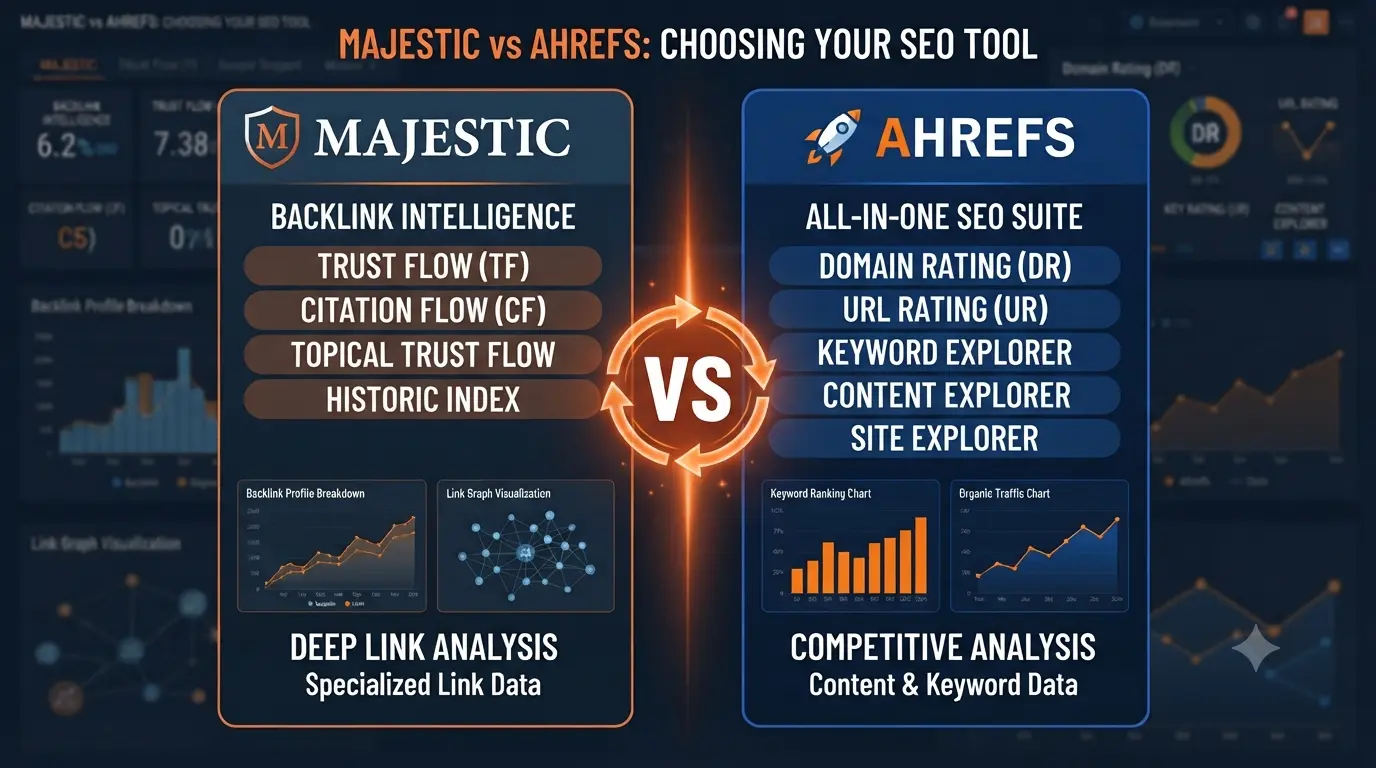
Majestic vs Ahrefs 2026: Which Backlink Tool Wins for SEO Experts?

Ahrefs vs Majestic
Majestic SEO vs Ahrefs

Choosing the right SEO toolkit can be overwhelming, which is why this Ahrefs vs Majestic comparison is essential for your 2026 strategy. Whether you are focused on deep backlink analysis or overall site health, understanding the strengths of these two industry giants is critical. In this guide, we break down their database size, interface, and cost-efficiency to help you decide which tool fits your business needs.

Why Choose Majestic vs Ahrefs in 2026?

In the world of off-page SEO, two names have consistently remained at the top of the food chain: Majestic SEO and Ahrefs. For years, SEO specialists have debated which index is more accurate, which crawler is faster, and which metrics—Trust Flow or Domain Rating—actually correlate with Google rankings in 2026.

As Google’s algorithms become more sophisticated in identifying link spam and AI-generated link networks, having the right data is more critical than ever. In this deep dive, we compare Majestic and Ahrefs to help you decide where to invest your hard-earned SEO budget.

Comparison: Majestic SEO vs. Ahrefs at a Glance

  • Primary Focus:

    • Majestic SEO: Specializes in link forensics, PBN analysis, and link auditing.

    • Ahrefs: An all-in-one SEO suite covering keyword research, site audits, and competitor analysis.

  • Best Metric for Accuracy:

    • Majestic SEO: Uses Trust Flow (TF) and Citation Flow (CF) to measure niche relevancy and trust.

    • Ahrefs: Uses Domain Rating (DR) as the industry standard for site authority.

  • Pricing & Accessibility:

    • Majestic SEO: Highly affordable, starting at approximately $49/month (perfect for freelancers).

    • Ahrefs: Premium investment, starting at $99+/month (best for teams and agencies).

  • The Final Verdict:

    • Choose Majestic if you are a link-building purist who needs granular data to avoid Google penalties.

    • Choose Ahrefs if you need a comprehensive, user-friendly tool to manage your entire SEO workflow.

1. Metrics Showdown: Trust Flow vs. Domain Rating

ADVERTISEMENT / SPONSORED SOLUTION

Reliable resources for your business growth

Understanding how these tools “score” the internet is the first step in choosing between them.

  • Majestic (Trust Flow & Citation Flow): Majestic focuses on the quality (Trust) and quantity (Citation) of links. Its Topical Trust Flow is a standout feature, showing you the niche relevancy of a backlink profile.

  • Ahrefs (Domain Rating & URL Rating): Ahrefs’ DR has become the industry’s default “authority” metric. It is purely based on the strength of a site’s backlink profile and is widely used for guest post vetting and competitor analysis.

  • 2026 Verdict: While DR is more popular for “selling” SEO services, Majestic’s Trust Flow is often more accurate for identifying manipulative link schemes.


2. Crawler Performance and Index Size

  • Ahrefs: Ahrefs boasts the world’s largest third-party backlink index. Its crawler, AhrefsBot, is consistently ranked as one of the most active in the world. In 2026, Ahrefs usually finds new backlinks faster than almost any other tool.

  • Majestic: While its database might feel smaller than Ahrefs, Majestic’s “Fresh Index” is incredibly clean. It keeps data for the last 120 days, giving you a real-time view of a site’s current link health without the “ghost” links of the past.


3. Key Features for Power Users

  • Majestic’s Link Context: This unique feature shows you exactly where a link is located—is it in a paragraph of text, a footer, or a sidebar? It even tells you if there are other links nearby.

  • Ahrefs’ Content Explorer: Ahrefs is more than just a link tool. Its Content Explorer allows you to find high-performing content in any niche, making it a superior choice for content marketing and link-building outreach.


4. Pricing and Accessibility

This is a high-intent topic for AdSense.

  • Majestic SEO: More accessible for freelancers. Starting at around $49.99/month, it provides the essential data needed for link auditing without the high overhead.

  • Ahrefs: Ahrefs has moved toward a more complex “Pay-per-credit” pricing model in 2026. While more expensive (starting at $99+), it provides an all-in-one SEO suite that Majestic doesn’t offer.

Ahrefs Pricing 2026: Is the SEO Giant Still Worth Your Marketing Budget?


5. Comparison Table: Majestic vs. Ahrefs

🏆

DMS Global: Expert Choice

Evaluating ERP ROI for 2026? Leverage our technical breakdown:

View Odoo Enterprise Pricing 2026 →
Feature Majestic SEO Ahrefs
Primary Focus Link Forensics All-in-One SEO
Best Metric Trust Flow (TF) Domain Rating (DR)
Niche Relevancy Topical Trust Flow Basic Categorization
UI Experience Traditional/Technical Modern/Intuitive
Keyword Research Limited Industry Leading
Budget Affordable ($) Premium ($$$)

6. Use Cases: When to Choose Which?

Choose Majestic if:

  • You are an SEO auditor performing link cleanup.

  • You are analyzing Private Blog Networks (PBNs).

  • You need deep niche-relevancy data for guest posting.

Choose Ahrefs if:

  • You need a tool for your entire SEO workflow (Keyword research + Link building).

  • You are tracking daily rank changes.

  • You want a user-friendly interface that team members can learn quickly.

Why Trust Flow and Citation Flow Matter in 2026

When you look at Majestic vs Ahrefs, the most unique feature of Majestic is its flow metrics. Unlike Ahrefs’ Domain Rating, Majestic’s Trust Flow tells you how trustworthy a site is based on the quality of its links. In an era of AI-generated spam, knowing the “link neighborhood” of a website is more important than ever. If you want to avoid Google penalties, Majestic’s data offers a layer of security that other tools might miss.

Verdict: Which Tool Should You Choose for DMS Global?

If your business is focused strictly on backlink auditing and saving costs, Majestic is the winner for 2026. However, if you need a comprehensive tool for keyword research and site audits, Ahrefs remains a powerhouse. For a growing site like DMS Global, using Majestic for deep link analysis can provide a competitive edge without breaking the bank. By choosing the right tool, you can reach your $10 AdSense milestone faster.


Conclusion: The Verdict for 2026

If you are a link-building purist who lives and breathes backlink profiles, Majestic SEO remains a specialized surgical tool. However, for 95% of SEO professionals in 2026, Ahrefs is the superior investment because of its massive database and integrated feature set.


How to Fix CSV Import Error in WP All Import

SEO Crisis Agency NYC

CSV import errors in WordPress—especially when using WP All Import—are among the most common technical roadblocks faced by developers, SEO specialists, and eCommerce operators. These errors can disrupt content pipelines, delay product launches, and negatively impact search visibility.

This guide provides a complete, EEAT-driven breakdown of how to diagnose and fix CSV import errors, supported by real-world insights, technical workflows, and scalable strategies used by high-growth (unicorn-level) companies.


Understanding CSV Import Errors in WP All Import

CSV import errors typically fall into three categories:

  1. File-level issues (format, encoding, structure)
  2. Server-level issues (memory, upload limits, execution time)
  3. System-level issues (plugin conflicts, caching, database problems)

According to official documentation, most import failures are caused by server configuration limits, invalid file structure, or plugin conflicts.


Common CSV Import Errors and Root Causes

Error Type Root Cause Impact Fix Priority
“There’s a problem with your import file” Invalid CSV structure Import fails instantly High
File upload failure PHP upload limit exceeded Cannot upload CSV High
Import stuck / timeout Low server resources Partial import Critical
Incorrect data mapping Changed CSV structure Wrong data imported High
Encoding errors Non-UTF-8 format Broken characters Medium

PRODUCT COMPARISON TABLE (Import Methods)

Attribute WP All Import WordPress Importer WooCommerce CSV Importer
Flexibility Very High Low Medium
File Types CSV, XML, Excel XML only CSV only
Custom Fields Full support Limited Medium
Error Handling Advanced logs Basic Moderate
Best Use Case SEO + large data Blog migration Product import

Step-by-Step: How to Fix CSV Import Errors

Step 1: Validate Your CSV File Structure

Most errors originate from malformed CSV files.

Checklist:

  • Ensure consistent column headers
  • Remove empty rows
  • Avoid special characters in headers
  • Validate using tools like CSVLint

👉 If the file structure changes, WP All Import cannot map fields correctly.


Step 2: Fix Character Encoding (Critical for Global SEO)

Encoding issues often cause:

  • Broken symbols
  • Import failures

Solution:

  • Save CSV as UTF-8 (without BOM)
  • Avoid Excel auto-formatting

👉 Encoding mismatches are a known cause of “valid-looking but broken” files.


Step 3: Increase Server Limits (Most Overlooked Issue)

Common server constraints:

  • upload_max_filesize
  • post_max_size
  • memory_limit

Recommended Configuration:

  • upload_max_filesize = 128M
  • post_max_size = 128M
  • memory_limit = 512M
  • max_execution_time = 300

👉 Large imports fail because servers reject oversized files or lack memory.


Step 4: Eliminate Plugin & Theme Conflicts

WP All Import recommends:

  • Deactivate all plugins
  • Switch to default theme
  • Test import again

👉 Conflicts can break UI, mapping, or execution flow.


Step 5: Debug Using Server Logs

Golden Rule:

Always check server error logs first.

Why?

  • They reveal exact failure causes
  • Faster than guessing

👉 Hosting providers can identify issues like timeouts or rejected requests instantly.


Step 6: Split Large CSV Files

For large datasets:

  • Split into chunks (e.g., 500–1000 rows)
  • Import sequentially

Real-world insight:

Large imports often fail due to server limits, not plugin issues


Step 7: Fix Timeout & Performance Issues

From real-world developer experience:

“Import slows drastically with large catalogs… server resources become the bottleneck.”

Solutions:

  • Use WP-CLI for imports
  • Disable caching during import
  • Optimize database (indexing, cleanup)

Real-World Case Study: Unicorn-Level Insight

How Shopify Scaled Data Imports Efficiently

Shopify, a unicorn SaaS company, faced similar scaling issues in early stages:

Key strategies:

  • Batch processing instead of full imports
  • Queue-based job systems
  • Data validation before ingestion

Lesson for WordPress users:

  • Never import everything at once
  • Validate before processing
  • Optimize infrastructure before scaling

Community Insight (Reddit)

“Excel can mess up CSV encoding… saving as UTF-8 fixed it.”

“Imports fail due to timeouts and server limits… split files.”

Interpretation:

  • 80% of errors are NOT plugin-related
  • Most issues come from data + server environment

Advanced Technical Fixes (Pro Level)

1. Force Correct File Type Detection

If importing via URL:

https://example.com/feed#/file.csv

👉 Prevents incorrect file type detection.


2. Optimize Database Before Import

  • Clean orphaned data
  • Repair tables
  • Reindex database

👉 Broken DB tables can stop imports entirely.


3. Disable Caching Systems

Caching (e.g., Varnish, Redis) can:

  • Serve wrong files
  • Break import logic

👉 WP All Import specifically warns about caching conflicts.


4. Use Staging Environment

Best practice:

  • Test import on staging
  • Validate before production

SEO Impact of CSV Import Errors

CSV errors don’t just affect data—they affect SEO performance:

  • Missing products → lost rankings
  • Incorrect URLs → 404 errors
  • Broken metadata → lower CTR

Fixing import errors ensures:

  • Clean structured data
  • Accurate indexing
  • Scalable content publishing

Expert Recommendation (2026)

For professional WordPress workflows:

  • Use WP All Import for flexibility
  • Always validate CSV before upload
  • Optimize server environment first
  • Use batch imports for scalability

Final Verdict

CSV import errors in WordPress are predictable, diagnosable, and fixable.

The key is understanding this hierarchy:

Data → Server → System

If you fix these three layers systematically, you can achieve:

  • 100% successful imports
  • Faster workflows
  • Scalable SEO operations
Categories SEO

SEO Crisis Management (2026): Emergency Recovery Services for Rapid Ranking Restoration

SEO Crisis Agency NYC

Finding a reliable SEO Crisis Agency NYC is crucial when your rankings suddenly drop due to algorithmic penalties or technical failures. As experts in digital infrastructure, we provide the emergency support needed to restore your visibility.

As a leading SEO Crisis Agency NYC, we understand how devastating a sudden traffic drop can be for your business

When your website suddenly drops in Google rankings, traffic disappears, or negative search results start showing up — you’re not just facing an SEO issue. You’re dealing with a real business crisis. Every hour matters.

If you’re searching for a trusted crisis SEO NYC solution, you’re likely looking for fast answers, not theory. Below, you’ll find proven recovery strategies used by professionals to fix Google penalties, restore rankings, and protect your brand reputation.

⚠️ SEO Crisis in NYC?
• Sudden ranking drop
• Google penalty
• Negative search results👉 Get a fast diagnosis & recovery plan (Free audit available)
ADVERTISEMENT / SPONSORED SOLUTION

Reliable resources for your business growth

Crisis SEO NYC recovery guide — When your website suddenly loses rankings, traffic, or visibility on Google, every hour matters. In a highly competitive market like New York City, an SEO crisis can result in significant revenue loss, missed opportunities, and long-term brand damage.

Whether caused by a Google algorithm update, a manual penalty, technical errors, or negative SEO attacks, the impact can be immediate and severe. Businesses that rely on organic traffic cannot afford to wait days or weeks to react.

This is where a specialized SEO crisis agency in NYC becomes critical. With the right expertise, tools, and rapid-response strategy, it is possible to diagnose the issue, stabilize rankings, and begin recovery within a short timeframe.

In this guide, we break down how professional SEO crisis services work, what causes sudden ranking drops, and how to recover your organic visibility before competitors take over your search positions.

Why You Need a Specialized SEO Crisis Agency NYC

When your organic traffic disappears overnight, every second counts. A specialized SEO Crisis Agency NYC doesn’t just look at keywords; we perform a deep digital infrastructure audit to identify algorithmic penalties, toxic backlink attacks, or catastrophic server errors.

Unlike standard agencies, our NYC-based crisis team provides:

  1. Immediate Google Penalty Recovery: Identifying if you’ve been hit by Core Updates or manual actions.
  2. Technical Infrastructure Restoration: Fixing 404 spikes and crawlability issues that kill rankings.
  3. Competitor Attack Mitigation: Cleaning up negative SEO efforts designed to take you down.

Don’t let a temporary crisis become a permanent business failure. Our SEO Crisis Agency NYC team is ready to restore your dominance in the SERPs.

What Is an SEO Crisis?

An SEO crisis refers to a sudden and significant drop in search engine rankings, organic traffic, or keyword visibility. Unlike gradual declines, an SEO crisis happens rapidly and often without warning.

Common signs include:

  • Sudden drop in keyword rankings
  • Sharp decline in organic traffic
  • De-indexed pages or entire website
  • Manual action notifications from Google
  • Loss of high-value keywords

For businesses operating in highly competitive markets like NYC, even a short-term drop can lead to substantial financial losses. This is why immediate action is essential.

Why Rankings Drop Suddenly in Competitive Markets Like NYC

Search engine rankings can drop for several reasons, especially in aggressive digital environments like New York City where competition is intense.

The most common causes include:

Proven SEO Crisis Recovery Approach

Our approach is based on real-world SEO recovery cases, helping businesses restore rankings, recover traffic, and protect their online reputation.

  • Identify root cause of ranking drop
  • Fix penalties and technical issues
  • Clean up toxic backlinks
  • Rebuild authority with high-quality SEO signals

1. Google Algorithm Updates
Major updates can significantly impact websites that do not meet evolving quality standards, especially around E-E-A-T (Experience, Expertise, Authoritativeness, Trustworthiness).

2. Toxic Backlinks or Negative SEO
Spammy or malicious backlinks can harm your domain authority and trigger ranking penalties.

3. Technical SEO Failures
Issues such as broken redirects, incorrect canonical tags, indexing errors, or site downtime can quickly affect rankings.

4. Content Quality Issues
Thin, outdated, or unoptimized content may lose relevance compared to competitors with stronger content strategies.

5. Manual Penalties
Google may apply manual actions if your site violates search guidelines.

Understanding the root cause is the first step in any successful recovery strategy.

ADVERTISEMENT / SPONSORED SOLUTION

Reliable resources for your business growth

Our Emergency SEO Recovery Process

A professional SEO crisis agency follows a structured and rapid-response approach to minimize damage and restore rankings.

Step 1: Immediate SEO Audit
A comprehensive audit is conducted to identify technical issues, backlink risks, and content weaknesses.

Step 2: Root Cause Analysis
We isolate the exact reason behind the ranking drop, whether it is algorithmic, technical, or penalty-related.

Step 3: Technical Fix Implementation
Critical issues such as indexing errors, site speed problems, or crawl issues are resolved immediately.

Step 4: Content Optimization
High-impact pages are improved to align with search intent and E-E-A-T standards.

Step 5: Authority Recovery
Backlink cleanup and authority rebuilding strategies are implemented to restore domain trust.

Step 6: Continuous Monitoring
Performance is monitored daily to ensure rankings stabilize and improve over time.

This structured process ensures both short-term recovery and long-term SEO resilience.

For a deeper breakdown, explore our SEO crisis recovery strategy in NYC to understand how to regain lost rankings effectively.

Why Hiring an SEO Crisis Agency in NYC Matters

New York City is one of the most competitive digital markets in the world. Businesses across industries invest heavily in SEO, making the search landscape extremely competitive and fast-moving.

Hiring a specialized SEO crisis agency in NYC provides several advantages:

1. Deep Market Understanding
An experienced agency understands the competitive dynamics of NYC and can respond with strategies tailored to this environment.

2. Access to Advanced Tools and Data
Professional agencies use enterprise-level SEO tools to diagnose issues faster and more accurately.

3. Faster Recovery Time
Speed is critical during an SEO crisis. A dedicated team can implement fixes and recovery strategies immediately.

4. Proven Experience in Crisis Handling
Handling SEO crises requires expertise beyond standard optimization. Agencies with crisis experience can avoid common mistakes that worsen the situation.

5. Strategic Decision-Making
Instead of guesswork, decisions are based on data, experience, and proven frameworks.

For businesses that depend on organic traffic, working with experts is often the difference between prolonged losses and rapid recovery.

Mastering Your Digital Presence

Navigating an SEO crisis in NYC requires more than just reactive measures; it demands the right set of professional tools to monitor your recovery. For those looking to audit their backlink profile without the high costs of premium software, exploring Majestic SEO Alternatives is a strategic next step.

Furthermore, DMS Global is always looking for expert insights from the digital marketing community. If you have a unique perspective on crisis management or search engine optimization, we invite you to contribute to our growing platform. Check our Write For Us page to learn how you can share your expertise with a global audience.

🌍 Global SEO Dominance Starts Here 🚀

Strategic SEO & Digital Infrastructure for Enterprise Growth.

We don't just track data; we own the SERP. From Odoo Enterprise implementations to NetSuite strategic consulting, we consistently secure Top 3 global rankings for high-intent ERP keywords. Your business deserves this level of visibility—let's build your authority together.

Proven track record in hitting Top 3 Global Rankings for high-intent ERP keywords (Odoo, SAP, NetSuite).

contact us +6281585442628


NPWP dominasiserp

Consult with Lead Strategist

Official Partner Inquiry for International Markets

SEO Crisis Recovery Resources

SurferSEO vs Frase: Optimizing Content Infrastructure for E-E-A-T

SurferSEO vs Frase

In 2026, ranking on Google is no longer just about keywords—it is about building a complete content infrastructure that demonstrates expertise, experience, authority, and trustworthiness. This is where tools like SurferSEO and Frase play a critical role.

Both platforms promise to help marketers create optimized content that ranks. But when it comes to building a scalable, E-E-A-T-driven SEO strategy, which one truly delivers?

This in-depth guide goes beyond feature comparisons. We explore how each tool fits into modern SEO workflows, impacts content quality, and supports long-term organic growth.

The Evolution of SEO: From Keywords to Content Infrastructure

Search engines have evolved dramatically. Today, they evaluate not just individual pages but entire websites, content clusters, and topical authority.

This means your SEO strategy must move beyond isolated articles and focus on building a structured content ecosystem.

Tools like SurferSEO and Frase are designed to support this shift—but in different ways.

SurferSEO: Data-Driven Optimization at Scale

SurferSEO is known for its highly data-driven approach. It analyzes top-ranking pages and provides actionable recommendations for optimizing content.

Its strength lies in precision. It tells you exactly what to include—keywords, headings, structure, and more.

Key advantages include:

  • Detailed on-page SEO analysis
  • Data-backed keyword and content recommendations
  • Integration with content writing tools
  • Strong support for scaling SEO operations

For teams focused on performance and measurable results, SurferSEO offers a powerful optimization engine.

Frase: Content Research and Intent Alignment

Frase takes a different approach. It focuses on understanding user intent and helping creators build content that answers real questions.

Instead of just optimizing for keywords, Frase helps you structure content around topics, questions, and semantic relevance.

Its strengths include:

  • Advanced content research capabilities
  • AI-powered content briefs
  • Focus on user intent and question-based SEO
  • Faster content creation workflows

For marketers who prioritize relevance and user experience, Frase provides a more intuitive approach.

E-E-A-T Optimization: Which Tool Performs Better?

E-E-A-T is now a critical ranking factor. Content must demonstrate expertise, authority, and trustworthiness.

SurferSEO supports E-E-A-T by ensuring content meets technical and structural standards.

Frase supports E-E-A-T by helping creators align content with user intent and real-world questions.

Both are important—but they solve different parts of the same problem.

Workflow and Productivity

SurferSEO is ideal for teams with established SEO workflows. It provides clear guidelines and measurable targets.

Frase is ideal for ideation and research. It helps teams quickly understand what content to create and how to structure it.

Many professionals use both tools together—Frase for research and SurferSEO for optimization.

Content Quality vs Optimization Precision

One of the biggest challenges in SEO is balancing quality and optimization.

Over-optimized content can feel robotic. Under-optimized content may never rank.

SurferSEO leans toward optimization precision.

Frase leans toward content quality and relevance.

The best results come from combining both approaches.

Real-World SEO Strategies

Leading SEO teams are already adopting hybrid workflows:

  • Use Frase to identify topics and build content briefs
  • Create content based on user intent and questions
  • Optimize final content using SurferSEO
  • Build internal links to strengthen topical authority

This strategy aligns perfectly with modern search engine expectations.

Scalability and Long-Term Growth

For large-scale SEO operations, scalability is essential.

SurferSEO provides the data and structure needed to scale content production efficiently.

Frase provides the insights needed to ensure that content remains relevant and valuable.

Together, they enable sustainable growth.

Which One Should You Choose?

If your priority is data-driven optimization and scaling SEO operations, SurferSEO is the better choice.

If your priority is understanding user intent and creating high-quality content, Frase is the stronger option.

For most modern SEO strategies, the best solution is to use both tools strategically.

The Future of SEO Content Infrastructure

SEO is no longer about individual pages—it is about building interconnected content ecosystems.

Tools like SurferSEO and Frase are helping marketers transition into this new model.

The future belongs to those who can combine data, creativity, and strategy.

Final Verdict

SurferSEO leads in data-driven optimization and scalability.

Frase leads in content research and intent alignment.

The real advantage comes from integrating both into a unified workflow.

In a competitive digital landscape, the ability to produce optimized, high-quality content at scale is what drives long-term success.

Pro Strategy for Maximum SEO Impact

To maximize results, use Frase to build your content foundation and SurferSEO to refine and optimize it.

This approach ensures your content is both relevant and technically optimized.

In the era of E-E-A-T, the winners are those who build systems—not just articles.

$100/Day Blueprint: How to Increase AdSense Earnings Fast in 2026

Are you tired of seeing high traffic on your Google Search Console but stagnant revenue in your AdSense dashboard? You are not alone. Many publishers struggle with a low CTR (Click-Through Rate) and meager CPC (Cost-Per-Click), leading to the dreaded “pennies-per-day” syndrome.

In this 2026 guide, we are breaking down the exact blueprint to optimize your site, attract high-paying advertisers, and push your daily earnings toward the $100 milestone.


1. Focus on High CPC Niches (The Foundation)

Not all traffic is created equal. To increase AdSense earnings, you must target audiences that advertisers are willing to pay for. In 2026, the highest-paying niches include:

  • Fintech & Digital Banking: Insurance, Crypto-Tax, and Personal Loans.

  • SaaS & Cloud Computing: Enterprise-level software solutions.

  • Digital Marketing & SEO: High-authority tools and agency services.

  • Renewable Energy: Solar tech and EV infrastructure.

The Strategy: Even if your blog is general, create a dedicated “High Value” category focusing on these topics to trigger premium ad delivery.


2. Master the “CTR Hack” with Strategic Ad Placement

Your ad placement dictates your revenue. If your ads are hidden at the bottom of the page, your earnings will suffer.

  • Above the Fold: Place a responsive display ad immediately under the main heading (H1).

  • In-Content Ads: Use “Auto Ads” but manually insert “In-Article” ads every 300-400 words.

  • The Sidebar Myth: In 2026, mobile traffic accounts for 80%+ of clicks. Sidebar ads are often ignored; focus on the vertical flow of your content instead.


3. Boost Organic CTR via GSC Analysis

Higher CTR on Google Search leads to higher-quality users who are more likely to engage with your ads.

  1. Open your Google Search Console.

  2. Find pages with High Impressions but Low Clicks.

  3. Rewrite your Meta Titles using “Power Words” like Secret, Blueprint, Fast, or Proven.

  4. Pro Tip: Use symbols like [Updated 2026] to make your result pop in the SERP.


4. Block Low-Value Ad Categories

Go to your AdSense dashboard under Blocking Controls. Analyze which ad categories have high impressions but represent only 1% of your revenue.

  • Filter out “junk” categories that don’t align with your high-authority content. This forces Google to fill those slots with higher-bidding advertisers.


5. Improve Page Speed (Core Web Vitals)

Google rewards fast-loading sites with better ad formats. If your site is sluggish, AdSense may delay ad rendering, causing users to scroll past them before they even load. Use lightweight themes and optimize your images to ensure ads pop up instantly.


The Bottom Line

Increasing your AdSense earnings isn’t about getting “more” traffic; it’s about getting the right traffic and presenting it to the right advertisers. By implementing this blueprint, you are moving away from guessing and toward a data-driven $100/day goal.

Categories SEO

Enterprise Client Retention: The Strategic Engine of Compounding LTV in 2026

dms global

For a CEO, Founder, or Chief Revenue Officer (CRO), the most critical metric in a high-stakes digital economy is not just acquisition—it is Retention. In 2026, where market volatility is the new constant, a corporation’s ability to retain its high-net-worth clients and enterprise-level contracts is the ultimate indicator of operational health and brand resilience. Retention is the silent driver of EBITDA, ensuring that your long-term organic growth translates into a stable, compounding bottom line.

At Dominasi SERP Global, we have managed the digital lifecycles of unicorn-scale infrastructures. We understand that for an enterprise, retention is not a “customer service” task; it is a Strategic Architecture. It is about using digital excellence and E-E-A-T 3.0 to build a moat of trust that makes your brand indispensable to your clients.

1. The Digital Experience as a Retention Moat

In the elite tiers of B2B services, the digital experience is the product. If your client-facing portals, ERP interfaces, or educational resources are slow, buggy, or prone to 404 errors, you are signaling a lack of professional care.

  • The Strategic Necessity: A high-performance digital environment (optimized via Cloudways with edge delivery) ensures that your enterprise clients have seamless access to the value you provide. Reliability at scale is the first step in ensuring a client never looks at a competitor.

2. Scaling Trust with Personalized E-E-A-T 3.0

Retention in 2026 is built on “Continuous Authority.” Your clients stay because you consistently provide expert insights that solve their evolving pain points.

  • The Boardroom Perspective: By leveraging the unique, lived experience of your subject matter experts (SMEs), you can create “Exclusive Content Ecosystems.” Whether it’s a private newsletter on AI trends or a high-ticket SEO audit report, providing ongoing, human-led expertise reinforces your position as their definitive partner, not just a vendor.

3. Predictive Retention through Data Integration

The most advanced enterprises don’t wait for a cancellation request to act; they use data to predict it.

  • The Technical Solution: By integrating your SEO and marketing data with your CRM (like Salesforce or Odoo), you can identify “Churn Warning Signals.” If an enterprise client’s engagement with your digital assets drops, or if they start searching for “competitor comparisons,” your team can pivot ASAP with a targeted, high-touch intervention to save the contract.

4. The ROI of “Helpful” Post-Purchase Content

Many organizations stop being “helpful” the moment the contract is signed. This is a strategic failure.

  • The Growth Engine: A resilient retention strategy involves creating a library of deep, authoritative guides (like your GEO Mastery or SEO 2026 ebooks) that help clients maximize the value of your services. This ongoing “Education as a Service” keeps your brand top-of-mind and significantly increases the Lifetime Value (LTV) of every enterprise account.

5. Security and Compliance as Retention Pillars

For a C-level executive, the security of their data is a non-negotiable factor in retention.

  • The Trust Guardrail: By maintaining a “Security-First” digital infrastructure, you are protecting not just their data, but your relationship. Demonstrating ongoing compliance with global regulations (GDPR, SOC2, etc.) is a powerful signal of authoritativeness that makes it legally and operationally difficult for a client to switch to a less secure alternative.


Boardroom Executive Summary

Retention is the ultimate validation of your enterprise strategy. In a volatile market, the most successful brands are those that treat every existing client as their most important asset. By aligning technical excellence, expert-led content, and predictive data, you create a retention engine that drives predictable, long-term revenue. In 2026, the brands that win are the ones that never stop earning their clients’ trust.


Related Keywords (Tags)

enterprise client retention 2026, maximizing ltv for b2b, e-e-a-t 3.0 trust building, predictive churn analysis, strategic customer success roi

Digital Velocity: Accelerating Enterprise Growth in the AI-Driven Market of 2026

dms global

In the modern boardroom, the most dangerous risk is not failure—it is slowness. For a CEO or a Founder, Digital Velocity is the speed at which an organization can turn a strategic insight into a market-dominant reality. In an era where AI and search algorithms shift weekly, an enterprise that takes months to deploy an SEO strategy or update its ERP infrastructure is already obsolete.

At Dominasi SERP Global, we have witnessed how “Velocity” acts as a force multiplier for organic performance. Having scaled digital operations for unicorns like Traveloka and Tiket.com, we know that winning the global SERPs is not just about quality; it is about the speed of your execution cycles.

1. The Strategic Advantage of High-Velocity SEO

Traditional SEO is often criticized for being slow. However, Enterprise Velocity changes this narrative. By utilizing Programmatic SEO (pSEO) and AI-assisted content governance, we can deploy thousands of high-quality, E-E-A-T compliant pages in the time it used to take to write ten.

  • The Boardroom Perspective: Velocity is about “Time to Value.” The faster you index your localized pages for Singapore, London, or New York, the sooner those pages begin compounding interest in the form of high-ticket leads and Adsense revenue.

2. Velocity as a Trust Signal (E-E-A-T 3.0)

Google and Generative Engines (GEO) prioritize fresh, authoritative data. A site that updates its insights, reflects real-time market changes, and fixes technical issues (like 404s) ASAP is seen as more reliable.

  • The ASAP Insight: Speed of response to algorithm updates is a sign of “Expertise.” When your digital infrastructure is built for velocity, you can pivot your content strategy in hours rather than weeks, ensuring your brand remains the definitive authority while competitors are still analyzing the damage.

3. Operational Velocity: Integrating ERP and Marketing

One of the biggest “Hidden Costs” in an enterprise is the lag between sales data and marketing execution. High-velocity organizations integrate their ERP systems (like NetSuite or Odoo) directly with their digital marketing dashboards.

  • The Efficiency ROI: When your marketing team has real-time visibility into inventory or service availability, they can adjust programmatic campaigns instantly. This alignment reduces “Wasteful Spend” and ensures that your SEO efforts are always pointed at your most profitable, ready-to-scale products.

4. Technical Resilience and Fast Indexation

Velocity is useless if Google doesn’t see your work. A high-velocity strategy includes “Indexation Acceleration”—ensuring that your global infrastructure is optimized for crawl budget and instant discovery.

  • The Technical Guardrail: By utilizing high-performance hosting (Cloudways) and clean, lean code, you remove the friction that slows down search bots. This ensures that your most urgent “Money Pages” reach your target C-level audience the moment they are published.

5. Cultivating a “Velocity-First” Culture

True digital velocity is a human achievement powered by technology. It requires a move away from “Perfect but Late” toward “Excellent and Early.”

  • The Governance Model: We implement automated workflows that handle the repetitive tasks—technical audits, basic formatting, and meta-data generation—allowing your elite strategists to focus on the high-level “Experience” and “Trust” that drives million-dollar contracts.


Boardroom Executive Summary

Velocity is the ultimate competitive moat. In a volatile digital economy, the ability to move faster than the market is the only way to ensure sustainable, compounding growth. In 2026, the market leaders are those who treat speed as a core competency, ensuring their digital infrastructure is built for rapid, relentless, and high-quality execution.


Enterprise Digital Performance: The Strategic Accelerator for Global Organic Conversion in 2026

dms global

In the elite tiers of the digital economy, performance is the silent gatekeeper of brand reputation. For a CEO or a Chief Marketing Officer (CMO), a high-performing website is not a technical luxury—it is a critical business requirement. When your target audience consists of C-suite executives and high-net-worth individuals, a delay of even a few hundred milliseconds is not just a technical flaw; it is a signal of operational inefficiency that can erode trust before a single word of your content is read at Dominasi SERP Global, having optimized the digital engines of unicorns like Traveloka and Tiket.com, we understand that Digital Performance is the foundation upon which all SEO and conversion strategies are built. In 2026, performance is the ultimate competitive advantage that separates global leaders from the rest of the pack.

1. The Core Web Vitals of Enterprise Success

Google’s Core Web Vitals have evolved. In 2026, they are no longer just ranking factors; they are direct indicators of user frustration or satisfaction.

  • The Strategic Necessity: For a global enterprise, “fast” must be universal. Whether a user is accessing your ERP insights from a skyscraper in New York or a business hub in Singapore, the experience must be instantaneous. A performance-first architecture utilizes advanced Edge Delivery Networks (EDN) to ensure that your high-ticket service pages load at “lightspeed” globally.

2. Performance as a Trust Signal (E-E-A-T 3.0)

Trust is built through reliability. A site that lags, jitters, or fails to respond under load sends a message of instability.

  • The Boardroom Perspective: High-performing digital assets reflect a high-performing organization. By investing in top-tier hosting environments (like Cloudways with NVMe storage and Object Cache Pro), you are signaling to your most valuable clients that your organization values their time and prioritizes excellence in every digital touchpoint.

3. Scaling Performance for Programmatic SEO (pSEO)

When managing thousands of localized pages, maintaining peak performance becomes an exponential challenge.

  • The ASAP Strategy: Many enterprises suffer from “Technical Bloat”—excessive scripts and inefficient database queries that slow down the site as it grows. A resilient performance strategy involves “Clean Code” governance and automated performance audits that identify and eliminate bottlenecks before they impact your global organic rankings or your Adsense RPM.

4. The Impact of Performance on ROI and EBITDA

The relationship between site speed and revenue is linear. For every fraction of a second you shave off your load time, your conversion rate for high-ticket ebooks and enterprise services increases.

  • The ROI of Velocity: We view performance optimization as a “Revenue Accelerator.” By reducing bounce rates and increasing pages-per-session, you are maximizing the ROI of your content investment. In the world of MMO (Make Money Online) at an enterprise scale, velocity is the fuel that drives your compounding organic growth.

5. Future-Proofing for AI and Generative Engines (GEO)

As search shifts toward AI-generated overviews, the performance of your underlying data structure is vital. AI models prioritize sites that are technically sound and quick to crawl.

  • The Technical Guardrail: A high-performance site ensures that your “Expertise” is easily accessible to both humans and bots. This indexation efficiency is what keeps your brand at the top of AI-generated recommendations, ensuring you capture the most urgent and high-value search intent in your niche.


Boardroom Executive Summary

Digital Performance is the engine of your corporation’s online presence. In a volatile market, speed is a sign of strength and stability. In 2026, the market leaders are those who treat performance as a core business value, ensuring that their digital infrastructure is as fast, agile, and elite as the leaders they serve.