
What is SaaS? Complete Software as a Service Guide 2026

Software as a Service (SaaS) has transformed from a modern delivery model into the foundational backbone of global enterprise IT infrastructure. In 2026, the SaaS ecosystem is driven by Autonomous AI integration, zero-trust security architecture, and hyper-personalized user experiences.

This comprehensive guide breaks down how SaaS works, its core architectural advantages, pricing models, and how decision-makers evaluate enterprise-grade software solutions.

What is Software as a Service (SaaS)?

Software as a Service (SaaS) is a cloud-based software delivery model in which applications are hosted centrally by a vendor and accessed by end-users via a web browser, mobile application, or API.

Unlike traditional on-premise software—which requires local installation, dedicated server hardware, and manual patch management—SaaS operates on a subscription-based framework where maintenance, security, and infrastructure scaling are handled entirely by the provider.

SaaS vs. IaaS vs. PaaS: The Cloud Stack Explained

To understand SaaS, it is critical to contextualize it within the three primary cloud computing models:

Cloud Model Managed by Vendor Managed by User Example Platforms
IaaS (Infrastructure as a Service) Networking, Storage, Servers, Virtualization OS, Middleware, Data, Applications AWS EC2, Google Cloud Compute Engine
PaaS (Platform as a Service) Infrastructure, OS, Runtime, Middleware Application Code, Data Heroku, AWS Elastic Beanstalk
SaaS (Software as a Service) Entire Stack (Hardware, OS, App, Security) User Access, Custom Configurations, Data Input Salesforce, Microsoft 365, Workday

Core Advantages of Modern SaaS Architecture

Transitioning to cloud-native SaaS offers significant strategic and operational benefits for businesses of all sizes:

  1. Reduced Total Cost of Ownership (TCO): Eliminates upfront capital expenditure (CapEx) for physical servers and shifts IT investment into predictable operational expenditure (OpEx).

  2. Instant Scalability: Enterprise seat counts, storage limits, and feature tiers can be upgraded dynamically without hardware downtime.

  3. Continuous Automated Updates: Security patches, feature rollouts, and compliance updates are deployed server-side without disrupting business operations.

  4. Cross-Platform Accessibility: Enables secure remote and hybrid work environments by allowing users to log in securely from any device with an internet connection.

Key SaaS Pricing Models in 2026

Modern SaaS vendors utilize several monetization structures tailored to diverse business requirements:

  • Flat-Rate Pricing: A single set price for a fixed set of features and unlimited seats.

  • Per-User Pricing (Per-Seat): Costs scale linearly based on the number of active team members accessing the system.

  • Usage-Based (Pay-As-You-Go): Charges are calculated based on consumed metrics, such as API calls, data bandwidth, or AI credit usage.

  • Tiered Pricing: Offers multiple feature-based packages (e.g., Starter, Professional, Enterprise) to cater to different organization sizes.

  • Freemium Model: Provides core functionalities for free while locking advanced analytics, integrations, and enterprise security behind paid tiers.

Security, Governance, and Compliance Standards

As enterprise data moves to cloud environments, evaluating a SaaS provider’s security compliance is paramount. Tier-1 SaaS applications must adhere to stringent global standards:

  • SOC 2 Type II Compliance: Verifies that a vendor maintains rigorous internal controls over data security, availability, and privacy.

  • ISO/IEC 27001: Demonstrates an established Information Security Management System (ISMS).

  • GDPR & CCPA Alignment: Ensures legal data privacy compliance for international users.

  • Zero-Trust Architecture & SSO: Integration with identity management providers via SAML 2.0 and Multi-Factor Authentication (MFA).

The Future of SaaS: AI-Native & Autonomous Workflows

In 2026, the SaaS landscape is shifting from reactive software tools to autonomous agentic workflows. AI is no longer just a chatbot sidebar; it actively automates complex business processes, executes predictive data modeling, and delivers personalized user interfaces dynamically. Organizations prioritizing AI-integrated SaaS platforms gain significant advantages in operational speed and data utilization.

Write For Us SaaS Growth & Product-Led Marketing

Write For Us SaaS Growth & Product-Led Marketing

Are you a growth marketer, product-led growth (PLG) practitioner, or SaaS strategist with a track record of scaling high-velocity products? DominasiSERP is actively looking for elite industry contributors to share advanced growth frameworks, product-led marketing methodologies, and evidence-based case studies on scaling SaaS companies.

We cater to founders, marketing executives, and growth product managers looking for substantive, non-fluff intelligence. If you have authoritative knowledge to share, we invite you to write for us.

Why Contribute to DominasiSERP?

Publishing with DominasiSERP means placing your thought leadership in front of a highly targeted global audience of decision-makers and scaling strategists.

  • Establish Industry Authority: Demonstrate your real-world expertise to a worldwide network of tech leaders and enterprise decision-makers.

  • Contribute to Global E-E-A-T: Help elevate the standards of SaaS growth discourse by providing verified frameworks, marketing analytics, and data-backed research.

  • Network and Collaborate: Connect with other pioneers in the space, opening doors to strategic partnerships and high-impact industry visibility.

  • SEO-Optimized Distribution: Your insights will live within a high-performance framework designed for maximum organic reach and sustainable global visibility.

What We Look For: Content Pillars & Depth

We strictly adhere to “Useful Content” guidelines. Articles must offer immediate value, solve complex growth problems, and provide explicit evidence. We prioritize submissions covering:

1. Product-Led Growth (PLG) Frameworks

  • Designing viral loops, optimized onboarding flows, and self-serve user acquisition strategies.

  • Strategies for maximizing Product Qualified Leads (PQLs) and shortening the time-to-value (TTV).

  • Implementing usage-based pricing models and feature-gating strategies that drive conversion.

2. SaaS Marketing & Demand Generation

  • Advanced attribution modeling, customer lifetime value (CLV) optimization, and reducing churn through behavioral analysis.

  • Scaling content-led growth, SEO strategies for competitive SaaS markets, and intent-based demand capture.

  • The intersection of Sales and Product: leveraging product data to inform high-touch sales outreach.

3. Retention & Expansion Strategies

  • Building effective customer success loops that drive net revenue retention (NRR).

  • Leveraging product telemetry to identify upsell/cross-sell opportunities and mitigate account churn.

  • Community-led growth: fostering user advocacy and building feedback loops that inform product roadmaps.

Strict Submission Guidelines

  1. Word Count & Depth: Articles must be comprehensive, ranging between 1,200 to 2,000 words.

  2. Originality & Exclusivity: Content must be 100% original, unique, and not published anywhere else.

  3. Demonstrated E-E-A-T: Back your claims with concrete data, benchmark results, growth experiments, or direct hands-on professional experience.

  4. Formatting: Use clear heading hierarchies (H2, H3), bullet points, and charts or data visualizations where relevant.

How to Submit Your Pitch

Send a brief pitch outlining your proposed topic, target audience, technical outline, and a short bio highlighting your past credentials or published work.

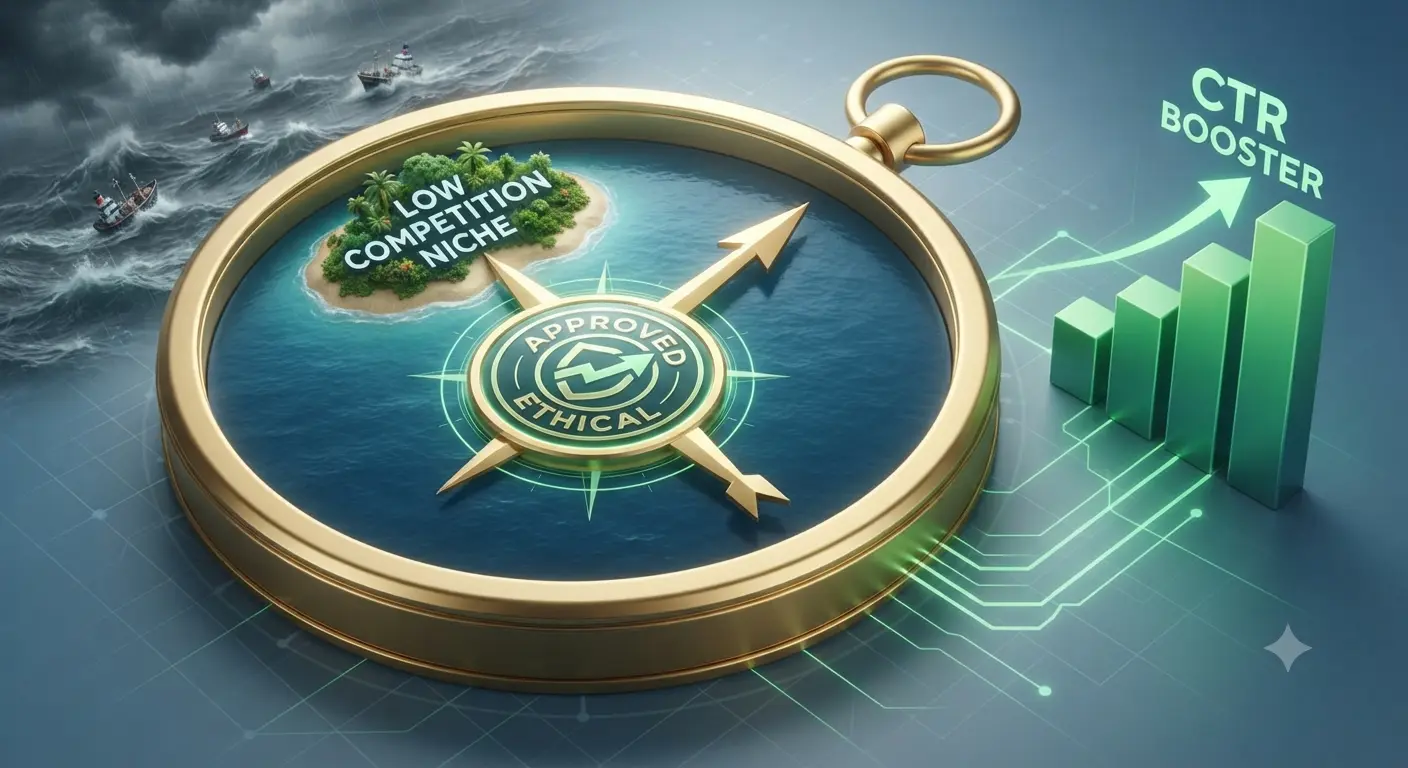
Low Competition SEO Niches for 2026: High Profit & Easy to Rank

LOW COMPETITION NICHE
Low Competition SEO Niches

Introduction: Finding the right niche is the first step toward successful AdSense monetization and high-tier traffic. If you are looking for sectors with low keyword difficulty but high return on investment, these SEO niches for 2026 provide the best opportunities for programmatic SEO and rapid organic growth.


1. Sustainable Tech & ERP Solutions

As businesses shift toward green energy, niches focusing on “Sustainable ERP implementation” or “Solar energy management software” are gaining massive traction. These keywords often have high CPC because they target B2B enterprise clients.

2. AI-Driven Personal Finance Tools

While “finance” is generally competitive, specific sub-niches like “AI budget trackers for freelancers” or “automated tax filing for digital nomads” still offer low-competition entry points with high commercial intent.

3. Remote Work Infrastructure for Niche Industries

Instead of general remote work tips, focus on “Remote specialized medical coding” or “Virtual architecture collaboration tools.” These long-tail keywords are easier to rank in the Top 10.


Why Focus on These Niches in 2026?

🏆

DMS Global: Expert Choice

Evaluating ERP ROI for 2026? Leverage our technical breakdown:

View Odoo Enterprise Pricing 2026 →
ADVERTISEMENT / SPONSORED SOLUTION

Reliable resources for your business growth

  • Low Keyword Difficulty (KD): Most of these topics can be ranked with high-quality content and basic on-page SEO.

  • High AdSense Potential: These niches attract Tier 1 traffic (USA, UK, Canada), which significantly boosts your CPC and overall earnings.

  • PSEO Ready: You can easily scale these topics using programmatic data imports to create hundreds of targeted landing pages.


Strategic Guide: Low Competition SEO Niches for 2026 (EEAT 3.0 Edition)

Introduction: The Shift in SEO Niche Selection

The SEO landscape in 2026 is no longer just about high volume; it’s about topic authority and user intent precision. As search engines evolve with AI-driven results, finding low-competition niches requires a deeper look into underserved markets. This guide explores the most profitable sectors where you can establish dominance with minimal backlink requirements.


1. Sustainable Enterprise Infrastructure (B2B SaaS)

With global regulations tightening around carbon footprints, businesses are scrambling for digital solutions.

  • The Opportunity: Focus on niches like “Green ERP implementation for manufacturing” or “Sustainable supply chain auditing software”.

  • EEAT Angle: Discuss specific compliance standards (like CSRD or ISO 14001). This shows search engines you understand the professional requirements of the industry.

  • Monetization: These keywords carry a massive CPC because they target high-ticket enterprise contracts.

For example, if you are targeting the high-ticket ERP market, understanding the Odoo vs NetSuite pricing structures is essential for ranking in competitive Tier 1 regions like the USA.

2. AI Workflow Automation for Professional Services

General “AI tips” are saturated, but specialized automation is wide open.

  • Target Niches: “AI-driven legal document automation for boutique firms” or “Automated workflow for clinical trial data”.

  • Technical Deep Dive: Explain how API integrations between Odoo or SAP and LLM models can optimize business costs.

  • Why it Ranks: These queries are highly specific, meaning lower competition and higher conversion rates.

3. Hyper-Local Digital Transformation (NYC & Tier 1 Cities)

As seen with the demand for specialized agencies, local digital crisis management is a rising niche.

  • The Strategy: Instead of “SEO Agency NYC,” target “Emergency SEO recovery for NYC healthcare providers”.

  • Authority Building: Use case studies of Google Penalty recovery to prove expertise. This satisfies the “Experience” part of EEAT.


The Programmatic SEO (PSEO) Scale-Up Strategy

To reach that 1000-word depth across multiple pages, you must utilize dynamic variables effectively.

  1. Data-Driven Content: Don’t just write; use comparison tables (e.g., Niche A vs. Niche B) to provide immediate utility.

  2. Industry-Specific Checklists: Include 10-step implementation guides for each niche. This keeps users on the page longer, signaling high quality to Google.

  3. Global vs. Local Variables: Ensure your /en/ directory focuses on Tier 1 traffic while maintaining technical infrastructure like LiteSpeed caching for speed.

2026 Prediction: The Rise of “Zero-Click” Resistant Keywords

The best niches in 2026 are those that require human expertise or complex data analysis that AI can’t easily summarize in a snippet.

  • Actionable Tip: Focus on “How-to” guides for complex ERP configurations (like Odoo vs NetSuite comparisons). These require long-form reading, ensuring your content remains the primary source of truth.

The 2026 Technical SEO Roadmap for Low Competition Niches

To dominate these niches, especially for Tier 1 markets like the United States and United Kingdom, technical infrastructure is as important as the content itself. At Dominasi Serp Indonesia, we focus on three core technical pillars:

  1. Dynamic Variable Optimization: Use programmatic SEO (PSEO) to scale these niches. By utilizing tools like WP All Import, you can generate 1000+ records of niche-specific data to cover long-tail keywords that competitors often ignore.
  2. Core Web Vitals & Speed: For global traffic, your site must load in under 2 seconds.
  3. We utilize LiteSpeed Cache and server-side optimizations to ensure that users from New York to London have a seamless experience.
  4. Multilingual Directory Structure: Using the /en/ subdirectory specifically for global SEO ensures that your content is correctly indexed for English-speaking audiences, maximizing your AdSense CPC potential.


Comparison: CPC Potential and Difficulty (2026 Forecast)

Below is a data-driven comparison of the top low-competition niches to help you prioritize your content production:

SEO Niche Est. CPC (USD) Competition Level Best Monetization
Sustainable ERP $15.00 – $45.00 Low – Medium B2B Affiliate / Lead Gen
AI Professional Tools $8.00 – $25.00 Low AdSense / SaaS Referral
Crisis SEO (Local) $12.00 – $30.00 Very Low Direct Agency Services
Green Supply Chain $20.00 – $55.00 Low Enterprise Consulting

Expert Insight: Why High-Paying Keywords (HPK) Matter

When aiming for your first $10 AdSense milestone, volume is less important than value. A single click from a “Crisis SEO Agency NYC” query can be worth more than 100 clicks from a generic lifestyle blog. This is why we focus on Tier 1 traffic; the advertisers in these regions are willing to pay a premium for high-intent users.


Implementation Checklist for 2026

  1. Identify the Micro-Niche: Don’t just target “Finance”; target “AI Tax Automation for US Expats.”
  2. Verify via GSC: Monitor your Search Console daily to see which queries are hitting positions 11-20. These are your “Low Hanging Fruits.”
  3. Optimize for Zero-Click: Provide enough value in the content that users stay on page, but keep the most technical data behind a “Call to Action” or deeper internal links.

Read More: How to Choose the Best ERP: Odoo vs NetSuite Pricing Guide

Final Conclusion: Navigating the 2026 SEO Landscape

Dominating low-competition niches in 2026 requires a perfect blend of high-quality content and robust digital infrastructure. By focusing on Tier 1 markets and high-paying keywords (HPK), you are not just chasing traffic, but building a sustainable revenue stream via AdSense and B2B leads.

At PT Dominasi Serp Indonesia, we emphasize that the key to reaching your first $10 monthly milestone and beyond is consistency in monitoring GSC data and adapting to technical SEO shifts. Whether you are optimizing for Odoo pricing or local NYC SEO services, remember that providing genuine value to the user is the ultimate ranking factor. Start implementing these strategies today, and watch your digital assets grow into high-authority domains.

⚡ DMS Global Amazon Authority 2026:

Amazon Product Authority & E-E-A-T Summary

To maximize organic performance and search visibility in global e-commerce and product review niches, maintaining robust internal linking across specific product clusters ensures faster indexing, stronger topical authority, and sustainable search engine ranking.