
For web developers, the choice of hosting environment is one of the most critical architectural decisions made at the start of a project. While shared hosting is often the default choice for hobbyists or simple landing pages, web developers frequently find that it imposes significant limitations on their workflow, deployment capabilities, and application performance.
As you move toward professional-grade projects—such as the global expansion of DominasiSerp—the distinction between a Shared Hosting environment and a Managed Virtual Private Server (VPS) becomes stark. This guide explores why Managed VPS is the preferred environment for serious web development and how it empowers developers to build, deploy, and scale with greater efficiency.
The Shared Hosting Constraint: Why Developers Outgrow It
Shared hosting is designed for simplicity, not technical flexibility. In a shared environment, hundreds of websites often reside on the same hardware, relying on the same pool of resources and a unified configuration.
-
Limited Customization: Developers on shared hosting typically lack root access. If your application requires a specific version of PHP, a unique Apache module, or a custom caching engine like Redis, you are at the mercy of the hosting provider’s global settings.
-
Environment Drift: Because shared servers are multi-tenant, you cannot easily replicate your local development environment to the server. This often leads to the infamous “it works on my machine” phenomenon.
-
Performance Bottlenecks: In a shared environment, you are susceptible to the “noisy neighbor” effect. If another site on the same server experiences a traffic spike, your application performance suffers, regardless of your code quality.
Managed VPS: The Developer’s Playground
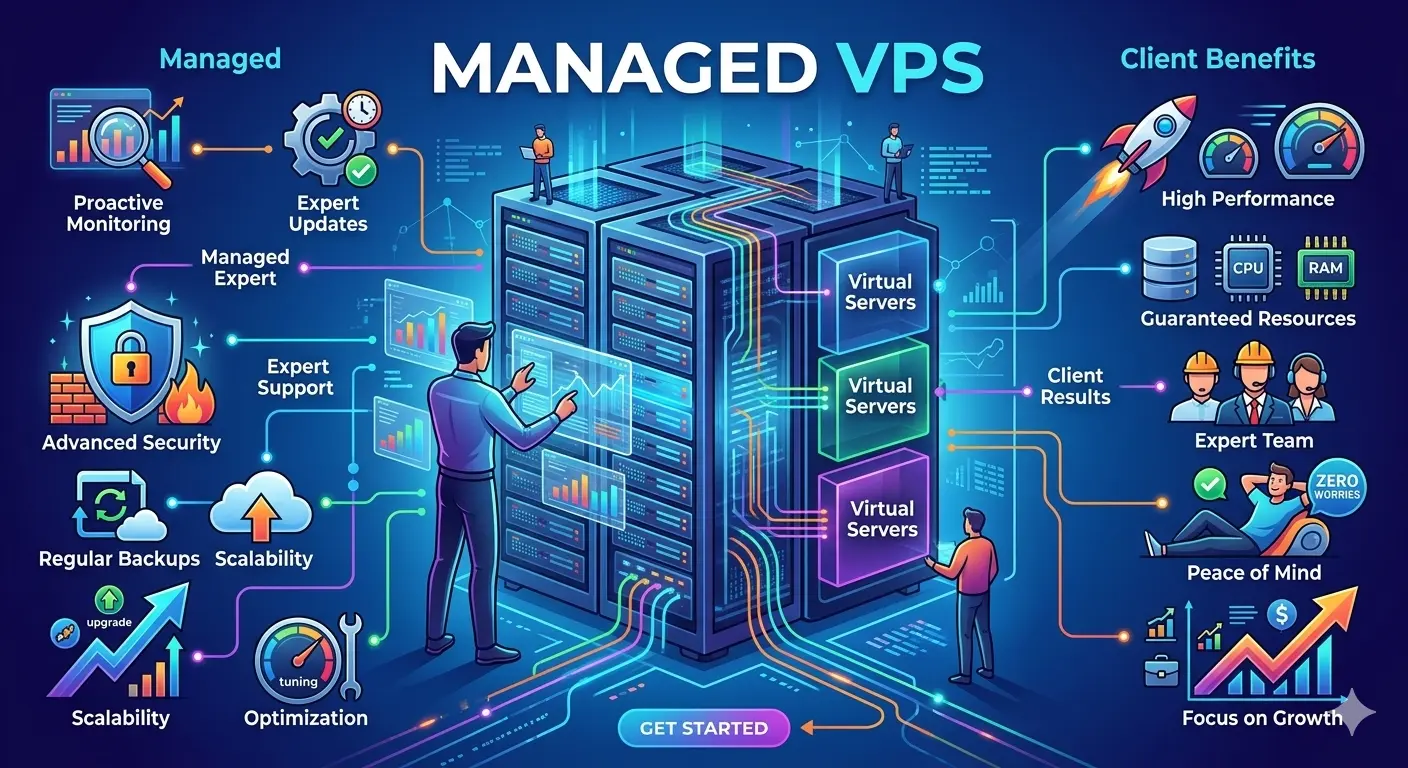
Managed VPS hosting provides a middle ground: you receive the isolation and control of a virtualized server, paired with the professional support that removes the burden of low-level infrastructure management.
1. Root Access and Environment Control
The most immediate benefit of a VPS is the ability to configure the server environment to match your application requirements. Whether you are deploying a custom Laravel application, a headless CMS, or a complex e-commerce stack, you have the freedom to install the exact software stack required for optimal performance.
Executive Deep-Dive
Scaling Beyond Traffic to Revenue
Most enterprises fail because they chase clicks instead of trust. While building your global presence, ensure your EEAT 3.0 signals are synchronized across all regions.
Recommended for you:
→ The Shift from Traffic to Trust: A New KPI for Enterprise SEO2. Predictable Performance
Because your resources (CPU, RAM, and SSD storage) are dedicated to your instance, your application behaves predictably. This allows developers to conduct accurate load testing and performance tuning, ensuring that the site remains responsive under high concurrency—a critical requirement for global, enterprise-level projects.
3. Workflow Integration
Modern Managed VPS platforms, such as those integrated with Cloudways or similar managed layers, allow developers to streamline their workflows. Features like staging environments, Git integration, and one-click backups transform the deployment process, reducing the time from “code push” to “live production”.
Security and Compliance for Web Applications
Security is a primary concern for developers managing professional applications. In a shared environment, you are only as secure as the weakest site on the server. A compromised neighbor could potentially lead to cross-site contamination.
Managed VPS environments offer:
-
Dedicated Firewall Configuration: Developers can implement custom firewall rules, IP blocking, and secure SSH keys to harden their environment.
-
Proactive Patching: While you manage the application, a managed provider typically monitors the OS and core server software for vulnerabilities, applying security patches that keep the environment compliant with modern standards.
The Strategic Decision: Why DMS Global Chooses Managed VPS
For projects like DMS Global, which are focused on global, long-term authority and scalability, infrastructure is an extension of the brand’s quality.
-
Reliability as a Trust Signal: Professional developers understand that downtime destroys user trust. Managed VPS provides the uptime guarantees that are necessary for high-ticket projects targeting C-level managers and enterprise clients.
-
Scaling for Growth: As a project expands, the ability to upgrade resources vertically (adding more RAM/CPU) without migrating to a new server architecture is invaluable. It allows for seamless growth that matches your traffic increases.
Conclusion
For the web developer, the shift from shared hosting to Managed VPS is a move toward professional empowerment. It replaces the limitations of a rigid, shared environment with a flexible, high-performance platform that is built to support complex applications. By investing in Managed VPS, you are not just hosting a website; you are building a robust infrastructure that supports your code, protects your users, and facilitates your long-term growth.
When you choose a Managed VPS provider, you gain a partner that handles the technical maintenance, allowing you to focus on what you do best: building exceptional web experiences.
related tags: managed vps, web development, hosting infrastructure, server architecture, application deployment
Exclusive Early Access: Q1 2026
The Global SEO Blueprint for C-Suite
We are finalizing an exclusive strategic framework for global enterprise scaling. Join the elite waitlist for early-bird pricing.
Secure Your Priority Spot