
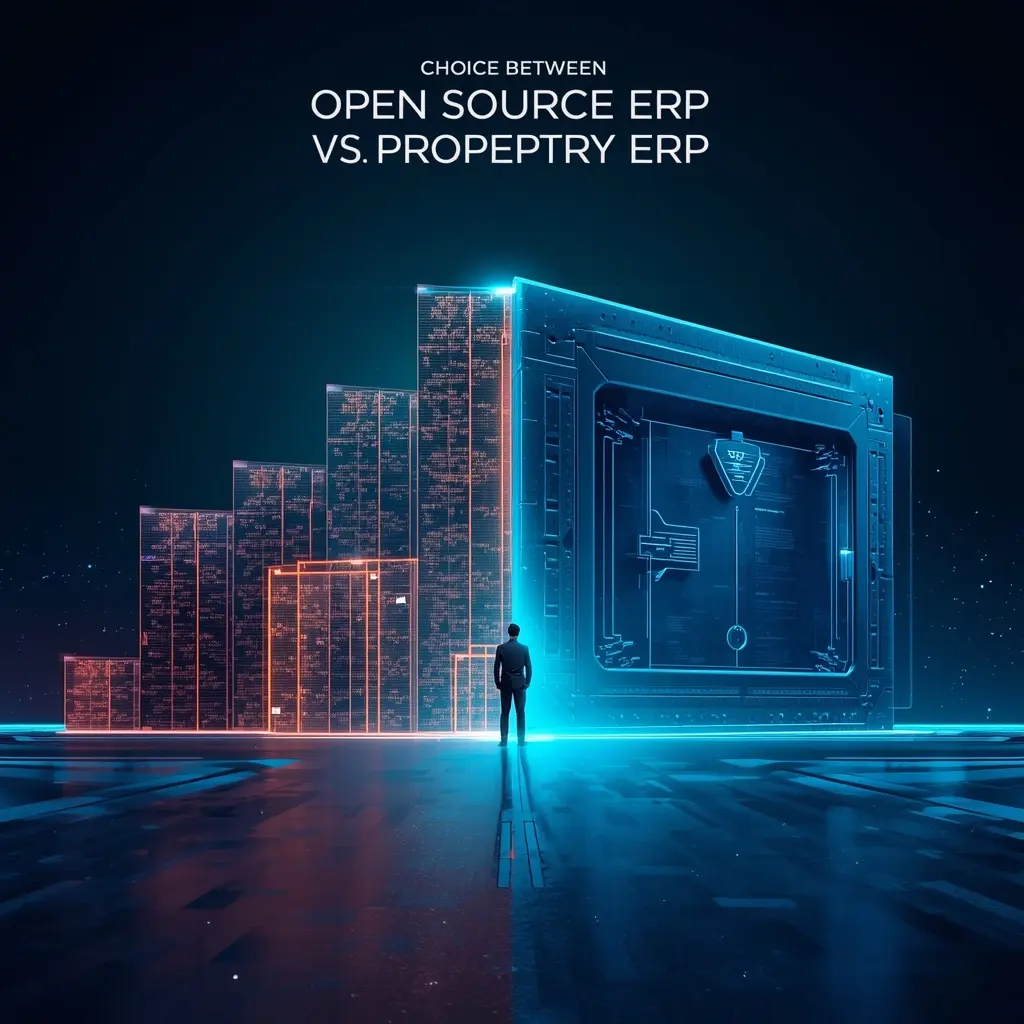
The strategic debate between open source ERP vs proprietary ERP remains a defining choice for organizations aiming to optimize their enterprise resource planning infrastructure. In 2026, as digital ecosystems evolve and technological demands scale, decision-makers face a critical crossroads between the agile customization of open-source platforms and the turnkey stability of enterprise-grade proprietary suites.
Architectural Flexibility vs Total Cost of Ownership
When comparing open-source solutions like Odoo and ERPNext against proprietary market leaders such as Oracle and SAP, architectural philosophy dictates the long-term value proposition. Open-source deployments grant organizations unhindered access to source code, enabling deep customization, localized adjustments, and freedom from vendor lock-in. However, internal technical expertise is required to manage infrastructure, updates, and security patches.
Conversely, proprietary solutions offer robust, out-of-the-box regulatory compliance, dedicated support channels, and unified ecosystem integration. While licensing costs represent a major capital expenditure, the minimized need for bespoke internal development can balance the total cost of ownership for large-scale operations.
Establishing E-E-A-T 3.0 Authority
Evaluating enterprise software requires rigorous E-E-A-T 3.0 standards. Relying on verified performance benchmarks, real-world implementation case studies, and transparent architectural audits ensures that your digital infrastructure supports sustainable growth. Aligning your software strategy with genuine organizational capabilities protects your business from costly misalignments and secures long-term market competitiveness.
Key Implementation Factors for Global Enterprises
When deploying enterprise software across international markets, the decision between open-source platforms and proprietary systems impacts more than just immediate software expenses. Organizations must evaluate long-term scalability, data security protocols, and integration velocity with existing cloud infrastructure.
Executive Deep-Dive
Scaling Beyond Traffic to Revenue
Most enterprises fail because they chase clicks instead of trust. While building your global presence, ensure your EEAT 3.0 signals are synchronized across all regions.
Recommended for you:
→ The Shift from Traffic to Trust: A New KPI for Enterprise SEOScalability and Customization Control
Open-source ecosystems allow engineering teams to rewrite modules, optimize database queries, and scale microservices without being bound by rigid vendor roadmaps. This level of control is vital for businesses operating across diverse regulatory environments where custom compliance features are mandatory.
Vendor Support and Predictable Maintenance
On the other hand, proprietary solutions shift the burden of maintenance, system patches, and security compliance directly to the vendor. For large enterprises with limited internal development bandwidth, this guaranteed SLA (Service Level Agreement) reduces operational friction and ensures uninterrupted business continuity. Balancing these operational priorities ensures your enterprise architecture remains resilient and future-proof.
Conclusion and Strategic Takeaway
Making the final decision requires aligning your technical roadmap with financial realities. Whether you choose the modular freedom of open-source frameworks or the enterprise assurance of proprietary suites, continuous auditing and strategic optimization will ensure sustained digital dominance.
The strategic debate between open source ERP vs proprietary ERP remains a defining choice for organizations aiming to optimize their enterprise resource planning infrastructure. In 2026, as digital ecosystems evolve and technological demands scale, decision-makers face a critical crossroads between the agile customization of open-source platforms and the turnkey stability of enterprise-grade proprietary suites. DMS Global provides this high-authority analysis to help you build a future-proof digital infrastructure.
Architectural Flexibility vs Total Cost of Ownership
When comparing open-source solutions like Odoo and ERPNext against proprietary market leaders such as Oracle and SAP, architectural philosophy dictates the long-term value proposition. Open-source deployments grant organizations unhindered access to source code, enabling deep customization, localized adjustments, and freedom from vendor lock-in. However, internal technical expertise is required to manage infrastructure, updates, and security patches.
Conversely, proprietary solutions offer robust, out-of-the-box regulatory compliance, dedicated support channels, and unified ecosystem integration. While licensing costs represent a major capital expenditure, the minimized need for bespoke internal development can balance the total cost of ownership for large-scale operations.
Establishing E-E-A-T 3.0 Authority
Evaluating enterprise software requires rigorous E-E-A-T 3.0 standards. Relying on verified performance benchmarks, real-world implementation case studies, and transparent architectural audits ensures that your digital infrastructure supports sustainable growth. Aligning your software strategy with genuine organizational capabilities protects your business from costly misalignments and secures long-term market competitiveness.
Key Implementation Factors for Global Enterprises
When deploying enterprise software across international markets, the decision between open-source platforms and proprietary systems impacts more than just immediate software expenses. Organizations must evaluate long-term scalability, data security protocols, and integration velocity with existing cloud infrastructure.
Scalability and Customization Control
Open-source ecosystems allow engineering teams to rewrite modules, optimize database queries, and scale microservices without being bound by rigid vendor roadmaps. This level of control is vital for businesses operating across diverse regulatory environments where custom compliance features are mandatory.
Vendor Support and Predictable Maintenance
On the other hand, proprietary solutions shift the burden of maintenance, system patches, and security compliance directly to the vendor. For large enterprises with limited internal development bandwidth, this guaranteed SLA (Service Level Agreement) reduces operational friction and ensures uninterrupted business continuity. Balancing these operational priorities ensures your enterprise architecture remains resilient and future-proof.
Total Cost of Ownership (TCO) and ROI Analysis
When calculating the return on investment (ROI) for enterprise software, stakeholders must look beyond initial licensing fees or implementation service costs. Proprietary software often involves substantial upfront capital expenditure (CapEx) alongside predictable recurring licensing fees. While this guarantees ongoing vendor updates, it can also create financial friction during economic downturns.
Conversely, open-source ERP systems substitute high licensing fees with operational expenditures (OpEx) dedicated to hosting, internal development, and community or enterprise-grade support subscriptions. For organizations with strong internal engineering capabilities, this model drastically reduces long-term TCO and redirects capital toward core product innovation and market expansion.
Security, Compliance, and Data Sovereignty
Data security and regulatory compliance represent non-negotiable pillars for modern global enterprises. Proprietary solutions typically offer centralized, out-of-the-box compliance frameworks tailored for international standards such as GDPR, HIPAA, and SOC 2. These pre-built security audits save internal compliance teams significant time.
On the other hand, open-source architectures empower organizations to maintain absolute data sovereignty. By hosting databases on private cloud infrastructures and exercising complete control over source code, enterprises can eliminate third-party data exposure risks and build bespoke security layers tailored specifically to their internal risk-management policies.
Future-Proofing Your Enterprise Architecture
Ultimately, choosing between open-source and proprietary ERP platforms in 2026 depends on your organization’s long-term digital strategy. By prioritizing architectural agility, robust data governance, and transparent E-E-A-T 3.0 performance metrics, your business can build a resilient digital foundation capable of adapting to rapid market shifts and sustaining global competitiveness.
- 🚀 Amazon Review: Bentgo Kids Lunch Box Review
- 📊 Product Comparison: Best Lunch Boxes for Kids
- ⚔️ Gear Selection: Cute Lunch Boxes Aesthetic Choices
- 🏢 Top Insulated: Top Insulated Bento Box
- 💡 Daily Commutes: Insulated Lunch Box Options
- 💰 Brand Alternatives: Lunch Boxes Target Alternatives
- 🔍 Shopping Guide: Bento Boxes Online Deals
- 📈 Food Ideas: Creative Bento Box Lunch Ideas
- ⚙️ Kids Gear: Stylish Lunch Boxes for Girls
Amazon Product Authority & E-E-A-T Summary
To maximize organic performance and search visibility in global e-commerce and product review niches, maintaining robust internal linking across specific product clusters ensures faster indexing, stronger topical authority, and sustainable search engine ranking.
Exclusive Early Access: Q1 2026
The Global SEO Blueprint for C-Suite
We are finalizing an exclusive strategic framework for global enterprise scaling. Join the elite waitlist for early-bird pricing.
Secure Your Priority Spot