
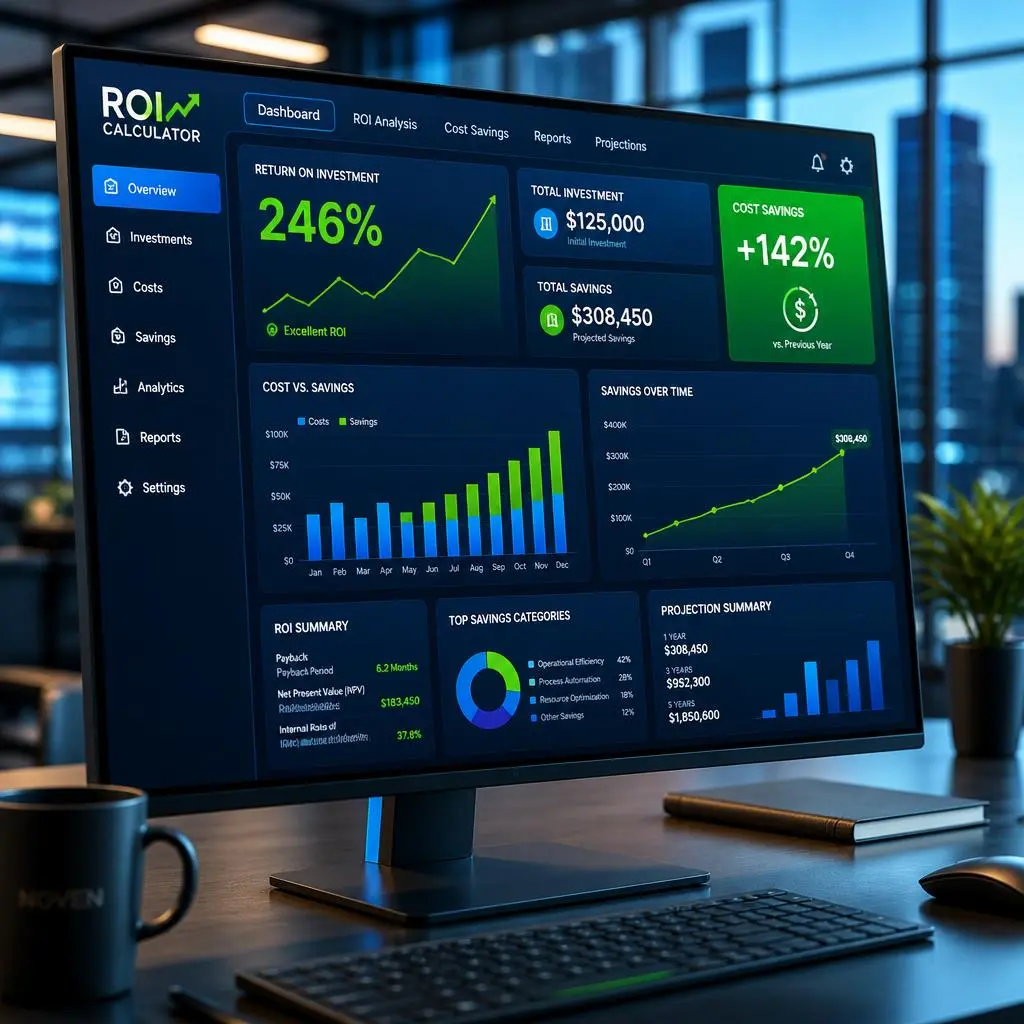
In 2026, navigating the financial complexities of a system overhaul requires more than just a ballpark figure. An ERP software cost calculator is an essential tool for C-level executives and IT directors to forecast the total investment needed for a seamless transition. As digital infrastructures evolve, understanding the nuances between upfront capital and long-term operational costs is the key to maintaining a healthy ROI.
The Variables Behind the Numbers
Calculating the true cost of an ERP system goes beyond the sticker price of a license. Several hidden variables significantly influence the final tally. Implementation services, data migration complexity, and user training often constitute a larger portion of the budget than the software itself. Additionally, the choice between on-premise solutions and cloud-native platforms like Odoo, SAP, or NetSuite will dictate your recurring maintenance and hosting expenditures.
🚀 Deep Dive Enterprise Resources
If you’re evaluating Enterprise Resource Planning, leverage our technical ROI breakdowns and performance benchmarks.
Leveraging Technology for Budget Accuracy
Executive Deep-Dive
Scaling Beyond Traffic to Revenue
Most enterprises fail because they chase clicks instead of trust. While building your global presence, ensure your EEAT 3.0 signals are synchronized across all regions.
Recommended for you:
→ The Shift from Traffic to Trust: A New KPI for Enterprise SEOModern businesses are now integrating Agentic AI within their ERP evaluation phase to run predictive cost simulations. By analyzing historical data and organizational scale, these advanced tools can provide a more granular view of the ERP implementation fees you might encounter. It is also vital to factor in the cost of future integrations, ensuring that your chosen ecosystem can adapt to emerging technologies without requiring a complete reinvestment.
🚀 Deep Dive Enterprise Resources
If you’re evaluating Enterprise Resource Planning, leverage our technical ROI breakdowns and performance benchmarks:
👉 Odoo Enterprise Pricing 2026: The Ultimate Guide
Detailed Breakdown of Enterprise ERP Cost Factors
When implementing enterprise systems such as Odoo, SAP, or Oracle NetSuite, budgeting extends far beyond initial software licensing fees. To ensure financial accuracy, organizations must systematically evaluate several core cost dimensions:
1. Licensing Structures: Subscription vs. Perpetual
Modern ERP platforms heavily favor Software-as-a-Service (SaaS) and cloud subscription models. Unlike traditional perpetual licenses requiring massive upfront capital expenditure (CapEx), cloud subscriptions operate on predictable operational expenditure (OpEx). However, long-term multi-year TCO (Total Cost of Ownership) calculations often reveal that subscription costs accumulate over time, making rigorous usage audits mandatory.
2. Implementation and Customization Overhead
System integration partners and specialized consultants typically account for 40% to 60% of total project expenditure. Custom workflow development, bespoke reporting dashboards, and legacy data migration significantly increase professional service hours. Adopting an out-of-the-box “clean core” philosophy minimizes expensive custom coding and accelerates deployment timelines.
3. Change Management, Training, and Ongoing Support
Technology success relies heavily on user adoption. Allocating budget for comprehensive employee training programs, post-launch hyper-care support, and routine software upgrades ensures the organization maximizes its digital investment from day one.
Conclusion: Beyond the Initial Estimate
A robust ERP cost estimation strategy is about more than just finding the cheapest option; it is about identifying value. By utilizing a data-driven approach to budgeting, enterprises can avoid the common pitfalls of budget overruns and project delays. In the competitive landscape of 2026, financial transparency in your digital infrastructure is the foundation of sustainable global growth.
- 🚀 Amazon Review: Bentgo Kids Lunch Box Review
- 📊 Product Comparison: Best Lunch Boxes for Kids
- ⚔️ Gear Selection: Cute Lunch Boxes Aesthetic Choices
- 🏢 Top Insulated: Top Insulated Bento Box
- 💡 Daily Commutes: Insulated Lunch Box Options
- 💰 Brand Alternatives: Lunch Boxes Target Alternatives
- 🔍 Shopping Guide: Bento Boxes Online Deals
- 📈 Food Ideas: Creative Bento Box Lunch Ideas
- ⚙️ Kids Gear: Stylish Lunch Boxes for Girls
Amazon Product Authority & E-E-A-T Summary
To maximize organic performance and search visibility in global e-commerce and product review niches, maintaining robust internal linking across specific product clusters ensures faster indexing, stronger topical authority, and sustainable search engine ranking.
Related Odoo Global Insights:
🔍 Global ERP Comparison Guide 2026
Finding the right ERP is critical for your global expansion. Explore our deep-dive analysis:
- → Odoo vs ERPNext: Which One Wins?
- → SAP vs Odoo: Enterprise Power vs Agility
- → NetSuite vs Odoo: Scalability Report
Advanced Financial Modeling and TCO Calculation Strategies
When senior leadership evaluates digital transformation initiatives, relying on surface-level software estimates often leads to unexpected financial strain. Building a foolproof financial model requires dissecting direct and indirect cost drivers over a multi-year horizon.
1. Direct Software Acquisition vs. Cloud Subscription Fees
Traditional on-premise ERP deployments required substantial upfront capital expenditure (CapEx) for server hardware, perpetual licenses, and dedicated database administration teams. In contrast, modern enterprise frameworks operate on cloud-based subscription models (SaaS). While this shifts expenses from CapEx to operational expenditure (OpEx) and lowers entry barriers, organizations must project subscription escalations over a 3- to 5-year lifecycle to prevent long-term margin compression.
2. Factoring System Integration and Customization Hours
Consulting fees and implementation partner services typically constitute the largest portion of Year 1 expenditure. Customizing standard ERP workflows to match legacy business processes dramatically inflates developer hours and maintenance overhead. Enterprise architects increasingly advocate for a “clean core” strategy—adapting organizational processes to standard out-of-the-box system features rather than rewriting core source code. This approach significantly curbs ongoing maintenance costs and streamlines future software upgrades.
3. Change Management, Training, and Productivity Loss
Technology investments fail when end-users resist adoption. Effective change management requires structured employee training programs, comprehensive documentation, and dedicated super-user support during the critical go-live phase. Neglecting user onboarding leads to operational friction, data entry errors, and temporary dips in organizational productivity.
4. Continuous Governance, Updates, and Security Compliance
Cloud enterprise software undergoes frequent feature updates, security patches, and regulatory compliance audits. Organizations must budget for internal IT governance teams or external managed service providers (MSPs) to oversee continuous integration, testing, and optimization. Proactive maintenance guarantees system stability and protects sensitive corporate data against evolving cybersecurity threats.
Maximizing Enterprise ROI Through Strategic Budget Allocation
Achieving a positive return on investment from a digital transformation initiative requires strict discipline and ongoing performance tracking. Organizations must establish clear Key Performance Indicators (KPIs) prior to deployment, such as process automation speed, inventory turnover efficiency, and order-to-cash cycle reduction. By continuously auditing software utilization and refining internal workflows post-launch, enterprises can unlock hidden cost efficiencies, mitigate financial risks, and secure long-term competitive advantage in the global market.
Mitigating Financial Risks During ERP Implementation
Enterprise resource planning migrations carry inherent financial risks, primarily driven by scope creep, delayed timelines, and underestimated data migration complexities. To safeguard organizational capital, project managers must enforce rigid governance structures and milestone-based vendor payments. Establishing an internal steering committee to oversee budget adherence ensures that unexpected technical hurdles are addressed swiftly without derailing the broader financial roadmap. Furthermore, investing in thorough pre-migration data cleansing prevents costly errors from migrating into the new cloud environment, preserving both data integrity and fiscal predictability throughout the entire lifecycle.
Long-Term Vendor Management and Software Scalability
As business requirements evolve, the chosen enterprise software platform must scale seamlessly without triggering exponential cost spikes. Establishing long-term service-level agreements (SLAs) with technology vendors and implementation partners guarantees predictable support pricing. Regularly reviewing licensing tiers, user activity logs, and module utilization ensures your organization only pays for active operational needs, securing sustainable financial efficiency for years to come.
Exclusive Early Access: Q1 2026
The Global SEO Blueprint for C-Suite
We are finalizing an exclusive strategic framework for global enterprise scaling. Join the elite waitlist for early-bird pricing.
Secure Your Priority Spot