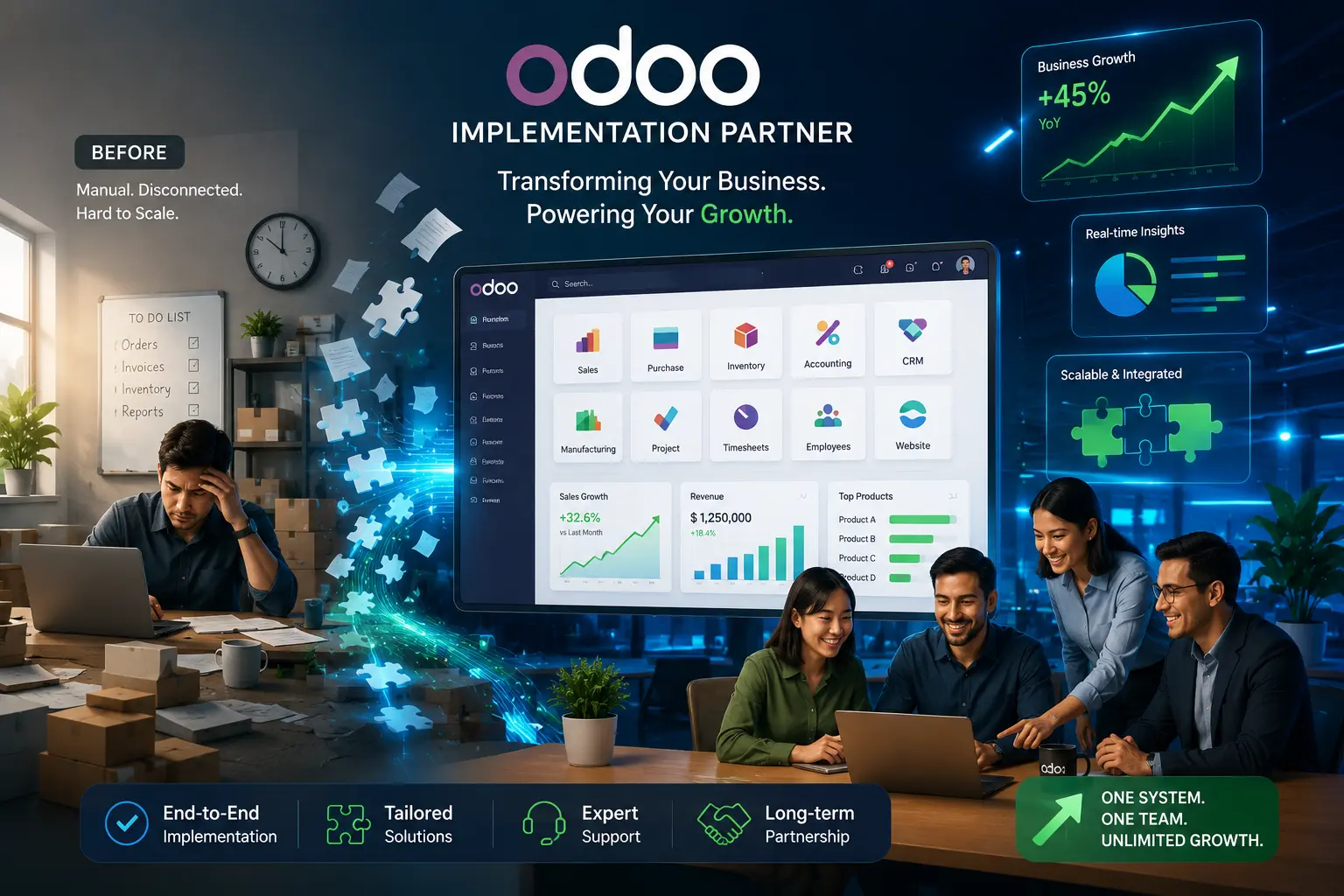
Odoo for SMEs
Implementing Odoo for SMEs is a strategic move that enables smaller businesses to professionalize their operations
In the competitive landscape of modern business, Small and Medium Enterprises (SMEs) face a unique set of challenges. They must remain agile, manage limited resources efficiently, and scale rapidly, all while competing with larger organizations that have significantly more capital. This is where an Odoo for SMEs strategy becomes a game-changer. By providing a comprehensive, modular, and affordable ERP solution, Odoo enables smaller businesses to professionalize their operations without the astronomical costs associated with traditional enterprise software.
1. Modular Flexibility for Scalable Growth The core advantage of Odoo is its modularity. Unlike rigid legacy systems that force you to purchase a full suite of features you may not need, Odoo allows SMEs to start with the essentials—such as accounting or CRM—and gradually add modules like manufacturing, e-commerce, or human resources as the business grows. This “pay-as-you-grow” approach preserves precious cash flow, allowing owners to reinvest in other areas of the business.
2. Cost-Effectiveness and Reduced TCO For an SME, Total Cost of Ownership (TCO) is a critical metric. Traditional ERP systems often require massive upfront licensing fees and expensive hardware maintenance. Odoo’s open-source model and flexible subscription options drastically lower the barrier to entry. Furthermore, because Odoo is web-based, businesses avoid the cost of maintaining dedicated servers, allowing them to leverage high-performance cloud infrastructure at a fraction of the cost.
3. Seamless Integration of Business Processes SMEs often struggle with “data silos,” where different departments use disparate software that doesn’t communicate. This leads to manual data entry, errors, and delayed reporting. Odoo unifies these processes under a single database. When a sales team closes a deal in the CRM, the inventory team is automatically notified to prepare the shipment, and the accounting department generates the invoice—all without human intervention. This automation drives massive efficiency gains.
4. User-Friendly Interface and Lower Learning Curve Technology adoption is a common hurdle for smaller teams. Odoo is designed with a modern, intuitive interface that is easy to navigate. Because the user experience is consistent across all modules, employees do not need to learn multiple, disconnected systems. This dramatically reduces training time and increases user adoption rates, ensuring the team spends more time growing the business and less time fighting the software.
5. Real-Time Data-Driven Decision Making Access to real-time analytics is no longer a luxury reserved for large corporations. With Odoo’s integrated reporting tools, SMEs can generate dynamic dashboards that provide deep insights into sales performance, inventory turnover, and cash flow in real-time. This ability to make data-backed decisions allows small business owners to pivot quickly, identify new opportunities, and mitigate risks before they escalate.
Conclusion: Empowering SMEs for the Future For SMEs, Odoo is more than just a software platform; it is a catalyst for operational excellence. By centralizing management, automating workflows, and providing scalable modules, Odoo empowers smaller players to compete on a level playing field with industry giants. Investing in an Odoo for SMEs implementation is a strategic move that prepares your business for sustainable, long-term success.
Best Practices for Long-Term Odoo Success
To ensure your Odoo implementation continues to deliver value as your business scales, focus on consistent user training and regular system updates. Encouraging your team to master the platform’s features reduces reliance on custom code, which keeps your system lean and upgrade-friendly. Additionally, perform periodic audits of your workflows to identify inefficiencies that can be solved with Odoo’s native automation tools. By treating Odoo as a living system that evolves with your business, you secure a competitive advantage that grows stronger over time.
The Strategic Advantage of Choosing the Right Partner
Beyond the software itself, the true power of an Odoo implementation lies in the strategic partnership you build. Working with an experienced Odoo consultant allows you to bypass common configuration errors and accelerate your time-to-market. By leveraging their expertise in industry-specific workflows, you avoid the trap of over-customization and ensure that your system remains agile, secure, and ready for future software upgrades. Ultimately, when you invest in the right Odoo for SMEs strategy, you are not just purchasing an ERP—you are building a sustainable digital foundation that empowers your team, optimizes your operational efficiency, and provides the real-time data visibility required to dominate your market niche.
Related Keywords: Odoo for SMEs, ERP benefits for small business, Odoo modular ERP, affordable ERP for SMEs, business automation with Odoo.