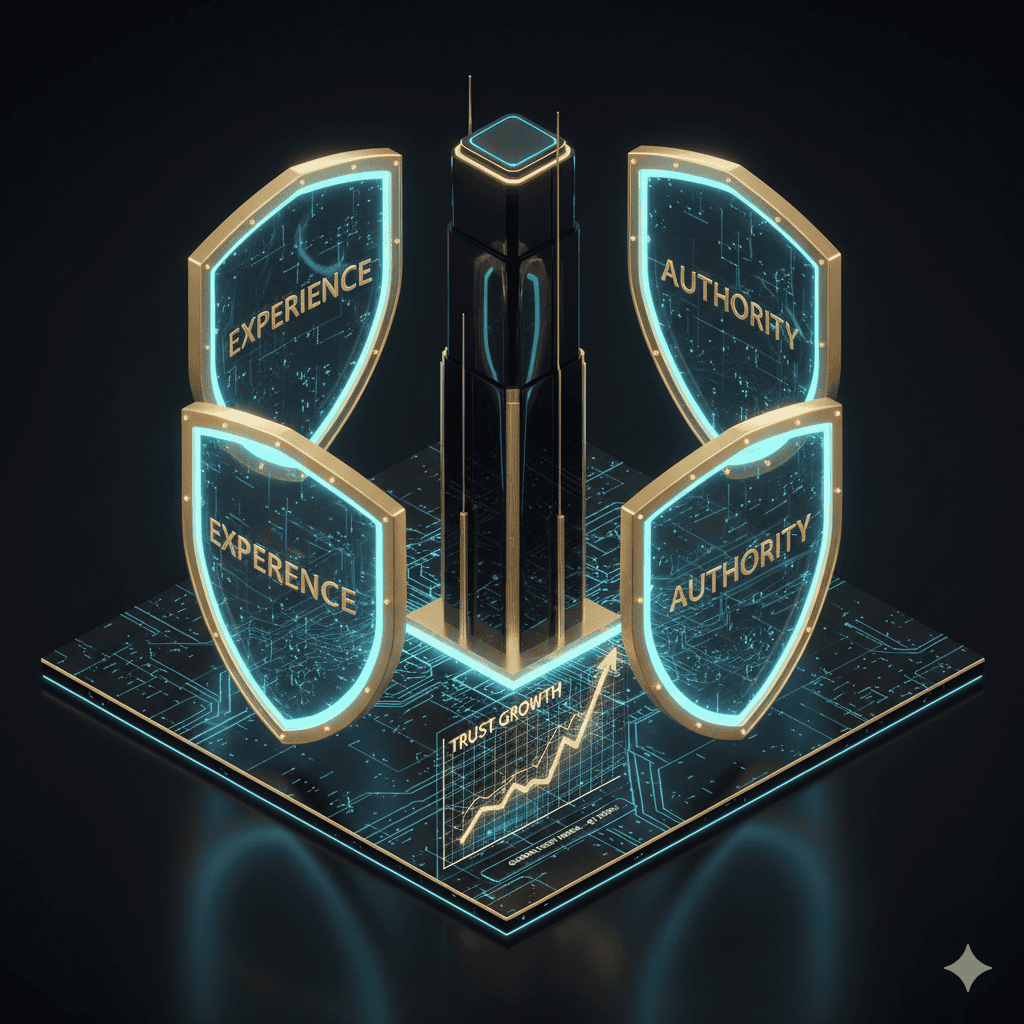
Defining a clear KPI for Enterprise SEO is the only way for global companies to turn search visibility into trust equity. In the boardroom of a global enterprise, the traditional metrics of digital marketing are undergoing a quiet but radical transformation. For years, CMOs and CEOs have been conditioned to look at “Organic Traffic” as the primary pulse of their digital health. However, in the age of AI-driven search and 2026’s EEAT 3.0 standards, traffic has become a deceptive North Star.
For high-ticket B2B sectors, where a single lead can represent millions in annual recurring revenue (ARR), a million visitors are worthless if none of them are decision-makers. The new, mission-critical KPI for the modern enterprise is no longer just visibility—it is Trust Equity.
The Deception of Volume
Many tools prioritize volume over insight, but a true KPI for Enterprise SEO focuses on quality and decision-making impact.
The digital landscape is currently saturated with “thin” content, much of it generated by legacy AI tools that prioritize quantity over insight. This has led to a phenomenon known as “Traffic Bloat.” Your site may be ranking for thousands of informational keywords, yet your sales team reports a drought in high-quality executive inquiries.
The reason is simple: C-level executives, co-founders, and VPs do not search like general consumers. They are not looking for “What is SEO?”—they are looking for “How to mitigate global market share erosion via algorithmic shifts.” If your content strategy is built on high-volume, low-intent keywords, you are attracting “tourists” while your competitors are hosting “delegates.”
Understanding EEAT 3.0: The Executive Filter
Google’s latest iteration of Quality Rater Guidelines, which we refer to as EEAT 3.0, has introduced a specialized layer of Experience and Entity Authority. For an enterprise targeting the global market via dominasiserp.com/en, this means the algorithm is looking for signals that your brand isn’t just a website, but a recognized institution.
-
Experience (The “I’ve Been There” Factor): Content must reflect first-hand accounts of solving enterprise-level pain points. Case studies and whitepapers are no longer “extras”; they are the core of your SEO authority.
-
Expertise (The Depth Factor): Shallow content is penalized. To win the trust of a CEO, your digital presence must demonstrate a level of technical and strategic sophistication that matches their own.
-
Authoritativeness (The Citation Factor): Who is talking about you? In the enterprise world, mentions in Tier-1 financial and industry journals are the digital equivalent of a gold-standard reference.
-
Trustworthiness (The Integrity Factor): This is the ultimate KPI. Trust is built through transparency, data security, and the consistent delivery of high-value insights without the “fluff.”
Why “Trust” is an Urgent Priority
The shift from traffic to trust is not a luxury—it is an urgent necessity. As Large Language Models (LLMs) and Search Generative Experience (SGE) begin to summarize the internet, they only cite sources that meet the highest trust thresholds.
If your brand is not perceived as a “Trusted Entity,” you will be excluded from the AI-generated summaries that C-level executives use for rapid decision-making. In this new paradigm, being “untrusted” is the same as being “invisible.”
Implementing the Trust KPI
Transitioning your enterprise SEO strategy requires a fundamental shift in how you measure success. Instead of asking “How many clicks did we get?”, the C-suite should be asking:
-
Information Gain Score: Does our content provide unique data or perspectives that do not exist elsewhere on the web?
-
Entity Association: Is our brand being programmatically linked to high-value industry terms and elite peer groups?
-
Conversion Quality: Are the leads coming from search sessions originating from corporate IP addresses or high-value professional networks?
Master your finances with Accounting Principles for Non-Accountants.
The Global Strategy for 2026
For a company like Dominasi SERP, moving into the global market requires more than translation—it requires cultural authority. An executive in London has a different “Trust Language” than one in Singapore or New York.
Your global URL structure (/en/) must serve as a beacon of localized expertise. This involves optimizing for local regulations, financial nuances, and regional pain points. When a VP of Finance searches for a solution, they need to feel that the content was written by someone who understands their specific regional compliance and market pressures.
Conclusion: Winning the Trust Race
The “Traffic Era” of SEO is over. The “Trust Era” has begun. For the enterprise that acts now, the reward is a permanent seat at the table of global industry leaders. For those who stay focused on vanity metrics, the cost will be a slow descent into digital irrelevance.
At Dominasi SERP, we help C-level leaders navigate this shift. We don’t just build links; we build digital legacies. We transform your search presence from a simple funnel into a fortress of trust.