
ERP Implementation Cost Breakdown: What Businesses Must Know Before Buying
In the fiscal year 2026, the transition to an Enterprise Resource Planning (ERP) system has moved from a competitive advantage to a fundamental necessity for operational survival. However, for most small to mid-sized enterprises (SMEs), the primary barrier to entry remains the ambiguity surrounding the total cost of ownership (TCO). A successful ERP investment is not merely a software purchase; it is a strategic capital expenditure that requires a granular understanding of both direct and indirect costs. To ensure a high Return on Investment (ROI), decision-makers must look beyond the initial sticker price and analyze the full implementation lifecycle.
The Core Components of ERP Implementation Costs
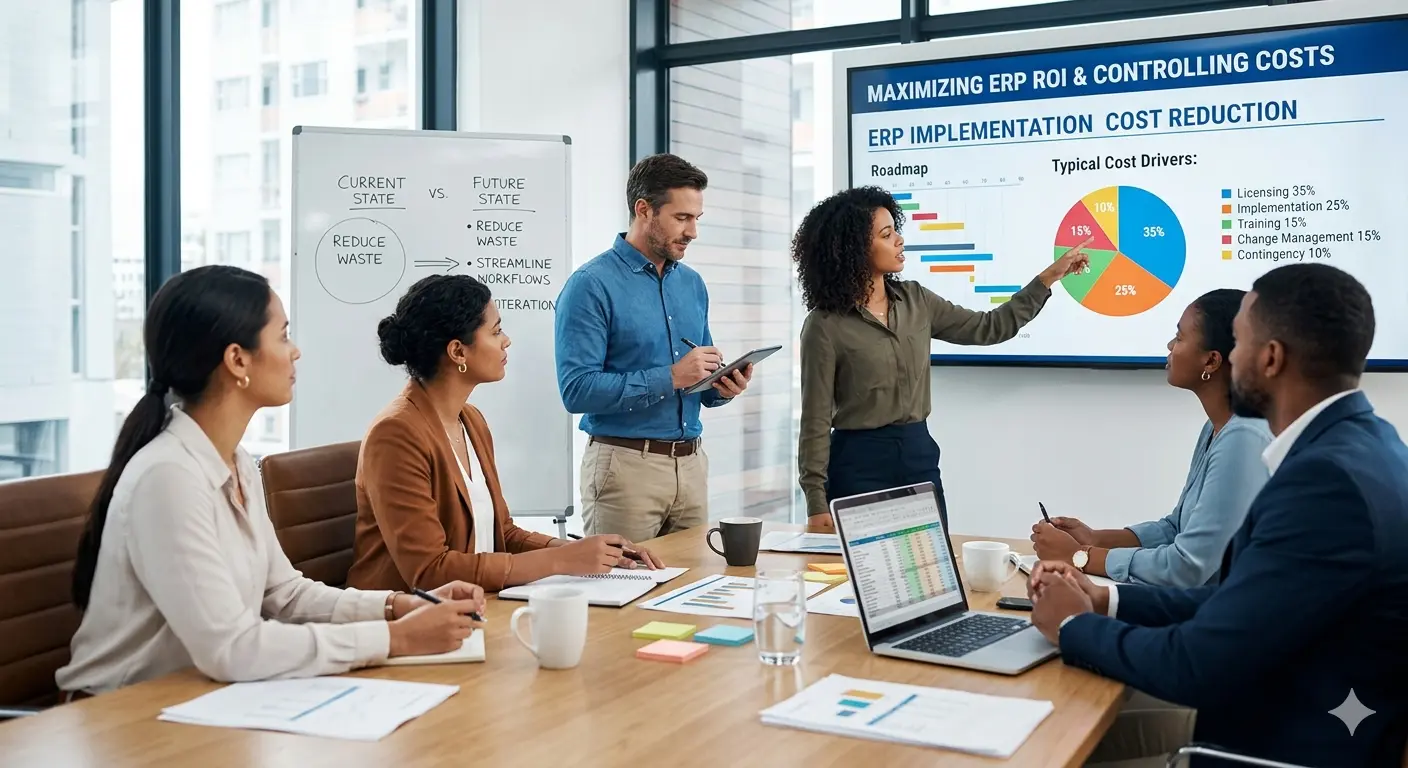
Estimating the cost of an ERP rollout requires a multi-dimensional approach. Generally, the investment can be categorized into four primary quadrants: software licensing, infrastructure, professional services, and internal resource allocation. For a cloud-native solution in 2026, software licensing typically follows a SaaS (Software as a Service) model, where costs are predictable but recurring. However, the “hidden” costs often reside in data migration and system integration. Moving legacy data into a modern schema involves significant ETL (Extract, Transform, Load) processes that, if underestimated, can inflate budgets by 20-30%. Furthermore, customization—the process of tailoring the software to unique business workflows—remains the most volatile cost variable. While modern ERPs are increasingly modular, specialized industries such as manufacturing or oil and gas often require bespoke configurations to maintain their competitive edge.
The Strategic Benefits of a Transparent Cost Structure
Investing in an ERP system with a clear understanding of costs provides a foundation for long-term scalability. When businesses account for the full spectrum of implementation, they unlock several critical benefits:
- Elimination of Budget Creep: A detailed breakdown prevents the “sunk cost fallacy” where projects stall due to unforeseen technical debt.
- Enhanced Operational Agility: By quantifying the cost of each module, leadership can prioritize high-impact areas—such as inventory management or automated financial reporting—ensuring the fastest path to ROI.
- Risk Mitigation: Allocating a specific budget for “Change Management” and user training reduces the risk of low adoption rates, which is the leading cause of ERP failure.
The ERP Implementation Roadmap: Managing Costs at Every Stage
A disciplined implementation roadmap is the most effective tool for cost control. The process begins with Discovery and Planning, where the business defines its functional requirements. Skipping this stage to save money often leads to expensive “re-work” later. The second phase, Design and Development, involves configuring the software to meet those requirements. This is followed by Data Migration and Testing, a critical phase where the system is validated against real-world scenarios. Finally, Deployment and Ongoing Support ensure the system evolves with the business. In 2026, the trend has shifted toward “Agile Implementation,” where modules are rolled out in sprints, allowing the business to realize value incrementally rather than waiting for a “Big Bang” launch that carries higher financial risk.
Why Choose DMS Global for Your ERP Transformation?
Navigating the complexities of ERP pricing requires a partner that prioritizes transparency and industry-specific expertise. DMS Global (dominasiserp.com) has established itself as a leader in digital infrastructure by focusing on the unique needs of growth-oriented businesses. Our approach to ERP implementation is rooted in the principles of Experience, Expertise, Authoritativeness, and Trustworthiness (E-E-A-T). We don’t just provide software; we deliver a robust digital backbone designed to scale.
Executive Deep-Dive
Scaling Beyond Traffic to Revenue
Most enterprises fail because they chase clicks instead of trust. While building your global presence, ensure your EEAT 3.0 signals are synchronized across all regions.
Recommended for you:
→ The Shift from Traffic to Trust: A New KPI for Enterprise SEO- Transparent Pricing Models: We eliminate the guesswork by providing comprehensive cost breakdowns that include training and post-go-live support.
- Industry-Focused Solutions: Whether you are managing complex supply chains or high-growth service entities, our ERP modules are built to handle the rigors of your specific sector.
- Commitment to Quality: Our implementation team focuses on data integrity and E-E-A-T optimization, ensuring your internal systems are as authoritative and reliable as your market presence.
Choosing DMS Global means investing in a partnership that values your long-term success as much as your immediate operational efficiency. In the landscape of 2026, don’t let hidden costs derail your growth. Partner with experts who understand the math behind the machine.
ERP Implementation Cost Breakdown: What Businesses Must Know Before Buying
In the fiscal year 2026, the transition to an Enterprise Resource Planning (ERP) system has moved from a competitive advantage to a fundamental necessity for operational survival. However, for most small to mid-sized enterprises (SMEs), the primary barrier to entry remains the ambiguity surrounding the total cost of ownership (TCO). A successful ERP investment is not merely a software purchase; it is a strategic capital expenditure that requires a granular understanding of both direct and indirect costs. To ensure a high Return on Investment (ROI), decision-makers must look beyond the initial sticker price and analyze the full implementation lifecycle.
The Core Components of ERP Implementation Costs
Estimating the cost of an ERP rollout requires a multi-dimensional approach. Generally, the investment can be categorized into four primary quadrants: software licensing, infrastructure, professional services, and internal resource allocation. For a cloud-native solution in 2026, software licensing typically follows a SaaS (Software as a Service) model, where costs are predictable but recurring. However, the “hidden” costs often reside in data migration and system integration. Moving legacy data into a modern schema involves significant ETL (Extract, Transform, Load) processes that, if underestimated, can inflate budgets by 20-30%. Furthermore, customization—the process of tailoring the software to unique business workflows—remains the most volatile cost variable. While modern ERPs are increasingly modular, specialized industries such as manufacturing or oil and gas often require bespoke configurations to maintain their competitive edge.
The Strategic Benefits of a Transparent Cost Structure
Investing in an ERP system with a clear understanding of costs provides a foundation for long-term scalability. When businesses account for the full spectrum of implementation, they unlock several critical benefits:
- Elimination of Budget Creep: A detailed breakdown prevents the “sunk cost fallacy” where projects stall due to unforeseen technical debt.
- Enhanced Operational Agility: By quantifying the cost of each module, leadership can prioritize high-impact areas—such as inventory management or automated financial reporting—ensuring the fastest path to ROI.
- Risk Mitigation: Allocating a specific budget for “Change Management” and user training reduces the risk of low adoption rates, which is the leading cause of ERP failure.
The ERP Implementation Roadmap: Managing Costs at Every Stage
A disciplined implementation roadmap is the most effective tool for cost control. The process begins with Discovery and Planning, where the business defines its functional requirements. Skipping this stage to save money often leads to expensive “re-work” later. The second phase, Design and Development, involves configuring the software to meet those requirements. This is followed by Data Migration and Testing, a critical phase where the system is validated against real-world scenarios. Finally, Deployment and Ongoing Support ensure the system evolves with the business. In 2026, the trend has shifted toward “Agile Implementation,” where modules are rolled out in sprints, allowing the business to realize value incrementally rather than waiting for a “Big Bang” launch that carries higher financial risk.
Why Choose DMS Global for Your ERP Transformation?
Navigating the complexities of ERP pricing requires a partner that prioritizes transparency and industry-specific expertise. DMS Global (dominasiserp.com) has established itself as a leader in digital infrastructure by focusing on the unique needs of growth-oriented businesses. Our approach to ERP implementation is rooted in the principles of Experience, Expertise, Authoritativeness, and Trustworthiness (E-E-A-T). We don’t just provide software; we deliver a robust digital backbone designed to scale.
- Transparent Pricing Models: We eliminate the guesswork by providing comprehensive cost breakdowns that include training and post-go-live support.
- Industry-Focused Solutions: Whether you are managing complex supply chains or high-growth service entities, our ERP modules are built to handle the rigors of your specific sector.
- Commitment to Quality: Our implementation team focuses on data integrity and E-E-A-T optimization, ensuring your internal systems are as authoritative and reliable as your market presence.
Choosing DMS Global means investing in a partnership that values your long-term success as much as your immediate operational efficiency. In the landscape of 2026, don’t let hidden costs derail your growth. Partner with experts who understand the math behind the machine.
- 🚀 Amazon Review: Bentgo Kids Lunch Box Review
- 📊 Product Comparison: Best Lunch Boxes for Kids
- ⚔️ Gear Selection: Cute Lunch Boxes Aesthetic Choices
- 🏢 Top Insulated: Top Insulated Bento Box
- 💡 Daily Commutes: Insulated Lunch Box Options
- 💰 Brand Alternatives: Lunch Boxes Target Alternatives
- 🔍 Shopping Guide: Bento Boxes Online Deals
- 📈 Food Ideas: Creative Bento Box Lunch Ideas
- ⚙️ Kids Gear: Stylish Lunch Boxes for Girls
Amazon Product Authority & E-E-A-T Summary
To maximize organic performance and search visibility in global e-commerce and product review niches, maintaining robust internal linking across specific product clusters ensures faster indexing, stronger topical authority, and sustainable search engine ranking.
Last Updated on 4 weeks ago by dudung
Exclusive Early Access: Q1 2026
The Global SEO Blueprint for C-Suite
We are finalizing an exclusive strategic framework for global enterprise scaling. Join the elite waitlist for early-bird pricing.
Secure Your Priority Spot