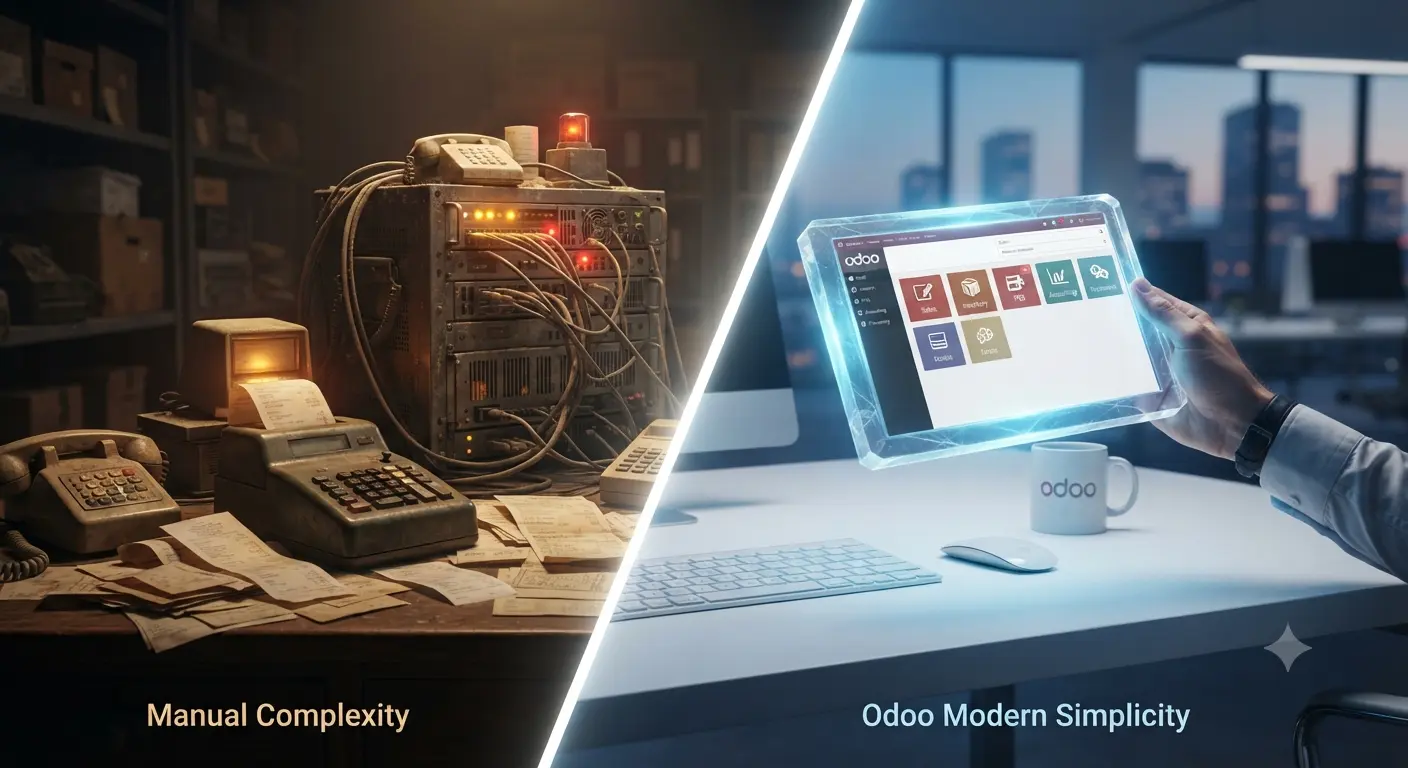
Odoo vs ERPNext
Quick Verdict
If you want flexibility and a large app ecosystem → Odoo is the better choice.
If you prefer a fully open-source, developer-friendly ERP → ERPNext is the winner.
👉 The right choice depends on your budget, customization needs, and technical expertise.
Introduction
In 2026, choosing the right ERP system is critical for business growth. Two popular open-source ERP platforms—Odoo and ERPNext—offer powerful tools for managing operations, finance, CRM, and more.
While both solutions are flexible and scalable, they differ significantly in pricing models, customization capabilities, and ease of use.
Core Differences
- Odoo: Modular ERP with a massive app marketplace and both free and paid versions.
- ERPNext: Fully open-source ERP with a simpler structure and built-in features.
Odoo acts more like a flexible platform, while ERPNext focuses on simplicity and transparency.
Pricing Comparison (2026)
Odoo Pricing: Offers a free community version, but most businesses choose the paid enterprise version. Pricing depends on apps and users.
ERPNext Pricing: Open-source and free to use, with optional hosting and support costs.
💡 ROI Insight: While ERPNext has a lower upfront cost, Odoo may provide better long-term ROI due to its scalability and ecosystem.
💡 Hidden Cost Insight: Implementation, customization, and training can cost 2–3x more than the software itself.
Pros and Cons
Odoo Pros:
- Large app ecosystem
- Highly customizable
- Modern user interface
Odoo Cons:
- Costs increase with more apps
- Requires technical setup for customization
ERPNext Pros:
- 100% open-source
- No licensing fees
- Simpler implementation
ERPNext Cons:
- Smaller ecosystem
- Less polished UI
Comparison Table
| Feature | Odoo | ERPNext |
|---|---|---|
| Pricing | Free + Paid | Free (Open Source) |
| Customization | High | Moderate |
| Ease of Use | High | Moderate |
| Scalability | High | Medium |
Use Cases
- Odoo: Best for growing businesses needing flexibility and integrations.
- ERPNext: Ideal for startups or companies with technical teams.
Which Should You Choose?
- Choose Odoo if: you want a scalable ERP with a rich ecosystem.
- Choose ERPNext if: you want a fully open-source and cost-effective solution.
👉 This is not just a software decision—it’s a long-term business infrastructure investment.
Final Recommendation
In 2026, Odoo is generally the better choice for businesses aiming for growth and flexibility, while ERPNext is ideal for cost-conscious companies with technical expertise.
Implementation & Deployment Comparison
When comparing Odoo vs ERPNext, implementation complexity is a critical factor.
- Odoo: Requires structured setup, especially for enterprise deployments. Many companies rely on official partners or consultants.
- ERPNext: Easier to deploy for developers and startups, with simpler configuration and fewer dependencies.
💡 Insight: Implementation costs can exceed software costs, especially for large businesses.
Scalability & Performance
Both ERP systems are scalable, but they approach growth differently.
- Odoo: Designed for scaling businesses with modular architecture and enterprise-grade support.
- ERPNext: Suitable for small to mid-sized businesses but may require optimization at scale.
👉 If your goal is rapid growth, Odoo offers better long-term scalability.
Security & Data Control
Security is a major concern in ERP adoption.
- Odoo: Offers enterprise-level security, especially in paid versions.
- ERPNext: Gives full control over data due to its open-source nature.
💡 Insight: Companies with strict data policies often prefer ERPNext for full ownership.
Hidden Costs You Should Know
Many businesses underestimate the total cost of ERP ownership.
- Customization and development
- Training and onboarding
- Maintenance and updates
👉 In many cases, these costs can be 2–5x higher than the initial software price.
NetSuite vs Dynamics 365 (2026): Cloud ERP Comparison & ROI Analysis
Conclusion
Both Odoo and ERPNext are powerful ERP platforms. Your final choice should depend on your budget, customization needs, and long-term business goals.
Detailed Pricing Breakdown
Understanding the real cost of ERP systems goes beyond subscription pricing.
Odoo: Pricing typically starts low but increases as businesses add more modules such as CRM, Accounting, Inventory, and HR. Each additional app and user contributes to the total cost.
ERPNext: While the software itself is free, businesses often pay for hosting, support, and developer customization.
👉 Key Insight: For small businesses, ERPNext appears cheaper initially, but Odoo can deliver higher ROI due to its ecosystem and scalability.
- 🚀 Amazon Review: Bentgo Kids Lunch Box Review
- 📊 Product Comparison: Best Lunch Boxes for Kids
- ⚔️ Gear Selection: Cute Lunch Boxes Aesthetic Choices
- 🏢 Top Insulated: Top Insulated Bento Box
- 💡 Daily Commutes: Insulated Lunch Box Options
- 💰 Brand Alternatives: Lunch Boxes Target Alternatives
- 🔍 Shopping Guide: Bento Boxes Online Deals
- 📈 Food Ideas: Creative Bento Box Lunch Ideas
- ⚙️ Kids Gear: Stylish Lunch Boxes for Girls
Amazon Product Authority & E-E-A-T Summary
To maximize organic performance and search visibility in global e-commerce and product review niches, maintaining robust internal linking across specific product clusters ensures faster indexing, stronger topical authority, and sustainable search engine ranking.