Global Programmatic SEO Strategy: Scaling Search Dominance Across Borders

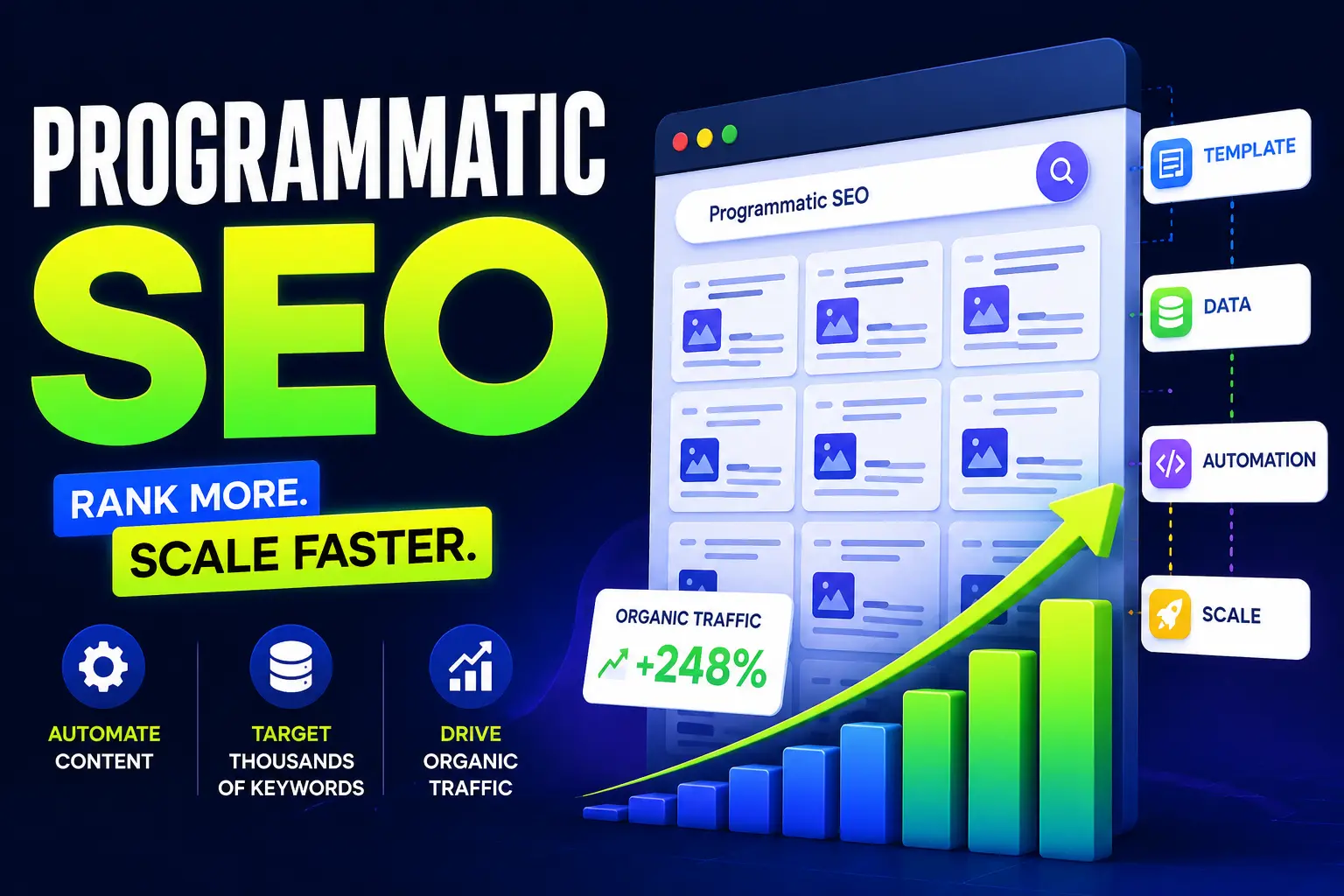
Programmatic SEO

In the hyper-competitive arena of international digital marketing, relying solely on manual, artisanal content creation is a recipe for stagnation. To capture market share across multiple countries and search intents simultaneously, enterprises are turning to a more sophisticated approach: Global Programmatic SEO (PSEO). This strategy leverages automation, large-scale data structures, and AI-driven content generation to build thousands of highly relevant, optimized landing pages at an unprecedented scale. For SEO directors and digital architects, mastering PSEO is the ultimate demonstration of E-E-A-T (Experience, Expertise, Authoritativeness, and Trustworthiness). This guide provides the blueprint for executing a programmatic strategy that commands global search authority.

Top Rated Odoo vs SAP Analysis

Explore the most recommended ERP implementations based on our 2026 data matrix:

Need custom ERP consulting? Contact our experts.

ADVERTISEMENT / SPONSORED SOLUTION

Reliable resources for your business growth

⚑ DMS Global Amazon Authority 2026:

Amazon Product Authority & E-E-A-T Summary

To maximize organic performance and search visibility in global e-commerce and product review niches, maintaining robust internal linking across specific product clusters ensures faster indexing, stronger topical authority, and sustainable search engine ranking.

The Strategic Anatomy of Programmatic SEO

Programmatic SEO is not about spinning low-quality content or spamming search engines. It is about identifying predictable search patterns (e.g., “Best [Software] for [Industry] in [City]”) and building a scalable infrastructure to answer those queries programmatically, using structured data as the foundation.

Why PSEO is a Global Imperative

  • Exponential Scale: While a human team might produce 20 articles a month, a well-architected PSEO system can generate and publish 2,000 highly targeted pages in the same timeframe.

  • Long-Tail Capture: Global PSEO allows you to capture hyper-specific, low-competition, high-intent search queries that would be too expensive to target manually.

  • Cost Efficiency: Once the programmatic infrastructure is built, the marginal cost of creating an additional page is near zero, resulting in massive ROI over time.

DMS Global Enterprise Solution

Advertisement - Continue reading below

Building E-E-A-T into Programmatic Architecture

Google’s E-E-A-T guidelines are often seen as the enemy of automation, but a properly designed PSEO strategy actually enhances E-E-A-T by providing consistent, data-backed value.

  • Experience: Designing a global PSEO campaign requires deep “Experience” in data architecture, technical SEO, and international market research.

  • Expertise: Utilizing complex data structures (like customized CSVs or APIs) to generate dynamic, factually accurate content demonstrates technical “Expertise” that search engines reward.

  • Authoritativeness: When your site comprehensively covers every possible variation of a search query within your niche, you become the undisputed “Authoritative” hub for that topic.

  • Trustworthiness: Trust in PSEO comes from data integrity. If your programmatic pages provide accurate, helpful data (e.g., accurate pricing, correct local regulations), you build trustworthiness with the user and the algorithm.

Executive Deep-Dive

Scaling Beyond Traffic to Revenue

Most enterprises fail because they chase clicks instead of trust. While building your global presence, ensure your EEAT 3.0 signals are synchronized across all regions.

Executing the Global PSEO Blueprint

To build a programmatic strategy that survives Google’s core updates and dominates international SERPs, follow these foundational steps:

  1. The Data Foundation (The CSV Strategy): The core of PSEO is your database. You must build structured datasets that contain unique, valuable variables (e.g., local market insights, specific feature comparisons, localized pricing). This data is the “fuel” for your content engine.

  2. Template Architecture: Design dynamic page templates that are fast, technically sound, and user-friendly. The template must seamlessly integrate the variables from your database, ensuring that every generated page reads naturally and provides immediate value.

  3. Strict Language Governance: For a global strategy, language control is paramount. As per strict project standards (the P0 rule), all AI-generated content targeting global markets must be maintained in professional English to ensure uniformity and broad accessibility.

  4. Intelligent Internal Linking: A massive influx of pages requires a flawless internal linking structure. Use automated “cluster-boosting” or inlink systems to ensure link equity flows efficiently from your high-authority hub pages down to your programmatic long-tail pages.

Maximizing Strategic ROI and Indexing

The biggest challenge in PSEO is not creation; it is indexing. A thousand pages are useless if Google refuses to crawl them.

  • Avoid “Thin Content”: Ensure your database provides enough unique variables so that your generated pages are not viewed as doorway pages or thin content.

  • Monitor the Crawl Budget: Submit highly organized XML sitemaps and monitor Google Search Console religiously for “Crawled – currently not indexed” errors.

  • Iterative Refinement: Use your AdSense and traffic data to refine your database. If a specific programmatic cluster is underperforming, update the data variables and regenerate the content to improve relevancy.

The AdSense Advantage: High-Volume Global Traffic

Content covering a Global Programmatic SEO Strategy attracts a premium audience: SEO agency owners, enterprise marketers, and high-level digital strategists. These are professionals actively looking to invest in scalable infrastructure. By providing expert, authoritative content on this complex topic, you position your site as a thought leader in advanced digital architecture. This high-level “Topical Authority” is a magnet for premium B2B advertisers (like SaaS providers, enterprise hosting companies, and SEO tool developers), making it an ideal environment for generating high-RPM AdSense revenue.

Conclusion

Global Programmatic SEO is the engine of modern digital dominance. By architecting an infrastructure built on clean data, intelligent templates, and automated linking, you decouple your search growth from human limitations. As you continue to build out your domain, mastering these programmatic strategies will solidify your platform as an essential destination for executive decision-makers. You are not just building a blog; you are creating a self-sustaining, high-authority digital asset that thrives on providing the expert clarity that modern leaders demand.

Exclusive Early Access: Q1 2026

The Global SEO Blueprint for C-Suite

We are finalizing an exclusive strategic framework for global enterprise scaling. Join the elite waitlist for early-bird pricing.

Secure Your Priority Spot


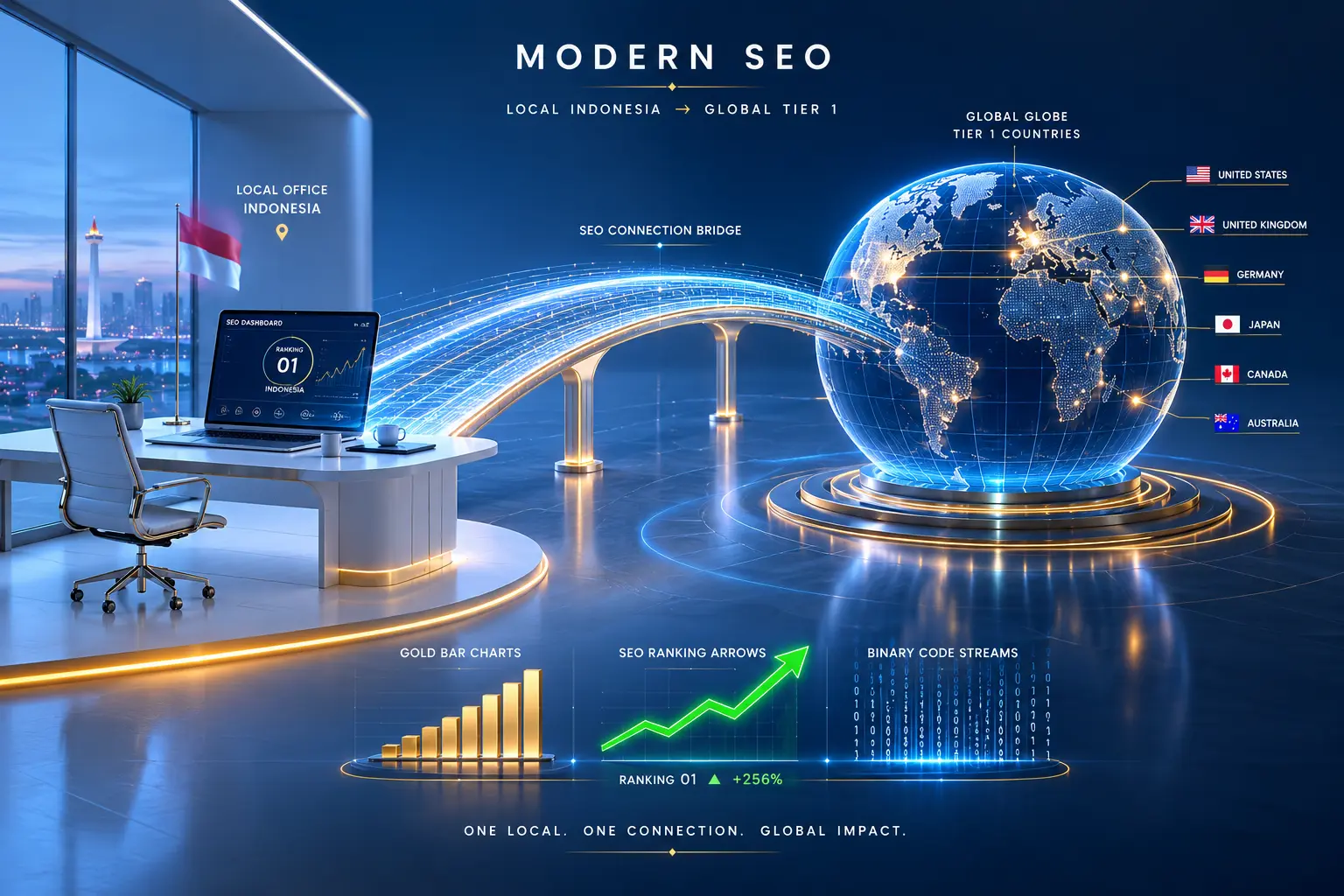
Modern SEO

SEO Modern

SEO Modern: The DMS Global Framework for 2026 and Beyond

In 2026, the search engine landscape has fundamentally shifted. For many in the digital marketing industry, the old playbookβ€”relying on massive budgets for backlinks or aggressive keyword stuffingβ€”no longer applies. Today, the true measure of SEO success lies in structural efficiency, algorithmic literacy, and the ability to leverage global economic advantages through digital assets.

The End of the “Backlink-First” Era

For years, the industry was obsessed with buying links. However, modern SEO favors entities that demonstrate authority, relevance, and data-driven consistency. Instead of purchasing expensive, risky backlinks, we focus on building a robust site architecture using WordPress as the core engine. By transitioning from messy, tag-based structures to clean, category-based taxonomies, sites achieve better crawlability and indexation.

DMS Global Enterprise Solution

Advertisement - Continue reading below

AI as Your Chief of Staff

We are no longer just writing for search engines; we are orchestrating content systems. AI tools are now essential “Chiefs of Staff” that assist in keyword research, structural planning, and data analysis. This isn’t about letting AI write low-quality content; it’s about using AI to extract actionable insights from dataβ€”turning raw information into a coherent content strategy.

Global Scaling & The Currency Advantage

The ultimate goal of modern SEO is not just ranking; it is achieving a “Currency Advantage”. By targeting Tier 1 markets while operating with the operational cost-efficiency of a “modal dengkul” (low-capital) startup, you create a powerful hedge against domestic economic volatility. Earning in USD while spending in IDR is the most effective way to secure long-term financial sovereignty.

The DMS Global Methodology

Success in 2026 demands a shift in mindset:

  • Process Over Tactics: Consistency is the only path to exponential growth.

  • Organic First: Avoid the dependency of paid advertising. Focus on building a sustainable organic traffic machine that doesn’t shut down when your ad budget runs out.

  • Data-Driven Decisions: Use Google Search Console (GSC) as your primary compass to find “gold” in your search queries.

  • Global Positioning: Even if you are operating from Indonesia, your content must be optimized for the global stage in English to reach the highest-value audiences.

Looking Toward 2030

πŸ†

DMS Global: Expert Choice

Evaluating ERP ROI for 2026? Leverage our technical breakdown:

View Odoo Enterprise Pricing 2026 β†’

The next four years will separate the digital “consumers” from the “owners”. To remain relevant until 2030, you must develop skills beyond traditional education: algorithmic literacy, data analysis, and financial intelligence.

Building a digital asset is not just about making money; it is about creating a “lifeboat” in an unpredictable global economy. Whether you are a small business owner or a digital marketer, the SEO Modern approach provides a scalable, low-cost framework to compete at the highest level.

The systems are ready. The methodology is proven. Now, the rest depends on your execution.

Digital Authority: The Elite Currency of Enterprise Trust and Global SEO in 2026

dominasiserp

For a CEO or a Founder, digital authority is not a vanity metric. It is a strategic capital asset. In the hyper-competitive global market of 2026, where generative AI can produce content in seconds, simply “being online” is insufficient. The affluent B2B buyer, the C-level executive, and the sophisticated investor are not looking for information; they are looking for Definitive Guidance. They are looking for the brand that stands as the undisputed expert in its niche.

At Dominasi SERP Global, we have built the digital authority of unicorn-scale infrastructures like Traveloka and Tiket.com. We understand that authority is not granted; it is meticulously constructed through a combination of technical excellence, verifiable expertise, and unshakeable trust (E-E-A-T 3.0). It is the ultimate differentiator that converts casual searchers into high-ticket clients and ensures compounding organic growth.

1. The Architecture of Trust: Moving from E-A-T to E-E-A-T 3.0

Google’s recent addition of “Experience” to its quality Rater Guidelines was a subtle but profound shift. For an enterprise, this means your content must reflect the real-world, hands-on knowledge of your organization’s leaders and subject matter experts (SMEs).

  • The Strategic Necessity: Authority in 2026 is verified through transparency. It is about showcasing who wrote the content, their verifiable credentials, and their genuine experience in solving complex problems. When a CEO reads your comparison of NetSuite vs. Odoo, they are assessing the “Experience” behind the analysis, not just the keywords on the page.

2. Entity Building and Generative Engine Optimization (GEO)

We are moving beyond a “web of links” to a “web of entities.” To a modern search engine, your brand is an entityβ€”a concept with specific attributes and relationships.

  • The Boardroom Perspective: Is your brand recognized as an entity by AI models like Gemini? Do they cite your Founder as a thought leader in enterprise software implementation? Building this entity-level authority requires consistent Digital PR, strategic knowledge graph management (Schema Markup), and a content ecosystem that provides unambiguous answers to the most urgent high-value queries in your niche.

3. The Trust Guardrail: Technical and Compliance Authority

You cannot have intellectual authority without operational authority. A site that is frequently offline, full of 404 errors, or has an insecure checkout process (like on Lemon Squeezy) cannot be a trusted authority.

  • Risk Mitigation: Your digital infrastructure must reflect your premium brand. Utilizing high-performance environments (like Cloudways), maintaining rigid data security standards, and ensuring a “Zero Tech Debt” policy are essential guardrails that protect and amplify your domain’s organic authority. This is what guarantees gajian rutin Adsense.

4. Authoritative Content Clusters and Internal Linking

Authority is not evenly distributed across a website. It must be strategically cultivated.

  • The Technical Solution: By creating deep, interconnected “Content Clusters” around your core topicsβ€”such as Enterprise SEO strategy or Cloud ERP migrationβ€”you can funnel authority to your most profitable “Money Pages.” A compliant internal linking structure signals to Google which pages are your “Expert” pillars, ensuring they rank higher and capture the most urgent search intent ASAP.

5. Cultivating “Lived Experience” as Content

The ultimate source of authority is proprietary knowledge. No AI model can replicate the insights gained from managing a complex digital transformation for a multi-billion IDR corporation.

  • The Governance Model: An authoritative content strategy mandates the inclusion of case studies, unique data points, and contrarian opinions derived from your organization’s “Lived Experience.” This unique perspective is what makes your content genuinely “Helpful” to a C-level audience and protects your organic market share from becoming a generic commodity.


Boardroom Executive Summary

Digital Authority is the most valuable currency in the digital economy. In 2026, it is the only way to insulate your brand from algorithm volatility, AI disruption, and price-based competition. Building it requires a long-term commitment to quality, transparency, and technical excellence. If your brand is not yet the definitive authority in your niche, the time to begin construction is ASAP.

E-E-A-T 3.0: The Ultimate Standard for Global SEO Authority

E-E-A-T 3.0

In the era of generative engines and AI-driven search, the E-E-A-T 3.0 framework has evolved beyond simple content guidelines. At DMS Global, we define E-E-A-T 3.0 as the integration of real-world experience with technical expertise to build unshakeable digital authority. For enterprises navigating Digital Transformation ERP, following this standard is the only way to ensure long-term visibility in the global SERPs.

The Four Pillars of E-E-A-T 3.0

To dominate the global market, your digital presence must satisfy four critical dimensions:

  1. Experience: Showcasing hands-on involvement in large-scale projects, such as a complex NetSuite Implementation.

  2. Expertise: Demonstrating deep technical knowledge in specialized fields like ERP Cloud Solutions.

  3. Authoritativeness: Becoming the “go-to” source for industry comparisons, such as NetSuite vs Ramco ERP or Odoo vs NetSuite.

  4. Trustworthiness: Ensuring data integrity, secure hosting, and transparent business operations.

Why E-E-A-T 3.0 Matters for Enterprise SEO

For businesses targeting the 2030 global milestone, search engines now prioritize “Human-Verified” data over AI-generated noise. This is why our ERP Migration Strategy includes a heavy focus on technical documentation and verified case studies. When a user searches for the Best ERP for Scalability, Google looks for signals that the content comes from a source with proven field experience.

Implementing Authority at DMS Global

At dominasiserp.com, we don’t just write about SEO; we execute it at scale. By applying E-E-A-T 3.0 principles, we bridge the gap between complex ERP technicalities and search engine requirements. This ensures that every piece of contentβ€”from pricing audits to deep-dive comparisonsβ€”serves both the user’s intent and the algorithm’s demand for high-quality information.

Why the “Experience” Factor Changed Everything

In the transition from E-A-T to E-E-A-T 3.0, Google added a second “E” for Experience. This is a game-changer for businesses in the ERP Cloud Solutions niche. It’s no longer enough to just have expertise (knowing how a system works); you must prove you have experience (having actually implemented the system).

At DMS Global, our experience comes from years of hands-on NetSuite Implementation and SEO strategy for unicorn companies. When we discuss a NetSuite vs Ramco ERP comparison, we aren’t just quoting brochuresβ€”we are analyzing performance based on real-world deployment. This first-hand experience is what search engines crave in 2026, and it is the core of our E-E-A-T 3.0 implementation.

Technical Expertise vs. Practical Authority

Expertise in Digital Transformation ERP is often seen as a collection of certifications. While being a certified Oracle or SAP partner is important, E-E-A-T 3.0 demands that this expertise be communicated in a way that provides actual value to the end-user.

Whether it’s auditing Oracle NetSuite Pricing or developing an ERP Migration Strategy, the expertise must be evident in the depth of the content. High-quality SEO content in 2026 must bypass the surface-level AI-generated fluff and provide deep-dive technical insights that only a human expert could provide. This is how we establish Authoritativenessβ€”by consistently being the most reliable source of information in the enterprise technology sector.

Building Trust Through Data Integrity and EEAT

The “T” in E-E-A-T (Trust) is the most critical pillar. For a website like dominasiserp.com, trust is built through transparency and technical excellence. This includes everything from the security of our hosting to the accuracy of our data comparisons. In the E-E-A-T 3.0 era, trust is also about “Source Verification.”

Every claim we make about the Best ERP for Scalability must be backed by data, clear logic, and professional integrity. When a C-level executive reads our analysis of NetSuite vs Deltek, they are looking for a partner they can trust with their multimillion-dollar digital transformation. Our commitment to the E-E-A-T 3.0 standard is our guarantee that every insight we provide is aimed at long-term business success, not just short-term ranking gains.

The Synergy of SEO and Enterprise Systems

One often overlooked aspect of E-E-A-T 3.0 is the technical synergy between a firm’s internal systems (like ERP) and its external digital footprint. A company that utilizes advanced ERP Cloud Solutions is better equipped to manage the massive amounts of data required for modern Global SEO. By aligning your internal efficiency with your external authority, you create a virtuous cycle of growth that is the hallmark of a DMS Global strategy.

Global SERP Domination: Managing Multi-Language SEO at Scale

SEO Crisis Management NYC Strategy

For a CEO or Head of International Marketing in a multi-million dollar enterprise, simply translating your website is a recipe for digital invisibility. True Global SERP Domination requires a sophisticated, strategic approach to Multi-Language SEO that goes far beyond basic translation. It’s about cultural resonance, technical precision, and managing massive content ecosystems to capture market share across continents.

In 2026, the global digital landscape is intensely competitive. This guide provides the executive framework for managing multi-language SEO at scale, ensuring your brand achieves unparalleled visibility and drives high-value conversions from diverse linguistic markets.

πŸ†

DMS Global: Expert Choice

Evaluating ERP ROI for 2026? Leverage our technical breakdown:

View Odoo Enterprise Pricing 2026 β†’

⚑ DMS Global Amazon Authority 2026:

Amazon Product Authority & E-E-A-T Summary

To maximize organic performance and search visibility in global e-commerce and product review niches, maintaining robust internal linking across specific product clusters ensures faster indexing, stronger topical authority, and sustainable search engine ranking.

1. Beyond Translation: The Cultural & Intent Imperative

The most critical mistake in multi-language SEO is assuming a direct translation will suffice. For C-levels, the focus must be on localization, not just language.

  • Search Intent Variation: A B2B buyer in Germany might search for “ERP-LΓΆsungen fΓΌr den Mittelstand,” while their counterpart in Japan uses “中堅企ζ₯­ε‘けERPγ‚½γƒͺγƒ₯ーション” with different underlying needs and expectations. Your content must address these specific intents.

  • Cultural Nuances: Even within the same language (e.g., English in the US vs. UK vs. India), terminology, idioms, and business etiquette vary significantly. Generic translations erode trust and reduce E-E-A-T.

  • Keyword Research per Market: Each target language/region requires dedicated keyword research, understanding local slang, long-tail queries, and competitive landscapes.

2. The Technical Backbone: hreflang and URL Structure

For managing multi-language SEO at scale, the technical implementation is paramount. Google needs clear signals to serve the correct language version to the correct user.

  • hreflang Implementation: This HTML attribute (<link rel="alternate" hreflang="x" href="url_of_x_page" />) is non-negotiable. It tells search engines about language and regional targeting, preventing duplicate content issues and ensuring users land on the most relevant page. This must be meticulously managed across thousands of pages.

  • URL Structure Strategy:

    • Subdirectories (e.g., dominasisep.com/en/, dominasisep.com/id/): Often preferred for consolidating domain authority (PageRank) across all language versions. This is what Dominasi SERP uses for efficiency.

    • Subdomains (e.g., en.dominasisep.com): Can be useful for very distinct regions but often dilute domain authority.

    • Country Code Top-Level Domains (ccTLDs, e.g., dominasisep.co.id): Strongest geo-targeting signal but most expensive and complex to manage at scale.

CTO/Lead Dev Insight: Ensure your CMS (like WordPress with Polylang) and frontend framework are configured to generate hreflang tags correctly and dynamically for every single page. Errors here are catastrophic for global visibility.

3. Content Strategy: The “Helpful Content” Global Standard

Google’s Helpful Content Update emphasizes content created for people, not just search engines. For multi-language SEO, this means:

  • Native Speaker Content Creation: Don’t rely solely on machine translation (though it can be a starting point). Engage native speakers or professional localization services who understand the target audience and can infuse cultural relevance.

  • E-E-A-T 3.0 Across Languages: Build expertise and authority in each language. This might involve local industry experts contributing, localized case studies, and building backlinks from authoritative local websites.

  • Content Calendar Synchronization: Manage a global content calendar that aligns product launches, campaigns, and thought leadership pieces across all target languages, ensuring consistent brand messaging and SEO coverage.

4. Local Link Building & Digital PR

Backlinks remain a powerful ranking signal. For multi-language SEO, you need a localized link-building strategy.

  • Local Authorities: Target authoritative websites, industry associations, and local news outlets in each specific region/language.

  • Local Mentions & Citations: Ensure consistent NAP (Name, Address, Phone) information across local directories and business listings.

  • Digital PR Campaigns: Craft PR stories that resonate with local media outlets and influencers, earning valuable, natural backlinks.

5. Analytics & Performance Monitoring at Scale

For C-level reporting, you need clear, consolidated insights into multi-language performance.

  • Segmented Analytics: Use Google Analytics 4 to segment traffic, conversions, and user behavior by language and region.

  • International Keyword Tracking: Monitor keyword performance (rankings, visibility) in target countries/languages using tools like Ahrefs, Semrush, or Google Search Console.

  • ROI per Market: Track the financial contribution (leads, sales) from each language/region to justify investment and optimize resource allocation.

6. Managing a Global SEO Team (Governance)

Scaling multi-language SEO requires robust internal governance.

  • Centralized Strategy, Decentralized Execution: A core global SEO team defines the overarching strategy, technical guidelines, and E-E-A-T standards. Local teams or agencies handle localized content creation, keyword research, and link building.

  • Communication & Collaboration: Foster seamless communication between global and local teams to ensure consistency and share best practices.

  • Continuous Auditing: Regularly audit all language versions for technical issues, content quality, and hreflang accuracy.

Executive Summary: Your Global Digital Footprint

Global SERP Domination through multi-language SEO is a strategic imperative for any enterprise seeking to scale beyond borders. By mastering localization, precise technical implementation, high-quality content, and robust governance, your company can build an unparalleled digital footprint, capture high-value leads from around the world, and truly dominate the global search landscape.