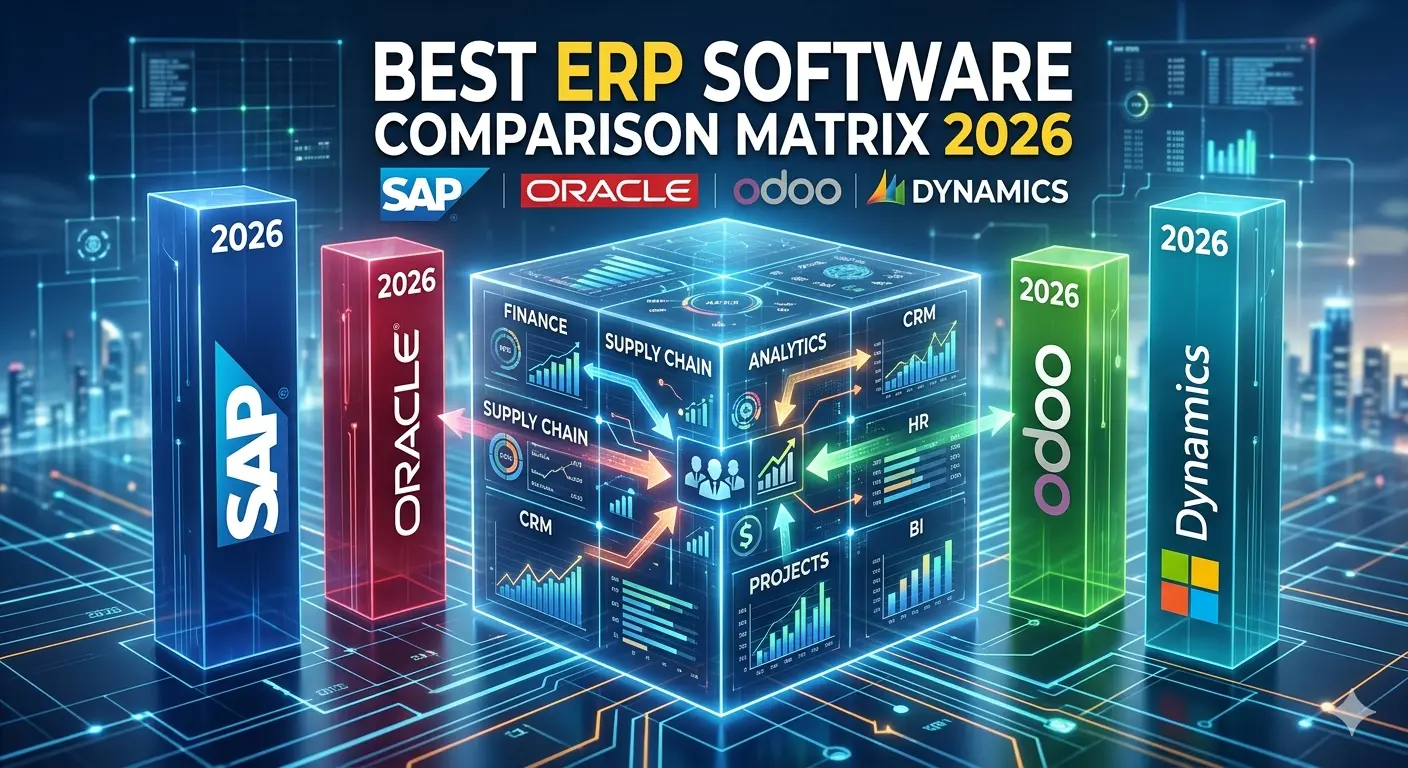
The Strategic Shift: Why Businesses are Moving to Cloud ERP in 2026
As we navigate the second quarter of 2026, the global business landscape has reached a definitive tipping point. The “wait-and-see” approach to digital transformation has been replaced by a mandatory migration toward cloud-native infrastructure. For small and medium enterprises (SMEs) as well as global corporations, Enterprise Resource Planning (ERP) software is no longer just a back-office tool for accounting; it is the central nervous system of a modern, data-driven organization. In an era defined by agentic AI, real-time supply chain volatility, and the need for extreme operational transparency, the switch to Cloud ERP is the most significant strategic move a company can make this year. This guide explores the multifaceted benefits of this transition and why high-growth companies are prioritizing Cloud ERP to establish market authority and Experience, Expertise, Authoritativeness, and Trustworthiness (E-E-A-T).
—
Core Benefits of Cloud ERP Software in 2026
[Image: Comparison of Legacy vs. Cloud ERP Efficiency 2026] The value proposition of Cloud ERP has evolved far beyond simple “remote access.” Today’s systems offer a level of intelligence that was technically impossible even three years ago. The primary drivers for the 2026 switch include:
- AI-Driven Predictive Analytics: Modern Cloud ERPs utilize built-in machine learning to forecast demand with 95% accuracy. Instead of reactive reporting, businesses now receive proactive alerts regarding potential cash flow gaps or inventory shortages before they occur.
- Seamless Global Scalability: Cloud-native architecture allows a business to spin up a new subsidiary or international warehouse in days, not months. Multi-currency, multi-language, and local tax compliance are handled automatically via real-time updates.
- Enterprise-Grade Security & Resilience: In 2026, cybersecurity is a top-tier business risk. Cloud ERP providers offer SOC 2 Type II compliance, end-to-end encryption, and automated disaster recovery that far exceeds what most internal IT teams can maintain on-premise.
- Lower Total Cost of Ownership (TCO): By eliminating expensive server hardware, cooling costs, and manual version upgrades, businesses are seeing an average 30% reduction in IT spending over a five-year period.
- Real-Time Data Synchronization: Every department—from the shop floor to the C-suite—operates on a single source of truth. This eliminates “data silos” and ensures that the “Authoritativeness” of your financial and operational reporting is beyond reproach.
—
The 2026 ERP Implementation Strategy: From Audit to Automation
[Image: The 5-Phase Cloud ERP Roadmap] A successful ERP rollout in 2026 is characterized by speed and precision. The “Big Bang” implementations of the past have been replaced by an Agile-Phased Approach. High-intent buyers follow this disciplined implementation roadmap: Phase 1: Diagnostic Audit: Conduct a deep-dive into current bottlenecks. This is where you identify “thin” processes that are draining resources. Phase 2: Data Sanitization & Migration: In the age of E-E-A-T, your system is only as authoritative as your data. Cleanse legacy databases before they enter the new cloud environment. Phase 3: Module Configuration: Tailor the ERP to your specific industry—whether it’s specialized Manufacturing (MTO/ETO), Field Service, or Distribution. Phase 4: User Empowerment & Training: Modern ERP interfaces are intuitive, but specialized training ensures your team leverages advanced AI features from day one. Phase 5: Continuous Optimization: Cloud ERPs are not “set and forget.” Monthly updates bring new features that should be integrated into your strategy to maintain a competitive moat.
—
Establishing Market Authority through E-E-A-T Optimized Operations
[Image: ERP as a Foundation for Business Trust] In 2026, your internal operational efficiency is a direct signal of your external market trustworthiness. A robust Cloud ERP enhances your brand’s E-E-A-T by: Experience: Demonstrating a track record of fulfilled promises through precise lead-time tracking and delivery accuracy. Expertise: Utilizing advanced modules to manage complex engineering or financial tasks with surgical precision. Authoritativeness: Providing stakeholders, auditors, and investors with transparent, real-time reports that cannot be manipulated. Trustworthiness: Ensuring customer data is handled with the highest security standards, fostering long-term loyalty in a skeptical market.
—
Why Choose DMS Global for Your 2026 ERP Transformation?
In a market saturated with generic software vendors, DMS Global (dominasiserp.com) stands out as the premier strategic partner for businesses that demand high-performance digital infrastructure. We don’t just sell software; we architect the future of your business.
- Deep Niche Expertise: Our DMS ERP platform is specifically engineered for sectors where complexity is the norm—manufacturing, oil and gas, professional services, and high-growth distribution.
- Strategic Senior Guidance: Every implementation is led by Senior Digital Strategists who understand how to align your ERP with your revenue goals and SEO-driven market presence.
- Unrivaled Modular Flexibility: We provide the “Lego blocks” of enterprise software. Start with our industry-leading Accounting Module and scale into Rental, POS, or Advanced MRP as your business grows.
- Commitment to Data Integrity: We prioritize your organization’s authoritativeness by ensuring every implementation adheres to the highest E-E-A-T standards, turning your data into a strategic asset.
Don’t let legacy systems hold your growth hostage in 2026. Contact DMS Global today at dominasiserp.com to schedule a tailored demonstration and discover why the world’s most agile companies are choosing us as their digital backbone. Join the “Road to $100M” and beyond with an infrastructure built for the future.
The Strategic Shift: Why Businesses are Moving to Cloud ERP in 2026
As we navigate the second quarter of 2026, the global business landscape has reached a definitive tipping point. The “wait-and-see” approach to digital transformation has been replaced by a mandatory migration toward cloud-native infrastructure. For small and medium enterprises (SMEs) as well as global corporations, Enterprise Resource Planning (ERP) software is no longer just a back-office tool for accounting; it is the central nervous system of a modern, data-driven organization. In an era defined by agentic AI, real-time supply chain volatility, and the need for extreme operational transparency, the switch to Cloud ERP is the most significant strategic move a company can make this year. This guide explores the multifaceted benefits of this transition and why high-growth companies are prioritizing Cloud ERP to establish market authority and Experience, Expertise, Authoritativeness, and Trustworthiness (E-E-A-T).
—
Core Benefits of Cloud ERP Software in 2026
[Image: Comparison of Legacy vs. Cloud ERP Efficiency 2026] The value proposition of Cloud ERP has evolved far beyond simple “remote access.” Today’s systems offer a level of intelligence that was technically impossible even three years ago. The primary drivers for the 2026 switch include:
- AI-Driven Predictive Analytics: Modern Cloud ERPs utilize built-in machine learning to forecast demand with 95% accuracy. Instead of reactive reporting, businesses now receive proactive alerts regarding potential cash flow gaps or inventory shortages before they occur.
- Seamless Global Scalability: Cloud-native architecture allows a business to spin up a new subsidiary or international warehouse in days, not months. Multi-currency, multi-language, and local tax compliance are handled automatically via real-time updates.
- Enterprise-Grade Security & Resilience: In 2026, cybersecurity is a top-tier business risk. Cloud ERP providers offer SOC 2 Type II compliance, end-to-end encryption, and automated disaster recovery that far exceeds what most internal IT teams can maintain on-premise.
- Lower Total Cost of Ownership (TCO): By eliminating expensive server hardware, cooling costs, and manual version upgrades, businesses are seeing an average 30% reduction in IT spending over a five-year period.
- Real-Time Data Synchronization: Every department—from the shop floor to the C-suite—operates on a single source of truth. This eliminates “data silos” and ensures that the “Authoritativeness” of your financial and operational reporting is beyond reproach.
—
The 2026 ERP Implementation Strategy: From Audit to Automation
[Image: The 5-Phase Cloud ERP Roadmap] A successful ERP rollout in 2026 is characterized by speed and precision. The “Big Bang” implementations of the past have been replaced by an Agile-Phased Approach. High-intent buyers follow this disciplined implementation roadmap: Phase 1: Diagnostic Audit: Conduct a deep-dive into current bottlenecks. This is where you identify “thin” processes that are draining resources. Phase 2: Data Sanitization & Migration: In the age of E-E-A-T, your system is only as authoritative as your data. Cleanse legacy databases before they enter the new cloud environment. Phase 3: Module Configuration: Tailor the ERP to your specific industry—whether it’s specialized Manufacturing (MTO/ETO), Field Service, or Distribution. Phase 4: User Empowerment & Training: Modern ERP interfaces are intuitive, but specialized training ensures your team leverages advanced AI features from day one. Phase 5: Continuous Optimization: Cloud ERPs are not “set and forget.” Monthly updates bring new features that should be integrated into your strategy to maintain a competitive moat.
—
Establishing Market Authority through E-E-A-T Optimized Operations
[Image: ERP as a Foundation for Business Trust] In 2026, your internal operational efficiency is a direct signal of your external market trustworthiness. A robust Cloud ERP enhances your brand’s E-E-A-T by: Experience: Demonstrating a track record of fulfilled promises through precise lead-time tracking and delivery accuracy. Expertise: Utilizing advanced modules to manage complex engineering or financial tasks with surgical precision. Authoritativeness: Providing stakeholders, auditors, and investors with transparent, real-time reports that cannot be manipulated. Trustworthiness: Ensuring customer data is handled with the highest security standards, fostering long-term loyalty in a skeptical market.
—
Why Choose DMS Global for Your 2026 ERP Transformation?
In a market saturated with generic software vendors, DMS Global (dominasiserp.com) stands out as the premier strategic partner for businesses that demand high-performance digital infrastructure. We don’t just sell software; we architect the future of your business.
- Deep Niche Expertise: Our DMS ERP platform is specifically engineered for sectors where complexity is the norm—manufacturing, oil and gas, professional services, and high-growth distribution.
- Strategic Senior Guidance: Every implementation is led by Senior Digital Strategists who understand how to align your ERP with your revenue goals and SEO-driven market presence.
- Unrivaled Modular Flexibility: We provide the “Lego blocks” of enterprise software. Start with our industry-leading Accounting Module and scale into Rental, POS, or Advanced MRP as your business grows.
- Commitment to Data Integrity: We prioritize your organization’s authoritativeness by ensuring every implementation adheres to the highest E-E-A-T standards, turning your data into a strategic asset.
Don’t let legacy systems hold your growth hostage in 2026. Contact DMS Global today at dominasiserp.com to schedule a tailored demonstration and discover why the world’s most agile companies are choosing us as their digital backbone. Join the “Road to $100M” and beyond with an infrastructure built for the future.