Silver Price Today: Real-Time Market Analysis & Long-Term Investment Outlook (2026)

silver

Silver has long held a unique status in the global commodities market. Unlike gold, which functions purely as a store of value or a safe-haven asset, silver acts as a hybrid instrument that combines monetary functions with massive industrial demand. Monitoring silver price today is not just about watching fluctuating numbers on a screen; it is about understanding the pulse of the global economy, the green energy transition, and the inflationary dynamics of 2026.

Market Dynamics & Pricing Drivers: Why Does Silver Move?

Silver price today is heavily influenced by two major forces: macroeconomic sentiment and manufacturing demand. In mid-2026, silver price volatility is often driven by global central bank monetary policies attempting to balance inflation targets with economic growth.

Based on our market observations at DMS Global, silver shows higher sensitivity than gold to US economic data. When there are signs of dollar weakness, silver tends to move more aggressively due to its higher volatility. Additionally, the gold-to-silver ratio remains a crucial indicator. When this ratio widens, silver is often considered historically “cheap,” attracting institutional investors to re-enter the market.

The Industrial Demand: Why is Silver More Than Just a Precious Metal?

One of the primary pillars supporting long-term silver prices is the green industrial revolution. The solar panel manufacturing sector, 5G infrastructure, and electric vehicle (EV) industry consume vast amounts of silver due to its unparalleled electrical conductivity compared to other affordable metals.

It is vital for investors to understand that this industrial demand is inelastic. This means that even in a slowing economy, the industrial sector still requires silver to maintain modern technology production. This provides a strong floor price for silver compared to other industrial commodities that are more vulnerable to recession.

Investment Strategy: Bullion vs. Silver ETFs

For those looking to optimize your portfolio, there are two main paths to gain exposure to silver prices:

  1. Physical Silver (Bullion): Provides full control without third-party risk. Highly recommended for investors who view silver as a long-term insurance against systemic uncertainty.

  2. Silver ETFs: Offers high liquidity and ease of access. This is suitable for those looking to capitalize on daily or weekly price momentum to profit from market volatility.

Expert Forecast: Navigating Volatility in 2026

Entering the third quarter of 2026, technical outlooks indicate that silver is in a healthy consolidation phase. We see that every price correction is an opportunity for long-term investors to accumulate. However, it should be noted that silver has a higher beta relative to stock market movements compared to gold.

Risk Management: Diversification is key. Never place all your capital solely into silver. Use silver as a portfolio complement to enhance growth potential amidst global economic shifts.

Conclusion & Outlook

Silver price today reflects the world’s transition toward a more digitalized and environmentally friendly economy. For the savvy investor, silver is not just a speculative commodity, but a strategic asset that plays a vital role in the future of technology.

Disclaimer: This article is prepared for educational purposes and market analysis. Silver price data is dynamic and subject to change at any time. Always conduct thorough research or consult with a financial advisor before making investment decisions.

Follow DMS Global for ongoing commodity market analysis and leading ERP/SaaS investment strategies in 2026.

Monitoring silver price today is essential for understanding the broader commodities market and inflationary trends in 2026. Many investors are now exploring digital gold as a convenient alternative, but for those balancing their portfolios, understanding the gold vs silver ROI is critical for long-term growth.

For those just starting out or seeking low-cost entry points, identifying the best gold etfs can simplify your investment journey. Additionally, savvy investors often leverage the poor mans gold strategy to maximize their exposure during periods of market volatility.

Related Posts:

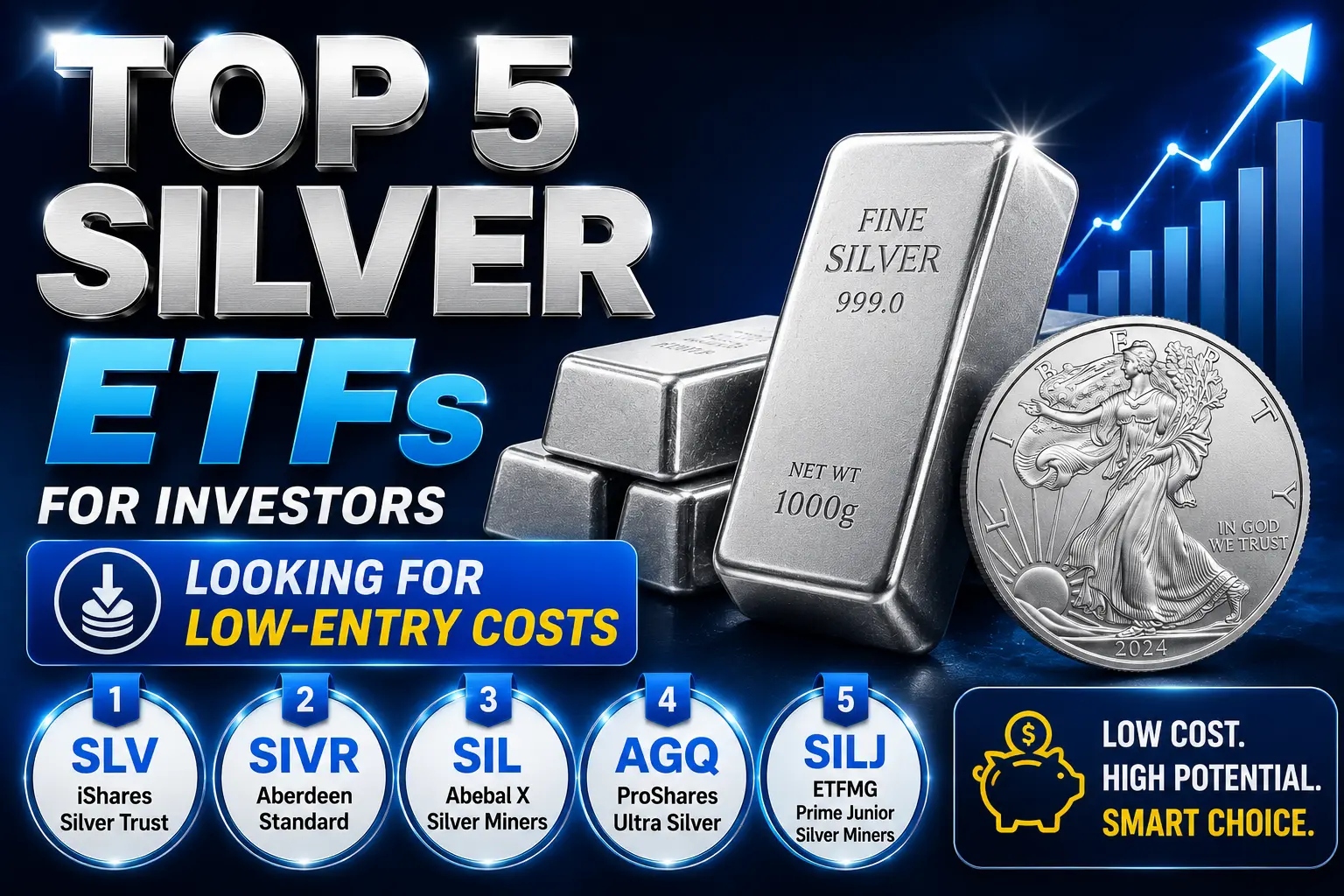
Top 5 Silver ETFs for Investors Looking for Low-Entry Costs

For many modern investors, the barrier to entry for precious metals is often perceived as high—not just in terms of price, but in the logistics of storage, security, and insurance. This is where Silver Exchange-Traded Funds (ETFs) shine. By offering a way to gain exposure to the price of silver through a brokerage account, ETFs have democratized precious metals investing. In 2026, if you are looking for low-entry costs and high liquidity, Silver ETFs are a strategic vehicle to consider.

What is a Silver ETF?

A Silver ETF is an investment fund that holds physical silver or silver-related derivatives. When you buy a share of a Silver ETF, you are essentially buying a “slice” of a professionally managed pool of assets. This eliminates the need to buy physical bars, find a safe, or pay high insurance premiums. It is an ideal entry point for beginners and a efficient tool for tactical traders.

Why ETFs for Low-Entry Costs?

  • Fractional Ownership: You don’t need to buy a 100 oz bar. You can buy a single share, making entry costs as low as the price of a single stock.

  • Zero Storage Hassle: The fund handles the security and auditing of the silver, meaning you don’t have to worry about home vaults or depository fees.

  • High Liquidity: You can buy and sell your position during market hours with the click of a button, providing unparalleled flexibility compared to physical bullion.

Top 5 Silver ETFs for 2026

1. iShares Silver Trust (SLV)

SLV is the largest and most liquid silver ETF on the market. It is designed to track the daily price movements of silver bullion.

  • Why it’s a top pick: Its massive volume ensures the tightest bid-ask spreads, meaning you lose less money to transaction costs when entering or exiting a position. It is the gold standard for those who prioritize liquidity above all else.

2. Aberdeen Standard Physical Silver Shares ETF (SIVR)

For investors focused on long-term costs, SIVR is often preferred over SLV.

  • Why it’s a top pick: It is known for having a competitive expense ratio. While SLV is for traders, SIVR is often favored by long-term holders who want to minimize the annual management fee, which eats into your returns over time.

3. Sprott Physical Silver Trust (PSLV)

PSLV takes a different approach. Unlike SLV, which may use derivatives, PSLV invests in unencumbered physical silver bars stored in a secure vault.

  • Why it’s a top pick: Shareholders have the right to redeem their shares for physical silver (subject to minimum requirements). This provides an extra layer of confidence for those who are skeptical of the “paper” silver market.

4. Invesco DB Silver Fund (DBS)

DBS is a commodity pool that tracks the performance of silver futures contracts rather than physical bullion.

  • Why it’s a top pick: This is a more technical tool designed for investors who want to capitalize on short-term price volatility. It is highly responsive to futures market trends and is a preferred instrument for tactical asset allocation.

5. ProShares Ultra Silver (AGQ)

This is a leveraged ETF designed to provide double (2x) the daily performance of silver.

  • Why it’s a top pick: This is not for the faint of heart. It is designed for sophisticated investors who want amplified exposure to silver price movements. It is an incredibly powerful tool for short-term hedging or high-conviction momentum plays.

Critical Considerations Before You Buy

While Silver ETFs are cost-effective, they are not a perfect substitute for physical ownership in every scenario:

  1. The Expense Ratio: Every ETF charges an annual management fee. While usually small, it is a drag on your performance that does not exist with physical silver.

  2. Taxation Differences: Depending on your jurisdiction, Silver ETFs may be taxed differently than physical bullion. In the U.S., they are often taxed as “collectibles,” which can mean a higher capital gains rate. Always check your tax local status.

  3. Counterparty Risk: When you hold an ETF, you are trusting the fund issuer. While they are highly regulated, it is a different kind of risk than holding a silver bar in your own hand.

Building Your Strategy

For most investors in 2026, the best approach is a layered portfolio. You might hold physical silver in a home safe for long-term “emergency” wealth, and use Silver ETFs in your brokerage account for tactical exposure, quick adjustments, and short-term market participation.

This combination allows you to benefit from the liquidity of the digital market while maintaining the absolute security of physical assets.