
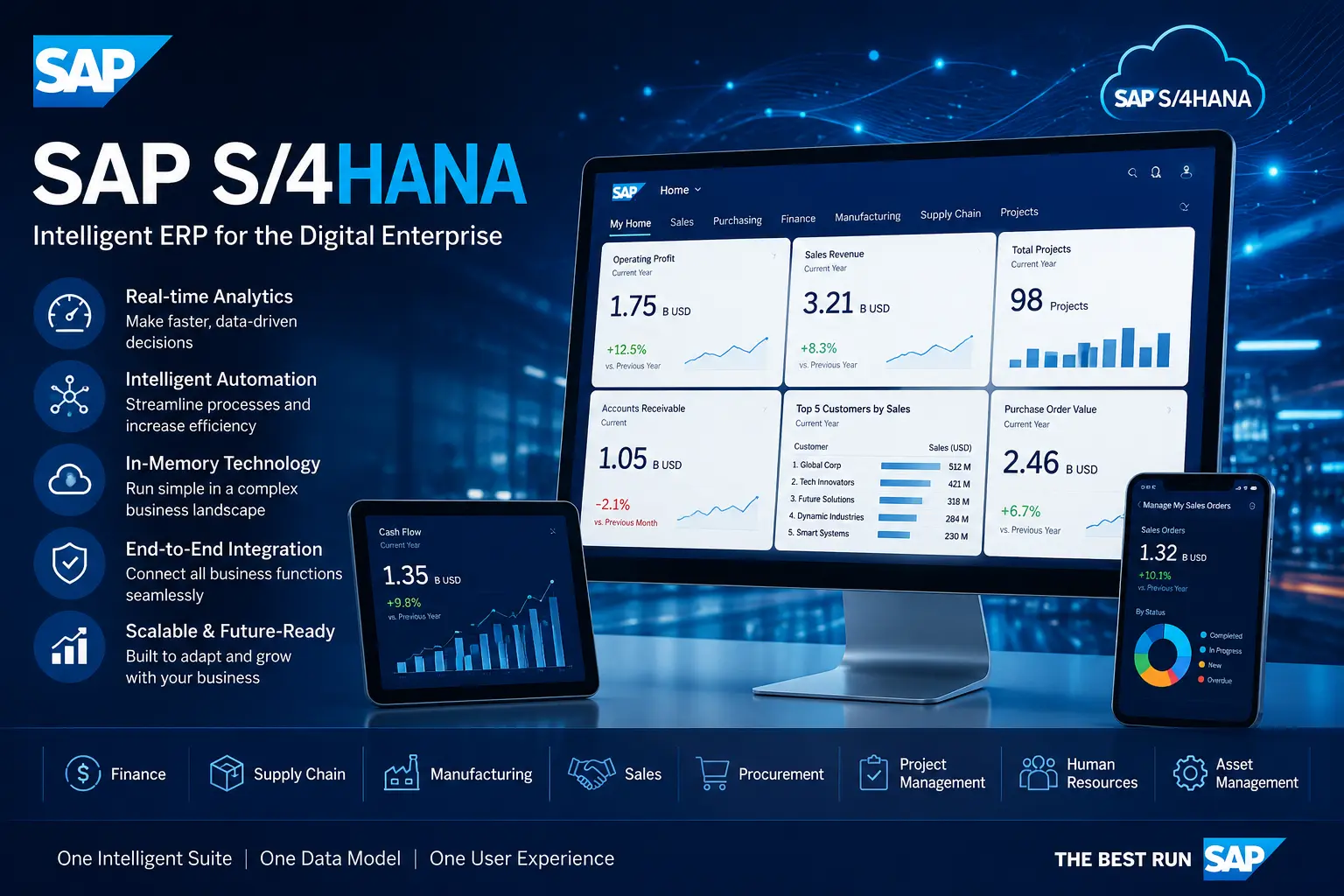
SAP S/4HANA represents the pinnacle of modern Enterprise Resource Planning (ERP). For global enterprises, moving to S/4HANA is not merely a software upgrade—it is a strategic business transformation. However, navigating the SAP S/4HANA pricing structure is notoriously complex, involving licensing models, cloud deployment options, and hidden operational costs.
In this guide, we provide a transparent, expert-led analysis of how SAP S/4HANA pricing functions in 2026 to ensure your organization makes a data-driven investment.
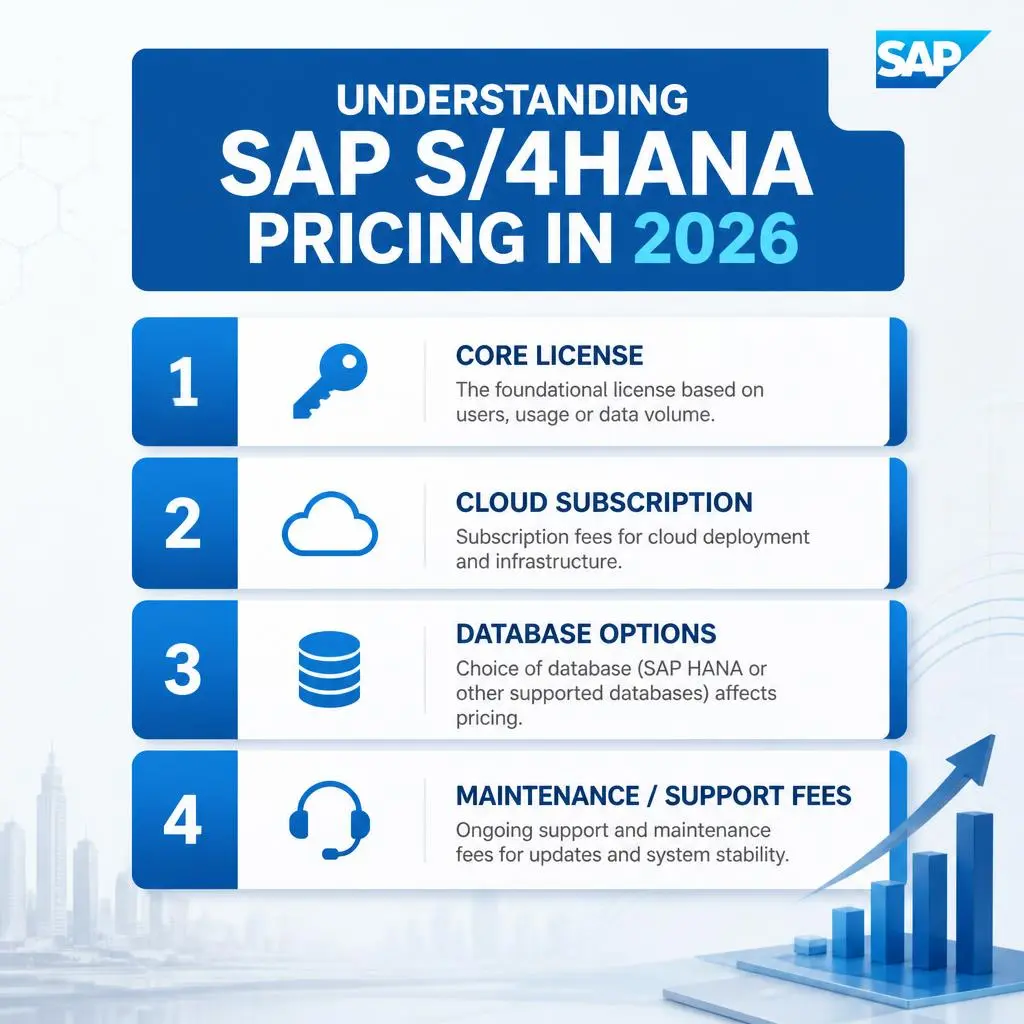
1. The Core SAP S/4HANA Pricing Models
Unlike legacy systems, SAP S/4HANA pricing has evolved to favor cloud consumption. The total cost is primarily split into two main buckets:
A. Subscription-Based (Cloud ERP)
This is the modern standard, particularly for SAP S/4HANA Cloud (Public or Private Edition).
-
Predictable OPEX: You pay a recurring subscription fee per user per month.
-
All-Inclusive: The subscription typically covers software licensing, infrastructure (hosting), and standard maintenance.
-
Scalability: You can add or remove users based on business growth, making it highly flexible for fluctuating enterprise needs.
B. Perpetual Licensing (On-Premise)
While SAP is pushing cloud-first, perpetual licensing remains for specific industries with strict data sovereignty requirements.
Executive Deep-Dive
Scaling Beyond Traffic to Revenue
Most enterprises fail because they chase clicks instead of trust. While building your global presence, ensure your EEAT 3.0 signals are synchronized across all regions.
Recommended for you:
→ The Shift from Traffic to Trust: A New KPI for Enterprise SEO-
CAPEX-Heavy: You pay a large one-time upfront fee for the perpetual license.
-
Annual Maintenance: You must pay an additional annual support fee (typically 18% to 22% of the initial license cost) to receive updates, patches, and technical support.
2. Factors That Influence Your S/4HANA Investment
The “sticker price” of SAP S/4HANA is rarely the final cost. When calculating the budget, enterprises must account for:
The “Full Use” vs. “Limited Use” License
SAP differentiates between user roles. A Full Use Equivalent (FUE) model is often used in the Private Cloud edition, where your license count is determined by how many users access the system and their respective permission levels.
-
Professional Users: Require access to all functionalities.
-
Functional Users: Require access to specific business units (e.g., Finance, Procurement).
-
Productive Users: Often need limited access, which can be licensed at a lower cost tier.
Deployment Complexity
-
Public Cloud: Multi-tenant, standardized processes. The pricing is lower and more predictable because the configuration is pre-defined.
-
Private Cloud: Single-tenant, highly customizable. This allows for complex industry-specific processes, but the infrastructure and management costs are higher.
3. Beyond Licensing: The Hidden TCO (Total Cost of Ownership)
True expert-led E-E-A-T analysis of S/4HANA pricing requires looking past the licensing agreement. Enterprises often underestimate:
-
Implementation Services: This is often the largest cost, frequently exceeding license fees. It includes data migration, custom development, business process redesign, and complex API integrations with legacy or third-party systems.
-
Change Management: The cost of training your staff to operate in a real-time, in-memory computing environment is a non-negotiable expense for ROI.
-
Third-Party Add-ons: Depending on your industry (e.g., specialized manufacturing or retail), you may need SAP-certified partner solutions that incur additional fees.
4. Strategic Planning for 2026 and Beyond
To maximize ROI, your S/4HANA pricing strategy should follow these three pillars:
-
Define Your Scope Early: Avoid “scope creep.” Implement core S/4HANA processes first before adding complex customizations.
-
Optimize User Licenses: Conduct a deep audit of your user roles. Shifting users from “Professional” to “Limited” tiers can reduce annual subscription costs by up to 30%.
-
Partner with a Specialized VAR: Work with an SAP Value-Added Reseller who understands your specific industry vertical. A specialized partner can negotiate better pricing structures and provide pre-built templates that drastically reduce implementation time.
Conclusion
The SAP S/4HANA pricing structure is a reflection of its massive capability. While the initial investment is significant, the long-term value—enabled by real-time analytics, automated business processes, and unparalleled scalability—is what differentiates market leaders from followers. By focusing on a cloud-first subscription strategy and rigorously auditing user access, your enterprise can secure a world-class ERP environment that remains competitive well into 2030.
- 🚀 Amazon Review: Bentgo Kids Lunch Box Review
- 📊 Product Comparison: Best Lunch Boxes for Kids
- ⚔️ Gear Selection: Cute Lunch Boxes Aesthetic Choices
- 🏢 Top Insulated: Top Insulated Bento Box
- 💡 Daily Commutes: Insulated Lunch Box Options
- 💰 Brand Alternatives: Lunch Boxes Target Alternatives
- 🔍 Shopping Guide: Bento Boxes Online Deals
- 📈 Food Ideas: Creative Bento Box Lunch Ideas
- ⚙️ Kids Gear: Stylish Lunch Boxes for Girls
Amazon Product Authority & E-E-A-T Summary
To maximize organic performance and search visibility in global e-commerce and product review niches, maintaining robust internal linking across specific product clusters ensures faster indexing, stronger topical authority, and sustainable search engine ranking.
Related Odoo Global Insights:
Last Updated on 1 week ago by dudung