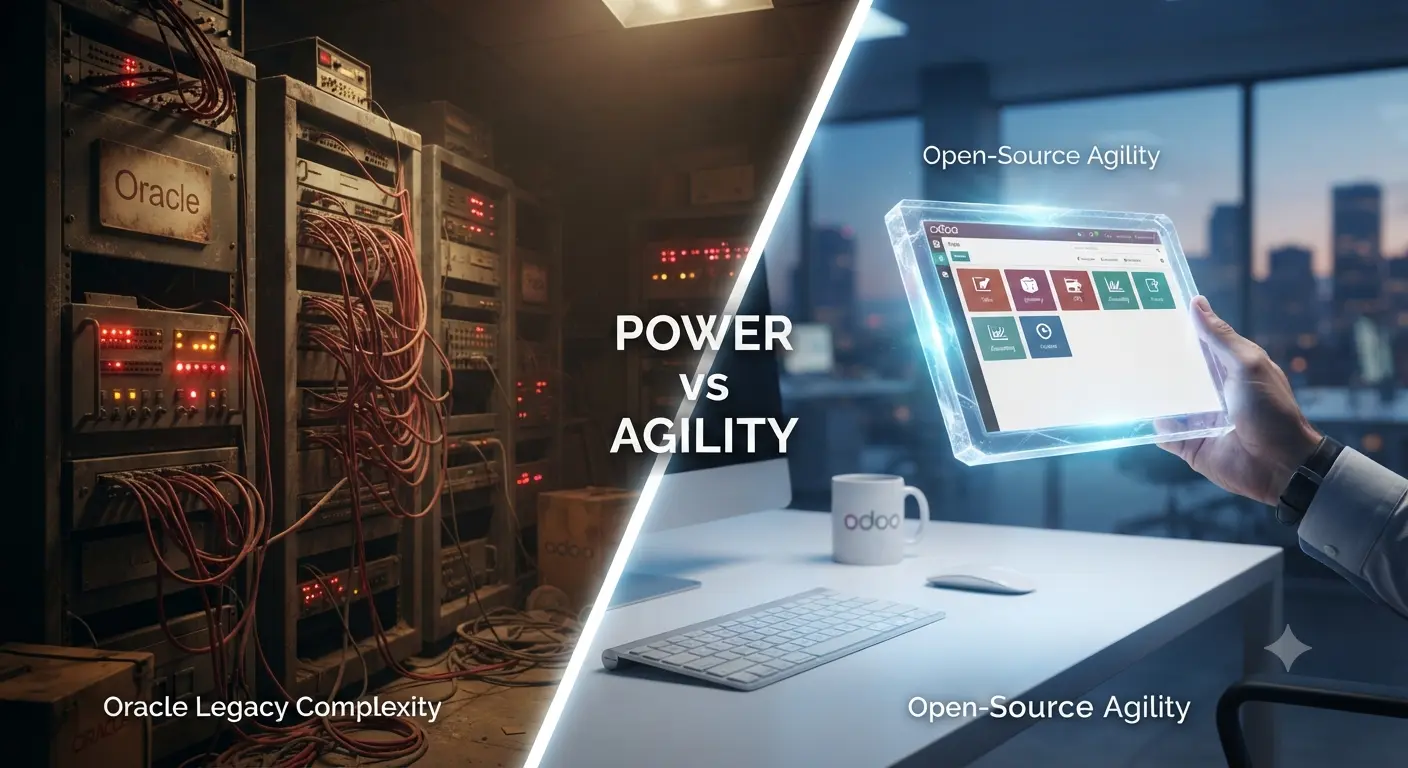
Introduction: The ERP Crossroads of 2026
Selecting an Enterprise Resource Planning (ERP) system in 2026 is no longer just about back-office management; it’s about digital agility. For decades, Oracle has represented the “safe,” heavyweight choice for the Fortune 500. However, Odoo’s modular, open-source approach has evolved into a formidable challenger that promises faster ROI and lower complexity.
Should you invest in the battle-tested infrastructure of Oracle, or pivot to the flexible ecosystem of Odoo? This guide breaks down the data you need to make an informed decision for your 2026 roadmap.
1. Philosophical Differences: Rigid Structure vs. Modular Freedom
Oracle (ERP Cloud / NetSuite): Oracle is built on “Best Practices.” It provides a rigid, highly structured environment designed for global consistency and compliance. It is ideal for companies that want their business to fit into a proven, high-security framework.
Odoo: Odoo is built on “Flexibility.” Its modular architecture allows you to install only what you need (CRM, Inventory, Accounting) and expand as you grow. For companies with unique workflows that don’t fit into standard ERP boxes, Odoo offers a significant advantage.
2. The Pricing War: Enterprise Licensing vs. Consumption
-
Oracle Costs: Typically involves high upfront costs, long-term contracts, and specialized licensing fees for every additional module or “user tier.” It is an investment often measured in hundreds of thousands, if not millions, of dollars.
-
Odoo Costs: Odoo Enterprise is famously transparent, with a per-user/month model that often costs 1/10th of an Oracle implementation.
-
TCO Analysis: Over a 5-year period, Odoo users typically save up to 70% on maintenance and licensing compared to Oracle users, primarily because Odoo doesn’t penalize you for system growth.
3. Implementation and Speed to Value
-
Oracle Implementation: Rollouts are often complex and can take 12 to 24 months. The rigidity of the system means that any misalignment with your current processes requires extensive (and expensive) consulting.
-
Odoo Implementation: Thanks to its Python-based framework and “Quickstart” methodologies, Odoo can be live in 3 to 6 months. This speed allows businesses to see a Return on Investment (ROI) much faster than with legacy systems.
4. Customization and the Developer Ecosystem
-
Oracle Customization: Requires specialized knowledge (like ABAP or proprietary Oracle tools). Developers in this niche are rare and expensive.
-
Odoo Customization: Built on Python, one of the most popular programming languages in the world. With Odoo Studio, even non-technical staff can make basic changes to fields and reports, empowering your internal team to maintain the system.
5. Feature Comparison Table
6. Verdict: Which One Wins in 2026? (H2)
Choose Oracle if:
-
You are a massive multinational corporation with thousands of users.
-
You require extreme, military-grade security and financial audit trails.
-
Budget is less of a concern than “brand prestige” and legacy stability.
Choose Odoo if:
-
You are a high-growth mid-market company or a scaling enterprise.
-
You value a modern, web-app feel that your employees will actually enjoy using.
-
You need to customize your ERP to fit your specific business model without breaking the bank.
Conclusion
While Oracle remains a dominant force for the world’s largest organizations, Odoo is the winner for businesses seeking agility and ROI in 2026. The gap in capability has closed, but the gap in price remains massive.