By: Dudung Arief Rahmanto (Senior SEO Specialist)
In 2026, the question is no longer “which AI tool should I use?” but “which system actually scales my revenue?”. After managing thousands of ERP-related articles and programmatic SEO projects, I’ve learned one hard truth: most AI tools are just noise.
If you are still manually researching keywords or writing content from scratch, you are effectively paying a “laziness tax” to your competitors. This guide isn’t just a list—it’s the exact workflow I use at DMS Global to automate content production and maintain topical authority without burning out.
The 2026 “Co-Creation” Model: How We Work
True E-E-A-T isn’t just about what you write; it’s about the perspective you bring. AI handles the framework and data processing, but you are the conductor.
My workflow follows a three-step cycle: Monitor, Audit, Create. We use AI to detect volatility, audit content gaps in real-time, and deploy content that answers user intent better than any static page.
The 10 Essential Tools for Your 2026 Stack
I have filtered these based on three criteria: efficiency, integration capability, and ROI.
| Tool | Recommended Tool | Why It’s a Must-Have |
| Search Intelligence | Perplexity AI | Best for real-time data and finding verifiable sources for citations. |
| SEO Workflow | Surfer SEO | The gold standard for monitoring AI visibility and optimizing content structure. |
| Content Creation | Claude 3.5/4 | Unmatched nuance and “human-like” tone compared to standard models. |
| Competitor Audit | SE Ranking | Predictive keyword suggestions and automated traffic forecasting. |
| Automation | Make.com | Connects your SEO data to your content pipelines without manual input. |
| Visuals | Ideogram 3.0 | Professional, brand-aligned imagery that AI systems recognize easily. |
| Technical SEO | Cursor | AI-driven coding to fix schema and site architecture in minutes. |
| Brand Presence | Profound | Measures “Share of Voice” across AI search and conversational snippets. |
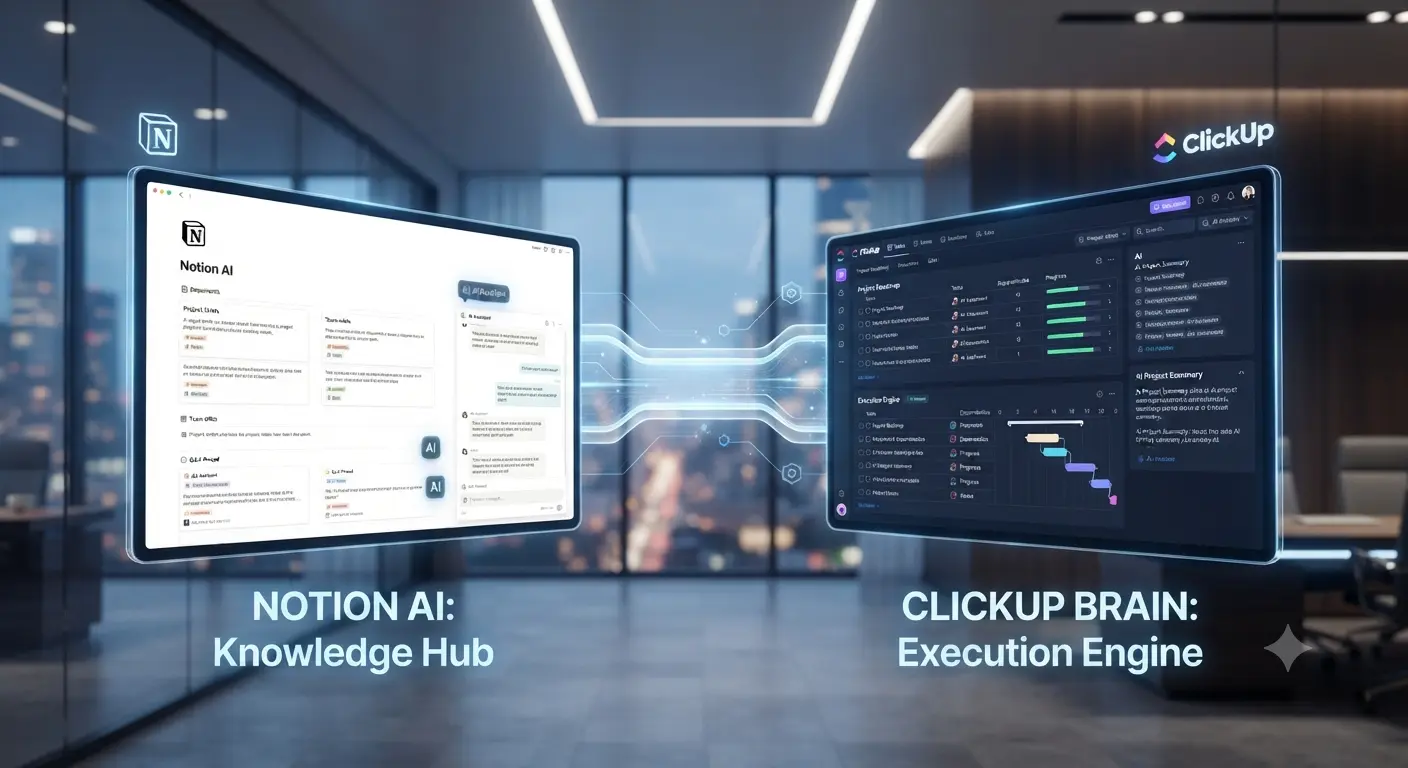
| Knowledge Mgmt | Notion AI | Centralizes your strategy, prompts, and content schedules. |
| Data Analytics | Semrush AI | Essential for competitor benchmarking and keyword clustering. |
Building Your “Defensible” Authority
Why does this stack work for DMS Global? Because it integrates AI agents into the strategy.
The Hidden Costs of Not Using AI in 2026
Many SEOs are still hesitant to adopt a full AI stack, fearing it will “devalue” their work. However, in 2026, the cost of manual labor is a competitive disadvantage. Consider these three areas where you are losing money:
- Research Latency: Manual keyword research takes hours. AI tools can crawl SERPs and analyze intent in seconds.
- Content Stagnation: Search engines now prioritize “freshness.” AI helps you update and refresh your content clusters daily, not monthly.
- Technical Debt: Fixing site architecture issues used to require a developer. With AI-assisted coding tools, you can resolve technical SEO errors in minutes.
My Proven AI Workflow: From Zero to Authority
People often ask me how I manage to produce high-quality ERP comparisons while maintaining an SEO blog. The secret is the “DMS Global Workflow”:
- Data Extraction: Use Perplexity to gather raw data on competitors.
- Contextual Writing: Feed that data into Claude 3.5. Tell it: “Write like an expert who has 10 years of experience in ERP implementation.”
- Quality Assurance: Manually inject your own “lived experience.” Add specific anecdotes from your projects in Jakarta or global implementations. This is what Google’s E-E-A-T loves.
- Distribution: Use AI to repurpose the article into LinkedIn updates, newsletter snippets, and short-form video scripts.
The Future: AI Agents and Beyond (2027-2030)
Looking ahead, we are moving from “tools” to “autonomous agents.” Imagine an agent that proactively detects your site’s traffic drop, analyzes the SERP, drafts a fix, and requests re-indexing while you sleep. This isn’t science fiction; it is the trajectory of the AI tools we are using today. By mastering these 10 tools now, you are future-proofing your career.
Final Thought: You are the Pilot
AI is not here to replace you; it is here to replace the “manual you.” By adopting these tools, you are buying back your time. Invest that time into high-level strategy, client relations, and building your brand. That is how you dominate the search landscape in 2026 and beyond.
-
Optimize for Micro-Interfaces: Google’s Search Generative Experience (SGE) now pulls content into summary boxes. By using hierarchical headings and concise, data-backed summaries, we make it easy for AI to cite our work as the definitive source.
-
Multimodal Optimization: We don’t just write text. We label images with contextual alt-text and provide chaptered transcripts for video content.
-
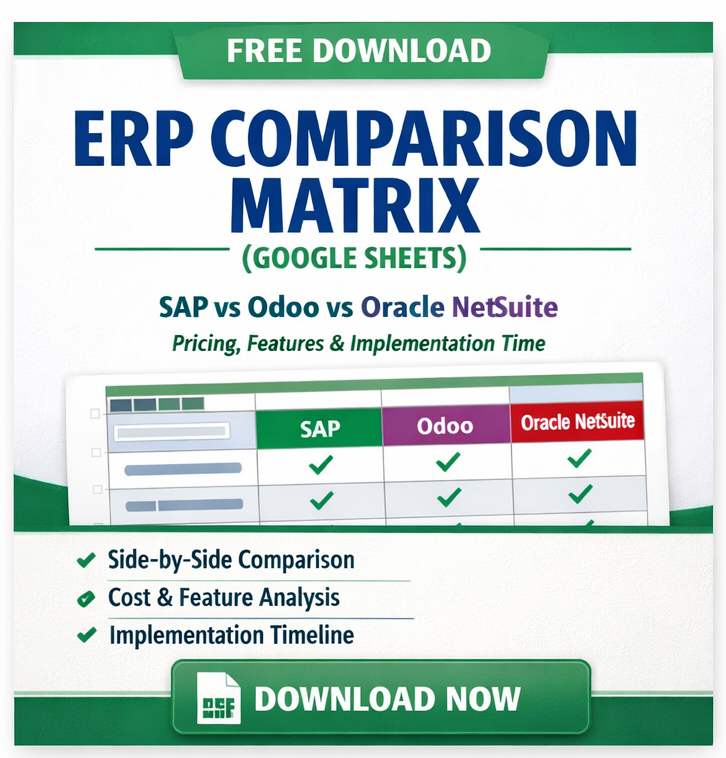
The “Human Injector”: Every piece of content is reviewed for “lived experience.” If a tool suggests a fact, I cross-reference it with my own project data (e.g., our ERP comparison matrix) to ensure accuracy.
The Bottom Line: SEO as a System
Stop treating SEO as a series of manual tasks. Treat it as a scalable machine. The brands winning in 2026 are not the ones with the largest budgets, but the ones with the smartest systems.
By automating the “boring stuff” (keyword research, technical audits, reporting) with the tools above, you free yourself to do what AI cannot: build real relationships and provide unique, expert-led value.
Are you ready to automate your authority? Share your thoughts on our latest ERP comparison matrix below!