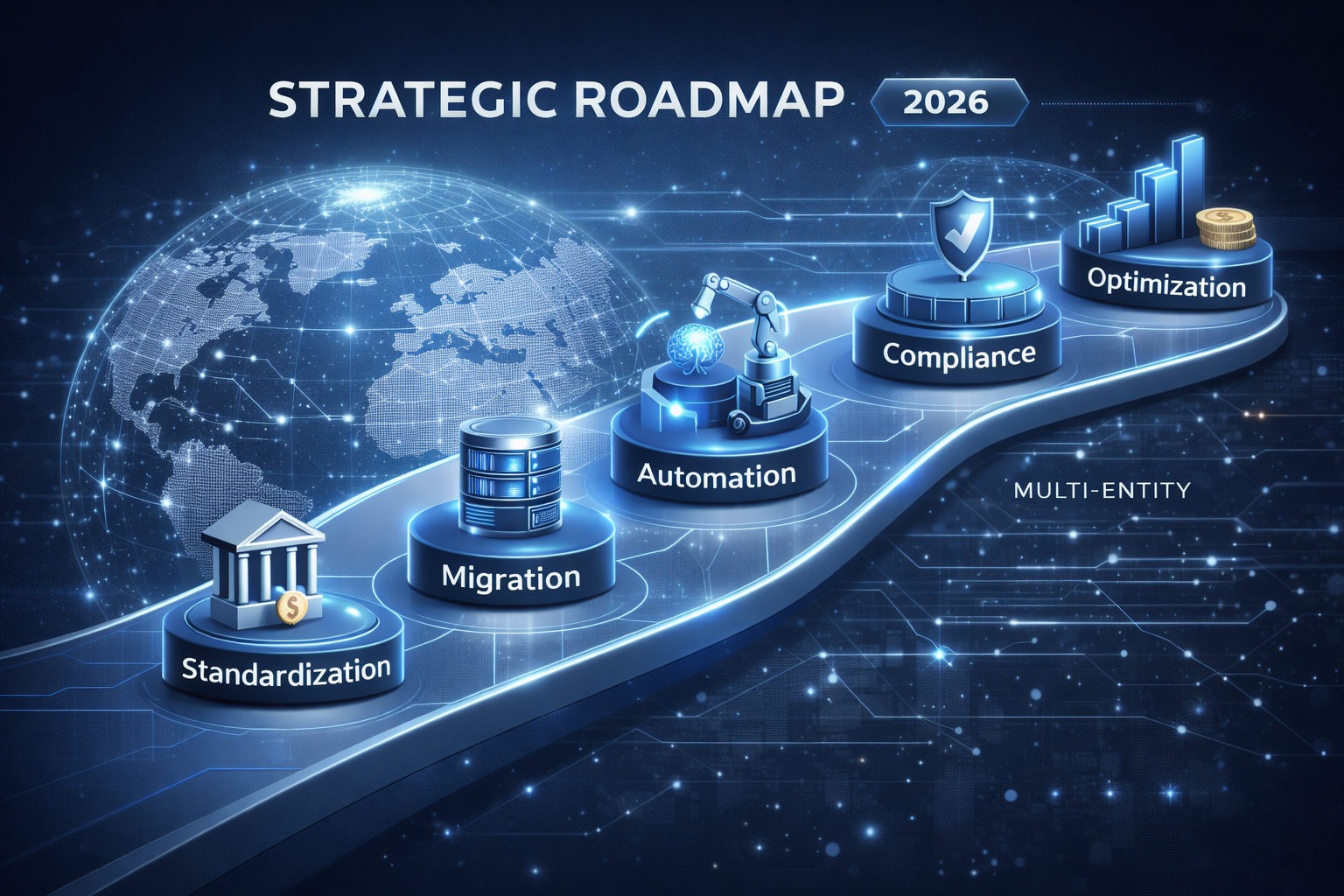
Understanding Oracle NetSuite OneWorld Pricing is a critical step for global enterprises looking to streamline their multi-entity financial management in 2026.
Oracle NetSuite OneWorld Pricing: 2026 Comprehensive Guide for Global Enterprises
In the competitive landscape of 2026, global enterprises require ERP solutions that offer both visibility and agility. Oracle NetSuite OneWorld stands as the industry leader for multi-entity management, but understanding the pricing structure is crucial for accurate financial planning and ROI calculation.
Understanding the NetSuite OneWorld Value Proposition
NetSuite OneWorld provides a unified, real-time platform that handles multiple currencies, taxation rules, and reporting requirements across various geographies. Unlike standard ERPs, OneWorld eliminates the need for manual consolidation, reducing the risk of errors and providing a single source of truth for global financial performance.
Breakdown of Licensing Models and Implementation Costs
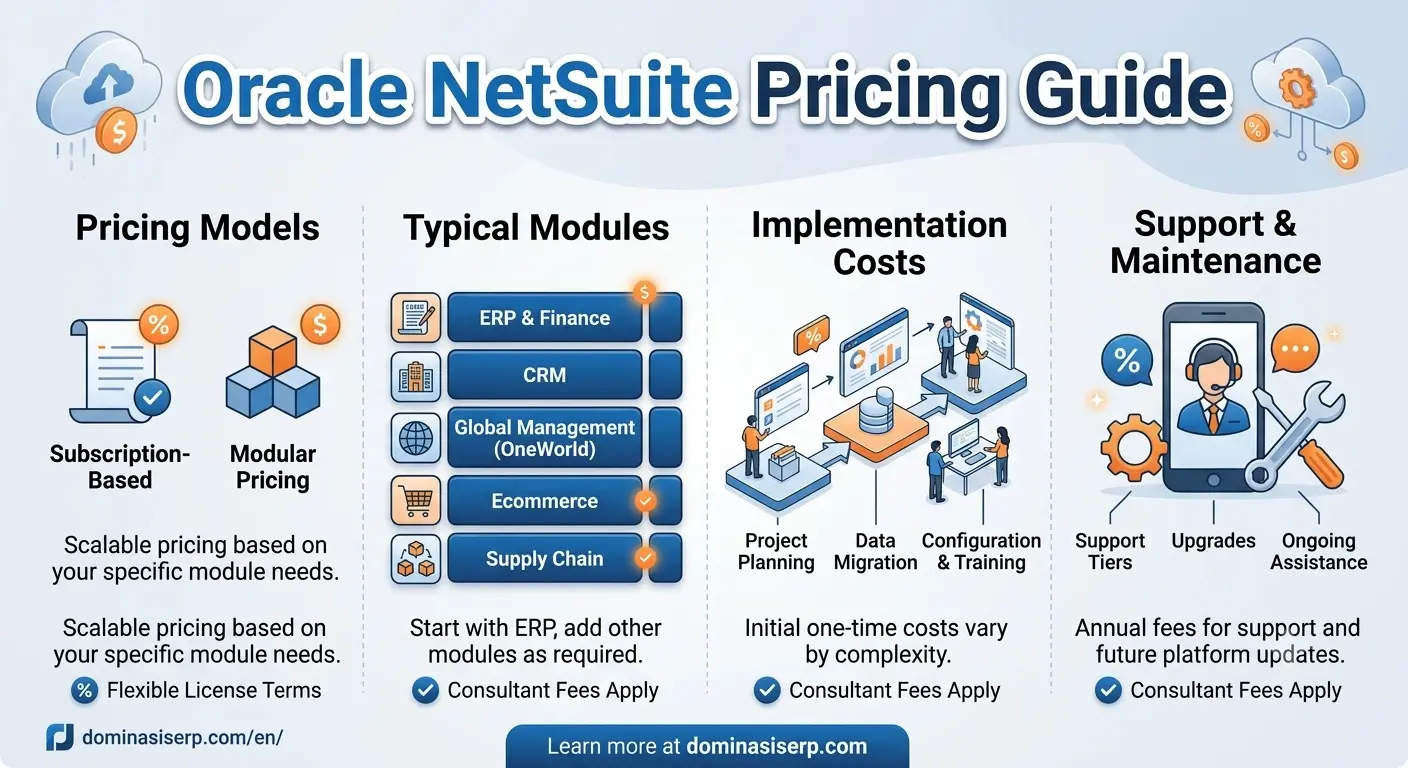
The cost of NetSuite OneWorld is generally structured around three primary components:
-
Base Platform: The core foundation fee for the OneWorld architecture.
-
User Licenses: Costs based on the number of roles and concurrent users required.
-
Add-on Modules: Specific functionality such as Advanced Inventory, Revenue Management, or specialized industry bundles.
Implementation costs vary significantly based on company size, complexity of global operations, and the number of subsidiaries being migrated to the system.
Key Factors Influencing Your Total Cost of Ownership (TCO)
To accurately forecast your TCO, consider the following internal and external variables:
| Factor | Impact on TCO |
| Global Subsidiaries | Higher number of entities requires more localized configuration. |
| Tax Compliance | Multi-jurisdictional tax rules necessitate complex automated compliance modules. |
| Data Migration | Complexity of legacy data cleanup impacts implementation hours. |
Comparative Analysis: OneWorld vs. Standard NetSuite for Subsidiaries
While standard NetSuite is sufficient for single-entity domestic companies, it lacks the multi-book accounting and intercompany elimination features inherent in OneWorld. For organizations with international operations, OneWorld is not merely an upgrade; it is a fundamental requirement for maintaining audit-ready financial statements.
Strategic ROI: Why Scalability Justifies the Investment
The ROI of NetSuite OneWorld is realized through operational efficiency and accelerated financial closing cycles. By automating global consolidations, finance teams can shift their focus from manual data entry to strategic financial analysis, significantly improving the firm’s agility in volatile markets.
Addressing Common Budgeting Concerns for Multi-Entity Management
-
Can I scale my license count later? Yes, the modular nature of NetSuite allows for seamless addition of users and modules as your global footprint expands.
-
Is implementation a one-time cost? Implementation is a one-time setup fee, while licensing is a recurring annual subscription.
-
How does OneWorld handle currency fluctuations? The system provides automated real-time currency conversion and revaluation, ensuring accurate reporting regardless of market volatility.
Deep Dive: Operational Efficiency Through OneWorld Modules
Beyond the core platform, NetSuite OneWorld offers specialized modules that drive significant operational efficiency. For global CFOs, the ability to automate complex revenue recognition—especially when dealing with multi-currency subscriptions—is a game changer. The Advanced Revenue Management module, for instance, ensures that you comply with international accounting standards like IFRS and ASC 606 effortlessly.
When calculating the budget, it is not just about the license cost; it is about the “cost of inaction.” Managing these processes on disparate, non-integrated systems leads to reconciliation delays, manual data entry errors, and a lack of audit transparency. By centralizing these in OneWorld, organizations typically see a 30% to 50% reduction in financial closing times.
Customization and Integration Capabilities
No two global enterprises are alike. Oracle NetSuite OneWorld is built to be extensible. Its SuiteCloud platform allows for deep customizations, enabling you to tailor the system to your unique business processes without breaking the core upgrade path. Whether you need to integrate with localized payment gateways in the UAE, or connect to a specialized CRM, the SuiteTalk API ensures your data flows seamlessly across your entire tech stack.
Navigating the Implementation Phase: Best Practices
To ensure your project stays within budget and timeline, consider these strategic steps:
-
Phased Rollout: Rather than a global “big bang” implementation, roll out OneWorld by region or subsidiary type. This minimizes disruption and allows for faster validation of local compliance rules.
-
Data Cleanliness: The quality of your output depends on the quality of your input. Before migrating, audit your legacy data. Removing duplicates and standardizing entity structures will save hundreds of implementation hours.
-
Change Management: The most significant bottleneck is rarely the software; it is the team’s adoption. Invest in comprehensive training programs tailored to regional roles to ensure the system is utilized to its full potential.
Future-Proofing with AI and Automation
In 2026, automation is no longer a luxury—it is a necessity. Oracle NetSuite has integrated advanced AI features that provide predictive insights into cash flow and supply chain requirements. For a company operating across multiple time zones, having an AI-driven dashboard that highlights potential risks—like a pending tax deadline in a specific subsidiary—is invaluable.
Conclusion: Investing in Scalable Infrastructure
Ultimately, Oracle NetSuite OneWorld pricing should be viewed as an investment in infrastructure. As your organization scales, the cost of maintaining siloed financial systems increases exponentially. OneWorld provides the foundation that allows you to expand into new markets with confidence, knowing that your financial backbone is capable of handling the complexity of a global, multi-currency enterprise.