SAP RISE Program Pricing
Navigating the financial landscape of enterprise resource planning can be a daunting challenge for modern organizations. When moving legacy systems to the cloud, understanding the true financial commitment required is critical for maintaining healthy profit margins. As an enterprise SEO strategist and digital transformation consultant who has guided numerous large-scale migrations, I have analyzed how organizations evaluate infrastructure investments. This comprehensive guide breaks down the financial components of the SAP RISE program, helping decision-makers forecast costs accurately and maximize return on investment.
Understanding the Architecture of SAP RISE Pricing
Unlike traditional software licensing where companies pay upfront for perpetual licenses and maintain local servers, the RISE with SAP model operates primarily as a subscription-based, Business-as-a-Service (BaaS) offering. This bundles several components into a single contractual agreement, which typically includes cloud infrastructure, software licenses, technical managed services, and business analytics tools.
Because every enterprise has a unique digital footprint, there is no one-size-fits-all price tag. Instead, pricing is calculated using a modular structure based on specific operational metrics. Understanding these underlying cost drivers is essential for preventing budget overruns during implementation.
Core Cost Components in the RISE Framework
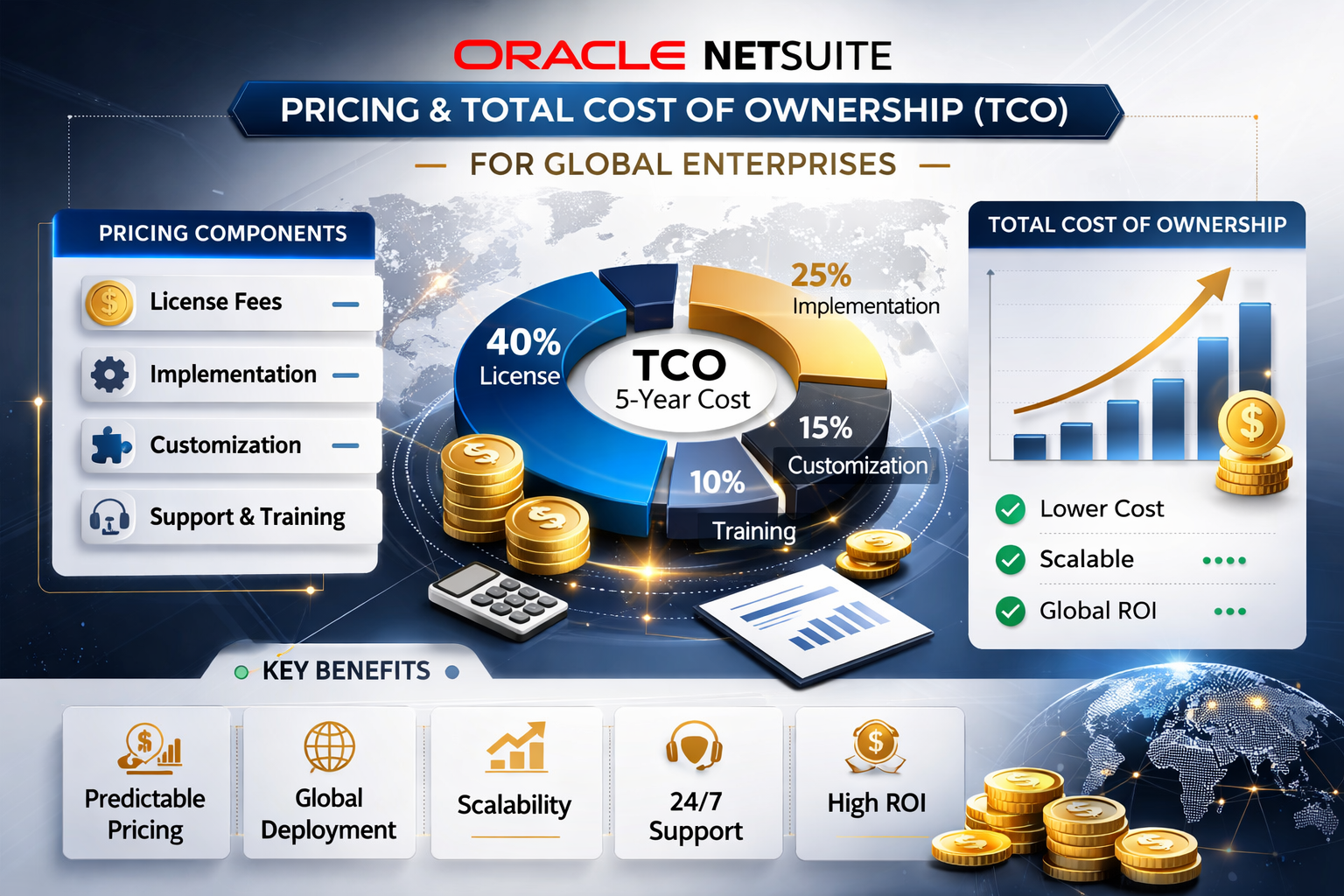
To build an accurate financial forecast, organizations must dissect the individual elements that contribute to the total cost of ownership (TCO). The primary expense categories include:
1. Cloud Infrastructure and Hosting Fees
The choice of hyperscaler—whether AWS, Microsoft Azure, Google Cloud Platform, or SAP’s private cloud—directly influences your baseline subscription cost. Compute power, memory allocation, storage tiers, and disaster recovery environments dictate the monthly or annual recurring expenditure. Enterprises with massive transaction volumes and extensive database sizes will naturally incur higher infrastructure tiers.
2. Software Subscription and User Licensing
Under the RISE framework, user licensing often shifts from traditional named-user metrics to Full Professional User equivalents or consumption-based metrics. Organizations must audit their current license utilization before transitioning. Dropping redundant or inactive user accounts during the migration phase is one of the most effective ways to optimize initial contract pricing.
3. Implementation and Migration Services
While SAP provides the foundational framework and tooling, third-party system integrators (SIs) or specialized consulting partners execute the actual data migration, custom code adaptation, and business process re-engineering. Implementation services often account for a significant portion of the Year 1 and Year 2 budgets. Partner fees vary widely based on geographical location, technical complexity, and the depth of customization required in your legacy environment.
Hidden Costs and Long-Term Financial Planning
Many digital transformation projects fail to hit financial targets because teams overlook secondary and ongoing operational expenses. To protect your enterprise bottom line, account for the following variables:
-
Custom Code Remediation: Legacy customizations rarely transfer seamlessly to a clean core cloud environment. Refactoring custom ABAP code or rebuilding extensions requires specialized developer hours.
-
Change Management and Training: User adoption directly impacts software ROI. Investing in comprehensive training programs ensures your workforce utilizes the new platform efficiently from day one.
-
Ongoing Support and Maintenance: Although RISE reduces internal hardware maintenance overhead, enterprises still need dedicated internal governance teams or managed service providers to handle continuous updates, patch management, and minor workflow tweaks.
Strategic Recommendations for Cost Optimization
Optimizing your SAP cloud investment requires a proactive, strategic approach. Follow these actionable steps to keep expenditure under control:
-
Adopt a “Clean Core” Strategy: Minimize heavy modifications to standard enterprise processes. Sticking close to standard out-of-the-box functionality drastically reduces both initial migration costs and future upgrade complexity.
-
Conduct Thorough License Audits: Eliminate “shelfware” by analyzing active user logs prior to entering negotiations with software vendors.
-
Leverage Phased Rollouts: Instead of a risky “big bang” migration, deploy modules in structured phases. This spreads capital expenditure over multiple financial quarters and allows internal teams to manage cash flow more predictably.
Conclusion
Transitioning to a cloud-first enterprise architecture through structured programs requires meticulous financial planning and deep technical foresight. By understanding the core infrastructure drivers, controlling implementation scope, and maintaining a clean core philosophy, organizations can harness powerful software capabilities while safeguarding their long-term operational budget. Strategic planning today ensures sustainable digital dominance tomorrow.