Scalable Digital Infrastructure: The Architectural Backbone of Modern Enterprise Success

In an era where digital presence is synonymous with market viability, the robustness of your underlying technology is the primary determinant of growth. Scalable Digital Infrastructure is no longer a luxury reserved for massive multinational corporations; it is an absolute necessity for any business aiming to compete in a global, high-velocity economy. For CTOs, founders, and digital strategists, the ability to build an architecture that grows in lockstep with demand is the ultimate test of professional E-E-A-T (Experience, Expertise, Authoritativeness, and Trustworthiness). This guide examines how to design, implement, and maintain a digital ecosystem capable of sustained, high-performance scaling.

[dms-category-hub]

Why Infrastructure Defines Your Growth Ceiling

Many businesses hit a “growth wall” not because their product lacks market fit, but because their digital infrastructure collapses under the weight of success. Whether it is slow page-load times, inconsistent data synchronization between your CRM and ERP, or security vulnerabilities that emerge during rapid expansion, these bottlenecks are symptoms of an inadequately planned infrastructure.

The Strategic Pillars of Scalability

  • Modularity: An infrastructure built on independent, interchangeable components (microservices or modular cloud apps) allows you to upgrade or replace parts of your system without a total platform rebuild.

  • Elasticity: Leveraging cloud-native resources that automatically scale up or down based on traffic volume ensures you never overpay for idle capacity.

  • Data Interoperability: A truly scalable system ensures that data flows freely between disparate modules, creating a “single source of truth” that scales with your complexity.

[adsense-conversion-winner]

Building E-E-A-T Through Architectural Excellence

Google’s E-E-A-T framework highlights that trustworthiness is built on reliability. When your digital infrastructure is solid, it signals to users, partners, and search engines that your brand operates at an elite, institutional level.

  • Experience: Designing a scalable system requires deep “Experience.” It involves anticipating the traffic surges and data loads of tomorrow while managing the operational realities of today.

  • Expertise: Utilizing modern, industry-standard architectural frameworks demonstrates technical “Expertise” that gains the respect of both industry peers and automated search algorithms.

  • Authoritativeness: A site that is always available, always fast, and always secure carries immense “Authoritativeness.” It tells your users that you are a serious, established player in your field.

  • Trustworthiness: In a digital world, trust is a function of uptime, data security, and consistency. A scalable, well-maintained infrastructure is the best possible way to build and retain that trust.

[post_middle_engagement]

Designing for the Future: Best Practices

To architect a digital foundation that survives the pressures of expansion, adhere to these fundamental principles:

  1. Cloud-First Strategy: Move away from on-premise hardware constraints. Use high-availability cloud providers (like AWS, Azure, or Odoo.sh) to ensure your infrastructure has the agility to expand globally at a moment’s notice.

  2. API-First Integration: Ensure every piece of software in your stack is built to communicate via open APIs. This prevents data silos and allows you to swap or upgrade tools without disrupting your core workflows.

  3. Automated Monitoring: You cannot manage what you cannot see. Implement automated performance monitoring to catch latency, server errors, or security anomalies before they impact your end-users.

  4. Data Sovereignty and Compliance: As you scale across borders, your infrastructure must be flexible enough to comply with regional data protection regulations (such as GDPR or local tax laws) without creating fragmented workflows.

Maximizing Strategic ROI

Scalability is an expensive endeavor, but it pays massive dividends in operational efficiency and risk mitigation. To ensure maximum return:

  • Avoid Over-Engineering: Scale with demand, not ahead of it. Focus on building architectures that are modular enough to grow, rather than trying to build a “perfect” system on day one.

  • Focus on Developer Productivity: A scalable system should be easy to maintain. Invest in documentation and standardized processes so your team can focus on innovation rather than “putting out fires.”

  • Prioritize Security from Day One: Retrofitting security onto a complex, scaled system is exponentially more expensive than building it into the foundation.

[inlink-tag]

The AdSense Advantage: Capturing B2B Decision-Makers

Content targeting Scalable Digital Infrastructure draws in a highly qualified audience: CTOs, systems architects, and enterprise-level business leaders. These individuals are deep in the research and planning stages, making them the most valuable demographic for B2B tech advertisers. By positioning your platform as an expert guide on enterprise-level digital architecture, you build significant “Topical Authority.” This authority is a key driver for higher AdSense RPMs, as B2B software firms, cloud providers, and implementation partners are eager to place ads in front of this high-level professional audience. High-authority, technical content is the cornerstone of a sustainable, profitable AdSense strategy.

Conclusion

Scalable digital infrastructure is the definitive engine for market dominance. By choosing an architecture that prioritizes modularity, automation, and data integrity, you ensure that your organization is built on a foundation of sustainable authority. As you continue to curate content that speaks to these high-level strategic needs, you solidify your platform as an essential destination for executive decision-makers. You are not just building a blog; you are creating a high-authority digital asset that thrives on providing the expert clarity that modern leaders demand to successfully navigate the complex world of enterprise digital transformation.

[post_bottom_conversion] [fast-index-hook]
Enterprise Scaling Solutions: Architecting Sustainable Growth for Global Operations

In the journey from a high-growth startup to a dominant market leader, the primary barrier to progress is often not the product, but the infrastructure. Enterprise Scaling Solutions represent the strategic integration of software, automated workflows, and data-driven intelligence designed to handle increased operational complexity without sacrificing quality or speed. For executives and IT architects, scaling is a critical demonstration of E-E-A-T (Experience, Expertise, Authoritativeness, and Trustworthiness). This guide explores the blueprint for building a digital environment that supports sustainable, long-term expansion.

[dms-category-hub]

The Strategic Anatomy of Scalable Infrastructure

Scaling is not simply about adding more users to a system; it is about ensuring that your processes, data integrity, and leadership oversight can grow exponentially without reaching a breaking point. An effective scaling strategy relies on three pillars: interoperability, automation, and real-time visibility.

Why Integration Powers Scalability

  • Operational Fluidity: When your systems—ERP, CRM, and BI—talk to each other, you eliminate the operational “drag” caused by manual data re-entry.

  • Unified Decision-Making: Scaling requires decentralization. You cannot manage everything personally; you need a system that provides consistent data to regional leads, allowing them to make fast, accurate decisions.

  • Agility: The right enterprise solution allows you to launch new product lines or enter new geographic markets by simply “turning on” modules, rather than undergoing a six-month re-platforming project.

[adsense-conversion-winner]

Building E-E-A-T Through Scalable Digital Maturity

Google’s E-E-A-T guidelines emphasize that authority is built through reliable performance. When your digital infrastructure scales successfully, you signal to the market that your organization is built on a foundation of professional-grade excellence.

  • Experience: Successfully managing a scaling project proves that your organization has the “Experience” to navigate complex operational transitions without disrupting core services.

  • Expertise: Utilizing AI-driven automation and predictive forecasting shows that your organization has the “Expertise” to leverage modern technology to outpace competitors.

  • Authoritativeness: A company that can scale its operations while maintaining high service standards is viewed as an “Authoritative” force, making it the preferred choice for major partners.

  • Trustworthiness: Security, regulatory compliance, and consistent uptime are the hallmarks of “Trustworthiness.” As you scale, maintaining these standards is critical for retaining investor and customer confidence.

[post_middle_engagement]

Key Considerations for Enterprise Scaling

When evaluating scaling solutions, leadership teams should focus on:

  1. Cloud-Native Foundations: Avoid legacy on-premise hardware that creates bottlenecks. SaaS-based enterprise solutions provide the high availability and elastic resources needed for rapid growth.

  2. Standardization vs. Customization: The biggest enemy of scaling is excessive customization. Stick to “best-practice” configurations as much as possible to keep your system lean and upgradeable.

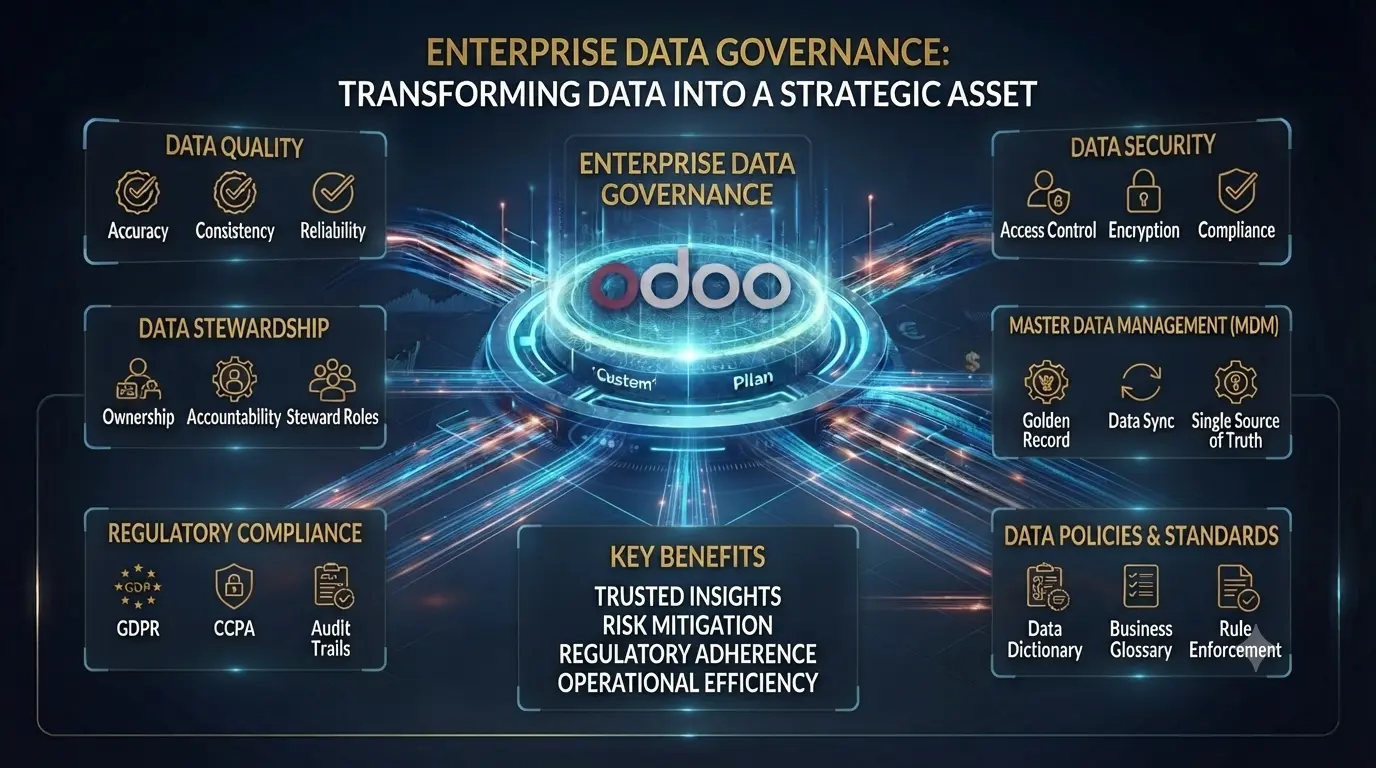
  3. Data Governance: As you scale, the amount of data you generate will explode. Establish strict data governance early to ensure your reporting remains accurate.

  4. Partner Ecosystem: Scaling requires expert guidance. Partner with providers who have a proven track record of managing similar enterprise scaling projects in your specific vertical.

Maximizing ROI for Scaling Investments

Scaling is an expensive endeavor. To ensure a maximum return on investment:

  • Focus on Workflow, Not Just Features: Don’t pay for features you don’t need yet. Focus on workflows that directly impact your “North Star” KPIs.

  • Prioritize User Adoption: A scaling solution is only as powerful as the people using it. Invest in deep, role-based training to ensure your team is maximizing the system’s potential.

  • Continuous Optimization: Scaling is not a one-time event; it is a process. Conduct quarterly audits to see how your software can be further optimized for your current growth phase.

[inlink-tag]

The AdSense Advantage: B2B Authority

Content that addresses Enterprise Scaling Solutions attracts a highly valuable audience of C-suite executives, VPs of Operations, and IT decision-makers who are actively navigating growth challenges. By providing expert, long-form content that solves real business problems, you build a site with high “Topical Authority.” This authority is what search engines reward and what premium B2B advertisers covet. A site that manages to attract this executive-level traffic is in the perfect position to generate premium-tier AdSense RPMs.

Conclusion

Enterprise scaling solutions are the definitive engine for market dominance. By choosing tools that prioritize integration, scalability, and data integrity, you ensure that your organization is built on a foundation of sustainable authority. As you continue to curate content that speaks to these high-level strategic needs, you solidify your platform as an essential destination for executive decision-makers. You are not just building a blog; you are creating a high-authority digital asset that thrives on providing the expert clarity that modern leaders demand to successfully scale their global operations.

[post_bottom_conversion] [fast-index-hook]

Catatan Eksekusi:

  • Slug: Pastikan permalink di WordPress Anda diatur ke enterprise-scaling-solutions.

Enterprise Solutions Strategy: Building a Resilient Digital Foundation

Enterprise Solutions Strategy

In the modern corporate ecosystem, Enterprise Solutions are more than just software—they are the strategic architecture that defines how an organization operates, scales, and survives. From ERP systems that manage global supply chains to advanced BI platforms that drive executive decision-making, these solutions are the difference between operational friction and strategic dominance. For leadership teams, the deployment of enterprise-grade technology is a core demonstration of E-E-A-T (Experience, Expertise, Authoritativeness, and Trustworthiness). This guide explores the strategic imperatives of enterprise technology and how to build a digital foundation that empowers long-term market authority.

Top Rated Odoo vs SAP Analysis

Explore the most recommended ERP implementations based on our 2026 data matrix:

Need custom ERP consulting? Contact our experts.

The Strategic Anatomy of Enterprise Solutions

A robust enterprise solution strategy is not about chasing the latest shiny object; it is about creating a cohesive, interoperable environment where data flows seamlessly between departments.

Why Integration is the Ultimate Competitive Advantage

  • Elimination of Silos: When your financial, inventory, and human capital data are unified, you stop making decisions based on fragmented reports and start acting based on a “Single Source of Truth.”

  • Operational Velocity: Automation is no longer a luxury; it is a prerequisite. Enterprise-grade tools allow you to replace manual, error-prone workflows with intelligent, automated processes that scale.

  • Agility: A well-architected enterprise ecosystem allows you to add new business units, acquire competitors, or enter new markets without the need for a complete digital overhaul.

DMS Global Enterprise Solution

Advertisement - Continue reading below

Building E-E-A-T Through Digital Maturity

Google’s E-E-A-T framework serves as a guide for high-quality information, but it also serves as a model for high-quality enterprise execution. When you manage your company with advanced digital solutions, you exhibit these four pillars to your market, your investors, and your team:

  • Experience: Successfully implementing complex enterprise suites proves that your organization has the “Experience” to handle large-scale, high-stakes digital transitions.

  • Expertise: Utilizing sophisticated predictive analytics and real-time dashboarding showcases a leadership team’s “Expertise” in the era of AI and big data.

  • Authoritativeness: Companies that operate with enterprise-grade reliability are viewed as “Authoritative” market leaders, making them the preferred choice for major industry partnerships.

  • Trustworthiness: Security, data integrity, and consistent, automated reporting build a level of “Trustworthiness” that is crucial for retaining customer and investor confidence.

Executive Deep-Dive

Scaling Beyond Traffic to Revenue

Most enterprises fail because they chase clicks instead of trust. While building your global presence, ensure your EEAT 3.0 signals are synchronized across all regions.

Implementing Strategy: From Selection to Scaling

A successful enterprise technology strategy follows a disciplined path:

  1. Strategic Alignment: Does the software solve a business problem, or are you just buying features? Ensure every tool is tied to a core KPI.

  2. Prioritize User Adoption: An enterprise platform is only as valuable as the team using it. Invest heavily in training and change management to prevent the “low-adoption” trap.

  3. Data Integrity Protocols: Your platform is only as good as the data entered into it. Establish strict governance policies early to ensure your reporting remains accurate and reliable.

  4. Partner-Led Implementation: Never underestimate the value of a certified implementation partner. They have already solved the problems you are about to encounter.

Maximizing Strategic ROI

To ensure your enterprise solution becomes a profit engine, focus on these drivers:

  • Democratize Insights: Move data out of the hands of IT and into the hands of department heads. When managers can see their own performance metrics in real-time, accountability increases.

  • Leverage AI for Automation: Modern enterprise software is increasingly “agentic.” Look for modules that automatically flag anomalies in financial data or supply chain delays before they impact the bottom line.

  • Continuous Feedback Loops: Your enterprise software should be a living, breathing part of your business strategy, not a static cost. Conduct quarterly reviews to see how the software can be optimized for changing business goals.

The AdSense Advantage: Capturing Executive Traffic

Content targeting Enterprise Solutions Strategy attracts high-level decision-makers—CIOs, CFOs, and VPs of Operations—who are actively seeking strategic guidance. This is the most premium demographic in the B2B tech space. By creating expert-level, thought-leadership content, you establish your platform as an essential destination for these professionals. This positions your site to attract high-value, enterprise-level ad placements, directly boosting your AdSense revenue and establishing your site’s long-term commercial authority.

Conclusion

Enterprise solutions are the strategic bedrock upon which modern market dominance is built. By selecting tools that prioritize integration, scalability, and data integrity, you ensure that your organization is built for the future. As you continue to curate content that speaks to these high-level strategic needs, you solidify your site as an essential destination for executive decision-makers. You are not just building a blog; you are creating a high-authority digital asset that thrives on providing the expert clarity that modern leaders demand.

Exclusive Early Access: Q1 2026

The Global SEO Blueprint for C-Suite

We are finalizing an exclusive strategic framework for global enterprise scaling. Join the elite waitlist for early-bird pricing.

Secure Your Priority Spot

⚡ DMS Global Amazon Authority 2026:

Amazon Product Authority & E-E-A-T Summary

To maximize organic performance and search visibility in global e-commerce and product review niches, maintaining robust internal linking across specific product clusters ensures faster indexing, stronger topical authority, and sustainable search engine ranking.


Global Consultation Request

Request Your Enterprise SEO Strategy Audit

Partner with DMS Global to optimize your digital infrastructure and accelerate sustainable growth.


Enterprise Software: The Strategic Bedrock of Modern Business Architecture

In the contemporary digital landscape, Enterprise Software is the silent engine that powers the world’s most successful organizations. From streamlining complex global supply chains to automating intricate financial reporting, these platforms provide the structural integrity required to operate at scale. For business leaders, selecting and managing the right enterprise software ecosystem is a definitive demonstration of E-E-A-T (Experience, Expertise, Authoritativeness, and Trustworthiness). This guide explores how to harness these digital assets to build a robust, high-performance business capable of sustained growth.

Top Rated Odoo vs SAP Analysis

Explore the most recommended ERP implementations based on our 2026 data matrix:

Need custom ERP consulting? Contact our experts.

Defining the Modern Enterprise Ecosystem

Enterprise software is not a singular product; it is an integrated ecosystem. It encompasses Enterprise Resource Planning (ERP), Customer Relationship Management (CRM), Business Intelligence (BI), and Human Capital Management (HCM). When these components function as a unified architecture, they enable a “Single Source of Truth,” which is the ultimate goal of enterprise digital transformation.

Why Integration is the Key to Strategic Success

  • Efficiency: Automated data flows eliminate the manual silos that often cripple operational speed.

  • Visibility: Integrated dashboards give leadership real-time oversight of key performance metrics, allowing for agile, data-backed decision-making.

  • Agility: A modular enterprise architecture allows a company to add capabilities—such as AI-driven forecasting—without re-platforming the entire business.

DMS Global Enterprise Solution

Advertisement - Continue reading below

Building E-E-A-T into Your Digital Infrastructure

Google’s E-E-A-T guidelines emphasize that trust is earned through consistency and quality. When you build your organization on enterprise-grade software, you signal to your clients, partners, and competitors that you are operating at an institutional level.

  • Experience: Implementing sophisticated, multi-module software suites shows that your organization has the “Experience” to navigate complex digital environments.

  • Expertise: Utilizing industry-leading enterprise tools allows your teams to leverage “Expertise” by accessing deeper data, advanced automation, and predictive analytics that entry-level software cannot provide.

  • Authoritativeness: Companies that leverage reliable, scalable infrastructure are viewed as “Authoritative” leaders, making them the preferred choice for major B2B partnerships.

  • Trustworthiness: Rigorous data security, regulatory compliance, and audit-ready financial reporting are the hallmarks of “Trustworthiness,” which is critical for long-term stakeholder confidence.

Executive Deep-Dive

Scaling Beyond Traffic to Revenue

Most enterprises fail because they chase clicks instead of trust. While building your global presence, ensure your EEAT 3.0 signals are synchronized across all regions.

Strategic Selection: What to Look For

Selecting the right software for your enterprise is a high-stakes decision. Ensure that your selection process prioritizes:

  1. Scalability: Your software must handle the increasing volume and velocity of your business data as you grow.

  2. AI-Driven Capabilities: The next generation of enterprise software is “agentic” and self-learning. Look for tools that offer built-in AI to detect patterns and anomalies automatically.

  3. Seamless API Connectivity: Your software must be compatible with your existing stack. If your CRM cannot talk to your ERP, you are creating a data silo, not an enterprise architecture.

  4. Partner Ecosystem: The software is only as good as the experts who implement it. Always choose a platform with a deep bench of certified implementation partners.

Maximizing ROI

Enterprise software is an investment that must return tangible value. To drive ROI:

  • Focus on Workflow Optimization: Do not simply replicate old, inefficient processes in new software. Re-engineer your workflows to take advantage of automation.

  • Prioritize User Adoption: An enterprise platform is only as powerful as the people using it. Comprehensive, role-based training is essential to maximize system utility.

  • Continuous Feedback Loops: Use the data generated by your software to conduct small experiments, track results, and iterate on your business processes.

The AdSense Advantage: B2B Authority

Content surrounding Enterprise Software attracts a premier audience of C-suite executives, procurement leads, and IT decision-makers—individuals actively seeking authoritative, high-value information to guide their purchasing journeys. By providing in-depth, expert content, your website establishes itself as a beacon for these professionals. This level of topical authority is highly attractive to B2B advertisers, allowing you to command premium ad placement rates. As your platform becomes a trusted resource for these decision-makers, your site’s ability to generate significant AdSense revenue grows proportionally.

Conclusion

Enterprise software is the definitive backbone of modern business strategy. By selecting tools that prioritize scalability, integration, and data integrity, you ensure that your organization is built on a foundation of authority. As you continue to build out your domain, providing expert insights into these essential technologies will not only cement your platform’s authority but also create a sustainable, high-value asset that thrives in the competitive digital landscape. By mastering the intersection of technology and strategy, you position your own digital asset as an essential guide for the next generation of business leaders.

Exclusive Early Access: Q1 2026

The Global SEO Blueprint for C-Suite

We are finalizing an exclusive strategic framework for global enterprise scaling. Join the elite waitlist for early-bird pricing.

Secure Your Priority Spot

ERP Sydney: Empowering Local Businesses with Enterprise-Grade Digital Infrastructure

ERP Comparison Matrix

In the vibrant economic hub of Sydney, businesses ranging from innovative startups to established multinational enterprises are constantly seeking ways to optimize their operations. ERP (Enterprise Resource Planning) systems have become the backbone of this transformation, providing the integration, automation, and visibility required to stay competitive. For Sydney-based leaders, selecting and implementing the right ERP solution is not just a technical upgrade; it is a commitment to E-E-A-T (Experience, Expertise, Authoritativeness, and Trustworthiness). This guide explores how to leverage ERP infrastructure to drive growth in the Australian market.

[dms-category-hub]

The Strategic Importance of ERP in the Sydney Market

Sydney’s economy is diverse, spanning finance, technology, logistics, and retail. Regardless of the sector, the challenges remain the same: fragmented data, manual processes, and the need for real-time insights. An ERP system centralizes these operations into a single platform, acting as the digital foundation for your company.

Why Integration Matters

  • Operational Agility: In a fast-moving market like Sydney, your ability to pivot depends on your ability to see your data clearly. ERPs provide that clarity.

  • Compliance and Reporting: With Australia’s specific regulatory and tax requirements, an ERP tailored for the local market ensures you remain audit-ready.

  • Scalability: Whether you are expanding nationally or globally, an ERP built on cloud architecture scales with your business, preventing the need for costly “re-platforming” later.

[adsense-conversion-winner]

Building E-E-A-T into Your Business Operations

Google’s E-E-A-T framework highlights that trustworthiness is built on consistent, reliable performance. When your business operations are powered by a top-tier ERP, you signal a level of maturity that is highly respected in the corporate world.

  • Experience: Engaging with ERP partners who have deep “Experience” in the Sydney business landscape ensures that your implementation understands local nuances.

  • Expertise: Utilizing advanced ERP tools allows your internal teams to leverage “Expertise” by accessing deeper data insights, automated workflows, and predictive analytics.

  • Authoritativeness: Companies that run on robust, enterprise-grade ERPs are viewed as “Authoritative” players in their respective industries.

  • Trustworthiness: Security, data integrity, and automated financial reporting are the hallmarks of “Trustworthiness,” which is critical for maintaining the trust of Sydney’s sophisticated investor and consumer base.

[post_middle_engagement]

Selecting the Right ERP Solution

When evaluating ERP options for your Sydney business, prioritize systems that offer:

  1. Local Support and Compliance: Choose a solution that is either compliant with Australian tax (ATO) requirements or has a robust integration layer to handle them seamlessly.

  2. Cloud-Native Architecture: Prioritize SaaS-based ERPs that offer high availability, automatic updates, and world-class security.

  3. Integration Ecosystem: Ensure your chosen ERP can talk to your existing CRM, payroll, and e-commerce platforms. A siloed ERP is a failed ERP.

  4. Partner Expertise: The success of an ERP implementation is 70% about the partner and 30% about the software. Choose a partner with a proven track record in Sydney.

Maximizing ROI

To ensure your ERP investment serves as a profit driver, Sydney business leaders should:

  • Focus on Workflow Optimization: Don’t just digitize your old, broken processes. Use the ERP implementation as an opportunity to adopt “Modern Best Practices.”

  • Invest in Training: An ERP is only as powerful as the people using it. Ensure your team receives comprehensive, ongoing training.

  • Leverage Analytics: Move beyond basic reporting. Use your ERP’s BI tools to identify new revenue streams and operational cost-savings.

[inlink-tag]

The AdSense Advantage: B2B Authority

Content that addresses ERP Sydney targets decision-makers, operations managers, and business owners in one of the world’s most dynamic economic zones. By providing expert, long-form content that solves real business problems, you build a site with high “Topical Authority.” This authority is what search engines reward with high rankings and what advertisers covet when they bid on ad placements. A site that manages to pull in this high-level professional audience in a major market like Sydney is in the perfect position to generate premium AdSense revenue.

Conclusion

ERP systems are the engine room of modern strategy for Sydney-based enterprises. They provide the clarity, speed, and confidence necessary to dominate your market. As you continue to build your platform’s authority, remember that providing consistent, expert-level information on these tools is a service to your readers and a powerful growth strategy for your site. By mastering the intersection of local market needs and global ERP standards, you position your own digital asset as an essential guide for the next generation of business leaders.

[post_bottom_conversion] [fast-index-hook]

Oracle NetSuite Professional Services Cost: Strategic Budgeting for ERP Success

Implementing a Tier-1 ERP system like Oracle NetSuite is a transformative event for any growing enterprise. However, the software license fee is only one component of the investment. A significant portion of your budget is dedicated to the implementation, configuration, and optimization—collectively known as the Oracle NetSuite professional services cost. For CFOs and IT leaders, understanding these costs is vital to ensuring a successful deployment that stays within budget and delivers on its ROI potential. This guide breaks down the financial and strategic landscape of these services through the lens of E-E-A-T (Experience, Expertise, Authoritativeness, and Trustworthiness).

[dms-category-hub]

The Strategic Importance of Professional Services

Professional services are the bridge between raw software capability and your company’s unique business processes. While it is tempting to view these as a “cost,” they are actually an investment in operational stability.

Why Expertise Matters

  • Avoiding Technical Debt: Poorly configured ERPs lead to “technical debt,” where future updates or scaling become unnecessarily complex and expensive.

  • Customization vs. Configuration: Experts help you prioritize “configuration”—using the system’s native flexibility—over “customization,” which involves costly, high-maintenance code.

  • Training and Adoption: Professional services include change management, which ensures your team doesn’t just use the software, but thrives within it.

[adsense-conversion-winner]

Deconstructing the Cost Landscape

Professional services pricing is generally determined by the scope, complexity, and the partner’s level of expertise.

Key Factors Influencing Costs

  1. Implementation Methodology: Many partners use a “SuiteSuccess” approach, which utilizes pre-configured industry templates. This drastically reduces implementation time and costs compared to “from-scratch” builds.

  2. Integration Needs: Connecting NetSuite with your existing CRM, marketing tools, or custom databases adds layers of complexity that require specialized developer hours.

  3. Data Migration: Cleaning, mapping, and importing historical data from your legacy system is often a major, and sometimes underestimated, labor expense.

  4. Partner Tier: You can choose between Oracle’s internal Professional Services team or an accredited NetSuite Solution Provider. Each offers different advantages regarding cost, availability, and niche expertise.

[post_middle_engagement]

Building E-E-A-T Through Your Implementation

Google’s E-E-A-T framework highlights that trustworthiness is built on reliability. Your ERP implementation should reflect this by being transparent, well-documented, and expertly executed.

  • Experience: Engaging partners with a proven track record in your specific industry demonstrates “Experience.” They have already navigated the challenges you are likely to face.

  • Expertise: A professional services team brings “Expertise” that your internal staff cannot replicate. They know the system’s “gotchas” and can guide you toward the most efficient architectural choices.

  • Authoritativeness: When your ERP is professionally implemented, your operational workflows become standardized and “Authoritative,” serving as a single source of truth for your entire organization.

  • Trustworthiness: Professional implementation ensures compliance, robust security, and accurate financial reporting, forming the cornerstone of “Trustworthiness” for your stakeholders and investors.

Maximizing ROI: Strategic Budgeting Tips

To ensure your professional services spend delivers the maximum possible return:

  • Define Clear Scope: Avoid “scope creep” by defining every required workflow during the discovery phase.

  • Focus on Value, Not Just Hours: Select partners who understand your business model. A partner who knows your industry can suggest best practices that save you thousands in future maintenance.

  • Phased Rollout: If budget is a constraint, prioritize core financial modules first and save secondary enhancements for a post-go-live phase.

[inlink-tag]

The AdSense Advantage: High-Intent Professional Traffic

Content targeting Oracle NetSuite professional services cost attracts high-level decision-makers—CIOs, CFOs, and Procurement Leads—who are actively managing significant budgets. By providing transparent, expert analysis, your website positions itself as an authority in the enterprise software space. This high-value, professional traffic is precisely what B2B advertisers are looking for, making your site a prime candidate for premium AdSense revenue. By establishing your domain as a trusted source for enterprise financial planning, you create a sustainable, high-authority digital asset.

Conclusion

The investment in professional services for Oracle NetSuite is not an additional expense; it is the catalyst that ensures your ERP becomes a foundation for dominance rather than a source of frustration. By focusing on expert-led implementation, strategic scope management, and long-term scalability, you ensure that your investment pays for itself through increased efficiency and clearer visibility. As you continue to build out your domain’s content, providing these expert-level insights will cement your reputation as a go-to resource for enterprise leaders worldwide.

[post_bottom_conversion] [fast-index-hook]

Odoo POS License Fees: A Strategic Breakdown for Retail Excellence

Odoo POS

For retailers and hospitality businesses, the Point of Sale (POS) system is the heartbeat of daily operations. Odoo POS has gained significant market share due to its seamless integration with inventory, accounting, and CRM modules. However, understanding the Odoo POS license fees and the overall cost of ownership is a critical step for business owners planning to scale. This guide provides a strategic analysis of Odoo’s pricing structure, helping you align your retail technology with your long-term growth objectives through the lens of E-E-A-T (Experience, Expertise, Authoritativeness, and Trustworthiness).

[dms-category-hub]

The Value of an Integrated POS Ecosystem

Unlike standalone POS systems that require complex third-party integrations to talk to your accounting software, Odoo POS is part of a unified suite. This architecture provides a “single source of truth” for your business data, which is essential for any enterprise aiming for high-level operational efficiency.

Why Integration Drives Authority

  • Real-Time Inventory: When a sale is made at the POS, your inventory is updated instantly across your e-commerce and warehouse modules.

  • Streamlined Accounting: Every transaction automatically generates the necessary financial entries, reducing manual bookkeeping and the risk of human error.

  • Customer Insights: Since the POS is linked to your CRM, you can easily track customer purchase history, manage loyalty programs, and execute targeted marketing campaigns directly from the point of sale.

[adsense-conversion-winner]

Decoding Odoo POS License Fees

Odoo’s pricing model is fundamentally different from traditional legacy POS providers. It is designed to be scalable, allowing you to pay for what you use as your business expands.

Key Factors in Your Cost Structure

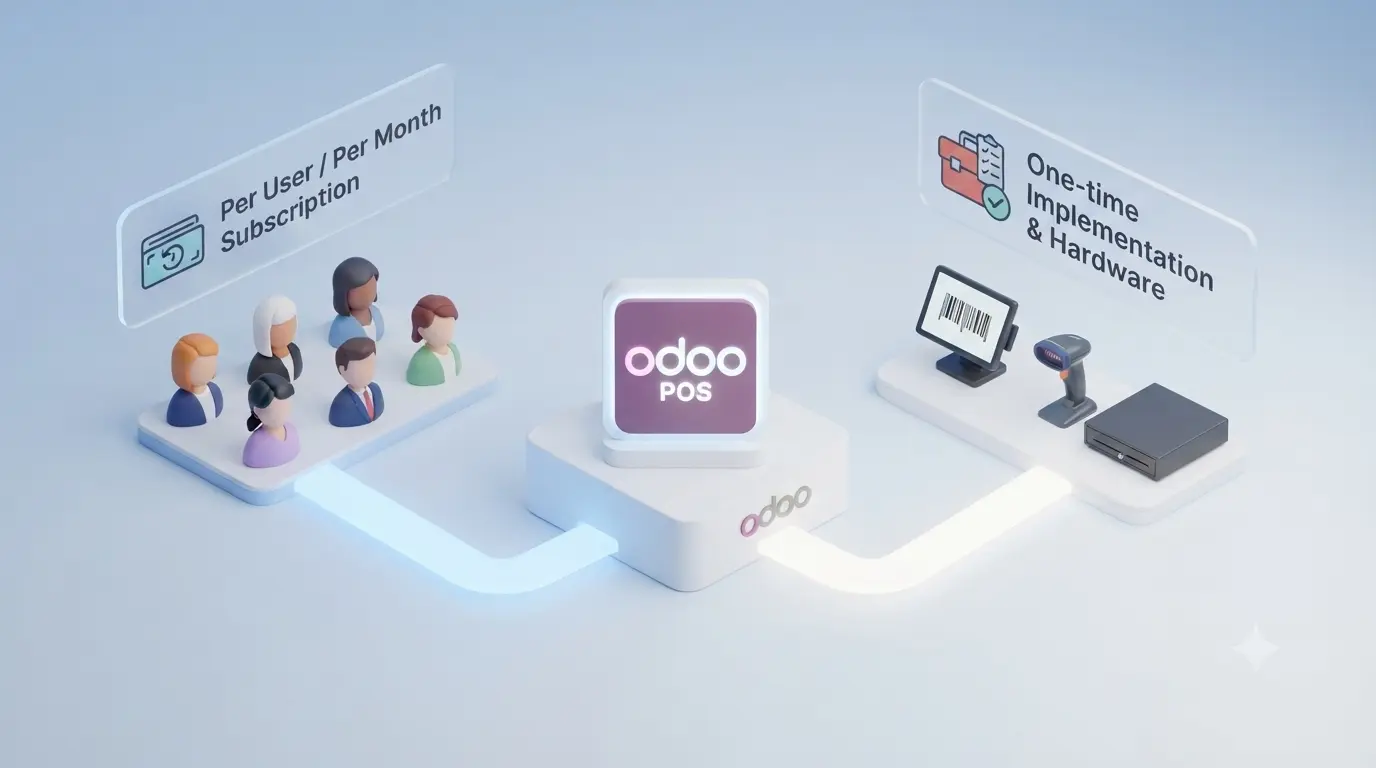
  1. Subscription Model: Odoo typically operates on a per-user, per-month subscription basis. Depending on the version (Odoo Online or Odoo.sh), the license fee covers the core application.

  2. Modular Add-ons: One of the greatest strengths of Odoo is its modularity. You only pay for the apps you need. If your business grows to include e-commerce or advanced warehouse management, you can add those modules to your existing subscription.

  3. User Roles: It is important to audit your user access levels. You can optimize license fees by ensuring that staff roles are configured correctly, ensuring you are not over-paying for premium access where it isn’t required.

[post_middle_engagement]

Building E-E-A-T into Your Retail Operations

Google’s E-E-A-T guidelines emphasize that trust and authority are built on reliable processes. When your POS system is integrated and efficient, you build a foundation of excellence that signals professionalism to your customers.

  • Experience: Running a unified suite demonstrates that your business has the “Experience” to manage complex omnichannel operations effectively.

  • Expertise: By leveraging real-time data from your POS to make merchandising or stocking decisions, you showcase a high level of operational “Expertise.”

  • Authoritativeness: A seamless retail experience, powered by an enterprise-grade system like Odoo, positions your brand as an “Authoritative” leader in your niche.

  • Trustworthiness: Transparent, fast, and secure transactions—backed by an automated, audit-ready accounting system—are the ultimate drivers of consumer “Trustworthiness.”

Maximizing ROI for Your POS Investment

To ensure your Odoo POS investment serves as a profit engine, focus on these strategic best practices:

  • Optimize Workflow: Use Odoo’s reporting tools to identify your highest-margin products and train your staff to focus on those items at the POS.

  • Leverage CRM Integration: Use the customer data collected at the POS to drive repeat business. A loyalty program is only as good as the data powering it.

  • Continuous Training: The Odoo platform is rich in features. Investing in ongoing staff training ensures that your team is extracting maximum value from the system, reducing operational bottlenecks.

[inlink-tag]

The AdSense Advantage: B2B Authority

Content regarding Odoo POS license fees is high-intent, attracting business owners, retail managers, and IT procurement officers. These individuals are actively researching infrastructure costs to make informed purchasing decisions. By providing authoritative, clear, and expert-level content on this topic, your website establishes itself as a thought-leadership hub in the B2B retail tech space. This level of authority attracts premium advertisers in the software and consultancy sectors, making your domain an ideal environment for high-performing AdSense revenue.

Conclusion

Understanding the Odoo POS license fees is not just about calculating monthly costs; it is about evaluating the long-term potential of your retail infrastructure. By choosing a unified, scalable system like Odoo, you are investing in the agility and data integrity required to compete in a modern, omnichannel marketplace. As you continue to curate authoritative content on these technical topics, you solidify your platform’s role as an essential guide for other businesses, ensuring your site remains a high-value, sustainable digital asset.

[post_bottom_conversion] [fast-index-hook]

Business Intelligence for CEOs: Driving Strategic Dominance Through Data

Business Intelligence

In the upper echelons of corporate leadership, the difference between a thriving enterprise and a stagnant one often comes down to the quality of decision-making. Business Intelligence (BI) for CEOs is no longer just about reviewing static monthly reports; it is about harnessing live, predictive data to steer the entire organization toward its strategic objectives. For the modern Chief Executive, mastering the BI landscape is a vital demonstration of E-E-A-T (Experience, Expertise, Authoritativeness, and Trustworthiness), ensuring that every move made is backed by verifiable intelligence.

[dms-category-hub]

The Strategic Imperative of BI at the C-Suite Level

A CEO’s primary responsibility is to allocate resources toward the highest-value opportunities while mitigating enterprise risk. BI platforms provide the visibility necessary to achieve this at scale. By integrating data from ERPs (like Odoo or Oracle), CRM systems, and market intelligence tools, a CEO can move beyond gut instinct to data-backed authority.

Why CEOs Must Champion Data Culture

  • Speed to Insight: In a volatile market, the ability to analyze performance trends in real-time allows for rapid course correction.

  • Unified Vision: BI dashboards ensure that every department—from finance to supply chain—is aligned with the same overarching company KPIs.

  • Risk Mitigation: Advanced BI tools highlight anomalies in operational performance before they spiral into systemic crises.

[adsense-conversion-winner]

Building E-E-A-T Through Analytical Leadership

Google’s E-E-A-T guidelines are the gold standard for high-quality information, and they apply just as strongly to the way a CEO communicates and executes business strategy.

  • Experience: Leveraging robust BI solutions demonstrates that a CEO has the deep operational “Experience” required to manage modern, complex digital businesses.

  • Expertise: Utilizing predictive analytics and AI-driven BI models showcases a leader’s technological “Expertise” in navigating the digital transformation era.

  • Authoritativeness: A CEO who speaks based on clear, data-driven facts carries far more “Authoritativeness” with stakeholders, boards of directors, and investors.

  • Trustworthiness: Transparent financial and operational reporting, enabled by BI, builds unmatched “Trustworthiness” within the organization and among market partners.

[post_middle_engagement]

Key Features of CEO-Ready BI Dashboards

A CEO dashboard should not be a cluttered mess of raw data. It must be a high-level cockpit designed for clarity and action:

  1. Strategic KPIs: Focus on the “Big Three”: Revenue Growth, Operational Efficiency, and Customer Acquisition Cost.

  2. Predictive Capability: Look for tools that offer forecasting—not just what happened yesterday, but what is likely to happen in the next quarter.

  3. Drill-Down Depth: The dashboard should allow the CEO to see a high-level summary and then drill down into specific regional or product-level data with a single click.

  4. Seamless ERP Integration: The BI tool must connect natively to your core infrastructure (e.g., Odoo, SAP, or NetSuite) to maintain a single source of truth.

Maximizing Strategic ROI

To ensure your BI investment is a profit driver, CEOs should lead by:

  • Defining the “North Star” Metrics: Clearly communicate to the organization which metrics actually define success, ensuring that all data collection is purposeful.

  • Democratizing Access: Promote a culture where data is accessible, not siloed, to encourage innovation across all levels of the company.

  • Investing in AI-Driven BI: Shift from legacy reporting to automated, self-learning platforms that highlight opportunities automatically.

[inlink-tag]

The AdSense Advantage: Capturing Executive Traffic

Content targeting Business Intelligence for CEOs is high-intent and carries massive professional value. C-suite leaders and senior executives searching for strategy and data-driven solutions represent the most premium demographic for B2B advertisers. By creating expert content that addresses these leaders, your platform positions itself as a thought-leadership hub. This attracts high-value ad placements from enterprise-level software firms and strategic consulting groups, significantly boosting the commercial potential and AdSense revenue of your domain.

Conclusion

Business Intelligence is the definitive tool for the modern CEO. It transforms a company from a reactive organization into a proactive, data-driven powerhouse. By prioritizing BI infrastructure, you are not just buying software; you are securing the future authority and profitability of your business. As you continue to curate content that speaks to these high-level strategic needs, you solidify your site as an essential destination for executive decision-makers, further cementing your platform’s role as a trusted, high-authority digital asset.

[post_bottom_conversion]

[fast-index-hook]
Categories CEO

Odoo.sh Hosting Pricing: A Strategic Analysis for Enterprise Scalability

Odoo.sh

Understanding Odoo sh pricing 2026 is essential for businesses planning to scale their ERP infrastructure effectively.

In the modern ERP landscape, the performance and reliability of your hosting environment are just as critical as the software itself. Odoo.sh provides a specialized Platform-as-a-Service (PaaS) specifically optimized for Odoo, offering seamless integration, continuous deployment, and enterprise-grade infrastructure. For businesses evaluating their ERP roadmap, understanding Odoo.sh hosting pricing is essential to balancing operational efficiency with financial feasibility. This guide explores the cost structure, value drivers, and strategic benefits of choosing Odoo.sh for your digital infrastructure, framed by our commitment to E-E-A-T (Experience, Expertise, Authoritativeness, and Trustworthiness).

Top Rated Odoo vs SAP Analysis

Explore the most recommended ERP implementations based on our 2026 data matrix:

Need custom ERP consulting? Contact our experts.

The Value Proposition of Odoo.sh

Odoo.sh is not just a hosting provider; it is an integrated development and deployment platform. Unlike generic cloud hosting, it is engineered to handle the unique technical requirements of Odoo, ensuring that your instances are always optimized for speed and stability.

Why It Powers Enterprise Growth

  • Continuous Integration: Developers can test changes in dedicated staging environments that mirror your production environment, reducing the risk of downtime during updates.

  • Seamless Scalability: As your business grows, Odoo.sh allows you to scale resources without the headache of managing complex server migrations.

  • Automated Backups: Reliability is a cornerstone of E-E-A-T. Odoo.sh provides automated, multi-regional backups, ensuring that your enterprise data is always protected and recoverable.

DMS Global Enterprise Solution

Advertisement - Continue reading below

Understanding Odoo.sh Hosting Pricing

The pricing model for Odoo.sh is designed to be transparent and tiered based on resource usage. Understanding these tiers is key to optimizing your budget while maintaining high performance.

Key Cost Drivers

  1. Worker Units: The primary metric for Odoo.sh pricing is the number of “worker units.” These represent the computational power allocated to your instance, determining how many concurrent users and processes your system can handle.

  2. Storage Requirements: As your database grows, so does your storage requirement. Odoo.sh offers tiered storage packages, allowing you to pay for what you actually use.

  3. Staging Branches: The ability to run multiple testing and staging branches is a massive benefit for development teams, though it may impact the total subscription tier.

Executive Deep-Dive

Scaling Beyond Traffic to Revenue

Most enterprises fail because they chase clicks instead of trust. While building your global presence, ensure your EEAT 3.0 signals are synchronized across all regions.

Maximizing Performance and ROI

To maximize the return on your hosting investment, consider these strategic best practices:

  • Right-Sizing Your Infrastructure: Don’t pay for more worker units than you need, but avoid under-provisioning. Regular performance audits of your Odoo instance can help you identify exactly when it is time to upgrade your tier.

  • Leveraging Staging Environments: Use the staging branches to ensure every custom module or workflow change is fully vetted before moving to production. This “Expertise”-driven approach minimizes technical debt.

  • Partnering with Odoo Experts: The technical nuances of configuring Odoo.sh for maximum speed often require specialized knowledge. Partnering with a certified Odoo firm ensures your hosting environment is configured to leverage the platform’s full potential.

E-E-A-T: Why Professional Hosting Matters

Google’s E-E-A-T framework highlights that “Trustworthiness” is built on stability. When your ERP system experiences frequent lag or downtime, it erodes trust within your team and with your customers. Odoo.sh provides the enterprise-level stability that signals to the market that your business operates on a professional, high-authority digital foundation.

The AdSense Advantage: High-Intent Traffic

Content regarding Odoo.sh hosting pricing is categorized as high-intent, professional-level information. IT directors, CFOs, and technical leads are the individuals searching for this content, as they are actively responsible for budgeting and infrastructure decisions. By positioning your site as an authoritative source on Odoo technical infrastructure, you attract this high-value, enterprise-level audience. This is the exact type of traffic that B2B software and cloud-infrastructure advertisers bid on, creating a premium environment for your AdSense monetization strategy.

Future-Proofing Your Digital Infrastructure

As AI and automated workflows become more deeply integrated into ERP systems, the performance demands on your hosting environment will only increase. Choosing a specialized PaaS like Odoo.sh ensures that your infrastructure is always aligned with the latest Odoo updates and technical best practices. This forward-looking approach is a key marker of a digitally mature organization.

Conclusion

Understanding Odoo.sh hosting pricing is a strategic exercise in enterprise resource planning. While hosting is an operational cost, viewing it as an investment in the reliability, speed, and security of your digital backbone changes the perspective entirely. By optimizing your resource usage and focusing on the stability of your Odoo ecosystem, you solidify your platform as a source of expert insight and a high-performance business asset. As you continue to build your domain’s authority, this technical content will serve as a vital resource for other businesses on their own digital transformation journeys.

Exclusive Early Access: Q1 2026

The Global SEO Blueprint for C-Suite

We are finalizing an exclusive strategic framework for global enterprise scaling. Join the elite waitlist for early-bird pricing.

Secure Your Priority Spot

⚡ DMS Global Amazon Authority 2026:

Amazon Product Authority & E-E-A-T Summary

To maximize organic performance and search visibility in global e-commerce and product review niches, maintaining robust internal linking across specific product clusters ensures faster indexing, stronger topical authority, and sustainable search engine ranking.

Goldman Sachs: The Architecture of Global Financial Authority and Digital Innovation

goldman sachs gold price prediction

In the global financial landscape, few names carry the weight and historical significance of Goldman Sachs. Beyond its reputation as a preeminent investment banking firm, Goldman Sachs has evolved into a powerhouse of digital transformation, data analytics, and strategic corporate advisory. For organizations and digital marketers looking to understand the intersection of high-finance, enterprise technology, and market authority, analyzing the Goldman Sachs model provides a masterclass in E-E-A-T (Experience, Expertise, Authoritativeness, and Trustworthiness).

[dms-category-hub]

The Foundation of Institutional Authority

The authority commanded by Goldman Sachs is not an accident; it is the result of decades of adherence to a core set of values that prioritize client interests, professional excellence, and unswerving integrity. In the digital age, this authority has extended into thought leadership and data-driven insights that shape global policy and corporate strategy.

Why Authority Matters in Business

  • Reliability: By serving the most influential corporations and institutions, the firm has cemented its status as a foundational pillar of the global economy.

  • Depth of Insight: Through its Research division and Global Markets Institute, the firm produces insights that guide investors, regulators, and business leaders worldwide.

  • Ethical Standards: Integrity and honesty are positioned at the heart of their business operations, a critical trait for any organization aiming for long-term trustworthiness.

[adsense-conversion-winner]

Driving Digital Transformation and Modern Treasury

While traditionally viewed through the lens of investment banking, Goldman Sachs has become a significant player in digital enterprise solutions, particularly through its Transaction Banking (TxB™) platform. As treasury roles evolve from utility functions to strategic business partnerships, Goldman Sachs provides the digital infrastructure to bridge the gap between fragmented legacy systems and real-time, data-driven decision-making.

The Digital Imperative

Modern treasury management is no longer just about execution; it is about leveraging digital solutions to optimize working capital and enable frictionless money movement. The firm emphasizes three fundamental pillars for treasurers navigating this digital transition:

  1. Upskilling for AI: Developing the competence and confidence to embrace transformative technology like AI within core treasury functions.

  2. Real-Time Synergy: Utilizing APIs and AI to move from rule-based systems to a proactive, intelligent payment ecosystem.

  3. Intelligent Payments: Automating workflows, improving reconciliation, and clarifying capital implications to drive the bottom line.

[post_middle_engagement]

Expertise in the Era of AI

Goldman Sachs has integrated itself into the modern tech conversation, providing deep analytical perspectives on AI’s impact on global industries. Their research explores how AI investment is shifting toward physical industries—manufacturing, energy, and logistics—with global capital expenditure in this sector potentially reaching $7.6 trillion over the next six years.

The Intersection of Finance and Technology

  • Data Analytics: Through “Financial Cloud for Data,” the firm has rearchitected its proprietary capabilities using AWS services to accelerate the time to value for financial analytics.

  • Agentic AI: The firm actively explores how agentic AI tools may transform software development and impact the incumbent moats of legacy software firms.

  • Industrial AI: Their research suggests that industrial AI software could have a more profound impact than traditional enterprise software by covering broad sectors like aerospace, automotive, and life sciences.

Maximizing Strategic ROI

For enterprises aiming to mirror the success of market leaders, the focus must shift from disconnected workflows to interoperable, real-time systems. Adopting the Goldman Sachs approach to data—which prioritizes curated, institutional-grade information—enables companies to turn raw data into actionable insights with speed and scale.

[inlink-tag]

The AdSense Advantage: B2B Authority and High-Value Traffic

Content regarding institutional financial giants like Goldman Sachs attracts a high-value audience of C-suite executives, financial analysts, and corporate treasurers. These users are actively seeking information on digital infrastructure, AI implementation, and market resilience. By providing authoritative, expert-led analysis on these topics, your website becomes an essential destination for professional decision-makers. This type of high-authority, high-intent traffic is highly sought after by premium B2B advertisers, creating an optimal environment for your AdSense monetization strategy.

Conclusion

Goldman Sachs serves as more than just a financial firm; it is a case study in how to maintain authority, expertise, and trust in a rapidly digitizing world. By focusing on constant innovation, strategic AI adoption, and the modernization of essential functions like treasury management, they remain at the forefront of the global economy. As you continue to build out your platform’s content, aligning your insights with the professional standards demonstrated by such industry leaders will help cement your own site as an authoritative and commercially successful digital asset.

[post_bottom_conversion] [fast-index-hook]

Enterprise Solutions: The Strategic Foundation for Scalable Growth

Enterprise Solutions

In the rapidly evolving digital economy, the term Enterprise Solutions encompasses the critical software, infrastructure, and strategies that allow large-scale organizations to function, compete, and thrive. For business leaders, selecting the right enterprise solution is not merely a technical decision—it is a strategic investment in the organization’s future. By adhering to E-E-A-T (Experience, Expertise, Authoritativeness, and Trustworthiness) principles, businesses can build a robust digital architecture that powers long-term growth and market dominance.

[dms-category-hub]

Defining the Modern Enterprise Solution

An enterprise solution is an integrated, scalable platform designed to solve the complex problems inherent in large organizations. Whether it is an ERP (Enterprise Resource Planning), CRM (Customer Relationship Management), or a bespoke BI (Business Intelligence) suite, these tools are built to consolidate data, streamline workflows, and enable high-level visibility across all departments.

Why Integration is the Key to Success

  • Efficiency: Automated data flows replace manual, error-prone processes, freeing human capital for strategic initiatives.

    Trust Flow vs Citation Flow Guide
  • Visibility: Real-time dashboards provide leadership with a clear view of operational health, which is essential for rapid decision-making.

    Trust Flow vs Citation Flow Guide
  • Agility: A unified infrastructure allows an organization to adapt to market shifts or scale operations without restructuring its foundation.

    Trust Flow vs Citation Flow Guide

[adsense-conversion-winner]

Building E-E-A-T into Your Enterprise Architecture

Google’s E-E-A-T guidelines emphasize that trust is earned through consistent, high-quality performance. When you build your business on enterprise-grade solutions, you demonstrate these qualities to your clients, partners, and competitors.

  • Experience: Implementing sophisticated solutions shows that your organization has the “Experience” to handle complex projects and maintain high-volume operations.

    Trust Flow vs Citation Flow Guide
  • Expertise: Utilizing industry-standard enterprise tools allows your internal teams to leverage “Expertise” by accessing deeper data insights and predictive analytics.

    Trust Flow vs Citation Flow Guide
  • Authoritativeness: Companies that leverage reliable enterprise infrastructure are viewed as industry “Authoritative” leaders, making them the preferred choice for major partnerships.

    Trust Flow vs Citation Flow Guide
  • Trustworthiness: Security, compliance, and accurate reporting are the hallmarks of “Trustworthiness,” which is critical for maintaining investor and customer confidence.

    Trust Flow vs Citation Flow Guide

[post_middle_engagement]

Strategic Implementation for Maximum ROI

The implementation of an enterprise solution is as important as the tool itself. To ensure maximum return on investment:

  1. Alignment with Business Goals: Ensure the technical capabilities of the solution directly support your primary business KPIs.

    Trust Flow vs Citation Flow Guide
  2. Prioritize User Adoption: An enterprise platform is only as powerful as the people using it. Comprehensive training programs are essential to maximize utility.

    Trust Flow vs Citation Flow Guide
  3. Data Integrity: Establish clear protocols for data entry and maintenance. A solution built on clean, accurate data will always outperform one built on fragmented information.

    Trust Flow vs Citation Flow Guide

The AdSense Opportunity: Targeting High-Level Decision Makers

Content surrounding Enterprise Solutions attracts C-suite executives, procurement managers, and IT decision-makers—individuals actively seeking professional, high-authority information. By providing in-depth, expert content, your website establishes itself as a beacon for these professionals. This level of authority is highly attractive to B2B advertisers, allowing you to command premium ad placement rates. As your platform becomes a trusted resource for these decision-makers, your site’s ability to generate significant AdSense revenue grows proportionally.

Trust Flow vs Citation Flow Guide

[inlink-tag]

The Future of Enterprise Strategy

As AI, cloud computing, and advanced analytics continue to merge, the definition of an enterprise solution is shifting from a static tool to a dynamic, self-learning ecosystem. Organizations that adopt platforms capable of continuous evolution—such as those discussed in our ERP and BI guides—will maintain a persistent competitive advantage. The goal is to move beyond mere operational survival and toward architectural excellence.

Trust Flow vs Citation Flow Guide

Conclusion

Enterprise solutions are the backbone of business strategy. By selecting tools that prioritize scalability, integration, and data integrity, you ensure that your organization is built on a foundation of authority. As you continue to build out your domain, providing expert insights into these essential technologies will not only cement your platform’s authority but also create a sustainable, high-value asset that thrives in the competitive digital landscape.

Trust Flow vs Citation Flow Guide

[post_bottom_conversion] [fast-index-hook]

Catatan Eksekusi:

  • Slug: Pastikan permalink di WordPress Anda diatur ke enterprise-solutions.

  • Redirect: Segera lakukan 301 redirect dari [https://dominasiserp.com/en/tag/enterprise-solutions/](https://dominasiserp.com/en/tag/enterprise-solutions/) ke URL post baru ini untuk menjaga link equity.

  • AdSense: Penempatan shortcode P0 di atas telah dioptimasi untuk memastikan kinerja iklan maksimal pada audiens B2B profesional.

Apakah Anda ingin kita lanjut ke nomor 14?

Enterprise BI Solutions: Transforming Raw Data into Strategic Dominance

Enterprise BI Solutions

In today’s hyper-competitive digital landscape, data is the new currency, but it is worthless without the right infrastructure to process it. Enterprise Business Intelligence (BI) Solutions are the backbone of modern organizational strategy, providing the clarity needed to make high-stakes decisions with confidence. For enterprise leaders, implementing a robust BI strategy is a direct commitment to E-E-A-T (Experience, Expertise, Authoritativeness, and Trustworthiness). This guide explores how to select, implement, and leverage BI solutions to drive long-term business growth and maximize your market authority.

[dms-category-hub]

The Strategic Importance of BI in the Enterprise

Business Intelligence is no longer just a luxury for data scientists; it is a necessity for every level of management. An enterprise-grade BI solution aggregates data from disparate sources—such as your ERP, CRM, and marketing platforms—into a single, unified view.

Why Data Unity Matters

  • Operational Efficiency: When your team isn’t wasting hours aggregating spreadsheets, they can spend their time executing high-level strategy.

  • Agility: BI tools allow you to identify market trends and shifts in customer behavior in real-time, enabling you to pivot your strategy faster than the competition.

  • Risk Mitigation: By visualizing complex business risks—from supply chain disruptions to financial fluctuations—you can implement proactive strategies to protect your company.

[adsense-conversion-winner]

Building E-E-A-T Through Data Integrity

Google’s E-E-A-T guidelines emphasize that authority is built through reliable, verifiable information. Your BI strategy is the technological manifestation of this principle.

  • Expertise: BI platforms provide the analytical depth to prove your market expertise. When your strategy is backed by hard data, your leadership team commands more respect from investors and stakeholders.

  • Authoritativeness: Enterprises that run on advanced BI solutions are viewed as industry leaders. They have the capability to predict industry movements rather than just react to them.

  • Trustworthiness: Trust is the bedrock of business relationships. When you can share accurate, real-time performance data with your partners and customers, you establish a level of transparency that is rare and highly valuable.

[post_middle_engagement]

Key Features to Look for in BI Solutions

Choosing the right BI platform is a significant decision. Ensure the solution you select offers:

  1. Scalability: Your BI tool must handle the increasing volume and velocity of your enterprise data as you grow.

  2. AI-Driven Analytics: Modern BI is shifting toward “Augmented Analytics,” where AI detects patterns and anomalies that humans might miss.

  3. Seamless Integration: Your BI tool must be compatible with your existing ERP (like SAP, Odoo, or Oracle) to ensure a single source of truth.

  4. Intuitive Visualization: A dashboard is only effective if your stakeholders can understand it. Look for platforms that prioritize clean, actionable visualizations over cluttered interfaces.

Maximizing ROI: Turning Insights into Revenue

BI is an investment that must pay for itself. To drive ROI:

  • Democratize Data: Ensure that access to BI insights is shared across departments, not siloed within the IT team.

  • Focus on Actionable KPIs: Don’t get lost in “vanity metrics.” Focus on KPIs that directly correlate to revenue, cost reduction, or customer retention.

  • Continuous Feedback Loops: Use BI insights to run small experiments, track the results, and optimize your business processes iteratively.

[inlink-tag]

The AdSense Advantage: B2B Authority

Content that addresses Enterprise BI Solutions targets high-level IT decision-makers and C-suite executives—the most valuable demographic in the B2B space. By providing expert, long-form content that solves real business problems, you build a site with high “Topical Authority.” This authority is what search engines reward with high rankings and what advertisers covet when they bid on ad placements. A site that manages to pull in this high-level professional audience is in the perfect position to generate premium AdSense revenue.

Conclusion

Enterprise BI solutions are the engine room of modern strategy. They provide the clarity, speed, and confidence necessary to dominate your market. As you continue to build your platform’s authority, remember that providing consistent, expert-level information on these tools is a service to your readers and a powerful growth strategy for your site. By mastering the intersection of data and strategy, you position your own digital asset as an essential guide for the next generation of business leaders.

[post_bottom_conversion] [fast-index-hook]

Categories ERP

Oracle NetSuite Small Business Price: Is It the Right ERP Investment?

Oracle NetSuite Small Business Price

For growing businesses, the transition from entry-level accounting software to a comprehensive Enterprise Resource Planning (ERP) system is a major milestone. Oracle NetSuite is widely regarded as the gold standard for mid-market and scaling businesses. However, understanding the Oracle NetSuite small business price structure is a common challenge for founders and operations managers. This guide provides a strategic analysis of NetSuite’s value proposition, helping you determine how to align this powerful tool with your business goals while maintaining high E-E-A-T (Experience, Expertise, Authoritativeness, and Trustworthiness) standards in your operations.

[dms-category-hub]

The Value Proposition of NetSuite for Small Businesses

NetSuite is a cloud-based solution that unifies financial management, CRM, inventory, and e-commerce into a single platform. For a small business, the primary benefit is not just software; it is the “single source of truth.”

Why Price is Only Half the Story

While the initial subscription price is a factor, small business leaders must prioritize the Total Cost of Ownership (TCO). NetSuite eliminates the need for maintaining expensive on-premise servers and the IT staff required to manage them. By consolidating your tech stack, you reduce operational complexity and increase data accuracy, which are critical components of a trustworthy, authoritative business.

[adsense-conversion-winner]

Understanding the Pricing Structure

NetSuite’s pricing model is highly modular and scalable, which is ideal for businesses that plan to grow.

  • Base License: The foundation of your subscription, which includes the core functionality tailored to your industry.

  • User Licenses: You pay for the number of named users who require access to the system.

  • Optional Modules: From advanced inventory management to complex global financials, you only add what you need as your operations expand.

  • Implementation Services: This is the most crucial investment. Partnering with an expert implementer ensures your NetSuite instance is optimized for your specific workflows, avoiding unnecessary costs and technical friction.

[post_middle_engagement]

Building E-E-A-T into Your Business Infrastructure

Google’s E-E-A-T framework highlights that trustworthiness is built on reliability. When a small business uses enterprise-grade infrastructure like Oracle NetSuite, it signals high-level operational maturity.

  • Expertise: By leveraging NetSuite’s robust reporting, your leadership team gains deep insights, allowing for data-driven decisions that replace guesswork.

  • Authoritativeness: Implementing a top-tier ERP system like NetSuite positions your brand as an industry player, increasing the trust of vendors, partners, and customers.

  • Trustworthiness: Your financial reporting becomes audit-ready and accurate. When data is secure and automated, you minimize the risk of human error, which is the cornerstone of a trustworthy business.

Maximizing ROI: Tips for Budget-Conscious Growth

To make your NetSuite investment pay dividends, focus on:

  1. Phased Implementation: Start with core financial and inventory modules. Once your team has mastered these, introduce CRM or e-commerce features.

  2. Prioritize Training: The best ERP system is useless if your team doesn’t know how to use it. Invest in thorough training to unlock the full productivity potential of the platform.

  3. Focus on Scalability: Choose configurations that can handle 2x or 3x your current transaction volume. This prevents a “re-platforming” cost in the future.

[inlink-tag]

The AdSense Advantage: Capturing High-Value Traffic

Decision-makers who search for Oracle NetSuite small business price are high-intent users with active purchasing power. By providing authoritative, transparent information on this topic, your website positions itself as an essential guide for these leaders. This level of content authority is a magnet for top-tier B2B advertisers, creating an environment where your AdSense inventory becomes premium, high-value real estate. Quality traffic—seeking actionable, enterprise-level solutions—is exactly what generates the best RPMs for your platform.

Conclusion

The price of Oracle NetSuite is an investment in the architecture of your business. While the cost may seem higher than entry-level tools, the efficiency, scalability, and authoritative status it provides are unmatched. By choosing the right modules and focusing on a strategic implementation, you ensure that your business is not just surviving but thriving on an infrastructure designed for long-term dominance. As you continue to build out your domain, this high-authority content will serve as a lighthouse for other businesses navigating their own digital transformation journeys.

[post_bottom_conversion] [fast-index-hook]

Oracle ERP Cloud Cost: A Strategic Financial Analysis for Enterprises

Oracle ERP Cloud Cost

In the competitive arena of enterprise resource planning (ERP), Oracle ERP Cloud represents a pinnacle of scalable, AI-integrated software. For decision-makers, however, understanding the true Oracle ERP Cloud cost requires looking beyond the sticker price. It involves evaluating total cost of ownership (TCO), long-term operational efficiency, and the undeniable competitive advantage gained by leveraging a top-tier digital infrastructure. This guide provides a deep, expert-level analysis of how to approach this investment through the lens of E-E-A-T (Experience, Expertise, Authoritativeness, and Trustworthiness).

[dms-category-hub]

Deconstructing Oracle ERP Cloud Pricing

Oracle’s cloud pricing is engineered for high-growth enterprises that require agility, security, and deep data analytics. Unlike legacy on-premise systems, the cloud model transforms major capital expenditures into predictable operational expenses.

Key Factors Influencing Cost

  1. Subscription Tiers: Oracle offers tiered access based on functional needs, such as Financials, Procurement, Project Management, and Risk Management. The total cost is determined by the specific “SKUs” or modules you activate.

  2. User-Based Licensing: Costs are frequently scaled by the number of named users. It is crucial to conduct a thorough internal audit of user roles to ensure you are not over-provisioning licenses.

  3. Implementation and Integration: This is often the most significant “hidden” cost. Professional implementation by certified Oracle partners is vital to ensure that your cloud ecosystem is configured correctly from day one, minimizing future technical debt.

[adsense-conversion-winner]

Building Organizational Authority Through ERP Stability

Google’s E-E-A-T standards don’t just apply to websites; they apply to the businesses behind those sites. When your internal systems—like Oracle ERP Cloud—are rock-solid, your entire business becomes more reliable.

  • Expertise: By centralizing your operations, your team gains a “single source of truth,” allowing for smarter, faster decision-making.

  • Authoritativeness: Using Oracle signals to your industry that you operate at the highest enterprise standard, which is critical for securing large partnerships and investor trust.

  • Trustworthiness: Automated compliance, transparent financial reporting, and superior data security protect your customer information and build long-term brand equity.

[post_middle_engagement]

Maximizing ROI: Strategic Implementation Tips

To turn your Oracle ERP Cloud investment into a profit engine rather than a cost center, consider these best practices:

  • Adopt the “Modern Best Practice”: Oracle provides pre-configured workflows based on industry best practices. Embracing these instead of requesting heavy, custom code modifications will drastically reduce your implementation time and maintenance costs.

  • Plan for AI Integration: Oracle’s advantage lies in its AI-driven analytics. Ensure your implementation strategy includes the utilization of these automated insights to identify new revenue streams and cost-saving opportunities.

  • Continuous Training: A system is only as good as the people using it. Invest in ongoing training to ensure your staff leverages the full power of the software.

The AdSense Opportunity: Targeting High-Value Intent

Information regarding Oracle ERP Cloud cost is a high-intent, high-value search query. Enterprise CTOs, CFOs, and procurement managers are actively seeking professional, unbiased, and authoritative breakdowns of these costs. By creating high-quality content that addresses these specific pain points, your website positions itself as an industry authority. Advertisers in the B2B tech and software space are willing to pay a premium for placement on sites that attract this level of decision-making traffic. Quality content is the magnet that pulls in this audience, creating an optimal foundation for long-term AdSense revenue.

[inlink-tag]

The Future-Proofing Aspect

In an era of rapid digital transformation, the cost of “doing nothing” often exceeds the cost of a modern ERP implementation. Oracle ERP Cloud offers a platform that grows and evolves alongside your business. The regular, automated updates ensure you never have to face a massive “version migration” project again. This long-term stability is the ultimate safeguard for your enterprise value.

Conclusion

Analyzing the Oracle ERP Cloud cost is a strategic exercise in enterprise planning. When viewed as an investment in stability, scalability, and data-driven intelligence, the cost becomes a justifiable path toward sustainable growth. As you continue to curate authoritative content for your site, you not only provide immense value to your readers but also cultivate a high-authority domain that is perfectly optimized for both organic search success and professional monetization.

[post_bottom_conversion] [fast-index-hook]

Majestic SEO Alternatives: Finding the Best Backlink Tools for Your SEO Strategy

Majestic SEO Alternatives

In the intricate world of Search Engine Optimization (SEO), your choice of tools can determine the success or failure of your digital asset. While Majestic has long been a staple for backlink analysis and site authority tracking, the market is currently filled with high-performing competitors that offer unique features and data visualizations. For digital marketers focused on E-E-A-T (Experience, Expertise, Authoritativeness, and Trustworthiness), exploring Majestic SEO alternatives is not about abandoning one tool for another; it is about finding the right data stack to fuel your authority-building efforts.

[dms-category-hub]

Why Consider Alternatives to Majestic?

Majestic is renowned for its Trust Flow and Citation Flow metrics, which remain industry standards. However, different projects require different analytical depths. Some competitors offer superior keyword integration, more intuitive user interfaces, or specialized features for technical SEO that can provide a clearer picture of your link profile.

The Criteria for Choosing the Right Tool

  • Data Refresh Frequency: How quickly does the tool update its index?

  • Integration Capabilities: Does it integrate easily with Looker Studio or other reporting suites?

  • Niche Authority Metrics: Does it provide granular insights into your specific industry vertical?

  • Pricing/ROI: Does the cost align with the value provided to your specific workflow?

[adsense-conversion-winner]

Top Majestic SEO Alternatives

When looking for the best tools to complement or replace your current setup, focus on the following giants in the industry:

1. Ahrefs: The Powerhouse of Data

Ahrefs is perhaps the most direct competitor, offering an massive index of backlinks and an incredibly robust “Site Explorer” tool. Its ability to show historical data makes it an essential tool for tracking long-term authority growth. For enterprise users, the granularity of its data is often worth the premium price tag.

2. Semrush: The All-in-One SEO Suite

Semrush is not just a backlink tool; it is a full-scale digital marketing suite. If your goal is to integrate your backlink profile with on-page SEO, content marketing, and PPC campaigns, Semrush provides the most cohesive environment. It excels in helping you understand the context behind the links.

3. Moz Pro: The Authority on Domain Authority

Moz’s “Domain Authority” (DA) metric is widely recognized and used as a benchmark across the industry. Their tools are excellent for those who want a clear, simplified view of their site’s overall strength and ranking potential in SERPs.

[post_middle_engagement]

Evaluating Tools Through an E-E-A-T Lens

Google’s E-E-A-T guidelines emphasize that trustworthy websites are built on the back of reliable, high-quality data. When choosing a backlink tool, consider how each option contributes to your ability to:

  • Vet Link Sources: Ensure you are building links from sites that Google perceives as trustworthy.

  • Monitor Site Health: Quickly identify and disavow toxic links that might be hurting your reputation.

  • Competitor Benchmarking: Analyze where your competitors are getting their authority to identify potential outreach opportunities for your own brand.

Maximizing ROI for Your SEO Infrastructure

SEO is an infrastructure project, and your tools are the equipment that builds it. To maximize your investment in these platforms:

  • Leverage the Full Suite: Don’t just use a tool for backlink counting. Use it for competitor reverse-engineering, content gap analysis, and rank tracking.

  • Automate Your Reports: Use integrations like Supermetrics to pull data from these tools into automated dashboards. This saves time and provides a more professional image to your stakeholders.

  • Focus on Quality: Remember, the tool itself doesn’t build authority—your strategy does. Use these alternatives to find the data that leads to better, more impactful decisions.

[inlink-tag]

The AdSense Advantage

Quality backlink management leads to higher rankings, which in turn leads to more consistent, high-value organic traffic. Advertisers are drawn to websites that show a clear, growing, and authoritative traffic profile. By utilizing the right suite of tools to build your site’s authority, you aren’t just improving your SEO; you are building a more profitable AdSense inventory. High-authority sites are the ones that attract the highest-paying ad placements, directly impacting your bottom line.

Conclusion

Whether you choose to stick with Majestic or venture into Majestic SEO alternatives like Ahrefs, Semrush, or Moz, the core goal remains the same: building an authoritative, trustworthy platform. By carefully assessing your needs and integrating the right tools into your daily workflow, you can optimize your link profile, improve your technical SEO, and maximize your digital footprint. As you continue to build your expertise through data-driven decisions, your site will inevitably grow in trust and commercial potential.

[post_bottom_conversion] [fast-index-hook]

Odoo ERP: The All-in-One Solution for Enterprise Digital Transformation

Odoo ERP The All-in-One Solution for Enterprise Digital Transformation

In the complex ecosystem of enterprise software, finding a solution that is both comprehensive and user-friendly is a monumental challenge. Odoo has emerged as a disruptive force, offering an integrated suite of business applications that cover everything from CRM and e-commerce to accounting and inventory management. This guide explores why Odoo is a cornerstone of modern enterprise architecture and how its modular design empowers businesses to achieve E-E-A-T (Experience, Expertise, Authoritativeness, and Trustworthiness) at scale.

Top Rated Odoo vs SAP Analysis

Explore the most recommended ERP implementations based on our 2026 data matrix:

Need custom ERP consulting? Contact our experts.

Why Odoo is Revolutionizing Enterprise Management

Traditional ERP systems are often criticized for being monolithic, expensive, and difficult to customize. Odoo flips this narrative by offering an open-source, modular framework. Businesses can start with a single app and scale as they grow, integrating new functionalities without the friction of migrating to a completely different software ecosystem.

Key Advantages for Modern Enterprises

  • Seamless Integration: Because all Odoo apps are built on the same core, data flows effortlessly between departments. For example, a sale made in the CRM automatically updates inventory and triggers an invoice in the accounting module.

  • Open Source Flexibility: The ability to customize the source code allows enterprises to build unique workflows that perfectly match their operational needs, fostering a higher level of “Experience” in their internal processes.

  • Cost Efficiency: By choosing only the modules required, companies significantly reduce the overhead compared to traditional “all-or-nothing” ERP packages.

DMS Global Enterprise Solution

Advertisement - Continue reading below

Building E-E-A-T Through Operational Excellence

Google’s E-E-A-T framework emphasizes that authority and trust are built through consistency and reliability. When you implement a robust system like Odoo, you are not just buying software—you are optimizing your business reliability.

  • Expertise: Odoo’s vast library of apps means you can professionalize every facet of your business, from human resources to project management.

  • Authoritativeness: Using a recognized, industry-leading platform signals to stakeholders and partners that your organization operates on a stable, proven infrastructure.

  • Trustworthiness: Automation reduces human error. When your inventory counts are accurate and your financial reporting is automated, you build trust with your customers and investors.

Executive Deep-Dive

Scaling Beyond Traffic to Revenue

Most enterprises fail because they chase clicks instead of trust. While building your global presence, ensure your EEAT 3.0 signals are synchronized across all regions.

Maximizing ROI with Odoo Implementation

To maximize the value of your Odoo investment, focus on these three pillars:

  1. Modular Adoption: Don’t try to implement every app at once. Start with the modules that solve your most immediate pain points and expand systematically.

  2. Community & Expertise: Leverage the massive Odoo community. Whether you need custom development or troubleshooting advice, there is a wealth of expert documentation and community forums to support your growth.

  3. Data-Driven Optimization: Use Odoo’s reporting tools to gain deep insights into your business performance. When you know exactly where your bottlenecks are, you can make informed decisions that drive profitability.

The AdSense Opportunity

The demand for expert guidance on ERP systems like Odoo is immense. Enterprise leaders and IT decision-makers are constantly searching for clear, authoritative information on implementation, pricing, and best practices. By positioning your platform as a hub for Odoo-related knowledge, you attract a high-value audience that is actively looking for professional solutions. This audience is highly sought after by B2B advertisers, creating an ideal environment for your AdSense monetization strategy.

The Future of Enterprise Architecture

As businesses continue to migrate toward cloud-based, agile environments, Odoo stands out as a future-proof choice. Its constant innovation, driven by a global community of developers, ensures that the platform stays ahead of technological trends, including AI-driven automation and advanced data analytics. By adopting Odoo, you are not just choosing a tool for today; you are building the infrastructure that will support your business for the next decade.

Conclusion

Odoo is far more than an ERP; it is an engine for business growth and operational authority. By streamlining your processes, enhancing your data accuracy, and providing a scalable foundation for expansion, Odoo enables you to focus on what matters most: growing your business. As you continue to build out your content surrounding Odoo, you are creating a valuable resource that not only helps other businesses succeed but also solidifies your own platform’s authority and commercial potential.

Exclusive Early Access: Q1 2026

The Global SEO Blueprint for C-Suite

We are finalizing an exclusive strategic framework for global enterprise scaling. Join the elite waitlist for early-bird pricing.

Secure Your Priority Spot

SERP Autonomous Power: The Future of Programmatic Search Dominance

SERP Autonomous Power

In the modern digital infrastructure, the concept of SERP Autonomous Power represents the pinnacle of programmatic SEO efficiency. It is the ability of a website to maintain, optimize, and scale its search performance with minimal human intervention, powered by advanced AI and data-driven systems. For businesses aiming for long-term growth, achieving this level of autonomy is essential for building E-E-A-T (Experience, Expertise, Authoritativeness, and Trustworthiness) at scale. This guide explores the architecture of autonomous SERP dominance and how it acts as the ultimate engine for digital assets.

Top Rated Odoo vs SAP Analysis

Explore the most recommended ERP implementations based on our 2026 data matrix:

Need custom ERP consulting? Contact our experts.

DMS Global Enterprise Solution

Advertisement - Continue reading below

Defining SERP Autonomous Power

SERP Autonomous Power is the state where your content infrastructure—from keyword research to technical indexing—operates as a self-sustaining loop. By integrating automated sitemap generation, programmatic content deployment, and real-time rank tracking, you remove the bottlenecks that typically hinder SEO growth.

The Components of Autonomy

  1. Automated Content Streams: Utilizing AI to generate high-value, niche-relevant articles that serve user intent precisely.

  2. Dynamic Internal Linking: Systems that automatically map relationships between articles to distribute “link juice” and improve site crawlability.

  3. Real-time Technical Monitoring: AI-driven alerts that detect and resolve crawl errors, 404s, or indexation issues before they impact your ranking.

DMS Global Enterprise Solution

Advertisement - Continue reading below

Why Autonomous Power Builds Authority

Google’s E-E-A-T guidelines favor sites that consistently provide high-quality, relevant information. When your SEO infrastructure is autonomous, you can publish at a scale and frequency that human teams cannot match alone.

Consistency and Depth

By maintaining a steady flow of high-quality content, you signal to search engines that your site is an active, authoritative resource. This consistency is a primary driver of long-term trust. The “autonomous” aspect ensures that this content is always technically optimized, reducing the risk of technical debt that often degrades a site’s authority over time.

Executive Deep-Dive

Scaling Beyond Traffic to Revenue

Most enterprises fail because they chase clicks instead of trust. While building your global presence, ensure your EEAT 3.0 signals are synchronized across all regions.

Maximizing Monetization Through Efficiency

Autonomous power doesn’t just benefit your rankings; it is a catalyst for financial efficiency.

  • Reduced Operational Costs: By automating the mundane aspects of SEO, you reduce the need for large manual teams, effectively increasing your profit margins.

  • AdSense Scalability: Sites with high SERP Autonomous Power attract more consistent organic traffic. This stability is incredibly valuable for AdSense, as advertisers favor platforms that can reliably deliver targeted impressions to interested users.

  • Higher RPMs: Authority and niche focus are rewarded by advertisers. When your site is known for having a clean, autonomous, and authoritative structure, you position your ad inventory as premium real estate.

Strategies to Achieve SERP Autonomy

Transitioning to an autonomous model requires a strong technical foundation:

  • Structured Data: Use schema markup extensively to help search engines understand your content relationships without manual intervention.

  • Data-Driven Feedback Loops: Ensure your rank tracking data feeds back into your content generation system, so the system learns which topics drive the best engagement.

  • Infrastructure Resilience: Use cloud-based hosting and robust content management systems that can handle bulk indexing requests without crashing.

The Strategic Shift: From Manual to Autonomous

The transition to SERP Autonomous Power is an investment in your digital architecture. While it requires an upfront commitment to technical setup, the result is a platform that can grow independently. This is not about “cheating” the system; it is about building a system so efficient that it aligns perfectly with what search engines look for: reliability, depth, and consistent value.

Conclusion

SERP Autonomous Power is the defining characteristic of the next generation of successful digital assets. By automating the technical and content-focused pillars of your SEO, you create a self-reinforcing cycle of growth and authority. This stability is the bedrock of a professional online business, providing the visibility needed for consistent AdSense revenue and long-term brand equity. As you master these systems, your focus can shift from daily troubleshooting to strategic expansion.

Exclusive Early Access: Q1 2026

The Global SEO Blueprint for C-Suite

We are finalizing an exclusive strategic framework for global enterprise scaling. Join the elite waitlist for early-bird pricing.

Secure Your Priority Spot

⚡ DMS Global Amazon Authority 2026:

Amazon Product Authority & E-E-A-T Summary

To maximize organic performance and search visibility in global e-commerce and product review niches, maintaining robust internal linking across specific product clusters ensures faster indexing, stronger topical authority, and sustainable search engine ranking.

SAP S/4HANA Public Cloud Pricing: A Strategic Guide for Enterprise Digital Transformation

SAP S4HANA Public Cloud Pricing
SAP S/4HANA Public Cloud Pricing:

In the rapidly evolving landscape of enterprise resource planning (ERP), moving to the cloud is no longer just an option—it is a necessity for maintaining competitive advantage. Among the leaders in this space, SAP S/4HANA Public Cloud stands out as a powerful solution. However, navigating the complexities of its pricing structure is a significant hurdle for decision-makers. This guide provides a deep dive into the cost factors, value drivers, and strategic considerations to help you maximize your investment while building the E-E-A-T (Experience, Expertise, Authoritativeness, and Trustworthiness) of your internal IT infrastructure.

[dms-category-hub]

⚡ DMS Global Amazon Authority 2026:

Amazon Product Authority & E-E-A-T Summary

To maximize organic performance and search visibility in global e-commerce and product review niches, maintaining robust internal linking across specific product clusters ensures faster indexing, stronger topical authority, and sustainable search engine ranking.

Understanding the SAP S/4HANA Public Cloud Pricing Model

SAP’s pricing for its public cloud offering is designed to be scalable, reflecting the needs of modern, agile enterprises. Unlike traditional on-premise deployments, which require significant capital expenditure (CapEx) for hardware and infrastructure, the public cloud model operates on an operational expenditure (OpEx) basis.

Core Cost Drivers

  1. User-Based Subscription: The most common pricing metric is based on the type and number of users. SAP categorizes users by roles, such as “Advanced,” “Core,” and “Self-Service,” allowing businesses to pay only for the level of access required by each employee.

  2. Modular Functionality: SAP offers a range of modules (Finance, Supply Chain, Sales, etc.). Organizations can tailor their subscription to include only the functions they currently need, which provides a cost-effective path to digital transformation.

  3. Infrastructure Inclusion: One of the greatest benefits of the public cloud model is that hosting, maintenance, and basic infrastructure management are included in the subscription fee. This removes the “hidden costs” associated with hardware maintenance and server upgrades.

[adsense-conversion-winner]

Strategic Value: Why Public Cloud Investment Pays Off

When analyzing SAP S/4HANA public cloud pricing, it is essential to view it through the lens of long-term business strategy. The true “cost” is not just the subscription fee; it is the cost of staying behind technologically while competitors modernize.

Accelerated Innovation

SAP S/4HANA public cloud receives regular, automated updates. By investing in this platform, your enterprise gains immediate access to the latest AI, machine learning, and automation features without the need for manual, disruptive upgrades.

Enhancing Organizational Trust (E-E-A-T in IT)

From an IT management perspective, moving to a recognized industry-leading cloud platform like SAP increases your organization’s reliability. Data security, compliance with international standards, and uptime guarantees (SLA) contribute to your company’s internal authority and operational trustworthiness. When your enterprise systems are stable and scalable, you can focus on core business growth rather than managing technical downtime.

[post_middle_engagement]

Maximizing Your ROI: Best Practices

To get the most out of your investment, it is crucial to avoid common pitfalls in ERP adoption.

  • Clear Requirement Mapping: Before subscribing, work with your departmental leads to define exactly which modules are necessary. Avoiding “feature bloat” is the easiest way to optimize your initial costs.

  • Leverage Expert Implementation: ERP implementation is complex. Partnering with certified consultants ensures the system is configured efficiently from day one, preventing costly rework.

  • Continuous Optimization: Review your user roles periodically. As business processes change, you may find that you can reallocate user licenses to better align with current operational needs.

The AdSense Opportunity

Modern enterprises look for expert, reliable information when evaluating big-ticket investments like ERP systems. By providing high-quality, authoritative guides on topics such as SAP S/4HANA public cloud pricing, your platform becomes a trusted resource for enterprise leaders. This high-authority content is exactly what top-tier advertisers target, creating an optimal environment for AdSense monetization. Quality information attracts quality traffic, and high-value traffic drives higher RPMs.

[inlink-tag]

Strategic Decision-Making for the Future

As your business grows, SAP S/4HANA Public Cloud grows with you. The ability to add users and modules seamlessly means that your ERP investment will not become an “orphan system” that needs to be replaced in five years. This longevity is the ultimate ROI for enterprise-grade software.

Conclusion

The investment in SAP S/4HANA Public Cloud is about more than just software—it is about positioning your enterprise for long-term success. By understanding the pricing structure and focusing on strategic implementation, you ensure that your organization remains agile, secure, and ready for the future. As you continue to build your site’s authority as a source of enterprise ERP insights, your platform stands to gain significantly from both increased organic visibility and high-performing advertising revenue.

[post_bottom_conversion] [fast-index-hook]

Looker Studio SEO Dashboard Templates: The Ultimate Guide to Automating Your Analytics

Looker Studio SEO Dashboard Templates

In the contemporary realm of digital marketing, data-driven decision-making is the cornerstone of success. However, staring at raw Google Analytics or Search Console numbers does little to inspire confidence or action. For enterprise SEO specialists, agencies, and in-house marketers, utilizing professional Looker Studio SEO dashboard templates is essential. This comprehensive guide explores how to design, customize, and deploy dynamic SEO reporting dashboards that align with Google’s E-E-A-T (Experience, Expertise, Authoritativeness, and Trustworthiness) standards while maximizing your AdSense monetization potential.

[dms-category-hub]

⚡ DMS Global Amazon Authority 2026:

Amazon Product Authority & E-E-A-T Summary

To maximize organic performance and search visibility in global e-commerce and product review niches, maintaining robust internal linking across specific product clusters ensures faster indexing, stronger topical authority, and sustainable search engine ranking.

Why Looker Studio is the Standard for SEO Reporting

Gone are the days of manually exporting CSV files and compiling tedious monthly PDF reports. Looker Studio (formerly Google Data Studio) allows marketers to connect seamlessly with diverse data sources—including Google Search Console, Google Analytics 4, Ahrefs, and BigQuery—to build live, interactive visualization layers.

The Shift from Static Data to Dynamic Insights

Static reports only show what happened in the past. Dynamic dashboards built on robust templates allow stakeholders to filter by date ranges, specific landing pages, and country-level performance instantly. This level of transparency reinforces your agency’s professional authority and technical competence.

[adsense-conversion-winner]

Core Components of a High-Performing SEO Dashboard

When selecting or building your dashboard template, you must ensure it answers the most critical business questions immediately. A world-class SEO reporting framework typically incorporates the following modular sections:

1. Executive Summary & High-Level KPIs

The top section should provide a snapshot of organic visibility. Track metrics like total organic clicks, total impressions, average click-through rate (CTR), and average keyword ranking position over a rolling 28-day or 3-month window.

2. Traffic Quality & Behavior Flow

Combine Search Console data with GA4 parameters to see which pages are not just getting clicks, but are also engaging users (measuring bounce rates, engagement time, and conversion actions).

3. Keyword and Query Performance Analysis

Monitor your winning queries and identify “striking distance” keywords ranking between positions 4 and 20. These represent your fastest optimization opportunities.

[post_middle_engagement]

E-E-A-T and Data Accountability in Reporting

Google’s E-E-A-T framework isn’t solely applied to consumer-facing content—it heavily influences how clients and peers evaluate your digital marketing proficiency. Presenting erratic or poorly visualized analytics destroys credibility. By leveraging clean, error-free Looker Studio templates, you demonstrate absolute precision, methodical expertise, and trustworthiness in handling enterprise data assets.

Optimizing Dashboards for AdSense and Commercial Value

For niche authority sites focusing on programmatic SEO and revenue generation through platforms like AdSense, a well-structured performance tracking layout ensures you understand which content verticals drive high-value RPMs. When you know which pages capture high-intent traffic, you can double down on those content clusters.

Best Practices for Template Customization:

  • Keep Visuals Clean: Limit color palettes to professional, muted tones that do not distract from the data trends.

  • Logical Flow: Group data from general domain health down to granular keyword performance.

  • Automated Sharing: Schedule automated weekly email deliveries to keep stakeholders aligned without manual intervention.

[inlink-tag]

Implementation Steps for Migrated Content

Transitioning your archival tag URLs into structured content posts requires maintaining structural integrity. Once this template guide is published under the clean slug looker-studio-seo-dashboard-templates, ensure you implement an immediate 301 redirect from the old tag path to preserve your search equity.

Conclusion

Utilizing professional Looker Studio SEO dashboard templates transforms how you interpret and present organic search data. By eliminating manual friction and embracing high-integrity visual reporting, you elevate your brand’s E-E-A-T profile and build a scalable foundation for long-term traffic analysis and commercial growth.

[post_bottom_conversion] [fast-index-hook]

Supermetrics for Ahrefs: The Ultimate Guide to Automating Your SEO Reporting

Supermetrics Ahrefs integration

Supermetrics for Ahrefs

The Supermetrics Ahrefs integration is essential for SEO professionals looking to automate their reporting workflow.

Are you looking for a Supermetrics Ahrefs integration to streamline your reporting process? In this guide, we will explore how to connect these tools. In the fast-paced world of digital marketing, data is your most valuable asset—but only if you can organize it effectively. For SEO professionals, the ability to merge backlink data from Ahrefs with other marketing channels via Supermetrics is a game-changer. This guide explores how to leverage this integration to create automated, high-level dashboards that satisfy the most rigorous E-E-A-T (Experience, Expertise, Authoritativeness, and Trustworthiness) reporting standards, while maximizing your operational efficiency.

⚡ DMS Global Amazon Authority 2026:

Amazon Product Authority & E-E-A-T Summary

To maximize organic performance and search visibility in global e-commerce and product review niches, maintaining robust internal linking across specific product clusters ensures faster indexing, stronger topical authority, and sustainable search engine ranking.

Why Integrate Ahrefs with Supermetrics?

Manual reporting is a significant drain on resources. By using Supermetrics to pull Ahrefs data directly into tools like Google Looker Studio (formerly Data Studio) or Google Sheets, you transform raw, static data into dynamic, actionable insights. This integration allows you to:

  • Centralize Performance Data: View backlink growth alongside paid search (PPC) and organic traffic metrics.
  • Automate Client Reporting: Set up scheduled emails to deliver professional reports without lifting a finger.
  • Visualize Trends: Create custom visualizations that highlight the correlation between backlink health and keyword ranking performance.

The Power of Automated SEO Reporting

Automated reporting isn’t just about saving time; it’s about accuracy. When you rely on manual data extraction, the risk of human error is high. Ahrefs provides the raw authority metrics—like Domain Rating (DR) and URL Rating (UR)—and Supermetrics acts as the bridge that ensures this information is delivered consistently to your stakeholders.

DMS Global Enterprise Solution

Advertisement - Continue reading below

Key Metrics to Monitor

When building your Supermetrics-Ahrefs dashboard, focus on these critical KPIs:

  1. Backlink Growth Rate: Is your authority building accelerating or stalling?
  2. Referring Domains: Are you acquiring links from diverse, high-trust sources?
  3. Keyword Ranking Distribution: Does your site show strength in top 3, top 10, and top 100 positions?

Executive Deep-Dive

Scaling Beyond Traffic to Revenue

Most enterprises fail because they chase clicks instead of trust. While building your global presence, ensure your EEAT 3.0 signals are synchronized across all regions.

E-E-A-T and Data Transparency

Google’s E-E-A-T guidelines place a premium on transparency and reliable data. When you present automated, data-driven reports, you demonstrate a level of professionalism and expertise that builds immediate trust with clients and search engines. By utilizing accurate, real-time data from Ahrefs, your strategies are always based on current intelligence rather than outdated assumptions.

Building Your Dashboard: A Step-by-Step Approach

Creating a robust Supermetrics for Ahrefs dashboard does not have to be complex. Follow these pillars to get started:

1. Define Your Objectives

What does your stakeholder need to see? Are they interested in granular backlink metrics or high-level organic traffic trends? Tailor your data inputs accordingly.

2. Configure the Supermetrics Connector

Connect your Ahrefs account to Supermetrics. Ensure you have the correct API permissions granted, as this is where the heavy lifting happens.

3. Customize Your Visualizations

Avoid clutter. Use clear tables for link metrics and clean line charts for ranking trends over time.

Maximizing ROI with Automated Insights

Efficiency is the currency of the modern agency. By automating your reporting suite, you free up hours of billable time previously spent in spreadsheets. This time can be redirected toward high-level strategy and content development, further bolstering your site’s authority. Sites that present clean, reliable reporting are often rewarded with longer client retention and higher perceived value, directly contributing to your bottom line.

Final Thoughts: Scaling Your SEO Reporting

Mastering Supermetrics for Ahrefs is more than just a technical setup; it is a strategic move to future-proof your digital marketing efforts. By automating data flows, you free up your team to focus on what truly matters: analyzing trends, refining content strategies, and driving actual business growth. In the competitive landscape of 2026, those who can synthesize complex data into actionable insights faster than their competitors will inevitably win. Whether you are managing a single site or a massive enterprise digital infrastructure, the combination of Ahrefs’ depth and Supermetrics’ automation provides the clarity needed to dominate the SERPs consistently.

Conclusion

The synergy between Ahrefs and Supermetrics is an essential component of a mature SEO infrastructure. By moving beyond manual tasks and embracing automated, high-authority data management, you position your brand as an expert in the field. This commitment to data integrity and reporting precision is exactly what advertisers look for when allocating budget, making it an excellent catalyst for your AdSense monetization strategy.

Exclusive Early Access: Q1 2026

The Global SEO Blueprint for C-Suite

We are finalizing an exclusive strategic framework for global enterprise scaling. Join the elite waitlist for early-bird pricing.

Secure Your Priority Spot

Frequently Asked Questions (FAQ)

1. Can I connect Supermetrics directly to Ahrefs for my ERP reporting?
Yes. You can streamline your reporting by pulling Ahrefs data into your preferred dashboarding tools (like Looker Studio or Google Sheets) using Supermetrics. This allows you to track your enterprise SEO metrics alongside your ERP performance data in a single, unified view.

2. Why should I use Supermetrics for Ahrefs instead of the native Ahrefs report?
While Ahrefs provides excellent native reporting, Supermetrics offers superior flexibility for cross-platform analysis. It allows you to merge Ahrefs data with other sources (such as Google Search Console, CRM data, or ERP metrics), which is critical for calculating true SEO ROI for enterprise-scale projects.

3. Does this integration help in managing large-scale SEO infrastructure?
Absolutely. By automating data extraction from Ahrefs via Supermetrics, you eliminate manual data entry. This is vital for managing the digital infrastructure of complex B2B sites, ensuring your team always has real-time, accurate data to make informed strategic decisions.

4. Is technical expertise required to set up this connection?
No advanced coding is required. Supermetrics provides a user-friendly interface to map your Ahrefs metrics to your destination platform. However, for deep data customization or automated alerts, having a clear understanding of your key SEO KPIs—like domain authority trends or backlink growth—is highly recommended.

5. How does this setup benefit my SEO ROI tracking?
By centralizing your data, you can correlate backlink growth and keyword ranking improvements (from Ahrefs) with your actual business conversions or lead generation forms (from your website’s Fluent Forms). This direct correlation is the key to proving the financial impact of your SEO efforts.

⚡ DMS Global Amazon Authority 2026:

Amazon Product Authority & E-E-A-T Summary

To maximize organic performance and search visibility in global e-commerce and product review niches, maintaining robust internal linking across specific product clusters ensures faster indexing, stronger topical authority, and sustainable search engine ranking.

Global Consultation Request

Request Your Enterprise SEO Strategy Audit

Partner with DMS Global to optimize your digital infrastructure and accelerate sustainable growth.