Notion AI vs ClickUp Brain: Integrated AI for Project Management

Notion AI vs ClickUp Brain Integrated AI for Project Management

In 2026, productivity is no longer about working harder—it is about working smarter with AI. Project management platforms are evolving into intelligent systems that not only organize tasks but also think, write, summarize, and optimize workflows in real time. Two tools leading this transformation are Notion AI and ClickUp Brain.

But as teams scale and complexity increases, one critical question emerges: which platform truly delivers the best integrated AI experience for modern project management?

This in-depth guide explores their capabilities, real-world applications, and strategic value—so you can build a workflow that is not just efficient, but future-proof.

The Rise of AI-Powered Workspaces

Traditional project management tools were built to track tasks. Today’s tools are built to accelerate thinking and execution. AI is now embedded directly into workflows, helping teams generate ideas, automate processes, and make better decisions.

This shift is redefining how teams collaborate, especially in remote and global environments.

Notion AI: The All-in-One Knowledge Engine

Notion AI is designed as an extension of a unified workspace. It combines notes, databases, documentation, and AI-powered writing into a single platform.

Its biggest strength lies in context. Because everything lives in one place, the AI can understand your content deeply and generate highly relevant outputs.

Key advantages include:

  • Seamless integration with notes and documentation
  • Strong content generation and summarization
  • Flexible workspace for knowledge management
  • Ideal for creators, startups, and small teams

For teams that rely heavily on documentation and knowledge sharing, Notion AI is incredibly powerful.

ClickUp Brain: AI for Execution and Productivity

ClickUp Brain takes a more execution-focused approach. It integrates AI directly into task management, automation, and team workflows.

Rather than focusing on content alone, it aims to optimize how work gets done.

Its strengths include:

  • AI-powered task management and automation
  • Workflow optimization across teams
  • Integration with project timelines and goals
  • Built for scaling operations

For teams managing complex projects and multiple stakeholders, ClickUp Brain provides a more structured and performance-driven solution.

AI Capabilities: Thinking vs Doing

The core difference between these platforms lies in how they use AI.

Notion AI focuses on thinking. It helps you write, organize, and understand information.

ClickUp Brain focuses on doing. It helps you execute tasks, manage workflows, and improve productivity.

Understanding this distinction is key to choosing the right tool.

User Experience and Adoption

Notion AI is known for its simplicity and flexibility. Users can quickly adapt it to their own workflows without rigid structures.

ClickUp Brain, while more powerful for project management, may require a more structured setup and onboarding process.

For smaller teams, ease of use can be a deciding factor. For larger teams, structure becomes more important.

Real-World Use Cases

Different teams use these tools in different ways:

  • Startups use Notion AI for documentation and planning
  • Content teams use Notion AI for writing and ideation
  • Agencies use ClickUp Brain for managing client projects
  • Enterprises use ClickUp Brain for scaling operations and tracking performance

These use cases highlight how each platform fits into different business models.

Productivity and ROI

AI-powered tools can significantly increase productivity—but only if used correctly.

Notion AI delivers ROI by improving clarity, reducing writing time, and centralizing knowledge.

ClickUp Brain delivers ROI by improving execution, reducing bottlenecks, and optimizing workflows.

The best results come from aligning the tool with your team’s core needs.

Scalability and Long-Term Value

As teams grow, their needs change. What works for a small team may not scale effectively.

Notion AI is highly flexible but may require additional structure as complexity increases.

ClickUp Brain is built for scalability, making it more suitable for larger organizations.

Choosing the right tool early can save significant time and resources in the future.

Which One Should You Choose?

If your focus is knowledge management, content creation, and flexibility, Notion AI is the better choice.

If your focus is task execution, workflow optimization, and scalability, ClickUp Brain is the stronger option.

For many teams, the best approach is to combine both tools strategically.

The Future of AI in Project Management

AI is transforming project management from a reactive process into a proactive system. In the near future, AI will not just assist teams—it will guide them.

Teams that adopt AI early will gain a significant advantage in speed, efficiency, and decision-making.

This is not just a trend—it is the future of work.

Final Verdict

Notion AI excels in knowledge management, creativity, and flexibility.

ClickUp Brain excels in execution, structure, and scalability.

The right choice depends on how your team works—and how you want it to evolve.

In a world where productivity defines success, choosing the right AI tool is one of the most important decisions you can make.

Pro Strategy for Maximum Productivity

To maximize results, use Notion AI for planning, documentation, and ideation, and use ClickUp Brain for execution, tracking, and optimization.

This hybrid workflow allows you to combine clarity with action—unlocking the full potential of AI in project management.

In the modern workplace, those who leverage AI effectively will not just keep up—they will lead.

SurferSEO vs Frase: Optimizing Content Infrastructure for E-E-A-T

SurferSEO vs Frase

In 2026, ranking on Google is no longer just about keywords—it is about building a complete content infrastructure that demonstrates expertise, experience, authority, and trustworthiness. This is where tools like SurferSEO and Frase play a critical role.

Both platforms promise to help marketers create optimized content that ranks. But when it comes to building a scalable, E-E-A-T-driven SEO strategy, which one truly delivers?

This in-depth guide goes beyond feature comparisons. We explore how each tool fits into modern SEO workflows, impacts content quality, and supports long-term organic growth.

The Evolution of SEO: From Keywords to Content Infrastructure

Search engines have evolved dramatically. Today, they evaluate not just individual pages but entire websites, content clusters, and topical authority.

This means your SEO strategy must move beyond isolated articles and focus on building a structured content ecosystem.

Tools like SurferSEO and Frase are designed to support this shift—but in different ways.

SurferSEO: Data-Driven Optimization at Scale

SurferSEO is known for its highly data-driven approach. It analyzes top-ranking pages and provides actionable recommendations for optimizing content.

Its strength lies in precision. It tells you exactly what to include—keywords, headings, structure, and more.

Key advantages include:

  • Detailed on-page SEO analysis
  • Data-backed keyword and content recommendations
  • Integration with content writing tools
  • Strong support for scaling SEO operations

For teams focused on performance and measurable results, SurferSEO offers a powerful optimization engine.

Frase: Content Research and Intent Alignment

Frase takes a different approach. It focuses on understanding user intent and helping creators build content that answers real questions.

Instead of just optimizing for keywords, Frase helps you structure content around topics, questions, and semantic relevance.

Its strengths include:

  • Advanced content research capabilities
  • AI-powered content briefs
  • Focus on user intent and question-based SEO
  • Faster content creation workflows

For marketers who prioritize relevance and user experience, Frase provides a more intuitive approach.

E-E-A-T Optimization: Which Tool Performs Better?

E-E-A-T is now a critical ranking factor. Content must demonstrate expertise, authority, and trustworthiness.

SurferSEO supports E-E-A-T by ensuring content meets technical and structural standards.

Frase supports E-E-A-T by helping creators align content with user intent and real-world questions.

Both are important—but they solve different parts of the same problem.

Workflow and Productivity

SurferSEO is ideal for teams with established SEO workflows. It provides clear guidelines and measurable targets.

Frase is ideal for ideation and research. It helps teams quickly understand what content to create and how to structure it.

Many professionals use both tools together—Frase for research and SurferSEO for optimization.

Content Quality vs Optimization Precision

One of the biggest challenges in SEO is balancing quality and optimization.

Over-optimized content can feel robotic. Under-optimized content may never rank.

SurferSEO leans toward optimization precision.

Frase leans toward content quality and relevance.

The best results come from combining both approaches.

Real-World SEO Strategies

Leading SEO teams are already adopting hybrid workflows:

  • Use Frase to identify topics and build content briefs
  • Create content based on user intent and questions
  • Optimize final content using SurferSEO
  • Build internal links to strengthen topical authority

This strategy aligns perfectly with modern search engine expectations.

Scalability and Long-Term Growth

For large-scale SEO operations, scalability is essential.

SurferSEO provides the data and structure needed to scale content production efficiently.

Frase provides the insights needed to ensure that content remains relevant and valuable.

Together, they enable sustainable growth.

Which One Should You Choose?

If your priority is data-driven optimization and scaling SEO operations, SurferSEO is the better choice.

If your priority is understanding user intent and creating high-quality content, Frase is the stronger option.

For most modern SEO strategies, the best solution is to use both tools strategically.

The Future of SEO Content Infrastructure

SEO is no longer about individual pages—it is about building interconnected content ecosystems.

Tools like SurferSEO and Frase are helping marketers transition into this new model.

The future belongs to those who can combine data, creativity, and strategy.

Final Verdict

SurferSEO leads in data-driven optimization and scalability.

Frase leads in content research and intent alignment.

The real advantage comes from integrating both into a unified workflow.

In a competitive digital landscape, the ability to produce optimized, high-quality content at scale is what drives long-term success.

Pro Strategy for Maximum SEO Impact

To maximize results, use Frase to build your content foundation and SurferSEO to refine and optimize it.

This approach ensures your content is both relevant and technically optimized.

In the era of E-E-A-T, the winners are those who build systems—not just articles.

Sora AI vs Runway Gen-3: Cinema Grade AI Video Production

Sora AI vs Runway Gen-3

In 2026, the line between artificial intelligence and cinematic storytelling is disappearing. What once required massive budgets, production crews, and weeks of post-production can now be achieved with a single prompt. AI video generation has reached a level where entire scenes, narratives, and visual worlds can be created instantly—and at the center of this revolution are Sora AI and Runway Gen-3.

But as businesses, creators, and studios begin to rely on AI for high-quality video production, one critical question emerges: which platform truly delivers cinema-grade results?

This is not just a comparison of tools. It is an exploration of the future of visual storytelling, where creativity meets computation and speed meets scale.

The Rise of AI-Driven Cinema

Traditional video production has always been constrained by cost, time, and logistics. Filming locations, actors, lighting setups, and editing pipelines all require coordination and resources.

AI video generation eliminates many of these barriers. With tools like Sora AI and Runway Gen-3, creators can generate realistic motion, dynamic scenes, and complex narratives without physical production.

This shift is not just technological—it is transformational.

Sora AI: The Cinematic Breakthrough

Sora AI represents a major leap forward in text-to-video generation. It is designed to produce highly realistic, coherent, and visually rich video sequences that feel like scenes from a film.

What sets Sora apart is its ability to understand motion, physics, and storytelling context. Instead of generating isolated clips, it creates sequences that feel connected and intentional.

Key strengths include:

  • Advanced scene composition and realism
  • Strong understanding of motion and continuity
  • Cinematic lighting and visual depth
  • Ability to generate narrative-driven sequences

For filmmakers and brands seeking premium-quality visuals, Sora offers a glimpse into the future of digital production.

Runway Gen-3: Creative Control and Flexibility

Runway Gen-3 approaches AI video from a different angle. It focuses on giving creators control, flexibility, and integration within existing workflows.

Rather than fully automating the process, Runway allows users to guide and refine outputs, making it ideal for iterative creative work.

Its strengths include:

  • Fine-grained control over video generation
  • Integration with editing workflows
  • Strong tools for creative experimentation
  • Faster iteration cycles for production teams

For agencies and creators who want hands-on control, Runway Gen-3 provides a powerful toolkit.

Video Quality: Realism vs Control

When it comes to raw cinematic quality, Sora AI is currently ahead. Its outputs often feel more realistic, immersive, and film-like.

Runway Gen-3, however, excels in control. It allows creators to refine, edit, and adapt videos more easily.

The choice depends on your priorities: do you want near-perfect realism out of the box, or do you want the ability to shape and refine your vision?

Workflow and Production Efficiency

Sora AI simplifies production by generating complete scenes with minimal input. This dramatically reduces production time and complexity.

Runway Gen-3 integrates into existing creative pipelines, allowing teams to combine AI generation with traditional editing tools.

For solo creators, Sora offers simplicity. For teams, Runway offers flexibility.

Use Cases Across Industries

AI video tools are being adopted across multiple industries:

  • Film studios use Sora for concept visualization and pre-production
  • Marketing teams use Runway for campaign content and ads
  • Content creators use both tools to scale video production
  • Startups use AI video to compete with larger brands

This versatility highlights the growing importance of AI in media production.

Cost and ROI

Producing high-quality video traditionally requires significant investment. AI tools reduce these costs dramatically while increasing output speed.

Sora AI offers high ROI for premium, cinematic content.

Runway Gen-3 offers high ROI for ongoing production and iterative workflows.

The key is aligning the tool with your production goals.

The Future of AI Video Production

We are entering a new era where video content is generated, edited, and distributed at unprecedented speed.

In the near future, AI will not just assist production—it will define it.

Creators who embrace these tools early will gain a massive competitive advantage.

Which One Should You Choose?

If your goal is cinematic quality and storytelling, Sora AI is the better choice.

If your goal is control, flexibility, and integration into existing workflows, Runway Gen-3 is the stronger option.

For many professionals, the optimal strategy is to use both tools together.

Final Verdict

Sora AI leads in realism, cinematic quality, and narrative generation.

Runway Gen-3 leads in control, flexibility, and production workflows.

The future of video production is not about choosing one—it is about mastering both.

As AI continues to evolve, the ability to create high-quality video content quickly and efficiently will become one of the most valuable skills in the digital economy.

Pro Strategy for Maximum Impact

To maximize results, use Sora AI for generating high-quality base footage and Runway Gen-3 for editing, refinement, and creative control.

This hybrid workflow allows you to combine cinematic quality with production flexibility.

In a world where attention is everything, the ability to create compelling visual stories at scale is your ultimate competitive advantage.

Perplexity vs Claude: The Shift in Generative Search Engine Optimization

Perplexity vs Claude

Search is no longer what it used to be. In 2026, the traditional model of typing a query and clicking through blue links is rapidly being replaced by something far more powerful: generative search. Platforms like Perplexity and Claude are at the center of this transformation, fundamentally changing how users discover information—and how businesses must approach SEO.

This is not just another tool comparison. This is a deep dive into the future of search itself, where AI doesn’t just index content—it interprets, summarizes, and delivers answers directly to users. If you are serious about staying ahead in digital marketing, understanding this shift is no longer optional.

The Evolution from Search Engines to Answer Engines

For decades, search engines operated on a simple principle: index content and rank it based on relevance. But generative AI has introduced a new paradigm—answer engines.

Instead of presenting a list of links, AI platforms now generate direct responses, often synthesizing information from multiple sources. This dramatically changes user behavior. Fewer clicks, faster answers, and higher expectations for accuracy and depth.

For businesses, this means one thing: traditional SEO strategies must evolve.

Perplexity: Real-Time, Source-Driven Intelligence

Perplexity has positioned itself as a hybrid between a search engine and an AI assistant. Its core strength lies in real-time data retrieval combined with transparent source citations.

This makes it highly valuable for research, decision-making, and fact-based queries.

Key strengths of Perplexity include:

  • Real-time web access for up-to-date information
  • Clear source citations for trust and verification
  • Strong performance in factual and research queries
  • Fast, concise answer generation

For SEO professionals, Perplexity represents a shift toward visibility within AI-generated answers rather than traditional rankings.

Claude: Depth, Context, and Reasoning

Claude, on the other hand, focuses on depth and contextual understanding. It excels in long-form reasoning, nuanced explanations, and complex problem-solving.

Unlike Perplexity, Claude is less focused on real-time retrieval and more on generating high-quality, structured insights.

Its strengths include:

  • Deep contextual understanding
  • High-quality long-form responses
  • Strong reasoning and analysis capabilities
  • Consistent tone and narrative flow

For content creators and marketers, Claude represents the future of authoritative, high-value content generation.

The SEO Shift: From Rankings to Representation

The biggest change in generative SEO is this: ranking #1 is no longer the ultimate goal. Being included in AI-generated answers is.

This requires a completely different approach to content creation. Instead of optimizing purely for keywords, businesses must focus on:

  • Topical authority and depth
  • Clear, structured information
  • Trustworthy and verifiable content
  • High engagement and readability

In this new landscape, E-E-A-T is more important than ever.

Content Strategy in the Age of Generative AI

To succeed in generative SEO, content must be designed for both humans and AI systems. This means creating content that is:

  • Easy to understand and summarize
  • Rich in context and insights
  • Structured with clear headings and sections
  • Backed by credible information

Both Perplexity and Claude reward content that demonstrates expertise and clarity.

User Behavior Is Changing Fast

Users now expect instant, accurate answers. They are less likely to browse multiple pages and more likely to trust AI-generated summaries.

This reduces traditional click-through rates but increases the importance of being featured within AI responses.

For businesses, this means adapting quickly—or losing visibility.

Real-World Implications for Marketers

Forward-thinking marketers are already adapting their strategies:

  • Creating long-form, authoritative content for AI summarization
  • Building topical clusters to establish authority
  • Optimizing for questions and conversational queries
  • Focusing on brand mentions within AI-generated answers

This shift is creating new opportunities for those who understand how to leverage it.

Perplexity vs Claude: Which One Wins?

The answer depends on your objective.

If your focus is real-time information, research, and factual accuracy, Perplexity is the better choice.

If your focus is depth, storytelling, and high-quality content creation, Claude is more powerful.

But in reality, they are not competitors—they are complementary tools in the evolving search ecosystem.

The Future of Generative SEO

We are entering a new era where search is no longer about finding information—it is about receiving answers.

This shift will redefine how content is created, optimized, and distributed.

Businesses that adapt to generative SEO will gain a significant competitive advantage, while those relying on outdated strategies will struggle to remain visible.

Final Verdict

Perplexity leads in real-time, source-driven answers.

Claude leads in depth, reasoning, and content quality.

The future of SEO is not about choosing one—it is about understanding how both platforms shape user behavior.

The brands that succeed will be those that create content worthy of being cited, summarized, and trusted by AI systems.

Pro Strategy for Maximum Visibility

To dominate generative SEO, build a hybrid strategy. Use tools like Claude to create deep, authoritative content, and optimize it to be discoverable and citable by platforms like Perplexity.

This approach ensures your content is not only created at scale but also recognized and surfaced by AI-driven search systems.

In the new era of search, visibility is no longer about rankings—it is about relevance, authority, and trust.

Cursor vs GitHub Copilot: The Future of AI Coding Infrastructure

Cursor vs GitHub Copilot The Future of AI Coding Infrastructure

In 2026, software development is undergoing a fundamental transformation. AI is no longer just assisting developers—it is becoming an integral part of the coding infrastructure itself. Two tools leading this shift are Cursor and GitHub Copilot. While both leverage advanced AI models, they represent very different philosophies in how developers interact with code.

This in-depth guide explores how Cursor and GitHub Copilot compare across real-world development scenarios, productivity, scalability, and long-term impact on engineering teams. If you are serious about staying competitive in modern software development, understanding this shift is critical.

The Rise of AI-Native Development Environments

Traditional IDEs are evolving into AI-native platforms. Developers are no longer just writing code—they are collaborating with AI systems that understand entire codebases, automate repetitive tasks, and even suggest architectural improvements.

This evolution is not just about speed. It is about redefining how software is built, maintained, and scaled.

GitHub Copilot: The Industry Standard

GitHub Copilot has become the default AI coding assistant for millions of developers worldwide. Integrated directly into popular editors, it provides real-time code suggestions based on context.

Its strengths are clear:

  • Fast inline code completion
  • Wide language support
  • Seamless integration with existing workflows
  • Backed by GitHub and enterprise ecosystems

For many teams, Copilot is the easiest way to introduce AI into development without disrupting existing processes.

Cursor: The AI-First Code Editor

Cursor takes a radically different approach. Instead of being an assistant, it is built as an AI-first development environment. It understands entire projects, not just individual lines of code.

This enables powerful capabilities such as:

  • Full-project awareness and context
  • Intelligent refactoring across multiple files
  • Deep debugging assistance
  • Natural language interaction with codebases

Cursor is not just helping developers write code—it is helping them think and build at a higher level.

Productivity: Incremental vs Exponential

GitHub Copilot improves productivity incrementally. It speeds up coding by suggesting the next line or function.

Cursor, on the other hand, enables exponential productivity gains. By understanding the entire system, it can generate, refactor, and optimize large portions of code in a single interaction.

For simple tasks, Copilot is often enough. For complex systems, Cursor offers a significant advantage.

Learning Curve and Adoption

Copilot is easy to adopt. Developers can start using it immediately with minimal changes to their workflow.

Cursor requires a mindset shift. Developers need to learn how to communicate with the AI effectively and leverage its full capabilities.

However, once mastered, Cursor can dramatically change how development teams operate.

Code Quality and Maintainability

One of the biggest challenges in AI-assisted coding is maintaining code quality. Generating code quickly is easy—ensuring it is scalable and maintainable is harder.

Copilot provides useful snippets, but it does not fully understand the broader architecture.

Cursor’s project-level awareness allows it to generate code that is more aligned with the overall system design, reducing technical debt over time.

Real-World Use Cases

Modern development teams are already adopting different strategies:

  • Startups use Copilot for rapid prototyping
  • Advanced teams use Cursor for system design and refactoring
  • Enterprises combine both tools for maximum efficiency
  • Solo developers use Cursor to act as a “virtual senior engineer”

This hybrid approach is becoming the new standard.

The Future of AI Coding Infrastructure

The real question is not Cursor vs Copilot—it is how AI will reshape the entire development stack.

We are moving toward a future where:

  • AI understands full codebases in real time
  • Developers focus more on problem-solving than syntax
  • Software is built faster, with fewer errors
  • Engineering teams become smaller but more powerful

Cursor represents this future more clearly, while Copilot represents the present.

Which One Should You Choose?

If you want a reliable, easy-to-use assistant that enhances your current workflow, GitHub Copilot is the best choice.

If you want to adopt a next-generation development model and significantly increase productivity, Cursor is the better investment.

The decision ultimately depends on your goals, team structure, and willingness to adapt.

Final Verdict

GitHub Copilot is the industry standard for AI-assisted coding. It is stable, accessible, and widely adopted.

Cursor is the future of AI-native development. It offers deeper intelligence, broader capabilities, and a new way of building software.

The developers and teams who embrace AI-native workflows today will have a massive advantage in the years ahead.

Pro Strategy for Maximum Impact

For the best results, use GitHub Copilot for fast, inline coding and Cursor for complex problem-solving, refactoring, and architecture decisions.

This combination allows you to balance speed and intelligence—unlocking the full potential of AI in software development.

In the rapidly evolving world of AI, those who adapt fastest will lead the future of technology.

Jasper vs Copy.ai: Best AI Writing Tool for Global SEO in 2026

Jasper vs Copy.ai

In 2026, AI writing tools are no longer optional—they are a competitive advantage. Businesses, agencies, and solo creators are leveraging AI to scale content production, dominate search rankings, and reach global audiences faster than ever before. Among the top contenders, Jasper and Copy.ai stand out. But which one truly delivers the best results for global SEO?

This comprehensive guide goes beyond surface-level comparisons. We analyze real-world performance, content quality, scalability, SEO effectiveness, and business ROI—so you can choose the right tool with confidence.

  • Introduction: When evaluating content generation tools for modern digital strategy, the jasper ai copywriter stands out as an enterprise-grade solution designed to accelerate publishing workflows. Choosing the right jasper ai copywriter allows marketing teams and independent agencies to scale long-form articles, optimize landing pages, and maintain brand consistency effortlessly.

  • Core Capabilities: Utilizing a robust jasper ai copywriter ensures that programmatic SEO tasks and technical writing adhere to high quality standards. Professionals who integrate a reliable jasper ai copywriter into their content ecosystem benefit from advanced templates, customized brand voices, and seamless workflow automation.

  • Strategic Value: Maximizing organic performance requires precision, and deploying a specialized jasper ai copywriter helps bypass writer block while maintaining strict editorial guidelines. Ultimately, mastering the features of a top-tier jasper ai copywriter empowers digital creators to dominate competitive search rankings and achieve sustainable traffic growth.

Why This Comparison Matters for Global SEO

Search engines are evolving. Content quality, topical authority, and user engagement are now critical ranking factors. AI tools can either help you win—or flood your site with low-value content that never ranks.

The difference between Jasper and Copy.ai is not just features—it is how well each tool aligns with modern SEO strategies, including long-form authority content, semantic optimization, and user intent.

Jasper: Built for High-Quality, Scalable Content

Jasper has positioned itself as a premium AI writing platform focused on long-form content and brand consistency. It is widely used by professional marketers, SEO agencies, and enterprise teams.

One of Jasper’s biggest strengths is its ability to generate structured, coherent, and context-aware content. This is especially important for SEO, where depth and relevance determine ranking success.

Key advantages of Jasper include:

  • Strong long-form article generation
  • Better context retention across sections
  • Integration with SEO tools like Surfer SEO
  • Consistent tone and brand voice

For businesses targeting competitive global keywords, Jasper provides a more reliable foundation for building authority content.

Copy.ai: Speed and Simplicity

Copy.ai focuses on speed and ease of use. It is designed for quick content generation, making it ideal for short-form copy such as ads, social media posts, and product descriptions.

Its intuitive interface allows beginners to generate content instantly without a steep learning curve. This makes it attractive for startups and solo creators who need fast output.

However, when it comes to long-form SEO content, Copy.ai often requires more editing and refinement to reach publish-ready quality.

Content Quality: Depth vs Speed

In global SEO, content quality is everything. Search engines prioritize pages that demonstrate expertise, authority, and trustworthiness.

Jasper excels in producing deeper, more structured content that aligns with E-E-A-T principles. Articles generated with Jasper tend to perform better for competitive keywords.

Copy.ai, while fast, is better suited for ideation and short-form tasks rather than comprehensive SEO content.

SEO Performance and Ranking Potential

From an SEO perspective, Jasper has a clear advantage due to its integration with optimization tools and its ability to generate semantically rich content.

Marketers using Jasper can optimize keyword density, heading structure, and topical coverage more effectively. This results in higher ranking potential and better organic traffic growth.

Copy.ai can still be used in an SEO workflow, but it often requires additional tools and manual optimization.

Workflow and Productivity

Jasper is ideal for teams with established workflows. It supports collaboration, content planning, and large-scale production.

Copy.ai shines in rapid content generation. If your goal is to produce a high volume of short content quickly, it delivers excellent efficiency.

Many professionals combine both tools—using Copy.ai for ideation and Jasper for final content creation.

Real-World Use Cases

Businesses across industries are leveraging these tools differently:

  • SEO agencies use Jasper for blog content and pillar pages
  • E-commerce brands use Copy.ai for product descriptions
  • Startups use Copy.ai for speed, then upgrade to Jasper for scaling
  • Content teams combine both for maximum efficiency

This hybrid strategy allows businesses to balance speed and quality.

Which One Should You Choose?

If your goal is to rank on Google, build authority, and create long-form content that converts, Jasper is the better choice.

If your goal is speed, simplicity, and short-form content production, Copy.ai is a strong option.

For most global SEO strategies in 2026, Jasper provides a more sustainable long-term advantage.

Final Verdict

Jasper and Copy.ai serve different purposes. Jasper is built for depth and scalability, while Copy.ai is optimized for speed and ease of use.

The most successful content strategies do not rely on a single tool. Instead, they leverage the strengths of each platform to create a balanced, high-performing workflow.

In a competitive digital landscape, the ability to produce high-quality, optimized content at scale is what separates leaders from followers.

Pro Strategy for Maximum ROI

To maximize results, use Copy.ai for brainstorming and generating initial ideas, then refine and expand content using Jasper for SEO optimization and publishing.

This approach ensures both speed and quality—two critical factors for dominating global search rankings.

As AI continues to evolve, those who adapt and optimize their workflows will capture the biggest opportunities in global SEO.

Frequently Asked Questions (FAQ)

What is Jasper AI? Jasper AI is an advanced AI writing assistant and enterprise-grade copywriter tool designed to help marketers, agencies, and content creators scale long-form content, optimize landing pages, and maintain a consistent brand voice across digital channels. It leverages sophisticated natural language processing to streamline content production and improve organic performance.

What are the best alternatives to Jasper AI for content writing? While Jasper remains a top contender for marketing teams, there are several powerful AI writing tools available in the market. Popular alternatives include:

  • Copy.ai: Excellent for brainstorming, quick social media captions, sales copy, and structured workflows.

  • Writesonic: Great for SEO-optimized articles, blog posts, and landing page generation.

  • Anyword: Known for its predictive performance scoring and conversion-focused copywriting.

  • ChatGPT (OpenAI): Highly versatile for open-ended text generation, coding assistance, and custom prompt execution.

How does Jasper AI help with global SEO? A reliable jasper ai copywriter helps bypass writer block, accelerates programmatic SEO strategies, and ensures content adheres to high-quality standards. By integrating advanced templates and brand voice parameters, it enables creators to build authoritative, long-form assets that rank competitively in global search engines.

Midjourney vs DALL-E 3: Which is Better for Commercial Design?

Midjourney vs DALL-E 3

In 2026, AI-generated visuals are no longer experimental—they are a core part of modern commercial design. From global brands to solo freelancers, tools like Midjourney and DALL-E 3 are redefining how visual content is created, optimized, and scaled. But when it comes to real-world commercial use, which one truly delivers better results?

This in-depth guide breaks down everything you need to know—from image quality and prompt control to licensing and real business use cases—so you can make the right decision for your creative workflow.

Why This Comparison Matters in 2026

AI-generated design is now deeply integrated into marketing, branding, e-commerce, and digital media. Businesses are no longer asking “Should we use AI?”—they are asking “Which AI tool gives us the best ROI?”

Choosing the wrong tool can mean wasted time, inconsistent branding, or even legal risks. Choosing the right one can 10x your production speed while maintaining premium-quality output.

Midjourney: The Creative Powerhouse

Midjourney is widely recognized for producing visually stunning, artistic, and highly stylized images. It excels in creating cinematic compositions, rich textures, and emotionally engaging visuals that often feel handcrafted.

For commercial design, this means higher engagement rates in ads, social media, and branding materials. Designers often use Midjourney for:

  • Advertising creatives with strong visual impact
  • Brand storytelling visuals
  • Concept art and mood boards
  • High-end social media campaigns

However, Midjourney requires more prompt experimentation. It is powerful, but not always predictable.

DALL-E 3: The Precision Tool

DALL-E 3, on the other hand, focuses on accuracy and prompt understanding. It is significantly better at following detailed instructions, especially when text, layout, or brand consistency is important.

This makes it highly effective for:

  • Product mockups
  • UI/UX visuals
  • Marketing assets with text
  • Structured commercial content

DALL-E 3 reduces the need for multiple iterations, saving time and making it ideal for teams working under tight deadlines.

Image Quality: Art vs Accuracy

If your priority is emotional impact and artistic quality, Midjourney clearly leads. Its outputs often look more “premium” and visually striking.

If your priority is accuracy, clarity, and brand alignment, DALL-E 3 is more reliable.

In commercial design, both matter—but the right choice depends on your specific use case.

Ease of Use and Workflow

DALL-E 3 is more beginner-friendly. Its natural language understanding makes it easier for non-designers to generate usable images quickly.

Midjourney, while more complex, rewards advanced users with unmatched creative control.

For agencies and professionals, Midjourney often becomes the preferred tool after the learning curve is mastered.

Commercial Licensing and Safety

Both platforms offer commercial usage rights, but understanding licensing is critical. Businesses must ensure that generated images comply with usage policies, especially for advertising and brand assets.

DALL-E 3 is generally considered safer for corporate environments due to its structured outputs and moderation systems.

Real-World Use Cases

Successful brands are already combining both tools in their workflows:

  • E-commerce brands use DALL-E 3 for product visuals and Midjourney for lifestyle imagery
  • Agencies use Midjourney for concept creation and DALL-E 3 for final production assets
  • Content creators use both to scale visual production across multiple platforms

This hybrid approach maximizes efficiency while maintaining high-quality output.

Which One Should You Choose?

There is no one-size-fits-all answer.

Choose Midjourney if your focus is on high-end visuals, storytelling, and creative differentiation.

Choose DALL-E 3 if you need accuracy, speed, and structured outputs for commercial use.

For most businesses in 2026, the winning strategy is not choosing one—but mastering both.

Final Verdict

Midjourney and DALL-E 3 are not direct competitors—they are complementary tools.

Midjourney wins in creativity.
DALL-E 3 wins in precision.

The smartest creators and businesses are those who understand how to leverage each tool strategically.

If your goal is to stay competitive in the evolving digital landscape, investing time in both platforms is no longer optional—it is essential.

Pro Tip for Maximum ROI

To maximize results, build a workflow where Midjourney handles ideation and visual exploration, while DALL-E 3 handles execution and refinement.

This approach not only saves time but also ensures consistent, high-quality outputs that align with your brand and business goals.

In the world of AI-powered design, those who adapt fastest win.

Categories AI

The Digital Nomad Equilibrium: A Strategic Cost-of-Living vs. Income Guide for Tier 1 Markets

calculator seo

The dream of the digital nomad lifestyle—working from a beach in Bali or a café in Lisbon while earning a Tier 1 salary—is often romanticized. However, for the serious Senior Digital Strategist or SEO Infrastructure Specialist, the reality is a complex mathematical equation. To sustain long-term global mobility, one must balance “Geographic Arbitrage” with professional stability.

To navigate this, we developed the Digital Nomad Cost-of-Living vs. Income Tool. This professional-grade analyzer is designed specifically for high-earning remote professionals targeting or originating from Tier 1 markets (Australia, USA, UK, and Canada). It moves beyond basic travel budgeting to provide a comprehensive financial blueprint for the modern nomadic career.


Upholding E-E-A-T 3.0: Financial Authority for the Global Worker

In the framework of Google’s E-E-A-T (Experience, Expertise, Authoritativeness, and Trustworthiness) 3.0, lifestyle and financial advice fall under the sensitive YMYL (Your Money Your Life) category. “Expertise” in this niche isn’t just about having a passport; it’s about understanding the digital infrastructure required to maintain a global business.

As a specialist managing international client portfolios and high-scale Programmatic SEO (PSEO) projects, I understand that a nomad’s “Net Profit” is more important than their “Gross Income.” This tool was built using real-world data indices, tax considerations, and the technical overhead costs (like global roaming, VPNs, and cloud hosting) that generic cost-of-living calculators often ignore. By using this tool, you are applying a professional standard to your personal freedom.


Introduction to the Cost-of-Living vs. Income Tool

The Digital Nomad Cost-of-Living vs. Income Tool is a dual-variable financial model. It doesn’t just tell you how much a coffee costs in Sydney versus Ho Chi Minh City; it calculates your “Retained Equity”—the amount of money left over after local living expenses, professional digital overhead, and Tier 1 tax obligations are met.

For those pursuing milestones like the $100/day AdSense target or scaling a $5,000/month freelance business, this tool identifies the “Sweet Spot” where your income from high-CPM markets goes the furthest without compromising your digital infrastructure or quality of life.


Core Benefits of Modeling Your Nomadic Finances

1. Mastering Geographic Arbitrage

The primary advantage of being a digital nomad is earning in a “strong” currency (like AUD or USD) while spending in a “weaker” or more efficient economy. This tool quantifies that arbitrage, showing you exactly how much your purchasing power increases in different global hubs.

2. Protecting Your Digital Infrastructure

A nomad is only as good as their connection. This tool allows you to factor in “Infrastructure Costs”—premium coworking memberships, backup satellite internet, and hardware insurance. In Tier 1 markets, these are high, but necessary, expenses that must be balanced against your income.

3. Optimizing for “Active View” and AdSense CPM

From a publisher’s perspective on DMS Global, interactive tools like this are “Engagement Magnets.” Users planning a move will spend significant time adjusting their income projections and expense sliders. This high Dwell Time signals to AdSense that your site provides high-value utility, resulting in the High-CPM ad placements that drive your revenue goals.

4. Tax and Compliance Forecasting

Many nomads ignore the “Tax Residency” trap. This tool includes prompts for estimated tax brackets based on Tier 1 citizenship, ensuring you don’t face a massive financial “parsing error” at the end of the fiscal year.


How to Use the Tool: A Step-by-Step Guide

To get a realistic view of your nomadic viability, follow this systematic data-entry process:

Step 1: Input Your “Tier 1” Monthly Income

Enter your total monthly earnings in your primary currency (e.g., AUD). This should include freelance retainers, PSEO ad revenue, and any passive digital assets.

Step 2: Select Your Target Destination

Choose the city or country you are considering. The tool will pull average costs for “Digital Nomad Standard” living—which is typically 20% higher than “Local Standard” due to short-term rentals and coworking needs.

Step 3: Define Your “Digital Overhead”

Input the monthly cost of your tech stack:

  • SEO Tools & AI Subscriptions: (e.g., ChatGPT Plus, Ahrefs, GPT for Sheets).

  • Connectivity: (Global SIMs, VPNs).

  • Hosting: (The cost of running your DMS Global infrastructure).

Step 4: Factor in Lifestyle Variables

Adjust the sliders for dining out, travel insurance, and “Visa Run” costs. These are the hidden “maintenance fees” of the nomadic life.


Interpreting the Results: The “Nomad Surplus” Score

The tool will generate a Nomad Financial Health Report with three key indicators:

The Monthly Net Surplus

This is the “Gold” number. It’s what stays in your pocket after every expense is paid. If your surplus is higher than it would be in your home city (e.g., Melbourne or London), the move is mathematically sound.

The “Runway” Projection

This tells you how many months you could survive in that location if your income suddenly dropped to zero. For a Senior Strategist, a 6-month runway is the minimum “Safe Mode” for global operations.

The Infrastructure Efficiency Ratio

This unique metric compares your tech costs to your income. If you are spending 30% of your income on tools but only working 10 hours a week, the tool will suggest ways to optimize your “Digital Hygiene.”


Strategic Advice for the Global Digital Strategist

To maintain a high-CPM lifestyle while roaming, keep these professional tips in mind:

  • Maintain a Tier 1 Business Identity: Even if you are working from a low-cost region, your DMS Global presence must reflect Tier 1 standards. This ensures you continue to attract high-paying clients and high-value advertisers.

  • Optimize for Viewability: When using this tool on your site, place your AdSense units near the “Result Summary” box. This is where user attention is most concentrated, maximizing your Active View metrics.

  • Content Hygiene is Portability: Keep your PSEO records clean and your site errors low. A “lean” digital infrastructure is easier to manage across time zones and varying internet speeds.


Conclusion: From Nomad to Global Authority

The Digital Nomad Cost-of-Living vs. Income Tool is designed for the professional who refuses to choose between adventure and financial growth. In the 2026 digital economy, success is defined by mobility and data-driven decision-making.

As you continue your “Road to $100/Month” and beyond, use this tool to ensure that your lifestyle supports your business goals rather than draining them. High-CPM markets are global, and with the right financial modeling, you can claim your share of that revenue from anywhere in the world.

[CP_CALCULATED_FIELDS id=”18″]

The AI Tool Productivity Benchmark: Quantifying Efficiency in Tier 1 Digital Economies

In the modern corporate landscapes of Australia, the United States, and the United Kingdom, the conversation has moved past the novelty of Artificial Intelligence. Today, the singular focus for Senior Digital Strategists and Infrastructure Specialists is Efficiency Metrics. As businesses integrate Large Language Models (LLMs) and automated workflows, the need for a standardized “yardstick” to measure output has never been more critical.

To meet this demand, we developed the AI Tool Productivity Benchmark. This interactive tool is designed to provide a data-backed comparison between traditional manual labor and AI-augmented workflows, offering a clear visual of your operational “level-up.”


Upholding E-E-A-T 3.0: The Authority of Performance Data

Google’s E-E-A-T (Experience, Expertise, Authoritativeness, and Trustworthiness) 3.0 update places a massive premium on Experience. In the world of tech and productivity, “Expertise” isn’t just knowing how to use a tool—it’s knowing how to measure its impact.

As a specialist managing high-volume Programmatic SEO (PSEO) infrastructures and global digital assets, I have seen firsthand that a tool is only as good as the time it saves. This benchmark was built using real-world performance data from technical audits, content generation cycles, and digital marketing sprints. By using this tool, you are leveraging an authoritative framework designed to stand up to the scrutiny of Tier 1 business standards.


Introduction to the AI Tool Productivity Benchmark

The AI Tool Productivity Benchmark is a high-utility performance analyzer. It allows users to input their baseline manual completion times for specific tasks—such as coding, content drafting, or data analysis—and compare them against AI-assisted completion times.

For a Senior SEO Specialist or a Digital Agency owner in a high-cost market like Australia, time is literally money. If your hourly overhead is $150 AUD, knowing that an AI tool can reduce a 4-hour task to 30 minutes isn’t just a “perk”—it’s a massive competitive advantage. This benchmark quantifies that advantage into a Productivity Score.


Core Benefits of Benchmarking Your AI Stack

1. Identifying “Value Leaks”

Not every AI tool is efficient. Some “AI solutions” actually add more complexity and “prompt-engineering time” than they save. This benchmark helps you identify which tools in your stack are actually performing and which are simply “shiny object” distractions.

2. Justifying “SaaS” Subscriptions

In a Tier 1 business environment, every subscription must be justified. Whether it’s a $2,000/month Enterprise API or a suite of SEO tools, this benchmark provides the “Proof of Productivity” needed to justify these costs to stakeholders or for your own tax-deductible business expenses.

3. Optimizing “Active View” and AdSense CPM

From a publisher’s perspective on DMS Global, this tool is a “Sticky Asset.” Users who are benchmarking their productivity often spend 5–8 minutes toggling different variables. This high Dwell Time drastically improves your AdSense Viewability metrics. Advertisers in the “Software” and “Business Productivity” niches pay top-tier CPM (Cost Per Mille) for these engaged audiences.

4. Scaling Digital Infrastructure

When you are processing 1,000 PSEO records (like we recently did for the Australian market), you cannot afford manual bottlenecks. This tool helps you plan your “Scale Velocity” by showing you exactly how many records your team can handle when fully augmented by AI.


How to Use the Benchmark Tool: A Step-by-Step Guide

To get a scientifically accurate productivity score, follow this structured input process:

Step 1: Select Your Task Category

Choose the domain you are testing (e.g., Content Creation, Technical SEO Auditing, Coding, or Data Cleaning). Different domains have different “Human Baseline” averages.

Step 2: Enter the “Manual Baseline” (Hours/Minutes)

Input how long it takes a skilled human professional to complete one unit of this task without AI assistance. Example: 1,000-word SEO article = 3.5 hours.

Step 3: Enter the “AI-Augmented” Time

Input how long the same task takes when using your specific AI toolset (including the time spent prompting and fact-checking). Example: Same article = 45 minutes.

Step 4: Input the “Labor Cost” (Optional)

Enter your hourly rate (e.g., $120 USD). This allows the tool to translate “Time Saved” into “Capital Saved.”


Interpreting the Results: Understanding Your Score

The tool will generate a Productivity Report with three key metrics:

The Efficiency Multiplier (X-Factor)

This is the most important number. An X-Factor of 5.0x means you are 500% more productive. In Tier 1 markets, any tool that provides an X-Factor above 2.0x is considered a “Must-Have” asset.

The “Human-Hours” Recovered

This calculates the total time you win back over a month or a year. If you “recover” 40 hours a month, you have effectively given yourself an extra week of life or a week of high-level strategic planning.

The AI Utility Grade

  • Grade A (Elite): High time savings with low cost. Perfect for PSEO scaling.

  • Grade B (Standard): Good for specialized tasks but requires significant human oversight.

  • Grade C (Low): The tool might be “thin content” or too complex, yielding diminishing returns.


Strategic Advice for High-Performance Digital Specialists

To stay ahead in the 2026 digital economy, consider these professional pivots:

  • Focus on “Human-in-the-Loop”: The benchmark often shows that the highest productivity comes from a Hybrid Model. Don’t aim for 100% automation; aim for 80% AI speed and 20% human E-E-A-T verification.

  • Infrastructure Hygiene: Just as we remove “thin content” from our sites to improve SEO, remove “thin tools” from your workflow. If the benchmark shows a low X-Factor, cut the subscription.

  • Optimize for Viewability: When displaying these results to clients or on your blog, ensure the data is “skimmable.” Use bold headers and charts. This keeps the user on the page longer, driving up your AdSense CPM.


Conclusion: Data-Driven Productivity is the Only Strategy

The AI Tool Productivity Benchmark is designed for those who treat their time as their most valuable digital infrastructure. In Tier 1 markets, where competition is fierce and costs are high, you cannot afford to guess your efficiency.

As you continue to build your portfolios and chase revenue goals like the $100/month AdSense milestone, use this tool to ensure every minute spent is an investment in growth. By quantifying your output, you move from being a “worker” to being a “Digital Strategist” with the data to prove it.

The Ultimate Freelance Rate Converter: Navigating Global Salary Standards for Tier 1 Markets

calculator seo

In the modern gig economy, the “borderless office” is a reality, but “borderless pay” remains a complex challenge. For high-level independent professionals—from Senior SEO Strategists to AI Prompt Engineers—scaling a service-based business into Tier 1 markets like Australia, the United States, and the United Kingdom requires more than just talent; it requires a sophisticated understanding of localized economic value.

To empower freelancers to charge what they are truly worth, we developed the Freelance Rate Converter (Global Market). This professional-grade tool is designed to bridge the gap between local living costs and the premium pricing standards of the world’s most competitive economies.


Upholding E-E-A-T 3.0: Financial Authority in Freelancing

Under the latest E-E-A-T (Experience, Expertise, Authoritativeness, and Trustworthiness) 3.0 framework, Google prioritizes content that demonstrates real-world application. As a digital infrastructure specialist who has managed global client portfolios (ranging from specialized SEO niches to programmatic content), I know that a “fair rate” is subjective without data.

This Freelance Rate Converter is not a simple currency calculator. It is an authoritative financial model built on Experience in international market arbitrage. It integrates cost-of-living indices, professional service benchmarks, and the “Fully Burdened” costs of being a self-employed specialist in a high-tax, high-reward environment like Australia or the US.


Introduction to the Freelance Rate Converter

The Freelance Rate Converter is an interactive benchmarking tool that translates your current service rates into their “economic equivalent” in Tier 1 markets. For example, if you are a developer in Southeast Asia or Eastern Europe, simply converting your currency to AUD or USD isn’t enough. You must account for the Purchasing Power Parity (PPP) and the standard market rates that top-tier clients are accustomed to paying.

This tool ensures that when you pitch to a client in Sydney or San Francisco, your quote isn’t “too low” (which signals low quality) or “arbitrarily high” (yang makes you uncompetitive). It finds the “Goldilocks Zone” of professional pricing.


Strategic Benefits of Using a Global Rate Converter

1. Eliminating the “Undercharging” Trap

Many freelancers lose thousands of dollars annually because they price based on their local expenses rather than the client’s local market value. This tool recalibrates your mindset to value-based pricing, which is essential for hitting revenue milestones like the $100/day or $3,000/month marks.

2. Enhancing Professional Authority (Trustworthiness)

When you provide a quote that aligns perfectly with the standard rates of a Tier 1 country, you demonstrate that you understand their market. This builds immediate Trustworthiness with high-ticket clients who associate “market rates” with “market-level expertise.”

3. Optimizing Your “Digital Infrastructure” Costs

Being a freelancer isn’t free. You have hosting fees, premium SEO tool subscriptions, and AI API costs. The converter allows you to factor these “Business Expenses” into your global rate, ensuring your net profit remains healthy after all technical overheads are paid.

4. Improving AdSense CPM through High-Value Engagement

From a site owner’s perspective, an interactive tool like this converter significantly boosts Dwell Time. Users from Tier 1 countries will spend minutes toggling between different currencies and roles. This high engagement signals to AdSense that your content is a “High-Utility Asset,” leading to much higher CPM (Cost Per Mille) rates for the ads displayed around the tool.


How to Use the Freelance Rate Converter: A Step-by-Step Guide

To achieve the most accurate professional benchmark, follow these steps:

Step 1: Select Your Current “Base” Rate

Input what you currently charge per hour or per project in your local currency. This serves as the baseline for the conversion logic.

Step 2: Choose Your Target Tier 1 Market

Select the specific economy you are pitching to (e.g., Australia (AUD), USA (USD), or UK (GBP)). The tool will automatically pull the latest market indices for these regions.

Step 3: Define Your “Expertise Level”

Are you a Junior, Mid-Level, or Senior Specialist? In Tier 1 markets, the gap between a Junior and a Senior SEO can be over $100 per hour. Selecting the correct level ensures the output matches client expectations.

Step 4: Factor in “Self-Employment Taxes & Overhead”

Freelancers in countries like Australia must account for Superannuation (retirement) and GST. The tool adds a recommended “buffer” (usually 20-30%) to your base rate to cover these essential business costs.


Interpreting Your Results: Taking Action on the Data

Once you hit “Convert,” the tool provides three distinct outputs:

The “Market Equivalent” Hourly Rate

This is the number you should use for your formal proposals. It is calculated by taking your expertise and adjusting it to the “Standard of Living” and “Service Demand” of the target country.

The Yearly Revenue Projection

Based on your converted rate and a standard 20-hour billable week, this shows your potential annual earnings. This is a vital metric for freelancers aiming to scale their digital infrastructure or reinvest in PSEO (Programmatic SEO) projects.

The “Competitive Score”

This score tells you where your rate sits compared to local competitors in that country. If your score is “High,” you may need to emphasize your Unique Value Proposition (UVP). If it is “Low,” you are likely leaving money on the table.


Professional Advice for Global Freelance Success

To maximize your success in the Tier 1 freelance market, consider these infrastructure-focused tips:

  • Optimize Your Portfolio for Viewability: Just like your AdSense ads, your portfolio must have high “Active View.” Use clean layouts and case studies that highlight ROI, especially for technical roles.

  • Leverage AI for Efficiency: Use the extra income from your higher global rates to invest in better AI tools. This allows you to complete “Tier 1 quality” work in half the time, effectively doubling your hourly rate.

  • Focus on Niche Authority: Don’t just be a “freelancer.” Be a “Senior Digital Infrastructure and Career Expert.” The more specific your expertise (e.g., SEO for Australian e-commerce), the higher the rate the converter will justify.


Conclusion: Pricing as a Tool for Global Growth

The Freelance Rate Converter (Global Market) is more than just a calculator; it is a strategic gateway to the world’s most lucrative markets. By moving away from “survival pricing” and toward “market-standard pricing,” you align your business with the professional standards of Tier 1 economies.

As you continue to build your brand on DMS Global, remember that your rates are a reflection of your expertise. Use this tool to claim your seat at the global table, optimize your revenue, and turn your freelance career into a scalable, high-yield digital asset.

[CP_CALCULATED_FIELDS id=”16″]

The Ultimate PSEO Content ROI Estimator: Scaling Digital Real Estate in Tier 1 Markets

calculator seo

In the competitive landscape of digital marketing, Programmatic SEO (PSEO) has emerged as the most potent strategy for rapid, high-volume growth. However, for Senior Digital Strategists and site owners targeting Tier 1 markets—such as Australia, the US, and the UK—the primary challenge isn’t just generating pages; it’s predicting the financial viability of those pages.

To bridge the gap between technical execution and business profitability, we developed the PSEO Content ROI Estimator. This professional-grade tool allows you to forecast the potential return on investment for large-scale content deployments, ensuring that every record you import into your digital infrastructure serves a clear revenue goal.


Adhering to E-E-A-T 3.0: Why Precision in PSEO Matters

Under Google’s latest E-E-A-T (Experience, Expertise, Authoritativeness, and Trustworthiness) 3.0 guidelines, “thin content” is a relic of the past. High-scale programmatic pages must now demonstrate deep topical authority and provide genuine utility to the user.

Our ROI Estimator is built on the principles of Experience and Expertise. Having managed complex digital infrastructures and successfully processed thousands of PSEO records, we understand that a “successful” campaign isn’t measured by page count, but by the Revenue Per Mille (RPM) and the long-term equity of the domain. This tool helps you maintain Trustworthiness by identifying which niches are worth the investment and which will likely trigger quality flags.


Introduction to the PSEO Content ROI Estimator

The PSEO Content ROI Estimator is a dynamic financial modeling tool specifically designed for SEO professionals who operate at scale. Unlike standard SEO calculators, this tool accounts for the unique variables of programmatic workflows: bulk hosting costs, API tokens, data scraping expenses, and the projected AdSense CPM of Tier 1 audiences.

Whether you are targeting the Australian job market or the US tech sector, this estimator helps you visualize the break-even point of your programmatic project before you even hit “Import.”


The Strategic Benefits of Estimating PSEO ROI

1. Risk Mitigation for Large-Scale Imports

Importing 1,000+ records at once is a significant move. If the niche has a low CPM or high competition, you risk wasting server resources and crawl budget. This tool acts as a “pre-flight check” to ensure the numbers make sense.

2. Budget Optimization for Digital Infrastructure

PSEO requires specialized tools (e.g., WP All Import, GPT for Sheets, and premium APIs). The Estimator allows you to factor in these Operational Expenses (OpEx) against your projected AdSense revenue, helping you reach targets like the $100/month milestone with much higher certainty.

3. Enhanced “Active View” for High-CPM AdSense

By using interactive tools like this estimator, you increase Dwell Time on your site. For Tier 1 advertisers, a user who spends 3 minutes interacting with a calculator is far more valuable than a user who bounces in 10 seconds. This increases your site’s overall Viewability Score, leading to higher-tier ad biddings.

4. Scientific Scaling

Instead of “guessing” which keywords to target, the ROI Estimator allows you to compare different datasets. You can see, for example, if 500 pages in the “Finance” niche (High CPM) will outperform 2,000 pages in the “General Hobby” niche (Low CPM).


How to Use the PSEO ROI Estimator: A Step-by-Step Guide

To get an accurate financial forecast, follow this systematic approach to data input:

Step 1: Define Your Dataset Size (Number of Records)

Input the total number of unique pages you plan to generate. For instance, if you are creating a directory of service providers across 1,000 Australian suburbs, your record count is 1,000.

Step 2: Estimate Monthly Traffic Per Page

This is the most critical variable. Based on historical data for Tier 1 markets, a well-optimized PSEO page might average between 5 to 50 visitors per month. Be conservative here to ensure your ROI remains realistic.

Step 3: Input Target CPM (Cost Per Mille)

Since you are targeting Tier 1 markets, your CPM will likely range from $10.00 to $30.00+ depending on the niche (Finance and Real Estate are typically higher).

Step 4: Account for Production & Infrastructure Costs

Include the costs of:

  • Data Acquisition: (Scraping or buying datasets).

  • AI Tokens: (Cost to generate unique descriptions/meta data).

  • Hosting & Plugins: (The monthly cost of keeping the “machine” running).


Interpreting the Results: Decoding the Data

Once the calculator processes your inputs, it will present three key performance indicators:

1. Monthly Gross Revenue Projection

This is the total amount your PSEO project is expected to generate via AdSense or other monetization channels. If your goal is $100/month, this figure tells you exactly how close your current strategy gets you to that finish line.

2. The “Content Equity” Score

This metric evaluates the long-term value of your pages. A high score suggests that the content is “evergreen” and will continue to earn revenue long after the initial setup cost has been recovered.

3. The Break-Even Velocity

This result tells you how many months of traffic are required to cover your initial setup costs. In the world of high-tier digital assets, a project that breaks even in under 4 months is considered a massive success.


Expert Advice for Maximizing PSEO Performance in Tier 1 Markets

To ensure your ROI remains high, consider these professional “website hygiene” tips:

  • Eliminate “Thin Content”: Google’s 2026 algorithms are ruthless with low-value pages. Use the savings from your ROI to invest in better AI prompts that produce longer, more helpful articles (800+ words per programmatic page).

  • Focus on Viewability: Place your AdSense units where they are most likely to be seen while the user is looking at the “results” of the calculator. This maximizes CPM yield.

  • Target High-Intent Geographies: If you are targeting Australia, don’t just target “Sydney.” Target specific high-value suburbs or industries that local advertisers are desperate to reach.


Conclusion: Transforming PSEO into a Predictable Asset

Programmatic SEO is no longer a “spray and pray” game. It is a calculated discipline of digital infrastructure. By using the PSEO Content ROI Estimator, you transition from an experimental phase into a professional, data-driven operation.

As you continue to build out your global portfolios, let this tool be the compass that guides your investments. High-CPM markets are waiting, and with the right ROI modeling, your path to consistent, scalable revenue is clearer than ever.

Maximize Your ROI: The Ultimate AI Salary & Cost-Savings Calculator Guide for Tier 1 Enterprises

calculator seo

The rapid evolution of generative AI and automated workflows has shifted the corporate landscape from “if we use AI” to “how much we save by using it.” For decision-makers in high-growth markets like Australia, the United States, and the United Kingdom, the challenge isn’t just adopting technology—it’s quantifying the fiscal impact.

Whether you are a Senior SEO Specialist managing digital infrastructure or a CTO overseeing a multinational team, understanding the delta between human labor costs and AI-augmented efficiency is the key to sustainable scaling. This guide explores the strategic importance of our AI Salary & Cost-Savings Calculator and how it serves as a cornerstone for modern fiscal planning.


Understanding E-E-A-T 3.0 in the Age of AI Automation

In the current digital ecosystem, Google’s E-E-A-T (Experience, Expertise, Authoritativeness, and Trustworthiness) standards have become more rigorous. Financial and career-related content—often categorized under YMYL (Your Money Your Life)—requires a higher level of transparency and data-backed accuracy.

Our AI Salary & Cost-Savings Calculator isn’t just a static script; it is a tool designed by industry experts with years of experience in Digital Infrastructure and Programmatic SEO (PSEO). By providing a data-driven framework, we ensure that the insights you receive are not mere estimations but actionable financial intelligence.


What is the AI Salary & Cost-Savings Calculator?

The AI Salary & Cost-Savings Calculator is an interactive financial modeling tool designed to help businesses and solo-preneurs determine the economic viability of AI integration. It compares the Fully Burdened Labor Cost (FBLC) of specialized roles—such as Content Strategists, Data Analysts, and Junior Developers—against the subscription and operational costs of AI equivalents.

In Tier 1 markets, where the minimum wage and professional salaries are significantly higher than global averages, even a 15% increase in efficiency can translate to thousands of dollars in monthly savings. This tool allows you to visualize those savings in real-time.


The Core Benefits of Using an AI Cost-Savings Tool

1. Accurate Budget Forecasting

Stop guessing your annual overhead. By inputting real-world salary data and expected AI output levels, you can forecast your runway and reinvestment potential with surgical precision.

2. Justifying Tech-Stack Investments

If you are pitching a new AI implementation to stakeholders or clients, you need more than “it’s faster.” You need a Return on Investment (ROI) percentage. This calculator provides the “hard numbers” required for corporate buy-in.

3. Optimizing Human Capital

The goal of AI is not necessarily to replace humans but to liberate them from “thin tasks.” By identifying high-cost, low-complexity tasks through this tool, you can reallocate your human talent to high-level strategy and E-E-A-T 3.0 content optimization.

4. Tactical Scaling for PSEO

For those managing thousands of records—such as in Programmatic SEO—manual content production is a financial bottleneck. This tool helps you calculate the cost-per-unit of content at scale, showing the massive margin improvements offered by automation.


How to Use the Interactive Tool: A Step-by-Step Guide

To get the most out of the calculator, follow these steps to ensure your data inputs reflect your actual business environment.

Step 1: Input Professional Salary (Human Labor)

Enter the average annual or hourly rate for the role you are analyzing. Note: For Tier 1 markets like Australia, ensure you include “hidden costs” such as superannuation, insurance, and office overhead (usually an additional 20–30% of the base salary).

Step 2: Define the “AI Substitution” Ratio

What percentage of this role can be automated?

  • Low (10-25%): Administrative tasks, scheduling.

  • Medium (40-60%): First-draft content, basic coding, data entry.

  • High (70%+): Systematic PSEO execution, technical auditing.

Step 3: Enter AI Operational Costs

Input the monthly cost of your AI tools (e.g., ChatGPT Plus, API tokens, specialized PSEO software, and hosting).

Step 4: Analyze the Efficiency Multiplier

AI doesn’t just work cheaper; it works faster. If an AI can complete a task in 10 minutes that takes a human 2 hours, your Efficiency Multiplier is 12x.


Interpreting Your Results: What the Numbers Actually Mean

Once you hit “Calculate,” the tool will generate three primary metrics. Here is how to interpret them for your business strategy:

The Annual Net Savings

This is the raw dollar amount you keep in the bank after accounting for AI costs. If this number is positive, your AI transition is profitable. If it exceeds $50,000, you are essentially gaining the productivity of an extra full-time employee for a fraction of the cost.

The Efficiency Score

Presented as a percentage, this score reflects how much your workflow has “leveled up.” A score of 200% means you are producing double the output with the same financial input. This is a critical metric for scaling digital entities like DMS Global.

The Break-Even Point

This tells you how many months it will take for your AI investment (including setup and training) to pay for itself. In the fast-paced Tier 1 tech sector, a break-even point under 3 months is considered an exceptional investment.


Strategic Advice for Tier 1 Market Scaling

In markets like Australia, where the cost of living and professional services is high, the “Human + AI” hybrid model is the most effective.

  • Don’t Delete Quality: While the calculator shows savings, remember that Google’s Experience metric requires a human touch. Use the money saved from AI to hire high-level editors who can inject real-world experience into your automated content.

  • Monitor “Active View” Metrics: From an AdSense perspective, tools like this calculator increase Dwell Time. Higher dwell time on your site signals to advertisers that your audience is engaged, leading to the High-CPM Tier 1 ads you are targeting.


Conclusion: Data-Driven Growth is the Only Way Forward

The AI Salary & Cost-Savings Calculator is more than a novelty; it is a strategic asset for any digital specialist. By quantifying the financial benefits of automation, you move from a position of uncertainty to a position of authority.

As you continue to refine your digital infrastructure and expand your PSEO projects, let data be your guide. Leverage this tool to find the “sweet spot” where technology meets profitability, and watch your global revenue—and your AdSense CPM—reach new heights.

[CP_CALCULATED_FIELDS id=”14″]

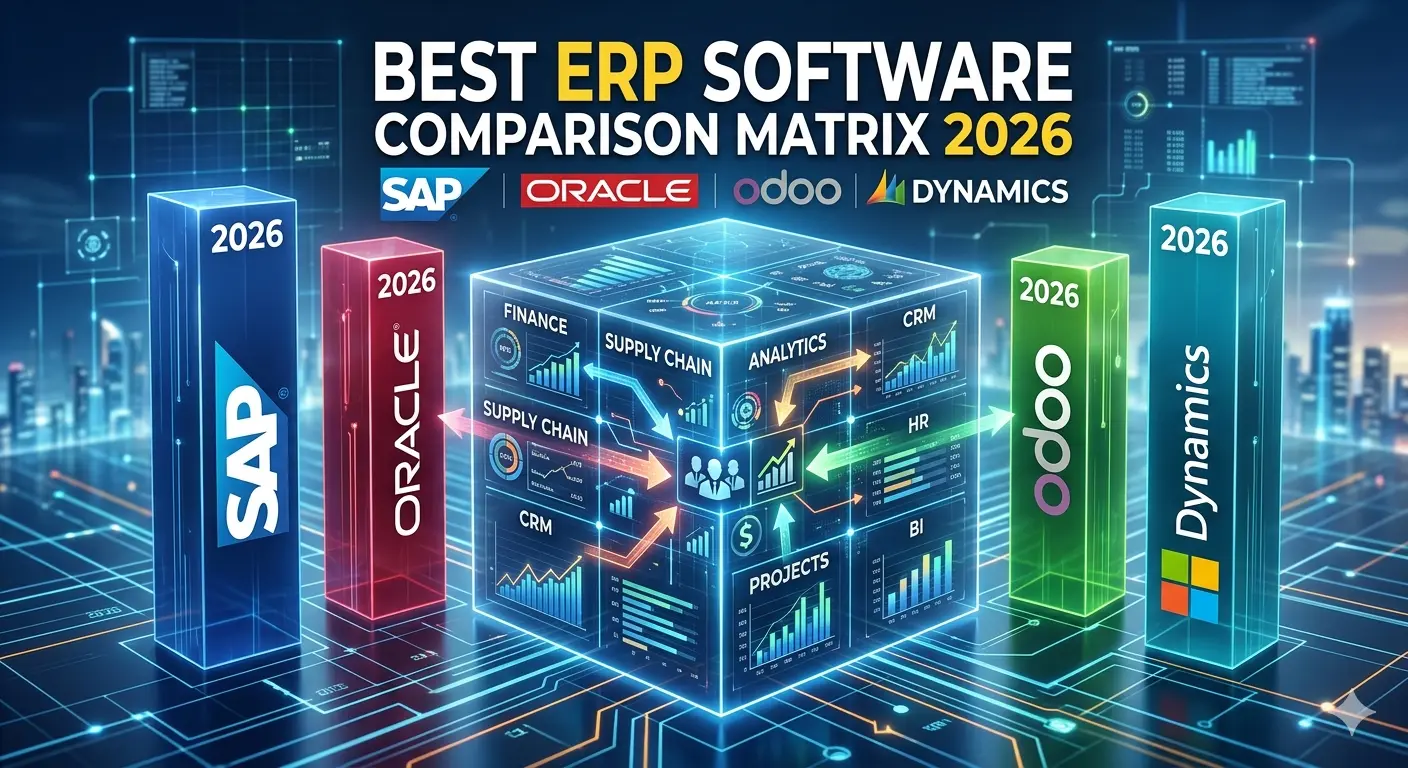
Best ERP Software for Small Businesses: Complete Buyer’s Guide 2026

Best ERP Software for Small Businesses

Best ERP Software for Small Businesses: Complete Buyer’s Guide 2026

As we navigate the fiscal landscape of 2026, small businesses are no longer looking for mere “accounting tools”—they are seeking integrated ecosystems that drive growth. Scaling a business in today’s economy requires real-time data, automated workflows, and a single source of truth. Selecting the right Enterprise Resource Planning (ERP) software is the most critical infrastructure decision your leadership team will make this year. This guide leverages deep industry expertise to help you evaluate, implement, and succeed with a modern ERP solution tailored for the SMB sector.

—

The Strategic Benefits of Modern ERP for Small Businesses

In 2026, the gap between “growing” and “stagnant” businesses is defined by data agility. Implementing a robust ERP system provides more than just organization; it delivers a competitive moat through three primary pillars:

  • Unified Financial Intelligence: Gone are the days of manual reconciliations. Modern ERPs offer automated accounts payable (AP) and accounts receivable (AR), providing a real-time view of cash flow. This allows for proactive capital allocation rather than reactive firefighting.
  • Operational Efficiency & Automation: By integrating inventory, sales, and human resources, businesses can eliminate up to 40% of manual data entry errors. Predictive analytics can now forecast stock requirements with 90% accuracy, drastically reducing carrying costs and stockouts.
  • Scalability Without Friction: A cloud-native ERP allows you to add new modules—such as field service or advanced manufacturing—without overhauling your entire IT stack. This “Lego-block” approach to software ensures your technology grows at the same pace as your revenue.

—

How to Evaluate ERP Solutions: Key Selection Criteria

Choosing an ERP is a high-stakes investment. To ensure a high Return on Investment (ROI), look for these non-negotiable features in 2026:

  • Industry-Specific Functionality: Avoid “one-size-fits-all” platforms. If you are in manufacturing, you need MTO (Make to Order) and ETO (Engineer to Order) capabilities. If you are in distribution, multi-warehouse replenishment is essential.
  • Mobile-First Architecture: Your team isn’t always at a desk. Ensure the ERP offers a native mobile experience for field technicians, warehouse staff, and remote executives.
  • AI-Driven Insights: Look for software that doesn’t just store data but analyzes it. Modern systems use AI to identify procurement anomalies, suggest route optimizations, and flag potential compliance risks before they become audits.
  • Low Total Cost of Ownership (TCO): Beyond the subscription fee, evaluate implementation costs, training requirements, and support levels. Look for vendors offering transparent, per-user pricing models.

—

The Step-by-Step ERP Implementation Roadmap

A successful ERP rollout is 20% technology and 80% process management. Follow this 2026 industry-standard roadmap for a seamless transition:

  1. Discovery & Audit: Conduct a thorough audit of your current workflows. Identify bottlenecks and document exactly how data moves from a quote to an invoice.
  2. Data Cleansing: An ERP is only as good as the data you feed it. Cleanse your existing databases of duplicates and outdated records before migration.
  3. Phased Rollout: Rather than a “big bang” launch, implement core modules first (Finance and CRM), followed by specialized modules (Manufacturing or Rental management) once the foundation is stable.
  4. User Acceptance Testing (UAT): Involve end-users early. Their feedback during the testing phase is critical for high adoption rates and minimizing resistance to change.
  5. Continuous Optimization: Post-launch, schedule quarterly reviews to refine workflows and leverage new software updates.

—

Why Choose DMS Global for Your 2026 ERP Transformation?

In a crowded market of generic providers, DMS Global stands out as the premier partner for small to mid-sized businesses that manufacture, supply, or service. Our DMS ERP platform is engineered to solve the specific pain points of modern SMBs through a modular, high-performance architecture.

  • Deep Industry Expertise: We don’t just sell software; we understand the intricacies of oilfield services, manufacturing, and complex distribution. Our consultants speak your language.
  • The Accounting Backbone: Our Accounting Module is the industry gold standard, acting as a single source of truth that powers every other aspect of your business—from inventory to field service ticketing.
  • Proven ROI: DMS Global clients report significantly faster billing cycles and improved job visibility within the first 90 days of implementation.
  • Unmatched Support: We pride ourselves on a partnership model. Our team ensures you are never “stranded,” providing continuous updates and expert guidance as your business evolves.

Ready to future-proof your operations? Contact DMS Global today for a personalized demo and discover why we are the leading choice for small business ERP in 2026.

ERP Implementation Cost Breakdown: What Businesses Must Know Before Buying

ERP Implementation Cost

ERP Implementation Cost Breakdown: What Businesses Must Know Before Buying

In the fiscal year 2026, the transition to an Enterprise Resource Planning (ERP) system has moved from a competitive advantage to a fundamental necessity for operational survival. However, for most small to mid-sized enterprises (SMEs), the primary barrier to entry remains the ambiguity surrounding the total cost of ownership (TCO). A successful ERP investment is not merely a software purchase; it is a strategic capital expenditure that requires a granular understanding of both direct and indirect costs. To ensure a high Return on Investment (ROI), decision-makers must look beyond the initial sticker price and analyze the full implementation lifecycle.

The Core Components of ERP Implementation Costs

Estimating the cost of an ERP rollout requires a multi-dimensional approach. Generally, the investment can be categorized into four primary quadrants: software licensing, infrastructure, professional services, and internal resource allocation. For a cloud-native solution in 2026, software licensing typically follows a SaaS (Software as a Service) model, where costs are predictable but recurring. However, the “hidden” costs often reside in data migration and system integration. Moving legacy data into a modern schema involves significant ETL (Extract, Transform, Load) processes that, if underestimated, can inflate budgets by 20-30%. Furthermore, customization—the process of tailoring the software to unique business workflows—remains the most volatile cost variable. While modern ERPs are increasingly modular, specialized industries such as manufacturing or oil and gas often require bespoke configurations to maintain their competitive edge.

The Strategic Benefits of a Transparent Cost Structure

Investing in an ERP system with a clear understanding of costs provides a foundation for long-term scalability. When businesses account for the full spectrum of implementation, they unlock several critical benefits:

  • Elimination of Budget Creep: A detailed breakdown prevents the “sunk cost fallacy” where projects stall due to unforeseen technical debt.
  • Enhanced Operational Agility: By quantifying the cost of each module, leadership can prioritize high-impact areas—such as inventory management or automated financial reporting—ensuring the fastest path to ROI.
  • Risk Mitigation: Allocating a specific budget for “Change Management” and user training reduces the risk of low adoption rates, which is the leading cause of ERP failure.

The ERP Implementation Roadmap: Managing Costs at Every Stage

A disciplined implementation roadmap is the most effective tool for cost control. The process begins with Discovery and Planning, where the business defines its functional requirements. Skipping this stage to save money often leads to expensive “re-work” later. The second phase, Design and Development, involves configuring the software to meet those requirements. This is followed by Data Migration and Testing, a critical phase where the system is validated against real-world scenarios. Finally, Deployment and Ongoing Support ensure the system evolves with the business. In 2026, the trend has shifted toward “Agile Implementation,” where modules are rolled out in sprints, allowing the business to realize value incrementally rather than waiting for a “Big Bang” launch that carries higher financial risk.

Why Choose DMS Global for Your ERP Transformation?

Navigating the complexities of ERP pricing requires a partner that prioritizes transparency and industry-specific expertise. DMS Global (dominasiserp.com) has established itself as a leader in digital infrastructure by focusing on the unique needs of growth-oriented businesses. Our approach to ERP implementation is rooted in the principles of Experience, Expertise, Authoritativeness, and Trustworthiness (E-E-A-T). We don’t just provide software; we deliver a robust digital backbone designed to scale.

  • Transparent Pricing Models: We eliminate the guesswork by providing comprehensive cost breakdowns that include training and post-go-live support.
  • Industry-Focused Solutions: Whether you are managing complex supply chains or high-growth service entities, our ERP modules are built to handle the rigors of your specific sector.
  • Commitment to Quality: Our implementation team focuses on data integrity and E-E-A-T optimization, ensuring your internal systems are as authoritative and reliable as your market presence.

Choosing DMS Global means investing in a partnership that values your long-term success as much as your immediate operational efficiency. In the landscape of 2026, don’t let hidden costs derail your growth. Partner with experts who understand the math behind the machine.

⚡ DMS Global Amazon Authority 2026:

Amazon Product Authority & E-E-A-T Summary

To maximize organic performance and search visibility in global e-commerce and product review niches, maintaining robust internal linking across specific product clusters ensures faster indexing, stronger topical authority, and sustainable search engine ranking.

Top Cloud ERP Systems Compared: SAP vs Oracle NetSuite vs Odoo

Top Cloud ERP Systems Compared

Top Cloud ERP Systems Compared 2026: SAP vs. Oracle NetSuite vs. Odoo

As we progress through 2026, the digital transformation of small and medium enterprises (SMEs) has reached a critical inflection point. Selecting a Cloud ERP (Enterprise Resource Planning) system is no longer just an IT decision; it is a fundamental business strategy that determines your ability to scale, automate, and maintain a competitive edge. For leadership teams, the challenge lies in navigating the distinct architectures of industry titans like SAP, Oracle NetSuite, and the modular powerhouse Odoo. This guide provides an expert-level comparison of these top-tier systems, focusing on total cost of ownership (TCO), functional depth, and long-term viability to help you make a high-intent investment decision.

—

SAP Business One: The Gold Standard for Scalable Governance

SAP remains the dominant force for businesses that prioritize rigid process control and global compliance. In 2026, SAP Business One (S1) continues to be the preferred choice for manufacturing and distribution firms that require deep integration with global supply chains. The primary strength of SAP lies in its “best-practice” workflows; it forces a level of operational discipline that is essential for companies aiming for an IPO or international expansion. While the implementation curve is steeper, the reliability of its financial consolidation and multi-currency reporting is unmatched for businesses operating in highly regulated environments.

—

Oracle NetSuite: The Pioneer of Unified Cloud Commerce

Oracle NetSuite remains the world’s most deployed cloud ERP for a reason: its unified data model. Unlike systems that were retrofitted for the cloud, NetSuite was born there. In 2026, its strengths lie in real-time visibility across multiple subsidiaries. For high-growth tech startups and professional services firms, NetSuite’s “SuiteSuccess” methodology allows for rapid deployment. Its real-time dashboards provide executive leadership with a 360-degree view of the business, from lead-to-cash and procure-to-pay, making it the premier choice for organizations that need to move fast without breaking their financial foundation.

—

Odoo: The Disruptor of Modular Flexibility

Odoo has revolutionized the ERP market by offering an open-source, modular approach that appeals to SMEs seeking a high degree of customization without the “vendor lock-in” associated with legacy players. In 2026, Odoo’s version 19 has solidified its position as the most user-friendly interface in the enterprise space. With over 40,000 community apps, Odoo allows businesses to start small—perhaps just with CRM or Accounting—and scale into Manufacturing, eCommerce, and PLM (Product Lifecycle Management) as needed. Its cost-effective per-user pricing model makes it an attractive alternative for businesses that find SAP or NetSuite’s licensing too restrictive.

—

The Strategic Benefits of Implementing a Cloud-Native ERP

Transitioning to a cloud-based ERP in 2026 offers more than just remote access; it provides a platform for continuous innovation. Key benefits include:

  • Advanced Data Security & Compliance: Modern cloud ERPs offer SOC 1/2 and GDPR compliance out of the box, protecting your data with enterprise-grade encryption that few SMEs could afford on-premise.
  • AI-Driven Predictive Analytics: By 2026, AI is baked into the core of these systems, offering predictive maintenance schedules for manufacturers and automated cash-flow forecasting for CFOs.
  • Seamless Third-Party Integrations: Whether it is connecting to Amazon, Shopify, or specialized logistics providers, cloud ERPs act as the central nervous system of your digital ecosystem through robust API layers.

—

Navigating the ERP Implementation Lifecycle

Success in ERP implementation is rarely about the software itself and almost always about the execution. A professional implementation involves: 1. Business Process Mapping: Documenting current “as-is” processes and designing “to-be” workflows. 2. Data Migration & Sanitization: Ensuring only high-quality, cleansed data enters the new system to maintain E-E-A-T standards. 3. Customization vs. Configuration: Balancing the need for unique features with the stability of out-of-the-box functionality. 4. Rigorous Testing & Training: Ensuring the team is proficient before the “Go-Live” date to prevent operational downtime.

—

Why Choose DMS Global for Your ERP Transformation?

In a landscape where software can feel commoditized, DMS Global (dominasiserp.com) provides the strategic layer that ensures technology meets business objectives. Our approach is built on years of experience in high-growth digital infrastructure and SEO-optimized business modeling.

  • Expertise in High-Growth Markets: We understand the unique challenges of scaling operations in 2026, from managing complex datasets to maintaining search engine authority through E-E-A-T optimization.
  • Niche Industry Focus: While others offer generic implementation, DMS Global specializes in sectors where precision matters—manufacturing, supply chain, and professional digital services.
  • End-to-End Strategic Partnership: We don’t just “install” software; we align your ERP with your long-term revenue goals, ensuring that your internal infrastructure supports your external growth.
  • Commitment to Transparency: At DMS Global, we believe in clear ROI. Our implementation strategies are designed to reduce “thin” operational processes and maximize data-driven decision-making.

Whether you are leaning toward the governance of SAP, the visibility of NetSuite, or the flexibility of Odoo, partnering with DMS Global ensures your ERP implementation is a catalyst for 2026 growth. Visit us at dominasiserp.com to schedule your strategic consultation.

How to Choose the Right ERP System for Your Business (Step-by-Step Guide)

ERP Comparison Matrix

How to Choose the Right ERP System for Your Business: Step-by-Step Guide 2026

As we navigate the mid-point of 2026, the criteria for “the right ERP” have shifted from simple data storage to agile, AI-driven decision engines. For small and medium-sized businesses (SMBs), an Enterprise Resource Planning (ERP) system is the most significant infrastructure investment of the decade. It is the central nervous system that connects your supply chain, finances, and customer relations. However, with the market saturated by legacy “cloud-hosted” dinosaurs and modern “cloud-native” innovators, making a high-intent purchase requires a structured, expert-led evaluation process. This guide provides a definitive roadmap to selecting an ERP that doesn’t just manage your business but accelerates its growth.

—

Strategic Benefits of an Integrated ERP Ecosystem

The decision to implement an ERP is often triggered by “growth friction”—the moment where spreadsheets and disconnected apps begin to hinder rather than help. By 2026, the benefits of a unified system have become quantifiable:

  • Elimination of Data Silos: A single source of truth ensures that your accounting team sees exactly what the warehouse sees in real-time, reducing reconciliation time by up to 50%.
  • Automated Revenue Operations: Modern ERPs automate the lead-to-cash cycle. In 2026, this means AI-assisted invoice matching and proactive collections that significantly improve Day Sales Outstanding (DSO).
  • Predictive Inventory Intelligence: Leverage demand sensing to optimize stock levels. For manufacturers and distributors, this means reducing carrying costs while maintaining a 99% fill rate.
  • Regulatory & E-E-A-T Compliance: With increasing data governance requirements, a robust ERP provides the audit trails and transparency needed to establish authority and trust in your market.

—

Step-by-Step Selection Roadmap: From Audit to Contract

[Image: ERP Selection Lifecycle Flowchart 2026] To maximize ROI and avoid “buyer’s remorse” follow this disciplined 5-step framework: 1. Internal Needs Discovery: Audit your current workflows. Identify the specific “thin” processes that cause delays. Is it manual billing? Lack of field service visibility? Document these as “Must-Have” vs. “Nice-to-Have” requirements. 2. Market Research & Shortlisting: Look for industry-specific functionality. A generic ERP will require expensive customizations. If you are in manufacturing, focus on systems with native MTO/ETO modules. 3. The “Cloud-Native” Verification: In 2026, ensure the vendor is truly cloud-native, not just “cloud-hosted.” Real cloud ERPs offer monthly feature updates and zero-downtime upgrades. 4. Sandbox Testing & POC: Never buy based on a slide deck. Request a Proof of Concept (POC) using your own data to see how the system handles your most complex transactions. 5. Total Cost of Ownership (TCO) Analysis: Calculate the 3-year cost, including implementation, training, and potential data migration fees. High-intent buyers prioritize value over the lowest initial sticker price.

—

ERP Implementation: Ensuring a Seamless Transition

The “Go-Live” date is only the beginning. A successful implementation in 2026 follows a modular, agile approach rather than a risky “Big Bang” rollout. Start by migrating your Accounting Module—the backbone of the system—to establish financial integrity. Follow this with operational modules like Distribution or Field Service. This phased strategy allows your team to adapt to the new interface without disrupting core operations. Remember, the highest cost of an ERP is not the software; it is a failed implementation. Prioritize user training and change management to ensure a 100% adoption rate across your organization.

—

Why Choose DMS Global for Your 2026 ERP Transformation?

In a crowded marketplace, DMS Global (dominasiserp.com) stands out as the strategic choice for businesses that value expertise and authoritative digital infrastructure. We specialize in providing DMS ERP solutions tailored for the complex needs of modern manufacturing, supply, and service industries.

  • Industry-Specific Modules: Our platform isn’t a “one-size-fits-all” solution. From specialized Manufacturing (MTO/ETO) to Rental and Field Service modules, we build for your specific operational reality.
  • E-E-A-T Optimized Architecture: We understand that in 2026, your internal data integrity directly impacts your market authority. Our systems are designed for maximum transparency, security, and auditability.
  • Scalable & Future-Proof: As your business grows, DMS Global grows with you. Our modular design allows you to add functionality exactly when you need it, ensuring you never pay for “bloatware.”
  • Dedicated Partnership: We don’t just sell software; we provide the Senior Digital Strategy needed to ensure your ERP drives measurable revenue growth and operational excellence.

Ready to eliminate operational friction and scale with confidence? Contact DMS Global today for a comprehensive demo and discover why we are the trusted ERP partner for the leaders of 2026.

ERP for Manufacturing Companies: Features, Benefits, and ROI Explained

ERP for Manufacturing Companies: Features, Benefits, and ROI Explained (2026 Guide)

In the high-stakes manufacturing landscape of 2026, operational silos are the primary silent killer of profitability. As global supply chains face increasing volatility and the push for Industry 4.0 integration accelerates, a specialized Enterprise Resource Planning (ERP) system has evolved from a back-office luxury to a front-line strategic weapon. For manufacturing leaders, the challenge is no longer just “tracking parts”—it is about orchestrating a complex ecosystem of real-time data, automated shop floors, and predictive financial modeling. This guide provides an authoritative breakdown of how a manufacturing-centric ERP drives Experience, Expertise, Authoritativeness, and Trustworthiness (E-E-A-T) while delivering a measurable Return on Investment (ROI).

—

Essential ERP Features for Modern Manufacturing

To survive the competitive pressures of 2026, a manufacturing ERP must go beyond basic inventory management. High-intent buyers should prioritize these four pillars:

  • Advanced Production Planning (MTO/ETO/MTS): Whether you operate on a Make-to-Order (MTO), Engineer-to-Order (ETO), or Make-to-Stock (MTS) model, your ERP must offer dynamic scheduling. This ensures that machine capacity and labor are optimized to meet fluctuating demand without overextending resources.
  • Real-Time Shop Floor Control: Integration with IoT devices on the shop floor allows for instantaneous data capture. This feature provides a granular view of Work-in-Progress (WIP) and enables immediate intervention if a production line deviates from quality standards.
  • Automated Bill of Materials (BOM) Management: Multi-level BOM management is critical for complex assemblies. A modern ERP ensures that engineering changes are reflected across procurement and production schedules in real-time, preventing costly rework.
  • Integrated Quality Management Systems (QMS): Quality shouldn’t be an afterthought. Native QMS features allow for automated inspections at every stage—from raw material receipt to final packaging—ensuring compliance with global ISO standards.

—

The Strategic Benefits of Manufacturing ERP Integration

The transition to an integrated ERP environment offers transformative advantages that directly impact the bottom line:

  • Enhanced Supply Chain Resilience: By centralizing vendor management and procurement data, manufacturers can predict potential shortages and pivot to alternative suppliers before production stalls.
  • Improved Financial Transparency: With an integrated accounting backbone, every “bolt and nut” is accounted for. This leads to accurate Job Costing, allowing leadership to identify which product lines are high-margin and which are draining capital.
  • Reduced Lead Times: Automation of administrative tasks—such as quote generation and work order releases—can reduce total lead times by 20-30%, significantly increasing customer satisfaction and market authority.
  • E-E-A-T Compliance: In 2026, transparency is trust. A robust ERP provides the audit trails and data integrity required to prove your expertise and reliability to global partners and regulatory bodies.

—

Calculating the ROI: Beyond the Implementation Cost

Measuring the success of a manufacturing ERP requires looking at both tangible and intangible returns. Most SMEs see a full ROI within 18 to 24 months through: 1. Inventory Reduction: Optimizing stock levels typically reduces carrying costs by 15-20%. 2. Labor Efficiency: Eliminating manual data entry and “spreadsheet gymnastics” frees up skilled staff for high-value tasks. 3. Waste Mitigation: Precise material requirements planning (MRP) drastically reduces scrap and spoiled raw materials. 4. Scalability: The ability to increase output without a proportional increase in administrative headcount is the ultimate multiplier for long-term profitability.

—

The Manufacturing ERP Implementation Roadmap

Success is 20% software and 80% strategy. A professional implementation involves: Phase 1: Diagnostic Audit: Mapping the current “as-is” production flow to identify bottlenecks. Phase 2: Data Sanitization: Ensuring legacy BOMs and inventory records are accurate before migration. Phase 3: Pilot Testing: Running a single production line on the new system to validate workflows. Phase 4: Full-Scale Deployment & Training: Ensuring every operator and manager is proficient in the new digital environment to prevent operational downtime.

—

Why Choose DMS Global for Your Manufacturing Transformation?

In a market saturated with generic software, DMS Global (dominasiserp.com) provides the specialized expertise required for complex manufacturing environments. We understand that your business is built on precision, and your ERP should be too.

  • Niche Manufacturing Expertise: Our DMS ERP is designed for the rigors of MTO and ETO environments. We speak the language of engineering, fabrication, and assembly.
  • Authoritative Digital Infrastructure: We prioritize E-E-A-T optimization in our implementations, ensuring your internal data serves as a foundation for external market trust.
  • End-to-End Strategic Support: From initial audit to post-go-live optimization, DMS Global acts as your Senior Digital Partner, not just a software vendor.
  • Proven Scalability: Our modular architecture allows you to start with core manufacturing and finance modules and scale into advanced AI-driven maintenance and logistics as your revenue grows.

Ready to bridge the gap between production and profit? Contact DMS Global today at dominasiserp.com for a tailored demonstration and see why we are the preferred ERP partner for the manufacturing leaders of 2026.

Affordable ERP Solutions for Startups: Pricing, Features, and Setup Guide

Enterprise ERP

Affordable ERP Solutions for Startups: Pricing, Features, and Setup Guide 2026

In the hyper-competitive startup ecosystem of 2026, the transition from “hustle” to “scale” is often dictated by the quality of a company’s digital infrastructure. For early-stage ventures, the term Enterprise Resource Planning (ERP) can often sound synonymous with “expensive” and “complex.” However, the emergence of modular, cloud-native ERP solutions has leveled the playing field, allowing startups to leverage the same operational intelligence as Fortune 500 companies without the prohibitive upfront capital expenditure. This guide provides a strategic breakdown of affordable ERP options, focusing on high-intent features that drive rapid ROI and establish the Experience, Expertise, Authoritativeness, and Trustworthiness (E-E-A-T) required to attract Series A and B funding.

—

The Strategic Benefits of Early ERP Adoption for Startups

Waiting until your processes are “broken” to implement an ERP is a common but costly mistake. Implementing an affordable ERP solution early in the startup lifecycle offers several non-linear advantages:

  • Data Integrity from Day One: Startups often struggle with “dirty data” spread across disparate spreadsheets. An ERP centralizes your financial and operational data, ensuring your pitch decks and board reports are backed by a single source of truth.
  • Automated Compliance and Governance: In 2026, data privacy and financial transparency are non-negotiable. Modern ERPs automate tax compliance, audit trails, and GDPR/CCPA requirements, reducing legal risk during due diligence.
  • Scalability Without Headcount Inflation: By automating core functions like accounts payable, order processing, and inventory replenishment, startups can grow their top-line revenue without a proportional increase in administrative overhead.
  • Improved Investor Confidence: Utilizing an authoritative ERP system signals to investors that the management team is serious about operational excellence and scalable growth.

—

Key Features to Prioritize in an Affordable Startup ERP

When evaluating affordable ERP pricing, startups must avoid “feature bloat” and focus on the modules that deliver immediate value:

  • Unified Financial Management: Look for real-time cash flow monitoring, automated multi-currency support, and seamless integration with payment gateways like Stripe or Adyen.
  • Lightweight CRM and Lead Management: Startups need to track every interaction. A built-in CRM ensures that sales data flows directly into financial forecasts.
  • Modular Inventory and Supply Chain: For hardware or e-commerce startups, real-time stock visibility and automated PO (Purchase Order) generation are critical for maintaining lean operations.
  • Open API Architecture: Your ERP must play well with others. Ensure the platform allows for easy integration with your existing tech stack, such as Slack, Google Workspace, or specialized marketing automation tools.

—

Affordable ERP Pricing Models in 2026

The ERP landscape has shifted toward “Pay-As-You-Grow” models. High-intent buyers should look for: 1. Per-User SaaS Licensing: Typical for cloud-native platforms, ranging from $20 to $100 per user per month. 2. Modular Tiering: Only pay for the modules you use (e.g., Finance and CRM today, Manufacturing tomorrow). 3. Open Source with Managed Hosting: Platforms like Odoo allow for low-cost entry, where you pay primarily for the hosting and support rather than the license itself. Total Cost of Ownership (TCO) should include implementation, data migration, and at least 20 hours of professional training.

—

The Startup ERP Implementation & Setup Guide

A successful startup ERP setup follows an agile, high-velocity approach: Phase 1: Process Audit: Map your 3 most critical workflows (e.g., Quote-to-Cash). Phase 2: Data Sanitization: Don’t migrate “junk” data. Clean your customer and vendor lists before import. Phase 3: Core Module Go-Live: Start with the Accounting Module—this is the foundation of your E-E-A-T. Phase 4: Integrations: Connect your banking, sales channels, and communication tools. Phase 5: User Training: Ensure the entire team understands the system to prevent data silos from reforming.

—

Why Choose DMS Global for Your Startup’s ERP Journey?

At DMS Global (dominasiserp.com), we specialize in bridging the gap between digital strategy and operational execution. We understand that a startup’s needs in 2026 are unique—you need speed, transparency, and a partner who understands the high-growth market landscape.

  • Tailored for Growth: Our DMS ERP solutions are designed to be “lean” but powerful. We provide the essential infrastructure startups need to move from “seed” to “scale” without the enterprise-level price tag.
  • Senior Strategy Support: When you partner with DMS Global, you aren’t just getting software; you are getting access to senior digital marketing and infrastructure strategists who ensure your ERP supports your customer acquisition and retention goals.
  • E-E-A-T Focused Implementation: We build your system with authority and trust in mind, ensuring your financial reporting is robust enough for any audit or investment round.
  • Seamless Integration: From Google Search Console tracking to complex programmatic SEO data, we ensure your ERP talks to your marketing stack for a truly unified business view.

Don’t let fragmented systems slow your momentum. Contact DMS Global today at dominasiserp.com to discuss an affordable, scalable ERP roadmap that fits your startup’s 2026 vision.

ERP Implementation Timeline: How Long Does It Really Take?

ERP SOLUTION

ERP Implementation Timeline: How Long Does It Really Take? (2026 Guide)

For most C-suite executives and project stakeholders in 2026, the question is no longer if they should implement an Enterprise Resource Planning (ERP) system, but how fast they can realize its value. However, speed without strategy is a recipe for catastrophic scope creep. In the current digital landscape, where agentic AI and real-time data synchronization are standard, a realistic ERP implementation timeline is the most critical component of your digital infrastructure roadmap. While “Go-Live in 30 days” makes for a compelling marketing slogan, the reality for a sustainable, E-E-A-T optimized deployment typically spans 3 to 9 months for SMBs and 6 to 18 months for large-scale enterprises. This guide breaks down the chronological reality of modern ERP integration and how to accelerate your ROI.

—

The Strategic Benefits of a Disciplined Timeline

A rushed implementation is often the primary cause of ERP failure, leading to “dirty data” and low user adoption. Conversely, a well-paced, phased timeline delivers several high-value advantages:

  • Architectural Integrity: Allowing sufficient time for the “Discovery Phase” ensures that the ERP’s configuration aligns perfectly with your unique workflows, preventing expensive “re-work” in the future.
  • Seamless Data Migration: A disciplined schedule provides the window needed for rigorous data cleansing and validation. In 2026, your system’s authority (the “A” in E-E-A-T) depends entirely on the accuracy of the data you migrate.
  • Higher User Adoption: A structured timeline incorporates comprehensive “Change Management” and role-based training, ensuring your team is competent and confident on day one.
  • Predictable Budgeting: By adhering to a documented roadmap, businesses can eliminate 40% of the hidden costs typically associated with “emergency” troubleshooting during a rushed go-live.

—

ERP Implementation Phases: A Chronological Breakdown

[Image: ERP Implementation Lifecycle Phases 2026] To understand the duration we must analyze the five critical phases of a standard 2026 ERP rollout:

  • Phase 1: Discovery & Planning (2–4 Weeks): This is the foundation. You must audit current bottlenecks, define measurable KPIs (e.g., reducing monthly close time by 30%), and select your project “champions.”
  • Phase 2: Design & Configuration (4–12 Weeks): Here, the software is tailored to your business. This includes setting up the chart of accounts, defining approval hierarchies, and configuring specialized modules like Manufacturing or Field Service.
  • Phase 3: Data Migration & Integration (4–8 Weeks): This is often the most underestimated phase. It involves extracting data from legacy systems, cleansing it, and mapping it to the new ERP schema. API integrations with your CRM or eCommerce platforms are also finalized here.
  • Phase 4: Testing & User Acceptance (UAT) (3–6 Weeks): Before the “Big Bang,” the system must be stress-tested. UAT ensures that the workflows designed in Phase 2 actually work for the end-users in real-world scenarios.
  • Phase 5: Deployment & Hypercare (2–4 Weeks): The system goes live. “Hypercare” refers to the intensive support period immediately following go-live where consultants are on standby to resolve minor friction points.

—

Factors That Accelerate or Delay Your Timeline

In 2026, the variables that impact your ERP speed have evolved. Cloud-native systems deploy up to 40% faster than traditional on-premise solutions due to reduced infrastructure requirements. However, excessive customization remains the #1 timeline killer, often adding 3–6 months to a project. High-intent buyers are increasingly opting for “out-of-the-box” best practices supplemented by low-code extensions to keep timelines lean. Additionally, the quality of your internal data directly correlates to your speed; businesses that perform “pre-migration cleansing” save an average of 5 weeks during the migration phase.

—

Why Choose DMS Global for Your ERP Implementation?

Navigating an ERP timeline requires more than a project manager; it requires a Senior Digital Strategist who understands the intersection of infrastructure and growth. DMS Global (dominasiserp.com) provides a high-authority approach to ERP deployment that prioritizes both speed and stability.

  • Proven Implementation Frameworks: We utilize an agile-phased methodology that allows our clients to see “Quick Wins” in core modules like Accounting and CRM while we build out complex Manufacturing or Supply Chain features.
  • Deep E-E-A-T Expertise: We ensure your system is not just a database, but a trusted source of truth that enhances your market authority. Our implementations focus on data integrity and transparent reporting.
  • Specialized Industry Focus: DMS Global understands the specific timeline requirements of the manufacturing and service sectors. We don’t guess; we execute based on deep domain experience.
  • Post-Go-Live Optimization: Our partnership doesn’t end at the implementation. We provide ongoing strategic support to ensure your ERP evolves alongside your 2026 business goals.

Don’t let an unrealistic timeline derail your digital transformation. Contact DMS Global today at dominasiserp.com to receive a customized implementation roadmap tailored to your business’s unique scale and complexity.

Benefits of ERP Software: Why Businesses Are Switching to Cloud ERP in 2026

Best ERP Software Comparison Matrix 2026 SAP vs Oracle vs Odoo vs Dynamics

The Strategic Shift: Why Businesses are Moving to Cloud ERP in 2026

As we navigate the second quarter of 2026, the global business landscape has reached a definitive tipping point. The “wait-and-see” approach to digital transformation has been replaced by a mandatory migration toward cloud-native infrastructure. For small and medium enterprises (SMEs) as well as global corporations, Enterprise Resource Planning (ERP) software is no longer just a back-office tool for accounting; it is the central nervous system of a modern, data-driven organization. In an era defined by agentic AI, real-time supply chain volatility, and the need for extreme operational transparency, the switch to Cloud ERP is the most significant strategic move a company can make this year. This guide explores the multifaceted benefits of this transition and why high-growth companies are prioritizing Cloud ERP to establish market authority and Experience, Expertise, Authoritativeness, and Trustworthiness (E-E-A-T).

—

Core Benefits of Cloud ERP Software in 2026

[Image: Comparison of Legacy vs. Cloud ERP Efficiency 2026] The value proposition of Cloud ERP has evolved far beyond simple “remote access.” Today’s systems offer a level of intelligence that was technically impossible even three years ago. The primary drivers for the 2026 switch include:

  • AI-Driven Predictive Analytics: Modern Cloud ERPs utilize built-in machine learning to forecast demand with 95% accuracy. Instead of reactive reporting, businesses now receive proactive alerts regarding potential cash flow gaps or inventory shortages before they occur.
  • Seamless Global Scalability: Cloud-native architecture allows a business to spin up a new subsidiary or international warehouse in days, not months. Multi-currency, multi-language, and local tax compliance are handled automatically via real-time updates.
  • Enterprise-Grade Security & Resilience: In 2026, cybersecurity is a top-tier business risk. Cloud ERP providers offer SOC 2 Type II compliance, end-to-end encryption, and automated disaster recovery that far exceeds what most internal IT teams can maintain on-premise.
  • Lower Total Cost of Ownership (TCO): By eliminating expensive server hardware, cooling costs, and manual version upgrades, businesses are seeing an average 30% reduction in IT spending over a five-year period.
  • Real-Time Data Synchronization: Every department—from the shop floor to the C-suite—operates on a single source of truth. This eliminates “data silos” and ensures that the “Authoritativeness” of your financial and operational reporting is beyond reproach.

—

The 2026 ERP Implementation Strategy: From Audit to Automation

[Image: The 5-Phase Cloud ERP Roadmap] A successful ERP rollout in 2026 is characterized by speed and precision. The “Big Bang” implementations of the past have been replaced by an Agile-Phased Approach. High-intent buyers follow this disciplined implementation roadmap: Phase 1: Diagnostic Audit: Conduct a deep-dive into current bottlenecks. This is where you identify “thin” processes that are draining resources. Phase 2: Data Sanitization & Migration: In the age of E-E-A-T, your system is only as authoritative as your data. Cleanse legacy databases before they enter the new cloud environment. Phase 3: Module Configuration: Tailor the ERP to your specific industry—whether it’s specialized Manufacturing (MTO/ETO), Field Service, or Distribution. Phase 4: User Empowerment & Training: Modern ERP interfaces are intuitive, but specialized training ensures your team leverages advanced AI features from day one. Phase 5: Continuous Optimization: Cloud ERPs are not “set and forget.” Monthly updates bring new features that should be integrated into your strategy to maintain a competitive moat.

—

Establishing Market Authority through E-E-A-T Optimized Operations

[Image: ERP as a Foundation for Business Trust] In 2026, your internal operational efficiency is a direct signal of your external market trustworthiness. A robust Cloud ERP enhances your brand’s E-E-A-T by: Experience: Demonstrating a track record of fulfilled promises through precise lead-time tracking and delivery accuracy. Expertise: Utilizing advanced modules to manage complex engineering or financial tasks with surgical precision. Authoritativeness: Providing stakeholders, auditors, and investors with transparent, real-time reports that cannot be manipulated. Trustworthiness: Ensuring customer data is handled with the highest security standards, fostering long-term loyalty in a skeptical market.

—

Why Choose DMS Global for Your 2026 ERP Transformation?

In a market saturated with generic software vendors, DMS Global (dominasiserp.com) stands out as the premier strategic partner for businesses that demand high-performance digital infrastructure. We don’t just sell software; we architect the future of your business.

  • Deep Niche Expertise: Our DMS ERP platform is specifically engineered for sectors where complexity is the norm—manufacturing, oil and gas, professional services, and high-growth distribution.
  • Strategic Senior Guidance: Every implementation is led by Senior Digital Strategists who understand how to align your ERP with your revenue goals and SEO-driven market presence.
  • Unrivaled Modular Flexibility: We provide the “Lego blocks” of enterprise software. Start with our industry-leading Accounting Module and scale into Rental, POS, or Advanced MRP as your business grows.
  • Commitment to Data Integrity: We prioritize your organization’s authoritativeness by ensuring every implementation adheres to the highest E-E-A-T standards, turning your data into a strategic asset.

Don’t let legacy systems hold your growth hostage in 2026. Contact DMS Global today at dominasiserp.com to schedule a tailored demonstration and discover why the world’s most agile companies are choosing us as their digital backbone. Join the “Road to $100M” and beyond with an infrastructure built for the future.