How to Earn Passive Income on Waveful App: A Comprehensive Strategic Guide

waveful MMO 2026
waveful
waveful

How to Earn Passive Income on Waveful App

In the rapidly evolving digital landscape of 2026, the aspiration to generate sustainable passive income has led many to explore emerging social platforms. While traditional giants like YouTube and Facebook have dominated the Make Money Online (MMO) space for years, Waveful has entered the market with a fresh, community-centric approach. For creators and digital entrepreneurs, mastering Waveful is not just about social networking; it is about building a scalable digital business. This guide outlines how to leverage the unique mechanics of Waveful to generate long-term passive income while adhering to high E-E-A-T (Experience, Expertise, Authoritativeness, and Trustworthiness) standards.

Understanding the Waveful Economic Model

Passive income is often misunderstood as “money for nothing.” In the context of Waveful, it is more accurately described as “asset-based income.” You build an asset—your community and your reputation—which then continues to generate returns over time.

Waveful operates on the “Island” system, which fosters niche-specific communities. This structure is inherently superior for passive income because it allows for high-quality, targeted engagement. Unlike a global feed where content is quickly buried, your contributions within an Island act as evergreen resources that can attract new followers and engagement weeks or even months after the initial post.

Building Your Authority (The E-E-A-T Approach)

To ensure your income streams remain stable, you must position yourself as an authority in your chosen niche. This is where E-E-A-T becomes your most valuable tool.

  • Experience: Share your genuine journey. If you are documenting your experience with SEO or digital marketing, be transparent about both your successes and your failures. This builds a human connection that is essential for long-term loyalty.

  • Expertise: Deep-dive into topics that your community cares about. Do not just skim the surface; provide actionable advice, detailed tutorials, and thorough analyses.

  • Authoritativeness: Engage with other creators and participate in high-level discussions within your Island. When other reputable creators interact with your content, it signals to both the platform and the users that you are a trusted source.

  • Trustworthiness: Maintain professional integrity. Ensure that your recommendations, especially those involving affiliate links or community support, are honest and provide real value to your audience.

Join Waveful Now

Get exclusive access and start earning from home.

Join Waveful

Strategic Pathways to Passive Income on Waveful

  1. The Community Support Loop: The most direct form of income on Waveful is through the support of your community. When you provide consistently helpful content, your followers are incentivized to use the “Super Likes” feature. Treat this not as a donation, but as a reward for the value you bring to the Island.

  2. Affiliate Ecosystems: Waveful is an excellent place to cultivate a community around specific tools or platforms. By building trust, you can effectively use affiliate marketing. For instance, sharing your experience with the platform itself is a great starting point. You can invite your audience to join the journey using your referral link: https://invites.waveful.app/jd7U.

  3. Cross-Platform Funneling: Do not treat Waveful as a silo. Use it as a hub to funnel your most dedicated followers to your other professional services, such as your website, paid newsletters, or consulting services. This diversifies your income and ensures that your digital business is resilient.

  4. Content Licensing and Syndication: As your Island grows, your content becomes an intellectual asset. You can repurpose your best Waveful posts into blog articles, e-books, or video scripts, creating a secondary stream of income from the same core material.

Consistency and the Long-Term Vision (2026–2030)

The key to generating passive income through 2030 is staying ahead of the curve. The digital economy is moving toward platforms that prioritize user ownership and direct creator-audience relationships. Waveful’s architecture is specifically built for this shift.

To ensure your passive income remains consistent, you must treat your Waveful presence as a business. This means auditing your content strategy, analyzing what topics generate the most engagement, and being willing to pivot when trends change. Avoid “clickbait” strategies. While they might provide a short-term spike in traffic, they rarely build the kind of loyal community that is required for stable, long-term passive income.

Avoiding Common Pitfalls

Many newcomers to the MMO space fall into the trap of trying to be everything to everyone. On Waveful, this is a recipe for failure. If you try to cover too many topics, you will fail to build a recognizable brand. Stick to your niche, stay consistent, and prioritize the quality of your engagement over the quantity of your posts.

Furthermore, do not neglect the “passive” aspect of your strategy. This means creating content that remains relevant for a long time. Tutorials, “how-to” guides, and industry analyses are far better for passive income than news-heavy posts that expire after 24 hours.

Final Thoughts on Global Growth

As evidenced by the growing creator presence in regions like the UK, Waveful is a global platform. This means that your target audience is not limited to your local geography. By producing high-quality content that addresses global pain points in your niche, you can tap into an international audience, effectively expanding your potential for income across different time zones.

Building a passive income stream on Waveful is a journey that requires patience, dedication, and a commitment to delivering value. By focusing on E-E-A-T, fostering genuine community engagement, and strategically leveraging the platform’s tools, you can build a sustainable and lucrative digital presence that will serve you well for years to come. Start today, stay consistent, and let your community be the engine of your success.

Waveful, MMO, Passive Income, Community Engagement, Global Content Strategy

Mastering Waveful: A Strategic Roadmap for Global MMO Success in 2026

waveful MMO 2026

Mastering Waveful

The digital landscape of 2026 is defined by a shift toward authentic connection and sustainable growth. As traditional advertising revenue models face increasing volatility, content creators and digital entrepreneurs are turning to platform-based community economies. Waveful has emerged as a significant player in this space, providing a unique environment that rewards interaction, expertise, and community stewardship. For those looking to excel in the Make Money Online (MMO) sector, mastering Waveful is no longer optional—it is a strategic necessity.

The E-E-A-T Framework in the Waveful Ecosystem

To build a sustainable presence on Waveful, one must adhere to the principles of E-E-A-T (Experience, Expertise, Authoritativeness, and Trustworthiness). Unlike legacy social networks that favor viral, often low-quality content, Waveful’s “Island” structure rewards depth.

  • Experience: The platform prioritizes creators who share firsthand knowledge. Whether you are documenting a technical SEO experiment or a personal development journey, your unique perspective is your greatest asset.

  • Expertise: By focusing on a specific Island, you demonstrate a commitment to your niche. This allows you to serve as a reliable resource for your community members.

  • Authoritativeness: Authority is earned through consistent, valuable contributions. Over time, your presence within an Island establishes you as a go-to figure for specific inquiries.

  • Trustworthiness: Transparency regarding your monetization goals and your genuine engagement with followers fosters deep trust, which is the foundation of long-term revenue.

Developing a Content Strategy that Resonates

A successful Waveful strategy is built on the pillar of “helpful content.” Before every post, ask yourself: Does this provide value to my community? Does it solve a problem, answer a question, or inspire meaningful discussion?

  1. Niche Selection: Choose an Island that aligns with your professional background or intense personal interests.

  2. Engagement-First Approach: Interaction is the engine of the Waveful economy. Respond to every comment, initiate debates, and show appreciation for the contributions of others.

  3. Consistency over Intensity: You do not need to post every hour. A high-quality post once or twice a day that encourages discussion is far more effective than dozens of low-effort status updates.

  4. Global Networking: Leverage the international nature of the platform. By observing successful creators in regions like the UK and Europe, you can gain insights into global trends that you can adapt for your local community.

The Financial Mechanics of Waveful

Unlike platforms that rely on opaque ad revenue-sharing agreements, Waveful offers a more direct path to monetization. The “Super Likes” feature is a testament to this, allowing your audience to signal appreciation for content they find truly helpful. This system aligns perfectly with the goal of creating high-quality content because the feedback loop is immediate and personal.

However, viewing Waveful solely as an “income app” is a mistake. It should be treated as an integral part of your personal brand ecosystem. By using Waveful to drive traffic to your website or other professional services, you are creating a diversified income funnel that is resilient against market changes.

A Step-by-Step Guide for New Entrants

If you are ready to begin, follow these steps to ensure you start on the right foot:

  • Create Your Profile: Treat your profile as your professional resume. Use a clear, professional image and a bio that highlights your expertise.

  • Engage Before You Broadcast: Spend your first week interacting with others. Add value to existing discussions before trying to grow your own Island.

  • Invite Your Network: Growth on Waveful is accelerated by your existing community. Invite your contacts and encourage them to engage with your content.

  • Use the Referral System: You can invite others to join the platform through your link, creating a foundation for your initial growth. Start your journey here: https://invites.waveful.app/CRZ4.

Why 2026 is the Year for MMO Diversification

We are entering a period where platforms that prioritize community ownership will outperform those that prioritize passive consumption. By focusing your efforts on Waveful, you are positioning yourself ahead of the curve. You are not just building a follower count; you are building a digital business.

As we look toward 2030, the creators who will thrive are those who can navigate multiple platforms while maintaining a singular, consistent voice. Waveful provides the ideal environment to test this strategy, as it allows for direct communication and community building that is often lost on larger, more crowded networks.

Sustaining Success for the Long Term

The key to longevity in the MMO space is adaptability. Keep a close eye on the platform’s updates, but never lose sight of your primary goal: serving your audience. When you prioritize the needs of your community, the algorithms—and the monetization benefits—will naturally follow.

Stay professional, stay consistent, and continue to refine your expertise. By leveraging the tools Waveful provides and maintaining a commitment to helpful, high-quality engagement, you are not just participating in an MMO program; you are building an authoritative and trustworthy presence in the global digital landscape.

Cara Menghasilkan Uang dari Waveful untuk Pemula: Panduan Lengkap dan Strategis 2026

waveful MMO 2026
waveful
waveful

Hasilkan Uang dari Waveful

Di era digital yang berkembang pesat pada tahun 2026, mencari peluang Make Money Online (MMO) yang berkelanjutan bukan lagi sekadar tren, melainkan kebutuhan. Banyak kreator mulai merasa jenuh dengan algoritma platform media sosial lama yang cenderung tertutup bagi kreator baru. Waveful hadir sebagai solusi alternatif yang menawarkan ekosistem lebih adil, di mana kreativitas dan interaksi komunitas menjadi kunci utama untuk menghasilkan pendapatan. Artikel ini akan membedah secara mendalam bagaimana kamu bisa memanfaatkan Waveful sebagai sumber penghasilan tambahan yang potensial.

Mengenal Waveful: Lebih dari Sekadar Media Sosial

Waveful adalah platform media sosial yang mengedepankan pembangunan komunitas melalui fitur yang disebut “Island“. Jika di platform lain kamu berjuang melawan algoritma demi view semata, di Waveful kamu berfokus pada membangun hubungan dengan orang-orang yang memiliki minat serupa. Dari perspektif E-E-A-T, platform ini memberikan ruang bagi kreator untuk menunjukkan keahlian (Expertise) mereka secara otentik.

Kamu bisa menjadi sosok otoritatif (Authoritativeness) dalam niche tertentu, mulai dari teknologi, SEO, hingga gaya hidup, hanya dengan konsisten berbagi informasi yang bermanfaat. Kepercayaan (Trustworthiness) pun terbentuk secara alami karena sistem monetisasi Waveful sangat transparan, memungkinkan audiens untuk mendukung kreator favorit mereka secara langsung.

Mengapa Waveful Menjadi Peluang MMO yang Menarik?

Ada alasan kuat mengapa Waveful layak masuk dalam portofolio MMO kamu:

  • Monetisasi yang Berbasis Interaksi: Tidak perlu menunggu jutaan pengikut. Dengan keterlibatan yang tinggi di komunitasmu, sistem seperti Super Likes memungkinkan kamu mendapatkan nilai ekonomi langsung dari apresiasi pengikut.

  • Fokus pada Komunitas (Islands): Ini memudahkan kamu dalam menargetkan audiens yang tepat. Jika kamu seorang SEO specialist, bergabung dengan Island yang membahas digital marketing akan memberikan jangkauan audiens yang sangat tertarget.

  • Potensi Referral: Waveful memiliki program undangan yang sangat menguntungkan. Mengajak orang lain bergabung melalui tautan resmi adalah salah satu cara tercepat bagi pemula untuk mulai membangun saldo di akun mereka.

Langkah-Langkah Strategis Memulai Karier di Waveful

Agar sukses dan memiliki performa organik yang solid, berikut adalah langkah yang bisa kamu terapkan:

1. Optimasi Profil secara Profesional Profil adalah etalase dirimu. Pastikan foto profil jelas, bio menjelaskan apa keahlianmu, dan link yang kamu cantumkan relevan. Profil yang terlihat profesional meningkatkan tingkat kepercayaan calon pengikutmu.

2. Tentukan Island yang Relevan Pilih Island di mana kamu merasa paling ahli. Jika kamu sudah berpengalaman di bidang tertentu, bagikan konten yang memberikan solusi atau edukasi. Konten yang membantu audiens adalah jenis konten yang paling cepat mendapatkan engagement.

3. Bangun Networking Global Waveful sudah digunakan secara global, termasuk oleh kreator di luar negeri. Jangan ragu untuk berinteraksi dengan kreator internasional. Ini akan memberikan wawasan baru tentang tren dunia yang bisa kamu adaptasi di pasar lokal.

4. Konsistensi dalam Memberikan Nilai Kunci utama dari helpful content adalah konsistensi. Berbagilah tips, tutorial, atau pandangan pribadi secara rutin. Ingat, audiens akan tetap setia jika mereka merasa mendapatkan nilai (value) dari setiap postingan yang kamu bagikan.

Mengelola Pendapatan dan Keberlanjutan

Menghasilkan uang dari rumah memang terdengar sangat menarik, namun tetap perhatikan manajemen risiko. Jangan jadikan Waveful satu-satunya sumber pendapatan. Gunakan aplikasi ini sebagai bagian dari diversifikasi aset digitalmu. Jika kamu seorang pebisnis atau digital marketer, Waveful bisa menjadi saluran untuk mengarahkan audiens ke website atau produk layananmu yang lain.

Selalu pantau kebijakan terbaru dari platform. Fitur monetisasi sering diperbarui seiring dengan pertumbuhan basis pengguna. Dengan tetap terinformasi, kamu bisa menyesuaikan strategi kontenmu agar tetap relevan dan menghasilkan pendapatan maksimal.

Mulai Langkahmu Sekarang

Kesuksesan di dunia digital tidak datang tanpa aksi. Waveful saat ini masih dalam fase pertumbuhan yang sangat subur, yang berarti kesempatan bagi kamu untuk menjadi salah satu pionir di komunitasmu masih terbuka lebar. Semakin awal kamu membangun otoritas di sebuah Island, semakin besar pula peluangmu untuk meraih penghasilan bulanan yang signifikan hingga tahun 2030 mendatang.

Jangan lewatkan kesempatan ini untuk membangun aset digitalmu sendiri. Kamu bisa mendaftar secara gratis dan mulai membangun ekosistemmu melalui tautan afiliasi ini: https://invites.waveful.app/jd7U.

Join Waveful Now

Get exclusive access and start earning from home.

Join Waveful

Dengan bergabung hari ini, kamu tidak hanya memulai perjalanan MMO, tetapi juga menjadi bagian dari jaringan global kreator yang saling mendukung. Tetap fokus, terus berikan konten terbaik, dan nikmati pertumbuhan komunitasmu di Waveful.

The Future of Community-Driven Monetization: A Comprehensive Guide to Waveful

waveful MMO 2026
waveful
waveful payment

In the rapidly evolving digital economy of 2026, the definition of Make Money Online (MMO) is undergoing a significant transformation. Creators are moving away from volatile, algorithm-dependent ad models toward more sustainable, community-based ecosystems. Waveful has emerged as a frontrunner in this shift, offering a social networking platform that prioritizes genuine interaction and shared economic value. For creators, influencers, and digital entrepreneurs, Waveful represents a paradigm shift where your influence is directly proportional to the value you provide to your community.

The Philosophy Behind Waveful: Why It Matters

At its core, Waveful is designed to combat the “content fatigue” prevalent on legacy social media platforms. While traditional networks often treat users as passive consumers of advertisements, Waveful treats users as active participants in a digital economy. The platform operates on the “Island” system—niche-specific communities where creators can cultivate a dedicated following.

This structure is highly aligned with modern E-E-A-T (Experience, Expertise, Authoritativeness, and Trustworthiness) standards. Google’s helpful content guidelines emphasize the importance of creating content for people, not just for search engines. Waveful naturally encourages this by rewarding creators who provide real-world expertise and foster trust within their Islands. When you share your experiences—whether it is in technology, personal finance, or lifestyle—you aren’t just broadcasting; you are building an authoritative presence that naturally garners engagement.

Maximizing Your Potential: Strategic Insights for 2026

To thrive on Waveful, creators must shift their mindset from “content churning” to “community cultivating.” Here are the core pillars to building a successful presence:

  • Deep Niche Expertise: Because Waveful operates on the Island system, being a generalist is less effective than being a specialist. Focus on an Island where you can demonstrate deep, verifiable experience.

  • The Power of Reciprocity: The platform’s unique features, such as “Super Likes,” are designed to reward high-value contributions. When you provide helpful, insightful, or entertaining content, your community is empowered to support your work directly. This creates a virtuous cycle of high-quality content production and financial appreciation.

  • Authenticity and Transparency: Trust is the most valuable currency in the digital space. By being transparent about your journey, sharing your wins, and even discussing your challenges, you establish the “Trustworthiness” component of E-E-A-T. This builds a loyal audience that stays with you regardless of algorithm changes.

  • Strategic Networking: Waveful is a global platform. As we have seen with the emergence of creators in regions like the UK, the platform is truly international. Engaging with global creators can provide you with insights into different market trends, allowing you to diversify your content strategy and reach a broader audience.

  • Sustainable Income Streams: Unlike platforms that rely solely on unpredictable ad revenue, Waveful allows you to build a community that can support multiple income streams, including affiliate partnerships and direct creator-to-community support.

Scaling Your Impact: From Local to Global

One of the most exciting aspects of Waveful is its global accessibility. Whether you are based in Mojokerto or London, the platform gives you the same tools to reach an international audience. This is particularly relevant for those of us involved in the SEO and digital marketing space. By documenting your professional journey, your experiments with technical SEO, or your insights into digital strategy, you are not just creating content; you are building a global brand.

For those looking to get started, the barrier to entry is minimal, but the potential for growth is immense. You can begin your journey by creating your account and setting up your presence here: https://invites.waveful.app/CRZ4. Joining early allows you to establish your authority in your chosen Island before the space becomes crowded.

Navigating Challenges in the MMO Landscape

It is important to maintain a grounded perspective. While the income potential on Waveful is significant, it requires the same level of professional dedication as any other business. Consistent posting, active engagement, and the delivery of high-value, helpful content are non-negotiable.

Avoid the trap of “get rich quick” schemes. Instead, view Waveful as a long-term asset. By consistently contributing to your community, participating in discussions, and staying updated with the platform’s evolving monetization tools, you are building a digital business that can last well into 2030 and beyond.

Your Roadmap for the Next Five Years

As we look at the trajectory of digital media, the platforms that succeed are those that prioritize the user-creator relationship. Waveful’s focus on community ownership and direct monetization makes it an ideal platform for the next five years.

To ensure your long-term success:

  1. Audit Your Content: Ensure every post brings value, answers a question, or solves a problem for your community members.

  2. Analyze Engagement: Use the platform’s analytics to understand what resonates. Are your tutorials performing better than your lifestyle insights? Lean into what works.

  3. Collaborate: Use the global nature of Waveful to your advantage. Partner with other creators in your niche to cross-pollinate audiences.

  4. Adapt: The digital landscape changes fast. Stay agile, be willing to pivot your content strategy, and always prioritize the needs of your audience over the algorithms.

The digital revolution is here, and it is being built on platforms that value human connection. By leveraging the tools Waveful provides and maintaining a commitment to helpful, high-quality content, you are positioning yourself at the forefront of the MMO industry. Start today, stay consistent, and watch as your community—and your influence—grows globally.

Waveful, MMO, Passive Income, Community Monetization, Digital Entrepreneurship

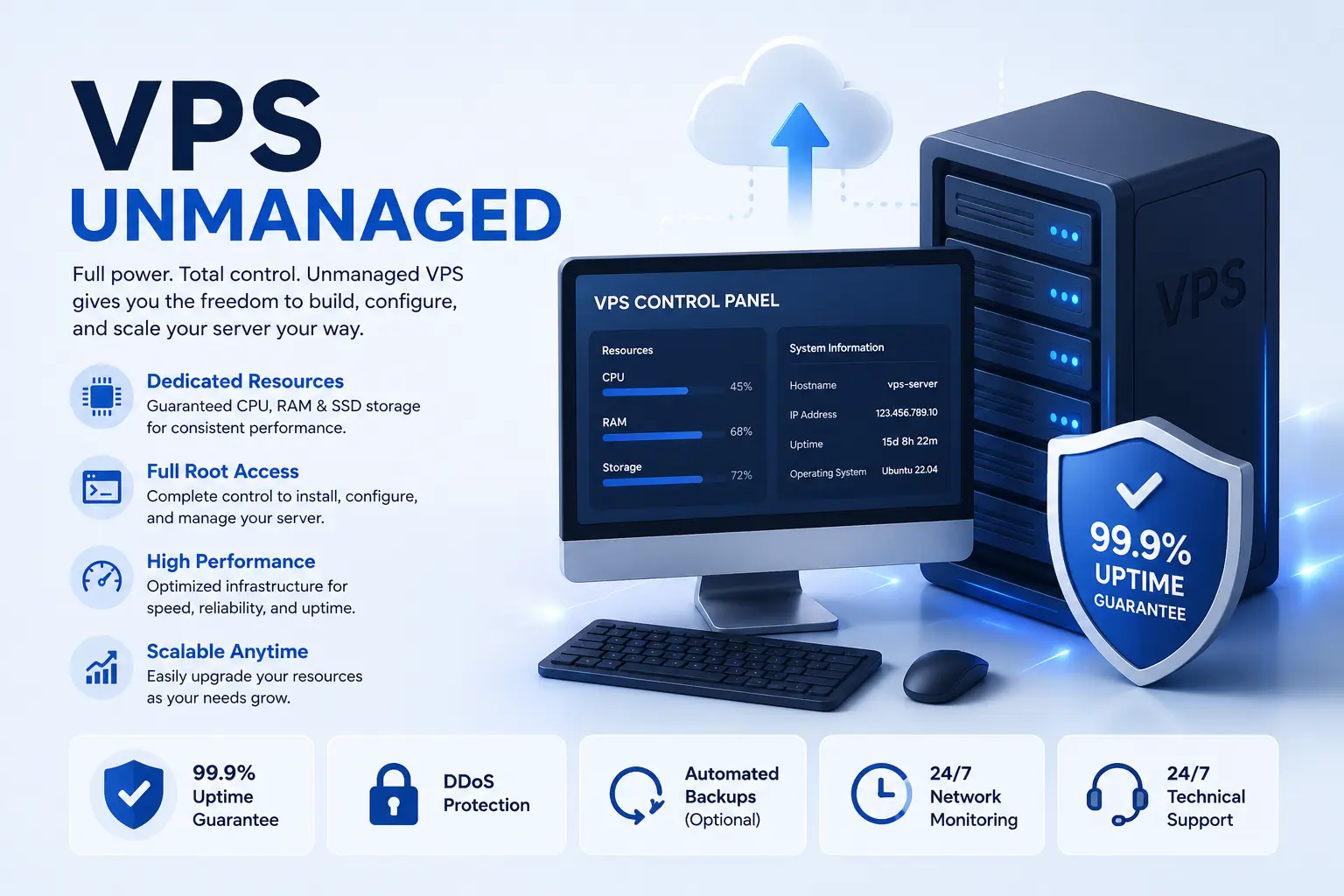
Is Unmanaged VPS Right for You? Balancing Cost and Control

In the sophisticated world of digital infrastructure, the leap from shared hosting to a Virtual Private Server (VPS) is often the most significant milestone for an growing project. However, once you enter the realm of VPS, you are immediately confronted with a fundamental choice: managed or unmanaged?

For developers, system administrators, and technology-focused entrepreneurs, the unmanaged VPS is the ultimate playground. It is the purest form of cloud hosting—a raw environment that offers unparalleled control at a fraction of the cost. Yet, this power comes with a significant responsibility: the total management of your environment. This article explores whether an unmanaged VPS is the right strategic fit for your project by balancing the undeniable benefits of cost-efficiency against the operational reality of “self-managed” infrastructure.

What Defines an Unmanaged VPS?

An unmanaged VPS is, at its core, a “blank canvas.” When you provision an unmanaged server, the provider gives you root access to a virtual machine with a base operating system (usually a Linux distribution like Ubuntu, Debian, or Rocky Linux). From that moment forward, the provider’s responsibility ends at the hardware and network layers.

You are responsible for:

  • Operating System Updates: Managing kernel patches, security updates, and package upgrades.

  • Software Stack Installation: Setting up your web server (NGINX, Apache, LiteSpeed), databases (MySQL, PostgreSQL), and language runtimes (PHP, Python, Node.js).

  • Security Configuration: Setting up firewalls, intrusion detection systems (IDS), and securing SSH access.

  • Backups and Disaster Recovery: Implementing your own backup strategies to ensure data integrity.

The Case for Unmanaged: The Economic and Technical Argument

Why would a business intentionally choose a path that requires more labor? The answer lies in two key areas: cost and granular control.

1. Cost Efficiency

Managed hosting providers charge a premium for the convenience of having their support staff handle updates and configurations. By choosing an unmanaged VPS, you eliminate this “management tax.” For a business scaling a network of websites or microservices, the savings from unmanaged hosting can be thousands of dollars annually, which can be reinvested into development or marketing.

2. Performance and Resource Optimization

Managed environments often come with “bloat”—pre-installed security suites, monitoring agents, and control panels (like cPanel or Plesk) that consume precious RAM and CPU cycles. In an unmanaged environment, you install only what you need. This lean setup allows you to squeeze the maximum possible performance out of every dollar spent on hardware, ensuring that your application receives 100% of the allocated resources.

3. Ultimate Technical Freedom

The greatest advantage is the ability to customize your stack. If you need a specific kernel module, a custom version of a database, or a highly specialized security configuration, an unmanaged VPS allows you to implement it immediately. There are no restrictions imposed by a provider’s “standard” software environment.

The Operational Reality: Are You Prepared?

While the benefits are compelling, the “unmanaged” label should not be taken lightly. Before migrating to this model, you must assess your team’s technical readiness.

The Security Burden

In a managed environment, the provider mitigates many common attack vectors. In an unmanaged environment, your server is essentially an island. If you fail to configure your firewall correctly or neglect to patch a critical vulnerability in your web server, your platform will be compromised. Security is not an “add-on” here; it is a fundamental part of your daily workflow.

The Maintenance Overhead

Maintaining a server is not a one-time setup; it is a continuous cycle. You need a structured approach to server management. If you are a solo entrepreneur or a small team, ask yourself: “How much time am I willing to take away from product development to spend on server maintenance?” If the answer is “none,” then an unmanaged VPS will quickly become a liability rather than an asset.

Balancing the Scales: The Hybrid Approach

For many DMS Global clients and professionals, the solution is not an all-or-nothing approach. Many opt for a “managed infrastructure” approach where they use automation tools to treat their unmanaged servers like managed ones.

By using tools like Ansible, Terraform, or even simple bash scripting, you can automate your server deployments. You can write “Infrastructure as Code” (IaC) to ensure that your server configuration is repeatable, secure, and easy to maintain. This approach gives you the cost benefits of unmanaged hosting while providing the consistency and ease-of-management typically associated with managed services.

Conclusion

Is an unmanaged VPS right for you? If your project requires high-performance, cost-effective scaling, and you possess (or are willing to learn) the system administration skills to secure and maintain your own environment, then the answer is a resounding yes. It provides the freedom to build exactly what you need without the constraints of a managed platform.

However, if your business is in its early stages and your primary focus must remain on the product rather than the infrastructure, the cost savings of an unmanaged VPS may be outweighed by the operational risk. As you evaluate your hosting needs, consider your internal expertise as the primary variable. The most successful deployments are not those that choose the cheapest path, but those that choose the path that aligns with their team’s technical capabilities.

related tags: vps unmanaged, server administration, cloud hosting cost, infrastructure as code, linux server security

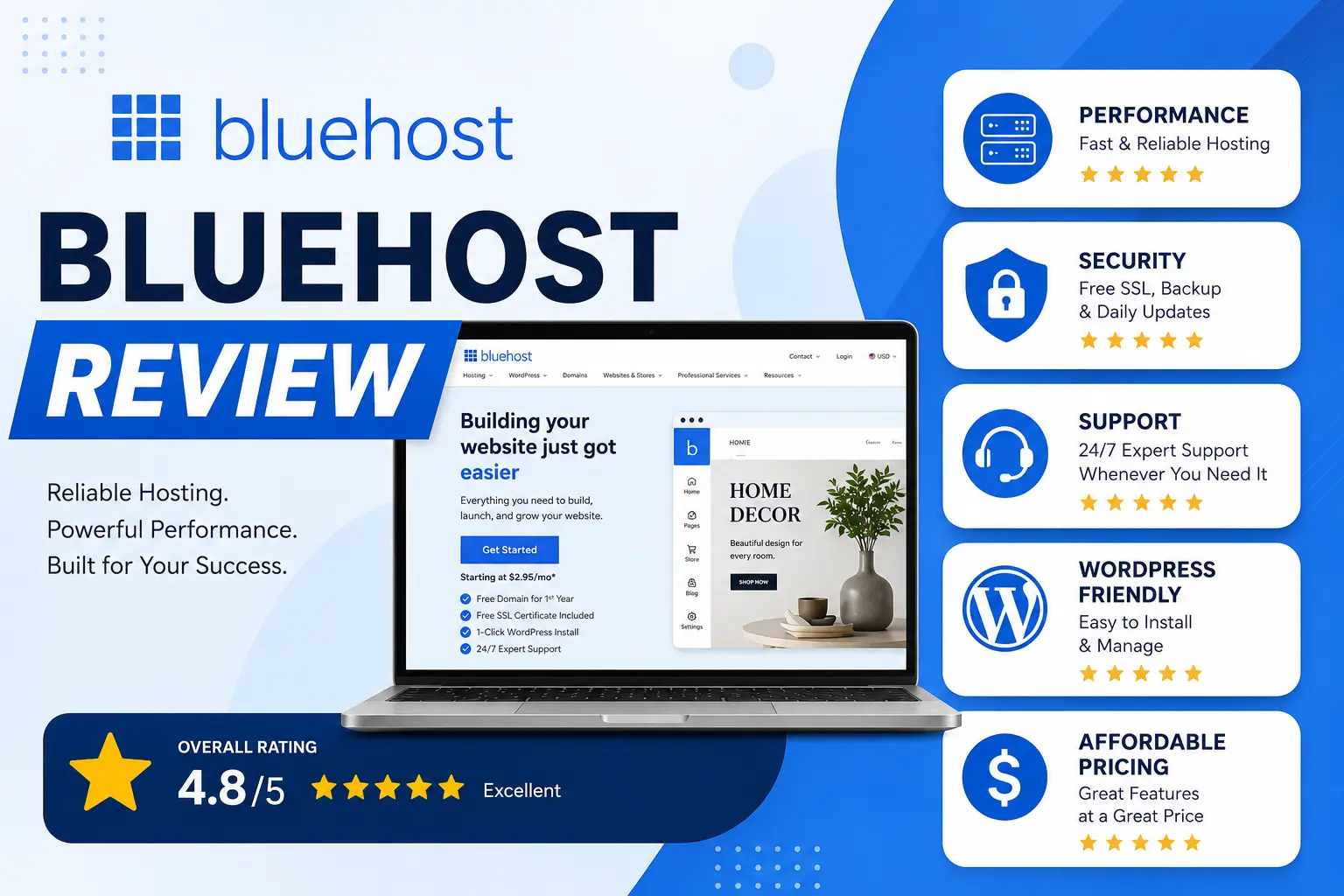
Bluehost Review: Why It Is Still a Leader for WordPress Startups

Bluehost Review

In the sprawling landscape of the web hosting industry, few names carry the weight and longevity of Bluehost. For over two decades, Bluehost has been a foundational pillar for millions of websites, and it remains a primary entry point for entrepreneurs, bloggers, and small business owners embarking on their first WordPress project. Despite the emergence of newer, niche-focused hosting platforms, Bluehost maintains its position as a market leader for startups by continuously refining its infrastructure to meet the demands of modern web development.

This review delves into why Bluehost remains a top-tier choice for WordPress startups in 2026, examining its performance, usability, and the ecosystem it provides for those building their digital identity.

The WordPress Connection: A Strategic Partnership

The most significant factor in Bluehost’s enduring success is its deep, official partnership with WordPress.org. While many hosts claim to “support” WordPress, Bluehost is one of the few officially recommended by the platform. This relationship goes beyond mere marketing; it translates into a seamless technical experience for the user.

For a startup founder, this means:

  • One-Click Installation: From the moment you purchase your hosting plan, WordPress is integrated into the workflow. You don’t need to manually configure databases or manage file uploads; the platform handles the initial setup, getting you to your dashboard in minutes.

  • WordPress-Specific Security: Bluehost provides enhanced security configurations tailored specifically to the WordPress core, reducing the risk of common vulnerabilities.

  • Update Management: They manage the automated updates for the WordPress core, ensuring that your site is running the latest, most secure version of the software without you needing to intervene.

Performance Optimized for Growth

Startups often face a dilemma: you need a hosting plan that is affordable today but capable of scaling tomorrow. Bluehost addresses this through a robust server infrastructure that handles traffic spikes effectively.

1. Enhanced Caching and Content Delivery

Bluehost leverages advanced caching layers to improve page load speeds. For a new site, this is critical for SEO. Google’s algorithms favor fast-loading pages, and by utilizing built-in Content Delivery Network (CDN) integration, Bluehost ensures your site content is cached across global servers. This reduces latency, making your site feel “snappy” even to visitors halfway across the world.

2. Custom Control Panel

Bluehost has modernized its user interface, moving away from outdated, complex panels. Their dashboard is designed for the non-technical user, putting essential functions—such as SSL management, domain settings, and email setup—within easy reach. This reduction in technical complexity is a major advantage for founders who need to move fast.

3. Scalable Infrastructure

Many beginners worry that their chosen host will “choke” if they experience a viral moment. Bluehost provides a clear upgrade path. Startups can begin on shared hosting, but as their traffic grows, they can seamlessly transition to Virtual Private Server (VPS) or dedicated server plans without the need for manual data migrations, which are often the biggest headache in site growth.

The E-E-A-T Advantage for New Businesses

In the context of the DMS Global mission, building a site that demonstrates E-E-A-T (Experience, Expertise, Authoritativeness, and Trustworthiness) is essential. Your hosting provider plays a subtle but vital role in this.

When you host with a reputable partner like Bluehost, you benefit from their infrastructure’s reliability. A site that is consistently online, loads quickly, and is secured with an SSL certificate tells search engines that your brand is trustworthy. For a startup, these technical “Trust” signals are the foundational layer upon which you build your authority through content.

Support: The Startup Safety Net

For a business owner, a technical error is a loss of revenue. Bluehost’s support philosophy is built around the idea that startups need access to expert help, regardless of the time. Whether it is an issue with a plugin configuration, a domain pointing problem, or a question about account billing, their support channels are available 24/7.

They provide not only technical troubleshooting but also a robust knowledge base, which acts as a self-service academy for founders learning to manage their first digital property.

Final Verdict: Building Your Foundation

Bluehost is not just a hosting provider; it is an infrastructure partner. For WordPress startups, it provides the perfect intersection of affordability, ease of use, and technical capability. By removing the technical barriers to entry and providing a scalable growth path, Bluehost allows founders to redirect their energy from managing servers to building their product and growing their brand.

As you embark on your journey with your new website, remember that your choice of hosting is a strategic business decision. By choosing a leader like Bluehost, you are ensuring that your digital presence is built on a foundation of reliability and performance that can support your vision as you expand.

related tags: Bluehost, WordPress hosting, startup website, web hosting infrastructure, managed WordPress

SiteGround Review: The Best Managed WordPress Hosting for Beginners

SiteGround Review The Best Managed WordPress Hosting for Beginners

Entering the world of digital publishing and eCommerce can be overwhelming, especially when you are confronted with technical challenges like server configuration, database management, and site security. For beginners, the goal is simple: you want to focus on creating content and building your brand, not troubleshooting server-side errors. SiteGround has consistently emerged as a premier choice for newcomers, earning a reputation as one of the best managed WordPress hosting providers by prioritizing simplicity, performance, and unmatched customer support.

This review examines why SiteGround is often the first recommendation for beginners and how its managed WordPress ecosystem provides the foundation for sustainable digital growth.

The Managed WordPress Philosophy

Many beginners fall into the trap of choosing the cheapest shared hosting plan, only to find that their site performance suffers as traffic grows. Managed WordPress hosting changes this dynamic. Instead of just giving you a server space, the provider manages the “heavy lifting” associated with the WordPress framework.

SiteGround’s managed offering includes:

  • Automated Updates: Security and version updates for WordPress core and plugins are handled automatically, ensuring your site is never vulnerable due to outdated software.

  • Specialized Security: SiteGround implements custom WAF (Web Application Firewall) rules specifically designed to block attacks targeting WordPress vulnerabilities.

  • Performance Caching: With their proprietary “SuperCacher” technology, they deliver content efficiently, which is a major factor in improving user experience and SEO rankings.

Why SiteGround is Ideal for Beginners

1. The Intuitive Site Tools Dashboard

Most hosting providers use standard, clunky cPanel interfaces. SiteGround has developed its own custom control panel, “Site Tools,” which is remarkably clean and user-friendly. Everything—from managing email accounts to setting up SSL certificates—is a single click away. For someone who has never touched a server, this design eliminates the “fear factor” of managing a website.

2. Streamlined Onboarding

When you sign up for SiteGround, the platform guides you through the WordPress installation process. You don’t need to manually configure databases or edit wp-config.php files. The setup wizard does the work for you, giving you a working site in under five minutes.

3. World-Class Customer Support

This is perhaps the most significant reason SiteGround retains its beginner base. Their support team is available 24/7 via chat, ticket, and phone. More importantly, they are trained specifically on the WordPress ecosystem. If you have a question about a plugin conflict or an image upload error, the support agents often act more like consultants than simple hosting techs.

Performance and Reliability

While SiteGround is accessible, it is not “lite” on performance. By utilizing Google Cloud Platform (GCP) for their infrastructure, SiteGround provides superior stability and speed compared to traditional providers.

Key performance features include:

  • Dynamic Caching: This ensures that your site pages load nearly instantly for visitors, which is crucial for retaining users who might otherwise leave due to slow page speeds.

  • CDN Integration: With a built-in Content Delivery Network (CDN) integration, your content is distributed across global servers, reducing latency for your international audience—an essential step for global SEO.

  • Daily Backups: SiteGround provides free daily backups and a simple restoration tool. If a beginner makes a mistake while editing their theme, reverting the site to a functional state is a simple “one-click” process.

Scalability: Growing Beyond the Beginner Stage

One concern for beginners is whether they will have to migrate their site once they start gaining traffic. SiteGround’s infrastructure is designed to scale. As your site grows from 1,000 visitors to 100,000, you can move up through their tiers—from shared hosting to cloud hosting—without needing to perform complex site migrations. This seamless transition path ensures that your hosting choice today remains relevant tomorrow.

The Importance of E-E-A-T for New Sites

In the context of the DominasiSERP (DMS) Global mission, it is important to remember that Google’s E-E-A-T (Experience, Expertise, Authoritativeness, and Trustworthiness) standards begin with your infrastructure. If your site is constantly slow or plagued by security errors, it immediately signals a lack of trust to search engines. By choosing a managed provider like SiteGround, you are offloading a large portion of the “Trust” factor to a partner with a proven track record, allowing you to focus your energy on demonstrating “Experience” and “Expertise” through your content.

Conclusion

SiteGround hits the sweet spot between powerful, enterprise-grade technology and beginner-friendly accessibility. They remove the technical barriers that often keep potential founders from starting their online journey. If you are looking to build a professional-grade website, a blog, or a small business portfolio, SiteGround provides the safety, speed, and support you need to succeed.

related tags: SiteGround, managed WordPress hosting, web hosting for beginners, WordPress performance, site security

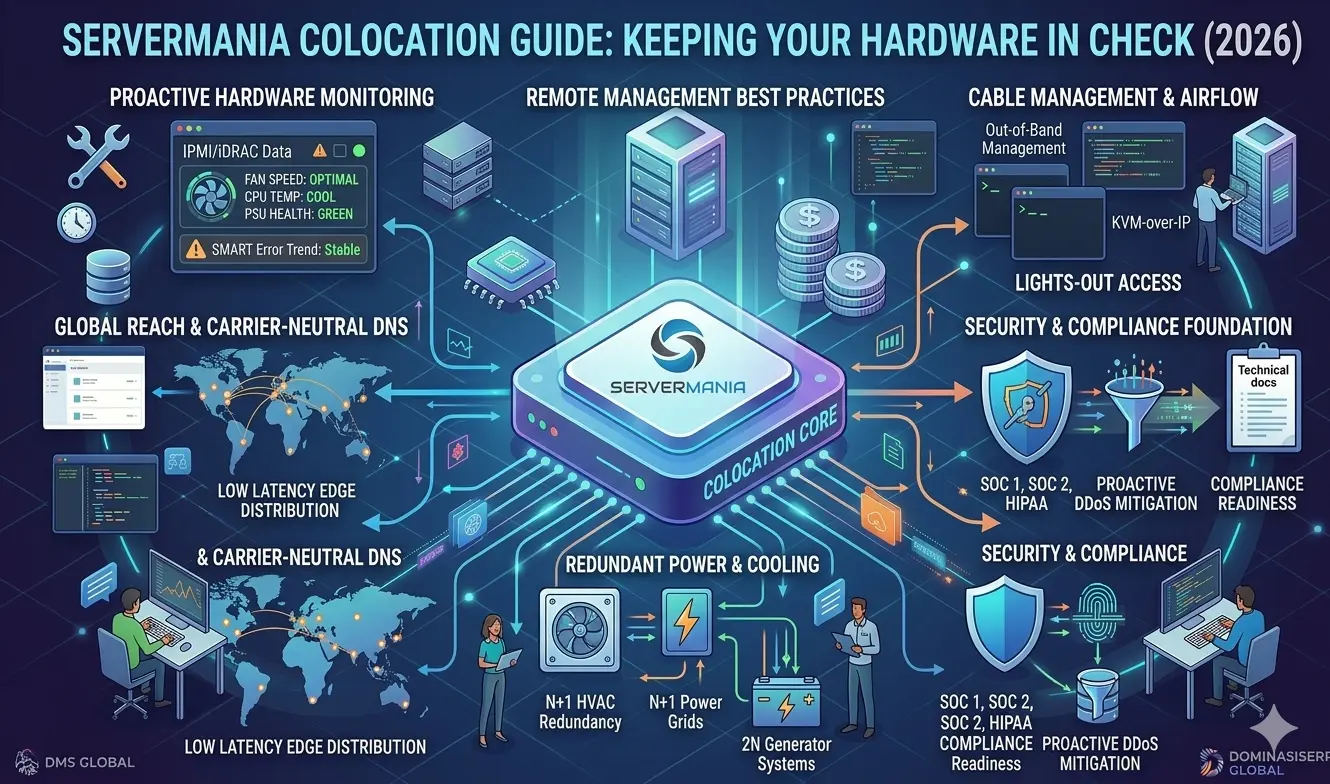
ServerMania Colocation Guide: Keeping Your Hardware in Check

ServerMania

In the evolving landscape of digital infrastructure, the “buy vs. build” debate is increasingly leaning toward a hybrid model. For many enterprise-level organizations, the necessity for total control over their server hardware remains paramount, even as they move away from maintaining their own physical data centers. This is where colocation shines. ServerMania, a veteran player in the hosting space, offers robust colocation services designed to provide that “goldilocks” balance: you own and manage the physical hardware, while they provide the industrial-grade environment, power, and connectivity.

This guide explores the strategic advantages of colocation with ServerMania and provides a framework for keeping your hardware performant, secure, and efficient in a third-party environment.

What is Colocation in the 2026 Enterprise Context?

Colocation is the act of renting space in a secure, climate-controlled facility—a carrier-neutral data center—and housing your own servers there. Unlike managed hosting where the provider owns the hardware, in a colocation setup, you retain full ownership of the physical chassis, CPUs, and storage.

For businesses that require specific hardware configurations, proprietary security modules, or long-term compliance with data sovereignty laws, ServerMania colocation provides the physical foundation for these needs without the massive overhead of constructing and maintaining a private data center.

The Strategic Advantages of ServerMania

Selecting a colocation provider is a commitment. You are essentially moving your business assets into someone else’s building. ServerMania differentiates itself through several enterprise-centric features:

1. Carrier-Neutral Connectivity

ServerMania’s facilities are carrier-neutral, meaning you are not locked into a single internet service provider. This is critical for businesses that require high-availability routing and the ability to negotiate their own bandwidth contracts. You can choose the blend of network providers that best suits your latency and cost requirements.

2. Physical Security and Compliance

Maintaining physical security—access control, biometric scanners, and 24/7 surveillance—is prohibitively expensive for most organizations. By housing your hardware in a ServerMania facility, you inherit their physical security protocols, which are typically compliant with industry standards like SOC 1, SOC 2, and HIPAA. This is a massive win for businesses that need to demonstrate security maturity to their stakeholders or regulators.

3. Redundant Power and Cooling

Uptime isn’t just about software; it’s about the underlying utilities. ServerMania data centers are built with N+1 or 2N redundancy for power grids and HVAC systems. In the event of a power failure, automated transfer switches and massive UPS (Uninterruptible Power Supply) banks keep your hardware humming until the diesel generators stabilize.

Keeping Your Hardware in Check: A Management Framework

Once your hardware is racked and stacked at a ServerMania facility, the responsibility for hardware performance remains yours. Here is how to keep your systems running optimally.

A. Proactive Hardware Monitoring

Without physical access to the server, you must rely on intelligent monitoring tools. Utilize IPMI (Intelligent Platform Management Interface) or iDRAC to monitor fan speeds, temperature, and power supply health. If a hardware component shows signs of degradation—such as an uptick in SMART errors on a hard drive—you can replace it before it causes a service outage.

B. Remote Management Best Practices

Ensure your servers are configured for “lights-out” management. This includes:

  • Remote Console Access: Always ensure your KVM-over-IP or serial console is configured correctly to access the BIOS if the OS fails to boot.

  • Out-of-Band Management: Keep your management network physically or logically isolated from your production traffic to prevent unauthorized access to your hardware controllers.

C. Cable Management and Airflow

Even in a colocation facility, how you cable your server can impact its longevity. Efficient cable management is not just aesthetic; it prevents airflow blockages. Ensure that your rack setup promotes front-to-back airflow, allowing the data center’s cooling system to effectively remove heat from your CPU and memory modules.

When Colocation is the Right Move

Colocation is not for every business. It is a specialized solution for those who have outgrown standard managed hosting and have the internal IT resources to manage their own hardware. You should consider ServerMania colocation if:

  • Hardware Customization is Required: You need specific CPU/GPU combinations or storage configurations that managed cloud providers do not offer.

  • Security and Data Sovereignty: You operate in a regulated industry where your data must remain on specific hardware that you control.

  • Cost Predictability: You have already invested in your own hardware and want to optimize your monthly recurring costs by only paying for power, space, and bandwidth.

Conclusion: The Professional Foundation

ServerMania colocation provides the stability, security, and connectivity that enterprise hardware demands. By offloading the physical data center management to professionals, you can focus your engineering talent on building superior software and delivering value to your customers. As you scale, keeping your hardware “in check” requires a blend of intelligent remote monitoring, disciplined maintenance, and a partner who understands the physical realities of global digital infrastructure.

related tags: ServerMania, colocation, enterprise hardware, data center management, server infrastructure

How to Deploy Your First Droplet on DigitalOcean for Under $5

How to Deploy Your First Droplet on DigitalOcean for Under $5

In the modern digital era, the ability to launch your own server environment is a fundamental skill for developers, entrepreneurs, and digital enthusiasts. DigitalOcean has revolutionized this process by providing a platform that emphasizes simplicity without sacrificing performance. For many, the journey begins with their most iconic offering: the $5 Droplet.

This article serves as a comprehensive guide to help you deploy your first Linux-based virtual private server (VPS), known as a “Droplet,” for less than $5 per month.

Why Start with a $5 Droplet?

When you are first starting your online project, such as a personal website, a small application, or a learning environment, you do not need enterprise-grade resources. A $5 Droplet provides a balanced starting point:

  • Dedicated Resources: Unlike shared hosting, you have your own dedicated CPU and memory, ensuring consistent performance.

  • Full Root Access: You have complete control over the operating system, allowing you to install custom software, configure firewalls, and manage security settings as you see fit.

  • Cost-Efficiency: It is the most affordable way to host a professional environment that can grow alongside your project.

Step-by-Step Deployment Guide

Deploying a server has never been easier. Follow these steps to get your environment up and running in minutes.

1. Account Creation and Security

After signing up, the first thing you should do is configure security. DigitalOcean highly recommends using SSH (Secure Shell) keys instead of standard passwords. This creates an encrypted connection between your local computer and the server, making it significantly harder for unauthorized users to gain access.

2. Choosing Your Droplet Configuration

Navigate to the “Create” button in your control panel and select “Droplets.” You will be presented with several options:

  • Region: Choose a data center closest to your target audience to minimize latency.

  • Image (OS): Ubuntu is the industry standard for beginners due to its massive community support and extensive documentation.

  • Size: Select the “Basic” plan. Within this plan, you will find the $5/month option (typically featuring 512MB-1GB of RAM depending on current promotions).

3. Networking and Backups

DigitalOcean allows you to enable optional features like automatic backups (for a small additional fee) and VPC (Virtual Private Cloud) networking. While optional, these are best practices for any production application, even for small projects.

4. Finalizing Deployment

Click “Create Droplet.” Within 60 seconds, DigitalOcean will provision your server and provide you with an IP address. You can now log in via your terminal using the SSH key you configured earlier.

Post-Deployment Essentials

Once your Droplet is live, the environment is a blank canvas. To ensure your server is secure and ready for production, follow these initial steps:

  • Update Packages: Run sudo apt update && sudo apt upgrade to ensure all software is at the latest version.

  • Create a User: Never run your services as the “root” user. Create a standard user with sudo privileges.

  • Configure a Firewall: Use ufw (Uncomplicated Firewall) to restrict traffic to only necessary ports (like SSH, HTTP, and HTTPS).

The Path to Growth

Starting with a $5 Droplet is not just about the low cost; it is about learning the architecture of the web. As your project gains traction, DigitalOcean makes it incredibly easy to scale. With a single click, you can resize your Droplet to a larger instance, or integrate it with other services like Managed Databases and Load Balancers.

By taking this first step, you are not just hosting a website; you are building a foundation for your digital future. Whether you are a student, a founder, or a curious developer, the skills you learn in managing your own cloud infrastructure will remain invaluable throughout your professional journey.

related tags: DigitalOcean, Droplet, cloud hosting, VPS for beginners, web server setup

A2 Hosting Review: Exploring Their High-Speed Turbo Servers

In the competitive world of web hosting, speed is the ultimate currency. With search engine algorithms heavily favoring fast-loading websites and users increasingly intolerant of latency, developers and business owners are constantly searching for infrastructure that can deliver content in milliseconds. A2 Hosting has distinguished itself in this crowded market through a singular, aggressive focus: raw speed. Their proprietary “Turbo” servers are not just a marketing label; they represent a significant engineering effort to push the boundaries of what shared, VPS, and dedicated hosting can achieve.

This review explores whether A2 Hosting’s high-speed claims hold up for professional projects and whether their infrastructure is the right fit for your performance-critical applications.

The Engineering Behind the Speed

The cornerstone of A2 Hosting’s performance strategy is their Turbo technology. Unlike standard hosting environments that rely on traditional Apache or basic NGINX configurations, A2 Hosting has optimized their stack to remove common performance bottlenecks.

1. LiteSpeed Web Server Integration

By leveraging the LiteSpeed Web Server, A2 Hosting’s Turbo plans handle concurrent connections far more efficiently than standard setups. LiteSpeed is designed to process PHP requests faster, which is critical for dynamic platforms like WordPress, Drupal, and Magento. This results in a lower Time to First Byte (TTFB), which is one of the most vital metrics for SEO success.

2. NVMe SSD Storage

The integration of NVMe (Non-Volatile Memory express) storage is the second major pillar of their speed strategy. NVMe drives provide drastically higher throughput compared to traditional SATA SSDs. For databases and file-intensive applications, this means reading and writing data occurs near-instantaneously, preventing the storage bottleneck that plagues many lower-tier hosting plans.

3. A2 Optimized Software

Speed can be negated by poor software configuration. A2 Hosting addresses this by providing “A2 Optimized” versions of popular CMS platforms. These pre-configured installs include security settings, caching plugins, and performance tweaks already applied, allowing users to achieve “out-of-the-box” performance without needing deep sysadmin knowledge.

Beyond Speed: Reliability and Security

While speed is the headline, a hosting provider must be robust enough for business-critical operations. A2 Hosting offers a balanced approach to reliability:

  • Perpetual Security: Their “Perpetual Security” initiative includes proactive patching, automated virus scanning, and a reinforced DDoS protection layer. For businesses handling sensitive user data, this added layer of defense is invaluable.

  • 99.9% Uptime Commitment: A2 Hosting maintains a consistent track record of reliability across their data centers. While no host can guarantee 100% uptime, A2’s redundant networking and server management minimize the risk of prolonged downtime.

  • Global Data Center Reach: With servers located across North America, Europe, and Asia, users can choose a data center close to their primary audience, further reducing latency—a key component of E-E-A-T (Experience, Expertise, Authoritativeness, and Trustworthiness) optimization for global sites.

Who Should Choose A2 Hosting?

A2 Hosting is not a “one-size-fits-all” solution; it is a specialized tool for specific types of users.

  • Developers and Agencies: Those who need fine-grained control, SSH access, and staging environments will find A2 Hosting’s VPS and dedicated plans highly flexible.

  • eCommerce Store Owners: For platforms where every second of load time correlates to abandoned carts, the performance gain from Turbo servers can have a direct, positive impact on revenue.

  • Performance-Obsessed Bloggers: If you are building a site with heavy dynamic content or complex page builders, A2 Hosting provides the computational overhead to keep your pages fluid.

Important Considerations for Decision Makers

Before migrating your entire digital ecosystem to A2 Hosting, keep a few factors in mind:

  1. Turbo vs. Standard Plans: The performance benefits of the Turbo servers are significant, but they are limited to specific tiers. Ensure your budget accounts for these “Turbo” plans if speed is your primary requirement.

  2. Support Channels: A2 Hosting provides 24/7 “Guru Crew” support. While helpful and knowledgeable, it is important to test their response times against your business’s specific needs for high-priority troubleshooting.

  3. Renewal Pricing: Like many providers in the industry, A2 Hosting offers aggressive promotional pricing for new customers. Be sure to review their long-term renewal rates to ensure the platform remains sustainable for your business growth.

Final Assessment: The Performance-First Choice

A2 Hosting successfully carves out a niche for itself by proving that performance does not have to be reserved for enterprise-level custom clouds. Through their commitment to LiteSpeed, NVMe storage, and pre-optimized software stacks, they provide a tangible competitive advantage for businesses that prioritize user experience.

For any organization—whether a local business in Mojokerto or a global enterprise—the infrastructure you choose is a fundamental part of your technical E-E-A-T. By choosing a partner like A2 Hosting that prioritizes speed at the hardware level, you are laying a foundation that is built for growth, stability, and high search performance.

related tags: A2 Hosting, Turbo servers, web hosting performance, LiteSpeed hosting, NVMe SSD hosting

InMotion Hosting for Business: Reliability Meets High Performance

For business owners and professional web developers, the hosting environment is more than just a place to store files; it is the engine that powers your digital presence. In an age where page load speed directly correlates with conversion rates and search engine rankings, choosing a hosting partner that prioritizes stability and raw performance is paramount. InMotion Hosting has built its reputation on exactly these pillars: offering business-grade reliability paired with the high-performance hardware required to compete in today’s demanding online marketplace.

The Business-First Philosophy

Many hosting providers target the hobbyist market with “unlimited” claims that often fall short under real-world traffic. InMotion Hosting takes a different approach. By focusing on businesses, agencies, and professional bloggers, they have optimized their infrastructure to support sustained performance rather than just burst capacity.

For a business, this translates to:

  • Consistent Uptime: Robust data centers and redundant networking ensure that your business remains accessible to customers around the clock.

  • Proactive Security: Instead of reactive measures, InMotion integrates security patches, malware protection, and firewalls at the infrastructure level.

  • Hardware Superiority: Utilizing NVMe SSD storage and customized server caching, they ensure that database-driven platforms, such as WordPress or Magento, run at peak efficiency.

Key Performance Drivers

What sets InMotion Hosting apart in a crowded market is their commitment to technical excellence.

1. Ultra-Fast NVMe SSD Storage

Traditional spinning hard drives or standard SSDs can create bottlenecks for high-traffic sites. InMotion Hosting’s move to NVMe SSD storage across their business lines significantly reduces disk I/O latency. For a business, this means faster database queries, quicker dynamic content rendering, and a smoother user experience for your customers.

2. Advanced Caching Solutions

Performance isn’t just about raw hardware; it’s about how efficiently content is delivered. InMotion utilizes customized server-side caching (often powered by NGINX or LiteSpeed, depending on the configuration). By caching dynamic pages before they are served, the server load is reduced, and visitors experience near-instant load times.

3. Developer-Friendly Environments

For businesses that have dedicated development teams, InMotion provides a playground that balances security with flexibility. Features like SSH access, support for multiple PHP versions, and git integration make it easy to deploy staging environments, test updates, and push changes to production without fear of breaking the live site.

Scaling with Your Business

One of the biggest risks for a growing business is outgrowing its infrastructure. InMotion Hosting mitigates this by providing a clear, scalable path:

  • Shared Business Hosting: The perfect starting point for local businesses and informational sites.

  • Managed VPS Hosting: As traffic grows, you can move to a Virtual Private Server, gaining dedicated resources that ensure your site performance is not impacted by other users on the server.

  • Dedicated Server Solutions: For large-scale eCommerce platforms and enterprise applications, dedicated hardware offers the ultimate level of performance and security.

The beauty of this architecture is that migration between tiers is streamlined, ensuring that as your business hits new traffic milestones, your hosting can evolve alongside it.

The Human Element: Support as a Partner

In the enterprise world, automated chatbots are insufficient. InMotion Hosting is widely recognized for its U.S.-based support team, which consists of trained technicians rather than just general support staff.

When your business is offline, you need a partner who understands your server architecture and can provide rapid, actionable solutions. This “US-based support” isn’t just a marketing point—it is a critical fail-safe that provides peace of mind to business owners who may not be technical experts themselves.

Conclusion: Investing in Infrastructure

Choosing a hosting provider is a business decision, not just a technical one. When you prioritize reliability and performance, you are investing in the long-term health of your brand. InMotion Hosting delivers a product that is perfectly tuned for businesses that demand more from their web presence. By providing high-speed NVMe infrastructure, a clear scaling path, and professional-grade support, they prove that you do not have to choose between performance and reliability—you can have both.

related tags: InMotion Hosting, business hosting, NVMe SSD, web server performance, managed VPS

Liquid Web Review: The Ultimate Solution for Enterprise Hosting

Liquid Web

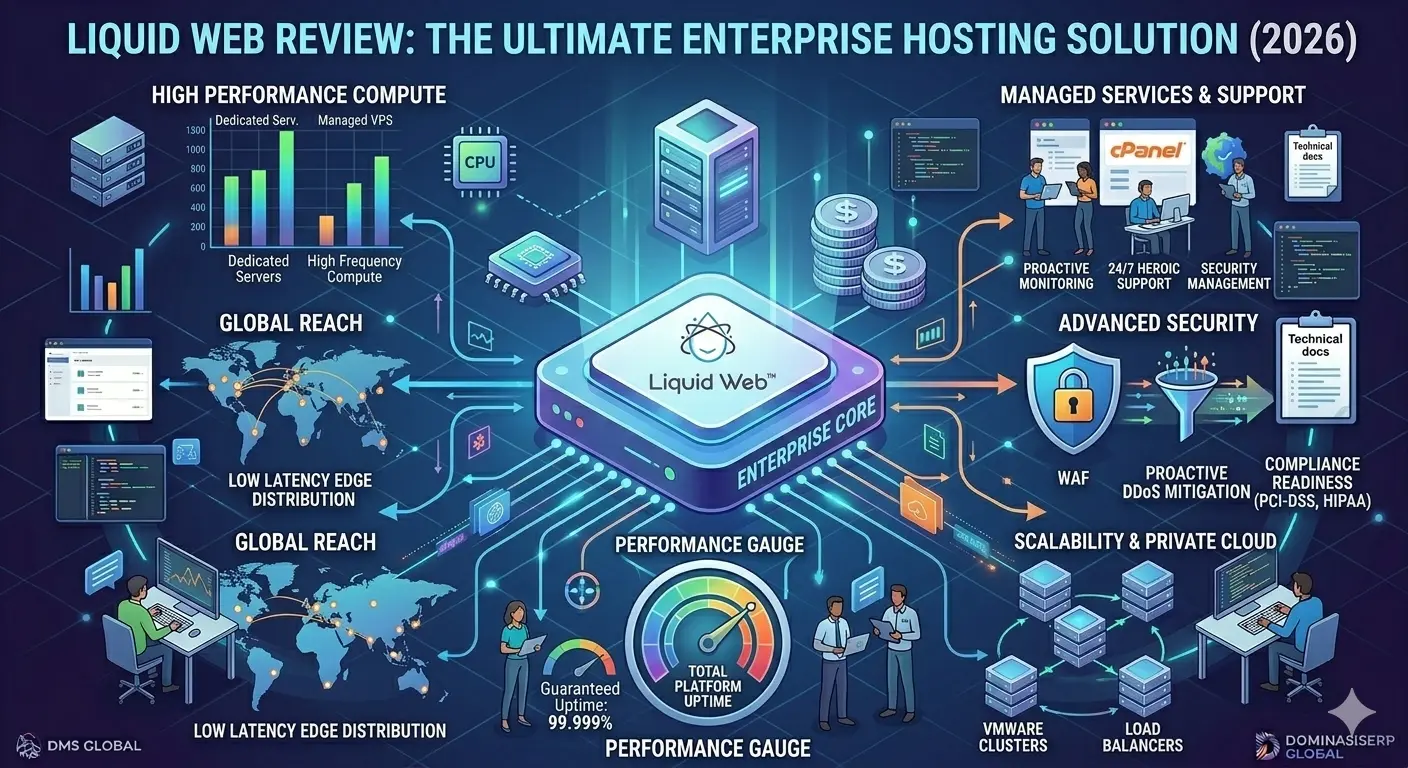
In the high-stakes world of enterprise-level digital operations, the infrastructure supporting your application is not just a cost center—it is a foundational pillar of your business performance. While shared and entry-level cloud hosting are suitable for startups, mature businesses, eCommerce powerhouses, and high-traffic platforms eventually face a critical juncture: they need more than just space; they need reliability, security, and an infrastructure partner that acts as an extension of their own IT team. This is where Liquid Web has carved out its reputation as the ultimate solution for enterprise hosting.

Why Enterprise Hosting Requires a Different Standard

Enterprise hosting is defined by three non-negotiable requirements: uptime, security, and scalability. When your platform handles thousands of concurrent users, a single hour of downtime can equate to significant financial loss and brand erosion. Unlike mass-market hosting providers that focus on volume, Liquid Web specializes in high-performance environments tailored for mission-critical applications.

Whether you are managing a massive WooCommerce store, a complex SaaS platform, or a private cloud environment, Liquid Web provides the specialized hardware and managed services that ensure your operations remain fluid and secure under any load.

The Liquid Web Advantage: Managed Performance

The true differentiator for Liquid Web is its “managed” philosophy. For enterprises, managing raw infrastructure—patching kernels, handling firewall rules, and optimizing database configurations—is a distraction from product innovation.

1. High-Performance Infrastructure

Liquid Web offers a diverse portfolio of infrastructure, including:

  • Dedicated Servers: For businesses that require absolute isolation and raw power without sharing hardware resources.

  • Managed VPS: Providing the flexibility of virtualization with the performance of enterprise-grade hardware.

  • Private Cloud & VMware: Tailored solutions that allow enterprises to build scalable, hybrid cloud environments with the control of an on-premise data center.

2. Managed Services as a Core Offering

When you host with Liquid Web, you are not just getting a server; you are getting a team of systems administrators. This includes proactive monitoring, 24/7/365 support, and, in many cases, security management. For enterprise IT leads, this means your internal team can focus on software deployment and user experience, while Liquid Web handles the “heavy lifting” of the underlying hardware and network layers.

Security at the Enterprise Level

For enterprise-level businesses, security is a constant battle. Liquid Web integrates multiple layers of protection directly into its hosting packages, reducing the need for expensive third-party tools.

  • Advanced Firewall Configurations: Tailored to block malicious traffic before it reaches your application.

  • Proactive DDoS Protection: With enterprise-grade hardware, Liquid Web mitigates volumetric attacks, ensuring your site stays online even during malicious activity.

  • Compliance Readiness: Liquid Web provides infrastructure that is built with compliance in mind, supporting businesses that need to adhere to strict regulatory standards like PCI-DSS and HIPAA.

Scalability Without Complexity

Scalability is often where enterprise projects falter. Scaling a server setup manually is fraught with risk. Liquid Web addresses this by offering load balancing, autoscaling (in specific cloud environments), and easy migration paths. As your business grows, moving from a single dedicated server to a load-balanced cluster is a streamlined, supported process rather than a complex engineering headache.

The “Heroic” Support Philosophy

Perhaps the most talked-about aspect of Liquid Web is its support team. In the enterprise sector, standard ticketing systems are often insufficient. Liquid Web’s “Heroic Support” model guarantees access to real engineers who understand the architecture of your specific environment. This reduction in “time-to-resolution” is vital for enterprises where every minute of downtime impacts the bottom line.

Conclusion: When to Choose Liquid Web

Liquid Web is not for the hobbyist or the beginner; it is a premium investment for businesses that have moved beyond the “growth” phase and into the “scaling” phase. If your business depends on its online presence to generate revenue, if you handle sensitive customer data that requires top-tier security, and if you have outgrown the limitations of standard shared or basic cloud environments, Liquid Web provides the stability you need.

By combining enterprise-grade hardware, proactive management, and a support team that functions as an extension of your company, Liquid Web allows you to offload the burden of infrastructure, enabling your organization to focus on what it does best: driving value for your customers.

related tags: Liquid Web, enterprise hosting, dedicated servers, managed hosting, cloud infrastructure

Hostinger Review: Can Cheap Hosting Really Deliver Pro Performance?

Shared Hosting

In the evolving landscape of 2026, finding a hosting provider that balances affordability with “pro” performance is a common challenge for businesses and developers. Hostinger has emerged as a major player by positioning itself in a “middle ground”—offering performance-focused features typically found in premium tiers at competitive price points. But can a budget-friendly host truly support professional-grade projects?

The Performance Foundation: LiteSpeed and NVMe

At the core of Hostinger’s performance-focused offering is the use of LiteSpeed Enterprise web servers. Unlike standard Apache setups often found in basic shared hosting, LiteSpeed is engineered for high concurrency and speed, which significantly boosts page load times.

  • LiteSpeed Web Servers: This technology allows for faster response times and improved handling of high traffic without requiring complex plugin configurations.

  • NVMe SSD Storage: By moving from traditional SSDs to NVMe (Non-Volatile Memory express) storage, Hostinger provides faster read/write speeds, which is essential for database-heavy applications and eCommerce stores.

  • In-house Optimization: Features like ObjectCache and code minification are built directly into the infrastructure to deliver a “blazing-fast” browsing experience right out of the box.

Ease of Use: The hPanel Advantage

One of Hostinger’s most significant differentiators for professionals and beginners alike is its custom control panel, hPanel.

  • Clean Interface: Designed to replace the industry-standard cPanel, hPanel provides a modern, intuitive dashboard where managing domains, emails, databases, and files is simplified.

  • Agency-Ready Features: For professionals managing multiple projects, Hostinger Pro offers an “all-in-one” dashboard to monitor security and performance across up to 300 sites, making it easier to collaborate with clients and team members.

  • One-Click Management: From website cloning to staging environments and 1-click WordPress installs, the infrastructure is built to streamline the development workflow.

Is It Ready for Business-Critical Workloads?

Hostinger’s suitability depends heavily on the scale and nature of your project.

  • For Small to Medium Businesses: Hostinger is highly effective for business sites, affiliate marketing blogs, and growing online stores. Its uptime guarantee (99.9%) and reliable performance track record make it a strong value-for-money choice.

  • For High-Traffic/Complex Projects: While Hostinger offers VPS and Cloud hosting plans for scalability, extremely high-traffic eCommerce stores or sites requiring dedicated server-level resources might eventually require specialized infrastructure like Cloudways or high-end dedicated VPS.

  • Security Standards: Security is a major focus, with free SSL certificates, DDoS protection, malware scanning, and automatic daily backups available on higher-tier plans.

Important Considerations Before Choosing

While Hostinger provides pro-level features, users should be aware of certain trade-offs:

  1. Renewal Pricing: The most common point of friction is the jump between the low promotional entry price and the standard renewal rate. It is essential to calculate your long-term costs across the full duration of your contract.

  2. Support Channels: Support is provided 24/7 via live chat and ticketing, but there is no phone support. For those who prefer immediate voice-based assistance, this may be a limitation.

  3. Plan Tiers: While basic shared plans are excellent for beginners, professional-grade requirements—such as daily backups, staging environments, and advanced security—often necessitate moving up to the “Business” or “Cloud” tiers.

Conclusion

Hostinger effectively proves that “cheap” does not always mean “low-quality.” By leveraging modern technologies like LiteSpeed, NVMe storage, and a polished user interface, it provides a professional-grade environment for the vast majority of web projects. For startups, agencies, and content creators, it offers an excellent balance of scalability and simplicity. However, as with any infrastructure decision, it is vital to match the specific tier of service to your traffic demands and technical requirements to ensure long-term stability.

related tags: Hostinger, web hosting, cloud hosting, WordPress performance, professional web hosting

Linode vs AWS: Why Startups Prefer Linode for Simplicity

linode vs aws

For startups navigating the competitive digital landscape of 2026, the choice of cloud infrastructure is a critical decision that influences everything from operational efficiency to long-term profitability. While Amazon Web Services (AWS) is undeniably the largest player in the hyperscale market, an increasing number of startups are gravitating toward Linode (now part of Akamai Cloud Computing) for its clarity, predictability, and developer-centric philosophy.

The Complexity of Hyperscale vs. The Power of Simplicity

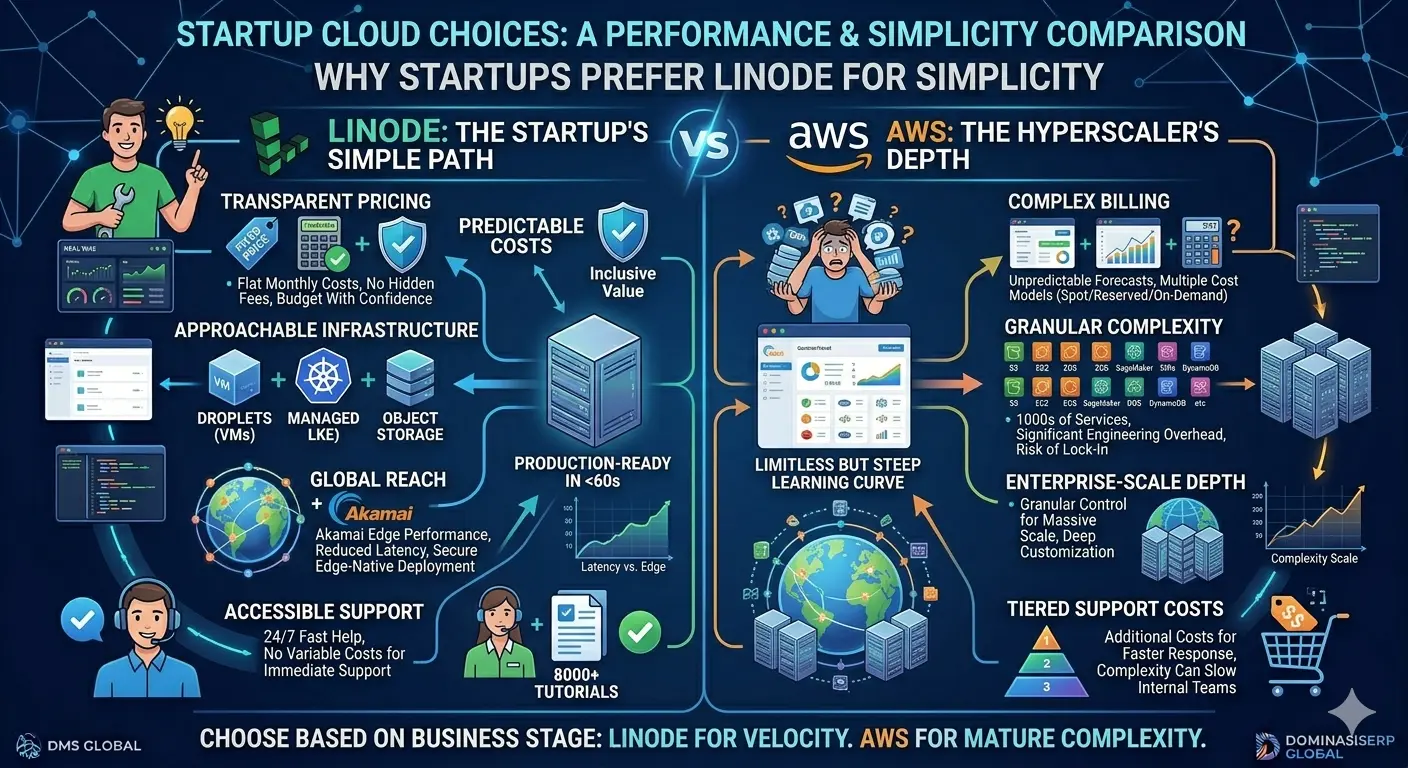
AWS provides an exhaustive catalog of thousands of specialized services, offering virtually limitless scalability and granular control. However, this depth often creates a steep learning curve and operational overhead that can distract early-stage teams from their core product development.

In contrast, Linode differentiates itself by focusing on a “developer-first” experience. It provides a suite of essential cloud products—such as compute, block storage, and managed Kubernetes (LKE)—that are designed to be intuitive and easy to manage without requiring a dedicated cloud engineering team. For startups, this means spending less time configuring complex interfaces and more time building.

Transparent Pricing: A Startup’s Best Friend

One of the most significant pain points for startups on AWS is the unpredictable nature of billing. AWS’s pricing models, involving reserved instances, spot instances, and complex data transfer fees, can make it notoriously difficult to forecast expenses accurately.

Linode offers a refreshing alternative with a transparent, flat-rate, and predictable monthly pricing model.

  • No Hidden Costs: Startup founders can budget with confidence knowing exactly what their monthly infrastructure bill will be.

  • Inclusive Value: Linode plans often bundle generous amounts of storage and outbound transfer, which are frequently charged as separate, variable costs on AWS.

  • Cost Efficiency: By avoiding the “hyperscaler tax” of complex networking and storage add-ons, startups can maintain a leaner operational budget.

Developer-Centric Experience and Support

Startups prioritize speed and agility. Linode’s dashboard is widely regarded for its clarity, allowing developers to provision instances in under 60 seconds. The platform’s documentation is another cornerstone of its success, with over 8,000 community-driven tutorials and guides that assist teams in troubleshooting and optimizing their deployments.

Moreover, while AWS support is often tiered and can be expensive for immediate technical assistance, Linode is recognized for providing accessible support, which is invaluable for lean teams that do not have 24/7 dedicated DevOps engineers.

Global Reach Meets Edge Performance

With its integration into the Akamai ecosystem, Linode has expanded its reach significantly, combining its traditional VPS simplicity with Akamai’s global edge network. This allows startups to benefit from:

  • Reduced Latency: Deploying applications closer to users through Akamai’s extensive network of edge PoPs.

  • Enterprise-Grade Security: Default DDoS protection and security layers that would often require complex configuration on other platforms.

  • Scalable AI Inference: Through the Akamai Inference Cloud, startups can now tap into powerful GPU resources for AI-driven applications, maintaining simplicity even as they scale into advanced workloads.

Conclusion

For the majority of startups, AWS represents a “future-proof” destination that may be overkill in the early stages, whereas Linode represents a “production-ready” starting point that accelerates time-to-market. By choosing a platform that champions transparent pricing, approachable infrastructure, and a clear developer experience, startups can focus their limited resources on innovation rather than infrastructure management.

Vultr vs DigitalOcean: Which Cloud Provider Wins for Speed?

Vultr vs DigitalOcean

In the competitive landscape of cloud infrastructure, developers and business owners are constantly seeking the optimal balance between performance, reliability, and cost. For a global-facing brand like DMS Global, infrastructure is not just a utility—it is the foundation of user experience and SEO authority. Two names frequently dominate the conversation: Vultr and DigitalOcean. Both are beloved in the developer community, but when the specific metric is raw speed, which provider truly takes the crown?

Understanding the Contenders

Both Vultr and DigitalOcean have carved out niches as “alternative cloud providers” that offer a more streamlined, developer-friendly experience compared to the massive, complex enterprise hyperscalers like AWS or Google Cloud.

  • DigitalOcean: Known for its legendary simplicity, user-friendly interface, and an ecosystem that feels tailor-made for startups and small-to-medium-sized developers.

  • Vultr: Often touted as the “performance-first” challenger. Vultr focuses heavily on offering the latest hardware, diverse storage options, and a wide global reach with high-performance instances that cater to compute-intensive workloads.

The Performance Metric: What Drives Speed?

To determine which provider wins for speed, we must look beyond marketing slogans and analyze the underlying architecture:

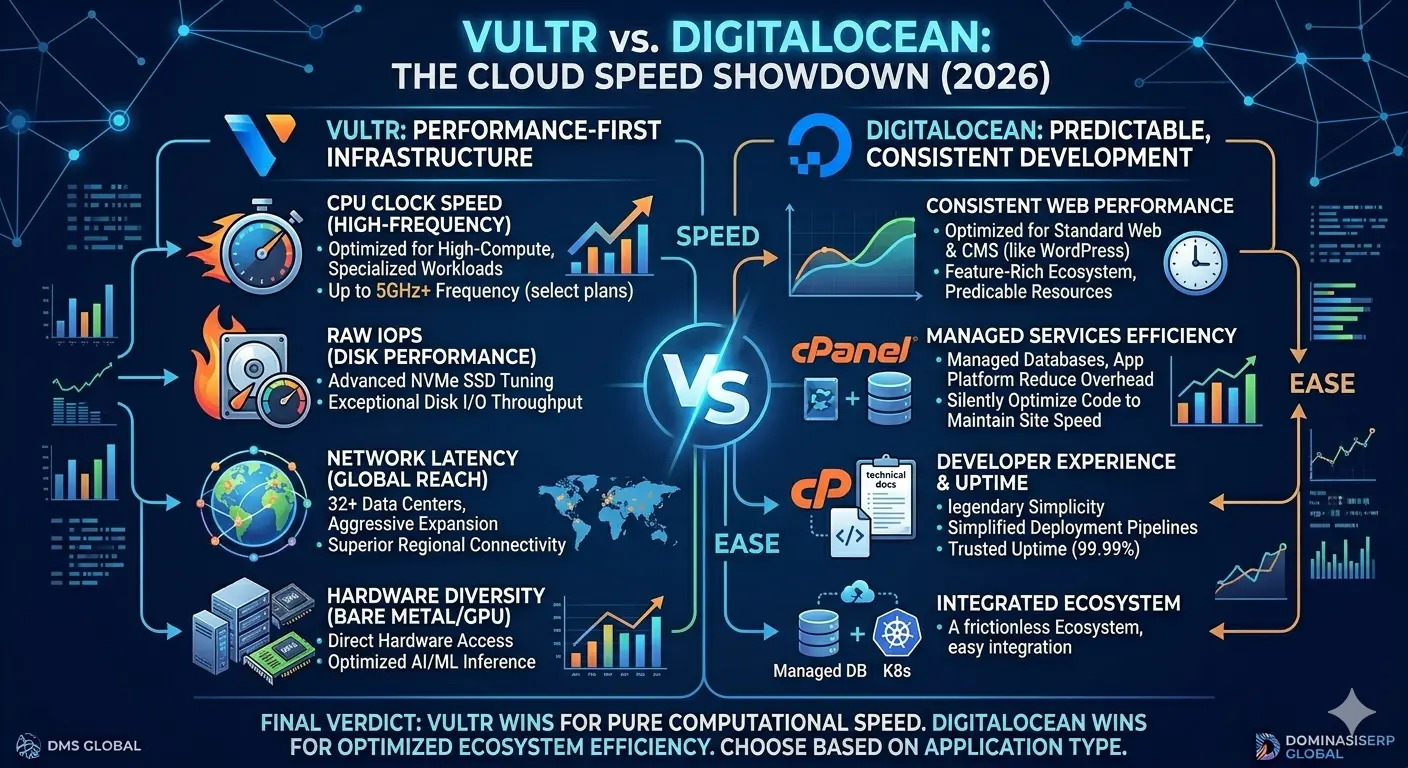
  1. CPU Benchmarks: Vultr generally provides more flexibility in choosing different CPU architectures, including high-frequency instances that leverage the latest generation of Intel and AMD processors. DigitalOcean offers “Premium Intel” and “Premium AMD” droplets, which are very competitive, but Vultr’s broad range of “Optimized Cloud” instances often provides a slight edge in raw processing throughput.

  2. Storage I/O: Both providers use NVMe SSD storage across their platforms. In high-load scenarios—such as running massive databases or real-time analytical engines—Vultr’s Bare Metal and High-Frequency plans tend to show lower latency in read/write operations.

  3. Network Throughput: For a global site like DMS Global, speed is not just about what happens inside the server; it is about how fast the data reaches the user. Vultr boasts an impressive global footprint with 30+ data center locations, often providing superior connectivity in regions where DigitalOcean might have fewer points of presence.

Comparative Speed Analysis

The Case for Vultr

Vultr’s “High-Frequency” compute plans are designed specifically for performance. They feature high-clock-speed CPUs and are optimized for applications that require sub-millisecond response times. If your application involves complex computational tasks, high-concurrency web traffic, or gaming servers, Vultr’s hardware stack is intentionally built to outperform standard cloud instances.

The Case for DigitalOcean

DigitalOcean does not lag behind significantly. Its “Premium” droplets are extremely efficient for standard web applications, content management systems (like WordPress), and microservices. DigitalOcean wins on consistency; their performance is highly predictable, and their integration of managed services (like Managed Databases and App Platform) often reduces the overhead that can ironically cause bottlenecks in self-managed environments.

The Role of Global Edge Distribution

For DMS Global, the /en/ site structure relies on reaching an international audience. Speed is effectively synonymous with “Latency.”

Vultr’s strategy of aggressive expansion into diverse geographic regions gives it an advantage for projects needing to place data physically closer to specific regional audiences. If your target demographic is in a market where Vultr has a data center but DigitalOcean does not, Vultr will objectively deliver faster loading times for those users.

E-E-A-T and Infrastructure Authority

Search engines evaluate performance through metrics like Core Web Vitals, which are heavily influenced by server response time (TTFB). By choosing the provider that delivers the fastest response for your specific geographic audience, you are directly improving your search engine ranking factors.

  • Expertise: By choosing Vultr for high-frequency compute, you signal that you understand the specific hardware needs of your application.

  • Trustworthiness: A site that remains lightning-fast regardless of load demonstrates professional infrastructure management, building trust with your high-ticket clients.

Final Verdict: Which One Should You Choose?

If your priority is absolute raw speed for compute-heavy, high-concurrency, or specialized applications, Vultr often has the edge due to its specialized high-frequency plans and broader hardware selection.

However, if your priority is optimized performance within a frictionless ecosystem, DigitalOcean remains a superior choice. Its performance is more than adequate for 95% of web applications, and the time saved by using their managed services can be re-invested into better site optimization—which often results in a faster end-user experience than chasing raw CPU cycles.

For the long-term roadmap of DMS Global, the “winner” for speed is the provider that integrates most seamlessly into your deployment pipeline. Performance is a combination of hardware speed, network latency, and efficient code. Choose the provider that allows your team to maintain that speed most consistently.

related tags: Vultr, DigitalOcean, cloud performance, infrastructure speed, web hosting comparison

Why DigitalOcean Is the Top Choice for Developers in 2026

DigitalOcean

In the fast-paced world of 2026, the cloud infrastructure landscape has matured significantly. While hyperscalers dominate the enterprise market, DigitalOcean continues to stand out as a preferred destination for developers, bootstrapped SaaS founders, and small-to-medium-sized agencies. By focusing on a developer-first philosophy that emphasizes simplicity, transparent pricing, and robust performance, DigitalOcean remains a cornerstone for builders who want to avoid the “enterprise complexity” often found elsewhere.

A Developer-First Ecosystem

DigitalOcean’s core appeal lies in its ability to strip away the unnecessary layers of complexity that often plague cloud management. For developers, this means a clean UI, intuitive API, and fast provisioning that allows them to go from an idea to a live application in minutes.

The platform’s ecosystem has expanded well beyond its iconic $5 “Droplets”. Today, it offers a comprehensive suite of integrated services:

  • Managed Databases: Developers can offload the maintenance of MongoDB, PostgreSQL, MySQL, and Redis to DigitalOcean, which handles backups, updates, and point-in-time recovery.

  • Managed Kubernetes (DOKS): DigitalOcean provides a simplified experience for orchestrating containerized applications, complete with a free control plane, making it accessible even for those who are not Kubernetes experts.

  • App Platform: This fully managed solution allows developers to deploy code directly from GitHub or GitLab, with the underlying infrastructure—runtimes, dependencies, and SSL—handled automatically.

Leading the Charge in AI-Native Infrastructure

As of 2026, AI has become central to business strategy, with over 52% of companies actively implementing AI solutions. DigitalOcean has positioned itself as an “AI-Native Cloud,” providing an “AI Factory” that integrates traditional cloud primitives with high-performance inference capabilities.

DigitalOcean enables developers to build and scale AI applications without the friction of stitching together fragmented services from multiple vendors:

  • GPU Droplets: Access to modern NVIDIA hardware (H100, H200, Blackwell) allows for both vertical and horizontal scaling of AI workloads.

  • Serverless and Dedicated Inference: The platform offers flexible inference options, from batch processing to real-time, high-throughput model hosting.

  • Unified AI Workflow: Through partnerships with NVIDIA and integrations with popular tools like LangGraph and CrewAI, developers can prototype and deploy AI agents seamlessly within the same environment where their data and apps live.

Performance and Cost-Effectiveness

For many developers and small teams, the “hyperscaler tax”—hidden costs around egress, complex networking, and storage—can be prohibitive. DigitalOcean’s pricing is famously transparent, with predictable costs that help companies control spending as they grow.

Performance remains a top priority, with a global data center network and NVMe SSD storage ensuring fast, reliable service. Whether it is reducing latency for mobile frontends or achieving higher inference throughput for AI agents, DigitalOcean’s performance is proven in production environments.

Reliability and Community Support

A major driver of DigitalOcean’s success has always been its “developer-first” identity, supported by extensive documentation and an active community. With a public knowledge base and a program that rewards technical content creation, the platform offers a wealth of resources for troubleshooting and learning.

While some users point out that managing highly available infrastructure on DigitalOcean may require more manual engineering effort compared to enterprise hyperscalers, the platform is perfect for the 89.5% of its customer base that consists of teams with fewer than 50 employees. For these builders, the trade-off is clear: they gain a platform that is feature-rich, easy to manage, and tailored to the needs of modern software development.

DigitalOcean continues to thrive not by trying to be everything to everyone, but by being exactly what the developer community needs: a reliable, high-performance home for the next generation of digital-native companies.

How to Start Your Own Hosting Business with Reseller Plans

reseller hosting

For entrepreneurs and web developers looking to diversify their income streams, entering the web hosting market is a strategic move. Instead of building infrastructure from scratch, a reseller hosting plan allows you to leverage an existing provider’s hardware and network while maintaining your own brand and client relationships. As DMS Global continues its mission to provide high-quality digital solutions, understanding the reseller model is essential for those looking to build their own hosting business.

Understanding Reseller Hosting

Reseller hosting is a form of white-label business where you purchase a bulk package of resources—such as disk space, bandwidth, and the ability to create multiple independent cPanel accounts—from a primary hosting provider. You then divide these resources into smaller hosting packages to sell to your own clients at a price point you determine.

The primary advantage is that the provider handles the heavy lifting of server management, maintenance, and security, while you focus on sales, marketing, and client support.

Steps to Launch Your Reseller Hosting Business

1. Select a Reputable Partner

Your business success relies entirely on the reliability of the underlying provider. Choose a partner that offers:

  • High Uptime Guarantees: Your clients expect their sites to stay online.

  • White-Label Support: Ensure you can brand your control panel and provide documentation without mentioning the parent company.

  • Scalability: Look for a provider that allows you to easily upgrade your reseller plan as you add more clients.

2. Define Your Target Niche

Don’t try to host everyone. Successful reseller businesses often focus on specific niches, such as:

  • Local Businesses: Offer bundled services like hosting, domain registration, and basic maintenance.

  • WordPress Developers: Create optimized environments for developers who need specific plugins or staging areas.

  • Bloggers and Content Creators: Provide high-speed hosting with pre-installed CMS templates.

3. Build Your Brand and Storefront

Since your clients interact with you, not the parent company, you need:

  • A Professional Website: This should serve as your sales landing page and support hub.

  • Billing Automation: Use tools like WHMCS (Web Host Manager Complete Solution) to handle invoicing, account provisioning, and client management automatically.

Operational Best Practices

Focus on Client Support

As a reseller, your competitive edge is the personal support you provide. When a client encounters an issue, they are not contacting a faceless data center; they are contacting you. Responding quickly to tickets and providing clear, actionable advice is what builds long-term trust and authority.

Manage Your Resources Wisely

A common mistake for new resellers is overselling. While some overselling is standard in the industry, ensure that you are not pushing your servers beyond their capacity, as this will lead to poor performance for your clients. Monitor your resource usage constantly and upgrade before you hit capacity limits.

Maintain Security Standards

Even though the primary provider handles server-level security, you are responsible for the applications your clients install. Educate your clients on the importance of strong passwords and keep an eye out for compromised accounts on your end, as these can affect the entire reseller cluster.

E-E-A-T: Building Authority in the Hosting Market

To succeed, you must demonstrate the principles of E-E-A-T (Experience, Expertise, Authoritativeness, and Trustworthiness):

  • Expertise: Create tutorials and documentation that help your clients solve common issues.

  • Authoritativeness: Share your knowledge about hosting configurations and performance tuning on your blog.

  • Trustworthiness: Be transparent about your uptime and support hours.

Conclusion

Starting a reseller hosting business is a scalable way to build a recurring revenue stream while providing valuable services to your community. By partnering with a reliable infrastructure provider and focusing on superior client support, you can build a sustainable brand that complements your existing web services. Whether you are scaling an existing agency or starting from scratch, the reseller model offers a low-barrier entry into the global web infrastructure market.

related tags: reseller hosting, hosting business, web infrastructure, white label hosting, entrepreneurship

Colocation Hosting Explained: Keeping Control of Your Hardware

colocation hosting

For organizations that have outgrown the limitations of shared, VPS, and even high-end dedicated server environments, colocation hosting emerges as the ultimate infrastructure solution. As DMS Global scales its international presence, understanding the full spectrum of hosting options becomes essential for maintaining absolute control over digital assets. Colocation provides a unique middle ground: you own the physical hardware, but you utilize a professional data center’s power, cooling, and network connectivity.

What Is Colocation Hosting?

Colocation, often abbreviated as “colo,” involves renting space in a secure, carrier-neutral data center to house your own physical servers. In this model, you maintain total ownership of the hardware, software, and data, while the facility provider ensures that the infrastructure—such as redundant power supplies, climate control, and high-speed internet connectivity—remains operational 24/7.

Unlike traditional hosting where the provider manages the server, in a colocation arrangement, you are the system administrator of your physical environment. This setup offers a level of customization and security that is simply not achievable in a virtualized or shared cloud environment.

The Strategic Advantages of Colocation

1. Absolute Control Over Hardware

With colocation, you are not restricted by a provider’s hardware choices. You can build your servers to meet your exact specifications, whether that requires high-density GPU processing, specialized storage arrays, or proprietary hardware configurations. This level of control is vital for enterprises with specific performance requirements that cannot be met by standard off-the-shelf solutions.

2. Enterprise-Grade Facility Security

By housing your hardware in a colocation facility, you benefit from the professional physical security that most individual companies cannot replicate. These facilities feature biometric access controls, 24/7 surveillance, and reinforced structures designed to protect against physical breaches.

3. Redundant Power and Connectivity

The facility provides multiple power sources and redundant internet backbones, which are critical for maintaining business continuity. In the event of a regional power outage, the data center’s industrial-grade UPS systems and backup generators ensure your servers remain online.

The Responsibility Factor: Who Manages What?

Colocation is not for every business; it requires a higher degree of technical expertise compared to managed hosting. Because you own the hardware, you are responsible for:

  • Hardware Maintenance: If a power supply, RAM module, or hard drive fails, it is your responsibility to replace it, often requiring you to physically visit the data center or contract a remote hands service.

  • Software and Security: You are in charge of everything from the operating system level upward, including OS updates, patch management, and firewall configurations.

  • Network Management: While the facility provides the connection, you must manage your server’s internal network settings and IP configurations.

Why Consider Colocation for DMS Global?

As DMS Global builds its long-term authority through 2030, colocation becomes a viable option for high-intensity, proprietary workloads that benefit from physical hardware ownership. When performance and data sovereignty are the top priorities, colocation ensures that your enterprise architecture is not constrained by the policies or hardware limitations of a third-party managed provider.

E-E-A-T and Physical Infrastructure

Colocation reinforces your brand’s Trustworthiness and Authoritativeness. By operating within a state-of-the-art facility, you demonstrate to clients and search engines that you take infrastructure quality and reliability seriously. It serves as a strong signal that your organization has the technical Experience and Expertise to manage large-scale data systems.

Conclusion

Colocation hosting represents the peak of infrastructure control. It is an investment in your own hardware and security, supported by a world-class facility environment. For businesses that require a bespoke, high-performance environment, colocation is the ideal bridge between managing your own servers and utilizing professional data center resources. While it demands greater internal management, the autonomy it provides is unmatched in the world of web infrastructure.

related tags: colocation hosting, data center services, server hardware, enterprise infrastructure, IT sovereignty

Managed WordPress Hosting vs. Standard Hosting: What Is the Difference?

Managed WordPress Hosting

In the evolving ecosystem of web hosting, choosing the right environment is the most pivotal decision for any content-driven brand. As DMS Global pushes toward its 2030 vision, the infrastructure supporting our platforms must prioritize efficiency, speed, and long-term authority. Many new website owners default to standard hosting, but as your project matures, the disparity between standard and Managed WordPress Hosting becomes a critical differentiator for your site’s success.

Understanding Standard Hosting

Standard hosting, or shared hosting, is the most common entry point for web beginners. It functions like an apartment building where you share resources—CPU, RAM, and bandwidth—with hundreds or thousands of other websites on the same physical server.

  • Cost-Effective: It is often the cheapest option, making it attractive for hobby projects.

  • Manual Responsibility: The hosting provider manages the server hardware, but you are responsible for everything else: WordPress core updates, plugin compatibility, security configurations, and backups.

  • Variable Performance: Because resources are shared, your site speed is subject to the activity of other websites on the server—a phenomenon known as the “noisy neighbor” effect.

The Managed WordPress Hosting Paradigm

Managed WordPress Hosting is a specialized environment engineered exclusively for WordPress. Instead of being a “jack-of-all-trades” environment, it is optimized at the server, database, and application levels specifically for WordPress performance.

1. Superior Speed and Optimization

Managed providers configure their servers to handle WordPress requirements out of the box. They utilize advanced caching technologies, such as Redis or server-side page caching, which are often difficult to configure correctly on standard hosting. This ensures that your site loads instantly, which is vital for maintaining E-E-A-T (Experience, Expertise, Authoritativeness, and Trustworthiness) standards.

2. Automatic Maintenance and Updates

On a standard plan, you must manually update WordPress, themes, and plugins. This is not just a chore—it is a security risk. If you fall behind on updates, your site becomes vulnerable. Managed hosting automates these updates, testing them in a staging environment to ensure they don’t break your site before deploying them to production.

3. Enterprise-Grade Security

Security in Managed WordPress Hosting goes beyond basic firewalls. These providers implement specialized security protocols designed to prevent common WordPress vulnerabilities, such as brute-force attacks on your login page or malicious file injections through outdated plugins.

4. Expert Support

The most significant difference for non-technical owners is the support team. When you have a WordPress-specific issue, standard hosting support often provides generic troubleshooting. Managed WordPress support teams consist of experts who understand the WordPress ecosystem intimately, allowing them to solve technical hurdles rapidly.

How This Impacts Global Brands Like DMS Global

For projects like DMS Global, which are designed for professional, high-ticket audiences, the “managed” experience is not an expense—it is an investment in professional reliability.

  • Consistency: A globally accessible /en/ site must be fast for every user, regardless of their location. Managed hosting provides the global delivery infrastructure necessary to maintain this level of performance.

  • Peace of Mind: When you offload the technical burden of server maintenance, your team can focus exclusively on scaling your content and authority.

  • Future-Proofing: As your traffic scales, managed environments offer a clear path for upgrading resources without the need for complex, manual server migrations.

Choosing the Right Path

If you are just beginning your online journey, standard hosting might suffice. However, if your website is a professional asset intended to build authority and grow for the long term, standard hosting quickly becomes a bottleneck.

Managed WordPress Hosting provides the architectural foundation required to sustain growth. It transforms your server from a technical burden into a silent partner, ensuring your content is always secure, lightning-fast, and available to your global audience. As we scale toward 2030, the professional choice is clear: prioritize a managed environment that supports your ambition.

related tags: managed wordpress hosting, web hosting comparison, website speed, wordpress security, scaling infrastructure

Why Cloud Hosting Is the Future of Scalable Web Architecture

Cloud Hosting

In the digital landscape of 2026, the demand for high-performance, resilient, and globally accessible web applications is at an all-time high. Businesses are moving away from traditional, rigid infrastructure in favor of solutions that can adapt to rapid growth and fluctuating traffic patterns. As DMS Global continues its expansion toward 2030, the strategic decision to adopt cloud hosting has proven to be the cornerstone of scalable web architecture.

The Evolution of Web Infrastructure

Traditionally, website hosting relied on physical hardware—either shared servers or dedicated machines. While these solutions served their purpose for years, they were inherently limited by physical boundaries. If your traffic spiked beyond the server’s capacity, your site would crash; if your hardware failed, your site went offline until repairs were made.

Cloud hosting flips this model. By abstracting the physical hardware through virtualization, cloud hosting allows infrastructure to behave like a fluid, on-demand utility. This shift is not just a trend; it is the fundamental architecture of modern enterprise success.

Key Pillars of Cloud Scalability

1. Elasticity and On-Demand Resource Allocation

The defining feature of cloud hosting is its elasticity. Unlike traditional hosting, where you are tied to the physical limits of a specific server, cloud environments allow you to scale CPU, RAM, and storage resources instantly. If a marketing campaign triggers a massive influx of traffic, cloud systems can automatically scale resources to maintain site speed and availability, ensuring that every user has a premium experience.

2. Built-in Redundancy and High Availability

Cloud architecture is designed with failure in mind. In a cloud cluster, your data and applications are often distributed across multiple physical nodes. If one hardware component fails, the system automatically redirects traffic to healthy nodes within the cluster. For a global business like DMS Global, this redundancy is critical to maintaining the 99.99% uptime required for enterprise-level trust.

3. Global Reach Through Edge Distribution

Cloud hosting seamlessly integrates with content delivery networks (CDNs) and multi-region deployment strategies. By hosting your application across different geographic zones, you reduce latency for users regardless of their location. This localized performance is a key factor in improving search engine rankings and user retention, directly contributing to your brand’s authority.

The Strategic Advantage of Cloud for DMS Global

For DMS Global, the transition to a global /en/ site structure was more than just a linguistic change—it was an infrastructure change. Cloud hosting provides the flexibility to manage these complex international requirements.

  • Agility in Deployment: Cloud platforms offer staging environments and automated pipelines, allowing the DMS Global technical team to deploy updates and localized versions without risking production stability.

  • Operational Efficiency: By offloading hardware management and redundancy planning to cloud providers, teams can focus their expertise on optimization and growth rather than firefighting hardware issues.

  • Cost Efficiency at Scale: Through a pay-as-you-go model, you pay only for the resources you consume, which allows for lean scaling as your traffic grows organically.

E-E-A-T and Infrastructure Authority

Search engines recognize websites that are consistently available, fast, and secure. Cloud hosting enhances these core aspects of E-E-A-T (Experience, Expertise, Authoritativeness, and Trustworthiness) by:

  • Ensuring Consistent Speed: Regardless of user volume, cloud-hosted sites maintain performance, which is a major signal of professional quality.

  • Securing Data: Advanced cloud platforms offer enterprise-grade firewalls and automated security tools that protect user data more effectively than localized solutions.

  • Building Trustworthiness: Uptime is the silent foundation of trust; cloud hosting minimizes downtime, signaling to your audience that your brand is reliable and professional.

Why Cloud Is the Future

The shift toward cloud hosting is not merely about hosting files; it is about building a platform that can survive and thrive in an unpredictable global market. As business architectures become more data-intensive and global, the physical constraints of traditional hosting will become an increasing liability.

For scaling businesses, cloud hosting offers the only architecture capable of sustaining exponential growth through 2030 and beyond. By adopting this flexible, redundant, and high-performance infrastructure today, you are future-proofing your business and ensuring that your website remains a powerful, reliable asset for your global audience.

related tags: cloud hosting, scalable web architecture, enterprise hosting, high availability, web performance