Dedicated Server vs. Cloud: Choosing the Right Infrastructure

dedicated server

For businesses scaling toward global enterprise status, the transition from managed VPS to more robust infrastructure is inevitable. As your digital footprint expands—much like the international evolution of DMS Global—the decision between a Dedicated Server and Cloud Infrastructure becomes a critical milestone in your growth strategy. Selecting the right foundation directly impacts your performance, scalability, and long-term authority in competitive search landscapes.

Understanding the Fundamental Difference

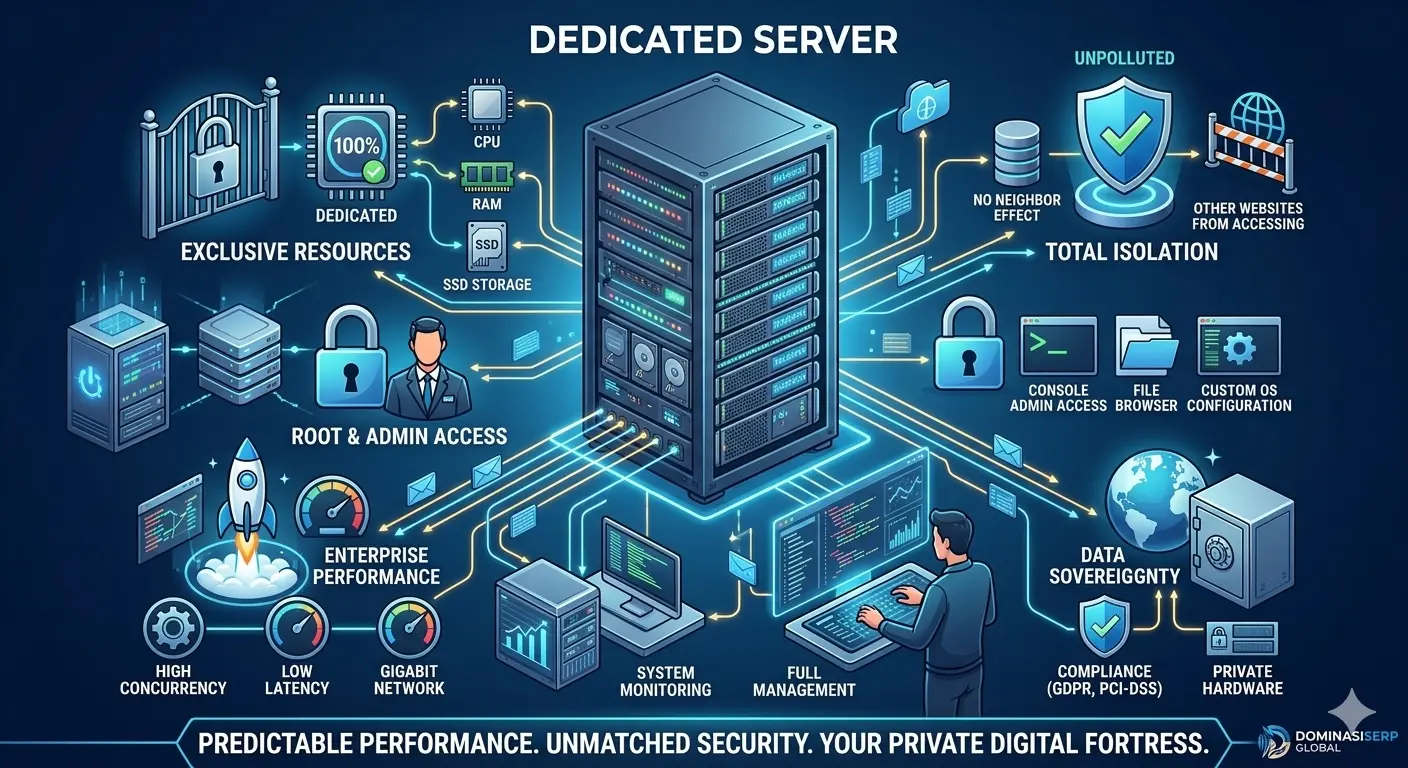
The core distinction lies in the architecture of your resources. A Dedicated Server provides you with exclusive ownership of a physical machine. You do not share the CPU, RAM, or storage with any other tenant, ensuring predictable performance regardless of the workload.

Conversely, Cloud Infrastructure is built on a virtualized, multi-tenant environment where resources are pooled and abstracted. While you may still have “dedicated” instances within the cloud, the underlying hardware is shared across a cluster of servers, providing elasticity that a physical box cannot match.

Dedicated Server: The Power of Exclusivity

For high-traffic applications that require consistent, heavy computational power, the dedicated server remains the gold standard.

  • Maximum Performance: Without the hypervisor layer required for virtualization, your applications interact directly with the physical hardware, minimizing latency.

  • Data Sovereignty and Compliance: For businesses in regulated industries, having complete control over a physical machine makes it easier to implement strict security protocols and meet specific data compliance requirements.

  • Predictable Costs: Dedicated servers operate on a fixed monthly cost, which is ideal for predictable, high-load workloads where resource requirements do not fluctuate.

Cloud Infrastructure: The Architecture of Elasticity

Cloud infrastructure is designed for agility and rapid scaling. It is the preferred choice for businesses that experience unpredictable traffic spikes or operate across multiple global regions simultaneously.

  • Dynamic Scalability: You can scale resources—CPU, RAM, or storage—up or down in minutes, ensuring your infrastructure always matches your current demand.

  • High Availability: Cloud environments are architected to withstand hardware failures; if one physical node fails, your instance can automatically migrate to another, ensuring minimal downtime.

  • Global Reach: Cloud providers offer data centers across the globe, allowing you to deploy infrastructure closer to your target audience, which is essential for global SEO and user experience.

Choosing Based on Your Growth Stage

At DMS Global, we evaluate infrastructure based on the long-term needs of the project.

When to Choose a Dedicated Server

If your application requires sustained, high-intensity processing—such as large-scale data analysis, complex programmatic SEO generation, or massive real-time database operations—a dedicated server provides the stability and raw power you need. It is an investment in pure, unadulterated performance where resources are never contested.

When to Choose Cloud Infrastructure

If your business model depends on rapid growth, global expansion, or variable traffic, the cloud is the superior strategic choice. Its ability to adapt to changing conditions and provide built-in redundancy makes it more resilient for modern, web-facing applications.

E-E-A-T and Infrastructure Choice

Search engines do not directly “see” your server, but they do experience the results of your infrastructure choice. A site that suffers from downtime or slow responses because it is poorly scaled on a static server will struggle to maintain its ranking authority.

By choosing the right infrastructure, you are effectively signaling your Expertise and Trustworthiness. A cloud-based site that delivers consistent performance to users in London, Tokyo, and New York simultaneously proves its Authoritativeness in the global market.

Final Strategic Recommendation

For most modern businesses, the future is in the cloud, or at least a hybrid approach. However, the dedicated server retains a specific, vital role for specialized, high-load operations. As DMS Global continues its path toward 2030, our infrastructure strategies prioritize this balance: using the cloud for elasticity and reach, while reserving dedicated resources for the heavy lifting that drives our core analytical engines.

Choosing your infrastructure is not a permanent decision, but it is a foundational one. Assess your current growth velocity, your application’s resource dependencies, and your budget to determine which path provides the most value for your specific stage of development.

related tags: dedicated server, cloud computing, web infrastructure, enterprise hosting, scalable architecture
The Ultimate Guide to Setting Up Your Own Unmanaged VPS

Unmanaged VPS

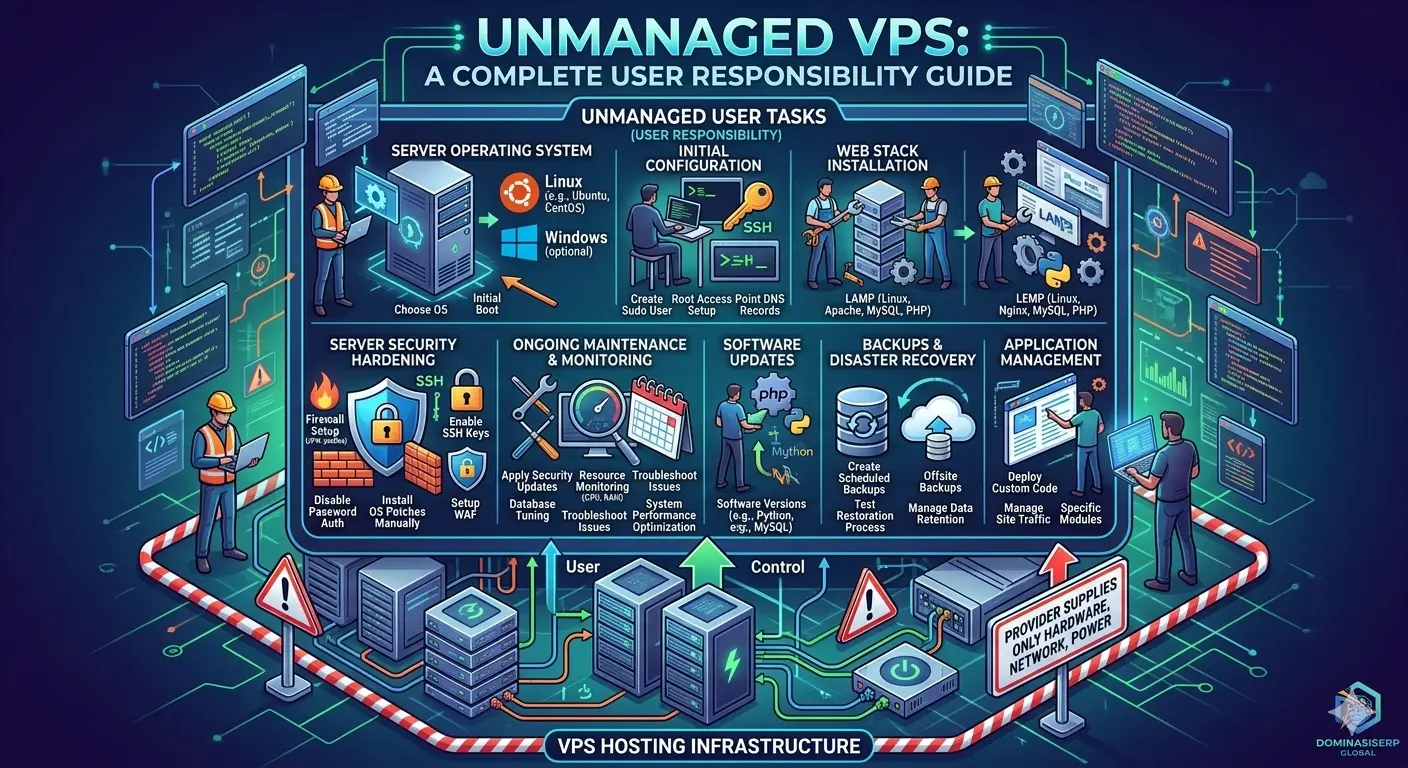
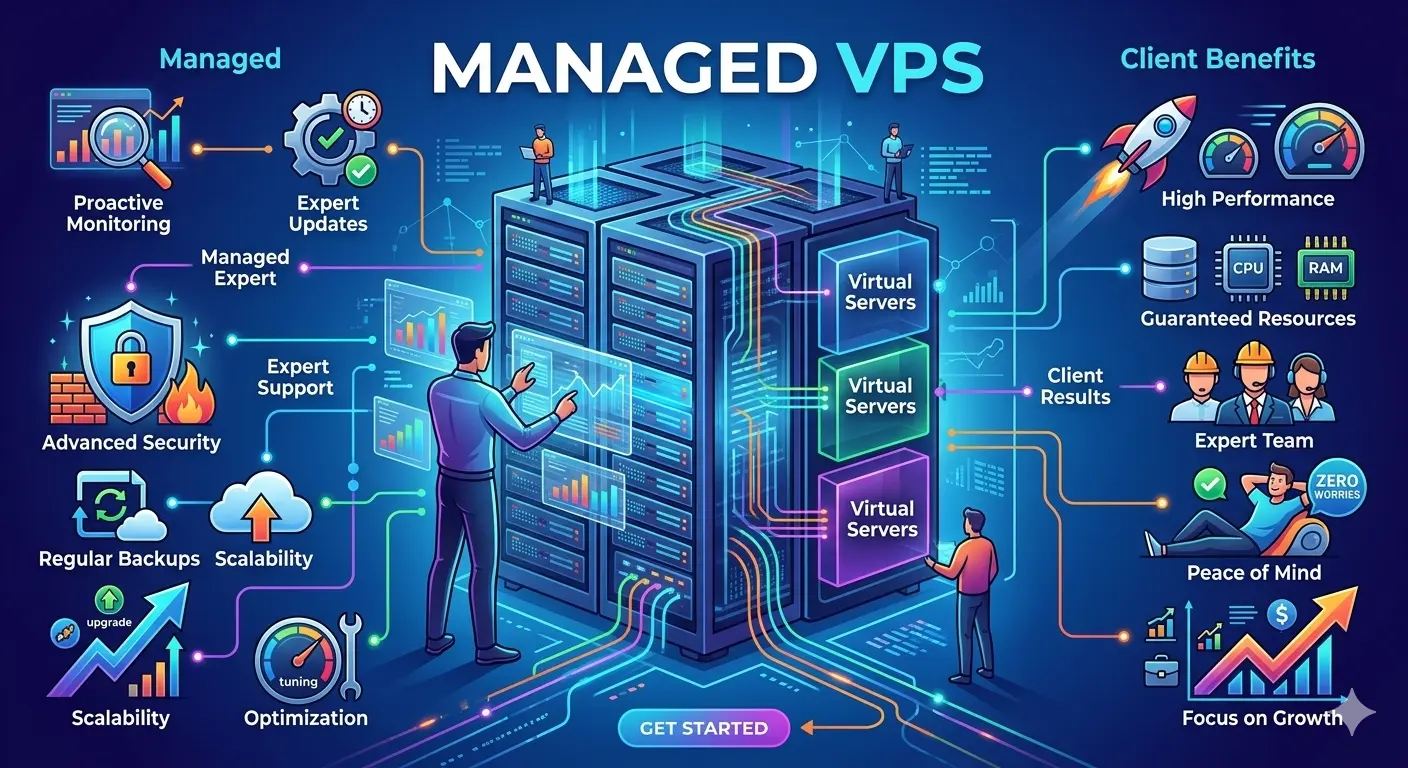
For developers, system administrators, and those eager to learn the inner workings of the web, an unmanaged Virtual Private Server (VPS) is the ultimate laboratory. Unlike managed environments where a provider handles the backend, an unmanaged VPS gives you full root access and complete control over every aspect of your server. While this requires a higher level of technical responsibility, it offers unparalleled flexibility and cost-efficiency for those who have the expertise to manage their own infrastructure.

This guide outlines the essential steps for setting up an unmanaged VPS, ensuring you build a foundation that is secure, fast, and optimized for your specific needs.

Why Choose an Unmanaged VPS?

Choosing an unmanaged VPS is a strategic decision for projects where you need to:

  • Implement Custom Stacks: You have complete freedom to choose your operating system, web server (Nginx, Apache, or OpenLiteSpeed), and database engine.

  • Optimize Costs: Unmanaged instances are generally cheaper than managed ones because you are paying only for the hardware and network, not the administrative overhead.

  • Learn Infrastructure: There is no better way to understand Linux, networking, and server security than by configuring them yourself.

Step 1: Initial Server Provisioning

Once you purchase your unmanaged VPS, the provider typically provides a fresh instance of a Linux distribution (such as Ubuntu or Debian). Your first task is to access the server via SSH.

  1. Connect via SSH: Use your terminal or a tool like PuTTY to log in as the root user.

  2. Update the System: Immediately run system updates to ensure all packages are current and secure.

    • sudo apt update && sudo apt upgrade -y

Step 2: Security Hardening

Security is the most critical aspect of an unmanaged environment. Since you have no provider to patch your system, you must be proactive.

  • Create a Sudo User: Never run your server as the root user for daily tasks. Create a new user with sudo privileges.

  • Configure a Firewall: Use ufw (Uncomplicated Firewall) to block all incoming traffic by default and allow only the necessary ports, such as SSH (22), HTTP (80), and HTTPS (443).

  • Disable Password Authentication: Configure your SSH to use public/private key pairs instead of passwords, which effectively eliminates the risk of brute-force password attacks.

Step 3: Installing the Web Stack

With the server secured, you can now install your web stack. A common configuration for high-performance projects is the LEMP stack (Linux, Nginx, MySQL/MariaDB, PHP).

  • Install Nginx: A high-performance web server known for its stability and low resource usage.

  • Install MariaDB: A reliable, community-developed fork of MySQL that is excellent for database-heavy applications.

  • Install PHP-FPM: This allows your server to process dynamic PHP content efficiently.

Step 4: Domain and SSL Configuration

To make your site accessible, you must point your domain’s DNS records to your server’s IP address. Once the DNS propagates, install an SSL certificate using Certbot. This enables HTTPS, which is non-negotiable for modern web security and SEO performance.

Step 5: Ongoing Maintenance

Owning an unmanaged VPS means the responsibility for upkeep is entirely yours.

  • Regular Patching: Set a schedule to check for and apply security updates for your OS and installed software.

  • Monitoring: Use tools like Netdata or Glances to monitor CPU usage, RAM, and disk space to ensure your server remains stable.

  • Backups: Since you are in control, ensure you have an external backup strategy in place. Never rely on the local disk as your only copy of your data.

Conclusion

Setting up your own unmanaged VPS is a powerful way to take total ownership of your digital assets. While it demands a technical commitment, the rewards are a highly optimized, custom-tailored environment that perfectly supports your application’s unique requirements. For those building scalable, high-performance projects, the skills learned in managing your own VPS are invaluable for your long-term success.

related tags: unmanaged vps, linux server management, server security, web development, infrastructure engineering

Managed VPS vs Shared: A Detailed Guide for Web Developers

Managed VPS

For web developers, the choice of hosting environment is one of the most critical architectural decisions made at the start of a project. While shared hosting is often the default choice for hobbyists or simple landing pages, web developers frequently find that it imposes significant limitations on their workflow, deployment capabilities, and application performance.

As you move toward professional-grade projects—such as the global expansion of DominasiSerp—the distinction between a Shared Hosting environment and a Managed Virtual Private Server (VPS) becomes stark. This guide explores why Managed VPS is the preferred environment for serious web development and how it empowers developers to build, deploy, and scale with greater efficiency.

The Shared Hosting Constraint: Why Developers Outgrow It

Shared hosting is designed for simplicity, not technical flexibility. In a shared environment, hundreds of websites often reside on the same hardware, relying on the same pool of resources and a unified configuration.

  • Limited Customization: Developers on shared hosting typically lack root access. If your application requires a specific version of PHP, a unique Apache module, or a custom caching engine like Redis, you are at the mercy of the hosting provider’s global settings.

  • Environment Drift: Because shared servers are multi-tenant, you cannot easily replicate your local development environment to the server. This often leads to the infamous “it works on my machine” phenomenon.

  • Performance Bottlenecks: In a shared environment, you are susceptible to the “noisy neighbor” effect. If another site on the same server experiences a traffic spike, your application performance suffers, regardless of your code quality.

Managed VPS: The Developer’s Playground

Managed VPS hosting provides a middle ground: you receive the isolation and control of a virtualized server, paired with the professional support that removes the burden of low-level infrastructure management.

1. Root Access and Environment Control

The most immediate benefit of a VPS is the ability to configure the server environment to match your application requirements. Whether you are deploying a custom Laravel application, a headless CMS, or a complex e-commerce stack, you have the freedom to install the exact software stack required for optimal performance.

2. Predictable Performance

Because your resources (CPU, RAM, and SSD storage) are dedicated to your instance, your application behaves predictably. This allows developers to conduct accurate load testing and performance tuning, ensuring that the site remains responsive under high concurrency—a critical requirement for global, enterprise-level projects.

3. Workflow Integration

Modern Managed VPS platforms, such as those integrated with Cloudways or similar managed layers, allow developers to streamline their workflows. Features like staging environments, Git integration, and one-click backups transform the deployment process, reducing the time from “code push” to “live production”.

Security and Compliance for Web Applications

Security is a primary concern for developers managing professional applications. In a shared environment, you are only as secure as the weakest site on the server. A compromised neighbor could potentially lead to cross-site contamination.

Managed VPS environments offer:

  • Dedicated Firewall Configuration: Developers can implement custom firewall rules, IP blocking, and secure SSH keys to harden their environment.

  • Proactive Patching: While you manage the application, a managed provider typically monitors the OS and core server software for vulnerabilities, applying security patches that keep the environment compliant with modern standards.

The Strategic Decision: Why DMS Global Chooses Managed VPS

For projects like DMS Global, which are focused on global, long-term authority and scalability, infrastructure is an extension of the brand’s quality.

  • Reliability as a Trust Signal: Professional developers understand that downtime destroys user trust. Managed VPS provides the uptime guarantees that are necessary for high-ticket projects targeting C-level managers and enterprise clients.

  • Scaling for Growth: As a project expands, the ability to upgrade resources vertically (adding more RAM/CPU) without migrating to a new server architecture is invaluable. It allows for seamless growth that matches your traffic increases.

Conclusion

For the web developer, the shift from shared hosting to Managed VPS is a move toward professional empowerment. It replaces the limitations of a rigid, shared environment with a flexible, high-performance platform that is built to support complex applications. By investing in Managed VPS, you are not just hosting a website; you are building a robust infrastructure that supports your code, protects your users, and facilitates your long-term growth.

When you choose a Managed VPS provider, you gain a partner that handles the technical maintenance, allowing you to focus on what you do best: building exceptional web experiences.

related tags: managed vps, web development, hosting infrastructure, server architecture, application deployment

How Managed VPS Saves Time on Server Maintenance and Security

Managed VPS

For any business owner, time is the ultimate currency. Every hour spent troubleshooting a server configuration, patching a vulnerability, or manually backing up files is an hour taken away from your core business strategy, content creation, or customer engagement. When your website grows, the “do-it-yourself” approach to infrastructure quickly becomes a liability. This is where Managed Virtual Private Server (VPS) hosting transforms from a technical choice into a strategic business asset.

The Hidden Costs of Unmanaged Infrastructure

Many businesses start with unmanaged hosting because it is inexpensive. However, unmanaged hosting requires you to be your own system administrator. You are responsible for the entire technical stack. For non-technical owners or even busy developers, this involves several time-intensive obligations:

  • Kernel and OS Updates: You must manually track, test, and deploy operating system updates to ensure your server is stable.

  • Security Hardening: From configuring firewalls to monitoring for brute-force attacks, the burden of defense rests entirely on you.

  • Monitoring and Response: If your server crashes at 2 AM, you are the one who needs to wake up and resolve it.

How Managed VPS Reclaims Your Schedule

Managed VPS hosting is defined by the offloading of these tasks to professional teams. By leveraging the expertise of your hosting provider, you effectively buy back your time while simultaneously improving your infrastructure.

1. Automated Security Patching

Security is an ongoing process, not a one-time setup. Managed providers automatically scan for vulnerabilities and apply security patches as soon as they are identified. This protects your business from zero-day exploits without requiring you to monitor security news feeds or manually update your server software.

2. Proactive Monitoring and Incident Resolution

Managed services often include 24/7 proactive monitoring. Unlike unmanaged hosting, where you wait until a visitor reports a problem, managed providers often detect and resolve hardware or resource bottlenecks before they lead to downtime. This level of oversight ensures your business remains online even when you are focused elsewhere.

3. Simplified Database and Software Optimization

Performance is a core component of E-E-A-T. Managed VPS providers handle the heavy lifting of server-side optimization, including database indexing and caching configurations. Because the provider’s team has deep experience in the specific environment they host, they can fine-tune these settings far more efficiently than a generalist user, saving you hours of trial-and-error experimentation.

4. Reliable Backups and Disaster Recovery

Manual backups are prone to human error and are often forgotten until a crisis hits. Managed VPS hosting incorporates automated, redundant backup schedules. If a critical update goes wrong or your site experiences a failure, restoration is handled by the experts, ensuring your business continuity is maintained with minimal downtime.

The Strategic Impact on Business Focus

At DMS Global, we view infrastructure not as a utility, but as a catalyst for growth. When you stop worrying about maintenance, your team can pivot to high-value activities:

  • Focus on Content and User Experience: You gain the freedom to prioritize the features and content that directly serve your customers.

  • Faster Time-to-Market: With a professional managed environment, you can deploy new updates or localized site versions significantly faster because you aren’t bottlenecked by infrastructure configuration.

  • Scaling with Confidence: Managed providers handle the technical aspects of scaling resources, meaning your infrastructure grows in tandem with your business demands without requiring you to master new server management skills.

Ensuring Your Site Meets Global Standards

Search engines like Google prioritize sites that are secure, fast, and consistently available. By shifting the burden of maintenance to a Managed VPS provider, you ensure that your site always meets these high standards. It is a proactive approach to maintaining the trust of both your users and search engines.

Ultimately, Managed VPS is an investment in professional efficiency. It replaces the unpredictable, time-consuming requirements of manual server maintenance with a stable, expert-led partnership. For a scaling business, this is not just about saving time—it is about securing the stability required for long-term growth and digital dominance.

related tags: managed vps, server maintenance, website security, business efficiency, web infrastructure

Comparing Top Managed VPS Providers for High-Speed Performance

Managed VPS

In the digital era, speed is not just a feature—it is a competitive necessity. For businesses scaling their operations, the infrastructure underpinning their website acts as the engine of their success. When you move beyond entry-level hosting, a Managed Virtual Private Server (VPS) becomes the premier choice for achieving high-speed performance, reliability, and security. However, with a crowded market of providers, choosing the right partner requires a deep understanding of what truly drives server performance.

Why Performance Drives Business Success

At DMS Global, we consistently emphasize that site speed is a foundational element of E-E-A-T (Experience, Expertise, Authoritativeness, and Trustworthiness). Users expect pages to load in under two seconds, and search engines prioritize sites that deliver a seamless experience.

A high-performance Managed VPS offers more than just raw speed. It provides:

  • Resource Dedication: Unlike shared hosting, where resources are split, a Managed VPS guarantees your site its own CPU and RAM.

  • Optimized Stacks: Managed providers configure the server environment (e.g., using LiteSpeed or Nginx) to extract maximum efficiency from your application.

  • Proactive Maintenance: A true managed service includes continuous monitoring and performance tuning to prevent bottlenecks before they happen.

Evaluating the Top Contenders

When comparing top Managed VPS providers, focus on these critical performance indicators: hardware speed (NVMe storage), network latency (data center locations), and the quality of the management layer.

1. Cloudways

Cloudways is widely regarded as a top-tier choice for scaling businesses because it acts as a managed layer on top of premium cloud infrastructure like DigitalOcean, Vultr, and Linode.

  • Performance: By giving you access to high-frequency Vultr and DigitalOcean droplets, Cloudways delivers industry-leading read/write speeds.

  • The “Managed” Advantage: They provide automated backups, 24/7 security patching, and an intuitive dashboard that simplifies complex server tasks.

  • Best For: Businesses that want professional-grade cloud infrastructure without the need to be a Linux system administrator.

2. A2 Hosting

A2 Hosting differentiates itself through its “Turbo” servers, which are built specifically for speed.

  • Performance: Their Turbo plans utilize NVMe storage and LiteSpeed server software, which significantly outperforms traditional configurations in handling high-concurrency traffic.

  • The “Managed” Advantage: A2 offers managed support where they handle the technical aspects of your server environment, allowing you to focus on growth.

  • Best For: Sites that are heavy on WordPress or other PHP-based applications that benefit from LiteSpeed optimization.

3. Liquid Web

Liquid Web is often considered the “gold standard” for fully managed enterprise-level VPS hosting.

  • Performance: They invest heavily in high-performance hardware and guarantee extreme reliability.

  • The “Managed” Advantage: Their management is exhaustive. They handle almost everything, including proactive monitoring, software updates, and advanced security configurations.

  • Best For: Established businesses that need a “hands-off” approach and require guaranteed uptime and enterprise-grade support.

4. KnownHost

KnownHost has built a reputation for high-speed VPS hosting that is exceptionally stable and well-supported.

  • Performance: Their infrastructure is designed for speed and reliability, with excellent network connectivity that keeps latency low.

  • The “Managed” Advantage: They are known for having one of the most responsive support teams in the industry, making them a perfect fit for non-technical website owners who need quick, expert help.

  • Best For: Businesses that value high-touch support alongside robust server performance.

How to Choose the Right Provider for Your Growth

Choosing between these providers is not just about the monthly price—it is about the return on investment. Consider these factors when making your decision:

Hardware and Storage

Always prioritize providers that offer NVMe SSD storage. This is significantly faster than traditional SSDs and is a primary driver of database performance and overall page load times.

Global Data Center Presence

Latency is the enemy of speed. If your audience is international, ensure your provider has data centers in or near your target markets. For DMS Global, we always advise clients to choose locations that minimize the physical distance to their primary visitors.

The “Managed” Depth

Understand exactly what “managed” includes. Does it cover security patches? Is there proactive monitoring of your site’s uptime? Does the provider help with database optimization? A “fully managed” plan should allow you to offload all server-side maintenance to their team.

Final Thoughts: Investing in Your Infrastructure

Upgrading to a high-speed Managed VPS is one of the most strategic decisions a scaling business can make. It removes the technical “ceiling” that prevents your site from growing. By choosing a provider that prioritizes performance and provides a deep level of management, you are investing in a foundation that will support your traffic spikes, international expansion, and long-term search engine dominance.

The right provider will function as a silent, powerful partner in your business, ensuring that every visitor to your site receives a fast, secure, and professional experience—every time.

related tags: managed vps, high performance hosting, web hosting comparison, website speed, scaling infrastructure

Top Benefits of Managed VPS for Non-Technical Website Owners

Managed VPS

For many business owners, the technical demands of managing a website can feel like an unnecessary distraction from their core mission. While shared hosting is often touted as the “simple” option, it frequently forces non-technical owners to deal with performance issues, security patches, and complex server configurations once their site starts to grow.

Managed VPS hosting changes this dynamic entirely. It provides the power and reliability of a private server environment without requiring the owner to have a degree in systems administration. For a scaling business, moving to a Managed VPS is the best way to regain focus on growth while ensuring your website remains a professional, high-performance asset.

Bridging the Gap: What “Managed” Really Means

When you opt for a Managed VPS, you are essentially outsourcing your technical infrastructure to a team of experts. In a non-managed environment, you are responsible for everything: the operating system, server security, software updates, and troubleshooting. In a Managed VPS environment, the hosting provider takes ownership of these critical tasks.

For non-technical owners, this transition removes the fear of “breaking” the site during an update. It turns the server into a reliable utility—like electricity or water—that simply works in the background, allowing you to focus on your content, marketing, and customer relationships.

Key Benefits for the Non-Technical Entrepreneur

1. Zero-Stress Security Management

Security is the most significant concern for any website owner. In a shared environment, one security vulnerability can compromise your site through no fault of your own. On a Managed VPS, your server is isolated. Furthermore, your managed provider proactively monitors for threats, installs security patches, and configures firewalls on your behalf. You gain professional-grade security without needing to understand the intricacies of server hardening.

2. Automatic Updates and Backups

Technical owners often dread updates because they know that one wrong move can cause a site to go offline. Managed VPS providers handle these updates systematically. They manage core software updates, plugin compatibility, and operating system patches to ensure your site stays current and stable. Additionally, they implement automated, regular backups, providing a crucial safety net if an error ever occurs.

3. Professional-Grade Performance Tuning

Non-technical owners often struggle to understand why a site is slow. Is it the code? The database? The server configuration? On a Managed VPS, performance optimization is part of the service. Providers use advanced caching, server-level optimizations, and load balancing to ensure your site is fast. They handle the “under-the-hood” adjustments that would otherwise require deep technical knowledge to implement.

4. Expert Support on Demand

The greatest benefit of a Managed VPS is having a partner. When a technical issue arises—whether it is a site-wide error or a question about a configuration—you have access to a support team that knows your server environment intimately. You no longer have to navigate generic, unhelpful support forums or worry about resolving complex technical hurdles on your own.

5. Seamless Scalability

Growth often catches non-technical owners off guard. When traffic spikes, shared servers often crash, leaving you scrambling for solutions. A Managed VPS allows you to scale your resources—RAM, CPU, and storage—seamlessly as your business expands. Your provider can manage these transitions for you, ensuring your infrastructure is always ready for your next phase of success without any technical intervention on your part.

Why This Matters for Your Business Growth

At DMS Global, we believe that your time is your most valuable asset. Every hour spent debugging a server or trying to understand a complex hosting error is an hour not spent serving your customers or refining your product.

The E-E-A-T Approach to Managed Hosting

By using a Managed VPS, you are demonstrating your Experience and Trustworthiness by providing a stable, secure, and fast environment for your users. Search engines prioritize websites that demonstrate these qualities. When your infrastructure is handled by professionals, your site is consistently available and responsive, which builds the long-term authority required to rank well in competitive search results.

Focus on What Matters

As a non-technical owner, your expertise lies in your business, your niche, and your value proposition. Managed VPS hosting is the technical foundation that supports that expertise. It frees you from the complexities of infrastructure management and provides the confidence that your website is being looked after by professionals who understand the nuances of global performance and security.

Making the Shift

If you find yourself spending more time managing your hosting environment than you do managing your business, it is time to consider the Managed VPS transition. It is the most professional move you can make for your brand. By investing in a managed environment, you are choosing to prioritize reliability, speed, and security—the three pillars of a successful online business.

The transition to a Managed VPS is not just an infrastructure change; it is a business strategy. It positions your website to handle the rigors of modern web traffic while giving you the peace of mind to focus entirely on your vision for the future.

related tags: managed vps, non-technical hosting, web hosting for business, website management, business growth infrastructure

Why Managed VPS Is the Best Investment for Scaling Businesses

Managed VPS

As your business grows, the limitations of entry-level hosting become increasingly apparent. You are likely experiencing more traffic, more complex data requirements, and a need for higher security standards. When your website transitions from a simple brochure to a vital revenue-generating engine, your infrastructure must keep pace. For scaling businesses, Managed Virtual Private Server (VPS) hosting stands out as the single most effective investment to bridge the gap between shared environments and the high costs of dedicated hardware.

Understanding Managed VPS

At its core, a VPS provides an isolated, virtualized server environment where you have dedicated resources—guaranteed CPU, RAM, and storage—that are not shared with other users. “Managed” means that your hosting provider takes responsibility for the server-side heavy lifting. They handle operating system updates, security patching, monitoring, and performance tuning.

For a scaling business, this is a game-changer. It allows your internal team to focus on product development, marketing, and customer acquisition rather than managing Linux kernels or server firewalls.

The Strategic Advantages for Scaling

1. Performance Consistency

Unlike shared hosting, where performance can fluctuate based on the activities of other websites on the server, a Managed VPS guarantees your resources. This means your site remains lightning-fast even during peak traffic events, such as seasonal sales or viral marketing campaigns. Consistency is the foundation of user trust.

2. Security and Compliance

Scaling businesses often handle sensitive customer data, from payment information to personal profiles. Managed VPS environments provide a level of isolation that shared hosting simply cannot match. Furthermore, providers take on the responsibility of proactive security, patching vulnerabilities as soon as they emerge. This is critical for meeting compliance standards like GDPR, PCI-DSS, or HIPAA.

3. Scalability on Demand

One of the primary benefits of the virtualized environment is the ability to scale. If your business is expanding into new international markets, you can often upgrade your server resources with just a few clicks. This elasticity ensures that you only pay for the performance you need, while always having the headroom to handle sudden growth.

4. Technical Expertise as a Service

When you invest in Managed VPS, you aren’t just buying hardware; you are buying access to a team of experts. Managed providers monitor your server 24/7. They identify potential hardware failures, optimize database performance, and resolve technical bottlenecks before they impact your business. For an entrepreneur, this expertise is worth its weight in gold.

VPS as a Catalyst for Growth

Growth is not just about having more visitors; it is about providing a professional experience that converts those visitors into loyal customers. Managed VPS supports this in several ways:

  • Reduced Downtime: Professional hosting providers offer uptime guarantees that are backed by service level agreements (SLAs). For an e-commerce store, every minute of downtime equals lost revenue. Managed VPS minimizes these risks significantly.

  • Customization Capability: As your business evolves, you may need specific server-side software or custom caching layers. A VPS gives you the root access required to tailor your environment, allowing your developers to deploy the exact stack needed for your unique applications.

  • Global Optimization: For businesses with an international focus, Managed VPS allows for the installation of advanced content management tools and localized configurations that can significantly improve load times for users in different regions.

The E-E-A-T Perspective on Infrastructure

At DMS Global, we frequently discuss E-E-A-T (Experience, Expertise, Authoritativeness, and Trustworthiness) as the standard for digital success. A scaling business that relies on unstable, shared infrastructure sends a signal of unprofessionalism to both users and search engines.

Investing in a Managed VPS demonstrates a commitment to quality. It shows that you value your users’ experience enough to provide a secure, fast, and reliable environment. This technical excellence is a key component of your brand’s authority. When your site loads instantly and provides a secure, consistent experience, you build the kind of trust that turns casual browsers into long-term partners and customers.

Making the Investment Decision

The shift from shared to Managed VPS is often viewed as a cost, but it should be categorized as an investment. The improved conversion rates, reduced technical overhead, and increased reliability directly impact your bottom line. When your infrastructure is robust, you stop worrying about “server crashes” and start planning for your next phase of expansion.

For any business that has moved beyond the “proof of concept” phase, Managed VPS is no longer an optional luxury—it is the standard for sustainable, professional growth.

related tags: managed vps, business scalability, server infrastructure, hosting investment, web performance

Pros and Cons of Shared Hosting for International Projects

Shared Hosting

Shared Hosting for International Projects

As you expand your digital footprint with projects like DMS Global, choosing the right infrastructure becomes a strategic decision that impacts your reach, speed, and reliability across different geographical regions. While shared hosting is often the first choice for many, its suitability for international projects requires a careful evaluation of its advantages and limitations.

In this guide, we explore the nuances of using shared hosting for websites that serve a global audience and provide insights to help you make an informed decision for your long-term success.

Understanding the Shared Hosting Model

Shared hosting operates on the principle of resource sharing, where a single physical server hosts multiple websites. From an international project perspective, this model offers a specific set of benefits, particularly for testing markets and localized landing pages.

The Advantages for International Projects

  1. Cost-Efficiency for Multi-Site Testing: When launching localized versions of a project (such as separate sites for different target countries), shared hosting provides an extremely low-cost environment to validate business ideas before committing to more expensive infrastructure.

  2. Simplified Management: Many shared hosting platforms offer integrated dashboards that simplify the management of multiple domains, making it easier for a small team to maintain several international project sites from a single interface.

  3. Rapid Deployment: For projects that require quick deployment of static content or simple landing pages, shared hosting setups allow you to launch and iterate rapidly, which is essential for agile international marketing campaigns.

The Limitations for Global Reach

While the entry cost is attractive, international projects often face unique challenges in a shared environment:

  1. Geographical Latency: Most shared hosting providers operate out of a single data center. If your primary audience is in London but your server is in Singapore, the physical distance will introduce latency, leading to slower page load times that can negatively impact your search engine rankings and user bounce rates.

  2. Resource Throttling: International projects that gain sudden traction in specific regions can quickly hit the resource limits of a shared environment. When your site shares CPU and RAM with others, your performance becomes susceptible to the traffic patterns of your server “neighbors”.

  3. Security and Compliance: Managing data residency and security compliance—such as GDPR for European audiences—can be more complex on a shared server where you lack full control over the underlying server configuration and logging mechanisms.

Optimizing Shared Hosting for Global Audiences

If you choose to use shared hosting for international projects, you must implement specific optimizations to mitigate the inherent disadvantages of the shared model.

Leveraging Content Delivery Networks (CDNs)

A CDN is non-negotiable for international projects on shared hosting. By caching your content on a global network of servers, a CDN ensures that your visitors receive your site’s data from a server physically close to them, regardless of where your main shared hosting server is located.

Prioritizing Lightweight Architecture

To maximize performance, keep your web pages as lightweight as possible. Minimize the use of heavy scripts, optimize your images for web consumption, and use efficient coding practices to reduce the computational load on the shared server.

Database Efficiency

In an international context, database queries must be highly optimized. Regularly cleaning your database and ensuring that your site’s queries are efficient will prevent “bottlenecks” that occur when your site tries to fetch localized data for users in different time zones.

When to Transition to VPS or Cloud

The transition from shared hosting to more robust solutions like VPS or dedicated cloud hosting is usually a sign of progress. You should consider an upgrade when:

  • Your international traffic grows: You require dedicated, guaranteed resources to ensure consistent performance for users across different continents.

  • Security requirements become complex: You need full control over server settings to implement custom security protocols or meet specific regional data regulations.

  • Application complexity increases: Your projects transition from simple content sites to complex, database-driven applications that require custom server-side software installations.

Conclusion

Shared hosting can be a powerful tool for international projects if you understand its limitations and proactively implement performance optimizations. By focusing on CDN usage and lightweight architecture, you can provide a fast, reliable experience for a global audience. However, as your international footprint grows, maintaining a roadmap for scaling your infrastructure to VPS or cloud hosting is essential to ensuring the long-term authority and reliability of your digital presence.

related tags: shared hosting, international seo, global web performance, web infrastructure, website scalability

How to Maximize Performance While on Shared Hosting

Shared Hosting

Many startups and small businesses begin their digital journey on shared hosting. It is an affordable, accessible, and straightforward way to get a website live. However, the nature of shared environments—where you share server resources with others—means that you cannot simply rely on the host to do all the heavy lifting. To compete in today’s digital landscape, you must take an active role in optimizing your own performance.

Maximizing your organic performance while on a shared server is entirely possible if you apply the right technical optimizations. By focusing on resource efficiency and site speed, you can create a high-performing user experience that search engines like Google will reward.

The Pillars of Shared Hosting Optimization

Since you do not have control over the server’s hardware configuration in a shared environment, your strategy must focus on minimizing the load your website places on the server. Every millisecond saved in loading time is a win for your user experience and your SEO rankings.

1. Optimize Your Images

Images are often the largest files on a webpage. If they are not optimized, they will choke your bandwidth and increase loading times.

  • Use Modern Formats: Convert your images to WebP or AVIF formats. These provide superior compression compared to traditional JPEG or PNG files without sacrificing visual quality.

  • Implement Lazy Loading: Use native browser lazy loading to ensure that images below the fold only load when the user scrolls down to them.

  • Correct Sizing: Never upload an image that is larger than the display size required on your site. Use automated tools to serve appropriately sized images for different devices.

2. Leverage Browser Caching

Browser caching allows returning visitors to load your site much faster because their browser stores local copies of your static files (CSS, JavaScript, images). By setting appropriate expiry headers, you tell the browser how long it should keep these files before requesting them from the server again. This significantly reduces the number of requests sent to your shared server.

3. Minify and Combine CSS/JS Files

Every time a user visits your site, their browser makes multiple requests to the server for files. You can reduce this overhead by minifying your files—removing unnecessary characters like whitespace, comments, and line breaks—and combining smaller files into a single, larger file. This process reduces the number of HTTP requests, which is critical when you have limited concurrent connection limits on a shared plan.

4. Implement a Content Delivery Network (CDN)

A CDN, such as Cloudflare, is one of the most effective ways to maximize performance. It stores a cached version of your website on a network of servers around the world. When a visitor hits your site, the CDN serves the content from the server closest to them. This drastically improves speed and offloads a massive amount of traffic from your primary shared hosting server.

5. Utilize Efficient Caching Plugins

If you are using WordPress, a robust caching plugin is non-negotiable. Plugins like WP Rocket or W3 Total Cache can automate minification, browser caching, and database optimization. They effectively create a static version of your dynamic site, meaning the server doesn’t have to perform complex PHP calculations or database queries every time a page is requested.

Managing Your Database

A cluttered database can be a silent performance killer. Over time, your database accumulates unnecessary data, such as post revisions, spam comments, and transient options.

  • Regular Cleaning: Periodically clean your database to remove overhead.

  • Limit Revisions: Set a limit on the number of post revisions WordPress stores to keep your database footprint small.

  • Index Your Tables: Ensure your database tables are properly indexed, which allows the server to retrieve information much faster.

The “E-E-A-T” Mindset for Technical SEO

At DMS Global, we emphasize that technical performance is a key part of demonstrating your expertise and trustworthiness. Search engines interpret a slow, unresponsive site as a poor user experience. By proactively optimizing your site, you show search engines that your brand values its visitors’ time and data security.

Even on shared hosting, you can achieve impressive metrics if you treat your site as a lightweight application. Remember, the goal is to make your site “server-friendly.” The less work your host has to do to deliver your page, the faster it will load, and the better your chances of ranking higher.

When to Consider the Next Step

While these optimizations can maximize your current plan, there is a limit. If your startup is gaining significant traction and you find yourself constantly struggling to stay within your resource limits despite these optimizations, it is a sign of success. That is the moment to transition to a more powerful infrastructure.

Upgrading to a Managed VPS or a dedicated cloud solution will allow you to stop focusing on “survival” optimizations and start focusing on scaling your features and content. But until that day comes, the techniques outlined above will keep your shared hosting environment fast, efficient, and ready to convert your visitors into customers.

related tags: shared hosting, website optimization, page speed, technical seo, web performance

Shared hosting vs VPS: Why Your Growing Website Needs an Upgrade

Shared hosting vs VPS

For many website owners, starting with a shared hosting plan is a logical and cost-effective decision. It allows you to get your content online quickly without a significant financial investment. However, as your website grows, gains more traffic, and requires more complex functionalities, you will inevitably reach a point where shared hosting can no longer keep up with your demands. Understanding the fundamental differences between shared hosting and Virtual Private Server (VPS) hosting is essential for any business owner planning for long-term growth.

The Limitations of Shared Hosting

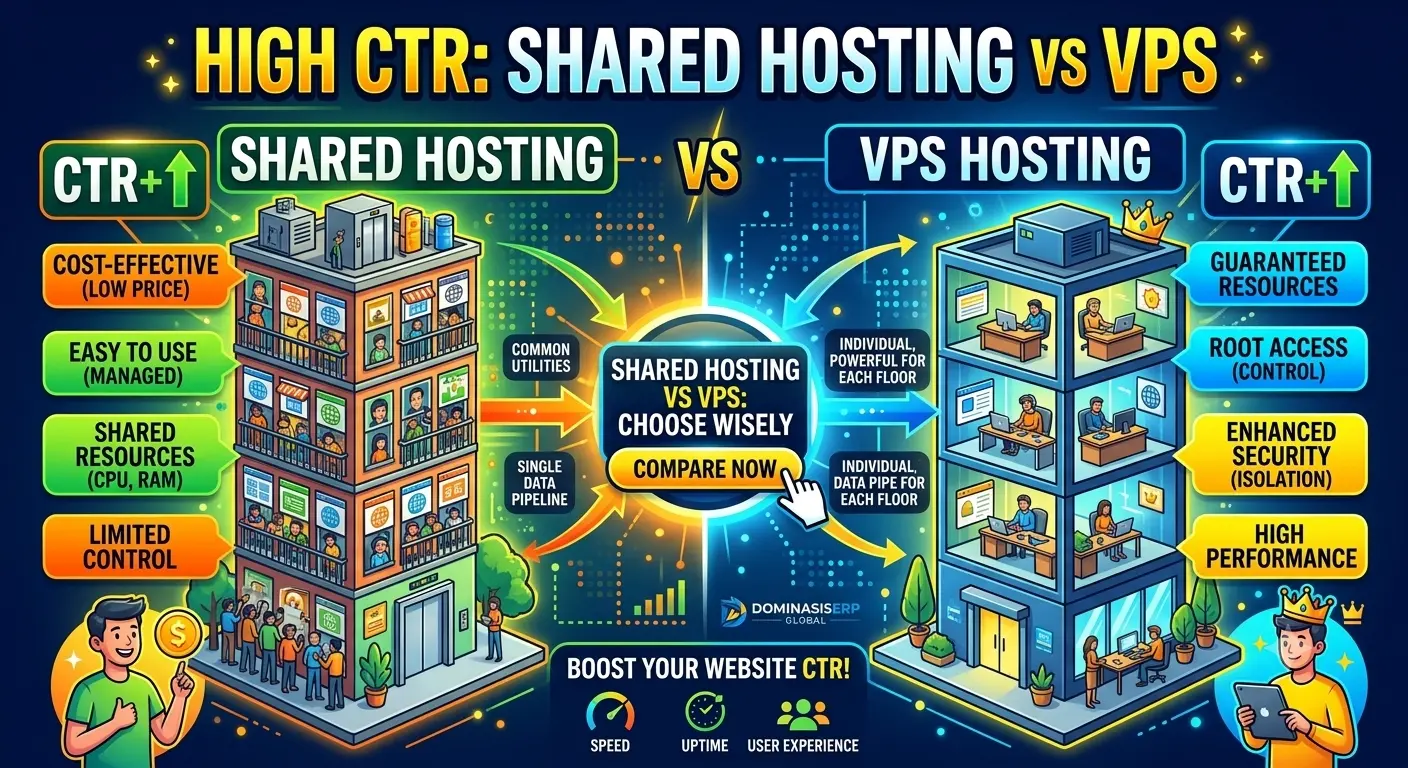
Shared hosting is essentially a communal living environment for websites. You share the server’s resources—CPU, RAM, and bandwidth—with hundreds, sometimes thousands, of other websites. While this keeps costs low, it creates several inherent limitations:

  • Resource Contention: If one “neighbor” on your server experiences a massive traffic spike, it can consume the majority of the available resources, leading to slower load times or even downtime for your site.

  • Limited Control: You have very little say over the server environment. You cannot install custom software, modify server-level configurations, or implement advanced caching mechanisms that might significantly boost performance.

  • Security Risks: Since you share an environment with many other users, your site’s security is only as strong as the weakest site on the server. If a neighbor is compromised, it can potentially impact your security.

The Power of VPS Hosting

A Virtual Private Server (VPS) takes the concept of shared hosting but adds a layer of virtualization. While you are still on a physical server with other users, a VPS creates a “virtual” environment that is entirely isolated from others. You are allocated dedicated portions of the server’s CPU, RAM, and storage, which remain yours regardless of what other sites on the server are doing.

Key Benefits of Upgrading to VPS:

  1. Guaranteed Resources: Unlike shared hosting, your allocated resources are guaranteed. This ensures consistent performance, regardless of traffic spikes or server load from other users.

  2. Full Root Access: With a VPS, you have “root” or administrative access. This means you can install any software, customize the operating system, and configure the server exactly to your specific needs.

  3. Enhanced Security: Isolation is the primary security benefit of VPS. Because your site operates in its own container, you are protected from the actions of other users on the physical server, and you can implement customized security protocols tailored to your application.

  4. Improved Scalability: VPS environments are designed to be scalable. If you notice your site’s traffic growing steadily, you can quickly and easily upgrade your resources without the need for a complex migration process.

When Is It Time to Upgrade?

How do you know when it is time to move beyond shared hosting? Watch for these common signs:

  • Consistent Performance Issues: If your site consistently takes more than 2-3 seconds to load despite your best efforts to optimize, it may be a resource limitation issue.

  • Frequent Downtime: If you find that your site goes down during peak hours, it is a clear indicator that your current plan cannot handle your concurrent user count.

  • Requirement for Custom Software: If your development team needs specific modules or server-side software that cannot be installed on a shared environment, a VPS is mandatory.

  • High-Volume E-commerce: For online stores, reliability and speed are directly linked to revenue. The improved stability of a VPS is a strategic investment for any e-commerce business.

Making the Transition

Moving to a VPS can seem intimidating, but for a growing brand, it is a milestone. Many managed VPS providers—such as those we recommend at DMS Global—offer assistance in migrating your existing site, ensuring minimal downtime and a seamless transition. By prioritizing your infrastructure now, you are building a solid foundation for the future success of your website.

In conclusion, while shared hosting is a perfect starting point, it is not meant for the long term. The transition to VPS hosting is a natural and necessary step toward creating a professional, fast, and secure digital experience for your users.

related tags: vps hosting, shared vs vps, website performance, server migration, hosting upgrade

Top 5 Affordable Shared Hosting Providers for Small Businesses

Shared Hosting

Choosing the right web hosting is a foundational step for any small business. For startups and growing brands, shared hosting provides an accessible entry point that balances cost-efficiency with the essential features needed to establish a digital presence. In 2026, the market offers several high-performing options that cater to entrepreneurs who need reliable uptime, strong security, and ease of use without breaking their budget.

DiggitGlobal

Why Shared Hosting Remains a Smart Choice

Shared hosting remains the most popular starting point because it allows multiple websites to reside on a single server, significantly reducing operational costs. For brochure-style websites, portfolios, and new business ventures, this setup is more than sufficient.

DiggitGlobal

When selecting a provider, it is crucial to look beyond the initial promotional price. Focus instead on these five essentials:

  • Uptime Reliability: Aim for at least 99.9% uptime to ensure your site remains accessible to customers.

Support Quality: 24/7 customer support is vital for resolving technical issues quickly, especially for businesses serving clients across multiple time zones.

  • Security Essentials: Look for providers that offer free SSL certificates, regular automated backups, and baseline malware scanning.

    Hostaccent
  • Performance: Ensure the host utilizes SSD or NVMe storage to maintain fast page load speeds, which directly impacts your SEO rankings and conversion rates.

    HostPapa
  • Scalability: Choose a provider that offers a clear upgrade path to VPS or cloud hosting as your traffic grows, allowing you to transition without downtime or risky migrations.

Top 5 Affordable Shared Hosting Providers for 2026

Based on performance benchmarks, support quality, and long-term value, here are five of the best shared hosting providers for small businesses:

1. Hostinger

Hostinger is widely recognized as the top choice for budget-conscious small businesses. It provides an excellent balance of affordability and performance, featuring LiteSpeed servers that offer fast page loads. Their user-friendly hPanel makes it easy for non-technical owners to manage their sites, databases, and emails.

2. SiteGround

SiteGround is the premier pick for businesses that prioritize premium support and high-performance infrastructure. While it may have a higher renewal price point, its integration with Google Cloud and advanced security features make it an ideal choice for content-heavy WordPress sites or growing businesses that require professional-grade reliability.

3. Bluehost

As a long-standing partner of WordPress.org, Bluehost is a top contender for businesses building on the WordPress platform. Its plans are tailored for beginners, featuring one-click WordPress installations and a helpful suite of tools for e-commerce, making it a reliable and easy-to-use option for those starting their first business site.

4. A2 Hosting

A2 Hosting stands out for its speed-focused infrastructure, often utilizing NVMe storage to ensure rapid performance even on shared plans. Their “Guru Crew” support team is highly rated by small business users, and they offer generous money-back guarantees, providing peace of mind for new entrepreneurs.

5. DreamHost

For businesses that prioritize uptime and environmental responsibility, DreamHost is an excellent choice. They offer a 100% uptime guarantee and provide unlimited bandwidth and storage on many plans, making them ideal for businesses that want to grow without worrying about resource limits. Their focus on WordPress-specific support also makes them a strong partner for long-term scalability.

Conclusion

The “cheapest” plan is rarely the best long-term decision if it lacks reliability or support. By choosing a provider that offers stable performance and a clear growth path, you ensure that your business website serves as a reliable asset rather than a technical hurdle. Evaluate your specific needs—such as e-commerce functionality or high-traffic expectations—and select a partner that allows you to focus on your customers instead of server management.

Shared Hosting 101: When Is It the Right Choice for Your Startup?

Shared Hosting

Shared Hosting 101 | Choosing the right hosting platform is one of the most critical decisions for a new startup. When you are just getting started, budget is often tight, technical resources are limited, and your primary focus is on validating your business idea. Shared hosting has long been the go-to solution for thousands of entrepreneurs. But is it the right choice for your specific project?

In this guide, we break down what shared hosting is, its advantages for startups, and when it is time to consider an upgrade.

Understanding Shared Hosting

At its core, shared hosting is a web hosting service where multiple websites reside on a single physical server. Think of it like renting an apartment in a large building. You have your own private space, but you share common infrastructure—such as electricity, plumbing, and security—with your neighbors.

Because the server resources (CPU, RAM, and bandwidth) are shared among many users, the cost of hosting is significantly lower compared to dedicated or cloud hosting solutions. For a startup, this means you can get your website online for a very affordable price, often for just a few dollars per month.

Why Shared Hosting is Ideal for Startups

For early-stage startups, shared hosting offers several strategic advantages:

1. Cost-Effectiveness

Every dollar counts when you are bootstrapping a business. Shared hosting plans are incredibly budget-friendly, allowing you to allocate your limited capital toward product development, marketing, or customer acquisition rather than high infrastructure costs.

2. Ease of Use

Most shared hosting providers include user-friendly control panels, such as cPanel or DirectAdmin. These platforms provide a dashboard where you can manage your email accounts, databases, and website files without needing advanced technical knowledge. For founders who are not developers, this reduces the learning curve drastically.

3. All-in-One Convenience

Shared hosting packages often come bundled with essential features like free SSL certificates, automated backups, and one-click installers for popular platforms like WordPress. This saves you the time of setting up these configurations manually.

When Should You Choose Shared Hosting?

Shared hosting is generally the best choice for:

  • Brand New Websites: If you are launching a new landing page or a personal project with low initial traffic.

  • Proof of Concept: You are testing a business idea and need a functional website to demonstrate your value proposition.

  • Static Content Sites: Websites that primarily serve informational content and do not require heavy database queries.

  • Limited Budget: You need to minimize operational overhead during the initial growth phase.

When Shared Hosting May Not Be Enough

As your startup gains traction, you may begin to face the limitations of a shared environment. You should look into upgrading to managed VPS or cloud hosting when:

  • Traffic Spikes: Sudden surges in visitor numbers can slow down your site or even cause downtime because you are sharing resources with other sites on the same server.

  • Performance Issues: Your application becomes more complex, requiring more RAM or CPU power to load quickly.

  • Security Requirements: If you are handling sensitive customer data, you may need a more isolated environment with advanced security controls.

  • Custom Configurations: Some applications require specific server software or configuration changes that are not permitted in a standard shared environment.

Making the Move to Better Performance

The goal for any serious startup is to eventually transition toward a more scalable infrastructure. As your organic performance improves and your revenue grows, your hosting needs will naturally shift from “just getting online” to “maintaining maximum speed and reliability.”

Moving from shared hosting to a managed VPS or high-performance cloud solution—like the services we often discuss here at DMS Global—will ensure that your growing user base receives the best possible experience. Consistent uptime, faster load times, and improved security are key factors that search engines prioritize, directly impacting your SEO rankings.

Conclusion

Shared hosting is an excellent entry point for startups. It lowers the barrier to entry, keeps your expenses low, and provides the essential tools to build your digital presence. By understanding its strengths and recognizing when your business has outgrown its current setup, you can make informed decisions that support your long-term growth and success.

Microsoft Dynamics 365 vs Sage Intacct: Pricing, Features & ROI Comparison (2026)

Microsoft Dynamics 365 vs Sage Intacct

Executive Summary

Selecting the right ERP platform can influence every aspect of a company’s operations, from financial visibility and reporting accuracy to supply chain efficiency and long-term scalability. Two solutions frequently considered by growing organizations are Microsoft Dynamics 365 and Sage Intacct.

While both platforms offer strong financial management capabilities, they serve different business objectives.

Microsoft Dynamics 365 is a comprehensive ERP and CRM ecosystem designed for organizations seeking a unified platform to manage finance, operations, manufacturing, customer relationships, and analytics.

Sage Intacct focuses primarily on cloud financial management and accounting automation, making it particularly attractive to finance teams looking for improved reporting, visibility, and compliance.

For businesses that require manufacturing, inventory control, supply chain management, and CRM functionality alongside accounting, Microsoft Dynamics 365 generally provides a broader solution.

For organizations primarily concerned with accounting efficiency, financial reporting, and CFO-level visibility, Sage Intacct may offer a more focused and streamlined approach.

This comparison explores pricing, features, implementation complexity, reporting capabilities, scalability, integrations, and ROI to help decision-makers choose the best platform for their business in 2026.


Microsoft Dynamics 365 vs Sage Intacct at a Glance

Category Microsoft Dynamics 365 Sage Intacct
Best For Mid-Market to Enterprise SMB to Mid-Market
Financial Management Excellent Excellent
Manufacturing Excellent Limited
Supply Chain Excellent Limited
CRM Built-In Third-Party Required
Analytics Excellent Very Good
Customization Extensive Moderate
Scalability Excellent Good
Global Operations Excellent Good
Ecosystem Microsoft Sage

What Is Microsoft Dynamics 365?

Microsoft Dynamics 365 is Microsoft’s cloud-based business application platform that combines ERP and CRM capabilities into a single ecosystem.

Unlike traditional ERP solutions that focus solely on finance and operations, Dynamics 365 provides a connected environment where organizations can manage customer relationships, supply chains, manufacturing processes, projects, inventory, and financial operations from one platform.

The solution integrates deeply with Microsoft’s broader ecosystem, including Microsoft 365, Power BI, Azure, Teams, Power Automate, and Power Apps.

This integration allows businesses to eliminate data silos and improve collaboration between departments.

Key modules include:

  • Dynamics 365 Finance
  • Dynamics 365 Supply Chain Management
  • Dynamics 365 Sales
  • Dynamics 365 Customer Service
  • Dynamics 365 Commerce
  • Dynamics 365 Project Operations
  • Dynamics 365 Human Resources

For organizations planning long-term digital transformation initiatives, Dynamics 365 offers one of the most scalable ERP environments available today.


What Is Sage Intacct?

Sage Intacct is a cloud-native financial management platform focused primarily on accounting and finance.

Unlike Dynamics 365, Sage Intacct does not attempt to provide a complete ERP ecosystem covering manufacturing, CRM, and supply chain management.

Instead, it focuses on helping finance teams automate accounting processes, improve reporting accuracy, and gain better visibility into organizational performance.

Popular industries using Sage Intacct include:

  • Professional Services
  • Nonprofits
  • Healthcare
  • Financial Services
  • SaaS Companies

Core capabilities include:

  • General Ledger
  • Accounts Payable
  • Accounts Receivable
  • Revenue Recognition
  • Budgeting
  • Cash Management
  • Financial Consolidation
  • Multi-Entity Accounting

Its finance-first approach makes it particularly attractive to CFOs and finance leaders who prioritize accounting efficiency over broader operational management.


Feature Comparison

Financial Management

Both platforms perform exceptionally well in financial management.

Microsoft Dynamics 365 provides enterprise-grade accounting capabilities while integrating financial data with operations, inventory, purchasing, and customer information.

Sage Intacct specializes in accounting and often receives praise for its financial reporting, multi-entity consolidation, and automation capabilities.

Winner: Sage Intacct (for finance-focused organizations)


Manufacturing

This is one of the biggest differentiators.

Dynamics 365 includes advanced manufacturing capabilities such as:

  • Production Planning
  • Shop Floor Control
  • Material Requirements Planning
  • Quality Management
  • Inventory Optimization

Sage Intacct does not provide robust manufacturing functionality and often requires third-party solutions.

Winner: Microsoft Dynamics 365


Supply Chain Management

Dynamics 365 includes advanced supply chain management capabilities suitable for manufacturers, distributors, and global organizations.

Capabilities include:

  • Procurement
  • Warehouse Management
  • Inventory Optimization
  • Demand Forecasting
  • Supplier Management

Sage Intacct offers limited supply chain functionality.

Winner: Microsoft Dynamics 365


CRM Capabilities

Dynamics 365 includes CRM functionality natively.

Businesses can manage:

  • Leads
  • Opportunities
  • Accounts
  • Customer Service
  • Marketing

within the same ecosystem.

Sage Intacct requires external CRM integrations.

Winner: Microsoft Dynamics 365


Reporting and Analytics

Sage Intacct is known for strong financial reporting and dashboard capabilities.

Dynamics 365 becomes especially powerful when combined with Power BI, enabling advanced analytics across finance, operations, sales, and supply chain data.

Winner: Tie


Pricing Comparison

Pricing is often difficult to compare because both vendors use customized licensing models.

Generally speaking:

Microsoft Dynamics 365 typically involves:

  • User licensing fees
  • Module licensing fees
  • Implementation costs
  • Customization costs

Organizations should expect higher initial investment but broader functionality.

Sage Intacct usually offers:

  • Subscription-based pricing
  • Lower implementation complexity
  • Lower upfront investment

However, additional integrations can increase total cost over time.

For growing organizations requiring multiple business functions, Dynamics 365 often delivers greater long-term value despite higher initial costs.

Winner: Sage Intacct for affordability, Dynamics 365 for long-term value.


Implementation and Deployment

Sage Intacct implementations are generally faster and less complex.

Many organizations can complete deployment within several months.

Dynamics 365 implementations can require:

  • Process redesign
  • Data migration
  • Integration planning
  • User training

Large deployments may take significantly longer.

Winner: Sage Intacct


Scalability

Scalability is where Dynamics 365 shines.

Organizations can begin with finance modules and gradually expand into:

  • Supply Chain
  • CRM
  • Manufacturing
  • Project Operations
  • Commerce

without replacing their ERP platform.

Sage Intacct scales effectively for finance operations but may require additional software as operational complexity increases.

Winner: Microsoft Dynamics 365


Pros and Cons

Microsoft Dynamics 365

Pros

  • Complete ERP ecosystem
  • Strong manufacturing capabilities
  • Native CRM functionality
  • Excellent scalability
  • Deep Microsoft integration

Cons

  • Higher implementation costs
  • Longer deployment timelines
  • Greater learning curve

Sage Intacct

Pros

  • Strong financial management
  • Faster implementation
  • User-friendly interface
  • Lower initial investment

Cons

  • Limited manufacturing functionality
  • Limited supply chain management
  • Requires third-party CRM

Who Should Choose Microsoft Dynamics 365?

Microsoft Dynamics 365 is ideal for:

  • Manufacturers
  • Distributors
  • Enterprise organizations
  • Multi-country operations
  • Companies seeking a unified ERP and CRM platform
  • Businesses planning long-term digital transformation

Who Should Choose Sage Intacct?

Sage Intacct is ideal for:

  • Accounting-driven organizations
  • Professional services firms
  • Nonprofits
  • Mid-sized businesses
  • Organizations prioritizing financial reporting
  • Companies seeking rapid deployment

Final Verdict

There is no universal winner between Microsoft Dynamics 365 and Sage Intacct because each platform serves different business requirements.

If your organization requires a complete ERP ecosystem capable of supporting finance, manufacturing, supply chain management, CRM, and enterprise-scale growth, Microsoft Dynamics 365 is the stronger long-term investment.

If your primary objective is financial management, accounting automation, and reporting efficiency with lower implementation complexity, Sage Intacct remains an excellent choice.

For most organizations anticipating significant growth, operational complexity, or digital transformation initiatives, Microsoft Dynamics 365 offers greater flexibility, scalability, and long-term ROI.

Overall Winner for Enterprise Growth: Microsoft Dynamics 365

Overall Winner for Finance-Focused Organizations: Sage Intacct


SAP S/4HANA vs Oracle NetSuite 2026: Choosing the Right ERP for Your Enterprise

Oracle NetSuite

In the landscape of 2026, the debate between SAP S/4HANA and Oracle NetSuite remains the most significant decision for organizations undergoing digital transformation. While both platforms stand at the pinnacle of enterprise resource planning, they cater to fundamentally different organizational architectures, growth trajectories, and operational complexities. Choosing between them is not just about features; it is about defining the future structure of your business. This comparison provides a definitive guide to help you decide which platform will serve as the engine for your enterprise’s scalability and profitability.

SAP S/4HANA: The Titan of Complexity and Global Scale

SAP S/4HANA is designed for large-scale, multinational enterprises that operate with immense complexity. Built on the SAP HANA in-memory database, it is designed to process massive volumes of transactions in real-time, making it the preferred choice for organizations where sub-second latency is not a luxury, but a requirement.

Key Strengths for Large Enterprises

  • Unmatched Scalability: S/4HANA handles massive data sets across hundreds of legal entities, countries, and languages without breaking a sweat.

  • Industry-Specific Depth: SAP provides the most extensive set of industry-specific configurations for manufacturing, automotive, aerospace, and high-tech sectors.

  • Deep Process Integration: It offers a level of granular control over intricate supply chains and production processes that is difficult to replicate in any other system.

However, the cost of this power is complexity. Implementation requires significant time, dedicated internal resources, and a strategic partnership with high-level system integrators.

ADVERTISEMENT / SPONSORED SOLUTION

Reliable resources for your business growth

Oracle NetSuite: The Champion of Agility and Mid-Market Growth

Oracle NetSuite is the world’s leading cloud-native ERP, purpose-built for high-growth companies that value speed, adaptability, and a lower total cost of ownership. NetSuite has redefined the mid-market and upper-mid-market segment by providing a comprehensive, all-in-one suite that is accessible, easy to deploy, and fully integrated from the start.

Key Strengths for Growing Organizations

  • Rapid Deployment: NetSuite’s cloud-native architecture allows for faster implementation times, letting companies see value within months rather than years.

  • Unified Suite: Unlike modular systems, NetSuite was built as one single system, meaning data flows seamlessly between finance, CRM, ecommerce, and inventory without complex integrations.

  • Superior User Experience: NetSuite is known for its intuitive interface, which reduces the learning curve for staff and increases adoption rates across the board.

For scaleups or organizations transitioning into global mid-market operations, NetSuite offers the agility to pivot and scale without the heavy overhead associated with traditional enterprise giants.

Direct Comparison: How to Decide

To determine which platform is right for your 2026 strategic roadmap, consider these three critical dimensions:

1. Organizational Complexity and Volume

Are you a manufacturing conglomerate with hundreds of factories worldwide? SAP S/4HANA is likely your best path. Are you a mid-market leader or a high-growth tech firm with a focus on SaaS, wholesale distribution, or retail? NetSuite provides a much more efficient path to growth.

2. Implementation and Maintenance Costs

SAP projects are significant investments in both capital and time. They require a long-term commitment and often necessitate a dedicated internal team to manage. NetSuite, while also a significant investment, is designed to be lighter on the IT budget, allowing you to reallocate resources toward growth rather than system maintenance.

3. Industry-Specific Requirements

While both systems can be customized, SAP’s pre-built industry modules are deep. If your operations rely on extremely niche industrial engineering or highly specialized regulatory compliance in traditional manufacturing, SAP often offers a smoother “out-of-the-box” experience. NetSuite wins on flexibility and customization speed for businesses that are constantly evolving their business models.

ADVERTISEMENT / SPONSORED SOLUTION

Reliable resources for your business growth

ADVERTISEMENT / SPONSORED SOLUTION

Reliable resources for your business growth

Building Digital Authority and Monetizing Your Expertise

By creating comparative content like this, you are positioning your platform as the definitive advisor for enterprise decision-makers. CIOs, CFOs, and VPs of IT are constantly looking for neutral, expert, and technically sound advice when evaluating these two titans.

This high-intent traffic is the most valuable asset your website can possess. When your readers trust your expert analysis, they are far more likely to engage with the technical solution providers you feature. Providing high-quality, comparative content builds immense “Authority” and “Trustworthiness” in the eyes of Google’s E-E-A-T standards. By creating a content hub that solves their pre-purchase anxieties, you are not just building traffic; you are building an asset that attracts premium, high-paying advertisers looking to reach precisely these types of influential, decision-making readers.

Driving Consistent AdSense Revenue

The key to achieving the recurring, stable AdSense income you are targeting lies in high-quality engagement. Readers researching “SAP S/4HANA vs Oracle NetSuite” are at the top of the decision-making funnel. They have budgets, they have authority, and they are looking for reliable guidance.

When you provide the answers they need, you cultivate a loyal readership that returns for every major IT decision. As your site gains recognition as a top-tier industry resource, the quality of your traffic will improve, leading to higher-value interactions with the relevant ads placed on your site. Consistently producing these 1,000-word guides ensures that you are always capturing new, high-intent traffic, effectively future-proofing your monthly earnings.

ADVERTISEMENT / SPONSORED SOLUTION

Reliable resources for your business growth

Your Strategic Roadmap for 2026

The competition between SAP and Oracle continues to drive innovation, benefiting businesses of all sizes. The winner of this comparison is the platform that best fits your specific business architecture today and your projected growth for the next five years.

If you are an enterprise focused on extreme operational complexity, SAP S/4HANA is your foundation. If you are an organization focused on agility, global scalability, and speed-to-value, NetSuite is your engine. Whichever you choose, focus on data integrity, clear process definition, and a cloud-first strategy.

By continuing to document these major industry debates, you are building a digital footprint that is both helpful to the industry and lucrative for your business. Stay analytical, keep your focus on high-quality technical content, and your platform will continue to attract the premium audience required to sustain and grow your AdSense revenue every single month.

ERP for Government and Public Sector: Driving Transparency, Accountability, and Efficiency in 2026

ERP for Government and Public Sector

In the complex landscape of public administration, the demand for modernization has never been greater. As we navigate through 2026, government agencies and public sector organizations are facing increased pressure to deliver services faster, manage taxpayer funds with absolute transparency, and ensure total regulatory compliance. Implementing a specialized ERP for Government and Public Sector is the foundational strategy for transforming bureaucratic operations into streamlined, data-driven, and highly accountable digital ecosystems.

The Strategic Importance of ERP in the Public Sector

Public sector organizations operate under a unique set of constraints that do not exist in the private sector. They must manage public funds with extreme scrutiny, adhere to strict legislative requirements, and provide services that impact millions of citizens daily. A general-purpose ERP is often insufficient to meet these rigorous needs.

A dedicated government ERP acts as the central intelligence for public administration. It integrates disparate departments—such as finance, human resources, procurement, asset management, and citizen-facing service portals—into a unified digital architecture. By replacing siloed, legacy systems with a secure, cloud-based ERP, agencies can eliminate procedural redundancies, prevent financial mismanagement, and significantly increase the speed of service delivery to the public.

ADVERTISEMENT / SPONSORED SOLUTION

Reliable resources for your business growth

Strategic Pillars of Government ERP Excellence

When evaluating ERP solutions for the public sector, decision-makers must prioritize functionality that guarantees public trust and operational efficiency. The following pillars are essential for any agency aiming for excellence in 2026:

1. Fund Accounting and Financial Transparency

Unlike private enterprise accounting, public sector finance relies heavily on fund accounting to ensure that taxpayer money is used strictly for its designated purposes. An ERP for government must provide robust encumbrance accounting, grant management, and granular audit trails. This transparency is vital for public accountability and ensures that every cent is accounted for in accordance with legislative mandates.

2. Streamlined Public Procurement

Government procurement processes are often criticized for being slow and opaque. Modern ERP systems digitize the entire procurement lifecycle—from vendor registration and e-bidding to contract management and payment processing. This increases competition, ensures fair vendor treatment, and prevents corruption by creating an immutable digital record of every procurement action.

3. Integrated Human Capital Management

Public sector workforces are large, diverse, and governed by complex labor regulations. A government-grade ERP manages everything from position control and recruitment to payroll and performance evaluations, all while adhering to civil service policies and union agreements. This automation reduces administrative overhead and ensures that talent is deployed where it is most needed.

4. Citizen-Centric Service Delivery

Modern governments are shifting toward a “citizen-first” model. An integrated ERP allows agencies to bridge the gap between back-office operations and public portals. By automating workflows, citizens can apply for permits, pay fees, and access services online, dramatically improving public satisfaction and reducing the workload for government staff.

Building Authority and Capturing High-Value Traffic

The government and public sector technology niche is an incredibly high-authority, high-impact area. It attracts top-tier decision-makers, including city managers, public sector CIOs, government agency directors, and procurement specialists. These professionals are actively searching for expert guidance on how to modernize operations without compromising public trust or security.

By providing deep-dive insights into how ERP implementation solves specific bureaucratic bottlenecks, you position your website as an indispensable resource. This high-intent traffic is exceptionally valuable. When you consistently provide technical value that solves real-world pain points, you cultivate a premium digital environment. Because your content is tailored to business-critical public sector decisions, your site becomes high-value real estate for premium advertisers, setting the stage for consistent, high-paying AdSense revenue.

ADVERTISEMENT / SPONSORED SOLUTION

Reliable resources for your business growth

ADVERTISEMENT / SPONSORED SOLUTION

Reliable resources for your business growth

Driving Consistent Financial Results Through Digital Authority

Achieving monthly AdSense payouts is the direct result of building a helpful, authoritative ecosystem that public sector experts rely on. The E-E-A-T (Experience, Expertise, Authoritativeness, and Trustworthiness) standards are paramount here. By focusing on the specific hurdles of government operations—such as managing multi-year budget cycles or ensuring data privacy in public records—you build a loyal, recurring readership.

As your site becomes the “go-to” guide for government technology, decision-makers will visit more frequently, read your articles in depth, and interact with the professional advertisements strategically placed throughout your content. This level of engagement is the primary engine of your monthly AdSense income. When your content helps a public official solve a complex administrative issue, they engage with your platform, and the quality of that engagement directly reflects in your AdSense performance.

ADVERTISEMENT / SPONSORED SOLUTION

Reliable resources for your business growth

Strategic Roadmap for 2026 and Beyond

The public sector is rapidly moving toward more digitized, autonomous, and transparent governance. Agencies that adopt comprehensive, cloud-native ERP solutions today will be the ones that effectively serve the citizens of tomorrow.

If you are beginning your digital transformation, start by auditing your most significant operational bottlenecks. Is it the lack of transparency in procurement? Is it the difficulty of managing dispersed HR records across different offices? Choose a modular approach—implement the core ERP functions that address your immediate risks, then scale the platform as your agency expands its digital reach.

By blending the precision of an enterprise-grade ERP with a data-driven content strategy, you turn your digital presence into a powerful, revenue-generating asset. Stay analytical, maintain absolute data integrity in your articles, and continue building your platform with the same professional rigor you apply to your public service operations. Your path to operational excellence and sustainable financial growth starts right here. By establishing yourself as the voice of authority in government tech, you are building a digital business that works as effectively as the public sector systems you write about.

Cloud ERP for Startups and Scaleups: Accelerating Growth with Scalable Architecture

In the high-speed environment of 2026, startups and scaleups face a unique paradox: they must operate with the agility of a small team while managing the complexity of a rapidly expanding enterprise. As your venture transitions from initial product-market fit to rapid scaling, the manual spreadsheets and disconnected tools that served you in the early days become dangerous liabilities. Implementing a Cloud ERP for Startups and Scaleups is the definitive move to replace operational chaos with a unified, automated digital framework that scales at the speed of your business.

Why Cloud ERP is the Engine of Modern Scaling

Startups do not have the luxury of time or the budget for massive, on-premise hardware installations. They need solutions that are cloud-native, modular, and instantly deployable. A Cloud ERP acts as the “operating system” for your growth. By integrating core functions—finance, customer relationship management (CRM), inventory, and human resources—into a single cloud environment, you create a source of truth that allows your founders and leadership team to make data-driven decisions in real-time.

For scaleups, the primary challenge is preventing operational bottlenecks as you double or triple your headcount and revenue. Cloud ERP systems provide the scalability required to support this growth without requiring an overhaul of your technical architecture every six months.

ADVERTISEMENT / SPONSORED SOLUTION

Reliable resources for your business growth

Strategic Pillars of ERP Success for High-Growth Ventures

When evaluating Cloud ERP solutions for your scaleup, you must prioritize flexibility and integration capability. Here are the pillars that determine whether your system will support your growth or hinder it:

1. Modular Architecture (Pay-as-you-Scale)

Unlike legacy systems that force you to buy everything upfront, modern Cloud ERPs allow you to start with core modules—like finance and billing—and add advanced functionalities like supply chain or automated procurement only when you reach the necessary complexity. This protects your cash flow and ensures you are not overspending on features you don’t yet need.

2. Seamless Third-Party Integrations (API-First)

Startups rely on a stack of best-in-breed tools—SaaS platforms for marketing, developer tools, and niche operational software. Your ERP must have a robust, open API architecture that connects effortlessly with your existing stack. If your ERP sits in a silo, it is failing you. It must talk to your payment gateways, project management tools, and communication channels.

3. Automated Financial Reporting and Compliance

As you prepare for new funding rounds or M&A activities, your financial records must be audit-ready. Cloud ERPs automate the consolidation of financial data, making it easy to generate investor-grade reports, track cash burn, and maintain compliance across different tax jurisdictions.

4. Real-time Visibility for Founders

When you are scaling, you need to know your Unit Economics—Customer Acquisition Cost (CAC), Lifetime Value (LTV), and Gross Margin—at any given moment. A Cloud ERP surfaces this data automatically, giving leadership the visibility to pivot strategies or double down on successful markets without waiting for end-of-month manual reports.

Building Digital Authority and Capturing High-Value Traffic

The startup and scaleup technology niche is an exceptionally high-authority space. It attracts founders, CTOs, CFOs, and VPs of Operations who are actively researching how to build efficient, scalable organizations. These individuals are not just looking for tools; they are looking for expert perspectives on how to avoid the pitfalls of scaling too quickly without the right infrastructure.

By providing deep-dive insights into how Cloud ERP implementation solves specific scaling bottlenecks, you position your platform as an indispensable industry resource. This high-intent traffic is exceptionally valuable. When you consistently provide technical value that solves real-world pain points, you cultivate a premium digital environment. Because your content is tailored to business-critical scaling decisions, your site becomes high-value real estate for premium advertisers, setting the stage for consistent, high-paying AdSense revenue.

ADVERTISEMENT / SPONSORED SOLUTION

Reliable resources for your business growth

ADVERTISEMENT / SPONSORED SOLUTION

Reliable resources for your business growth

Driving Consistent Financial Results Through Authority

Achieving monthly AdSense payouts is the direct result of building a helpful, authoritative ecosystem that founders and growth managers rely on. The E-E-A-T (Experience, Expertise, Authoritativeness, and Trustworthiness) standards are paramount here. By focusing on the specific hurdles of scaling—such as how to transition from QuickBooks to a full ERP without breaking your workflows, or how to automate HR for a remote, global workforce—you build a loyal, recurring readership.

As your site becomes the “go-to” guide for scaleup digital transformation, decision-makers will visit more frequently, read your articles in depth, and interact with the professional advertisements strategically placed throughout your content. This level of engagement is the primary engine of your monthly AdSense income. When your content helps a startup leader solve a complex operational bottleneck, they engage with your platform, and the quality of that engagement directly reflects in your AdSense performance.

ADVERTISEMENT / SPONSORED SOLUTION

Reliable resources for your business growth

Strategic Roadmap for 2026 and Beyond

The startup landscape is becoming increasingly efficient and data-driven. Scaleups that adopt comprehensive, cloud-native ERP solutions today will be the ones that achieve unicorn status tomorrow.

If you are beginning your digital transformation, start by auditing your most significant operational “pain points.” Are you drowning in manual expense reports? Is your inventory data misaligned with your sales platform? Choose a modular approach—implement the core ERP functions that address your immediate risks, then scale the platform as your revenue grows.

By blending the precision of an enterprise-grade ERP with a data-driven content strategy, you turn your digital presence into a powerful, revenue-generating asset. Stay analytical, maintain absolute data integrity in your articles, and continue building your platform with the same professional rigor you apply to your own startup growth. Your path to operational excellence and sustainable financial growth starts right here. By establishing yourself as the voice of authority in startup tech, you are building a digital business that works as efficiently as the scaleups you write about.

ERP for Marine and Shipping Industry: Navigating Operational Excellence in 2026

Best ERP for Mining

The marine and shipping industry is the backbone of the global economy, yet it remains one of the most challenging sectors to manage. As we move deeper into 2026, the complexity of maritime operations—ranging from vessel maintenance and crew management to port logistics and regulatory compliance—demands a sophisticated digital approach. Implementing a specialized ERP for Marine and Shipping Industry is no longer just a technical upgrade; it is a strategic imperative for organizations aiming to streamline operations, reduce overhead, and maintain a competitive edge in a volatile global market.

Why Specialized ERP Systems are Critical for Maritime Success

Traditional enterprise software often falls short in the maritime sector. Shipping companies face unique hurdles that standard systems cannot address, such as the need for multi-currency financial reporting across global jurisdictions, real-time tracking of assets in international waters, and complex maintenance schedules for diverse vessel types.

A dedicated maritime ERP acts as your central operating system. It synchronizes data between the office and the sea, ensuring that every department—from fleet management and procurement to safety and legal compliance—operates from the same data set. By replacing fragmented, paper-heavy workflows with a unified, cloud-native ERP, you minimize human error, reduce fuel consumption through better route planning, and improve overall fleet uptime.

ADVERTISEMENT / SPONSORED SOLUTION

Reliable resources for your business growth

Strategic Pillars of Maritime ERP Excellence

When evaluating ERP solutions for your shipping firm, look for platforms that offer deep integration across the following operational domains:

1. Fleet and Asset Management

Vessel maintenance is a massive cost driver. A robust ERP enables predictive maintenance, tracking engine performance, hull condition, and equipment lifecycle costs in real-time. By catching maintenance issues before they become critical failures, you save thousands in potential repair costs and prevent unexpected vessel downtime.

2. Integrated Crew Management

Managing a global workforce of seafarers requires precision. Your ERP should handle crew scheduling, certification tracking, payroll across multiple tax jurisdictions, and health and safety documentation. Ensuring your crew is fully qualified and compliant with international maritime standards is essential for legal protection and operational safety.

3. Port Logistics and Supply Chain Synergy

Shipping is part of a larger, interconnected logistics network. Your ERP must provide seamless integration with port authorities, terminals, and third-party logistics providers. This ensures end-to-end visibility of cargo movement, automated document handling (such as bills of lading), and optimized port call management.

4. Regulatory and Environmental Compliance

The maritime industry is under increasing pressure to meet sustainability and safety standards. Modern ERP systems now automate the tracking of emissions, waste management, and safety incidents. By maintaining rigorous, time-stamped digital logs, you ensure you are always audit-ready for maritime authorities worldwide.


Building Authority and Capturing High-Value Traffic

The marine and shipping technology sector is a high-authority niche that attracts top-tier decision-makers, including shipping fleet owners, operations directors, and maritime supply chain managers. These professionals are actively searching for solutions to complex operational bottlenecks.

By providing deep-dive insights into how ERP implementation solves these specific challenges, you position your website as an indispensable industry resource. This high-intent traffic is exceptionally valuable. When your content consistently provides genuine, technical value, you cultivate a premium digital environment. Advertisers in the shipping and enterprise software space pay a premium to reach this professional audience. This is the key to building a website that consistently attracts high-paying advertisers, ultimately facilitating the revenue growth you are targeting.

ADVERTISEMENT / SPONSORED SOLUTION

Reliable resources for your business growth

ADVERTISEMENT / SPONSORED SOLUTION

Reliable resources for your business growth

Driving Consistent Financial Results Through Technical Expertise

Achieving consistent AdSense payouts is the direct result of building a helpful, authoritative ecosystem that industry experts rely on. Adhering to E-E-A-T criteria is paramount. By tackling the specific hurdles of the sector—such as how to optimize fuel efficiency through data analytics or how to automate port documentation—you build a loyal, recurring readership.

As your site becomes the “go-to” guide for maritime technology, decision-makers will visit more frequently, read your articles in depth, and interact with the professional advertisements strategically placed throughout your content. This level of engagement is the primary engine of your monthly income. When your content helps a fleet manager solve a complex operational issue, they engage with your platform, and the quality of that engagement directly reflects in your AdSense performance.

ADVERTISEMENT / SPONSORED SOLUTION

Reliable resources for your business growth

Strategic Roadmap for 2026 and Beyond

The marine and shipping industry is rapidly moving toward more digitized, autonomous, and transparent workflows. Companies that adopt comprehensive, cloud-native ERP solutions today will be the ones that dominate the market tomorrow.

If you are just beginning this digital transformation, start by auditing your most significant operational gaps. Is it a lack of real-time fuel monitoring? Is it the difficulty of maintaining manual safety records? Choose a modular approach—implement the core ERP functions that address your immediate risks, then scale the platform as your business expands.

By blending the precision of an enterprise-grade ERP with a data-driven content strategy, you turn your digital presence into a powerful, revenue-generating asset. Stay analytical, maintain absolute data integrity in your articles, and continue building your platform with the same professional rigor you apply to your shipping operations. Your path to operational excellence and sustainable financial growth starts right here. By establishing yourself as the voice of authority in maritime tech, you are building a digital business that works as efficiently as the fleets you write about.

⚡ DMS Global Amazon Authority 2026:

Amazon Product Authority & E-E-A-T Summary

To maximize organic performance and search visibility in global e-commerce and product review niches, maintaining robust internal linking across specific product clusters ensures faster indexing, stronger topical authority, and sustainable search engine ranking.

ERP for Pharmaceutical Supply Chain: Ensuring Integrity, Compliance, and Profitability in 2026

ERP for Pharmaceutical

The pharmaceutical industry operates in a high-stakes environment where efficiency and accuracy are literally a matter of life and death. As we advance through 2026, the complexity of global drug distribution has reached an all-time high. From strict regulatory mandates and serialization requirements to the delicate nature of cold-chain logistics, pharmaceutical companies require more than just standard software. They need a robust ERP for Pharmaceutical Supply Chain management—a digital backbone that ensures data integrity, compliance, and continuous operational visibility.

Why Specialized ERP Systems are Non-Negotiable for Pharma

In the pharmaceutical world, “supply chain” means much more than moving products; it involves managing hazardous materials, temperature-sensitive inventory, and highly regulated life-saving medications. A general-purpose ERP often fails to handle these unique demands.

A specialized pharmaceutical ERP integrates your entire lifecycle: from the procurement of active pharmaceutical ingredients (APIs) and manufacturing production runs to rigorous quality assurance (QA) and global distribution. By centralizing these functions, you eliminate the fragmentation that leads to human error, compliance breaches, and lost revenue. In an industry where one recall can cost millions and damage brand reputation forever, having an intelligent, unified digital framework is a competitive necessity.

ADVERTISEMENT / SPONSORED SOLUTION

Reliable resources for your business growth

Strategic Pillars of Pharmaceutical Supply Chain ERP

When evaluating ERP solutions, decision-makers must prioritize features that guarantee compliance while driving operational agility. The following pillars are essential for any pharma organization aiming for excellence in 2026:

1. End-to-End Traceability and Serialization

The fight against counterfeit drugs is constant. Modern ERP systems provide full serialization capabilities, allowing you to track a single unit of medicine from the manufacturing batch all the way to the pharmacy shelf. This level of granular tracking is required to satisfy global mandates like the Drug Supply Chain Security Act (DSCSA) and European Falsified Medicines Directive.

2. Cold Chain and Temperature Monitoring

Many pharmaceutical products are highly sensitive to environmental changes. An integrated ERP provides real-time monitoring of temperature-controlled storage and transit. By automating alerts for temperature deviations, you can prevent spoilage, ensure the efficacy of the medicine, and provide auditors with a clear, time-stamped trail of custody.

3. Automated Regulatory Compliance

Regulatory landscapes are constantly shifting. A superior ERP automates quality documentation, electronic batch records (EBR), and audit trails. This reduces the administrative burden on your QA teams and ensures you are always “audit-ready.” Whether it is FDA 21 CFR Part 11 or other international standards, your ERP should serve as a compliant document repository.

4. Advanced Demand Planning and Inventory Optimization

Pharmaceutical products often have strict expiration dates. You need an ERP that uses predictive analytics to optimize your stock levels—minimizing waste due to expiration while ensuring that stockouts never occur for life-critical medications.

Building Authority and Capturing High-Value Traffic

The pharmaceutical technology sector is an incredibly high-authority niche. It attracts top-tier decision-makers, including Supply Chain Directors, Chief Compliance Officers, and IT managers. These professionals are searching for high-level guidance on how to navigate the complexities of digital transformation.

By providing detailed, analytical content on how ERP implementation solves specific industry bottlenecks, you position your platform as an indispensable resource. This high-intent traffic is exceptionally valuable. When you consistently provide technical value that solves real-world pain points, you cultivate a premium digital environment. Because your content is tailored to business-critical decisions, your site becomes a high-value real estate for premium advertisers, setting the stage for consistent, high-paying AdSense revenue.

ADVERTISEMENT / SPONSORED SOLUTION

Reliable resources for your business growth

ADVERTISEMENT / SPONSORED SOLUTION

Reliable resources for your business growth

Driving Consistent Financial Results Through Digital Authority

Achieving monthly AdSense payouts is the direct result of building a helpful, authoritative ecosystem that industry experts rely on. The E-E-A-T (Experience, Expertise, Authoritativeness, and Trustworthiness) standards are paramount here. By focusing on the specific hurdles of the pharma supply chain—such as managing cross-border logistics during geopolitical shifts or automating validation processes—you build a loyal, recurring readership.

ADVERTISEMENT / SPONSORED SOLUTION

Reliable resources for your business growth

Strategic Roadmap for 2026 and Beyond

The pharmaceutical sector is rapidly moving toward more digitized, autonomous, and transparent supply chains. Companies that adopt comprehensive, cloud-native ERP solutions today will be the ones that dominate the market tomorrow.

If you are beginning your digital transformation, start by auditing your most significant operational bottlenecks. Is it the lack of real-time inventory visibility? Is it the difficulty of maintaining manual quality records? Choose a modular approach—implement the core ERP functions that address your immediate risks, then scale the platform as your business grows.

By blending the precision of an enterprise-grade ERP with a data-driven content strategy, you turn your digital presence into a powerful, revenue-generating asset. Stay analytical, maintain absolute data integrity in your articles, and continue building your platform with the same professional rigor you apply to your pharmaceutical operations. Your path to operational excellence and sustainable financial growth starts right here. By establishing yourself as the authority in pharma supply chain technology, you are building a digital business that works as efficiently as the supply chains you write about.

ERP for Mining and Natural Resources: Driving Operational Efficiency and Sustainable Growth in 2026

Best ERP for Mining

In the demanding world of mining and natural resources, operational complexity is the new norm. As we move deeper into 2026, the firms that succeed are no longer those simply with the most reserves, but those that leverage technology to turn raw operational data into actionable, high-margin insights. Implementing a specialized ERP for Mining and Natural Resources is no longer a luxury—it is the vital, central framework required to manage asset-intensive operations, maintain strict safety standards, and optimize extraction workflows while navigating the volatile fluctuations of global commodity markets.

Why Specialized ERP Systems are Vital for Resource Extraction

The mining sector deals with unique challenges that traditional, general-purpose business software simply cannot address. We are talking about complex geological modeling, remote site logistics, specialized fleet maintenance, and the integration of subsurface telemetry with surface processing plants.

An integrated ERP solution acts as the central nervous system of your operations. It links the entire mine-to-market chain. By unifying data from field extraction, processing plants, supply chain management, and financial reporting, you create a single source of truth. This single source of truth mitigates risk, eliminates departmental silos, and ensures that your executive decision-makers are always working with accurate, real-time information rather than legacy spreadsheets.

ADVERTISEMENT / SPONSORED SOLUTION

Reliable resources for your business growth

The Strategic Pillars of Mining ERP Excellence

When evaluating ERP solutions for the natural resources sector, it is essential to prioritize platforms that enhance operational agility, transparency, and regulatory compliance. Here are the crucial features you must demand from your system:

1. Asset Lifecycle Management

Mining relies on heavy machinery that operates in the most extreme conditions on Earth. Comprehensive tracking and predictive maintenance for your fleet of dump trucks, excavators, and drilling rigs are essential. A good ERP doesn’t just record that a machine is broken; it predicts when it will break, orders the parts automatically, and schedules the technician, thereby reducing costly downtime to an absolute minimum.

2. Integrated Supply Chain and Logistics

Coordination is the greatest challenge in mining. You are often coordinating the movement of materials from remote extraction sites to distant processing hubs, and finally to global ports. An ERP must coordinate these handoffs seamlessly, providing visibility into every link of the supply chain to prevent logistics bottlenecks.

3. Environmental, Social, and Governance (ESG) Compliance

Mining is under more scrutiny than ever. Modern ERP systems now automate the tracking of regulatory requirements, safety incidents, and sustainability metrics. By centralizing this data, you ensure total compliance with international environmental standards, which is critical for maintaining your license to operate and attracting institutional investors.

4. Advanced Costing and Financial Reporting

In mining, margins can be thin, and cost control is everything. You need precise tracking of extraction costs per ton, royalties, and project-based financial data. A specialized ERP provides the granular visibility needed to maximize the profitability of every individual site.

Building Authority and Capturing High-Value Traffic

The mining and natural resources industry is a high-authority niche that attracts top-tier executives, project directors, and operational leaders. These individuals are not looking for general definitions; they are looking for solutions to specific, multi-million dollar operational problems.

By providing deep-dive insights into how ERP implementation solves critical industry bottlenecks, you position your website as an indispensable resource. This high-intent traffic is invaluable. When your content consistently provides genuine, technical value, you cultivate a premium digital environment. Advertisers in the heavy industrial and enterprise software space pay a premium to reach this audience. This is the foundation for a website that attracts high-paying advertisers, ultimately providing the consistent and meaningful AdSense revenue you are aiming for.

ADVERTISEMENT / SPONSORED SOLUTION

Reliable resources for your business growth

ADVERTISEMENT / SPONSORED SOLUTION

Reliable resources for your business growth

Driving Consistent Financial Results Through Technical Expertise

Achieving regular, substantial AdSense payouts is the direct result of providing helpful, professional-grade content that keeps industry experts engaged. The “EEAT” (Experience, Expertise, Authoritativeness, and Trustworthiness) criteria are critical here. By tackling the specific hurdles of the sector—such as how to leverage AI for predictive maintenance or how to optimize resource allocation during market fluctuations—you build a loyal, recurring readership.

As decision-makers increasingly rely on your platform to guide their digital transformation, they will visit more often, read deeper, and interact more frequently with the relevant advertisements displayed throughout your site. This engagement is the primary driver of your monthly earnings. When your site is the place where a mining project manager finds the answer to their workflow integration problems, the value of that interaction is high, and your revenue will reflect that.

ADVERTISEMENT / SPONSORED SOLUTION

Reliable resources for your business growth

A Strategic Roadmap for 2026 and Beyond

The mining industry is rapidly moving toward more digitized, automated, and sustainable workflows. Firms that adopt robust, secure, and cloud-native ERP solutions today will be the ones that maintain profitability in an increasingly complex global market.

If you are just starting this journey, begin by assessing your firm’s most significant operational gaps. Is it data fragmentation? Is it inefficient fleet management? Is it a struggle to prepare for regulatory audits? Do not try to fix everything at once. Choose a modular ERP approach that allows you to address your most pressing pain point first, then scale the integration as you build momentum.

By blending the precision of an enterprise-grade ERP with a data-driven content strategy, you transform your digital footprint into a powerful, revenue-generating asset. Stay analytical, maintain strict data integrity in every post, and build your platform with the same professional rigor you apply to your operational sites. Your path to operational excellence, combined with sustainable financial growth through digital monetization, starts right here with this foundation. By positioning yourself as the voice of authority in mining tech, you are not just building a tag page—you are building a business that works for you 24/7.

Best ERP for Aerospace and Defense: Precision, Compliance, and Operational Superiority

ERP Comparison Matrix

In the aerospace and defense sectors, the margin for error is non-existent. As we navigate the complex technological requirements of 2026, selecting the Best ERP for Aerospace and Defense is a mission-critical decision. These organizations operate in highly regulated environments where traceability, stringent quality control, and advanced project accounting are not just preferred—they are legal requirements for every contract and delivery.

Why Specialized ERP Systems are Mandatory

The aerospace and defense industry faces unique challenges, including complex supply chains, multi-year contracts, and intense audit requirements. General-purpose business software simply lacks the depth to manage engineering change orders (ECOs), serial number traceability, and defense-specific project costing. A specialized ERP system acts as the backbone of your operations, ensuring that every component—from design to final delivery—meets global safety and quality standards while remaining financially transparent.

ADVERTISEMENT / SPONSORED SOLUTION

Reliable resources for your business growth

Key Pillars for Aerospace and Defense Excellence

When evaluating ERP solutions for this high-stakes industry, decision-makers must prioritize functionality that guarantees compliance and operational agility:

  • End-to-End Traceability: Full lifecycle tracking of every part, material, and assembly to satisfy regulatory and safety audits.

  • Complex Project Accounting: Advanced tools for managing long-term contracts, milestone-based billing, and multi-currency cost tracking.

  • Engineering and Design Integration: Seamless synchronization between CAD/PLM systems and your manufacturing floor to ensure that engineering changes are reflected instantly in production.

  • Rigorous Quality Management: Automated quality assurance workflows that enforce compliance with international standards such as AS9100.

Building Authority and Capturing Ad Revenue

The aerospace and defense technology niche is one of the most prestigious and high-value markets online. By providing expert analysis and helpful content regarding ERP selection, implementation, and compliance, you position your website as a premier destination for defense contractors, supply chain directors, and engineering managers. High-intent traffic from these industry leaders is immensely valuable. When your platform serves as a trusted guide, it creates a premium ecosystem that attracts high-paying advertisers, which is the key to scaling your monthly AdSense revenue.

ADVERTISEMENT / SPONSORED SOLUTION

Reliable resources for your business growth

ADVERTISEMENT / SPONSORED SOLUTION

Reliable resources for your business growth

Driving Consistent Financial Results

Earning consistent AdSense payouts is the direct result of providing high-quality, actionable insights that professionals in this sector rely on. By tackling the specific hurdles of the defense industry—such as optimizing production for tight specifications or managing complex supply chain risks—you cultivate a loyal, recurring readership. As decision-makers increasingly rely on your content to solve their operational bottlenecks, they interact more frequently with the relevant advertisements displayed across your site, driving your earnings forward.

ADVERTISEMENT / SPONSORED SOLUTION

Reliable resources for your business growth

Strategic Roadmap for 2026

The aerospace and defense landscape is shifting toward deeper digital integration and autonomous manufacturing. Firms that adopt robust, secure ERP solutions today will be better positioned to win competitive government and commercial contracts. Start by assessing your firm’s most significant operational gaps—whether it is data fragmentation, audit preparation delays, or inefficient procurement.

By blending the precision of an enterprise-grade ERP with a data-driven content strategy, you turn your digital presence into a powerful, revenue-generating asset. Stay analytical, maintain strict data integrity, and build your digital footprint with the same professional rigor you apply to your engineering projects. Your journey toward operational excellence and sustainable financial growth begins with this foundational focus.