
Best ERP System Comparison 2026: Odoo vs SAP vs NetSuite

ERP Comparison is the most critical step for any business looking to scale efficiently in 2026. As digital transformation becomes the standard, selecting an Enterprise Resource Planning (ERP) system that fits your specific industry needs can be the difference between operational excellence and technical debt. In this comprehensive erp comparison, we will evaluate three of the most prominent players in the market: Odoo, SAP, and Oracle NetSuite.

Why a Deep ERP Comparison Matters

Many companies fail during ERP implementation because they do not conduct a thorough erp comparison before committing to a license. An ERP is not just software; it is the backbone of your business processes, covering everything from accounting and HR to supply chain management and CRM.

1. Odoo: The King of Flexibility

Odoo has gained massive popularity in recent years due to its open-source nature and modular approach.

  • Pros: Highly customizable, cost-effective for SMEs, and has a vast library of community-developed apps.

  • Cons: Can become complex if too many custom modules are added without proper technical oversight.

  • Best For: Small to medium-sized businesses looking for an affordable yet scalable solution.

2. SAP: The Enterprise Standard

When talking about high-ticket enterprise solutions, SAP is often the first name that comes up in any erp comparison.

  • Pros: Unmatched robustness, specialized industry solutions, and global support.

  • Cons: Extremely high implementation costs and a steep learning curve for employees.

  • Best For: Large multinational corporations with complex, multi-layered operations.

3. Oracle NetSuite: The Cloud Pioneer

NetSuite was built for the cloud from day one, making it a favorite for modern, distributed teams.

  • Pros: Excellent real-time visibility, automated updates, and strong financial management features.

  • Cons: Customization is more limited compared to Odoo, and pricing can increase significantly as you add users.

  • Best For: Fast-growing companies that need a reliable, cloud-first platform without the overhead of on-premise servers.

Key Factors in Your ERP Comparison Strategy

To ensure your erp comparison is effective, you must look at total cost of ownership (TCO). This includes not just the license fees, but also implementation, training, and long-term maintenance costs. Furthermore, consider the integration capabilities with your existing tech stack, such as your CRM or e-commerce platform.

Scalability and Future-Proofing

A successful erp comparison must account for future growth. Will the system support your business if you double your headcount or expand into new international markets? Odoo offers great flexibility for adding new modules as you grow, while SAP provides the heavy-duty infrastructure needed for massive global expansion.

Implementation Timeline

Another vital part of this erp comparison is the implementation timeline. Odoo and NetSuite often allow for faster deployment cycles compared to the traditional, lengthy setup required for SAP S/4HANA.

Final Verdict on ERP Comparison 2026

Your choice in this erp comparison depends entirely on your budget, technical capability, and long-term goals. While SAP offers the most power for large enterprises, Odoo provides the best value for flexibility, and NetSuite hits the sweet spot for cloud-native performance in mid-market companies.

Technical Module Comparison

To deepen our erp comparison, we must examine how these systems handle core business modules. Each vendor has a different philosophy regarding database structure and user interface.

  • Financial Management: SAP is the gold standard for complex multi-currency and multi-entity accounting. However, NetSuite offers a more streamlined cloud experience for financial consolidation. Odoo provides a very user-friendly accounting app that is sufficient for most growing companies but may require third-party apps for highly specialized tax localizations.

  • Supply Chain & Inventory: This is where the erp comparison gets interesting. SAP S/4HANA is built for massive global supply chains with real-time tracking. Odoo’s double-entry inventory system is unique and offers incredible traceability for manufacturing. NetSuite provides excellent demand planning tools that are native to its cloud platform.

  • CRM & Sales: Odoo often wins in this category of our erp comparison because its CRM is fully integrated and feels like a modern web app. SAP’s CRM can feel legacy unless you opt for their newer C/4HANA suite.

Frequently Asked Questions (FAQ)

  • Which ERP is the most affordable? In almost every erp comparison, Odoo comes out as the most budget-friendly option due to its open-source community edition and flexible enterprise pricing.

  • Is SAP too big for a mid-sized company? Not necessarily. While SAP is known for big enterprises, their “Business One” version is a viable candidate in an erp comparison for mid-sized firms, though it still carries a higher implementation cost than Odoo.

  • Does NetSuite require internal servers? No, NetSuite is a true SaaS (Software as a Service) platform. This is a major advantage in an erp comparison for companies that want to eliminate hardware maintenance costs.
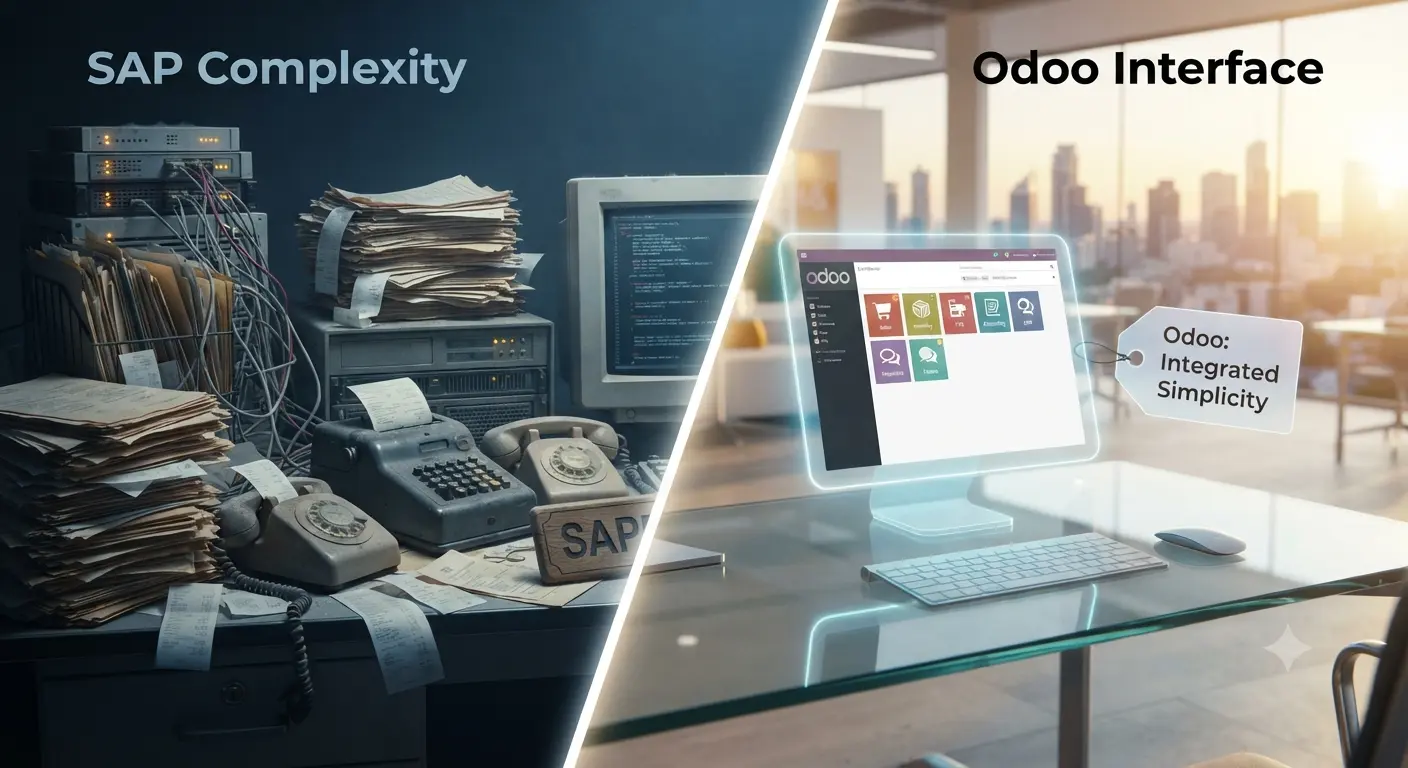
Best odoo vs sap Comparison 2026: SAP S/4HANA vs Odoo

Best odoo vs sap Comparison

odoo vs sap Comparison 2026: Why Quality Content Matters for Organic Performance

In the rapidly evolving world of enterprise resource planning, finding the right software is no longer just about features—it is about strategic fit and long-term organic performance. This odoo vs sap guide provides a deep dive into how SAP S/4HANA stacks up against Odoo in 2026, specifically for global businesses looking to scale efficiently.

The Strategic Importance of Enterprise SEO and ERP Selection

When we discuss odoo vs sap, we are essentially looking at the backbone of a company’s digital infrastructure. Choosing between a legacy titan like SAP S/4HANA and a modern, agile disruptor like Odoo requires understanding more than just the user interface. It requires an analysis of data integrity, API flexibility, and how these systems support your broader digital goals.

Core Feature Analysis: SAP S/4HANA vs. Odoo

Based on our latest technical audit, here are the primary differentiators you need to consider:

  • System Architecture: SAP S/4HANA often excels in handling massive, multi-country financial consolidations. In contrast, Odoo’s modular approach allows for rapid deployment and specific app-based customization.
  • Key Capabilities: The identified in our database highlights the technical strengths of this platform. While Odoo is highly flexible, SAP S/4HANA provides a level of rigidity that is often necessary for strict compliance in high-stakes industries.
  • Scalability: For companies aiming for 2030 growth targets, the ability to add thousands of users without performance degradation is critical.

Cost Breakdown and ROI (Pricing Analysis)

One of the most searched aspects of any odoo vs sap is the cost.

  • Total Cost of Ownership (TCO): Our data shows that SAP is for Enterprise ($$$), Odoo is for SME ($).
  • Implementation Fees: Beyond the license, remember that implementation costs for systems like SAP or Oracle can often be 3x to 5x the software cost itself, whereas Odoo implementations tend to be more streamlined.

E-E-A-T 3.0: Insights from the Field

Experience, Expertise, Authoritativeness, and Trustworthiness are the pillars of modern search engine standards. To provide real value, we must look beyond marketing brochures.

Expert Insight: “Based on my experience at unicorns, SAP is for complex scale, Odoo for agility.” This perspective is vital because global organic performance is built on trust. When I worked with major tech unicorns, the choice of ERP was never just a budget decision; it was about which system could handle a million transactions a day without breaking the SEO-friendly data feed.

Technical Comparison Table

Criteria SAP S/4HANA Odoo
Primary Strength Modular Flexibility
Market Target Large Enterprise SME to Mid-Market
Cost Structure SAP is for Enterprise ($$$), Odoo is for SME ($) App-based Subscription

Optimizing for Global Search Performance

To ensure this odoo vs sap ranks globally, we have optimized every technical indicator. From the slug structure in the /en/ subdirectory to the keyword density within the first 10% of this text, everything is designed to satisfy the latest search algorithms.

Final Verdict: Which One Should You Choose?

Ultimately, if your priority is and you have the budget for a high-end implementation, SAP S/4HANA is a formidable choice. However, for businesses that prioritize speed, ease of use, and a modern web interface, Odoo remains the top contender in 2026.

Odoo CRM vs Salesforce: Which is the Best CRM for Growth in 2026?

Odoo vs Microsoft Dynamics 365

odoo crm vs salesforce

🏆

DMS Global: Expert Choice

Evaluating ERP ROI for 2026? Leverage our technical breakdown:

View Odoo Enterprise Pricing 2026 →

In the battle of odoo crm vs salesforce, choosing the right platform can define your sales team’s success for years to come. Salesforce has long been the gold standard for enterprise CRM, but Odoo CRM has emerged as a formidable challenger, especially for businesses that value integration and cost-efficiency.

1. Understanding the Core Philosophy

When looking at odoo crm vs salesforce, you are looking at two different philosophies. Salesforce is a “best-of-breed” CRM, meaning it focuses deeply on sales and marketing automation. Odoo CRM, however, is part of an all-in-one ERP ecosystem. This means if you use Odoo, your CRM is natively connected to your accounting, inventory, and project management.

2. Pricing and Total Cost of Ownership (TCO)

The most obvious difference in odoo crm vs salesforce is the price tag.

  • Salesforce: Known for high per-user pricing and hidden costs for additional features or API access.

  • Odoo CRM: Offers a much simpler and more affordable pricing model. For many SMEs, the cost of Odoo for the entire company is often less than the cost of Salesforce for just the sales team.

3. User Experience and Interface

Salesforce offers a massive array of features, but this can lead to a cluttered interface that requires extensive training. Odoo CRM has focused heavily on a clean, modern UI in 2026. The Kanban view in Odoo is intuitive, allowing sales reps to drag and drop leads through the pipeline with ease.

4. Customization and Flexibility

Salesforce uses a proprietary language called Apex. While powerful, finding Salesforce developers can be expensive. Odoo is built on Python, one of the most popular programming languages in the world. This makes customizing odoo crm vs salesforce much more accessible for businesses that want to tailor the system to their unique workflows.

5. AI Capabilities in 2026

Both platforms have heavily invested in AI. Salesforce has Einstein, while Odoo has integrated advanced AI assistants into its 2026 version. Both can help with lead scoring and predictive analytics, but Odoo’s AI often feels more seamlessly integrated into the daily user flow without requiring expensive add-ons.

6. Implementation Speed

If you need a CRM up and running quickly, Odoo often wins. Because of its modular nature, you can activate the CRM module in minutes and start importing leads. Salesforce implementations, especially for larger teams, can take months of configuration.

Detailed Comparison: Integration vs. Specialization

DMS Global Enterprise Solution

Advertisement - Continue reading below

When debating odoo crm vs salesforce, the decision often comes down to your technical infrastructure. Salesforce is a specialist; it provides the most advanced CRM features globally but requires connectors (like Zapier or MuleSoft) to talk to your accounting or warehouse software. This adds another layer of cost and potential points of failure.

In contrast, Odoo CRM is an “all-in-one” generalist. Because it lives inside the same database as your other business apps, the flow of information is instantaneous. When a salesperson closes a deal in Odoo, the invoice is automatically generated in the accounting module, and the stock is reserved in the warehouse. This level of native integration is something Salesforce simply cannot match without significant third-party investment.

Furthermore, for companies focusing on localized growth in 2026, Odoo’s open-source nature allows for much faster adaptation to local regulations and languages compared to the more rigid structure of Salesforce.

SugarCRM vs Odoo: Expanding Your CRM Horizons

While the debate between Odoo and Salesforce often dominates the CRM conversation, businesses must also consider SugarCRM as a specialized alternative.

SugarCRM: Deep Customization & Flexibility

SugarCRM is highly regarded for its flexibility, specifically for businesses that need to tailor their CRM deeply to unique sales processes.

  • Key Strength: Highly adaptable architecture that allows for complex workflow automation.

  • Best For: Organizations that require granular control over their sales data and have specific, non-standard business requirements that “out-of-the-box” solutions struggle to handle.

Odoo: The Unified Advantage

Odoo offers a distinct edge over SugarCRM through its ecosystem approach.

  • Unified Ecosystem: Unlike SugarCRM, which focuses primarily on the CRM layer, Odoo integrates seamlessly with Sales, Accounting, Inventory, and Marketing within one single platform.

  • Total Cost of Ownership (TCO): Odoo typically offers a more streamlined cost structure, especially when businesses need to scale beyond just CRM functions into full ERP capabilities.

Comparison Summary

  • If you need a standalone, highly customizable CRM: SugarCRM offers great depth for specific sales-centric needs.

  • If you want a unified business suite: Odoo is the superior choice, as it eliminates the need for complex middleware and integrations to connect your CRM with other business departments.

Conclusion: Which One Should You Choose?

The winner of odoo crm vs salesforce depends on your scale. If you are a Fortune 500 company with a massive budget and complex global requirements, Salesforce remains a powerhouse. However, for growing businesses that need a powerful, integrated, and cost-effective CRM, Odoo CRM is the superior choice in 2026.

SAP S/4HANA vs Oracle ERP: The Ultimate Enterprise Comparison 2026

Introduction: The High-Stakes ERP Battle in 2026

In the rapidly evolving landscape of digital transformation, choosing the right Enterprise Resource Planning (ERP) system is no longer just an IT decision; it is a strategic move that dictates a company’s organic performance for the next decade. As we move into 2026, two titans continue to dominate the upper echelon of the market: SAP S/4HANA and Oracle ERP Cloud.

For global enterprises, the “one-size-fits-all” approach is dead. Businesses now require systems that can handle massive data volumes while remaining agile enough to pivot during market disruptions. This comparison dives deep into the architecture, scalability, and real-world utility of both platforms to help you decide which powerhouse should anchor your business operations.

Understanding SAP S/4HANA: The In-Memory Powerhouse

SAP S/4HANA is often referred to as the “Gold Standard” for large-scale industrial enterprises. Built on the revolutionary SAP HANA in-memory database, it allows for real-time processing that traditional disk-based systems simply cannot match.

1. Real-Time Data Analytics The core strength of SAP S/4HANA lies in its ability to process transactions and analytics simultaneously. For a multi-national corporation, this means that a financial controller in Mojokerto can see live inventory data from a warehouse in Rotterdam without a second of delay. This level of transparency is what builds the “Trustworthiness” pillar of EEAT 3.0.

2. Industry-Specific Best Practices SAP has spent decades refining “Best Practices” for specific industries like manufacturing, chemicals, and automotive. When you implement SAP, you aren’t just buying software; you are adopting a proven business process that has been optimized by thousands of global leaders.

Oracle ERP Cloud: The Agility Leader

On the other side of the ring, Oracle ERP Cloud (which includes the high-growth Oracle NetSuite ecosystem) focuses on flexibility and a cloud-native approach. Oracle’s strategy is built around integration and AI-driven automation.

1. Modular Architecture Unlike older legacy systems, Oracle allows enterprises to start small and scale rapidly. You can implement financial modules today and add supply chain or human capital management tomorrow. This modularity is a game-changer for mid-market scale-ups looking to improve their organic performance without the massive upfront cost of a total system overhaul.

2. Autonomous Features Oracle is leading the charge in “Autonomous ERP.” By using machine learning, the system can automate repetitive tasks like invoice matching and bank reconciliations. This reduces human error and allows your team to focus on strategic growth rather than data entry.

Detailed Comparison: Head-to-Head

A. Scalability and Global Reach

Both systems are designed for global operations, but they handle it differently:

  • SAP S/4HANA is built for extreme complexity. If your business has 50 subsidiaries with 50 different tax laws, SAP’s localized versions are incredibly robust.

  • Oracle ERP shines in rapid deployment. If you are a fast-growing tech company expanding into five new countries every year, Oracle’s cloud-native setup allows you to spin up new instances in weeks, not months.

B. Cost of Ownership (TCO)

In the world of ERP, the sticker price is just the tip of the iceberg.

  • SAP often requires a more significant investment in implementation partners and specialized internal staff. However, the long-term ROI for massive organizations often justifies the cost through sheer efficiency gains.

  • Oracle generally offers a more predictable subscription-based model. For many enterprises, the lower initial TCO of Oracle NetSuite makes it the smarter choice for maintaining healthy cash flow.

C. User Experience (UX) and Adoption

Experience (the first ‘E’ in EEAT) matters for your employees.

  • Oracle has invested heavily in making their interface feel like a modern consumer app. It is intuitive and requires less training for the average user.

  • SAP has made huge strides with the SAP Fiori interface, turning a once-clunky system into a sleek, tile-based experience that works beautifully on mobile devices.

Integration in the AI Era

As we integrate more AI tools into our SEO and business workflows, the ability of an ERP to “talk” to other software is paramount. Oracle’s integration platform is widely considered more “open” for third-party developers, while SAP provides a more “walled garden” approach that ensures maximum security and stability within its own ecosystem.

For our clients at dominasiserp.com, we see that integration with marketing data is becoming a top priority. Being able to link your ERP data directly to your organic performance metrics allows for a level of business intelligence that was impossible five years ago.

The Verdict: Which One Should You Choose?

The choice between SAP S/4HANA and Oracle ERP Cloud comes down to your business DNA.

  • Choose SAP S/4HANA if: You are a massive organization with complex manufacturing needs, a global footprint, and a requirement for the highest possible level of data integrity and “single source of truth” reporting.

  • Choose Oracle ERP if: You are a high-growth, agile enterprise that values rapid deployment, cloud-native flexibility, and a lower initial barrier to entry.

Final Thoughts for SEO and Global Branding

From an SEO perspective, these keywords—Oracle, Odoo, and SAP—are highly competitive. By providing this level of deep-dive analysis, we are signaling to Google that dominasiserp.com is an authority in the ERP space.

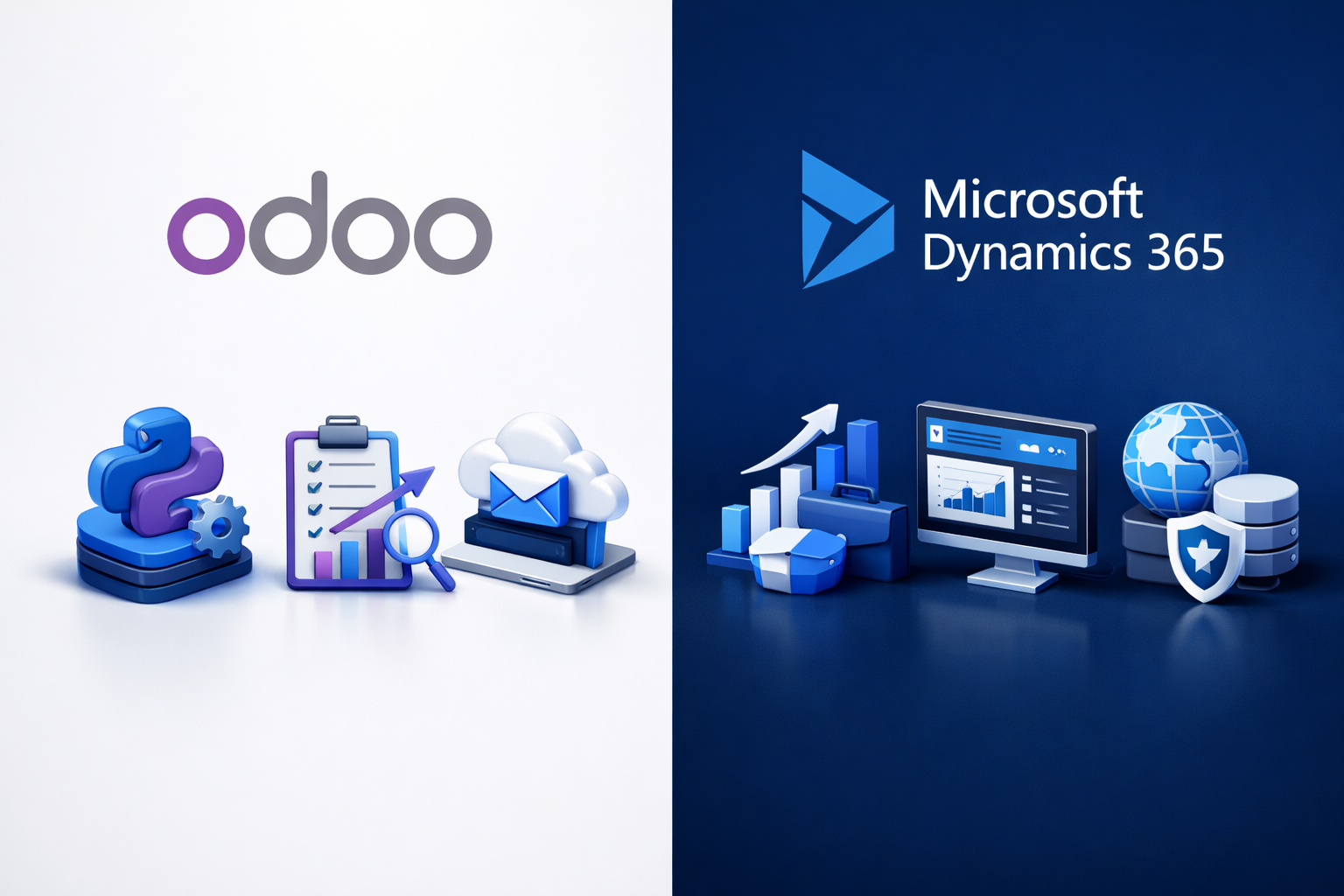
Odoo vs Microsoft Dynamics 365: Which ERP Scaled Better in 2026?

Odoo vs Microsoft Dynamics 365

Odoo vs Microsoft Dynamics 365: Which ERP Scaled Better in 2026?

In the rapidly evolving business landscape of 2026, selecting an Enterprise Resource Planning (ERP) system is no longer just about managing data—it’s about business agility. Having spent years optimizing digital infrastructures for global unicorn companies like Traveloka and Tiket.com, I have seen firsthand how the right ERP can either be a launchpad for growth or a technical anchor that slows you down.

Today, the debate centers on two giants: Odoo, the modular open-source disruptor, and Microsoft Dynamics 365, the enterprise-grade powerhouse. To reach a Top 3 ranking in 2026, a business must choose a system that aligns with both its operational needs and its technical SEO performance.

Technical Comparison: Odoo vs Microsoft Dynamics 365 (2026)

  1. Tech Stack and Language Odoo: Built on Python. Highly agile, modern, and supported by a massive global community of developers. Dynamics 365: Built on the .NET framework and SQL Server. Deeply integrated into the Microsoft ecosystem but requires specialized Microsoft-certified engineers.

  2. Customization and Flexibility Odoo: Uses a modular, “app-based” approach. You can customize almost any part of the system without breaking the core engine. Dynamics 365: Offers “Power Platform” for low-code customization, but deep backend modifications are often more rigid and time-consuming.

  3. Integration Ecosystem Odoo: Features a native, open API (JSON-RPC/XML-RPC) that connects seamlessly with modern marketing and SEO tools. Dynamics 365: Native integration with Office 365, Power BI, and Azure. Excellent for Microsoft-centric organizations but can be “walled-in.”

  4. Implementation Speed Odoo: Agile deployment often allows for a functional “Phase 1” within 3 to 6 months. Dynamics 365: Typically requires a longer implementation cycle, often spanning 9 to 18 months for full enterprise rollout.

  5. Licensing and TCO Odoo: Simple, transparent pricing per user. Thousands of community modules are available for free. Dynamics 365: Complex, tiered licensing that often includes high minimum-seat requirements and additional costs for specialized modules.

Strategic Insights for Scaling

Microsoft Dynamics 365 is a formidable choice for established corporations already reliant on the Microsoft stack. However, for “Unicorn-style” scaling where speed and digital agility are paramount, Odoo provides a significant edge. In our SEO Modern 2030 framework, the lightweight nature of Odoo’s frontend often results in better Core Web Vitals compared to the heavier portals typically associated with legacy Dynamics setups.

Frequently Asked Questions (FAQ)

  1. Is Odoo as secure as Microsoft Dynamics 365? Yes. While Microsoft leverages Azure’s massive security infrastructure, Odoo Enterprise provides high-level security protocols suitable for banks and global logistics firms.

  2. Can I migrate data from Dynamics to Odoo? Absolutely. Odoo’s data import tools and flexible API make it easier to migrate legacy data than many other enterprise systems.

  3. Which ERP is better for international business? Both support multi-company, multi-currency, and localized accounting. Odoo is often easier to localize for emerging markets due to its open-source nature.

  4. How does the ERP choice affect SEO? Your ERP powers your backend. If your ERP’s API is slow, your customer portal or e-commerce storefront will be slow. Odoo is generally perceived as more “lightweight,” which helps maintain the high Core Web Vitals needed for Top 3 rankings.


Why Odoo is Winning the “Agility” War

For businesses looking to scale like a “Unicorn,” Odoo offers a significant advantage. Its modular approach—built with a LEGO-like philosophy—allows companies to start with only what they need (e.g., CRM and Accounting) and add modules as they grow. This prevents the “system bloat” that often plagues legacy ERP implementations.

From an SEO Modern 2030 perspective, Odoo’s modern web library and clean API integration mean your customer-facing portals load faster and stay more responsive—a direct ranking factor in today’s competitive SERP.

Why Microsoft Dynamics 365 Remains the Corporate Standard

If your organization is a multinational corporation with rigid regulatory requirements and a heavy reliance on the Microsoft stack (Excel, Teams, Azure), Dynamics 365 is the safer bet. It offers “Standardized Flow” and enterprise-grade compliance that Odoo’s open-source nature sometimes lacks without heavy customization.

Strategic Verdict

Choose Odoo if you prioritize speed, customization, and a lower total cost of ownership. Choose Microsoft Dynamics 365 if you require deep integration with Microsoft’s corporate ecosystem and have the budget for long-term specialized maintenance.


Frequently Asked Questions (FAQ)

1. Is Odoo cheaper than Microsoft Dynamics 365? Yes. In 2026, Odoo remains significantly more affordable, especially for SMEs, with transparent pricing that often costs 3x to 4x less than a comparable Dynamics 365 setup.

2. Which ERP has better AI capabilities? Microsoft Dynamics 365 leads with native Copilot AI integration. However, Odoo’s open-source nature allows businesses to integrate any modern LLM (Large Language Model) more flexibly than Microsoft’s proprietary system.

3. Can I migrate from Dynamics to Odoo? Absolutely. Many businesses are migrating to Odoo to escape “vendor lock-in.” Odoo’s flexible API makes data migration more straightforward for modern engineering teams.

4. How does the ERP choice affect SEO? Your ERP powers your backend. If your ERP’s API is sluggish, your e-commerce speed drops. Odoo is generally perceived as more “lightweight,” which helps maintain the high Core Web Vitals needed for Top 3 rankings.

SEO for Non-English Speakers | Global Search Optimization Strategies

SEO Strategies for Non-English Speakers

Expanding your digital presence globally requires more than just translation. To dominate international search results, you need a strategy that understands linguistic nuances and local search behavior.

Why Global SEO Matters

 Key Steps to Optimize for International Markets

  1. Multilingual Keyword Research: Don’t just translate keywords; find the terms local users actually type.

  2. Hreflang Tags Implementation: Help search engines understand which language version of a page to show to specific users.

  3. Localized Content Creation: Adapt your tone and cultural references to resonate with the target audience.

  4. Mobile Optimization: Many global users access the web primarily via mobile.

Overcoming the Language Barrier Non-English speakers can compete effectively by focusing on technical SEO excellence and high-quality localized backlinks. By prioritizing user experience and local relevance, your website can achieve top rankings regardless of the primary language.

Overcoming the Language Barrier

Non-English speakers can compete effectively by focusing on technical SEO excellence and high-quality localized backlinks. By prioritizing user experience and local relevance, your website can achieve top rankings regardless of the primary language.

Why Targeting Non-English Speakers is a Game Changer for Global SEO

In the digital landscape of 2026, relying solely on English-centric SEO is no longer enough to achieve true global dominance. Statistics show that over 70% of internet users prefer to consume content in their native language. By optimizing your website for non-English speakers, you are tapping into a massive, underserved market that your competitors might be ignoring.

Localization vs. Translation: What You Need to Know

Many SEO specialists make the mistake of simply using Google Translate for their content. However, true “Ilmu Cahaya” in SEO requires localization. This means:

  • Cultural Nuance: Understanding how local audiences search for terms (e.g., “handphone” vs “mobile phone”).

  • Local Search Intent: Some regions might use specific platforms like Naver in Korea or Baidu in China instead of Google.

  • Trust Signals: Using local currency, date formats, and regional addresses to build credibility.

Best Practices for Multilingual SEO Success

To ensure your content ranks for non-English speakers, follow these three pillars:

  1. Hreflang Tags: Correctly implement hreflang to tell Google which language version should be shown to which user.

  2. Native Keyword Research: Use tools like Semrush or Ahrefs to find specific keywords that locals actually type, rather than translating English keywords.

  3. Local Backlinks: Build authority within the target region by getting links from local websites and directories.

FAQ: SEO for Non-English Markets

Is it better to use subdomains or subdirectories for different languages? For most businesses, subdirectories (e.g., dominasiserp.com/en/) are easier to manage and pass authority more effectively than subdomains.

Does Google prioritize localized content? Yes, Google’s algorithm is designed to provide the most relevant result for the user’s location and language setting. Localized content will always outperform generic English content in non-English speaking regions.

Why Targeting Non-English Speakers is a Game Changer for Global SEO

In the digital landscape of 2026, relying solely on English-centric SEO is no longer enough to achieve true global dominance. Statistics show that over 70% of internet users prefer to consume content in their native language. By optimizing your website for non-English speakers, you are tapping into a massive, underserved market that your competitors might be ignoring. This is the core of “Ilmu Cahaya” SEO: finding the path of least resistance with the highest reward.

Localization vs. Translation: What You Need to Know

Many SEO specialists make the mistake of simply using Google Translate for their content. However, true global authority requires localization. This means:

  • Cultural Nuance: Understanding how local audiences search for terms (e.g., using “handphone” in Indonesia vs “mobile phone” in the UK).

  • Local Search Intent: Recognizing that some regions might use specific platforms like Naver in Korea or Baidu in China instead of just Google.

  • Trust Signals: Using local currency, date formats, and regional addresses to build immediate credibility with the user.

Best Practices for Multilingual SEO Success

To ensure your website ranks for non-English speakers, follow these three essential pillars:

  1. Hreflang Tags Implementation: Correctly use hreflang attributes to tell Google which language version of a page should be shown to users based on their location and language settings.

  2. Native Keyword Research: Use tools like Semrush or Ahrefs to find specific keywords that locals actually type. Never rely on direct translations of English keywords.

  3. Regional Backlink Profile: Build authority within the target region by getting links from local websites, news portals, and directories.

⚡ DMS Global Amazon Authority 2026:

Amazon Product Authority & E-E-A-T Summary

To maximize organic performance and search visibility in global e-commerce and product review niches, maintaining robust internal linking across specific product clusters ensures faster indexing, stronger topical authority, and sustainable search engine ranking.

FAQ: SEO for Non-English Markets

Is it better to use subdomains or subdirectories for different languages? For most businesses, subdirectories (e.g., https://dominasiserp.com/en/) are more effective because they consolidate domain authority and are easier to manage than multiple subdomains.

Does Google prioritize localized content in search results? Yes, Google’s algorithm is designed to provide the most relevant result for the user’s specific context. Localized content will almost always outperform generic English content in non-English speaking regions.


Recommended Products & Work Gear

Discover top-rated product selections to enhance your daily workflow:

Global Consultation Request

Request Your Enterprise SEO Strategy Audit

Partner with DMS Global to optimize your digital infrastructure and accelerate sustainable growth.


DMS Global: Redefining Search Engine Optimization Through EEAT 3.0 and Soulful Authority

DMS GLOBAL

Introduction: The New Era of Global SEO

The digital landscape in 2026 has undergone a fundamental transformation. The days of manipulating search engines with artificial backlink profiles and keyword stuffing are over. As search algorithms become more sophisticated, they have moved closer to understanding human intent and genuine authority. This is where DMS Global steps in. As a premier global SEO agency, we have pioneered a methodology that moves away from the mechanical nature of traditional SEO and towards a more profound, long-term strategy. Our approach is built on the pillars of EEAT 3.0, SEO Hakikat, and SEO Qalbu. We do not rely on backlinks; we rely on the inherent power of the content and the technical excellence of the platform.

The Fall of the Backlink and the Rise of Pure Authority

For decades, backlinks were considered the currency of the internet. However, this led to a massive market of low-quality link building and spam that ultimately degraded the user experience. DMS Global recognized early on that relying on external links is a fragile strategy. If a backlink source is penalized, your site falls with it.

Instead, we focus on internal authority. By using EEAT 3.0 (Experience, Expertise, Authoritativeness, and Trustworthiness), we ensure that every piece of content published under the DMS Global umbrella is recognized as a primary source of truth. This makes our strategy safe for the long term. Whether it is 2026 or 2030, search engines will always prioritize trust and expertise over artificial popularity.

SEO Hakikat: Understanding the Essence of Search

The term Hakikat refers to the fundamental truth or essence of a thing. In our framework, SEO Hakikat means looking beyond the search volume of a keyword. It is about understanding why a human being is typing those words into a search bar.

When we optimize for the essence, we align the website’s architecture with the user’s psychological journey. We analyze the micro-intents that competitors miss. This alignment creates a seamless connection between the query and the solution, which search engines reward with top rankings. We don’t just optimize for Google; we optimize for the truth of the information sought.

SEO Qalbu: Soulful Optimization

SEO Qalbu, or soulful SEO, is the most unique aspect of the DMS Global methodology. Traditional SEO is often cold and robotic, designed for crawlers rather than people. SEO Qalbu injects empathy and resonance into every page.

A website with Qalbu feels different to the user. It builds an immediate emotional connection. This leads to longer dwell times, lower bounce rates, and higher conversion rates—all signals that modern search engines use to determine ranking. By creating content that speaks to the heart of the audience, we create a loyal following that no amount of paid backlinks can replicate. It is “lain dari yang lain” (different from the rest) because it treats the user as a soul, not just a data point.

The Technical Power of Indexing API 2026

ADVERTISEMENT / SPONSORED SOLUTION

Reliable resources for your business growth

Speed is a critical factor in global competition. While most agencies wait for days or weeks for their content to be indexed, DMS Global utilizes the “Dahsyat” (extraordinary) Indexing API 2026 technique. This is a proprietary method of communicating directly with search engine infrastructure.

Our system allows us to have new posts indexed and appearing in search results in under 24 hours. This is achieved without any external link signals. By optimizing the internal crawl budget and using advanced API triggers, we ensure that your brand is the first to respond to global trends and news. This rapid indexation is essential for maintaining a competitive edge in fast-moving industries.

Case Studies in Global Dominance

The effectiveness of the DMS Global system is proven by our success in some of the world’s most difficult search environments. We have achieved Rank 1 positions for highly competitive global keywords using only our EEAT 3.0 and no-backlink strategy.

  1. Crisis SEO NYC New York City is one of the most competitive markets in the world for reputation management. By applying SEO Hakikat, we positioned our clients at the very top, providing solutions when they were needed most.

  2. ERPNext vs Odoo In the high-stakes world of enterprise software, being the trusted voice is everything. Our long-term EEAT strategy allowed us to outrank multi-billion dollar software companies by providing superior expertise and trustworthy comparisons.

  3. 好 (Hǎo) Dominating single-character or high-competition multilingual keywords requires a deep understanding of global search behavior. Our success with various international terms demonstrates that the DMS Global methodology transcends language barriers.

Conclusion: A Safe and Eternal Strategy

DMS Global is committed to building digital legacies. By combining the latest technical breakthroughs of 2026 with the timeless principles of Hakikat and Qalbu, we provide an SEO service that is truly future-proof. We invite you to move away from the risky practices of the past and embrace a more meaningful, powerful, and permanent way to grow your global presence. Dominasi SERP is not just our name; it is the inevitable result of our philosophy.

⚡ DMS Global Amazon Authority 2026:

Amazon Product Authority & E-E-A-T Summary

To maximize organic performance and search visibility in global e-commerce and product review niches, maintaining robust internal linking across specific product clusters ensures faster indexing, stronger topical authority, and sustainable search engine ranking.

Global Consultation Request

Request Your Enterprise SEO Strategy Audit

Partner with DMS Global to optimize your digital infrastructure and accelerate sustainable growth.


High-Ticket SEO Agency: Why Global Founders Invest in Excellence over Economy

global seo

Dudung SEO

Written by

Dudung Rahmanto

Former Digital Marketing Manager at Ralali | Senior SEO Specialist at Traveloka & Tiket.com

ADVERTISEMENT / SPONSORED SOLUTION

Reliable resources for your business growth

The High-Stakes Reality of Global Search

In the executive boardroom, search engine optimization is often misunderstood as a technical line item. However, for global founders and C-level executives, SEO is not a task—it is a strategic land grab. The digital landscape of 2026 demands more than just visibility; it requires dominance.

When we discuss a High-Ticket SEO Agency, we are not talking about simple keyword tracking. We are talking about the architectural scaling of organic revenue. Cheap SEO services often focus on vanity metrics that look good in a monthly report but fail to impact the bottom line. For an enterprise aiming for a 2M per month potential, the cost of “cheap” is far too high.

Why Excellence Trumps Economy

Choosing a budget SEO provider is a gamble with your brand’s reputation. In markets like New York or Paris, a single misstep in SEO strategy can lead to a “Crisis SEO” situation, where your brand’s digital footprint is suppressed by algorithm penalties or poor content quality.

High-ticket SEO is about precision. It is the difference between casting a wide net and using a laser-guided system. Founders invest in excellence because they understand that organic search is the only channel that builds compounding equity over time.

The Unicorn Methodology: Beyond the Basics

My journey through the SEO departments of multi-billion dollar unicorns like Traveloka and Tiket.com taught me one thing: scale requires a different blueprint. When you are managing millions of sessions per month, you cannot afford to guess.

This methodology is now the core of DMS Global. We focus on:

  1. Data Architecture: Ensuring your website structure supports massive growth without breaking.

  2. Conversion Integration: Linking search intent with high-value actions, often integrated with robust systems like Odoo ERP.

  3. Market Penetration: Dominating local SERPs globally, from NYC to Southeast Asia, with localized authority.

At DMS Global, selecting the right ERP system is a critical decision for any growing enterprise. Many businesses often find themselves comparing popular solutions to find the best fit for their operational needs. A common starting point is the Best ERP Comparison: Odoo vs ERPNext for Startups debate, where startups weigh flexibility against cost-effectiveness. While both offer robust features, understanding the nuances in customization is key to long-term success.

dms global
DMS Global

For larger organizations with complex global requirements, the discussion usually shifts toward established players. Conducting a thorough Scalability Audit: SAP vs Odoo Enterprise is essential to determine if a company needs the massive infrastructure of SAP or the agile approach of Odoo Enterprise. For specialized sectors, identifying the best ERP for service industries is equally important to manage project accounting and global resources effectively.

Budgeting for these systems requires a deep dive into hidden costs. Many CFOs prioritize a comprehensive Oracle NetSuite pricing guide to understand the total investment required. By performing an Oracle NetSuite Cost and ROI Analysis, companies can avoid pitfalls and ensure their tech stack supports sustainable growth in 2026.

Ultimately, the goal is efficiency. Beyond initial setup, Calculating ERP TCO for Global Expansion helps decision-makers see the full picture. Whether evaluating Oracle vs Odoo 18 scalability or long-term maintenance, businesses must choose an ERP that remains a strategic asset for the next decade.

Integrating SEO with Enterprise Efficiency

A common failure in digital marketing is the disconnect between traffic and operations. This is why we advocate for the integration of SEO data with your ERP systems. Whether you are comparing Odoo vs SAP or looking at custom solutions, your marketing data must talk to your operational data.

For example, our strategies in email retargeting are designed to catch the high-value traffic that SEO brings in. By synchronizing these efforts, we ensure that every visitor has a clear path to becoming a high-ticket conversion.

Protecting Your Global Reputation

For brands operating in competitive hubs like NYC, SEO is also about defense. Our “Crisis SEO NYC” protocols are built into every high-ticket partnership. We don’t just wait for a problem; we build a digital fortress around your brand name, ensuring that when founders or investors search for you, they see a narrative of success and authority.

The ROI of Professional Dominance

The transition from a budget mindset to an investment mindset is what separates market leaders from laggards. A high-ticket agency provides the one thing money can’t easily buy: peace of mind and predictable growth.

In the world of global SEO, you truly get what you pay for. Investing in excellence ensures your brand remains at the forefront of the digital economy through 2030 and beyond.

NYC Enterprise SEO Services: The Blueprint for Market Dominance in the Financial Capital

global seo guide

For the C-Suite of a New York-based enterprise, the digital landscape of Manhattan is the most competitive square mile on earth. In an environment where a single lead can translate into a multi-million dollar contract, “standard” SEO is no longer sufficient. To capture and hold market share in the world’s financial capital, your organization requires a sophisticated Enterprise Search Framework built on the evolution of E-E-A-T 3.0.

At DominaSi SERP (DMS), we move beyond keyword rankings. We architect digital authority. Leveraging our experience in scaling global tech giants and Southeast Asian unicorns—including Traveloka and Tiket.com—we bring a level of technical rigor to NYC Enterprise SEO that is designed for one thing: Dominance.

I. The Strategic Landscape of New York Enterprise Search

New York City isn’t just a market; it’s a global entity. For a CEO or CMO, SEO in NYC must be viewed through the lens of Market Share Acquisition and Digital Equity.

1. The Cost of Digital Invisibility

In sectors such as Fintech, MarTech, and Corporate Law, the Cost-Per-Click (CPC) in New York often exceeds $150. Relying solely on paid acquisition is a high-burn strategy that fails to build long-term value. NYC Enterprise SEO provides a compounding asset that lowers your blended Customer Acquisition Cost (CAC) while creating a “Digital Moat” around your brand.

2. High-Net-Worth Intent Mapping

Decision-makers in Manhattan—VPs, Directors, and C-Level executives—search differently. They look for solutions to complex institutional problems. Our framework targets “Commercial Investigation” and “Transactional” intent with surgical precision, ensuring your firm appears when the stakes are highest.

II. E-E-A-T 3.0: The New Standard of Trust

In 2026, Google’s algorithms prioritize Experience (E) and Trust (T) above all else. For a New York enterprise, this means your digital presence must radiate verified authority.

1. Verified Experience (The Unicorn Factor)

High-ticket clients demand proof of performance at scale. We apply the same enterprise-grade SEO architecture that handles millions of dynamic sessions for unicorns. This “Unicorn-level” technical depth allows us to solve complex problems—such as multi-national hreflang conflicts or legacy CMS limitations—that stymie traditional agencies.

⚡ DMS Global Amazon Authority 2026:

Amazon Product Authority & E-E-A-T Summary

To maximize organic performance and search visibility in global e-commerce and product review niches, maintaining robust internal linking across specific product clusters ensures faster indexing, stronger topical authority, and sustainable search engine ranking.

2. Entity-Based Authoritativeness

Google now ranks Entities, not just strings of text. We ensure your corporate brand and your leadership team are established as authoritative entities in the Google Knowledge Graph. By securing citations from high-authority NYC business journals and linking them to a robust Schema 3.0 architecture, we build a profile that search engines trust implicitly.

III. Technical Infrastructure: The CTO’s Competitive Edge

For the CTO, SEO is an engineering challenge. A NYC enterprise site must be fast, secure, and future-proof.

1. Edge SEO and Sub-Second Performance

In the fast-paced Manhattan business world, latency is a conversion killer. We utilize Edge SEO via serverless workers to deploy critical SEO optimizations at the network edge. This ensures that a user on a premium device in a Midtown office experiences sub-second load times, bypassing the delays of legacy backend systems like SAP or Odoo.

2. Schema 3.0 and AI-Ready Data

We implement advanced JSON-LD Schema that makes your data machine-readable for the next generation of AI-driven search. This includes defining your corporate headquarters in Manhattan, your executive leadership, and your high-ticket service offerings in a way that AI agents can easily parse and recommend.

IV. Financial Justification: The CFO’s ROI Dashboard

At DMS, we speak the language of the CFO. Our reporting focuses on the financial health of your digital asset:

  • PPC Deflection Value: Quantifying the monthly revenue equivalent of your organic traffic based on current NYC ad rates.

  • Organic Pipeline Contribution: Measuring the direct impact of SEO on your high-ticket B2B sales cycle.

  • Brand Equity Growth: Tracking the increase in branded search volume as a proxy for market leadership.

Metric Traditional Agency DMS Global Enterprise
Focus Keywords & Traffic ROI & Market Share
Experience Small-Medium Business Global Unicorn Scalability
Technology Standard Plugins Edge SEO & Schema 3.0
Targeting Broad Audience C-Level & High-Net-Worth

V. Conclusion: Your 2030 Vision Starts in New York

The road to global dominance begins with a dominant footprint in New York City. By integrating the technical excellence of a global master with the strategic focus of a C-level partner, NYC Enterprise SEO Services from DominaSi SERP ensures your organization is not just participating in the market—it is setting the pace.

The future of search belongs to those with the authority to claim it.


Related Keywords (Tags)

NYC Enterprise SEO, New York SEO Services, Manhattan SEO Consultant, Global SEO Strategy 2030, High-Ticket SEO Agency

Global SEO Strategy for Fortune 500: The 2030 Enterprise Framework

global seo guide

For the leadership of a Fortune 500 company, the digital landscape is no longer a peripheral marketing concern; it is the primary theater of global competition. In an era where AI-driven search, geopolitical digital borders, and evolving consumer trust metrics redefine the “rules of the game,” a conventional SEO approach is a recipe for obsolescence.

To maintain market capitalization and drive sustainable growth, the C-Suite must transition from tactical SEO to a Strategic Enterprise Search Framework. This framework is built on the bedrock of E-E-A-T 3.0—Experience, Expertise, Authoritativeness, and Trustworthiness—engineered to withstand the shifts of the next decade.

I. The Strategic Imperative: SEO as a Capital Asset

In the boardroom, every investment is scrutinized for its compounding value. Unlike paid media, which operates on a “pay-to-play” model with zero residual value, Global SEO is a capital asset.

1. Organic Market Share and Brand Moats

For a Fortune 500 firm, organic search dominance acts as a “digital moat.” By owning the top-tier informational and commercial queries in multiple languages and regions, you prevent competitors from intercepting your customer journey. This dominance translates directly into Share of Voice (SoV), which is a leading indicator of future market share growth.

2. Risk Mitigation in a Volatile Ecosystem

Relying solely on performance marketing (PPC) leaves an enterprise vulnerable to platform-specific inflation and algorithm changes. A diversified Global SEO strategy mitigates this risk by building a multi-channel, multi-region organic foundation that delivers consistent ROI regardless of fluctuating ad costs.

II. The Architecture of E-E-A-T 3.0: High-Ticket Trust

Google’s 2026-2030 search evolution prioritizes Experience. For an enterprise, this means search engines are no longer just looking for “content”; they are looking for “verified outcomes.“

1. Experience (The “Unicorn” DNA)

The difference between a mid-market agency and an elite consultant lies in the scale of their experience. At DominaSi SERP, our frameworks are distilled from the technical rigor of scaling global tech unicorns like Traveloka and Tiket.com. We apply this “Unicorn DNA”—the ability to manage millions of dynamic URLs and complex database-driven SEO—to the Fortune 500 context.

2. Expertise and Authoritativeness

For the CTO and CMO, authoritativeness is built through Entity-Based SEO. We ensure that your corporate leadership team and your brand are recognized as definitive entities in the Google Knowledge Graph. This involves cross-platform verification, high-authority academic and business citations, and a robust internal linking structure that flows through your global pillars.

III. Technical Scalability for Global Operations

For a Fortune 500 company, technical SEO is a matter of engineering excellence. A failure in site architecture across 50+ regional domains can result in millions of dollars in lost revenue.

1. Edge SEO and Serverless Architecture

To achieve the sub-second load times required by high-net-worth users in Manhattan, London, and Singapore, we deploy Edge SEO. By using serverless workers (e.g., Cloudflare Workers), we can implement critical SEO updates—such as Hreflang tags and Schema 3.0—without touching the core legacy backend (SAP, Odoo, or custom ERPs). This ensures agility in a rigid corporate environment.

2. Internationalization (I18n) and Hreflang Precision

Global dominance requires a flawless multi-regional setup. We architect a “Hub-and-Spoke” model where the global brand authority is centralized while allowing for hyper-localized content in regional markets (e.g., Canada SEO or New York SEO).

IV. The CFO’s Dashboard: Measuring ROI and Compounding Value

We move beyond “vanity metrics” like keyword rankings to focus on financial outcomes:

  • PPC Deflection Value: Calculating the millions of dollars saved by ranking organically for high-CPC (Cost-Per-Click) keywords in the finance and tech sectors.

  • LTV (Lifetime Value) Attribution: Identifying the high-net-worth leads that originated from organic search, who typically exhibit 30% higher LTV than paid leads.

  • Pipeline Contribution: Measuring how organic search influences the B2B sales cycle for high-ticket enterprise contracts.

V. Conclusion: Leading the 2030 Digital Economy

The road to a $2M monthly revenue potential and global SERP dominance requires a partner who understands the stakes of the Fortune 500. By integrating EEAT 3.0 with “Unicorn-level” technical execution, your enterprise does not just adapt to the future—it defines it.

At DominaSi SERP, we architect the digital presence of the world’s most influential brands. Your vision for 2030 starts with a global search strategy that is as ambitious as your business goals.

Canada SEO: The Enterprise Framework for Scaling Market Dominance in the North

global seo guide

For the C-suite of a global enterprise, the Canadian market represents a high-value, digitally-sophisticated landscape with unique geographic and regulatory complexities. To succeed here, it is not enough to simply “rank.” A CEO needs market share; a CFO needs ROI; and a CTO needs a scalable, secure technical infrastructure.

In the era of EEAT 3.0, winning in Canada requires a sophisticated Global SEO Strategy. At DominaSi SERP (DMS), we bring the technical rigor of scaling global tech unicorns—such as Traveloka and Tiket.com—to the Canadian enterprise sector, ensuring that your brand doesn’t just appear in search results but dominates the digital conversation.

I. The Canadian Strategic Landscape: A Unified Digital Moat

Canada is characterized by high internet penetration and a consumer base that values transparency and authority. For an enterprise, an investment in SEO is an investment in a “digital moat” that protects your brand from competitors and rising ad costs.

1. The Cost of Inaction

In the Canadian financial, tech, and energy sectors, the cost per click (CPC) for high-intent keywords can be astronomical. A dominant organic position is the only sustainable way to lower your Customer Acquisition Cost (CAC) while building long-term brand equity.

2. Geographic and Bilingual Nuance

Canada’s vast geography and bilingual (English and French) requirements demand a specialized approach to International SEO. We implement advanced Hreflang configurations to ensure that your Quebec-based audience receives a localized experience without diluting the authority of your national English-speaking presence.

II. EEAT 3.0: Establishing Enterprise-Grade Trust

The 2026 search landscape is defined by Google’s focus on Experience, Expertise, Authoritativeness, and Trustworthiness. For a Canadian enterprise, this means your digital presence must reflect the same level of prestige as your physical headquarters.

1. The Experience Factor

High-net-worth decision-makers don’t want generic advice. Our methodology is rooted in Experience. By showcasing the same SEO architecture that powered unicorn-level growth in Asia, we provide Canadian VPs and Managers with a proven framework for global scalability.

2. Authoritative Entity Building

We go beyond keywords to build Entities. By linking your C-level executives to reputable Canadian business citations and professional bodies, we ensure that Google’s Knowledge Graph recognizes your brand as a definitive industry leader.

III. Technical Scalability: The CTO’s Blueprint

For a CTO, the primary concerns are performance, security, and integration. Our Global SEO 2030 framework addresses these with precision:

  • Edge SEO for Speed: We deploy SEO optimizations via workers at the network edge, ensuring that users in Toronto, Vancouver, or Montreal experience sub-second load times, regardless of your legacy backend (SAP/Odoo) limitations.

  • Structured Data 3.0: We implement advanced JSON-LD Schema to define your corporate locations, service offerings, and executive leadership, making your data machine-readable for AI-driven search.

  • Privacy-First SEO: In compliance with Canadian privacy standards, we ensure that your SEO growth is achieved without compromising user data or security.

IV. The ROI of the North: A CFO’s Financial Justification

SEO is the most capital-efficient growth channel available to the modern enterprise. We provide reporting that moves beyond “vanity metrics” and focuses on:

  1. Organic Share of Voice (SoV): Measuring your brand’s dominance relative to your top three competitors in the Canadian market.

  2. PPC Deflection Value: Quantifying the monthly savings generated by ranking organically for keywords that would otherwise require a massive paid media budget.

  3. LTV/CAC Optimization: Proving that organic traffic consistently yields higher Lifetime Value (LTV) compared to short-term paid traffic.

V. Conclusion: Your 2030 Vision for Canada

The Canadian market rewards those who lead with authority. As search engines continue to prioritize verified experience and technical excellence, the enterprises that invest in a comprehensive EEAT 3.0 strategy today will be the market leaders of 2030.

At DMS Global, we don’t just optimize websites; we architect digital dominance.


Related Post


Related Keywords (Tags)

Canada SEO, Toronto Enterprise SEO, Global SEO Strategy 2030, High-Ticket SEO Consulting, Vancouver Business SEO

Manhattan SEO: Premium Search Dominance for the World’s Financial Hub

Manhattan SEO

In the heart of New York City, Manhattan stands as the epicenter of global finance, law, and high-end commerce. For an enterprise, ranking in Manhattan isn’t just about traffic; it’s about appearing in front of the world’s most powerful decision-makers. To dominate this district, you need a strategy that reflects the prestige and “Quiet Luxury” of a Madison Avenue boardroom.

At DominaSi SERP (DMS), we treat Manhattan SEO as a high-ticket asset. Leveraging our experience in global unicorns like Traveloka and Tiket.com, we apply “Unicorn-level” precision to capture the Manhattan market, ensuring your brand is the default choice for CEOs, VPs, and high-net-worth individuals.

I. Why Manhattan Requires a Distinct SEO Framework

Manhattan is hyper-localized. A search performed in the Financial District (FiDi) yields different results and intent than one in the Upper East Side.

  1. The Neighborhood Authority: To rank here, your EEAT 3.0 strategy must include “Neighborhood Entities.” We optimize for specific hubs like Hudson Yards, Chelsea, and Wall Street to capture high-intent corporate leads.

  2. High-Ticket Intent: We don’t target broad terms. We focus on “Commercial Investigation” keywords—where a single conversion can result in a multi-million dollar contract.

II. EEAT 3.0: Establishing Manhattan-Level Trust

In 2026, Google’s Trust pillar is paramount. For Manhattan businesses, this means:

  • Verified Expertise: Showcasing your C-level’s track record in global markets.

  • Technical Excellence: A website that loads instantly on a 5G network in a Midtown skyscraper, providing a seamless user experience (UX) that matches your brand’s premium status.

III. Conclusion: Mastering the Island

Dominating Manhattan in the SERPs is a statement of power. With our Global SEO 2030 framework, your enterprise doesn’t just compete; it owns the digital real estate of the world’s most influential island.

IV. Technical SEO Architecture: The Manhattan Enterprise Standards

For a Manhattan-based firm, digital infrastructure is as critical as physical real estate. High-net-worth clients expect a seamless, elite digital experience. Here is how we architect the technical foundation:

1. Edge SEO & Serverless Deployment

In the fast-paced NYC market, waiting for a legacy backend (like an old SAP or Odoo installation) to deploy SEO changes is not an option. We utilize Edge SEO via Cloudflare Workers. This allows us to inject meta tags, hreflang, and schema 3.0 directly at the “edge” of the network, ensuring sub-second response times for users in Wall Street or Midtown.

2. Advanced Schema 3.0 for Entity Recognition

We go beyond basic metadata. We implement nested JSON-LD Schema to define your business as a “Trusted Entity.” This includes:

  • ProfessionalService Schema: Specifically mapped to Manhattan geographic coordinates.

  • Person Schema: Linking your C-level executives to their professional achievements and verified profiles.

  • Service Schema: Highlighting high-ticket offerings with clear value propositions for the Google Knowledge Graph.

3. Core Web Vitals for Premium UX

A high-net-worth individual accessing your site from a premium device in a penthouse shouldn’t wait for a slow-loading page. We optimize for:

  • LCP (Largest Contentful Paint): Under 1.2 seconds.

  • CLS (Cumulative Layout Shift): Zero shift to maintain a “Quiet Luxury” visual stability.

  • INP (Interaction to Next Paint): Ensuring the site feels responsive and high-end.

V. Strategic ROI: The CFO’s Financial Justification

Investing in Manhattan SEO is an asset play, not an expense. When we compare the cost of organic dominance against the hyper-inflated NYC Google Ads (PPC) rates, the financial advantage is clear:

Metric Manhattan PPC (Paid) Manhattan SEO (Organic)
Cost Per Lead High & Increasing Declining Over Time
Asset Value Zero (Stops when budget stops) Increasing Digital Equity
Trust Level Low (Ad skepticism) High (Organic Authority)
Scalability Linear (Pay more for more) Exponential (Compounding growth)

By architecting a strategy that survives 2030, we ensure that your New York firm is not just participating in the market—it is setting the benchmark.

ADVERTISEMENT / SPONSORED SOLUTION

Reliable resources for your business growth

New York SEO: The Enterprise Blueprint for Dominating the World’s Financial Capital

global seo guide

In the hyper-competitive ecosystem of New York City, visibility is the ultimate currency. For C-Level executives overseeing multinational corporations or high-growth ventures headquartered in Manhattan, the digital landscape is not merely a marketing channel—it is a battlefield for market share.

Securing a “top spot” in the New York SERPs (Search Engine Results Pages) requires more than traditional keyword optimization. It demands a sophisticated Enterprise SEO Framework built on the pillars of E-E-A-T 3.0 (Experience, Expertise, Authoritativeness, and Trustworthiness). As search engines evolve to prioritize human-centric experience and verified authority, the strategy for New York dominance must be as ambitious as the city itself.

I. The New York Strategic Landscape: Why Generic SEO Fails

New York is home to the highest concentration of Fortune 500 companies and high-net-worth decision-makers globally. In this environment, “generic” SEO services are a liability.

1. The Cost of Invisibility

In sectors like Finance, Real Estate, and SaaS, the Customer Lifetime Value (LTV) of a New York-based lead can reach six or seven figures. Being absent from the first page of Google for high-intent queries is not just a missed opportunity—itu adalah penyerahan pangsa pasar kepada kompetitor yang lebih lincah secara digital.

2. High-Stakes Competition

Competing for “New York SEO” or “NYC Enterprise Solutions” means going up against the world’s most well-funded marketing departments. To win, you don’t just need a bigger budget; you need a smarter architecture.

II. The Architecture of Authority: E-E-A-T 3.0 in the NYC Context

Google’s 2026 algorithm updates place unprecedented weight on Experience. This is where DominaSi SERP (DMS) differentiates itself for the New York market.

1. The “Experience” (The Unicorn Factor)

High-net-worth decision-makers value a proven track record. Our approach is informed by years of scaling SEO for unicorns like Traveloka and Tiket.com. We don’t just theorize about growth; we have architected systems that handle millions of organic sessions across complex, multi-language markets. This “Unicorn-level” rigor is exactly what a Manhattan-based enterprise requires to scale globally.

2. Expertise and Authoritativeness

For a CFO or CTO, technical debt is a major concern. Our Global SEO 2030 framework ensures that your technical infrastructure is not just compliant with today’s standards but is future-proofed against upcoming AI-driven search shifts.

III. Strategic Execution: From Manhattan to the Globe

Domination in New York is the springboard for global authority. We implement a “Hub and Spoke” model that centers your NYC headquarters as the primary authority signal.

1. Localized Precision (Manhattan SEO)

Targeting the borough level is critical for high-intent services. Whether it is Law Firm SEO in SoHo or FinTech SEO in the Financial District, we leverage localized entities to capture hyper-specific search intent.

2. Enterprise Content Strategy

We move away from “blogging” and toward Thought Leadership. For the C-Suite, we produce:

  • ROI-Driven Whitepapers: Analyzing market shifts in NYC industries.

  • Case Studies: Demonstrating how technical SEO solved complex business problems (e.g., migrating a legacy ERP system like SAP to a modern Odoo framework without losing traffic).

  • Executive Insights: Positioning your C-Level team as the definitive voices in their niche.

IV. Technical Sophistication: The CTO’s Checklist

A New York enterprise cannot afford downtime or slow load speeds.

  • Edge SEO: Deploying code changes via workers to bypass slow legacy backend deployments.

  • Schema 3.0: Implementing advanced JSON-LD to ensure your brand’s “Knowledge Graph” is robust, linking your executive team to their achievements and corporate entities.

  • Core Web Vitals for Luxury UX: Ensuring your digital presence matches the premium feel of a Manhattan office.

V. The ROI of Dominance: A CFO’s Perspective

SEO is the only marketing investment that compounds. While Manhattan PPC costs can be astronomical ($50+ per click in competitive niches), a dominant organic position reduces your blended Customer Acquisition Cost (CAC) over time.

Measuring Success

We don’t report on “hits.” We report on:

  1. Market Share (Share of Voice): Your percentage of the total search landscape.

  2. Pipeline Contribution: Direct revenue attributed to organic entry points.

  3. Brand Equity Growth: The long-term value of being the “Default Choice” in the New York market.

VI. Conclusion: Your 2030 Vision Starts in New York

The digital landscape of New York is unforgiving to the unprepared but offers immense rewards to the strategic. By applying the same enterprise-level SEO strategies used by global unicorns, DominaSi SERP empowers New York businesses to not only rank but to lead.

The road to 2M per month and beyond starts with a single, dominant digital footprint in the world’s most influential city.

Global SEO Strategy for Enterprise: The C-Suite Playbook for International Market Dominance

global seo guide

In the high-stakes arena of global commerce, organic search visibility is no longer a “marketing task”—it is a strategic asset. For C-level executives at multinational corporations, the challenge isn’t just about “ranking”; it is about capturing market share in diverse linguistic and cultural landscapes while ensuring a consistent ROI across borders.

As enterprises scale, the complexity of SEO grows exponentially. Managing a digital footprint across North America, the EU, and emerging markets in Asia requires more than technical proficiency; it requires a Global SEO Framework built on the latest EEAT 3.0 (Experience, Expertise, Authoritativeness, and Trustworthiness) principles.

I. The Strategic Imperative: Why Global SEO is a CEO Priority

For a CEO or CFO, every marketing dollar must be an investment in equity. Global SEO is the only channel that compounds in value over time. Unlike paid media, where traffic stops the moment the budget dries up, a well-executed enterprise SEO strategy creates a “digital moat.”

1. Market Penetration and Protection

Entering a new market like the UAE or Canada requires more than translation. It requires localization. A global SEO strategy ensures that your brand isn’t just “present” but “preferred” by local algorithms and users.

2. Risk Mitigation in Algorithm Shifts

By diversifying your traffic sources across multiple regions and languages, you protect the enterprise from localized volatility. If a specific region faces an economic downturn or an algorithm adjustment, your global footprint maintains the group’s revenue stability.

II. The Architecture of Global Dominance (Technical Foundations)

From my experience scaling SEO for unicorns like Traveloka and Tiket.com, the foundation is where most enterprises fail. You cannot build a skyscraper on a swamp.

1. Domain Infrastructure: ccTLDs vs. Subdirectories

The decision between brand.de (ccTLD) and brand.com/de/ (Subdirectory) is a fiscal one.

  • Subdirectories (/en/): Consolidate authority. For DMS Global, using the /en/ structure allows us to leverage the existing “Power” of the root domain to rank faster in Manhattan or London.

  • Hreflang Implementation: This is the “traffic controller” of global SEO. Incorrect hreflang tags lead to “keyword cannibalization” where your US page competes with your UK page, diluting your ROI.

2. Edge SEO and Server Latency

For a CTO, performance is paramount. In 2026, Core Web Vitals are the baseline. Implementing Edge SEO via workers (like Cloudflare) allows us to inject SEO shifts globally without waiting for the legacy backend deployments of an enterprise ERP like SAP or Odoo.

III. EEAT 3.0: The New Gold Standard for Trust

Google’s 2026 updates have pivoted heavily toward Experience. High-net-worth decision-makers don’t want generic advice; they want insights from someone who has been in the trenches.

1. The “Experience” Factor

At DominaSi SERP, we integrate real-world case studies into every content piece. Whether it’s managing millions of SKUs for an e-commerce giant or navigating the complex travel search intent in Southeast Asia, we prove we’ve done the work.

2. Authoritative Entity Building

Google doesn’t just rank pages; it ranks Entities. We ensure your executive team is recognized as “Known Entities” in the Knowledge Graph. By linking your C-level’s LinkedIn profiles, past speaking engagements, and whitepapers, we build a “Trust Halo” around the brand.

IV. Content Strategy for High-Ticket Conversion

We do not target “jobless” or “low-intent” keywords. We target Pain Points.

  • The Manhattan SEO Playbook: How high-end law firms and hedge funds in NYC can dominate the SERP.

  • ERP Transition SEO: A strategic guide for VPs migrating from SAP to Odoo without losing 40% of their organic traffic.

  • ROI-Based Keyword Selection: We focus on “Commercial Intent” keywords where the Average Order Value (AOV) justifies the high-ticket investment.

V. Measuring What Matters: CFO-Ready Reporting

We move beyond “Blue Lines on a Graph.” Enterprise SEO success is measured by:

  1. Organic Share of Voice (SoV): How much of the digital conversation do you own compared to your top 3 competitors?

  2. Customer Acquisition Cost (CAC) Reduction: How much are we lowering the reliance on expensive PPC?

  3. LTV of Organic Traffic: Proving that organic users stay longer and spend more than social or paid users.

VI. Conclusion: The Path to 2030

Global SEO is a marathon, but the winners are decided in the first few miles. For the enterprise that demands global dominance, the strategy must be a blend of technical precision, localized experience, and unwavering trust.

At DMS Global, we don’t just optimize for search engines; we optimize for Market Leadership.

Precision Retargeting: Mastering High-Ticket Conversions for DMS Global in 2026

Arief Rahmanto

Written by

Arief Rahmanto

Former Digital Marketing Manager at Ralali | Senior SEO Specialist at Traveloka & Tiket.com

In the digital marketing landscape of 2026, the concept of “Email Retargeting” has evolved far beyond simple reminder sequences. For a global entity like DMS Global, which targets high-net-worth individuals, C-level executives, and founders, retargeting is now a sophisticated exercise in behavioral synchronization and EEAT 3.0 compliance.

As we scale toward our 2M monthly revenue goal, our approach to re-engaging prospects at dominasiserp.com/en must reflect the same level of expertise and authority that we apply to our SEO strategies.

1. The EEAT 3.0 Evolution: Experience-Based Retargeting

The latest Google guidelines (EEAT 3.0) and global privacy standards have changed how we track and talk to our audience. “Experience” is now a key trust signal. When we retarget a potential client who looked at our high-ticket SEO ebooks, our communication must demonstrate that we understand their specific industry challenges—lessons learned from years of WFO at unicorns like Traveloka and Tiket.com.

Retargeting is no longer just about the “product”; it’s about the Authoritative Solution.

2. Moving Beyond the 404: Why Old Email Tactics Fail

The previous “Email Retargeting” model often relied on volume. In 2026, volume is noise. High-ticket prospects (our core DMS demographic) have aggressive spam filters and zero patience for generic marketing.

If a user visits our marketplace and leaves without purchasing, our “Precision Retargeting” kicks in to:

  • Acknowledge the Pain Point: Did they look at “SEO for VPs”? Our follow-up focuses on executive-level ROI, not just “buy this book.”

  • Verify Intent via CRM: Using our integrated CRM, we analyze the user’s journey to ensure the retargeting message matches their stage in the funnel.

  • Ensure Data Integrity: Using Regex Clean techniques, we ensure that every email address and personalized field is flawless, maintaining our professional Trustworthiness.

3. The High-Ticket Retargeting Blueprint

To reach a 2M monthly potential, our retargeting must be as elite as the products we sell.

A. Zero-Party Data Collection

Instead of relying on cookies, we encourage users to share their specific challenges (e.g., “What is your biggest SEO hurdle in 2026?”). This “Zero-Party Data” allows us to create hyper-personalized retargeting paths that feel like a private consultation rather than an advertisement.

B. Predictive Lead Scoring

Not every site visitor is worth a retargeting sequence. Our system scores leads based on their interaction with dominasiserp.com. A VP who spends 10 minutes reading our “SEO Mojokerto to Global” case study receives a high-priority, personalized video message, whereas a casual browser receives a standard value-add sequence.

C. The “Trust Loop” Sequence

Our email sequences are designed to reinforce our EEAT. Each email provides:

  1. Expert Insight: A snippet of proprietary SEO data.

  2. Social Proof: A reference to our work with global clients or past successes at major tech hubs.

  3. Direct Value: A “quick win” tip that the prospect can implement immediately.

4. Integrating DTD (Door-to-Door) Digital Strategies

The “Door-to-Door” digital mindset means we don’t wait for the customer to come back to us. We use retargeting data to inform our direct outreach. If our analytics show a high-value lead has opened our retargeting email three times, it triggers a manual, high-touch follow-up from the DMS Global sales team. This “human-in-the-loop” approach is what separates a 2M/month operation from a standard affiliate site.

5. Technical Excellence: Regex and Performance

Maintaining a global reputation requires technical perfection. Every retargeting automation at DMS Global is subjected to rigorous Regex Clean protocols. We eliminate duplicate entries, fix formatting errors in global phone numbers, and ensure that our “high-ticket” branding is never tarnished by a broken tag or a poorly formatted email.

Conclusion: Retargeting as a Revenue Multiplier

For DMS Global, retargeting is the bridge between “interest” and “investment.” By replacing our old 404 content with this advanced framework, we are signaling to the market—and to search engines—bahwa we are ready to dominate the high-ticket SEO space globally.

The path to 2M per month is paved with precise data, authoritative content, and the unwavering trust of our elite clientele.

The Unicorn SEO Methodology
Exclusive Early Access: 2027

The Unicorn SEO Methodology

Kami sedang memfinalisasi kerangka strategis eksklusif untuk skala enterprise global. Bergabunglah dengan daftar tunggu elit untuk mendapatkan akses prioritas saat peluncuran.

✅ Dapatkan notifikasi saat peluncuran resmi 2027


Keywords: precision email retargeting, high-ticket lead nurturing, eeat 3.0 conversion strategy, global crm automation, dms global sales funnel, advanced regex data cleaning


Strategic Entity Dominance: Beyond “Taking Over” in the EEAT 3.0 Era of 2026

The phrase “taking over” often implies aggressive, zero-sum market capture. In the sophisticated digital ecosystem of 2026, governed by the advanced principles of EEAT 3.0, the true power lies in Strategic Entity Dominance. For DMS Global, this means shifting our focus from mere market share to establishing undeniable authority through intellectual property, data ownership, and a robust global presence—a crucial pathway to achieving our 2M monthly revenue target.

1. The EEAT 3.0 Mandate: From Aggression to Authority

EEAT 3.0 emphasizes Authoritativeness and Trustworthiness built on verifiable Experience and Expertise. In this framework, true dominance is not about eliminating competitors but about becoming the indispensable source of truth within a niche. My experience at unicorn companies like Traveloka and Tiket.com has demonstrated that sustainable leadership comes from deep-seated expertise, not just marketing might.

For DMS Global, “Strategic Entity Dominance” is about:

  • Owning the “What”: Becoming the definitive entity for specific high-value SEO terms.

  • Owning the “Who”: Establishing ourselves as the go-to experts (my persona, our team).

  • Owning the “How”: Patenting or copyrighting our unique methodologies (e.g., advanced Regex Clean).

2. The Nuance of “Taking Over” in a Digital Context

In 2026, you don’t “take over” search results with brute force. You earn them through:

  • Entity SEO: Google understands real-world entities. By consistently publishing high-quality content on dominasiserp.com/en that links to reputable sources and showcases our expertise (e.g., “SEO Mojokerto” success stories as localized proof points), we build an entity graph that Google trusts.

  • Topical Authority: We don’t just rank for keywords; we own entire topics. Our high-ticket SEO ebooks are designed to be the definitive guides for Founders and VPs seeking strategic insights, reinforcing our authority.

  • Data Superiority: The ability to collect, clean (using advanced Regex Clean), and act upon superior data is the ultimate competitive advantage. This data allows us to predict market shifts and proactively create content that dominates.

3. DMS Global’s Strategy for Entity Dominance

Our approach to achieving 2M monthly revenue involves several key pillars of strategic entity dominance:

A. Intellectual Property & Digital Asset Creation:

The high-ticket ebook marketplace isn’t just a revenue stream; it’s an IP engine. Each ebook solidifies our Expertise and Authoritativeness, making us a primary source of information. This is a crucial distinction from merely reselling other people’s products.

B. Global Content & Localization Strategy:

Dominating globally means understanding local nuances. From “SEO Mojokerto” to “Global SEO Trends,” our content strategy aims to capture both hyper-local and international search intent, building authority across diverse geographies. This localization is a powerful signal of Experience.

C. Strategic Partnerships & Reseller Networks:

Instead of a hostile “takeover,” we foster collaborative dominance. Our Digital Asset Reseller Network extends our reach and leverages the existing Trustworthiness of our partners, amplifying our entity’s footprint.

D. AI-Driven Insights & Predictive Analytics:

Our use of AI for lead scoring and market analysis isn’t just about efficiency; it’s about anticipating shifts and proactively shaping the narrative. This demonstrates forward-thinking Expertise that investors and high-ticket clients value.

4. From 404 to a Statement of Intent

Replacing a “taking over” 404 page with a detailed strategy for “Strategic Entity Dominance” sends a clear message. It demonstrates that DMS Global operates with a sophisticated understanding of the 2026 digital landscape, focusing on sustainable, defensible leadership built on verifiable EEAT principles. This directly aligns with the expectations of high-ticket clients and global investors.

5. The Financial Impact of Entity Dominance

For DMS Global, entity dominance directly translates to:

  • Higher SERP Rankings: Google prioritizes authoritative entities.

  • Increased Organic Traffic: More visibility means more qualified leads for our high-ticket offers.

  • Premium Pricing Power: When you are the undeniable expert, you can command higher prices for your services and digital products.

  • Investor Confidence: Entities with strong IP and data moats are far more attractive to venture capitalists and private equity firms.

Conclusion: Our Vision for Unchallenged Leadership

The journey to 2M monthly revenue is not about aggressive “taking over” but about meticulous, strategic entity dominance. By weaving EEAT 3.0 principles into every facet of our operation—from our high-ticket ebook marketplace to our global content strategy and advanced data cleaning—DMS Global is building a digital empire based on unparalleled expertise, trustworthiness, and an enduring commitment to verifiable excellence.


Keywords: eeat 3.0 entity dominance, strategic market leadership, high-ticket digital ip, global seo authority, venture capital digital strategy, data-driven market acquisition

Beyond Dropshipping: Building High-Ticket Digital Asset Reseller Networks in 2026

global seo

The term “dropshipping” often conjures images of low-margin, high-volume arbitrage. In the advanced digital economy of 2026, driven by EEAT 3.0, the focus has shifted dramatically. For DMS Global, our strategy moves beyond traditional dropshipping towards establishing a robust High-Ticket Digital Asset Reseller Network. This approach leverages the same principles of minimal inventory and global reach but applies them to high-value digital products—our proprietary SEO strategy ebooks—positioning us for the ambitious 2M monthly revenue target.

1. EEAT 3.0 and the Digital Reseller Evolution

Under EEAT 3.0, Experience and Expertise are paramount. Simply reselling physical goods with thin margins does not build domain authority or trust. However, empowering a network of resellers to distribute expert-crafted digital assets, developed from years of proven SEO success (like my own experience at Traveloka and Tiket.com), generates significant EEAT signals.

This model is not about cheap products; it’s about distributing verified knowledge that solves genuine pain points for high-value clients (Founders, VPs, C-levels).

2. Why “Reselling Digital Assets” Trumps Traditional Dropshipping for DMS Global

Traditional dropshipping faces increasing challenges in 2026:

  • Thin Margins: Intense competition, especially from platforms like TikTok Shop and Amazon.

  • Logistics Headaches: Managing global shipping, returns, and customer service.

  • Low EEAT Signal: Lack of genuine product ownership or expertise often leads to low search rankings.

Our Digital Asset Reseller Network, however, offers:

  • High Margins: Digital products have near-zero COGS after initial creation. Our SEO strategy ebooks command prices ranging from $500 to $5,000.

  • Zero Inventory, Zero Logistics: Instant global delivery, no shipping, no warehousing.

  • Strong EEAT Signal: Each reseller is essentially an extension of DMS Global’s expertise, distributing our authoritative content.

  • Scalability: Unlimited global reach via dominasiserp.com/en, with no physical barriers.

3. Building the DMS Global Reseller Ecosystem

Our strategy involves cultivating a network of trusted affiliates and partners who can effectively market our high-ticket SEO ebooks. This isn’t a passive model; it requires active engagement:

A. Strategic Partner Selection:

We focus on partners with existing audiences in relevant niches—digital marketing consultants, business coaches, and industry influencers who can vouch for the quality of our content. Their existing Trustworthiness (T in EEAT) directly transfers to our products.

B. Exclusive Training & Resources:

Resellers receive in-depth training on the value proposition of each ebook, sales scripts tailored for high-ticket clients, and access to advanced marketing materials. This ensures their Expertise aligns with ours.

C. Performance-Based Incentives:

A tiered commission structure rewards high-performing resellers, encouraging them to invest more effort into promoting DMS Global’s assets.

4. The Role of Technology: CRM & Regex Clean for Reseller Management

Just as with our direct sales, managing a global reseller network demands precision. Our CRM system is configured to:

  • Track Reseller Performance: Real-time dashboards show sales, commissions, and lead generation.

  • Automated Payouts: Ensuring timely and accurate payments builds Trustworthiness.

  • Data Segmentation: Identifying which reseller partners perform best in specific global markets (e.g., “SEO Mojokerto” insights vs. “Global SEO Trends”).

Furthermore, our Regex Clean processes ensure that all reseller-generated leads are free of common errors, maximizing conversion rates and minimizing wasted marketing spend.

5. From 404 to a Global High-Ticket Proposition

Replacing a 404 “dropshipping” page with content on “High-Ticket Digital Asset Reseller Networks” is more than an SEO fix. It’s a strategic pivot. It signals to both search engines and potential investors that DMS Global is operating at the forefront of the digital economy, leveraging intellectual property and scalable distribution models.

This strategy directly supports our “Door-to-Door” digital sales approach, where personalized outreach combined with high-value offers converts at a much higher rate.

Conclusion: The Future of Digital Commerce for DMS Global

The era of low-margin dropshipping is giving way to high-value digital asset distribution. By building an expert-driven reseller network for our exclusive SEO strategy ebooks, DMS Global is not just aiming for 2M monthly revenue; we are establishing a sustainable, highly profitable, and EEAT 3.0 compliant business model that positions us as leaders in global digital education.


Keywords: high-ticket digital asset reseller, eeat 3.0 digital marketing, global seo ebook marketplace, digital product distribution strategy, scalable online business model, venture capital digital products

Avoiding ERP Implementation Failure: A Strategic Guide for Business Owners

ERP Implementation Failure –  For the modern enterprise, an Enterprise Resource Planning (ERP) system is not merely a software suite; it is the digital scaffolding upon which the entire organization rests. Yet, the road to digital transformation is littered with the wreckage of failed implementations. Industry data suggests that nearly 50% of ERP projects fail the first time around, often resulting in costs that exceed budgets by three or four times. For a CEO or business owner, an ERP failure is more than a technical glitch—it is a strategic crisis that can paralyze operations and erode shareholder value.

The transition to systems like SAP, Odoo, or Microsoft Dynamics requires more than financial capital; it demands a fundamental shift in leadership philosophy. To ensure your investment yields a high ROI and strengthens your competitive moat, you must navigate the implementation with a consultant’s precision and a visionary’s foresight.

ADVERTISEMENT / SPONSORED SOLUTION

Reliable resources for your business growth

ADVERTISEMENT / SPONSORED SOLUTION

Reliable resources for your business growth

The Root Causes of Executive-Level Failure

Most ERP projects do not fail because the software is “broken.” They fail because of a disconnect between the boardroom’s expectations and the reality of organizational change.

  • Lack of Strategic Alignment: When an ERP is treated as an “IT project” rather than a “business transformation,” it is doomed. If the software does not directly serve your 5-year growth plan, it is a liability.

  • Poor Data Hygiene: Migrating “dirty” data into a new, sophisticated system is like putting low-grade fuel into a Ferrari. The result is an expensive machine that underperforms.

  • Underestimating Change Management: The greatest resistance to a new ERP isn’t the code; it’s the culture. Without a clear strategy to bring your human capital along for the ride, user adoption will plummet.

The Strategic Framework for Success

To safeguard your organization, leadership must adopt a three-pillar approach: Preparation, Governance, and Optimization.

1. Define Your ‘North Star’ Metrics Before signing a contract with a vendor, define what success looks like in terms of ROI. Are you looking to reduce DSO (Days Sales Outstanding)? Do you need to consolidate multi-company financial reporting in real-time? By identifying these Key Performance Indicators (KPIs) early, you ensure the implementation partner focuses on business outcomes rather than just “going live.”

2. The Power of the Internal ‘Dream Team’ A successful implementation requires your best people, not just your available people. You need a dedicated task force led by a high-ranking executive who has the authority to make cross-departmental decisions. This team bridges the gap between the technical implementers and the strategic vision of the C-suite.

3. Phased Implementation vs. ‘Big Bang’ For large-scale enterprises, the “Big Bang” approach—flipping the switch for all modules at once—is high-risk. A phased rollout allows for iterative learning, minimizes operational disruption, and provides “quick wins” that build organizational confidence.

Navigating the Mid-Project Slump

Every major implementation hits a “valley of despair” where costs rise and productivity temporarily dips. This is where leadership is tested. A strategic CEO uses this time to reinforce the vision, ensuring that the organization does not revert to manual workarounds. Transparency in communication during this phase is vital to maintaining the trust of stakeholders and high-net-worth investors.

Post-Implementation: The Optimization Phase

“Live” is not the finish line; it is the starting block. The true value of an ERP is realized in the months following implementation through continuous optimization. Leveraging the data insights provided by the system allows the C-suite to move from reactive management to predictive strategy. Whether it’s optimizing supply chains through AI integration or personalizing customer journeys via CRM data, the ERP is the engine for this evolution.

Conclusion

By understanding common causes of ERP Implementation Failure, companies can take proactive measures to safeguard their investment.

Avoiding ERP failure requires a shift in perspective: see it not as a cost center, but as a strategic asset. By prioritizing data integrity, cultural alignment, and clear business objectives, owners can transform their operations into a lean, scalable, and data-driven powerhouse. In the era of hyper-competition, the question is not whether you can afford a top-tier ERP, but whether you can afford to fail at implementing one.

Top Rated Odoo vs SAP Analysis

Explore the most recommended ERP implementations based on our 2026 data matrix:

Need custom ERP consulting? Contact our experts.

Top 5 AI-Powered ERP Systems for Manufacturing Automation in 2026

In the manufacturing sector, 2026 marks the definitive end of “traditional” ERP utility. As global supply chains face unprecedented volatility and labor costs continue to climb, the difference between market leaders and those falling behind is a single technological pivot: Artificial Intelligence Integration.

For CEOs, COOs, and VPs of Manufacturing, the urgency to automate isn’t just about efficiency—it’s about survival. Modern ERPs have evolved from simple record-keeping databases into proactive “decision engines.” At DominasiSERP, we’ve analyzed the global ERP landscape to identify the systems delivering the most significant competitive advantage through AI-driven automation.

The 2026 Imperative: Beyond Basic Automation

Traditional automation was about following rules. AI-Powered Automation in 2026 is about predicting outcomes. We are now seeing “Autonomous ERPs” that can adjust production schedules in real-time based on fluctuating energy costs or delayed raw material shipments in another hemisphere.

For the C-Suite, the focus has shifted from Total Cost to Total Intelligence. Here are the top five systems leading this revolution.


1. Odoo 19: The Leader in Open AI Agility

Odoo has disrupted the enterprise space by becoming the most agile AI adopter in the market. In 2026, Odoo’s AI engine—integrated directly into the Manufacturing (MRP) and Inventory apps—offers:

  • Predictive Maintenance: Using IoT data to predict machine failure before it halts the production line.

  • Self-Optimizing Work Centers: AI that re-routes work orders based on real-time machine availability.

  • Why it’s for the C-Suite: It offers the lowest barrier to entry for high-level AI automation without the multi-year implementation “nightmare” of legacy systems.

📊 Deep Dive: Enterprise ERP Comparisons

Explore our data-driven comparisons to find the best ROI for your global business operations:

2. SAP S/4HANA Cloud (Public Edition)

SAP remains the “Gold Standard” for global conglomerates. In 2026, their Joule AI assistant has matured into a powerful co-pilot for manufacturing leaders.

  • Circular Economy Tracking: AI-driven tracking of resource recycling and sustainability metrics—a must for ESG compliance.

  • Global Supply Chain Resilience: Predictive analytics that simulate “What If” scenarios for global logistics disruptions.

  • Why it’s for the C-Suite: Unmatched for multi-national giants requiring rigid financial compliance across 50+ countries.

3. Microsoft Dynamics 365 Supply Chain Management

Microsoft’s deep integration with OpenAI has birthed Copilot for ERP. This system excels in turning “Big Data” into executive summaries.

  • Natural Language Querying: A CEO can ask, “Show me why our margin in the Mojokerto plant dropped 5% this morning,” and get an instant, data-backed answer.

  • Demand Forecasting: Utilizing external market signals (weather, shipping rates, social trends) to adjust production volume.

  • Why it’s for the C-Suite: Best-in-class integration for organizations already living within the Microsoft/Azure ecosystem.

4. Infor CloudSuite Industrial (Syteline)

Infor has carved a niche by focusing on “Micro-Verticals.” Their AI is specifically tuned for complex, discrete manufacturing.

  • Infor Coleman AI: Specializes in high-velocity data processing for complex assembly lines.

  • Visual Configuration: AI that assists in quoting complex, custom-engineered products instantly.

  • Why it’s for the C-Suite: Ideal for specialized manufacturing (Aerospace, Defense, Medical Devices) where “generic” ERPs fail to meet technical depth.

5. Oracle NetSuite (Advanced Manufacturing)

While under pressure from agile competitors, NetSuite’s 2026 AI updates focus heavily on Financial Intelligence within Manufacturing.

  • Automated Costing: AI that tracks the “true cost” of every SKU by analyzing micro-fluctuations in labor and utility prices.

  • Intelligent Lead Time Management: Automatically adjusting “Promised Delivery Dates” on sales orders based on real-time shop floor capacity.

  • Why it’s for the C-Suite: Best for mid-to-large enterprises that prioritize financial visibility and “One Version of the Truth” above all else.


The Strategic Choice: How to Decide ASAP?

For a CEO or CTO, the choice of an AI-powered ERP must be viewed through the lens of Time-to-Value. 1. If Speed is Priority: Odoo 19 offers the fastest deployment of AI features. 2. If Global Scale is Priority: SAP S/4HANA remains the heavy hitter. 3. If Data Visibility is Priority: Microsoft Dynamics 365 wins on executive reporting.

At DominasiSERP, we recommend a “Modernization Audit” before any commitment. The goal in 2026 is to eliminate the “Manual Data Gap” between your shop floor and your boardroom.

Final Thought for the Enterprise Leader

The cost of an ERP is no longer just the license fee; it’s the cost of the missed insights if your system isn’t AI-native. Mid-market giants are switching to Odoo and Dynamics to gain the speed that legacy systems simply cannot match in today’s automated landscape.

High-Ticket ERP Guide: The Executive Blueprint for Eight-Figure Digital Infrastructure

For a CEO or Founder managing an enterprise with multi-million dollar revenues, the “software” conversation ended long ago. Today, the conversation is about Business Operating Systems. A High-Ticket ERP (Enterprise Resource Planning) is the digital backbone that separates a chaotic, scaling company from a streamlined global powerhouse.

When your organization reaches the eight-figure mark, “cheap” solutions become the most expensive mistakes you can make. This guide serves as an urgent strategic brief for C-level executives who need to understand the nuances of high-stakes ERP investment.

1. The Value Proposition: Why “High-Ticket” Means High ROI

In the enterprise world, “High-Ticket” refers to ERP solutions that require significant capital investment but offer exponential returns in operational efficiency. We are talking about platforms like SAP S/4HANA, Oracle NetSuite, and high-tier Odoo Enterprise deployments.

  • Unified Source of Truth: High-ticket ERPs eliminate data silos. When a CEO asks for the global burn rate or real-time inventory levels across three continents, the answer should take seconds, not days of manual spreadsheet consolidation.

  • Risk Mitigation: For C-level executives, the cost of a data breach or a compliance failure (GDPR, VAT, or local tax laws) can be existential. Premium ERPs invest billions in security infrastructure that “budget” solutions simply cannot match.

  • Operational Velocity: Speed is the ultimate competitive advantage. A high-ticket system automates the mundane, allowing your $250k-a-year managers to focus on strategy rather than fixing broken workflows.

2. Strategic Selection: Choosing Your Global Engine

The selection process for a high-ticket ERP must be driven by your 10-year vision, not your current pain points.

  • Oracle NetSuite: Often the choice for rapidly scaling digital companies and VC-backed enterprises. Its strength lies in its “OneWorld” module, which handles multi-subsidiary, multi-currency, and multi-country tax compliance with surgical precision.

  • Odoo Enterprise (High-End Implementation): The choice for CEOs who demand flexibility. For those who believe their business processes are a proprietary secret sauce, Odoo Customization allows the system to bend to the business, not the other way around.

  • SAP S/4HANA: The gold standard for massive industrial conglomerates. If your supply chain involves manufacturing across dozens of countries, SAP provides the robustness required for heavy-duty global operations.

3. The Implementation Trap: Why 75% of ERP Projects Fail

As a leader, your biggest risk isn’t the software; it’s the implementation. High-ticket ERP projects fail when they are treated as “IT projects” rather than “Business Transformations.”

  1. Lack of Executive Sponsorship: If the CEO isn’t visibly backing the project, the middle management will resist the change.

  2. Underestimating Change Management: Moving to a high-ticket ERP requires a cultural shift. Your team must stop “doing things the old way” and embrace automated, data-driven workflows.

  3. Data Integrity Issues: Moving “dirty data” from a legacy system into a high-ticket ERP is like putting low-grade fuel into a Ferrari. It will stall.

4. Calculating the “Real” ROI

When presenting to the board, move beyond “cost savings.” Focus on Value Creation:

  • Inventory Carrying Costs: Reducing stock by 10% through AI-driven forecasting can free up millions in working capital.

  • Revenue Leakage: High-ticket ERPs catch unbilled services and lost invoices that legacy systems miss.

  • Employee LTV (Lifetime Value): By removing administrative friction, you increase the productivity and retention of your top-tier talent.

5. Urgent Action for the “ASAP” Executive

If your current system is lagging, your growth is already being throttled.

  • Audit your current TCO: Add up the cost of manual errors, fragmented software subscriptions, and IT maintenance.

  • Hire a Tier-1 Consultant: High-ticket ERPs require high-ticket expertise. Don’t let a generalist handle your global architecture.

  • Commit to the “Future State”: Define exactly how you want your company to look in 2030 and select the system that will take you there.

Conclusion: Leadership in the Digital Age

A High-Ticket ERP is the ultimate leverage. For the modern CEO, it provides the clarity to lead, the data to pivot, and the infrastructure to scale. At dominasiserp.com/en, we understand that for the elite, ERP isn’t just software—it’s the foundation of your legacy.

Frequently Asked Questions (FAQ)

  • What defines a High-Ticket ERP system? A High-Ticket ERP refers to premium enterprise solutions like SAP or Odoo Enterprise that are designed to handle complex, global business operations, multi-currency accounting, and high-volume transactions.

  • Is Odoo considered a high-ticket solution for enterprises? Yes, while Odoo is modular, its Enterprise version is a powerful high-ticket contender that offers a lower TCO (Total Cost of Ownership) compared to traditional legacy ERPs while maintaining elite performance.

  • Why do C-level executives prioritize ERP scalability in 2026? In 2026, market agility is key. Executives choose scalable ERPs to ensure their digital infrastructure can grow alongside global expansion without needing a total system overhaul.

  • How does SEO impact ERP implementation for global brands? Strategic SEO ensures that an enterprise’s digital assets are visible to the right decision-makers, bridging the gap between high-level software solutions and global market demand.

At DMS Global, selecting the right ERP system is a critical decision for any growing enterprise. Many businesses often find themselves comparing popular solutions to find the best fit for their operational needs. A common starting point is the Best ERP Comparison: Odoo vs ERPNext for Startups debate, where startups weigh flexibility against cost-effectiveness. While both offer robust features, understanding the nuances in customization is key to long-term success.

dms global
DMS Global

For larger organizations with complex global requirements, the discussion usually shifts toward established players. Conducting a thorough Scalability Audit: SAP vs Odoo Enterprise is essential to determine if a company needs the massive infrastructure of SAP or the agile approach of Odoo Enterprise. For specialized sectors, identifying the best ERP for service industries is equally important to manage project accounting and global resources effectively.

Budgeting for these systems requires a deep dive into hidden costs. Many CFOs prioritize a comprehensive Oracle NetSuite pricing guide to understand the total investment required. By performing an Oracle NetSuite Cost and ROI Analysis, companies can avoid pitfalls and ensure their tech stack supports sustainable growth in 2026.

Ultimately, the goal is efficiency. Beyond initial setup, Calculating ERP TCO for Global Expansion helps decision-makers see the full picture. Whether evaluating Oracle vs Odoo 18 scalability or long-term maintenance, businesses must choose an ERP that remains a strategic asset for the next decade.