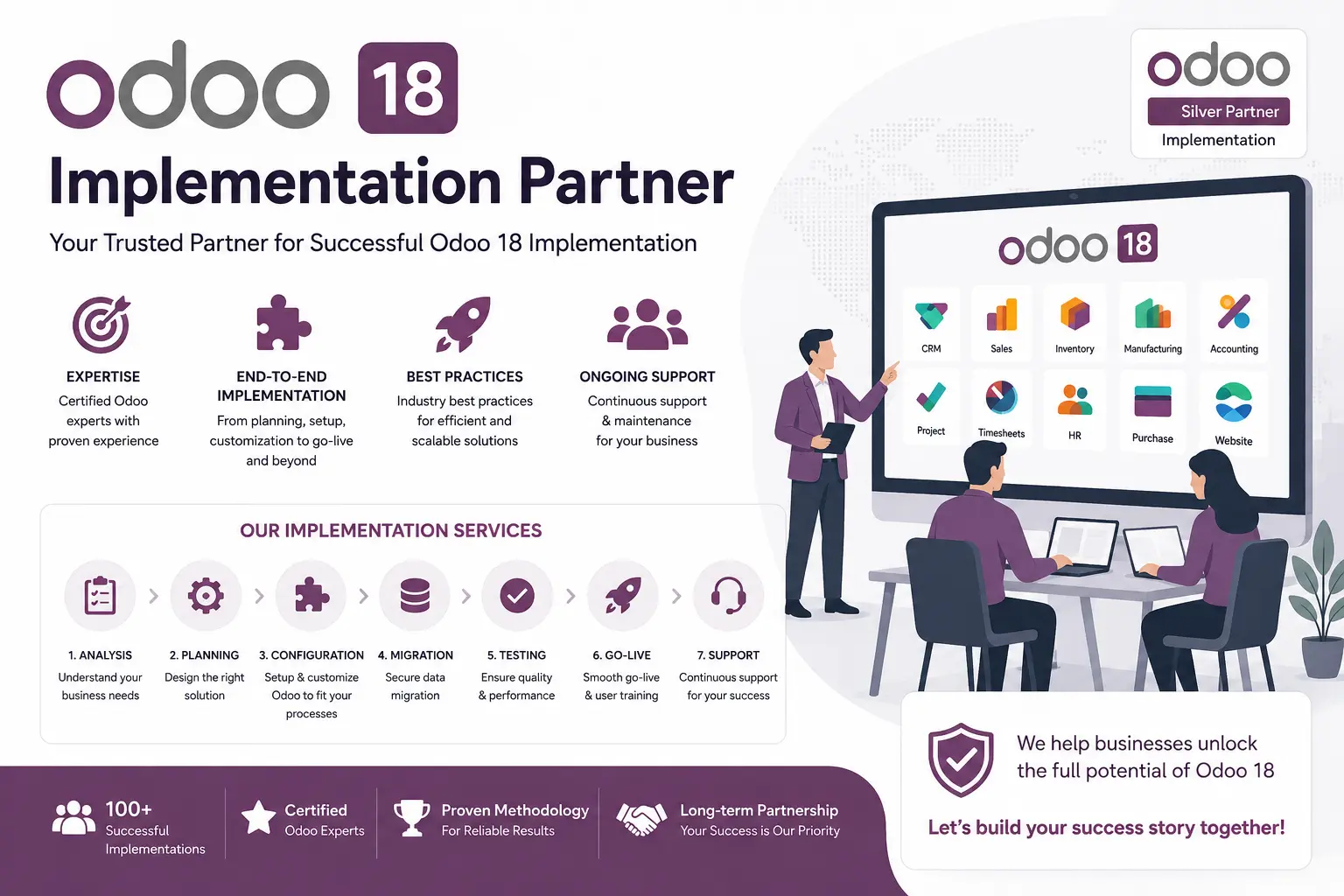
Odoo 18 Implementation Partner
Implementing Odoo 18 is a milestone decision for any enterprise aiming to modernize its business operations. As the latest version brings advanced features, improved AI integration, and enhanced performance, selecting the right partner for your Odoo 18 implementation is the most critical factor in determining your project’s success. This guide explores the strategic nuances of choosing an implementation partner who can translate Odoo’s technical capabilities into tangible business growth.
The Critical Role of an Odoo 18 Implementation Partner
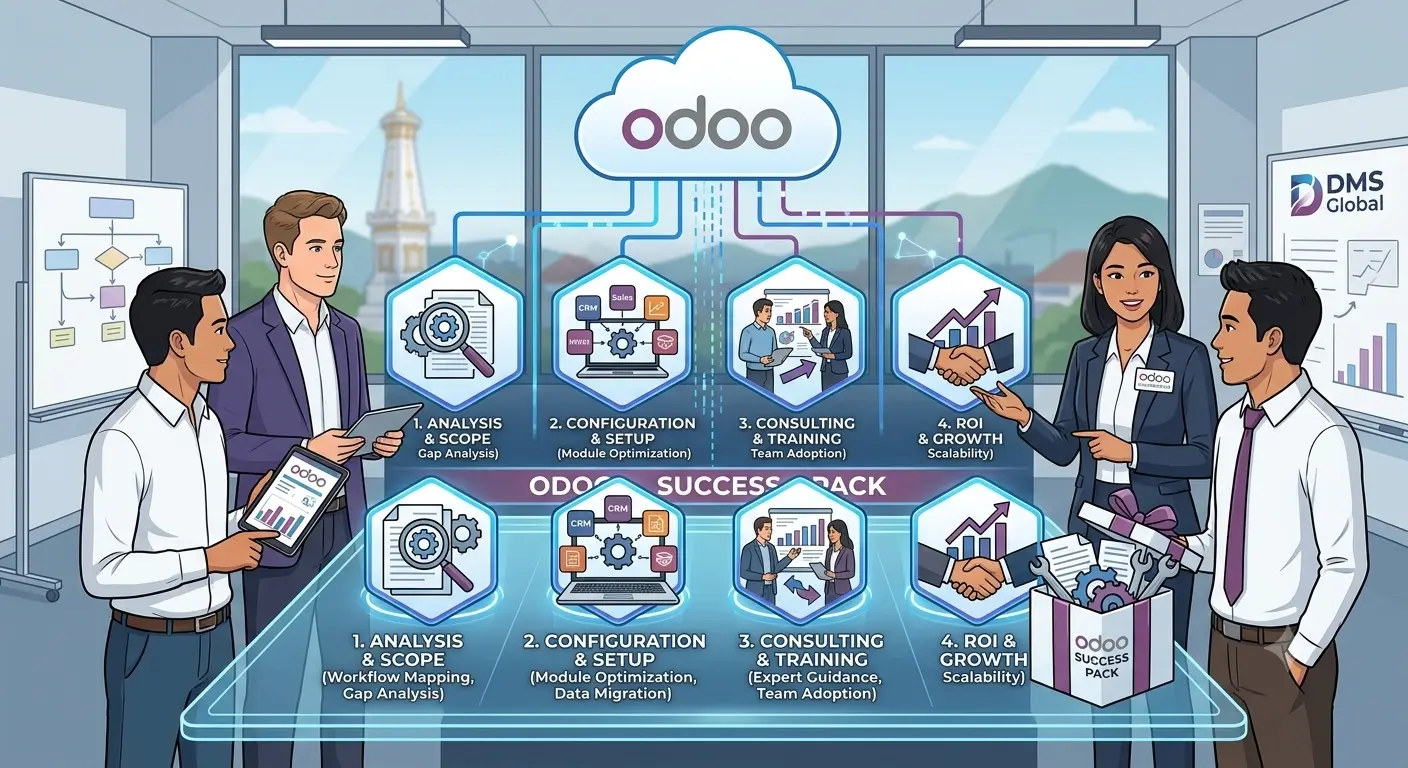
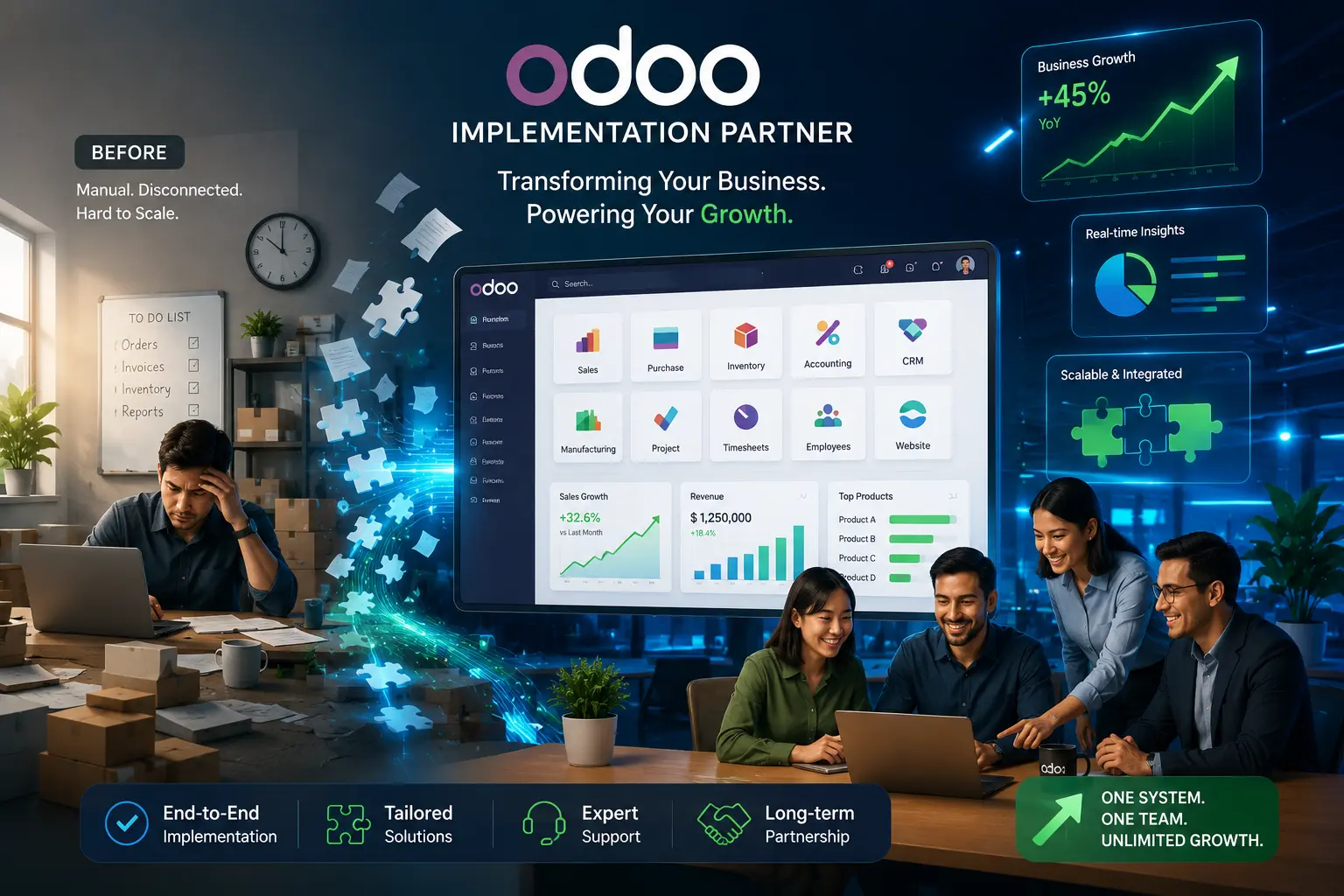
An implementation partner is more than just a technical service provider; they are a strategic extension of your business. While the Odoo platform provides the tools, a skilled partner brings the methodology, industry knowledge, and technical expertise required to configure the system to your unique requirements. In 2026, with the increasing complexity of business environments, the role of a partner involves not just installation, but architecture design, data migration, user training, and long-term performance optimization.
Key Competencies to Look For
When vetting potential partners, don’t just look for technical certifications; look for a partner who aligns with your business objectives.
1. Industry-Specific Expertise
Does the partner have a proven track record in your industry? An Odoo 18 implementation for a manufacturing firm requires vastly different configurations than one for a retail or professional services company. Look for partners who understand your sector’s regulatory needs, operational flow, and common pain points.
2. Strategic Methodology
A professional implementation partner follows a structured methodology. They should provide a clear project roadmap, including comprehensive discovery, design, development, testing, and post-go-live support. This methodology is essential for minimizing risk and ensuring that the project remains within scope and on budget.
3. Data Migration and Integration Prowess
One of the most complex aspects of any ERP transition is data migration. Your partner must be highly proficient in data mapping and cleansing, ensuring that your historical information is successfully integrated into Odoo 18 without loss of integrity. Additionally, they should be experts in integrating Odoo with your existing ecosystem—such as legacy CRMs, e-commerce platforms, and payment gateways.
4. Continuous Support and Evolution
Implementation is not the end; it is the beginning of your journey with Odoo 18. Choose a partner that offers post-implementation support, proactive maintenance, and strategic guidance to help you leverage new features as Odoo continues to evolve.
Why Odoo 18 Requires a Different Approach
Odoo 18 introduces sophisticated changes that require specialized expertise. Partners who were experts in previous versions must now demonstrate proficiency in the new AI-driven workflows, enhanced accounting features, and revamped user interface. Ensure that your partner is not just “familiar” with Odoo, but is actively participating in the Odoo 18 ecosystem, understanding how these new capabilities can be specifically harnessed to drive efficiency for your enterprise.
The Risk of Picking the Wrong Partner
The cost of a failed implementation goes far beyond the initial investment. It includes lost productivity, employee frustration, operational downtime, and the eventual need to perform a costly re-implementation. A partner who lacks experience or fails to understand your business requirements can lead to a fragmented system that fails to deliver on its promise. This is why due diligence in the partner selection process is non-negotiable.
Maximizing ROI with Your Partner
To truly maximize the value you receive, treat your implementation partner as a collaborative team.
-
Clearly Define KPIs: Establish measurable goals for your implementation early on, such as “reduction in order processing time” or “increase in inventory turnover.”
-
Prioritize Knowledge Transfer: Ensure your internal team is actively involved in the implementation process. A great partner will empower your employees to become internal Odoo experts, reducing your long-term dependence on external support.
-
Open Communication Channels: Establish regular check-ins and progress reports to maintain transparency throughout the lifecycle of the project.
Why DMS Global Standards Matter
As you scale your business, your implementation must scale with you. A partner that adheres to global best practices ensures that your configuration is future-proof. Whether you are dealing with multi-currency operations, complex tax requirements, or global supply chain logistics, your Odoo 18 implementation partner should be capable of configuring a system that supports your international growth trajectory.
Conclusion
Selecting an Odoo 18 implementation partner is a decision that will define your operational efficiency for years to come. By prioritizing deep industry knowledge, a disciplined implementation methodology, and a commitment to long-term success, you position your enterprise to fully leverage the potential of Odoo 18. This is not merely a software installation; it is an investment in your business’s digital foundation. Choose a partner who shares your vision and has the demonstrated capability to bring that vision to life.