How Industrial Demand for Solar Panels Impacts Global Silver Prices

silver

In the global commodities market, few relationships are as structurally significant as that between silver and the solar energy sector. As the world accelerates its transition toward renewable energy, silver has transformed from a primarily monetary asset into a mission-critical industrial input. For investors monitoring the silver market in 2026, understanding how the explosive growth of photovoltaic (PV) solar panel installations impacts global silver prices is not just an academic exercise—it is the key to understanding the next decade of price action.

The Silver-Solar Connection: Why It’s Irreplaceable

To understand the price pressure on silver, one must first understand why the metal is used in solar panels. Silver is the most electrically conductive metal on Earth. In a solar cell, a thin layer of silver paste is screen-printed onto the silicon wafer to act as a collector grid, which gathers the electrons generated by sunlight and moves them into the electrical circuit.

While scientists have spent decades trying to develop substitutes for silver—such as copper or nickel—none have proven to be as efficient. Using any other metal significantly reduces the energy output of the solar panel. In an industry where efficiency is the primary metric of success, silver remains the “gold standard” of conductive materials.

The Scale of Demand in 2026

By 2026, the volume of silver consumed by the solar industry has reached levels that few analysts predicted a decade ago. Every gigawatt of new solar capacity added to the global grid requires a massive injection of industrial-grade silver.

  • Net-Zero Mandates: Major economies have codified net-zero carbon goals. The build-out required to achieve these targets is unprecedented in scale, necessitating a continuous, massive demand for PV hardware.

  • The Technology Shift: Manufacturers are moving toward high-efficiency cell technologies, such as TOPCon (Tunnel Oxide Passivated Contact) and HJT (Heterojunction Technology). These advanced designs actually require higher silver loading per cell than traditional panels to maximize efficiency. This trend of “increased silver intensity” is a massive bullish factor for the price.

Supply Inelasticity: The Perfect Storm

If industrial demand for silver is skyrocketing, why haven’t prices already tripled? The answer lies in the nature of silver supply. Unlike gold, which is mined for its own sake, the vast majority of silver is produced as a by-product of mining base metals like copper, lead, and zinc.

When a solar panel manufacturer needs more silver, they cannot simply order a mining company to “open a silver mine.” The mining company will only expand if the primary metal (e.g., copper) is economically viable to extract.

This creates a fundamental mismatch:

  1. Demand side: Driven by government mandates and green energy targets (highly elastic).

  2. Supply side: Tied to the mining cycles of base metals (highly inelastic).

This structural imbalance is the primary driver of global silver prices in the current era. It creates a “floor” for the price, as the solar industry is essentially a “buyer of last resort” that will compete with retail investors for the limited supply of physical bullion.

Price Discovery in the Solar Era

How does this industrial demand translate into price? It occurs through two primary channels:

1. The Physical Squeeze

When industrial demand surges, physical silver is pulled out of the retail market and locked into manufactured products. This reduces the amount of “available” silver for investment purposes. As investors see less physical supply on the market, premiums for coins and bars tend to rise, which eventually forces the “spot price” higher to reflect the actual scarcity.

2. Market Sentiment and Speculation

As the world recognizes silver’s role as the “green metal,” institutional money—pension funds, hedge funds, and sovereign wealth funds—is beginning to treat silver as a strategic commodity. When solar installation data is released showing record-breaking growth, speculative capital flows into the silver market, anticipating that industrial shortages are inevitable.

Managing the Risks

Investors should recognize that this dependency creates specific risks:

  • Technological Breakthroughs: If a scientist discovers a way to replace silver in solar panels without losing efficiency, it would be a “black swan” event for the silver price. However, as of 2026, no such technology exists at scale.

  • Global Macroeconomics: A total global manufacturing recession could slow the pace of solar installations. While green energy is a long-term goal, short-term economic downturns can lead to delays in major infrastructure projects.

  • Geopolitical Disruption: Much of the world’s solar manufacturing occurs in specific regions. Trade disputes, tariffs, or shipping lane disruptions can temporarily affect the rate at which silver is consumed by the solar industry, leading to short-term price volatility.

The Bottom Line for Investors

For the long-term investor, the solar-silver connection is a structural bull case. We are witnessing a fundamental change in the identity of silver. It is no longer just a hedge against inflation; it is a primary component of the global energy transition.

As you position your portfolio for 2026 and beyond, viewing silver through the lens of industrial utility is essential. When the demand for electricity grows, the demand for solar panels grows—and when the demand for solar panels grows, the demand for silver is inescapable. This is a simple, powerful, and structural narrative that is likely to define the silver market for years to come.

Silver Coins vs. Silver Bars: Which One is Better for Your Savings?

Silver coin

For the silver investor, the journey often culminates in a classic dilemma: do you allocate your capital into coins or bars? Both are pure, physical silver, yet they serve distinctly different roles within an investment portfolio. In 2026, as retail investors increasingly turn to physical assets to hedge against economic uncertainty, understanding the nuances between these two forms is essential for maximizing the efficiency of your savings.

The Core Difference: Liquidity vs. Efficiency

At its most fundamental level, the choice between silver coins and silver bars comes down to a trade-off between liquidity and efficiency.

  • Silver Coins: Generally carry higher premiums because they involve more complex minting processes, artistry, and government backing. However, they are the most recognizable form of silver, making them incredibly liquid.

  • Silver Bars: Are designed for bulk weight. They are cheaper to produce, which translates into lower premiums. You get more silver for every dollar spent, but they lack the ease of rapid, small-scale liquidation.

Silver Coins: The Sovereign Hedge

When we talk about “coins,” we are primarily referring to government-minted bullion like the American Silver Eagle, the Canadian Silver Maple Leaf, or the Austrian Philharmonic.

The Advantages

  • Universal Recognition: If you ever need to liquidate your position in a hurry, you will never struggle to find a buyer for sovereign coins. Dealers worldwide recognize their weight, purity, and authenticity instantly.

  • Counterfeit Security: Government mints utilize advanced anti-counterfeiting features—such as micro-engraving, radial lines, or specialized edge reeding—that are extremely difficult to replicate.

  • Divisibility: Coins typically come in one-ounce denominations. This makes them the “currency” of your portfolio, allowing you to sell just a small portion of your wealth if an emergency arises, without needing to break a larger holding.

The Cost of Convenience

The premium on coins is essentially the “insurance cost” of guaranteed purity and liquidity. You are paying for the brand, the security, and the ease of future trade.

Silver Bars: The Wealth Accumulator

Silver bars, ranging from 1 oz “hand-poured” bars to massive 1,000 oz industrial bars, are the primary tool for serious wealth accumulation.

The Advantages

  • Lowest Premium per Ounce: Because bars require less labor and minting precision than coins, they are sold much closer to the “spot price” of silver. For the investor who is focused on accumulating the maximum number of troy ounces over a long period, bars are mathematically superior.

  • Space Efficiency: Storing 500 ounces of silver in 10 oz or 100 oz bars takes up significantly less space than 500 individual coins. If you are using a home safe or a bank deposit box, volume matters.

The Liquidity Constraint

While bars are easily sold to bullion dealers, they are less “portable” in a societal crisis. You cannot easily trade a 100 oz silver bar for groceries. Furthermore, because bars are easier to cast, they have historically been subject to more creative counterfeiting attempts, meaning you must be more diligent about buying from reputable, authorized dealers.

How to Choose for Your Savings

Your choice should be determined by your specific savings strategy.

The “Laddered” Approach (Best for Most)

Most professional investors do not choose one or the other; they employ a laddered strategy.

  1. The Foundation (Coins): Build your base with government-minted coins. This is your “liquid reserve.” If the economy enters a period of severe instability, this is the silver that functions most like money.

  2. The Growth Layer (Bars): Once you have a comfortable buffer of coins, switch your accumulation strategy to bars. This allows you to increase your total “weight” in silver at the lowest possible cost, accelerating your wealth accumulation.

Assessing Your Risk Profile

  • If you are a short-term trader: Coins are better. You want the highest possible liquidity to pivot your position as market conditions change.

  • If you are a long-term “stacker”: Bars are better. You are playing a 5-to-10-year game, and the cumulative savings from lower premiums will lead to a larger overall position at the end of the period.

The Role of “Junk Silver”

When discussing coins, one cannot ignore “junk silver”—pre-1965 U.S. coins (dimes, quarters, half-dollars) made of 90% silver. These are neither formal bullion coins nor bars; they are the ultimate “barter” asset. Because they are fractional and have no numismatic (collector) value, they are perfect for small-scale transactions. Having a small portion of your savings in junk silver provides a layer of utility that neither modern bullion coins nor large bars can match.

Final Verdict for 2026

In the current economic climate, silver is not just an asset; it is a strategic tool for financial resilience. If you are building savings for the long haul, start with coins for security, then transition to bars for growth.

Always prioritize purchasing from recognized, reputable sources, and remember that regardless of the form—coin or bar—the goal remains the same: to exchange unstable currency for a stable, enduring store of value. Your savings are a reflection of your foresight; choose the vehicle that best serves your long-term vision.

The Hidden Costs of Storing Physical Silver: What You Must Know

silver

For many investors, the decision to buy physical silver is driven by a desire for independence—freedom from the digital banking system, from counterparty risk, and from the volatility of paper assets. However, the ownership of physical bullion brings with it a reality that is often overlooked in the excitement of the initial purchase: the ongoing cost of stewardship. In 2026, understanding the hidden costs of storing physical silver is the difference between a profitable long-term investment and a portfolio that slowly bleeds capital through maintenance expenses.

The Illusion of “Free” Storage

The most common mistake for beginners is the belief that storing silver at home is “free.” While you may not receive an invoice for home storage, the costs are very real; they are simply hidden in the form of capital expenditure, risk, and insurance. To manage your silver portfolio like a professional, you must account for these expenses as part of your total cost basis.

1. The Capital Cost of Security

If you choose the home vault route, your storage “fee” is front-loaded. A high-quality, fire-rated, and tamper-resistant safe is not a nominal purchase—it is a significant piece of security infrastructure.

  • Installation: A truly secure safe must be bolted to the structure of your home. This often requires professional installation to ensure the floor can handle the weight and the mounting is tamper-proof.

  • Maintenance: Security systems connected to the safe—including motion sensors, specialized alarm lines, and remote monitoring—require monthly subscriptions and occasional hardware upgrades.

  • The Opportunity Cost: That capital spent on a safe is money that could have been invested in more silver. You must weigh the protection of your current stack against the growth potential of an expanded one.

2. Insurance Premiums: The Invisible Drag

Perhaps the most overlooked cost is insurance. Many standard homeowners’ insurance policies contain “sub-limits” for precious metals, often capping coverage at a few thousand dollars—a tiny fraction of a serious collection.

  • Specialized Riders: To properly insure a substantial stack, you need a specialized personal articles floater or a dedicated bullion insurance policy.

  • Appraisal Requirements: Insurance companies often require periodic independent appraisals and serial number documentation. If your collection consists of many smaller items, the administrative time and professional appraisal fees can represent a significant percentage of your collection’s value.

3. The “Cost of Ignorance”: Security Risks

Security risk is a hidden liability. If your silver is stored at home, you are the chief of security. This entails a lifestyle cost:

  • Anonymity Maintenance: The safest place to store silver is where no one knows it exists. This means limiting who knows about your collection—including family, friends, and service workers. The “cost” here is the social constraint of maintaining a high level of operational security (OPSEC).

  • Natural Disaster Risk: If you live in an area prone to fire, flood, or extreme weather, your home storage solution requires further investment in high-end, waterproof, and fire-resistant containers, which increase the cost per ounce of stored silver significantly.

4. The Depository Alternative: The Visible Cost

When you move your silver to a professional, third-party depository, the “hidden” costs become “visible.” You will pay an annual storage fee, typically ranging from 0.5% to 1.5% of the total market value of your holdings.

  • Why pay it? You are paying for the transfer of risk. The depository assumes the burden of security, insurance, and audit.

  • The Breakeven Analysis: For a small portfolio, a 1% annual fee might feel like a heavy tax. However, as your portfolio grows, the “cost” of professional insurance and high-security infrastructure at home often exceeds the fees charged by a depository. The larger your stack, the more cost-efficient a professional depository becomes.

5. Liquidity and Transactional Friction

The cost of storage is also linked to the cost of access.

  • Home Storage: Provides instant liquidity but requires you to pay for the logistical security to move your silver to a dealer when you decide to sell.

  • Depository Storage: Often provides integrated selling options. You can sell your silver directly from the vault, which is convenient but may come with specific dealer premiums or administrative processing fees.

How to Calculate Your “All-In” Cost

To calculate the true performance of your silver investment, use this formula for your annual review:

$$\text{Total Storage Cost} = \text{Annual Insurance} + \text{Security Maintenance} + \text{Depository Fees} + \text{Logistical Expenses}$$

Divide this by your total number of ounces. This is your “storage cost per ounce.” If this number is rising faster than the price of silver, your storage strategy is eroding your investment gains.

The Strategy for 2026: Hybrid Stewardship

In 2026, the most effective strategy for the serious investor is the Hybrid Approach.

  1. Keep a “Working Stack” at home: A small, liquid portion of your silver (easily transportable, easily sold) kept in a high-quality home safe for immediate access.

  2. Keep the “Core Stack” in a depository: The majority of your wealth—the portion intended for long-term preservation—should be housed in a professional, insured, and audited facility.

This dual approach balances the need for security, liquidity, and cost-efficiency. It acknowledges that physical silver is not just an asset to be bought; it is a responsibility to be managed. By accounting for these hidden costs now, you ensure that when the time comes to sell, the wealth you have preserved is truly yours to keep.

Should You Invest in Silver Mining Stocks in 2026?

silver

For the precious metals investor, the journey often begins with physical silver—holding the metal in your hand. But as portfolios grow and investment strategies mature, many investors find themselves looking at the “second tier” of the silver market: mining stocks. In 2026, as the narrative shifts toward industrial scarcity and the green energy revolution, the case for silver mining stocks has become particularly compelling. However, investing in the companies that pull silver from the earth is fundamentally different from owning the metal itself.

The Concept of “Operating Leverage”

To understand why investors flock to mining stocks, you must understand operating leverage. When you own physical silver, your gains are 1:1 with the price movement of the metal. If silver goes up 10%, your asset value increases by 10%.

Mining stocks, however, offer leveraged exposure. Consider a company that mines silver at an “all-in” cost of $20 per ounce. If the silver price is $25, their profit margin is $5. If the market price of silver jumps to $30 (a 20% increase), that same company’s profit margin leaps from $5 to $10—a 100% increase in profitability. This multiplier effect is why mining stocks often outperform physical silver by a significant margin during bull markets.

The 2026 Landscape: Why Miners Are Attracting Attention

In 2026, the silver mining industry is experiencing a structural convergence.

1. Persistent Industrial Demand

The industrial requirement for silver in photovoltaic (solar) panels and high-performance electronics (AI and EV components) has created a “floor” for silver prices. Miners are no longer solely dependent on the volatility of speculative investment; they are servicing a permanent, growing industrial necessity. This provides long-term revenue visibility that was less certain a decade ago.

2. The Structural Supply Deficit

Global primary silver production is inherently rigid. Because most silver is produced as a byproduct of base metal mining (copper, lead, zinc), silver output is not easily scaled to meet market demand. Companies that successfully identify and bring new silver-dominant projects online in 2026 are positioned to capture significant premiums, as the world struggles to source enough metal for the green transition.

The Risks: Why Mining is “Notorious”

While the upside potential of mining stocks is high, the risks are equally pronounced. If you are going to invest in this sector, you must approach it with eyes wide open.

  • Geopolitical Risk: Many of the world’s most prolific silver deposits are located in jurisdictions with volatile political environments. A change in government policy, tax codes, or nationalization of mines can wipe out years of gains overnight.

  • Operating Cost Inflation: Energy, labor, and equipment costs are the biggest enemies of the miner. When global inflation pushes the cost of diesel, electricity, and machinery higher, it compresses profit margins—even if the price of silver is rising.

  • Execution Risk: Bringing a mine into production is an engineering feat of immense complexity. Delays, permitting issues, and geological surprises are common. A single “bad earnings call” regarding production failures can cause a stock to drop 20% in a single day.

How to Evaluate Silver Mining Stocks: The Hierarchy

Not all mining stocks are created equal. In 2026, sophisticated investors typically categorize them into three tiers:

1. The Majors (Senior Producers)

These are large, established companies with diversified operations across multiple countries. They offer the lowest risk and the highest liquidity. They are ideal for investors who want exposure to the sector without the wild volatility of small-cap plays.

2. The Juniors (Explorers/Developers)

These companies are in the business of finding new deposits. They have the highest potential for massive capital gains—if they find a world-class deposit, the stock can be a “ten-bagger.” However, the probability of failure is also extremely high. They are essentially speculative bets.

3. The Royalty and Streaming Companies

These are the “banks” of the mining world. They don’t operate mines; they provide capital to miners in exchange for a percentage of future production. They offer excellent exposure to rising silver prices with significantly lower operational risk, as they are insulated from the day-to-day costs of running a mine.

Due Diligence Checklist

If you decide to allocate capital to silver miners, prioritize these three metrics:

  1. AISC (All-In Sustaining Cost): This is the gold standard for miner profitability. Look for companies that keep their AISC well below current market prices.

  2. Jurisdiction: Stick to companies operating in stable mining jurisdictions (e.g., Canada, Australia, parts of the U.S.) to minimize geopolitical surprises.

  3. Balance Sheet Strength: In a high-interest-rate environment, avoid miners with excessive debt. Look for companies that have cash on hand to fund their own growth.

The Verdict for 2026

Investing in silver mining stocks in 2026 is a strategy for investors seeking alpha—returns that exceed the market average. It is not for the faint of heart, and it should never replace a core holding of physical silver.

Instead, treat mining stocks as a tactical, leveraged component of your portfolio. By focusing on high-quality producers with strong balance sheets and operational discipline, you can benefit from the structural tailwinds of the silver market while managing the inherent risks of the mining industry.

Understanding Silver Volatility: How to Trade Market Swings Safely

silver

Silver is often referred to by seasoned traders as the “devil’s metal.” This moniker is well-earned. Unlike the stable, measured movements of gold, silver is notorious for its ability to swing violently in both directions within a single trading day. For the uninitiated, this volatility can be a source of significant financial stress. However, for the educated investor, this very volatility is the source of the market’s greatest opportunities. In 2026, understanding how to navigate these swings is the key to trading silver safely and effectively.

Why is Silver So Volatile?

To trade silver safely, you must first understand the fundamental drivers of its volatility. Silver has a much smaller, thinner market than gold. Because the absolute dollar volume of the silver market is lower, it takes significantly less capital to move the price in either direction.

Furthermore, silver’s “dual personality”—acting simultaneously as a monetary metal and an industrial commodity—means it reacts to two different sets of news. It is influenced by macroeconomic events (interest rates, central bank policy, inflation) and industrial market dynamics (solar panel manufacturing demand, EV battery supply chains, and base metal mining fluctuations). When these two factors align, silver can move with a velocity that few other assets can match.

The Psychology of the Swing

Volatility is not an objective metric; it is an emotional experience. The “safest” way to trade market swings is to acknowledge that silver volatility is a feature, not a bug.

  • The Fear Trap: During a sharp sell-off, the natural inclination is to panic-sell to “stop the bleeding.”

  • The Greed Trap: During a parabolic spike, the fear of missing out (FOMO) often drives investors to buy at the absolute top.

Successful traders do not react to the swing; they anticipate it. They build their positions during the quiet moments and implement rigorous risk management to survive the noisy ones.

Risk Management: The Trader’s Best Friend

You cannot control the market, but you can control your exposure. Here is the framework for trading silver swings without losing your capital:

1. Position Sizing

Never, under any circumstances, go “all in” on a single trade. Because silver can swing 5-10% in a week, a single oversized position can wipe out your account. Scale into positions slowly. If you have a conviction, start with a 1-2% allocation and only increase it as the trade moves in your favor.

2. The Stop-Loss Discipline

In a volatile market, a stop-loss is not an option; it is a requirement. However, in silver, your stops must be wide enough to survive “noise” but tight enough to prevent catastrophic loss. Avoid placing stops at obvious price levels where “stop-running” (where institutions deliberately trigger stops to create liquidity) is common.

3. Understanding Correlation

Silver rarely moves in isolation. Watch its relationship with the U.S. Dollar (DXY) and the 10-year Treasury yield. When the dollar index strengthens, silver almost always faces head-winds. By watching these correlates, you can anticipate volatility before it shows up on the silver chart.

Tactical Strategies for Market Swings

Strategy A: The “Buy the Dip” Approach

In a long-term bull market, silver often undergoes violent corrections. These are not signs of weakness; they are “washouts” that clear out weak hands. Identify major support levels—areas where price has historically found a floor—and scale in when silver reaches these points during a market panic.

Strategy B: Range Trading

Silver frequently enters consolidation phases where it trades within a defined range for weeks. During these periods, look to sell at the top of the range and buy at the bottom. This allows you to harvest profit from the “noise” while waiting for the next major breakout.

Strategy C: The “Core and Trade” Model

This is the safest way for a retail investor to build wealth. Hold a “core” position of physical silver that you never sell, no matter what the market does. Then, use a separate, smaller amount of capital to trade the swings around that core. This ensures that you are always in the market, but you have the flexibility to profit from the volatility.

Navigating 2026 Market Dynamics

As we look at the remainder of 2026, we are facing structural supply issues in the mining sector. This means that volatility will likely remain skewed toward the upside. As industrial demand for solar and AI hardware continues to climb, “dips” in silver price may become increasingly shallow and harder to buy. The key for this year is patience: don’t chase the candles. Wait for the market to give you an entry that respects your risk-reward ratio.

The Bottom Line

Trading silver safely is about mitigating your emotional response to price swings. By utilizing strict position sizing, maintaining clear stop-loss parameters, and understanding the macro drivers behind the volatility, you can turn the “devil’s metal” into one of the most profitable components of your investment portfolio.

Remember: markets are designed to transfer money from the impatient to the patient. In a market as volatile as silver, patience is not just a virtue—it is your ultimate competitive advantage.

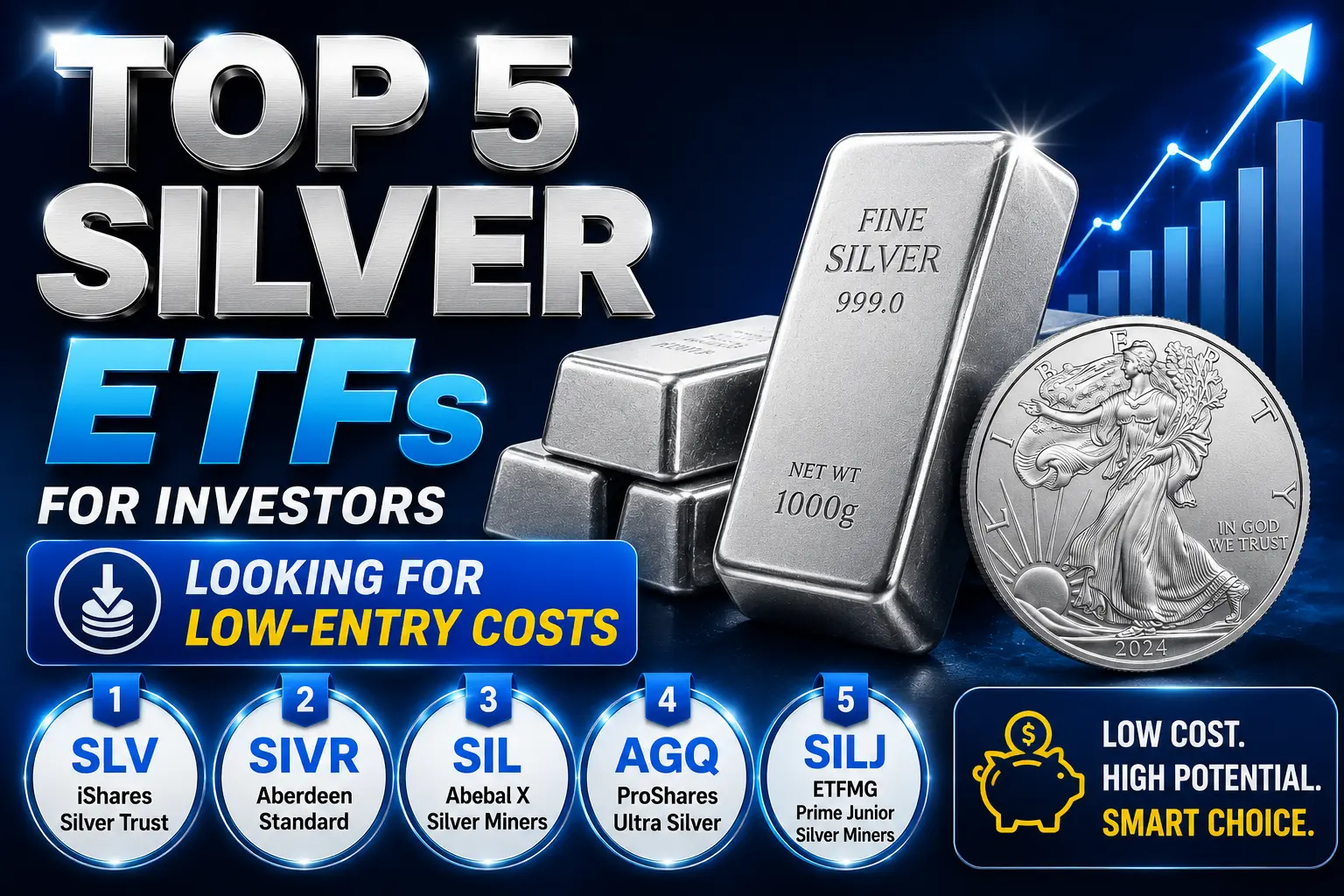
Top 5 Silver ETFs for Investors Looking for Low-Entry Costs

For many modern investors, the barrier to entry for precious metals is often perceived as high—not just in terms of price, but in the logistics of storage, security, and insurance. This is where Silver Exchange-Traded Funds (ETFs) shine. By offering a way to gain exposure to the price of silver through a brokerage account, ETFs have democratized precious metals investing. In 2026, if you are looking for low-entry costs and high liquidity, Silver ETFs are a strategic vehicle to consider.

What is a Silver ETF?

A Silver ETF is an investment fund that holds physical silver or silver-related derivatives. When you buy a share of a Silver ETF, you are essentially buying a “slice” of a professionally managed pool of assets. This eliminates the need to buy physical bars, find a safe, or pay high insurance premiums. It is an ideal entry point for beginners and a efficient tool for tactical traders.

Why ETFs for Low-Entry Costs?

  • Fractional Ownership: You don’t need to buy a 100 oz bar. You can buy a single share, making entry costs as low as the price of a single stock.

  • Zero Storage Hassle: The fund handles the security and auditing of the silver, meaning you don’t have to worry about home vaults or depository fees.

  • High Liquidity: You can buy and sell your position during market hours with the click of a button, providing unparalleled flexibility compared to physical bullion.

Top 5 Silver ETFs for 2026

1. iShares Silver Trust (SLV)

SLV is the largest and most liquid silver ETF on the market. It is designed to track the daily price movements of silver bullion.

  • Why it’s a top pick: Its massive volume ensures the tightest bid-ask spreads, meaning you lose less money to transaction costs when entering or exiting a position. It is the gold standard for those who prioritize liquidity above all else.

2. Aberdeen Standard Physical Silver Shares ETF (SIVR)

For investors focused on long-term costs, SIVR is often preferred over SLV.

  • Why it’s a top pick: It is known for having a competitive expense ratio. While SLV is for traders, SIVR is often favored by long-term holders who want to minimize the annual management fee, which eats into your returns over time.

3. Sprott Physical Silver Trust (PSLV)

PSLV takes a different approach. Unlike SLV, which may use derivatives, PSLV invests in unencumbered physical silver bars stored in a secure vault.

  • Why it’s a top pick: Shareholders have the right to redeem their shares for physical silver (subject to minimum requirements). This provides an extra layer of confidence for those who are skeptical of the “paper” silver market.

4. Invesco DB Silver Fund (DBS)

DBS is a commodity pool that tracks the performance of silver futures contracts rather than physical bullion.

  • Why it’s a top pick: This is a more technical tool designed for investors who want to capitalize on short-term price volatility. It is highly responsive to futures market trends and is a preferred instrument for tactical asset allocation.

5. ProShares Ultra Silver (AGQ)

This is a leveraged ETF designed to provide double (2x) the daily performance of silver.

  • Why it’s a top pick: This is not for the faint of heart. It is designed for sophisticated investors who want amplified exposure to silver price movements. It is an incredibly powerful tool for short-term hedging or high-conviction momentum plays.

Critical Considerations Before You Buy

While Silver ETFs are cost-effective, they are not a perfect substitute for physical ownership in every scenario:

  1. The Expense Ratio: Every ETF charges an annual management fee. While usually small, it is a drag on your performance that does not exist with physical silver.

  2. Taxation Differences: Depending on your jurisdiction, Silver ETFs may be taxed differently than physical bullion. In the U.S., they are often taxed as “collectibles,” which can mean a higher capital gains rate. Always check your tax local status.

  3. Counterparty Risk: When you hold an ETF, you are trusting the fund issuer. While they are highly regulated, it is a different kind of risk than holding a silver bar in your own hand.

Building Your Strategy

For most investors in 2026, the best approach is a layered portfolio. You might hold physical silver in a home safe for long-term “emergency” wealth, and use Silver ETFs in your brokerage account for tactical exposure, quick adjustments, and short-term market participation.

This combination allows you to benefit from the liquidity of the digital market while maintaining the absolute security of physical assets.

Gold vs. Silver: Which Precious Metal Offers Better Long-Term ROI?

Gold vs silver

The debate between gold and silver is as old as the modern financial system itself. For the long-term investor, choosing between these two precious metals is not merely a question of personal preference; it is a strategic decision that depends on your risk tolerance, your investment horizon, and your understanding of global economic mechanics. In 2026, as investors search for assets that offer both protection and growth, the comparison between the “monetary anchor” (gold) and the “industrial powerhouse” (silver) has become more critical than ever.

Gold: The Guardian of Purchasing Power

Gold has functioned as a store of value for millennia. It is the ultimate asset of “last resort”—the one thing that retains its purchasing power when paper currencies fail.

The Gold ROI Profile

Gold’s long-term ROI is generally characterized by low volatility and steady preservation. Gold does not typically “skyrocket” in the same way speculative tech stocks do, nor does it collapse in a vacuum. Instead, gold tends to perform best during periods of:

  • Monetary Debasement: When central banks increase the money supply, gold’s nominal price rises as the currency loses value.

  • Geopolitical Instability: Gold is the classic “fear trade.” When global markets are uncertain, capital flows into gold, driving its price higher regardless of underlying economic fundamentals.

For the long-term investor, gold is an insurance policy. Its ROI is realized not just in price appreciation, but in the relative protection it provides to your total portfolio during market drawdowns.

Silver: The High-Beta Growth Asset

Silver offers a fundamentally different ROI profile. While gold is 100% monetary, silver is a hybrid: it is both a monetary metal and a critical industrial commodity.

The Silver ROI Profile

Silver’s long-term ROI is characterized by higher volatility and potential for explosive gains. Because the silver market is much smaller than the gold market, it takes significantly less capital to move the price. This “high-beta” nature means silver often outperforms gold in bull markets but can suffer deeper losses in bear markets.

  • The Industrial Catalyst: As we move toward 2027, silver’s ROI is increasingly tied to the green energy transition (solar) and high-tech manufacturing (EVs, AI hardware). This provides a demand floor that gold lacks.

  • The “Leverage” Effect: Historically, when the economy enters a growth phase, industrial demand for silver drives its price up faster and further than gold.

Analyzing the Gold-to-Silver Ratio (GSR)

For investors trying to decide which metal offers better long-term ROI, the Gold-to-Silver Ratio (GSR) is the primary analytical tool. The GSR represents how many ounces of silver it takes to buy one ounce of gold.

  • High GSR (e.g., above 80): Historically, a high ratio suggests that silver is undervalued relative to gold. Long-term investors often use these periods to accumulate silver, betting that the ratio will eventually revert to the mean.

  • Low GSR (e.g., below 50): A low ratio suggests that silver is relatively expensive. During these times, investors often take profits on their silver holdings and rotate into gold to lock in gains and increase their defensive positioning.

Factors Influencing Long-Term Performance

When looking at the next decade, which metal is positioned for better ROI?

1. The Supply Chain Rigidity

Silver supply is primarily a by-product of base metal mining (copper, lead, and zinc). This makes silver supply inelastic—it cannot quickly scale up to meet demand. Gold, conversely, is mined primarily for its own sake. If the price of gold rises, miners can justify expanding gold-specific mines. This scarcity in silver supply is a powerful long-term bullish signal for the metal.

2. Monetary Policy and Inflation

If your long-term outlook is one of persistent, structural inflation, both metals will perform well. However, gold will likely be the more “reliable” winner, as it is decoupled from industrial cycles. If you believe the economy will continue to digitize and electrify, silver’s industrial demand will likely drive it to outperform gold on a percentage-return basis.

The Verdict: Which One Should You Own?

The “better” ROI depends on your portfolio construction:

  • The Core-Satellite Strategy: Many professional investors treat gold as the “core” (e.g., 70% of precious metal allocation) for stability and silver as the “satellite” (e.g., 30% of precious metal allocation) for growth.

  • The Tactical Swap: If you are an active investor, the best ROI is often achieved by not picking a winner at all, but rather by rotating between the two based on the Gold-to-Silver Ratio.

Final Thoughts

Gold vs. silver is not a zero-sum game; they are two sides of the same protective coin. Gold protects you from the system breaking down, while silver allows you to profit from the technological economy moving forward. For the long-term investor in 2026, the best “ROI” is not necessarily the highest possible percentage gain, but the portfolio that provides the best risk-adjusted balance of growth and safety.

The Role of Silver in Green Energy: Why EV Batteries Matter

silver

In the global race to transition away from fossil fuels, much of the conversation has centered on lithium, cobalt, and nickel. However, there is a quieter, more conductive giant playing a mission-critical role in the green energy revolution: silver. As we look toward the technological landscape of 2026, it is becoming increasingly clear that silver is not just a precious metal—it is the backbone of modern electrification. Nowhere is this more evident than in the rapid evolution of Electric Vehicle (EV) batteries and their supporting power infrastructure.

Silver: The Unsung Hero of Conductivity

To understand why silver is indispensable to the green economy, one must first understand its physical properties. Silver possesses the highest electrical and thermal conductivity of all metals. While copper is the standard for general wiring, silver’s superior efficiency makes it the essential component in high-performance applications where heat management and energy loss are critical factors.

In an Electric Vehicle, the goal is to maximize range while minimizing weight and energy waste. This is where silver’s unique properties come into play.

The Intersection of EVs and Battery Technology

While silver is not used in the “bulk” of an EV battery’s cathode in the same way lithium is, it is critical in the battery’s Power Management Systems (PMS) and the conductive additives that improve charge efficiency.

1. Enhancing Charge Efficiency

Modern EV manufacturers are constantly seeking ways to increase “fast-charging” capabilities. Silver-based contact points and conductive pastes allow for higher current throughput during the charging process. By reducing electrical resistance, silver helps minimize the heat generated during rapid charging, which in turn extends the overall lifespan of the battery pack.

2. Contact and Connection Reliability

Electric Vehicles contain miles of circuitry and hundreds of sensitive electronic connections. Silver-coated contacts are used to prevent corrosion and ensure stable connectivity in the harsh, high-vibration environment of an EV. Without these high-performance materials, the complex “brain” of the EV—which manages power delivery from the battery to the drivetrain—would be significantly less efficient.

The Scalability Challenge

As we push toward 2027, the demand for EVs is scaling globally. This brings us to the “silver loading” dilemma. Historically, engineers have tried to reduce the amount of silver used in electronics to save on costs. However, in the realm of high-performance EV batteries and autonomous driving sensors, the trend is reversing.

The industry is finding that as power requirements increase, you simply cannot “engineer away” the need for silver. The efficiency gains provided by silver-based components are too valuable to sacrifice, meaning that every new EV on the road is becoming an increasingly “silver-intensive” product.

The Synergy: EVs and Renewable Energy Grids

The role of silver in green energy is a two-part story. Not only is silver essential for the EV itself, but it is also critical for the power grid that charges it.

  • Solar-to-EV Pipeline: Photovoltaic (PV) solar panels use silver pastes to convert sunlight into electricity. As solar arrays expand to charge growing fleets of electric vehicles, the demand for silver rises at two distinct points: the generation of the power (solar) and the storage/consumption of that power (EVs).

  • Grid Infrastructure: The charging infrastructure—the massive “supercharger” stations being built across highways—relies on high-voltage silver-contact relays to handle the immense power loads required to charge a battery in minutes rather than hours.

Why This Matters for Investors

For the forward-thinking investor, the industrial demand for silver is a structural shift that is independent of short-term market speculation.

  1. Supply Inelasticity: As we discussed in previous analyses, silver supply is largely a by-product of base metal mining. It cannot be “turned on” simply because EV demand increases. This structural mismatch between rising demand and rigid supply creates a fundamental floor for silver prices.

  2. The “Green” Premium: As consumers and governments prioritize “green” technologies, the carbon footprint of manufacturing becomes a key metric. Because silver increases the efficiency of solar panels and EV batteries, it inherently helps manufacturers meet carbon reduction targets, making it a “green-certified” input that is highly resistant to being replaced by less efficient alternatives.

Conclusion: The Element of Electrification

In 2026, the narrative of silver is shifting from a passive monetary asset to an active industrial necessity. Electric Vehicles are the most significant technological pivot of our generation, and silver is the material that makes that pivot efficient, reliable, and scalable.

As the world continues to electrify its transportation sector, silver will likely move from the periphery of the green energy discussion to its very center. For those invested in physical silver, this represents more than just a hedge against inflation; it is a direct stake in the success of the global transition to sustainable energy.

How to Build a Physical Silver Portfolio: A Beginner’s Guide

silver

For those looking to diversify their wealth beyond traditional paper assets, building a physical silver portfolio is a foundational step. While stocks, bonds, and real estate are standard components of modern finance, physical silver offers something unique: tangible, intrinsic value that exists entirely outside the digital financial system. In 2026, as investors seek stability amidst economic shifts, understanding how to construct a silver portfolio—and doing so intelligently—is more vital than ever.

Why Physical Silver?

Before diving into the “how,” it is important to understand the “why.” Physical silver serves as both a hedge against inflation and a store of value. Unlike “digital silver” (such as ETFs or certificates), owning physical bullion means you hold an asset with no counterparty risk. If the financial system experiences a shock, your physical silver remains yours, fully under your control.

Step 1: Establish Your Investment Goals

Your strategy should depend on your ultimate goal. Are you building a portfolio for long-term wealth preservation, or are you looking for tactical gains based on market cycles?

  • For Wealth Preservation: Focus on recognized, high-purity bullion (99.9% silver or higher). Prioritize government-minted coins, which are easily recognized and liquid worldwide.

  • For Capital Appreciation: Some investors prefer “junk silver” (pre-1965 U.S. silver coins) or larger bars, which often carry lower premiums compared to government-minted coins, allowing you to acquire more ounces per dollar.

Step 2: Understand the Premium

This is where beginners most often stumble. The “spot price” of silver is the raw price of the metal on the global market. However, you will never pay exactly the spot price.

Dealers charge a premium above the spot price to cover the costs of minting, distribution, insurance, and profit.

  • Lower Premiums: Large silver bars (10 oz, 100 oz) generally have lower premiums because they are cheaper to manufacture relative to their weight.

  • Higher Premiums: Small, artistic, or government-minted coins carry higher premiums due to the craftsmanship and security features involved.

Pro-tip: As a beginner, focus on “cost-per-ounce.” Calculate the total price of the item divided by the number of troy ounces, then compare that across different products to find the best deal.

Step 3: Choose Your Product Mix

A well-rounded portfolio typically contains a mix of three categories:

  1. Government-Minted Bullion Coins: (e.g., American Silver Eagles, Canadian Silver Maples). These are the most liquid. If you ever need to sell, every dealer in the world will recognize and accept them immediately.

  2. Private Mint Bars and Rounds: These are excellent for accumulating weight. They are often cheaper than government coins and are highly efficient for wealth accumulation.

  3. Fractional Silver: Having a portion of your portfolio in smaller weights (e.g., 1 oz bars) provides flexibility. If you ever need to liquidate a portion of your wealth to pay for small expenses, you won’t have to sell a massive 100 oz bar.

Step 4: Secure Your Assets

As your portfolio grows, storage security becomes paramount.

  • The Beginner Setup: A high-quality, fireproof safe bolted to the floor in a discreet, non-obvious location in your home is the standard starting point.

  • The Protocol: Never discuss your holdings publicly. The best security for physical silver is anonymity.

Step 5: Master the Art of DCA (Dollar-Cost Averaging)

The silver market can be volatile. Instead of trying to guess the “perfect” time to buy, use a Dollar-Cost Averaging (DCA) strategy. Commit to buying a specific dollar amount of silver every month, regardless of the price.

  • When prices are high, you buy fewer ounces.

  • When prices are low, you buy more. Over time, this strategy smooths out the price volatility and ensures you are consistently building your position without the stress of daily market watching.

Step 6: Maintain Records

Treat your physical silver like a business. Maintain a simple spreadsheet recording:

  • Date of purchase.

  • Product description.

  • Purchase price (including premiums and shipping).

  • Current spot price (for periodic valuation). This is not only useful for your own tracking but is also critical for calculating your cost basis when it eventually comes time to sell or pass the assets to your heirs.

The Bottom Line

Building a physical silver portfolio is a marathon, not a sprint. By focusing on low-premium bullion, maintaining disciplined accumulation, and prioritizing secure storage, you can build a resilient, tangible asset base that provides peace of mind in any economic environment. Start small, stay consistent, and remember: in the world of hard assets, slow and steady truly does win the race.

Is Silver a Better Hedge Than Gold in 2026? A Comparative Analysis

silver

In the world of precious metals, gold has long held the title of the ultimate “safe haven.” It is the cornerstone of central bank reserves and the timeless barometer for economic anxiety. However, as we move through 2026, a growing number of sophisticated investors are questioning whether silver might actually be a superior hedge. While gold provides stability, silver offers something potentially more lucrative during times of economic transition: high-beta volatility and dual-sector demand.

Deciding whether silver is a “better” hedge than gold in 2026 requires an understanding of how these two metals react to the specific macroeconomic pressures of our current era.

The Case for Gold: The Monetary Anchor

Gold’s status as a hedge is rooted in its role as an alternative currency. It has no industrial use of significance, meaning its price is almost entirely driven by investment sentiment, central bank purchasing, and inflation expectations.

  • Deflationary Protection: Gold historically shines when the monetary system faces a crisis of confidence. When investors fear that fiat currencies are being devalued, they flock to gold because it is the “neutral” asset that no government can easily manipulate or increase in supply.

  • Volatility Mitigation: Gold is less volatile than silver. If your primary goal is wealth preservation with minimal sleepless nights, gold remains the superior choice. It moves in a predictable, measured fashion, making it the bedrock of a conservative portfolio.

The Case for Silver: The High-Beta Hedge

Silver’s “hedge” status is more complex. In 2026, silver is not just a monetary metal; it is a critical industrial commodity. This creates a “double-edged” hedge that gold simply does not possess.

  • Industrial Demand as a Floor: Because silver is essential for solar energy, AI hardware, and medical technology, its price is supported by real-world consumption. When the economy is growing, industrial demand drives silver higher. When the economy is contracting, silver still maintains value due to its monetary role.

  • The “Leverage” Effect: Silver is often referred to as “gold on steroids.” Because the market for silver is much smaller and more liquid than the gold market, silver tends to move with much higher intensity. During periods of rampant inflation, silver has historically outperformed gold in terms of percentage gains, acting as an amplifier for the inflationary signal.

Comparative Dynamics in 2026

As of 2026, the global economy is grappling with structural supply-side challenges. This environment shifts the advantage in favor of silver for three key reasons:

1. The Energy Transition

The global push toward net-zero emissions is a permanent, structural shift. This requires a massive, sustained supply of silver. Gold has no equivalent demand driver. As we look ahead, this ensures that even during economic lulls, there is a “buyer of last resort” for silver in the manufacturing sector.

2. The Gold-to-Silver Ratio (GSR)

The GSR remains the most effective tool for tactical allocation. When the ratio is historically high, it indicates that gold is relatively expensive and silver is historically cheap. Sophisticated investors often use this ratio to “swap” between the two metals, accumulating silver when it is undervalued and shifting back to gold when silver has had an explosive rally.

3. Supply Scarcity

Silver is largely mined as a by-product of base metals (copper, lead, zinc). Unlike gold miners, who can ramp up production if the price is right, silver supply is locked to the fortunes of base metal mining. In 2026, with the high demand for copper for energy grids, the silver supply remains inelastic. This scarcity is a powerful hedge against debasement that is largely unique to silver.

Which Hedge is Right for Your Portfolio?

The choice between gold and silver is not a binary one; it is a question of your financial objective.

  • Choose Gold if: Your objective is pure wealth preservation, risk mitigation, and protection against catastrophic financial system collapse. Gold is your “insurance policy.”

  • Choose Silver if: You are seeking an inflationary hedge that has the potential to generate capital appreciation. Silver is your “growth-oriented insurance.”

The Bottom Line

In 2026, silver can be considered a “better” hedge than gold for the investor who understands the interplay between monetary policy and industrial demand. While gold protects you from the system breaking, silver protects you from the system evolving.

By diversifying into silver, you are not just hedging against inflation—you are investing in the essential building blocks of the future economy. For most portfolios, the most prudent approach is to treat gold as the foundation and silver as the tactical growth component, ensuring you are protected regardless of which direction the market moves next.

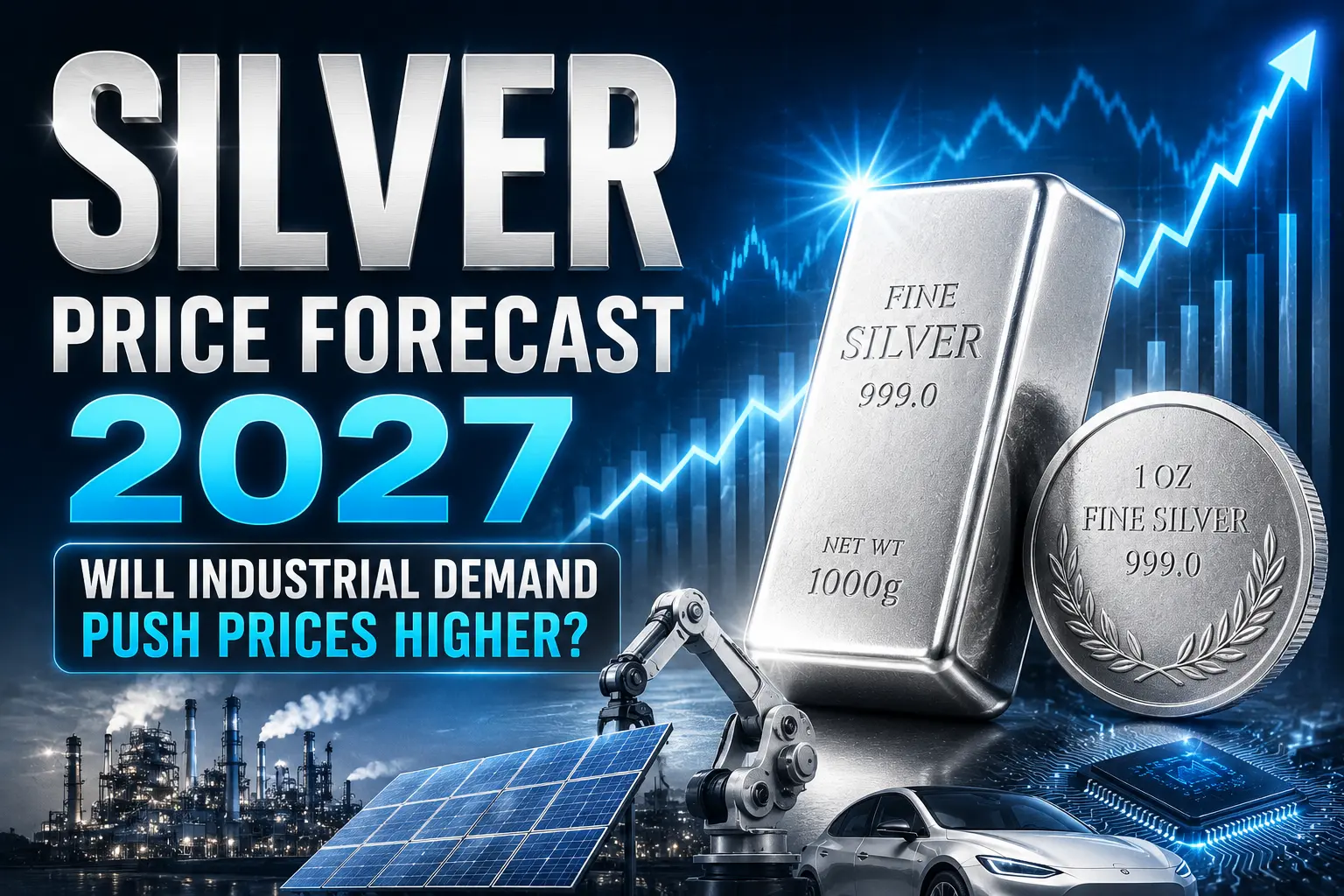
Silver Price Forecast 2027: Will Industrial Demand Push Prices Higher?

As we move toward 2027, the global silver market finds itself at a fascinating crossroads. For years, silver was primarily viewed through the lens of monetary policy—a hedge against inflation or a play on interest rates. However, as we look toward the 2027 horizon, the narrative is shifting fundamentally toward industrial necessity. The question on every investor’s mind is whether the unrelenting appetite for silver in the technology and green energy sectors will finally decouple the metal from its historic tether to gold and drive prices to new structural highs.

The Industrial Engine: The Green Revolution

The primary catalyst for the 2027 silver forecast is the global transition to sustainable energy. Silver is arguably the most critical component in the manufacturing of photovoltaic (PV) solar cells. Unlike many other commodities, there is no viable substitute for silver that offers the same level of electrical conductivity and efficiency in solar applications.

Photovoltaic Projections

By 2027, the global installation of solar capacity is expected to reach record levels. Countries that have committed to net-zero targets are rapidly accelerating their transition, and this infrastructure build-out requires tens of millions of ounces of silver annually. We are witnessing a fundamental shift where industrial demand is no longer just a “side factor”—it is becoming the primary driver of market liquidity.

The AI and Tech Hardware Surge

Beyond the solar sector, the artificial intelligence (AI) and high-performance computing revolution is creating a new tier of demand for silver. Modern data centers, high-end consumer electronics, and complex circuitry in electric vehicles (EVs) all utilize silver in significant quantities.

In 2027, the “AI-driven hardware cycle” will be in full swing. As hardware becomes more efficient and more integrated, the intensity of silver use per device—or “silver loading”—is increasing rather than decreasing. This creates a supply-demand imbalance that traditional mining output is struggling to meet.

The Mining Supply Gap: A Looming Reality

If demand is surging, why aren’t prices already exponentially higher? The answer lies in the structural rigidity of silver supply.

Most silver is produced as a by-product of base metal mining (copper, lead, and zinc). Mining companies do not open a “silver mine” in response to higher silver prices; they open a mine based on the economic viability of the primary base metal.

Current mining data for 2026 suggests that while silver demand is climbing, the global pipeline for new primary silver projects is historically thin. The lead time to bring a new mine to production is often a decade or more. Therefore, in 2027, we are likely to face a structural deficit—a state where the world consumes more silver than it can pull from the ground, regardless of the price.

Price Discovery: The 2027 Scenario

When analyzing the potential price action for 2027, three scenarios emerge:

  1. The Supply Crunch (Bullish): If industrial demand continues to grow at current rates while base metal mining remains steady, the physical market will experience a squeeze. Premiums on physical bullion could reach extreme highs as manufacturers compete with retail investors for the same limited supply of 999 fine silver.

  2. The Substitution Scramble (Neutral): Should silver prices hit levels that make it prohibitive for manufacturers, the industry may accelerate efforts to substitute silver with cheaper alternatives like copper or nickel. While this would temper price growth, it would also likely lead to a drop in solar panel efficiency.

  3. The Monetary Catalyst (Macro-Bullish): If 2027 also sees a shift in central bank policy—specifically, a weakening of the dollar or a return to aggressive stimulus—silver will benefit from both its industrial and monetary “roles” simultaneously. This is the “perfect storm” scenario that many long-term bulls are betting on.

Risk Factors to Consider

No forecast is complete without acknowledging the risks. The 2027 silver outlook depends heavily on:

  • Macroeconomic Stability: A global recession could dampen consumer electronics demand, temporarily slowing silver consumption.

  • Technological Breakthroughs: Any major breakthrough in material science that significantly reduces the amount of silver needed in solar cells would be a bearish factor for the long-term price.

  • Geopolitical Mining Issues: A large portion of global mining occurs in regions that can experience rapid regulatory or political changes, which could disrupt the global supply chain overnight.

The Bottom Line for 2027

The forecast for 2027 suggests that silver is moving from a speculative asset to an industrial essential. While short-term volatility remains a certainty, the structural foundations of the market—rising industrial demand, a rigid mining supply, and the global push for renewable energy—are all pointing toward a tighter, more supply-constrained environment.

Investors should view silver not just as a hedge against inflation, but as a strategic stake in the future of the global technological infrastructure. In 2027, the price of silver will likely reflect this transition, rewarding those who recognize the metal’s role as the “element of the future.”

Storing Physical Silver: Home Vault vs Depository in 2026

silver

For the dedicated silver investor, the journey doesn’t end at the point of purchase. Once you have acquired your physical assets, the question of where to store them becomes the most critical security decision you will make. In 2026, as geopolitical tensions and economic shifts drive more individuals toward tangible wealth, the debate between the home vault and the professional depository has never been more relevant. Both options offer distinct advantages and risks, and the “right” choice depends entirely on your personal priorities regarding accessibility, cost, and security.

The Home Vault: Total Control and Immediate Access

For many, the appeal of a home vault is rooted in the philosophy of “if you can’t touch it, you don’t own it.” Having your silver on-site provides a sense of psychological comfort and immediate liquidity.

The Advantages

  • Zero Counterparty Risk: You are the sole custodian of your assets. You do not rely on a company’s financial stability, insurance policies, or administrative competence to access your wealth.

  • Immediate Accessibility: Whether it is a late-night financial emergency or a desire to inspect your holdings, your silver is exactly where you left it.

  • No Recurring Storage Fees: While there is an upfront investment in a high-quality safe or vault room, you avoid the ongoing annual storage fees charged by third-party facilities.

The Risks and Challenges

  • The Physical Security Burden: Storing significant amounts of silver at home makes you a target. You are responsible for the entire security infrastructure, including fireproofing, tamper-evident alarms, and, most importantly, keeping your collection’s location a secret from everyone—including friends and extended family.

  • Insurance Limitations: Many home insurance policies have strict limits on precious metals coverage. Securing specialized riders can be expensive and may require you to provide serial numbers or detailed appraisals, which some investors prefer to keep private.

The Professional Depository: Institutional-Grade Security

A professional bullion depository is a specialized facility designed solely for the storage of precious metals. In 2026, these facilities have become the gold standard for high-net-worth investors and those with large physical positions.

The Advantages

  • Institutional-Grade Security: These vaults feature multi-layered security protocols, including biometric access, 24/7 armed guards, seismic sensors, and advanced surveillance that is virtually impossible to replicate at home.

  • Full Insurance Coverage: Depositories carry comprehensive insurance policies that cover the full market value of your holdings. This provides a robust financial guarantee that your assets are protected against theft, damage, or loss.

  • Professional Audit Trails: Reputable depositories provide regular, independent third-party audits. This ensures that your holdings are always accounted for, which is essential for estate planning and wealth reporting.

The Risks and Challenges

  • Counterparty and Administrative Risk: You are relying on a third party to safeguard your assets. While reputable firms are highly regulated, there is always a degree of trust required regarding their operational integrity.

  • Ongoing Costs: You will pay annual storage fees, typically calculated as a percentage of your holdings’ value. For long-term investors, these costs can add up significantly over the years.

  • Access Constraints: You cannot “drop in” to a high-security vault. Accessing your silver often requires prior notification and strict verification procedures, meaning it is not suitable for rapid, daily liquidity needs.

Making the Decision: A Strategic Framework

When choosing between a home vault and a depository, consider these three factors:

1. The Scale of Your Holdings

If you own a modest amount of silver for short-term hedging, a high-quality home safe is usually sufficient. If your collection has grown into a substantial portion of your net worth, the risks of home storage—including the risk of loss through natural disaster or theft—often outweigh the convenience, making a depository the rational choice.

2. Your Lifestyle and Mobility

Home storage assumes a stable, secure residential environment. If you travel frequently, relocate often, or live in an area with high crime rates, a depository offers a secure, stationary “home” for your assets that remains protected regardless of your personal life changes.

3. Your Risk Tolerance

Ask yourself: “What is my biggest fear?” If your fear is government overreach or societal instability, home storage aligns with a “sovereign” investment approach. If your primary fear is theft, fire, or the logistical nightmare of managing home security, a professional depository provides the peace of mind that comes with institutional protection.

Conclusion: Securing Your Future

In 2026, there is no “one-size-fits-all” solution for silver storage. Many sophisticated investors actually employ a hybrid strategy: they keep a small, liquid portion of their silver in a home safe for emergencies and store the bulk of their wealth in a secure, insured professional depository. Whatever path you choose, remember that the goal is not just to acquire wealth, but to ensure it remains protected for the long term.

Historical Silver Performance vs. Inflation: A 2026 Perspective

silver

For decades, the debate surrounding precious metals has centered on a single, compelling question: do they truly act as an inflation hedge? As we navigate the complex economic landscape of 2026, the historical performance of silver against inflation has become a critical focal point for institutional and retail investors alike. Understanding this relationship is key to determining whether silver belongs in your long-term wealth preservation strategy.

The Theory: Why Silver Should Beat Inflation

The economic theory behind silver as an inflation hedge is straightforward. Unlike fiat currency, which governments can print in unlimited quantities, silver has a finite supply constrained by geological rarity and mining costs. When the cost of living rises—meaning the purchasing power of the dollar, euro, or yen declines—the nominal price of hard assets like silver typically trends upward to reflect this devaluation.

Historical Performance: A Two-Decade Analysis

Looking at the data from the early 2000s through 2026, silver’s performance versus inflation presents a nuanced picture. Silver is not a steady, linear hedge like a Treasury Inflation-Protected Security (TIPS). Instead, it acts as a “pressure valve” for the monetary system.

1. The 2008 Financial Crisis and Beyond

During the global financial crisis, silver experienced significant volatility. However, in the immediate years following the massive monetary stimulus (2009–2011), silver’s price experienced a historic surge, vastly outpacing the prevailing inflation rate. This demonstrated silver’s tendency to react explosively when investors lose confidence in the stability of paper currency.

2. The 2020–2026 Period

The post-pandemic era has provided a masterclass in silver’s dual role. While inflation spiked globally, silver initially struggled due to a strong dollar. However, as the structural deficit in industrial silver (due to green energy and AI manufacturing) became undeniable, silver began to decouple from its traditional correlation with the USD. This suggests that in 2026, silver’s “inflation hedge” status is now reinforced by “industrial necessity.”

Silver vs. Gold: The Hedging Difference

Many investors ask, “Why not just buy gold?” While gold is the ultimate store of value, silver provides a different profile:

  • Gold is a monetary anchor; it is stable and moves slowly with inflation expectations.

  • Silver is a high-beta inflation hedge; it amplifies the inflationary message. If inflation expectations rise by 1%, silver often moves by a multiple of that, driven by speculative investment flows and industrial demand.

Analyzing the 2026 Inflation Environment

In 2026, inflation is driven less by “excess money supply” and more by “supply-side scarcity.” This environment is historically bullish for physical commodities. When inflation is caused by raw material shortages (the cost of building energy infrastructure, mining, and food production), silver—which is essential for these sectors—tends to perform exceptionally well.

Managing the Volatility of an Inflation Hedge

Investors must be warned: silver is not a “smooth” hedge. You will experience months, or even years, where silver remains stagnant while inflation continues to climb. The key to successfully using silver against inflation is a long-term time horizon.

  • The 5-Year Rule: Historical data suggests that silver effectively preserves purchasing power over cycles of 5 to 10 years, not 5 to 10 weeks.

  • Total Portfolio Integration: Do not allocate 100% of your wealth to silver. Treat it as a “tail-risk” hedge that protects your portfolio when traditional assets fail to maintain value during inflationary spikes.

The Verdict: Does Silver Work?

The historical record confirms that silver is a highly effective, albeit volatile, instrument for combating the long-term devaluation of currency. In the specific context of 2026, silver’s role is bolstered by its industrial utility. As global economies continue to struggle with structural supply issues and the cost of the green transition, physical silver remains one of the few assets that cannot be debased.

By integrating silver into a diversified portfolio, you aren’t just betting on inflation—you are investing in the essential building block of the modern technological economy.

Tax Implications of Investing in Silver: What You Must Know in 2026

silver

For many investors, the allure of silver lies in its ability to protect wealth against the eroding effects of inflation. However, behind the shiny exterior of bullion bars and coins lies a complex regulatory framework. Understanding the tax implications of investing in silver is not just a matter of compliance—it is a critical component of your overall return on investment (ROI). In 2026, as tax authorities globally increasingly scrutinize alternative assets, it is vital for investors to understand how their precious metal holdings are taxed.

The “Collectibles” Classification

The most important concept to understand is how the IRS (in the U.S.) and similar tax bodies elsewhere categorize silver. In many jurisdictions, silver is classified as a “collectible.”

Unlike stocks or bonds, which are generally taxed at favorable long-term capital gains rates if held for more than a year, collectibles are often subject to a different tax regime. In the U.S., for instance, gains from the sale of silver bullion can be taxed at a maximum federal rate of 28%, which is significantly higher than the standard long-term capital gains rate for other assets. This distinction is crucial because it significantly impacts the net profit an investor keeps after a successful trade.

Taxable Events: When Do You Owe Taxes?

You do not owe taxes simply by owning silver. The tax obligation is triggered by a taxable event, which typically occurs when you dispose of your silver holdings.

  • Selling for Profit: When you sell your silver to a dealer, a private buyer, or an exchange, the difference between your “cost basis” (the original purchase price plus any transaction costs) and the “selling price” is your capital gain.

  • Bartering: Using silver directly to purchase goods or services is also considered a taxable event. The IRS views this as selling the silver for its fair market value at the time of the transaction, and any gain realized must be reported.

Strategies for Tax Efficiency

While you cannot avoid taxes, you can proactively manage them to optimize your long-term returns. Here are common strategies employed by sophisticated investors:

1. The Power of Long-Term Holding

Because tax rates can fluctuate and specific exemptions may apply based on the duration of ownership, holding silver as a long-term strategic asset is generally more tax-efficient than short-term speculative trading. Long-term holdings also help weather the inherent volatility of the precious metals market.

2. Utilizing Tax-Advantaged Accounts

One of the most effective ways to mitigate the high “collectibles” tax rate is to hold your silver within a Self-Directed IRA (SDIRA). By doing this, you defer taxes on your gains until you take distributions in retirement. This allows your silver holdings to grow without the immediate tax burden of annual capital gains, providing a compound growth effect over time.

3. Record-Keeping: Your Best Defense

The burden of proof rests entirely on you. If you cannot prove your cost basis, the tax authority may assume your entire selling price is pure profit, leading to a much higher tax bill than necessary.

  • Keep all receipts: Save the original purchase invoice for every bar or coin.

  • Document transaction fees: Shipping, insurance, and dealer premiums can often be added to your cost basis, effectively lowering your taxable gain.

Reporting Requirements

If you sell significant quantities of silver, dealers may be required to file Form 1099-B with the IRS. Always ensure you are working with reputable dealers who provide clear, documented records of your transactions. If you are ever unsure about your reporting requirements, consulting with a tax professional who specializes in precious metals is a non-negotiable step to avoid penalties.

tax cloud review

The Bottom Line

Silver is an exceptional asset for portfolio diversification and wealth preservation, but it is not “tax-free.” By recognizing the 28% collectibles tax rate (or your local equivalent), utilizing tax-advantaged accounts like an SDIRA, and maintaining meticulous records, you can ensure that your silver investments remain a net benefit to your financial future rather than a tax-time headache. As we look ahead to the rest of 2026, informed planning remains your greatest asset.

Silver Spot Price Analysis and Volatility: Mastering the Market in 2026

Silver coin

For the uninitiated, silver is often viewed as “gold’s younger brother”—a precious metal that moves in tandem with gold but with less prestige. For the seasoned investor in 2026, however, silver is recognized as something far more complex: a high-beta industrial commodity that demands a sophisticated understanding of spot price mechanics and inherent market volatility.

If you are looking to integrate silver into your portfolio, you must first master the art of analyzing its spot price and navigating the volatility that defines its trading lifecycle.

Understanding the “Spot Price” Mechanism

The “spot price” of silver is the current market price for one troy ounce of physical silver available for immediate delivery. Unlike stock prices, which are set on centralized exchanges like the NYSE, the silver spot price is derived from a global network of over-the-counter (OTC) trades, futures markets (primarily the COMEX in New York and the LBMA in London), and physical dealer networks.

The Role of Futures Markets

The COMEX futures market is the primary “price discovery” engine for silver. When you see a price quote on a financial news app, it is typically the price of the “front-month” futures contract. Because silver is a physical commodity, the relationship between the futures price and the actual physical price can deviate, especially when demand for physical bullion outstrips supply—a phenomenon that has become increasingly common in 2026.

Why is Silver So Volatile?

Silver’s volatility is not a bug; it is a feature. It is consistently higher than gold’s, and this stems from three primary factors:

1. Market Depth and Liquidity

The physical silver market is much smaller than the gold market. Because the total dollar value of the silver market is smaller, it takes significantly less capital to move the price in either direction. This creates a “thin” market where large institutional buy or sell orders can cause rapid, sharp price movements.

2. The Dual-Role Tension

Silver is perpetually caught between two worlds:

  • The Monetary World: Investors buy silver as a safe haven during inflationary periods or currency crises.

  • The Industrial World: Manufacturers buy silver for solar panels, EV circuitry, and medical devices. When these two worlds collide—such as when an economic recovery fuels industrial demand while inflation scares fuel investment demand—the resulting price action can be explosive.

3. By-Product Mining Constraints

Most silver is not mined directly. It is a by-product of lead, zinc, and copper mining. Therefore, silver’s supply is not dictated by its own price, but by the demand for base metals. This supply rigidity means that when industrial demand spikes, the market cannot quickly “turn on the tap” to provide more supply, leading to significant price surges.

Analyzing Trends: Tools for the Modern Investor

To analyze silver’s spot price effectively in 2026, you should move beyond simple price charts:

  • The Gold-to-Silver Ratio (GSR): This is the classic metric for determining value. Historically, when the ratio is high (e.g., above 80), silver is considered undervalued relative to gold. When it is low (e.g., below 50), silver is historically expensive.

  • Industrial Purchasing Managers’ Index (PMI): Since silver is an industrial metal, a rising global manufacturing PMI is a leading indicator for higher silver prices.

  • Open Interest: Monitor the volume of open contracts on the COMEX. Sudden spikes in open interest often precede major price breakouts or breakdowns.

Navigating Volatility: A Strategy for Stability

Volatility is where most amateur investors lose money, but it is also where the most significant wealth is created. To survive and thrive in a volatile silver market:

  1. DCA (Dollar-Cost Averaging): Do not attempt to time the exact bottom of a price dip. Instead, commit to buying fixed dollar amounts at regular intervals. This naturally lowers your cost basis over time and removes the emotional stress of daily price fluctuations.

  2. Focus on Physical Premiums: During periods of high volatility, the “spot price” may stay flat, but the “physical premium” (the cost to buy physical coins/bars above spot) can skyrocket. Always account for the premium when calculating your entry point.

  3. Define Your Time Horizon: If your goal is wealth preservation, ignore the daily “spot” noise. If your goal is trading, strictly define your stop-loss points before entering the trade.

The Bottom Line

Silver spot price analysis is the study of global economic health. By monitoring the supply-side constraints of mining, the industrial consumption metrics of green energy, and the classic Gold-to-Silver ratio, you can gain a significant edge over the average market participant. Embrace the volatility as the natural state of the market, and use it to build a position that serves your long-term financial goals.

How to Buy Silver Bullion Safely Online: A 2026 Security Guide

silver

In the digital age, the ability to acquire tangible assets like silver bullion from the comfort of your home is a major convenience. However, convenience often brings risk. As more investors pivot toward precious metals to hedge against economic uncertainty in 2026, the number of online marketplaces has surged—and so have sophisticated scams.

Buying silver bullion safely online requires more than just a credit card; it requires a systematic approach to verifying sellers, understanding logistics, and ensuring your assets are genuine. This guide provides the blueprint for navigating the online bullion market with confidence.

Why Online Purchasing is the New Standard

Traditionally, investors bought silver from local coin shops. While face-to-face interaction has its benefits, the online market offers superior selection, competitive pricing (thanks to lower overheads), and 24/7 accessibility. When you buy from a reputable online dealer, you are tapping into a global supply chain, often securing better premiums on bulk silver coins and bars than those found locally.

The 4-Step Security Protocol for Buyers

Before you click “purchase,” you must run every potential seller through this rigorous security filter.

1. Reputation and Longevity

Never buy from a new website or a marketplace without an established history. Look for dealers that have been in operation for at least 5–10 years. Check third-party review platforms, but be wary of sites that only show internal testimonials. Cross-reference them with independent industry forums and watchdog groups.

2. Physical and Digital Transparency

A legitimate bullion dealer will provide clear physical addresses, verified phone numbers, and responsive customer service. If a website hides its contact information or uses a generic “support@…com” email address without a physical location, walk away. Professional dealers often belong to industry organizations like the Industry Council for Tangible Assets (ICTA).

3. Pricing Discipline

If the price seems too good to be true, it is. Scammers often list silver significantly below the spot price to lure victims. While reputable dealers may have slight variations in premiums based on their inventory costs, they will never sell silver at a loss compared to current market spot prices.

4. Secure Payment Practices

Never pay using untraceable methods. Legitimate dealers accept bank wires, checks, and credit cards. If a seller insists on cryptocurrency, wire transfers to private individuals, or P2P money transfer apps, these are massive red flags for fraud.

Understanding Logistics: Shipping and Insurance

Buying silver online involves a crucial logistical component: the journey from the vault to your door.

  • Discreet Packaging: High-end dealers use unmarked, non-descript packaging. They do not label your box with “SILVER” or “BULLION.” This is a security feature designed to prevent theft during transit.

  • Full Insurance: Always ensure that your shipment is fully insured by the dealer until the moment it is signed for. If the package goes missing, the dealer should assume liability, not you.

  • Signature Requirements: For significant orders, expect to sign for your package. Never waive this requirement just to have the package left on your porch.

Protecting Your Investment Upon Arrival

Once your silver arrives, your job isn’t done. Use this simple verification process:

  • Record Everything: Film yourself opening the package from start to finish without pausing. This serves as your “unboxing evidence” should there be a dispute regarding the quantity or condition of the items.

  • Weight Verification: Use a precision digital scale. Genuine silver bars and coins have specific weights. Any significant deviation is a sign of a fake.

  • Magnetic Test: Silver is non-magnetic. While this isn’t an exhaustive test, it is a quick way to rule out base metals that are highly reactive to magnets.

Conclusion: Investing with Confidence

Buying silver bullion online is safe, efficient, and cost-effective—provided you prioritize process over speed. By conducting due diligence on your dealer, ensuring full insurance coverage, and verifying your shipment upon arrival, you can build a formidable precious metals portfolio from your laptop. As we move through 2026, the ability to secure physical wealth independently is a superpower. Use it wisely, stay vigilant, and let your due diligence be your greatest form of asset protection.

Industrial Demand and Silver Price Trends: The 2026 Outlook

silver

In this silver price prediction 2026, we analyze how industrial demand and global market trends are shaping the future of precious metals.

In the world of precious metals, silver occupies a unique position. Unlike gold, which is primarily held as a store of value, silver is a “tech metal.” Its superior electrical and thermal conductivity makes it an indispensable component in the modern industrial engine. As we move through 2026, the correlation between industrial demand and silver price trends has become the single most important factor for investors to monitor.

The Industrial Revolution 2.0: Silver’s New Era

For decades, silver’s price was largely driven by photography and jewelry. Today, those drivers have been eclipsed by high-growth industrial applications. The “Green Energy Transition” is no longer a forecast—it is an industrial reality.

1. Photovoltaic (PV) Solar Power

The solar industry remains the largest consumer of industrial silver. As governments worldwide rush to meet decarbonization targets, the massive scale-up of solar infrastructure is creating a structural deficit in the silver market. PV cells require specific high-purity silver paste, and as efficiency requirements for solar panels increase, so does the silver content per cell.

2. The Electric Vehicle (EV) and AI Surge

Modern vehicles are essentially rolling data centers, and silver is the glue that holds their circuitry together. From advanced battery management systems to autonomous driving sensors and charging infrastructure, EVs require significantly more silver per unit than traditional internal combustion engine vehicles. Furthermore, the explosion of AI-driven data centers requires high-speed connectivity and power distribution systems that rely heavily on silver-based components.

Decoding the Price Trends

If industrial demand is so high, why isn’t the silver price on a straight vertical trajectory? The answer lies in the complex interplay between mining supply, inventory levels, and macroeconomic sentiment.

The Supply-Side Constraint

Silver mining is notoriously difficult to scale. Unlike oil, where production can be increased relatively quickly, opening a new silver mine takes years of permitting, capital investment, and geological exploration. Current supply is heavily reliant on “by-product” mining—silver is often found alongside lead, zinc, and copper. This means silver production is often at the mercy of demand for these other base metals, leading to a rigid supply curve that cannot easily respond to spikes in silver demand.

Inventory and Arbitrage

In 2026, we are seeing a trend where physical inventory in major exchanges is becoming more sensitive to industrial demand. When industrial users see their supply chains tightening, they prioritize securing physical bullion over betting on paper markets. This physical-first demand creates price volatility that often disconnects silver from traditional equity market correlations.

Strategic Implications for Investors

Understanding these trends requires a shift in mindset. Silver should not be viewed merely as a “poor man’s gold.” Instead, it should be analyzed through the lens of industrial commodity cycles.

  • Monitor Manufacturing Data: Keep a close eye on global manufacturing output and green energy infrastructure spending. These are your leading indicators for silver demand.

  • Embrace Volatility: Because silver is caught between the “safe haven” narrative and the “industrial commodity” narrative, it will continue to be more volatile than gold. Use this volatility to your advantage by scaling into positions during manufacturing downturns.

  • Long-Term Thesis: The structural deficit—where industrial demand exceeds mining output—is expected to persist for several years. This provides a compelling long-term thesis for silver as a core portfolio asset.

Conclusion: The Path Ahead

The story of silver in 2026 is one of industrial necessity. As the world pushes for electrification, decarbonization, and digitalization, the metal’s role as an essential industrial building block will only expand. For investors, the takeaway is clear: the price of silver is increasingly tied to the physical output of the global economy. By aligning your portfolio with these industrial realities, you position yourself to benefit from the technological growth that defines the 2026 landscape.

Silver IRA Rollover Guide for Beginners: Securing Your Retirement in 2026

Silver coin

As we navigate the economic landscape of 2026, many investors are looking for ways to protect their retirement savings from the erosive effects of inflation and market volatility. One of the most effective strategies gaining traction is the Silver IRA Rollover. If you are tired of watching your retirement account fluctuate wildly with the stock market, shifting a portion of your wealth into physical silver might be the stabilization your portfolio needs.

This guide provides a step-by-step breakdown of how to perform a Silver IRA rollover, the regulatory requirements you must follow, and why physical silver is becoming a staple in modern retirement planning.

What is a Silver IRA Rollover?

A Silver IRA, also known as a Precious Metals IRA, is a specialized self-directed Individual Retirement Account (IRA) that allows you to hold physical silver bullion—coins and bars—instead of just traditional paper assets like stocks, bonds, or mutual funds. A “rollover” involves moving funds from an existing retirement account (such as a 401(k), 403(b), or traditional IRA) into this new, silver-backed account without incurring tax penalties, provided you follow specific IRS guidelines.

Why Investors are Choosing Silver in 2026

The appeal of silver in 2026 is driven by its dual nature:

  1. Inflation Hedge: As global currency supply increases, precious metals have historically maintained purchasing power.

  2. Industrial Scarcity: Unlike gold, which is mostly a monetary asset, silver is essential for the green energy transition. Solar panel manufacturing and electric vehicle (EV) production create a constant industrial “floor” for silver demand.

  3. Portfolio Diversification: Silver often moves independently of the equities market, providing a necessary buffer during economic downturns.

Step-by-Step Rollover Process

1. Open a Self-Directed IRA

You cannot hold physical silver in a standard IRA. You must open a Self-Directed IRA (SDIRA), which is administered by a custodian specialized in handling alternative assets.

2. Choose Your Funding Method

You can choose between a Direct Rollover (where funds move directly from custodian to custodian) or an Indirect Rollover (where the check is issued to you). We highly recommend the direct route to avoid the 60-day deadline and the potential for withheld taxes.

3. Select IRS-Approved Metals

Not all silver is eligible. The IRS requires that silver held in an IRA must meet a minimum purity standard of .999 fine. This typically includes popular bullion coins like the American Silver Eagle, Canadian Silver Maple Leaf, and specific silver bars.

4. Secure Storage

You cannot store IRA silver in your home safe. It must be held in an IRS-approved, third-party, insured depository. This ensures the integrity of your investment and complies with federal tax law.

Important Regulatory Considerations

The IRS has strict rules regarding precious metals IRAs. Attempting to manage the metal yourself can lead to “distribution” status, meaning you would be forced to pay income taxes and a potential 10% penalty if you are under 59 ½. Always verify that your chosen custodian is reputable and fully compliant with all reporting requirements.

Managing Risk in Your Silver Portfolio

While silver offers stability, it is still a commodity. It is subject to price swings based on mining supply, geopolitical events, and industrial output. A balanced approach—allocating a portion of your retirement to silver while maintaining other liquid assets—is usually the most prudent strategy for long-term growth.

The Bottom Line

A Silver IRA rollover is not about “getting rich quick.” It is about wealth preservation. By moving a portion of your retirement into a tangible, high-demand asset like silver, you are taking proactive steps to defend your future against the uncertainty of the global paper-asset market. As we look further into 2026 and beyond, having a bedrock of physical silver may provide the financial resilience required to weather any economic storm.

Physical Silver vs. Silver Stocks Investment: Which is Right for Your Portfolio in 2026?

silver

As the global economy faces ongoing inflationary pressures and a rapid acceleration in green energy adoption, precious metals have reclaimed their status as essential portfolio components. Among these, silver stands out as both a monetary hedge and a critical industrial commodity. However, for investors eager to capitalize on silver’s potential, a fundamental debate persists: should you hold physical silver or invest in silver mining stocks?

In this guide, we break down the risks, rewards, and strategic utility of both approaches to help you decide which fits your risk profile in 2026.

The Case for Physical Silver: Tangible Wealth

Physical silver, in the form of bullion bars or coins, offers a form of “wealth insurance” that exists outside the digital banking system.

Why Investors Choose Physical:

  • Zero Counterparty Risk: When you hold physical silver, you own the asset outright. There is no middleman, no ETF manager, and no reliance on a corporation’s operational success.

  • Intrinsic Value: Silver has been a store of value for centuries. In times of severe currency devaluation, physical metal remains universally recognized.

  • Psychological Security: For many, the ability to physically store and protect their assets provides a peace of mind that digital assets cannot replicate.

The Downsides:

  • Storage and Security Costs: Keeping large amounts of silver at home requires high-quality safes or off-site insurance, which adds to your carrying costs.

  • Lower Liquidity: Selling physical bullion involves dealing with dealers, verifying authenticity, and paying premiums over the spot price.

  • Limited Leverage: Physical silver only moves in direct proportion to the spot price of the metal.

The Case for Silver Stocks: Operational Leverage

Silver stocks, including mining companies and streamers, provide a different avenue for growth. You are not just betting on the price of the metal; you are betting on the operational efficiency of the miners extracting it.

Why Investors Choose Stocks:

  • Operational Leverage: If silver prices rise, mining companies can see their profit margins expand significantly, often causing the stock price to outperform the metal itself.

  • Dividends and Yields: Unlike physical silver, which pays no “interest,” well-managed mining companies often return profits to shareholders through dividends.

  • High Liquidity: You can buy or sell thousands of dollars worth of mining stocks in seconds through any standard brokerage app.

The Downsides:

  • Operational Risks: Miners face labor strikes, geopolitical instability in mining regions, and geological challenges that can tank a stock even when silver prices are high.

  • Management Risks: Poor corporate governance can destroy value regardless of the market environment.

  • Market Correlation: Mining stocks often trade in tandem with the broader equity market, meaning they may crash during a general stock market sell-off, even if silver prices remain stable.

Strategic Comparison Table

Feature Physical Silver Silver Mining Stocks
Primary Goal Wealth Preservation Capital Appreciation
Liquidity Low to Moderate Very High
Risk Factors Theft, Storage Operational, Management
Income Potential None Dividends
Correlation Low (Independent) Moderate (Equity Market)

The Verdict for 2026

The best approach often isn’t choosing one over the other, but integrating both.

If your primary goal is long-term wealth preservation against systemic financial risk, physical silver should be your foundation. It serves as your “fire extinguisher” in a financial crisis. Conversely, if you are looking to maximize your returns during the green energy transition—where demand for silver in solar panels and EV circuitry is hitting record highs—silver stocks can provide the aggressive growth necessary to boost your portfolio.

In 2026, the industrial demand for silver is a secular trend, not a fad. Whether you choose the tangible weight of a silver bar or the dynamic potential of a mining stock, ensure your choice aligns with your long-term financial horizon rather than short-term market noise.

Best Silver ETFs for Portfolio Diversification: A 2026 Investor’s Guide

silver

Diversification is the cornerstone of risk management. In 2026, as inflation remains a persistent challenge and the global economy transitions toward a green energy future, the demand for precious metals is reaching a fever pitch. While gold often commands the spotlight, silver is increasingly being recognized for its dual nature: a monetary hedge and a critical industrial commodity. For investors looking to capture this growth without the logistical burdens of physical ownership, Silver ETFs (Exchange-Traded Funds) provide a streamlined, liquid solution.

Understanding the Silver Market in 2026

To understand the best Silver ETFs, one must first recognize why silver is performing. Silver is consumed by industries—specifically solar panel manufacturing, electric vehicle circuitry, and AI-driven data center infrastructure. Unlike gold, which is mostly held in vaults, silver’s industrial consumption creates a “demand floor” that can protect prices even during periods of moderate economic cooling.

What Makes a “Best” Silver ETF?

When selecting an ETF for portfolio diversification, an investor must look beyond simple price tracking. Key metrics include:

  1. Expense Ratio: The lower the cost to own the fund, the higher your long-term yield.

  2. Physical Backing: Does the fund actually hold physical silver bars, or does it utilize derivatives (futures) to track the price? Physical backing is generally preferred for long-term holders.

  3. Liquidity: High trading volume ensures you can enter and exit positions without excessive slippage.

  4. Track Record: How closely does the fund track the spot price of silver during periods of high volatility?

Top Silver ETFs to Consider for Diversification

1. iShares Silver Trust (SLV)

SLV remains the industry standard for liquidity. It is designed to track the spot price of silver (minus expenses) and is held by physical silver in secure vaults.

  • Pros: Exceptional liquidity, institutional-grade storage.

  • Cons: Higher expense ratio compared to some newer, lower-cost competitors.

2. Aberdeen Physical Silver Shares ETF (SIVR)

For cost-conscious investors, SIVR often stands out due to its competitive expense ratio. It is designed to reflect the performance of the price of silver bullion.

  • Pros: Low expense ratio, direct exposure to physical silver.

  • Cons: Lower trading volume than SLV, which may matter for active day traders, though it is irrelevant for long-term diversification.

3. Sprott Physical Silver Trust (PSLV)

PSLV takes a different approach by holding fully allocated physical silver. Many investors choose PSLV because it offers the option for shareholders to redeem their shares for physical bullion under specific conditions.

  • Pros: High trust levels, redemption options, premium/discount transparency.

  • Cons: Can trade at a premium or discount to the Net Asset Value (NAV), adding another layer of price risk.

Integrating Silver into Your Portfolio

Diversification does not mean replacing your stocks with silver. Instead, it involves allocating a strategic percentage (typically 5% to 10% of a portfolio) to hedge against currency devaluation and volatility. By utilizing ETFs, you gain this exposure with the added benefit of being able to trade them as easily as any other stock in your brokerage account.

Risk Factors to Monitor

While silver offers potential, it is not without risk. Investors should monitor:

  • Industrial Cycles: A downturn in the manufacturing sector can impact silver prices more severely than gold prices.

  • Interest Rates: Silver, being a non-yielding asset, generally faces pressure when interest rates remain high for an extended period, as investors may prefer bonds or cash equivalents.

The Bottom Line for 2026

The best Silver ETF for your portfolio depends entirely on your objective. If you are a long-term allocator focused on lowering costs, SIVR or PSLV are compelling. If you are a tactical trader, the liquidity of SLV remains unmatched. As we progress through 2026, silver’s role in the green energy sector confirms that it is more than just a speculative asset—it is a foundational pillar of modern industrial growth.