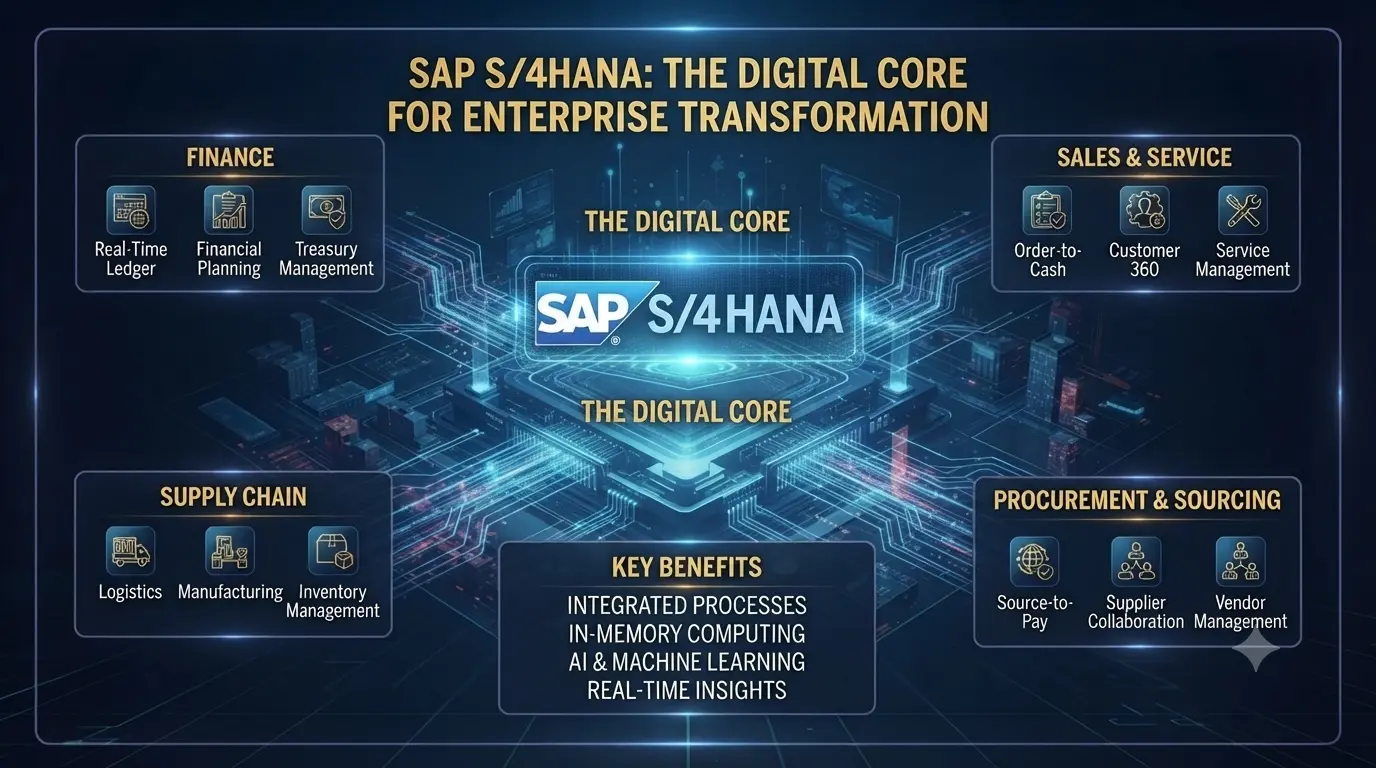
Developing a robust ERP migration strategy is the defining factor between a seamless digital transformation and an operational nightmare. For enterprises looking to transition to modern, cloud-native systems like Odoo, SAP S/4HANA, or Oracle NetSuite, the migration process is far more than a simple data transfer—it is a fundamental re-engineering of your business operations that demands precision, foresight, and a well-structured roadmap to ensure long-term scalability.
1. The Strategic Necessity of a Structured Migration Roadmap
A migration strategy ensures that your business maintains operational continuity while upgrading its digital core. Without a formal plan, enterprises frequently fall victim to data loss, extended system downtime, and fragmented workflows that diminish the value of the new platform. A strategic roadmap aligns stakeholders, defines technical milestones, and creates a safety net for business-critical processes. It serves as a blueprint that harmonizes your IT infrastructure with your broader corporate objectives, ensuring that technology investments yield measurable business outcomes rather than just technical debt.
2. Detailed Phases of a Successful ERP Migration
To achieve a seamless transition, your ERP migration strategy must account for several distinct, high-impact phases:
- Comprehensive Assessment & Audit: Before moving a single byte of data, conduct a deep-dive audit of your current data silos, legacy system bottlenecks, and undocumented custom processes. Identify exactly what must be migrated and, more importantly, what should be retired or archived to prevent bloating your new system.
- Data Cleansing, Mapping, and Standardization: “Garbage in, garbage out” remains the greatest risk in any digital migration. Spend significant time—often more than anticipated—cleansing your data, mapping fields to the new schema, and standardizing formats to ensure integrity before the actual transfer process begins.
- Phased Modular Deployment: Avoid the “big bang” implementation trap at all costs. Utilize a modular migration approach—migrating by department, geography, or functional module—to reduce operational risk, enable real-time testing, and facilitate immediate troubleshooting without affecting the entire enterprise.
- Rigorous Testing and Validation Cycles: Establish rigorous testing environments that mirror production as closely as possible. Perform user acceptance testing (UAT) with real-world, high-volume scenarios to ensure that the ERP configuration supports actual, complex business workflows.
3. Managing the Human Element: The Critical Success Factor
Technical success is fundamentally insufficient without organizational adoption. A superior ERP migration strategy places equal emphasis on technical data handling and human-centric change management.
- Clear Communication Channels: Maintain transparency regarding the migration timeline and its impact on daily roles. Communicate the “why” behind the change to ensure buy-in at all levels.
- Comprehensive End-User Training: Do not rely on generic, one-size-fits-all tutorials. Provide role-based, hands-on training that directly addresses specific pain points for your workforce, ensuring everyone understands how the new tools improve their daily output.
- Internal Super-User Network: Establish “super-users” within each department. These individuals act as internal champions, providing peer-to-peer assistance and reducing the burden on your core IT migration team during the volatile go-live phase.
4. Technical Best Practices for Modern ERP Systems
Modernizing your architecture requires a shift in how you handle system integration and security. Utilize robust middleware for connecting your new ERP with existing CRM, e-commerce, or specialized logistics platforms to avoid brittle, point-to-point connections. A key pillar of a successful ERP migration strategy is ensuring that your new system is configured with automated, granular access controls to meet modern data privacy standards. A migration is the ideal time to re-evaluate and harden your entire enterprise security posture, including end-to-end encryption for data at rest and in transit.
5. Managing Risk and Data Governance
During the migration, data governance must be prioritized. Implement strict data validation protocols to ensure that information migrating to your new system is accurate, compliant with regulatory requirements (such as GDPR or local tax laws), and properly categorized. Establish a “rollback” strategy; if the migration hits unforeseen technical barriers, you must have the capability to revert to a stable state within your predefined recovery time objective (RTO).
6. Post-Migration Optimization and Continuous Improvement
Migration does not end at “Go-Live.” The post-implementation phase is critical for fine-tuning workflows, monitoring system latency, and ensuring that your team is fully leveraging the new system’s advanced capabilities. Establish a formal feedback loop where end-user issues are categorized, analyzed, and used to further optimize system configurations in the months following the transition. This period of rapid optimization is where the highest long-term efficiency gains are realized.
7. Common Pitfalls and How to Mitigate Them
Avoid common migration failures by anticipating these risks:
- Scope Creep: Stay disciplined; focus on achieving your core migration objectives before attempting complex, non-essential customizations.
- Inadequate Change Management: Do not underestimate the cultural shift required for successful new ERP adoption.
- Ignoring Performance Metrics: Establish clear performance benchmarks before migration so you can prove the ROI to stakeholders afterward.
- Neglecting Customizations: Replicating poor manual processes in your new digital environment is a recipe for failure; use this opportunity to simplify and automate, not just move existing issues.
8. Frequently Asked Questions (FAQ) About ERP Migration
To further understand the complexities of enterprise transitions, we have compiled answers to the most common questions regarding ERP migration strategy.
- How long should an ERP migration typically take? The timeline varies significantly based on the size of your enterprise and the complexity of your data. While some modular migrations take 6 months, large-scale enterprise deployments can span 12 to 24 months.
- What is the most common reason for ERP migration failure? Poor data quality and lack of organizational change management are the leading causes. If the human element is ignored, even the most technologically advanced system will struggle to achieve high user adoption rates.
- Should we migrate all data to the new system? Not necessarily. A critical part of your strategy should involve archiving legacy data that is no longer essential for daily operations. This keeps your new system lean and improves performance.
- What role does the cloud play in modern migration? Cloud-native ERPs significantly reduce infrastructure maintenance costs and allow for easier, automated updates. Moving to the cloud is often the primary driver for modern migration initiatives.
- How can we measure the success of our migration? Use clear KPIs, such as system adoption rates, reduction in manual processing time, improvements in data accuracy, and the overall time-to-value for your core business workflows.
Conclusion
By adopting a structured, phased approach to your ERP migration strategy, you minimize downtime and maximize the long-term value of your new digital system. Prioritize data integrity, emphasize human-centric change management, and commit to continuous post-migration optimization. This holistic approach ensures your enterprise emerges from the migration more agile, data-driven, and competitive than before, setting a solid foundation for sustainable growth in the years to come.
Conclusion
By adopting a structured, phased approach to your ERP migration strategy, you minimize downtime and maximize the long-term value of your new digital system. Prioritize data integrity, emphasize human-centric change management, and commit to continuous post-migration optimization. This holistic approach ensures your enterprise emerges from the migration more agile, data-driven, and competitive than before, setting a solid foundation for sustainable growth in the years to come.