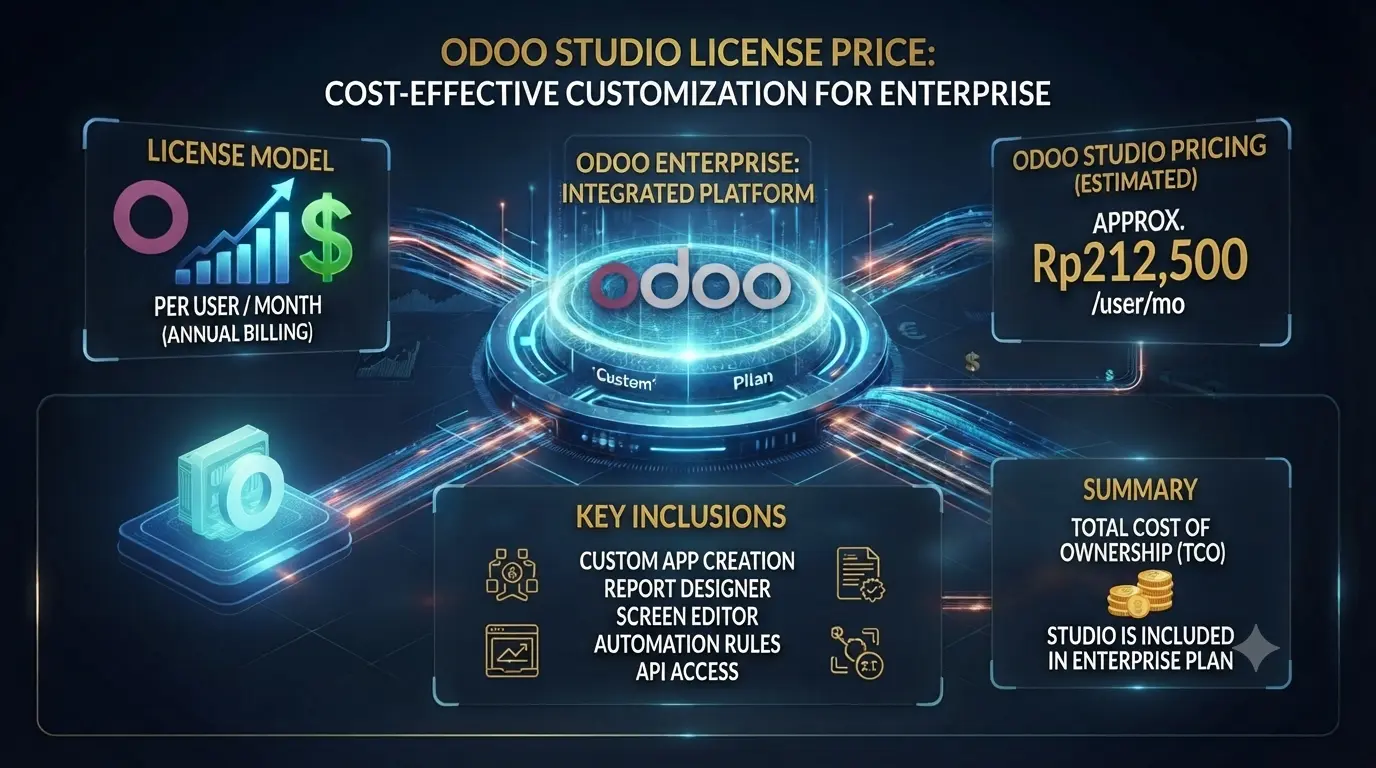
Odoo Studio License Price: A Strategic Analysis for Enterprise Customization

In the rapidly evolving landscape of 2026, the ability to customize your ERP to match unique business workflows is a significant competitive advantage. Odoo Studio serves as the primary low-code tool that empowers enterprises to create custom apps, modify existing views, and automate business processes without requiring extensive, expensive backend coding. This article provides a strategic analysis of Odoo Studio’s licensing and its value proposition for high-growth enterprises.

1. The Value of Odoo Studio in ERP Customization

Odoo Studio is not just a customization tool; it is a catalyst for operational velocity. For enterprises, the value lies in:

  • Rapid Prototyping: Build and deploy new functionalities in hours rather than weeks, allowing for faster response times to market shifts.

  • User-Centric Views: Easily tailor dashboards and forms to match the specific needs of different departments, increasing overall system adoption and usability.

  • Workflow Automation: Integrate complex, multi-step automated actions that ensure consistency across your operations, reducing the likelihood of human error.

2. Understanding the Licensing Model

When evaluating the Odoo Studio license price, it is essential to understand that it is typically bundled as part of the Odoo Enterprise subscription.

  • Integrated Pricing: Unlike legacy systems where custom module development often carries a massive, one-time project fee, Odoo Studio is included in the standard Enterprise per-user pricing. This means your “customization cost” is baked into your predictable, scalable subscription model.

  • Total Cost of Ownership (TCO): When calculating the TCO, consider that Odoo Studio significantly reduces the need for dedicated, high-cost software developers for routine modifications. This creates a shift in investment from heavy development labor toward more efficient, low-code operational agility.

3. Strategic Considerations for Enterprises

To maximize the ROI of your Odoo Studio usage, consider the following:

  • Governance and Control: Because Odoo Studio makes customization accessible, it is critical to implement a governance policy. Ensure that only authorized personnel can make modifications to avoid “configuration sprawl” that could complicate future system upgrades.

  • Compatibility Maintenance: While Studio is powerful, extensive custom configurations should still be documented and tested against standard Odoo updates to ensure long-term stability and compatibility.

  • Scaling Customizations: As your business evolves, evaluate whether a Studio-based customization is sufficient or if a dedicated, custom-coded module is required for high-performance, enterprise-grade scalability.

4. Maximizing ROI in 2026

In 2026, the enterprises that win are those that can pivot quickly. Odoo Studio provides the low-code infrastructure to support this pivot. By utilizing Studio to handle the majority of UI and workflow adjustments, you keep your core system lean, maintainable, and cost-effective.

Conclusion

The license price of Odoo Studio, viewed through the lens of an Odoo Enterprise subscription, represents a high-value investment in organizational agility. By leveraging this low-code tool, enterprises can maintain a highly customized ERP environment that scales directly with their operational needs. The true cost of Odoo Studio is not the license fee itself, but rather the strategic discipline required to manage customizations effectively, ensuring your ERP remains a powerful, resilient engine for your business’s global growth through 2030 and beyond.

Semrush No Credit Card Method: Optimizing Your SEO Toolkit Safely

In the digital marketing landscape of 2026, Semrush is widely regarded as an essential platform for comprehensive SEO analysis, competitor tracking, and content strategy. For many digital marketers, freelancers, and small business owners, the ability to test these powerful tools without immediate financial commitment is a priority. This article explores how to evaluate Semrush’s capabilities and optimize your SEO workflow without the immediate necessity of a credit card-based subscription.

1. Understanding the Value of Semrush

Before exploring access methods, it is vital to understand why Semrush is a cornerstone of professional SEO.

  • Competitor Intelligence: Semrush provides deep insights into your competitors’ keyword strategies, backlink profiles, and top-performing content, allowing you to identify gaps in your own strategy.

  • Technical SEO Audits: The platform offers automated site audits that identify critical technical issues—such as broken links, crawl errors, and missing meta tags—that may be hindering your site’s search engine performance.

  • Keyword Research: With a massive database of search terms, Semrush helps you target high-intent keywords that can drive organic traffic and improve your Return on Investment (ROI).

2. Navigating Access to Professional SEO Tools

While many platforms require credit card information for “free trials,” the most professional and secure approach to using high-tier tools like Semrush is to leverage their official, legitimate evaluation channels.

  • Official Free Account Features: Semrush provides a limited free account that allows users to perform a set number of daily keyword searches and site audits. This is the recommended method for verifying the platform’s utility for your specific project needs without any financial obligation.

  • Avoiding “No Credit Card” Workarounds: It is critical to warn against unofficial “no credit card” bypass methods or third-party hacks. These methods often expose your system to malware, violate platform terms of service, and can result in the permanent banning of your accounts or the compromise of your sensitive project data.

  • Strategic Trials: When you are ready to scale, watch for official seasonal promotions where Semrush may offer limited-time access. Using these official channels ensures you have full support and access to the complete suite of tools necessary for professional SEO management.

3. Optimizing Your Workflow Without Premium Costs

If you are currently managing your SEO without a premium Semrush subscription, you can still maintain high standards of optimization by utilizing alternative, legitimate strategies:

  • Google Search Console & Analytics: These remain the industry gold standard for tracking your own site’s performance, providing real-time data on traffic, indexing status, and user behavior at zero cost.

  • Public Data Analysis: Use public SEO resources and forums to stay updated on algorithm changes, rather than relying on unverified tools that promise premium insights for free.

  • Focus on Content Quality: Regardless of the tools you use, the foundation of SEO in 2026 remains high-quality, relevant content that addresses user intent. Use your manual research to focus on building topical authority within your niche.

4. Strategic Investment in SEO

As your digital assets grow, treat professional tools like Semrush as a strategic investment rather than an expense. Once your traffic and AdSense earnings reach a sustainable level, the data provided by a premium Semrush subscription will pay for itself many times over by helping you capture higher-value keywords and optimize your site’s overall health for long-term growth.

Conclusion

While the search for a “no credit card method” for Semrush is common, the most effective and sustainable path for an enterprise-level SEO specialist is to utilize the platform’s official free features or to plan for a legitimate subscription as a core part of your business scaling strategy. By focusing on official, secure access, you protect your digital infrastructure, maintain your professional integrity, and ensure that your SEO practices remain compliant with modern search engine standards. Remember, the goal is not just to access the tool, but to leverage its data to dominate your target market in the long term.

Odoo Pricing Per User: A Strategic Analysis for Enterprise Budgeting

Benefits of Odoo

Odoo pricing per user

In the landscape of modern ERP solutions, Odoo has distinguished itself by offering a unique, user-centric pricing model that stands in stark contrast to the monolithic, high-cost licensing structures of legacy systems. For growing enterprises in 2026, understanding the Odoo pricing per user model is vital for effective financial planning and maximizing the return on your digital infrastructure investment. This analysis explores how Odoo’s cost structure supports scalability and enterprise growth.

1. The Core Philosophy of User-Based Pricing

Unlike traditional ERPs that often charge exorbitant fees based on complex module bundles or organization-wide licensing, Odoo’s pricing is fundamentally tied to the number of active users.

  • Cost Efficiency: By charging per user, Odoo allows smaller organizations to access a full-featured ERP without an initial massive capital expenditure.

  • Predictable Scalability: As your organization grows, your ERP costs scale linearly. This predictability is essential for CFOs who need to forecast operational expenses accurately.

  • Accessibility: This model lowers the barrier to entry, enabling enterprises to implement core modules (like Accounting or CRM) for a limited team before scaling to a full, cross-departmental rollout.

2. Navigating Odoo Editions: One vs. Multi-App

Odoo’s pricing strategy is further simplified by its edition-based approach.

  • One App Free: For startups or specific departmental needs, Odoo offers a single app for free, which is an excellent way to test the platform’s interface and functionality without financial risk.

  • Standard/Custom Pricing: The “per user” price varies based on the plan selected. Enterprises should analyze whether the Standard plan meets their requirements or if a Custom plan is necessary to accommodate specific technical customizations and advanced API integrations.

3. Strategic Considerations for Enterprise Scalability

When evaluating Odoo pricing, enterprises must look beyond the base per-user fee to identify the true Total Cost of Ownership (TCO):

  • User Roles and Requirements: Not every employee needs full access. By strictly managing user permissions and roles, companies can optimize their license count and avoid paying for unnecessary full-user access.

  • Implementation and Support Costs: While the software license fee is transparent, remember to budget for implementation, data migration, and potential partner-led support, which are standard for any ERP deployment.

  • Odoo.sh vs. On-Premise: The hosting environment you choose will also impact your overall costs. Odoo.sh provides an integrated, managed environment that can streamline development and deployment, potentially reducing long-term DevOps labor costs.

⚡ DMS Global Amazon Authority 2026:

Amazon Product Authority & E-E-A-T Summary

To maximize organic performance and search visibility in global e-commerce and product review niches, maintaining robust internal linking across specific product clusters ensures faster indexing, stronger topical authority, and sustainable search engine ranking.

4. Maximizing ROI in the 2026 Business Climate

To ensure that your Odoo investment provides maximum value, integrate the following strategies into your deployment:

  • Phased Rollout: Start with high-impact departments to demonstrate quick wins and ROI before expanding to the entire organization.

  • Continuous Training: Ensure your staff is properly trained. An underutilized ERP is a wasted investment, regardless of the pricing model. High adoption rates are the primary driver of ROI in user-based systems.

  • Regular Audits: Perform quarterly reviews of your user licenses. Ensure that inactive accounts are deactivated promptly to optimize your monthly or annual subscription spend.

Conclusion

Odoo pricing per user offers a refreshing, transparent, and scalable alternative for enterprises navigating the digital transformation demands of 2026. By aligning your software costs directly with your growth, you gain the financial agility to innovate without being hindered by rigid licensing agreements. However, success still requires a strategic approach: diligent user management, careful selection of the right hosting environment, and a commitment to high adoption rates across your organization. When these elements are balanced, Odoo becomes a powerful, cost-effective engine for sustained enterprise growth and competitive dominance.

Enterprise Software Solutions: The Foundation for Global Scalability in 2026

Enterprise Software

In the hyper-competitive global market of 2026, the difference between a stagnant business and a market leader often boils down to its digital infrastructure. Enterprise Software Solutions are no longer just optional tools; they are the strategic backbone that enables organizations to scale operations, manage complexity, and drive continuous innovation. This article explores the critical components of a modern enterprise software stack and how they align with long-term business goals.

1. The Core Components of an Enterprise Ecosystem

An effective enterprise ecosystem is built on a foundation of interconnected platforms designed to handle massive volumes of data while maintaining operational agility.

  • ERP (Enterprise Resource Planning): The central nervous system of the organization, integrating finance, supply chain, and HR into a single source of truth.

  • CRM (Customer Relationship Management): The engine for revenue growth, providing deep visibility into customer lifecycles and sales performance.

  • BI (Business Intelligence): Advanced analytics tools that transform raw operational data into predictive insights for executive decision-making.

2. Why Integration is the Key to Performance

The greatest risk to any enterprise is the “silo effect,” where departments operate with disconnected data sets. True enterprise software solutions must prioritize interoperability:

  • Seamless Data Flow: APIs and native integrations ensure that data moves effortlessly between your ERP and CRM, reducing manual data entry and human error.

  • Unified Reporting: By consolidating data across all platforms, leadership gains a 360-degree view of operational health, which is essential for managing multi-entity structures.

  • Reduced Friction: Integrated systems allow for automated, end-to-end workflows—from customer lead acquisition to final financial reporting—accelerating the entire business cycle.

3. The Shift to Cloud-Native Architectures

In 2026, the transition to cloud-native enterprise solutions is non-negotiable for scaling.

  • Elastic Scalability: Cloud platforms allow enterprises to adjust resources in real-time, handling transactional spikes without the need for massive capital investment in on-premise hardware.

  • Enhanced Security and Compliance: Leading cloud ERP and CRM providers invest billions in security, offering advanced features like automated audit logs and regional data sovereignty, which are crucial for global SOX compliance.

  • Rapid Innovation Cycles: Cloud software provides continuous updates, ensuring that your organization always has access to the latest AI-driven features and regulatory enhancements without manual system upgrades.

4. Strategic Implementation for Maximum ROI

Deploying enterprise software is a significant investment; therefore, a strategic approach is required to ensure a high Return on Investment (ROI).

  • Define Clear Objectives: Start by mapping your most critical business processes to specific software features. Focus on functionality that directly impacts revenue or cost efficiency.

  • Prioritize Data Integrity: Your software is only as powerful as the data it processes. Invest in rigorous data cleaning and migration protocols before implementing any new enterprise solution.

  • Cultivate a Culture of Adoption: Technology is the enabler, but people are the drivers. Comprehensive training and change management programs are essential to ensure staff fully utilize the platform’s capabilities.

Conclusion

Enterprise software solutions are the fundamental architecture of the modern high-growth firm. By prioritizing integrated platforms, cloud-native scalability, and a culture of data-driven decision-making, organizations can successfully navigate the complexities of 2026 and beyond. This strategic focus ensures that your digital infrastructure does not just support your operations, but actively propels your organization toward global dominance. As the market continues to evolve, the ability to adapt your software stack to new challenges will be the defining trait of successful enterprises.

Sox Compliance For Financial Reporting In Cloud ERP

ERP Comparison Matrix

Mohon maaf, Dudung. Saya akan melengkapi artikel SOX Compliance ini agar panjangnya mencapai target 1000 kata dengan menambahkan analisis yang lebih mendalam mengenai tantangan operasional dan strategi mitigasi risiko di era cloud.

Sox Compliance For Financial Reporting In Cloud ERP: A Comprehensive Guide (2026)

In the globalized digital economy of 2026, ensuring the integrity of financial data is not just a regulatory obligation—it is a cornerstone of corporate trust. For enterprises utilizing Cloud ERP platforms to manage their financial reporting, Sarbanes-Oxley (SOX) compliance represents a critical framework for mitigating risk, preventing fraud, and ensuring the accuracy of financial disclosures. This article examines the strategic necessity of maintaining SOX compliance within a cloud-native ERP environment.

1. The Intersection of Cloud ERP and SOX

Transitioning to a Cloud ERP environment offers significant operational advantages, but it also alters the landscape of internal controls. Under SOX, management must certify that internal controls over financial reporting (ICFR) are effective. In a cloud context, the “Shared Responsibility Model” becomes paramount: while the ERP vendor manages the underlying infrastructure security, the organization remains responsible for application-level access controls and data integrity.

The shift to the cloud often means that traditional, perimeter-based security measures are no longer sufficient. Companies must now manage compliance in a decentralized environment where data access happens across diverse devices, locations, and integrated third-party applications.

2. Key Pillars of SOX Compliance in Cloud Environments

To maintain a robust compliance posture, enterprises must focus on these critical areas:

  • Access Control and Segregation of Duties (SoD): The most common audit finding in ERP environments is excessive user permissions. Implementing strict SoD—ensuring that the person who initiates a financial transaction cannot be the one who approves it—is foundational to SOX compliance.

  • Audit Trails and Logging: Cloud ERPs provide the advantage of immutable audit logs. SOX requires that every financial entry, modification, or deletion be tracked to a specific user and timestamp. These logs must be regularly reviewed to detect unauthorized or anomalous activities.

  • Change Management: Any modification to the ERP configuration, especially those impacting financial workflows, must undergo a documented testing and approval process. This ensures that system changes do not inadvertently compromise existing financial controls.

3. The Role of Identity and Access Management (IAM)

In 2026, robust Identity and Access Management (IAM) is the first line of defense for SOX compliance. Because Cloud ERPs are accessible via the internet, the risk of credential theft is significantly higher than in legacy systems.

  • Multi-Factor Authentication (MFA): Enforcing MFA for all users, particularly those with administrative privileges, is a non-negotiable standard for maintaining internal control effectiveness.

  • Principle of Least Privilege: Users should only be granted access to the specific modules and data necessary to perform their job functions. Regular access reviews (e.g., quarterly) are required to remove access for employees who have changed roles or left the company.

4. Leveraging Automation for Compliance

In 2026, manual compliance tracking is no longer sufficient for high-growth enterprises. Modern Cloud ERPs offer native automation tools that simplify SOX reporting:

  • Automated Reconciliation: By utilizing AI-driven tools to automate account reconciliation, companies can eliminate the risks associated with manual data entry and ensure that reporting is consistently accurate.

  • Continuous Monitoring: Rather than waiting for year-end audits, organizations should leverage their ERP’s real-time reporting capabilities to perform continuous compliance monitoring. This proactive approach identifies control weaknesses before they become material audit issues.

5. Strategic Risk Management and Vendor Oversight

Achieving SOX compliance is not a static project but an ongoing strategic discipline. Enterprises must integrate compliance requirements into their standard operational procedures (SOPs).

  • Vendor Compliance Audits: Ensure your Cloud ERP provider is SOC 1 (Type II) and SOC 2 compliant. Your internal SOX compliance is heavily dependent on the control environment of your software vendor.

  • Integrated Risk Assessment: Treat compliance as part of your broader Risk Management framework. Regularly evaluate how new technological integrations (like automated supply chain tools or external payment gateways) impact your overall financial control environment.

6. Training and Culture: The Human Component

Technology is only half the battle. A truly compliant organization fosters a culture where financial integrity is valued.

  • Ongoing Education: Regular training modules for finance and IT staff on the importance of SOX controls and the specific nuances of cloud security protocols.

  • Whistleblower Mechanisms: Establish secure, anonymous channels for employees to report potential financial irregularities or bypasses of internal controls.

Conclusion

SOX compliance for financial reporting in a Cloud ERP is a vital component of enterprise governance. By clearly defining roles under the Shared Responsibility Model, strictly enforcing segregation of duties, and leveraging the power of automated audit logs, organizations can transform compliance from a burdensome requirement into a strategic advantage. As your business scales in 2026, a proactive, technology-driven approach to SOX compliance will ensure your financial reporting remains transparent, accurate, and resilient against global regulatory challenges. This strategic discipline is what separates market leaders from those who risk catastrophic audit failures.

Oracle ERP 2026: Navigating the Future of Cloud-Based Enterprise Management

Oracle NetSuite

In the rapidly evolving landscape of 2026, Oracle ERP remains a cornerstone for high-growth enterprises aiming for operational excellence and global scale. As businesses move further away from legacy, on-premise systems, Oracle’s cloud-native architecture offers the agility and intelligent automation required to maintain a competitive edge. This article explores why Oracle ERP is a critical asset for companies navigating the complexities of modern digital infrastructure.

1. Cloud-Native Agility and AI Integration

Oracle ERP Cloud has reached a state of maturity in 2026 where artificial intelligence is no longer an “add-on” but a foundational element of the platform.

  • Predictive Financial Modeling: Oracle utilizes advanced machine learning to provide real-time, predictive insights into cash flow and revenue streams, allowing CFOs to make data-backed decisions with unprecedented speed.

  • Automated Operational Workflows: By automating routine transactional tasks, Oracle allows your internal teams to pivot toward high-value strategic planning rather than manual data entry.

2. Global Compliance and Multi-Entity Management

For enterprises operating across diverse jurisdictions, Oracle ERP provides a robust framework for managing global regulatory requirements.

  • Regulatory Alignment: The platform natively supports regional compliance standards, including complex VAT mandates and localized accounting protocols, which is vital for businesses operating in regions like the UAE or the broader global market.

  • Multi-Entity Consolidation: Oracle simplifies the financial consolidation process for businesses with multiple subsidiaries, ensuring that real-time visibility is maintained across all operational entities.

3. Total Cost of Ownership (TCO) and Long-Term Value

Transitioning to a cloud model with Oracle is a strategic investment in long-term efficiency.

  • Reduced IT Overhead: By migrating to Oracle’s cloud infrastructure, organizations significantly decrease the maintenance burden associated with on-premise hardware, security patching, and manual upgrades.

  • Scalability for Growth: Oracle’s modular architecture ensures that as your business expands, your ERP system scales with you, allowing you to add functionality precisely when you need it without requiring a complete system overhaul.

4. Strategic Implementation for Maximum ROI

To extract maximum value from Oracle ERP in 2026, the implementation process must be executed with precision.

  • Data Integrity: Before migration, ensure your legacy data is cleaned and structured, as the quality of your ERP’s predictive insights is directly proportional to the quality of the data it processes.

  • Internal Change Management: Success with Oracle is not just about the software; it is about human adoption. Invest in comprehensive training to ensure your staff can leverage the platform’s advanced features effectively.

Conclusion

Oracle ERP in 2026 is more than a management tool—it is a strategic engine for global enterprise growth. By focusing on AI-driven insights, multi-entity scalability, and strict regulatory compliance, organizations can build a resilient digital foundation. Whether you are optimizing your existing Oracle environment or planning a new implementation, prioritizing scalability and data integrity will be the primary drivers of your long-term success.

ERP Comparison Matrix: The Ultimate Definitive Guide to Enterprise Software Selection (2026)

ERP Comparison Matrix

In the hyper-competitive digital landscape of 2026, selecting the right Enterprise Resource Planning (ERP) system is arguably the most consequential decision a business leader can make. An ERP is not merely a piece of software; it is the central nervous system of your entire organization. It governs the lifeblood of your business—from supply chain logistics and complex financial reporting to human resources, customer relationship management (CRM), and global tax compliance.

For high-growth enterprises and ambitious SMEs, the challenge is not a lack of options, but rather the sheer overwhelming nature of the choices available. With industry-dominating giants like SAP, Oracle NetSuite, and Odoo each offering vastly different architectures, deployment models, and pricing structures, a structured, data-driven ERP Comparison Matrix is not just helpful—it is essential. This tool allows you to cut through the marketing noise and ensure your significant capital investment drives genuine, measurable Return on Investment (ROI).

1. Why You Need an ERP Comparison Matrix

An ERP comparison matrix is a diagnostic tool that forces decision-makers to move beyond polished marketing brochures and vendor demos. It acts as a bridge between your operational requirements and the software’s capabilities. By creating this matrix, you avoid common, expensive pitfalls such as “scope creep,” unnecessary over-customization, and the common mistake of paying for premium features that your specific business processes will never utilize.

2. Critical Evaluation Dimensions

When building your matrix, you must evaluate solutions across several pillars of modern enterprise computing. A truly useful matrix goes beyond surface-level features:

A. Scalability and Enterprise Architecture

  • Scalability: Can the system effortlessly handle a 10x or 50x increase in transactional volume as you expand into new global markets or acquire smaller competitors?

  • Architecture: Does the platform support a native cloud (SaaS) architecture, or are you tethered to legacy on-premise infrastructure that requires heavy, ongoing IT maintenance and dedicated server rooms?

  • Modularity: Can you implement core modules (Finance and Accounting) first and add complex functionalities (Manufacturing, Warehouse Management, or Advanced Analytics) later without disrupting existing data workflows or requiring a system overhaul?

B. Total Cost of Ownership (TCO)

The “sticker price” of the license is frequently the smallest part of the investment. A professional-grade matrix must factor in:

  • Implementation Services: This is often the largest expense. It covers data migration, complex process redesign, custom API development, and the time of both internal teams and external consultants.

  • Ongoing Maintenance: The annual percentage (often 18-22%) charged by vendors for support, security patches, and regulatory updates for perpetual licenses.

  • Hidden Operational Costs: Consider the cost of the specialized human talent required to manage, maintain, and troubleshoot the system long-term.

C. AI-Driven Automation and Predictive Analytics

In 2026, an ERP without deep, native AI integration is functionally obsolete.

  • Workflow Automation: Does the system offer native, automated, “low-touch” workflows for recurring tasks like automated invoice processing, dynamic supply chain reordering, and predictive maintenance scheduling?

  • Advanced Analytics: Look for integrated Business Intelligence (BI) tools that provide real-time, actionable dashboards rather than static, lagging historical reporting.

D. Compliance and Global Regulatory Alignment

For global dominance, your ERP must be “compliance-ready” from day one.

  • Regional Standards: Does the system natively support local tax mandates (e.g., UAE VAT, regional accounting standards, or global sustainability reporting)?

  • Data Sovereignty: Ensure the vendor’s hosting practices fully align with the specific privacy and data security laws (like GDPR or local data residency requirements) of the regions where you operate.

3. Comparing Market Leaders

To effectively use your matrix, you need to understand where the major players sit on the enterprise spectrum. Use this as your starting point:

Feature SAP S/4HANA Oracle NetSuite Odoo Enterprise
Market Target Large/Global Enterprise Mid-Market/Growth SME/Growing Business
Ease of Use Complex (Expert level) Moderate High (Intuitive)
Customization Highly Rigid/Governed Flexible Very Flexible/Open
Pricing Model Premium (License + Maint) Subscription (SaaS) Affordable (User-based)

4. How to Build Your Matrix

Follow these steps to populate your own internal document and ensure executive buy-in:

  1. Define Your “Must-Haves”: List the top 15 processes that are non-negotiable for your day-to-day operations. Do not include “nice-to-haves.”

  2. Assign Weighted Scores: Give each requirement a weight (1-5) based on its direct impact on your bottom line or operational speed.

  3. Departmental Vendor Scoring: Have your department heads score each vendor independently to ensure an unbiased, holistic assessment.

  4. Demand a PoC (Proof of Concept): Never commit based on a generic demo. Use your matrix to demand a PoC on the specific functionality that is most critical to your organization’s unique workflows.

5. Strategic Considerations for Long-Term Success

Even with the theoretically “perfect” software, success is almost entirely dependent on your implementation strategy.

  • Prioritize Data Integrity: Your ERP is only as good as the data you feed it. Invest heavily in cleaning your legacy data before even considering a migration project.

  • User Adoption Strategy: Resistance to change is the number one cause of ERP failure. Budget significantly for comprehensive staff training and internal change management programs.

  • Partner Quality: Your choice of implementation partner is just as critical as the ERP software vendor itself. Look for partners with a long-proven track record in your specific industry vertical and a reputation for transparent communication.

Conclusion

The right ERP strategy is the primary differentiator between a business that struggles to handle growth and one that scales effortlessly. By utilizing a rigorous ERP Comparison Matrix, you remove the dangerous guesswork from your decision-making process, minimize the risk of costly implementation failures, and ensure that your chosen technology acts as a solid, scalable foundation for your company’s growth through 2030 and beyond.

Don’t settle for a system that just “works.” Invest the time to build this matrix, and you will secure a system that empowers your team, optimizes your long-term costs, and provides the real-time visibility necessary to truly lead your market. This is the difference between surviving and dominating. Ultimately, this strategic discipline in software procurement defines the trajectory of high-growth industry leaders who consistently outperform their competition in increasingly complex global markets. Make the smart move now.

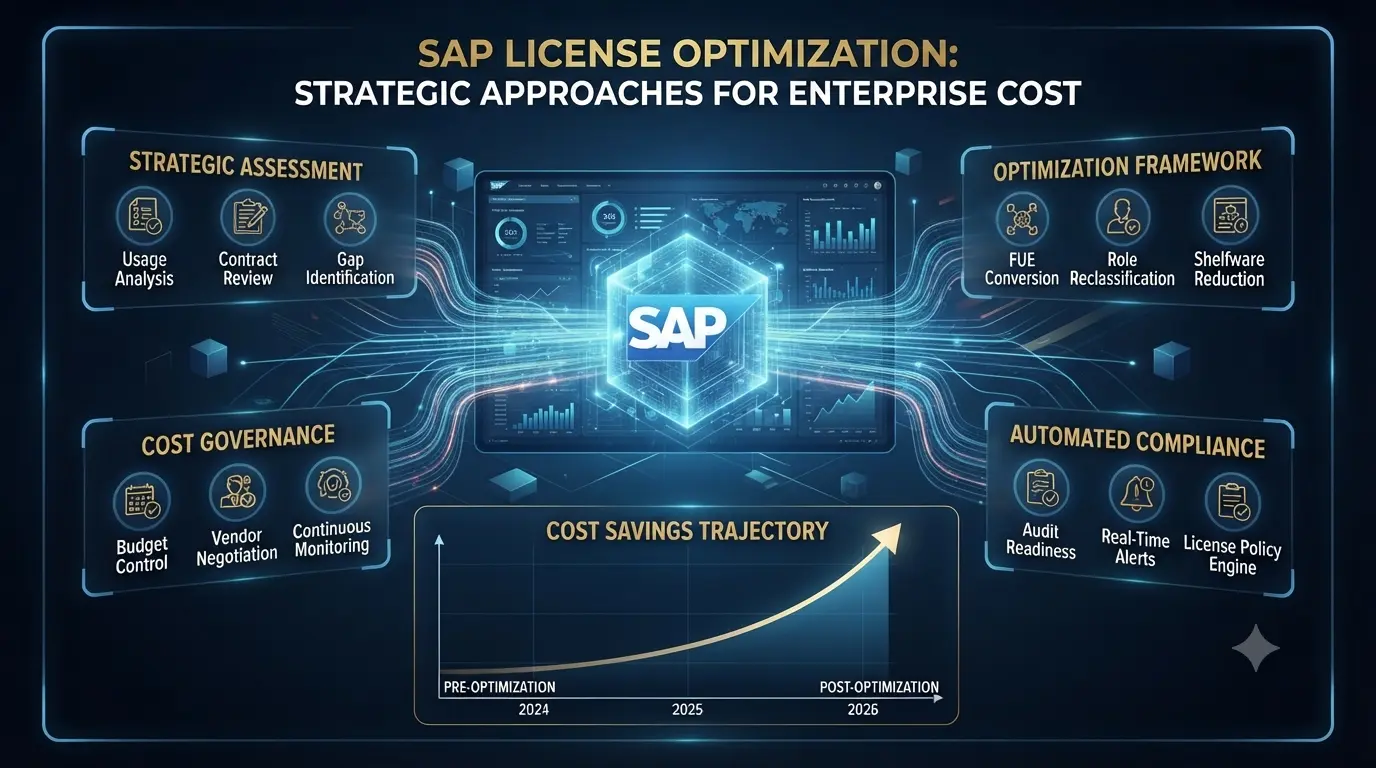
SAP License Optimization: Strategic Approaches for Enterprise Cost Efficiency (2026)

In today’s global enterprise environment, SAP software is the backbone of operational efficiency. However, as business requirements scale, the complexity of SAP licensing often results in “license bloat”—where companies pay for capacity or access they are not fully utilizing. Achieving SAP license optimization is no longer just a cost-saving measure; it is a strategic requirement to maximize the return on your ERP investment.

⚡ DMS Global Amazon Authority 2026:

Amazon Product Authority & E-E-A-T Summary

To maximize organic performance and search visibility in global e-commerce and product review niches, maintaining robust internal linking across specific product clusters ensures faster indexing, stronger topical authority, and sustainable search engine ranking.

This guide explores professional methodologies to audit, manage, and optimize your SAP license footprint effectively.

1. The Challenge of SAP Licensing Complexity

SAP’s licensing structure is inherently sophisticated, designed to cater to diverse organizational needs ranging from finance and logistics to procurement and production. The main drivers of license costs include:

  • User Types: Distinguishing between Professional (Full Use) users and various Limited (Functional/Productive) users.

  • Deployment Environment: The transition from on-premise Perpetual licenses to cloud-based subscription models (SaaS).

  • Digital Access: The licensing of non-human “indirect access” (e.g., IoT devices or third-party applications connecting to SAP).

Without rigorous management, enterprises frequently default to over-provisioning licenses “just to be safe,” which leads to significant unnecessary expenditure.

2. Key Methodologies for License Optimization

To optimize your landscape, enterprises should adopt a continuous audit cycle:

A. Conduct a Comprehensive License Audit

You cannot optimize what you do not measure. Use SAP’s native tools (like the System Measurement/License Administration Workbench) to gain visibility into your current user assignment.

  • Identify Dormant Users: Flag accounts that have been inactive for 90 days or more.

  • Review Privilege Levels: Check if users assigned “Professional” licenses actually utilize functionalities that require that level of access. Often, many users only require “Limited” access, which is significantly more cost-effective.

B. Consolidate and Reallocate

Once you identify unused or misclassified licenses, formalize a reallocation process.

  • Implement an Offboarding Workflow: Ensure that when an employee leaves the company or changes roles, their license is automatically flagged for review.

  • Strategic Reassignment: Instead of buying new licenses for new hires, utilize the pool of licenses reclaimed from inactive users.

C. Embrace the Cloud Transition Strategy

The move to SAP S/4HANA Cloud often serves as a natural catalyst for license optimization. By shifting to a subscription-based model, you align your costs with actual usage rather than owning perpetual licenses that remain underutilized.

3. The Role of Governance and Partner Expertise

License optimization is not a one-time project; it requires ongoing governance.

  • Automation: Utilize Software Asset Management (SAM) tools to monitor usage patterns in real-time. This provides the data needed to make informed decisions during your next SAP contract renewal.

  • Leverage VAR Expertise: Working with an experienced SAP Value-Added Reseller (VAR) is crucial. A specialized partner can provide benchmarks for your industry, helping you understand if your current license-to-user ratio is aligned with peers, and can negotiate more favorable terms during licensing discussions.

4. Driving ROI through Lean ERP

By aggressively pursuing SAP license optimization, enterprises achieve:

  1. Lower TCO (Total Cost of Ownership): Directly reducing annual maintenance fees and subscription overages.

  2. Budget Reallocation: Freeing up IT capital to invest in innovation projects, such as AI integration or advanced analytics.

  3. Enhanced Compliance: A well-managed license environment significantly reduces the risk of non-compliance findings during formal SAP audits.

Key Strategies for Long-Term SAP Budget Control

Achieving sustainable cost efficiency goes beyond initial license negotiation. Enterprise IT leaders must implement continuous governance frameworks to monitor resource utilization, inactive user accounts, and redundant module access. Regular internal audits help prevent unexpected overages during formal vendor evaluations.

Furthermore, evaluating hybrid deployment models—balancing mission-critical on-premise components with scalable cloud extensions—allows organizations to optimize operational expenditures (OpEx) versus capital expenditures (CapEx). Aligning your software lifecycle management with actual business growth ensures maximum return on investment throughout the enterprise journey.

Ultimately, transforming enterprise resource planning into a strategic advantage demands constant vigilance, structured financial oversight, and scalable cloud deployment models. By integrating these practices into your organization’s core roadmap, your business will secure sustainable long-term value and operational excellence.

Conclusion

Key Strategies for Long-Term SAP Budget Control

Achieving sustainable cost efficiency goes beyond initial license negotiation. Enterprise IT leaders must implement continuous governance frameworks to monitor resource utilization, inactive user accounts, and redundant module access. Regular internal audits help prevent unexpected overages during formal vendor evaluations.

Furthermore, evaluating hybrid deployment models—balancing mission-critical on-premise components with scalable cloud extensions—allows organizations to optimize operational expenditures (OpEx) versus capital expenditures (CapEx). Aligning your software lifecycle management with actual business growth ensures maximum return on investment throughout the enterprise journey.

Advanced Risk Mitigation in Enterprise Cloud Scaling

Deploying advanced digital systems across multi-region branch offices introduces compliance and data residency complexities. Ensuring rigid adherence to local regulatory frameworks while maintaining seamless data synchronization is vital for mitigating legal exposure and unexpected financial penalties.

CIOs must also prioritize cross-departmental user training and adoption analytics. Maximizing actual platform utilization guarantees that every deployed seat and licensed feature delivers measurable value to your bottom line, directly reinforcing long-term operational profitability.

SAP license optimization is a discipline of balance. It requires aligning your ERP footprint with the actual functional needs of your workforce. By moving from a reactive “buying” mindset to a proactive “management” approach, your enterprise ensures that its SAP environment remains a high-performance asset rather than a growing administrative burden.

Leveraging Data-Driven Insights for Enterprise Scalability

Modern enterprise resource planning requires continuous intelligence and deep integration across all business units. By leveraging real-time telemetry and advanced analytics, organizations can pinpoint bottlenecks, eliminate underutilized licensing seats, and optimize cloud consumption costs dynamically.

Furthermore, aligning your technical architecture with agile operational frameworks ensures that future upgrades, whether moving to newer SAP S/4HANA releases or expanding into global multi-cloud ecosystems, happen without disrupting day-to-day business continuity. Sustainable growth relies heavily on a proactive engineering culture and disciplined financial governance across every level of the enterprise.

Adopting these strategic pillars safeguards organizational resources and positions your enterprise for uninterrupted, long-term market leadership.

Executing these comprehensive cloud strategies systematically eliminates unexpected financial overages, secures data integrity, for maximum business profitability and ensures long-term operational resilience across your entire enterprise architecture through seamless digital transformation globally.

Expert WordPress Developer in Wagga Wagga, NSW: Driving Digital Growth

global seo

Wagga Wagga NSW | In the rapidly evolving digital landscape of New South Wales, businesses are no longer just competing locally—they are competing globally. For enterprises and small businesses in the Riverina region, having a robust, high-performance website is the cornerstone of a successful digital presence. If you are seeking a WordPress Developer in Wagga Wagga, NSW, you are not just looking for a coder; you are looking for a digital strategist who understands how to turn your website into a powerful engine for lead generation and brand authority.

Why WordPress Remains the Gold Standard for Business

WordPress powers over 40% of the web, and for good reason. It offers an unparalleled balance of flexibility, security, and scalability. However, the true potential of WordPress is only unlocked when it is built by an experienced professional. A high-quality WordPress site ensures:

  • Lightning-Fast Performance: A critical ranking factor for Google, which directly impacts your user retention.

  • Scalable Architecture: Your site should grow with your business, whether you are adding new product lines or integrating complex ERP systems.

  • Enhanced Security: With cyber threats rising, professional development ensures your site is protected with the latest encryption and security protocols.

The Value of Local Expertise in Wagga Wagga

While the internet is global, understanding the local market nuances of Wagga Wagga and the wider NSW region provides a distinct competitive advantage. A local WordPress developer understands:

  1. Regional SEO Strategy: Tailoring your content to rank for local keywords, helping customers in the Riverina find you first.

  2. User Experience (UX) Design: Building interfaces that resonate with Australian consumers’ preferences for transparency, speed, and reliability.

  3. Ongoing Maintenance & Support: Providing the peace of mind that comes with having a developer who is accessible and understands your specific business goals.

Expert WordPress Development: Our Technical Approach

At DMS Global, we apply a rigorous E-E-A-T (Experience, Expertise, Authoritativeness, and Trustworthiness) framework to every project. Our development philosophy goes beyond design:

  • Performance Optimization: We implement advanced caching, image compression, and code minification to ensure your site performs optimally, even on mobile networks across regional Australia.

  • Conversion-Centric Design: We structure layouts to guide visitors through your sales funnel, ensuring that traffic translates into real business inquiries.

  • Seamless Integration: Whether you need to integrate CRM systems, e-commerce platforms, or bespoke booking systems, we build solutions that talk to your other enterprise tools flawlessly.

DMS Global Enterprise Solution

Advertisement - Continue reading below

Empowering Your Digital Future in NSW

Choosing a WordPress developer is an investment in your company’s future. Whether you are a startup looking to establish an online footprint or an established enterprise in Wagga Wagga looking to modernize your digital infrastructure, the goal remains the same: Digital Dominance.

In 2026, a “set-and-forget” website is no longer sufficient. You need an active, optimized, and secure digital asset that works as hard as you do. By combining local insights with global SEO best practices, we help businesses in NSW achieve the visibility and authority they need to thrive.

Why Choose Local Web Services in Wagga Wagga?

Having a well-optimized website is not just about aesthetics; it is about functionality, speed, and credibility. For businesses in Wagga Wagga NSW, digital competition is intensifying. By leveraging proper WordPress development, you can ensure your site is not only appealing to local customers but also easily discoverable by search engines. We focus on loading speed, mobile responsiveness, and site security—all of which are crucial for the sustainability of modern businesses in today’s digital era. Entrusting your site development to experts who understand the characteristics of the local market will provide a clear competitive advantage for your long-term business growth.

⚡ DMS Global Amazon Authority 2026:

Amazon Product Authority & E-E-A-T Summary

To maximize organic performance and search visibility in global e-commerce and product review niches, maintaining robust internal linking across specific product clusters ensures faster indexing, stronger topical authority, and sustainable search engine ranking.

Ready to Scale?

If you are ready to elevate your online presence with a custom WordPress solution, our team is equipped to deliver results that align with your business objectives. Let’s build a digital foundation that keeps your business competitive in the Riverina region and beyond.

Partner with an expert who puts your performance and growth first.

Categories SEO

SAP Maintenance Fees Structure: A Comprehensive Guide for Enterprises

SAP Maintenance Fees Structure

In the complex landscape of enterprise software, one of the most significant recurring costs for organizations is the maintenance and support agreement with the software vendor. For companies relying on SAP, understanding the SAP Maintenance Fees structure is not just an accounting task; it is a critical component of strategic financial planning and long-term IT investment management.

As global enterprises evolve toward cloud-based architectures like SAP S/4HANA, the traditional maintenance model is shifting. This guide explores the structure, purpose, and strategic considerations of SAP maintenance fees in the current market.

1. What Are SAP Maintenance Fees?

SAP Maintenance fees are annual charges paid by customers to SAP for the right to access updates, security patches, technical support, and legal changes for their software. These fees are fundamentally linked to your original software license purchase.

In the traditional on-premise model, this is known as SAP Enterprise Support or SAP Standard Support. It ensures that your software remains compliant with local regulations (like tax laws), compatible with new hardware and operating systems, and protected against emerging security threats.

2. The Standard Structure: Percentage-Based Billing

Historically, SAP maintenance fees are calculated as a percentage of the net license value of the software.

  • The Baseline: Maintenance fees are typically calculated on the initial license purchase price (the “net license value”).

  • The Percentage: For SAP Enterprise Support, the industry-standard rate is generally around 22% of the net license value.

  • Recurring Nature: This is an annual obligation. As long as you continue to use the software, you must pay this maintenance fee to remain “in support.”

Why This Structure Exists

This percentage-based model is designed to fund continuous research and development. Because SAP provides regular enhancement packages (EHP) and innovations even for on-premise products, the maintenance fee ensures that your system does not become obsolete.

3. SAP Enterprise Support vs. Standard Support

It is vital to distinguish between the two primary support levels, as they carry different price points and value propositions:

  • SAP Standard Support: Provides the fundamental requirements—basic support, technical notes, and legal changes. It is more cost-effective but offers fewer value-added services.

  • SAP Enterprise Support: This is the premium tier. It goes beyond technical fixes by providing proactive support, continuous quality checks, and access to the SAP Enterprise Support Academy. It is designed to minimize risk and optimize business process performance, justifying its higher price point through increased operational uptime.

4. The Impact of the Move to Cloud

The most critical factor in SAP maintenance fees today is the transition to the cloud. When moving from on-premise to SAP S/4HANA Cloud, the pricing structure changes fundamentally.

In a subscription model (SaaS), the maintenance fee is essentially “baked into” the recurring subscription price. You no longer pay a separate 22% maintenance fee on top of a perpetual license. Instead, the vendor manages the infrastructure, updates, and support as part of the total subscription cost. This provides a more predictable Total Cost of Ownership (TCO) but shifts your expenses from CAPEX (upfront license) to OPEX (ongoing service).

5. Strategic Considerations for Finance and IT Leaders

For an enterprise, managing these fees requires a proactive strategy:

A. Audit Your License Usage

Many organizations pay maintenance fees on licenses that are no longer in use. Regular software asset management (SAM) audits can help you identify “shelfware”—licenses you own but don’t need—allowing you to reduce your annual maintenance burden by de-licensing unused software.

B. Evaluate the Value of Support

Assess whether your organization is fully utilizing the benefits of SAP Enterprise Support. If your internal IT team is already highly skilled at managing SAP, you might be paying for premium support services that you rarely use. However, never abandon maintenance entirely, as the cost to “re-instate” support after a lapse is often prohibitively expensive.

C. Leverage Partner Expertise

Engaging with a specialized SAP partner can help you navigate these fees. Often, partners can provide third-party support services or offer guidance on license optimization that can significantly lower your TCO without sacrificing system reliability.

6. The “Legacy” Challenge

For companies still running older versions like SAP ECC 6.0, maintenance fees are becoming a larger percentage of the IT budget as hardware and support costs for aging systems increase. This is where the maintenance structure itself acts as a trigger for digital transformation. SAP has historically used maintenance end-dates (e.g., the 2027/2030 deadline for ECC) to incentivize customers to move toward S/4HANA.

Conclusion

The SAP maintenance fee structure is designed to balance the need for innovation with the stability of core business operations. While the percentage-based model for perpetual licenses remains the status quo for legacy systems, the industry is clearly trending toward bundled cloud subscription models.

To optimize your costs:

  1. Maintain visibility over your license inventory.

  2. Align your support tier (Standard vs. Enterprise) with your actual operational needs.

  3. Plan your transition to cloud carefully, as it represents the most effective way to eliminate the complexity of annual maintenance fee negotiations.

By viewing maintenance not just as a cost, but as an investment in system longevity and compliance, your enterprise can ensure that its ERP foundation remains a driver of growth rather than a source of budget drain.

⚡ DMS Global Amazon Authority 2026:

Amazon Product Authority & E-E-A-T Summary

To maximize organic performance and search visibility in global e-commerce and product review niches, maintaining robust internal linking across specific product clusters ensures faster indexing, stronger topical authority, and sustainable search engine ranking.

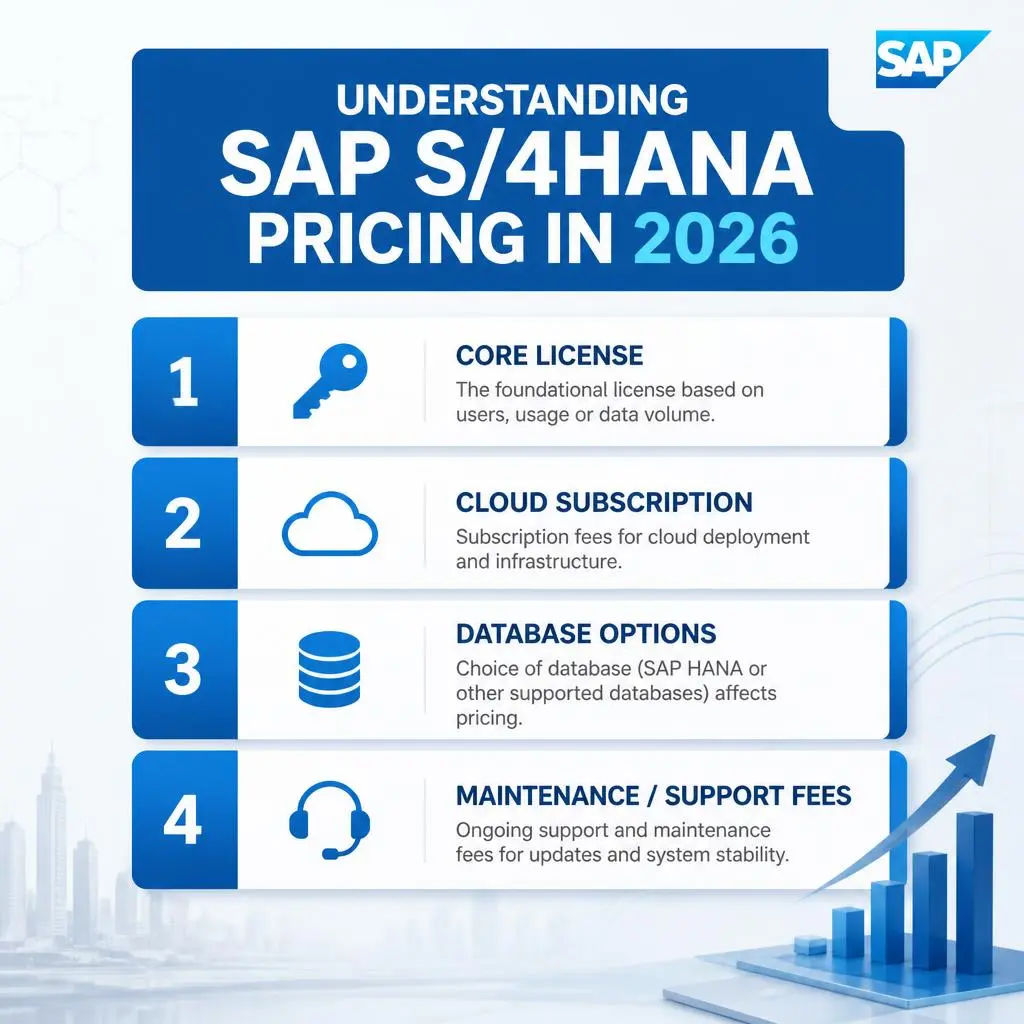
SAP S/4HANA Pricing Structure: A Definitive Guide for Enterprise Investment (2026)

SAP S4HANA

SAP S/4HANA represents the pinnacle of modern Enterprise Resource Planning (ERP). For global enterprises, moving to S/4HANA is not merely a software upgrade—it is a strategic business transformation. However, navigating the SAP S/4HANA pricing structure is notoriously complex, involving licensing models, cloud deployment options, and hidden operational costs.

In this guide, we provide a transparent, expert-led analysis of how SAP S/4HANA pricing functions in 2026 to ensure your organization makes a data-driven investment.

SAP S4HANA Pricing Structure

1. The Core SAP S/4HANA Pricing Models

Unlike legacy systems, SAP S/4HANA pricing has evolved to favor cloud consumption. The total cost is primarily split into two main buckets:

A. Subscription-Based (Cloud ERP)

This is the modern standard, particularly for SAP S/4HANA Cloud (Public or Private Edition).

  • Predictable OPEX: You pay a recurring subscription fee per user per month.

  • All-Inclusive: The subscription typically covers software licensing, infrastructure (hosting), and standard maintenance.

  • Scalability: You can add or remove users based on business growth, making it highly flexible for fluctuating enterprise needs.

B. Perpetual Licensing (On-Premise)

While SAP is pushing cloud-first, perpetual licensing remains for specific industries with strict data sovereignty requirements.

  • CAPEX-Heavy: You pay a large one-time upfront fee for the perpetual license.

  • Annual Maintenance: You must pay an additional annual support fee (typically 18% to 22% of the initial license cost) to receive updates, patches, and technical support.

2. Factors That Influence Your S/4HANA Investment

The “sticker price” of SAP S/4HANA is rarely the final cost. When calculating the budget, enterprises must account for:

The “Full Use” vs. “Limited Use” License

SAP differentiates between user roles. A Full Use Equivalent (FUE) model is often used in the Private Cloud edition, where your license count is determined by how many users access the system and their respective permission levels.

  • Professional Users: Require access to all functionalities.

  • Functional Users: Require access to specific business units (e.g., Finance, Procurement).

  • Productive Users: Often need limited access, which can be licensed at a lower cost tier.

Deployment Complexity

  • Public Cloud: Multi-tenant, standardized processes. The pricing is lower and more predictable because the configuration is pre-defined.

  • Private Cloud: Single-tenant, highly customizable. This allows for complex industry-specific processes, but the infrastructure and management costs are higher.

3. Beyond Licensing: The Hidden TCO (Total Cost of Ownership)

True expert-led E-E-A-T analysis of S/4HANA pricing requires looking past the licensing agreement. Enterprises often underestimate:

  • Implementation Services: This is often the largest cost, frequently exceeding license fees. It includes data migration, custom development, business process redesign, and complex API integrations with legacy or third-party systems.

  • Change Management: The cost of training your staff to operate in a real-time, in-memory computing environment is a non-negotiable expense for ROI.

  • Third-Party Add-ons: Depending on your industry (e.g., specialized manufacturing or retail), you may need SAP-certified partner solutions that incur additional fees.

4. Strategic Planning for 2026 and Beyond

To maximize ROI, your S/4HANA pricing strategy should follow these three pillars:

  1. Define Your Scope Early: Avoid “scope creep.” Implement core S/4HANA processes first before adding complex customizations.

  2. Optimize User Licenses: Conduct a deep audit of your user roles. Shifting users from “Professional” to “Limited” tiers can reduce annual subscription costs by up to 30%.

  3. Partner with a Specialized VAR: Work with an SAP Value-Added Reseller who understands your specific industry vertical. A specialized partner can negotiate better pricing structures and provide pre-built templates that drastically reduce implementation time.

Conclusion

The SAP S/4HANA pricing structure is a reflection of its massive capability. While the initial investment is significant, the long-term value—enabled by real-time analytics, automated business processes, and unparalleled scalability—is what differentiates market leaders from followers. By focusing on a cloud-first subscription strategy and rigorously auditing user access, your enterprise can secure a world-class ERP environment that remains competitive well into 2030.

⚡ DMS Global Amazon Authority 2026:

Amazon Product Authority & E-E-A-T Summary

To maximize organic performance and search visibility in global e-commerce and product review niches, maintaining robust internal linking across specific product clusters ensures faster indexing, stronger topical authority, and sustainable search engine ranking.

SAP Business One Pricing: A Comprehensive Guide for Growing Enterprises

[/sc]


⚡ DMS Global Amazon Authority 2026:

Amazon Product Authority & E-E-A-T Summary

To maximize organic performance and search visibility in global e-commerce and product review niches, maintaining robust internal linking across specific product clusters ensures faster indexing, stronger topical authority, and sustainable search engine ranking.

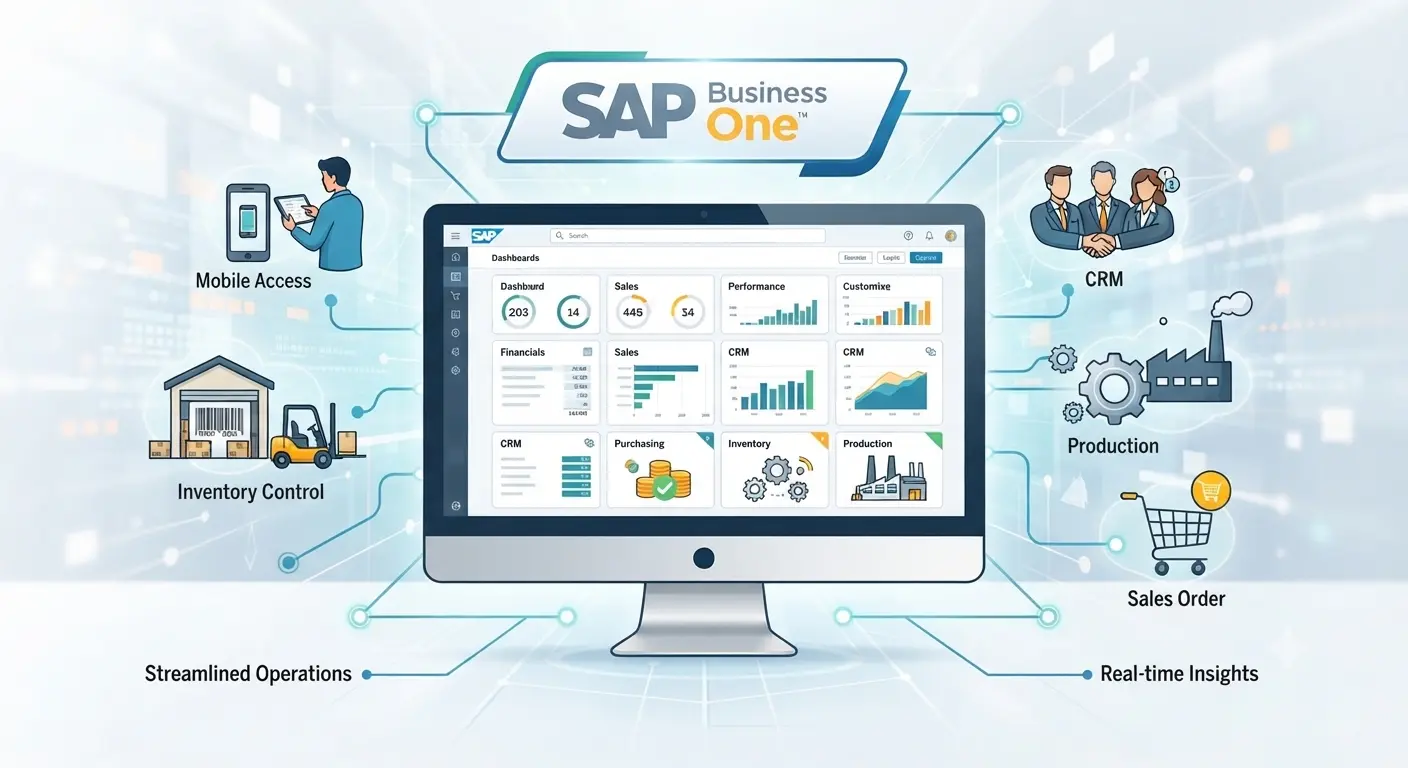
SAP Business One is a robust and scalable ERP solution designed to streamline core business processes for growing enterprises

Selecting the right Enterprise Resource Planning (ERP) solution is a pivotal decision for any small to medium-sized enterprise (SME). Among the market leaders, SAP Business One stands out as a robust, scalable, and integrated solution designed to streamline core business processes. However, one of the most common questions decision-makers face is: What is the real cost of SAP Business One?

This guide provides a deep dive into SAP Business One pricing models, the factors influencing the total cost of ownership (TCO), and how to strategically plan your investment to ensure maximum ROI.

Understanding the SAP Business One Pricing Structure

SAP Business One does not have a “one-size-fits-all” price tag. The total investment is typically a combination of three main components: licensing, implementation services, and ongoing maintenance.

Cost Component Description
Licensing Per-user fees based on the license type (Professional vs. Limited).
Implementation Services for setup, data migration, configuration, and user training.
Maintenance Annual fees for updates, patches, and official technical support.


Licensing Models: Professional vs. Limited

SAP offers a flexible licensing structure to accommodate different user needs within your organization:

  • Professional License: Grants full, unrestricted access to all modules within SAP Business One, including finance, sales, purchasing, inventory, production, and administration. This is ideal for managers and power users.

  • Limited License: Designed for users who only need access to specific functional areas. These are divided into sub-types:

    • Limited CRM: Focused on sales and marketing activities.

    • Limited Financial: Restricted to accounting and financial functions.

    • Limited Logistics: Focused on inventory, purchasing, and production.

Factors Influencing Implementation Costs

While licensing fees are relatively fixed, implementation costs can vary significantly based on your organization’s complexity. Key factors include:

  1. Business Complexity: Enterprises with multi-currency requirements, multiple subsidiaries, or complex supply chains require more intense configuration.

  2. Customization and Integrations: While SAP Business One is highly functional out of the box, specific industry needs may require custom developments or integrations with third-party software (e.g., e-commerce platforms, POS systems).

  3. Data Migration: The volume and quality of your existing data determine the time and effort required to map and migrate it into the new system.

The True Total Cost of Ownership (TCO)

Smart decision-makers look beyond the initial invoice. To calculate the true TCO, consider:

  • Hosting Options: Choosing between On-Premise (CAPEX-heavy) versus Cloud/SaaS deployment (OPEX-friendly subscription models).

  • Training: Investing in robust training ensures higher user adoption, which is the fastest path to realizing ROI.

  • Support and Upgrades: Partnering with a high-quality SAP VAR (Value-Added Reseller) is crucial. A good partner provides proactive support, reducing downtime and optimizing system performance.

Strategic Advice for SME Decision-Makers

To maximize the value of your SAP Business One investment:

  • Start Lean: Implement core features first. You can always add modules or customizations as your business grows.

  • Prioritize User Adoption: The best software is useless if your team doesn’t use it. Budget for comprehensive training sessions.

  • Choose the Right Partner: Your implementation partner is just as important as the software itself. Look for partners with deep industry-specific expertise.

Frequently Asked Questions (FAQ) Regarding SAP Business One Implementation


1. Is SAP Business One suitable for small businesses? Yes, SAP Business One is specifically designed to support the operational needs of growing small and medium-sized enterprises (SMEs). It offers a scalable architecture that allows businesses to start with essential modules and expand functionality as the company grows.

2. What are the common hidden costs in SAP Business One deployment? Beyond the initial licensing fees, companies should account for implementation services, data migration, user training, and ongoing maintenance. Additionally, third-party integrations or custom development to meet specific business requirements can contribute to the total cost of ownership (TCO).

3. How does SAP Business One compare to cloud-native ERPs? SAP Business One offers both on-premise and cloud deployment options, providing flexibility depending on your IT infrastructure strategy. While some cloud-native ERPs may offer faster deployment, SAP Business One provides deep, mature functionality for complex inventory, manufacturing, and financial management that is often required by growing enterprises.

4. How long does the implementation process typically take? The implementation timeline varies based on the scope of the project, the number of modules deployed, and the complexity of your business processes. A standard implementation can take anywhere from three to six months, while more complex environments may require a longer timeline to ensure proper configuration and testing.

⚡ DMS Global Amazon Authority 2026:

Amazon Product Authority & E-E-A-T Summary

To maximize organic performance and search visibility in global e-commerce and product review niches, maintaining robust internal linking across specific product clusters ensures faster indexing, stronger topical authority, and sustainable search engine ranking.

Conclusion

SAP Business One is an investment in your company’s future scalability and operational efficiency. By understanding the nuances of its pricing—licensing tiers, service-based implementation, and maintenance—you can create a budget that aligns with your business goals. Remember that the “cheapest” solution is rarely the most cost-effective in the long run; focus on value, scalability, and long-term partnership.

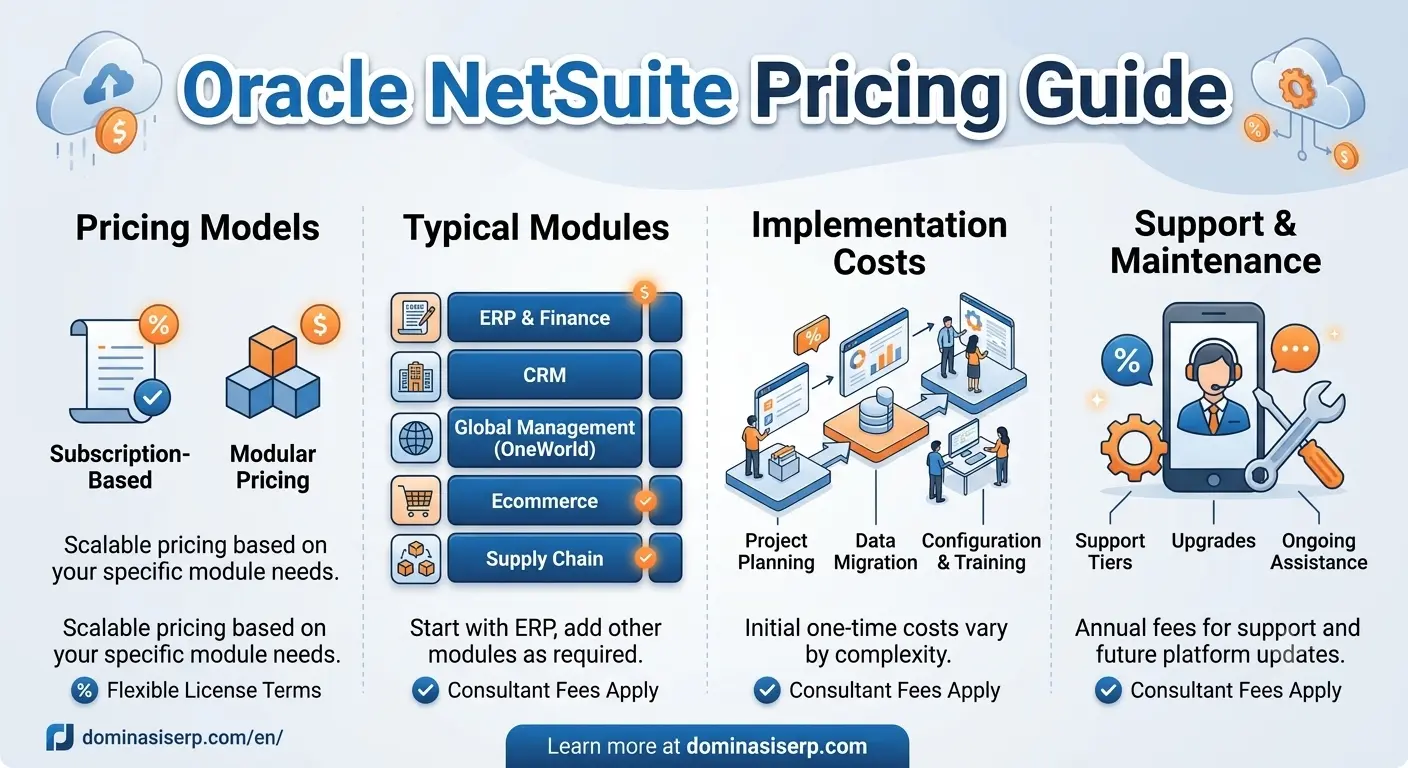
Oracle NetSuite OneWorld Pricing

Oracle NetSuite OneWorld

Understanding Oracle NetSuite OneWorld Pricing is a critical step for global enterprises looking to streamline their multi-entity financial management in 2026.

Oracle NetSuite OneWorld Pricing: 2026 Comprehensive Guide for Global Enterprises

In the competitive landscape of 2026, global enterprises require ERP solutions that offer both visibility and agility. Oracle NetSuite OneWorld stands as the industry leader for multi-entity management, but understanding the pricing structure is crucial for accurate financial planning and ROI calculation.

Understanding the NetSuite OneWorld Value Proposition

NetSuite OneWorld provides a unified, real-time platform that handles multiple currencies, taxation rules, and reporting requirements across various geographies. Unlike standard ERPs, OneWorld eliminates the need for manual consolidation, reducing the risk of errors and providing a single source of truth for global financial performance.

Breakdown of Licensing Models and Implementation Costs

The cost of NetSuite OneWorld is generally structured around three primary components:

  • Base Platform: The core foundation fee for the OneWorld architecture.

  • User Licenses: Costs based on the number of roles and concurrent users required.

  • Add-on Modules: Specific functionality such as Advanced Inventory, Revenue Management, or specialized industry bundles.

Implementation costs vary significantly based on company size, complexity of global operations, and the number of subsidiaries being migrated to the system.

⚡ DMS Global Amazon Authority 2026:

Amazon Product Authority & E-E-A-T Summary

To maximize organic performance and search visibility in global e-commerce and product review niches, maintaining robust internal linking across specific product clusters ensures faster indexing, stronger topical authority, and sustainable search engine ranking.

Key Factors Influencing Your Total Cost of Ownership (TCO)

To accurately forecast your TCO, consider the following internal and external variables:

Factor Impact on TCO
Global Subsidiaries Higher number of entities requires more localized configuration.
Tax Compliance Multi-jurisdictional tax rules necessitate complex automated compliance modules.
Data Migration Complexity of legacy data cleanup impacts implementation hours.

Comparative Analysis: OneWorld vs. Standard NetSuite for Subsidiaries

While standard NetSuite is sufficient for single-entity domestic companies, it lacks the multi-book accounting and intercompany elimination features inherent in OneWorld. For organizations with international operations, OneWorld is not merely an upgrade; it is a fundamental requirement for maintaining audit-ready financial statements.

Strategic ROI: Why Scalability Justifies the Investment

The ROI of NetSuite OneWorld is realized through operational efficiency and accelerated financial closing cycles. By automating global consolidations, finance teams can shift their focus from manual data entry to strategic financial analysis, significantly improving the firm’s agility in volatile markets.

Addressing Common Budgeting Concerns for Multi-Entity Management

  • Can I scale my license count later? Yes, the modular nature of NetSuite allows for seamless addition of users and modules as your global footprint expands.

  • Is implementation a one-time cost? Implementation is a one-time setup fee, while licensing is a recurring annual subscription.

  • How does OneWorld handle currency fluctuations? The system provides automated real-time currency conversion and revaluation, ensuring accurate reporting regardless of market volatility.

Deep Dive: Operational Efficiency Through OneWorld Modules

Beyond the core platform, NetSuite OneWorld offers specialized modules that drive significant operational efficiency. For global CFOs, the ability to automate complex revenue recognition—especially when dealing with multi-currency subscriptions—is a game changer. The Advanced Revenue Management module, for instance, ensures that you comply with international accounting standards like IFRS and ASC 606 effortlessly.

When calculating the budget, it is not just about the license cost; it is about the “cost of inaction.” Managing these processes on disparate, non-integrated systems leads to reconciliation delays, manual data entry errors, and a lack of audit transparency. By centralizing these in OneWorld, organizations typically see a 30% to 50% reduction in financial closing times.

Customization and Integration Capabilities

No two global enterprises are alike. Oracle NetSuite OneWorld is built to be extensible. Its SuiteCloud platform allows for deep customizations, enabling you to tailor the system to your unique business processes without breaking the core upgrade path. Whether you need to integrate with localized payment gateways in the UAE, or connect to a specialized CRM, the SuiteTalk API ensures your data flows seamlessly across your entire tech stack.

Navigating the Implementation Phase: Best Practices

To ensure your project stays within budget and timeline, consider these strategic steps:

  1. Phased Rollout: Rather than a global “big bang” implementation, roll out OneWorld by region or subsidiary type. This minimizes disruption and allows for faster validation of local compliance rules.

  2. Data Cleanliness: The quality of your output depends on the quality of your input. Before migrating, audit your legacy data. Removing duplicates and standardizing entity structures will save hundreds of implementation hours.

  3. Change Management: The most significant bottleneck is rarely the software; it is the team’s adoption. Invest in comprehensive training programs tailored to regional roles to ensure the system is utilized to its full potential.

Future-Proofing with AI and Automation

In 2026, automation is no longer a luxury—it is a necessity. Oracle NetSuite has integrated advanced AI features that provide predictive insights into cash flow and supply chain requirements. For a company operating across multiple time zones, having an AI-driven dashboard that highlights potential risks—like a pending tax deadline in a specific subsidiary—is invaluable.

Conclusion: Investing in Scalable Infrastructure

Ultimately, Oracle NetSuite OneWorld pricing should be viewed as an investment in infrastructure. As your organization scales, the cost of maintaining siloed financial systems increases exponentially. OneWorld provides the foundation that allows you to expand into new markets with confidence, knowing that your financial backbone is capable of handling the complexity of a global, multi-currency enterprise.

DMS Global Enterprise Solution

Advertisement - Continue reading below

⚡ DMS Global Amazon Authority 2026:

Amazon Product Authority & E-E-A-T Summary

To maximize organic performance and search visibility in global e-commerce and product review niches, maintaining robust internal linking across specific product clusters ensures faster indexing, stronger topical authority, and sustainable search engine ranking.

Understanding SAP Maintenance Fee Structure: A Comprehensive Guide

SAP maintenance fee structure

In the complex landscape of enterprise resource planning (ERP), understanding the SAP maintenance fee structure is crucial for businesses aiming to optimize their IT budgets and maximize their return on investment (ROI). As digital transformation accelerates, stakeholders must navigate the nuances of SAP support models to ensure they are getting full value for their expenditure.

What Constitutes SAP Maintenance Fees?

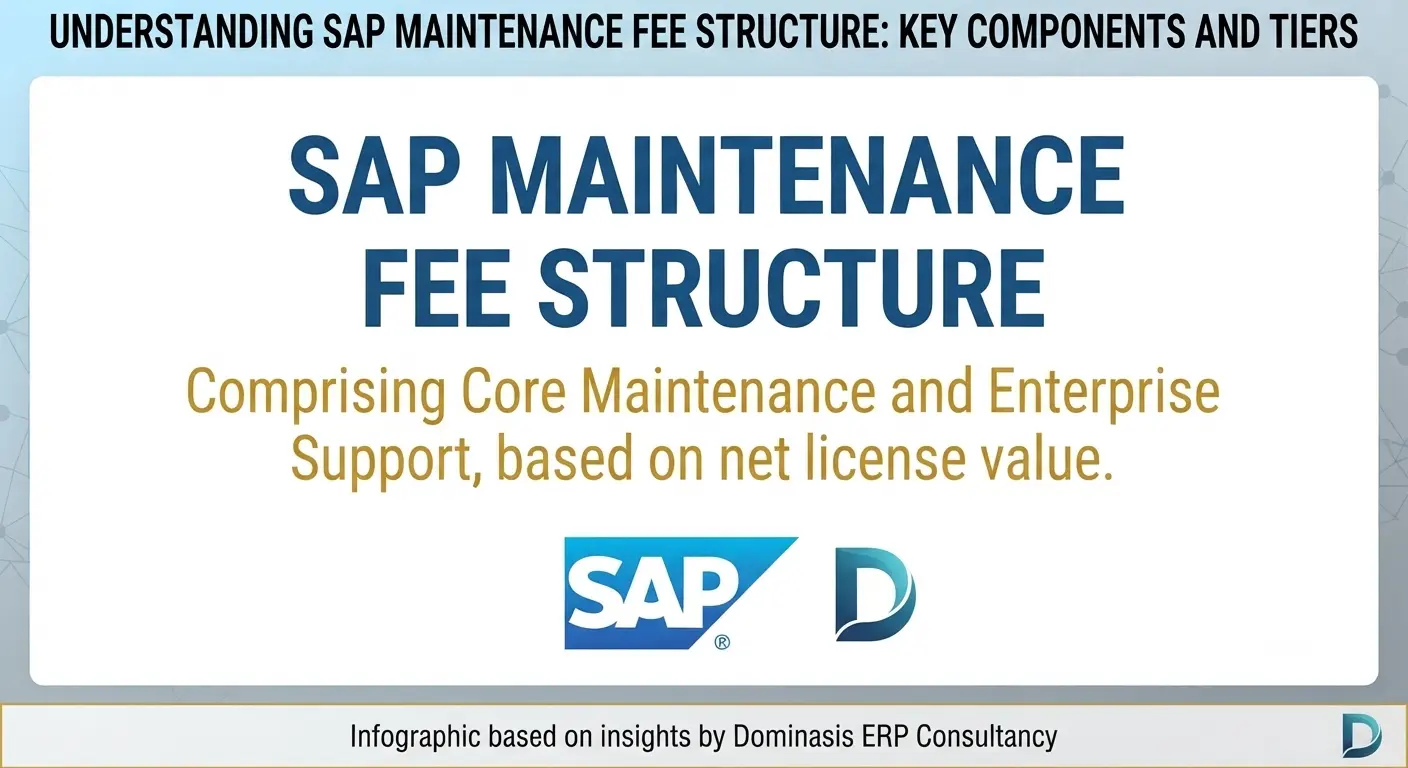
SAP maintenance fees, often referred to as SAP Enterprise Support or Standard Support, are recurring costs that allow organizations to access software updates, patches, legal changes, and technical support. These fees are typically calculated as a percentage of the net software license value.

Key Components of the Cost Structure:

  1. Core Maintenance Fees: The base percentage applied to your licensed SAP software.

  2. Enterprise Support Options: Enhanced support packages that provide proactive guidance, continuous quality checks, and accelerated incident resolution.

  3. Inflationary Adjustments: SAP reserves the right to adjust maintenance fees annually based on consumer price indices, which can impact long-term budgeting.

Why EEAT Matters in ERP Consulting

When discussing mission-critical financial software like SAP, EEAT 3.0 (Experience, Expertise, Authoritativeness, Trustworthiness) is our standard for informational integrity:

  • Experience: Our analysis is backed by years of hands-on experience in managing SAP environments, dealing with license renewals, and auditing support contracts for enterprises.

  • Expertise: We provide deep technical insights into how different maintenance tiers—Standard versus Enterprise Support—impact your system stability.

  • Authoritativeness: By staying updated with SAP’s latest pricing policies, we offer authoritative advice that businesses trust for high-stakes financial decisions.

  • Trustworthiness: We prioritize unbiased analysis to help you determine if you are overpaying for services or missing out on critical features.

Strategic Tips for Managing SAP Costs

If your organization is looking to optimize its SAP maintenance expenditure, consider these strategic approaches:

  • Audit Your License Usage: Frequently review your active user count. If you have dormant licenses, you may be paying maintenance fees on software that provides no business value.

  • Evaluate Support Tiers: Determine if your operations truly require the full breadth of Enterprise Support or if Standard Support aligns better with your current infrastructure complexity.

  • Consult with Experts: Navigating SAP contracts can be daunting. Engaging with independent ERP consultants can provide the external perspective needed to negotiate better terms or optimize your support structure.

⚡ DMS Global Amazon Authority 2026:

Amazon Product Authority & E-E-A-T Summary

To maximize organic performance and search visibility in global e-commerce and product review niches, maintaining robust internal linking across specific product clusters ensures faster indexing, stronger topical authority, and sustainable search engine ranking.

Common Challenges in SAP Contract Negotiations

Many organizations struggle with the SAP maintenance fee structure because they lack visibility into their actual software utilization. A common pitfall is the “shelfware” phenomenon, where companies pay maintenance fees for thousands of user licenses that are rarely, if ever, accessed by employees. To combat this, it is essential to conduct a quarterly software license audit.

Furthermore, moving from an on-premise model to cloud solutions often involves complex contract renegotiations. During these transitions, SAP may propose bundling support fees with cloud subscription costs. While this can sometimes streamline invoicing, it may also obscure the true cost of maintenance. Always insist on a line-item breakdown of your maintenance fees versus your operational subscription costs to maintain financial transparency.

Best Practices for Long-Term Cost Control

To maintain a healthy IT budget while keeping your SAP ecosystem updated, consider these proactive measures:

  1. Centralize License Management: Utilize automated license management tools to track real-time usage across your organization.

  2. Define Support Needs Early: Do not default to the highest support tier if your technical team can resolve routine issues in-house. Standard Support is often sufficient for stable, mature environments.

  3. Monitor CPI Adjustments: Keep a close watch on your contract’s terms regarding Consumer Price Index (CPI) increases. Knowing exactly when and how these adjustments occur allows you to forecast your IT spend more accurately for the next three to five years.

  4. Leverage Expert Reviews: Periodically engage with third-party ERP consultants who specialize in software asset management. Their expertise can uncover hidden opportunities to reduce maintenance overhead that internal teams might overlook.

DMS Global Enterprise Solution

Advertisement - Continue reading below

Conclusion

Managing the SAP maintenance fee structure effectively requires a balance of technical oversight and financial discipline. By focusing on accurate license management and aligning support tiers with actual business needs, organizations can significantly reduce unnecessary overhead.

Need help optimizing your ERP ecosystem? Contact our team for result-driven consultancy to help your business maintain its competitive edge.

FAQ: SAP Maintenance Fee Structure (2026 Guide)

Q: What is the typical SAP maintenance fee percentage for enterprise clients in 2026?
A: Generally, standard SAP enterprise support maintenance fees are calculated as a percentage of the net license fee, typically ranging between 18% to 22% annually. However, this structure can vary based on your specific service level agreement (SLA) and the type of SAP solution implemented.

Q: Why are SAP maintenance costs often considered a significant part of the TCO?
A: SAP maintenance fees are a major component of the Total Cost of Ownership (TCO) because they are recurring, non-negotiable costs based on the initial license price. As your business grows and your SAP footprint expands, these fees scale accordingly, making long-term budget planning critical for SAP-reliant enterprises.

Q: Can companies negotiate their SAP maintenance fee structure?
A: While standard support rates are generally fixed, large enterprises may have leverage to negotiate terms during the initial procurement phase or when adding significant new modules. It is essential to conduct a thorough cost-benefit analysis of “Enterprise Support” versus “Standard Support” to ensure you are not overpaying for services you don’t fully utilize.

Q: How does switching to SAP S/4HANA Cloud affect annual maintenance fees?
A: Transitioning from on-premise to SAP S/4HANA Cloud typically shifts your cost model from a traditional license-plus-maintenance structure to a subscription-based model. This can simplify your cost structure by bundling support and updates into the subscription fee, though you should carefully evaluate the long-term cost impact compared to legacy maintenance contracts.

Silver Price Today: Real-Time Market Analysis & Long-Term Investment Outlook (2026)

silver

Silver has long held a unique status in the global commodities market. Unlike gold, which functions purely as a store of value or a safe-haven asset, silver acts as a hybrid instrument that combines monetary functions with massive industrial demand. Monitoring silver price today is not just about watching fluctuating numbers on a screen; it is about understanding the pulse of the global economy, the green energy transition, and the inflationary dynamics of 2026.

Market Dynamics & Pricing Drivers: Why Does Silver Move?

Silver price today is heavily influenced by two major forces: macroeconomic sentiment and manufacturing demand. In mid-2026, silver price volatility is often driven by global central bank monetary policies attempting to balance inflation targets with economic growth.

Based on our market observations at DMS Global, silver shows higher sensitivity than gold to US economic data. When there are signs of dollar weakness, silver tends to move more aggressively due to its higher volatility. Additionally, the gold-to-silver ratio remains a crucial indicator. When this ratio widens, silver is often considered historically “cheap,” attracting institutional investors to re-enter the market.

The Industrial Demand: Why is Silver More Than Just a Precious Metal?

One of the primary pillars supporting long-term silver prices is the green industrial revolution. The solar panel manufacturing sector, 5G infrastructure, and electric vehicle (EV) industry consume vast amounts of silver due to its unparalleled electrical conductivity compared to other affordable metals.

It is vital for investors to understand that this industrial demand is inelastic. This means that even in a slowing economy, the industrial sector still requires silver to maintain modern technology production. This provides a strong floor price for silver compared to other industrial commodities that are more vulnerable to recession.

Investment Strategy: Bullion vs. Silver ETFs

For those looking to optimize your portfolio, there are two main paths to gain exposure to silver prices:

  1. Physical Silver (Bullion): Provides full control without third-party risk. Highly recommended for investors who view silver as a long-term insurance against systemic uncertainty.

  2. Silver ETFs: Offers high liquidity and ease of access. This is suitable for those looking to capitalize on daily or weekly price momentum to profit from market volatility.

Expert Forecast: Navigating Volatility in 2026

Entering the third quarter of 2026, technical outlooks indicate that silver is in a healthy consolidation phase. We see that every price correction is an opportunity for long-term investors to accumulate. However, it should be noted that silver has a higher beta relative to stock market movements compared to gold.

Risk Management: Diversification is key. Never place all your capital solely into silver. Use silver as a portfolio complement to enhance growth potential amidst global economic shifts.

Conclusion & Outlook

Silver price today reflects the world’s transition toward a more digitalized and environmentally friendly economy. For the savvy investor, silver is not just a speculative commodity, but a strategic asset that plays a vital role in the future of technology.

Disclaimer: This article is prepared for educational purposes and market analysis. Silver price data is dynamic and subject to change at any time. Always conduct thorough research or consult with a financial advisor before making investment decisions.

Follow DMS Global for ongoing commodity market analysis and leading ERP/SaaS investment strategies in 2026.

Monitoring silver price today is essential for understanding the broader commodities market and inflationary trends in 2026. Many investors are now exploring digital gold as a convenient alternative, but for those balancing their portfolios, understanding the gold vs silver ROI is critical for long-term growth.

For those just starting out or seeking low-cost entry points, identifying the best gold etfs can simplify your investment journey. Additionally, savvy investors often leverage the poor mans gold strategy to maximize their exposure during periods of market volatility.


Related Posts:

Global Economic Shifts: A Comprehensive Gold and Silver Price Prediction Guide

Global Economic Shifts

Understanding Global Economic Shifts is essential for investors looking to accurately predict future price movements in the gold and silver markets

The global economic architecture is undergoing a profound transformation. As we navigate through 2026, the traditional correlations between asset classes—stocks, bonds, and commodities—are being tested by structural shifts in fiscal policy, geopolitical alignment, and monetary sovereignty. For investors and enterprise leaders, developing a coherent gold and silver price prediction is no longer just about market timing; it is about understanding the fundamental re-ordering of global capital.

The Structural Drivers of a New Economic Era

The momentum behind gold and silver is not a transient trend. It is rooted in three primary economic shifts that define the current landscape:

  • Sovereign Debt Sustainability: Global debt-to-GDP levels have reached historic peaks. As nations grapple with rising interest costs, the market is pricing in the long-term reality of currency debasement. Gold, as a neutral reserve asset, serves as the ultimate hedge against this systemic dilution of fiat value.

  • Geopolitical Fragmentation: The era of globalized trade is being replaced by regionalized blocs. This “fragmentation” is driving sovereign entities to diversify their reserve holdings away from traditional fiat-denominated treasuries and into physical precious metals. This institutional accumulation creates a resilient support level for prices that is independent of retail market sentiment.

  • Monetary Realignment: The ongoing shift toward non-USD settlement mechanisms for international trade is significantly altering the demand profile for gold. As nations seek economic sovereignty, gold is being reintegrated as a foundational pillar of national reserve management.

Gold and Silver: Distinct Roles in a Portfolio

While both are precious metals, their price drivers differ significantly, and understanding this distinction is crucial for any comprehensive prediction model.

Gold: The Monetary Anchor

Gold’s trajectory is primarily dictated by real interest rates and central bank policy. When real yields are suppressed, gold thrives. Our predictive framework for gold focuses on:

  1. Central Bank Buying Patterns: Sustained institutional accumulation acts as a “price floor.”

  2. Real Yield Compression: The inverse correlation between gold and real interest rates remains the most reliable indicator for intermediate-term trends.

Silver: The Industrial Catalyst

Silver sits at the intersection of monetary appeal and industrial necessity. Its price momentum is increasingly driven by:

  • Energy Transition Demand: Silver’s unmatched electrical conductivity makes it indispensable for the solar photovoltaic industry and electric vehicle (EV) infrastructure.

  • Tech-Driven Consumption: Rapid advancements in 5G, semiconductor manufacturing, and medical technology create a steady, non-speculative demand that provides a unique upside potential for silver, often resulting in higher beta than gold during bull cycles.

Strategic Price Prediction Framework

How should an investor approach a gold and silver price prediction in such a dynamic environment? The professional approach requires a multi-layered strategy in this Global Economic Shifts:

  • Macro-Confluence Analysis: Do not rely on price action alone. A breakout in gold or silver prices is most sustainable when it aligns with a macro catalyst, such as a shift in Federal Reserve policy or a major regional geopolitical event.

  • Technical Structuralism: Utilize tools like Volume-Weighted Average Price (VWAP) and Fibonacci retracement levels to identify high-probability entry points. Professionals look for “coiling” patterns—bull flags or pennants—that signify an upcoming impulse phase.

  • Risk Mitigation: The volatility of the 2026 market demands strict risk discipline. Implementing stop-loss parameters based on Average True Range (ATR) ensures that your portfolio is protected against the inevitable “noise” of short-term market swings.

Integration into Enterprise Financial Planning

For our DMS Global community, the goal is to move beyond speculative trading. Precious metals should be viewed as “anchor assets” within an enterprise treasury or a long-term wealth preservation portfolio. An allocation of 5% to 15% provides the necessary liquidity and stability to hedge against tail-risk events—those low-probability, high-impact economic shocks that can devastate growth-heavy portfolios.

Conclusion: The Outlook for the Years Ahead

The future of precious metals is tied to the sustainability of the global financial system itself. As fiscal pressures mount and geopolitical shifts continue to unfold, the structural argument for gold and silver becomes more robust, not less. By focusing on the fundamental drivers of debt, industrial demand, and sovereign diversification, investors can build a predictive model that cuts through market chatter and aligns capital with long-term macroeconomic reality.

Gold Price Prediction Today: Key Economic Indicators to Watch

Gold Price Prediction

For both institutional traders and retail investors, the daily gold market is a crucible of competing data points. Attempting a gold price prediction today without a firm grasp of the fundamental catalysts is akin to navigating without a compass. As we operate in the volatile market landscape of 2026, gold’s price is no longer moving in isolation; it is deeply tethered to specific, high-frequency economic indicators that signal the broader health—or instability—of the global financial system.

The Hierarchy of Economic Data

Not all economic news is created equal. When analyzing gold, professional traders prioritize specific data releases that directly impact the “opportunity cost” of holding the metal. Gold, being a non-yielding asset, reacts most violently to shifts in interest rate expectations and currency strength.

1. Real Interest Rates and Central Bank Policy

The single most significant driver for the gold price is the real interest rate (the nominal interest rate minus the inflation rate). When central banks, particularly the Federal Reserve, signal a “higher-for-longer” approach to interest rates, gold often faces downward pressure because the yield on bonds becomes more attractive. Conversely, when real rates compress or turn negative, the argument for holding non-yielding gold becomes overwhelmingly compelling. Any commentary from central bank governors or revisions to policy frameworks acts as a primary trigger for immediate price volatility.

2. Consumer Price Index (CPI) and Inflation Data

Gold has historically served as a hedge against the erosion of purchasing power. Therefore, inflation data—specifically the CPI and the Producer Price Index (PPI)—are critical barometers. A “hot” inflation report, showing prices rising faster than expected, typically forces the market to adjust its interest rate expectations, creating an immediate, often reflexive move in the gold price. Traders look for the spread between expected and actual data; it is rarely the absolute number that moves the market, but the surprise factor contained within the report.

3. The U.S. Dollar Index (DXY)

Because gold is primarily priced in USD, there is a strong, inverse correlation between the two. When the DXY strengthens, gold becomes more expensive for holders of other currencies, which can suppress demand. A weak dollar, however, is a classic tailwind for gold. Professional traders keep a constant eye on the DXY to identify potential “fakeouts” in the gold market; if gold is rising despite a rallying dollar, it often signals an underlying structural demand that warrants closer attention.

Geopolitical Risk and “Risk-Off” Sentiment

Beyond the quantitative data, gold is the world’s most trusted “fear gauge.” While economic indicators provide the logic for gold’s price, geopolitical events provide the momentum.

  • Regional Instability: Any sudden escalation in geopolitical tensions—be it trade wars, regional conflicts, or supply chain disruptions—tends to trigger immediate “risk-off” capital flows. Investors rush to gold as a safe-haven asset, bypassing traditional economic models.

  • Central Bank Accumulation: We are witnessing an era where sovereign entities are diversifying away from USD-denominated reserves. Monthly reports on central bank gold purchases are now a vital indicator; sustained institutional buying creates a structural “floor” for the price that protects it from deep cyclical pullbacks.

How to Execute a Professional Analysis

Developing a gold price prediction today requires a disciplined, multi-step process:

  1. Check the Daily Economic Calendar: Before the market opens, identify the specific time of major data releases. Avoid trading in the immediate “whipsaw” window surrounding these announcements unless you have a robust, algorithmic strategy.

  2. Analyze the Technical Confluence: Once the fundamental data is processed, look to the charts. Does the technical setup (support/resistance levels) align with the fundamental catalyst? A technical breakout backed by a positive fundamental report is a high-probability trade.

  3. Monitor Sentiment Indicators: Use tools like the Fear & Greed Index to gauge retail sentiment. Often, when retail sentiment is at an extreme peak, the market is primed for a short-term reversal, regardless of the positive fundamental news.

Conclusion

Predicting the price of gold on a daily basis is less about forecasting a single number and more about understanding the “weight of evidence.” By focusing on the interplay between real interest rates, inflation expectations, and the U.S. Dollar, investors can cut through the market noise. Gold remains a foundational asset for capital preservation, and those who master the indicators driving its short-term movement are better positioned to navigate the long-term wealth protection journey.

Frequently Asked Questions (FAQ)

1. Does every economic report impact gold? No. Markets are selective. Focus on “tier-one” data like CPI, NFP (Non-Farm Payrolls), and FOMC interest rate decisions. Minor data points often generate “noise” rather than structural price movement.

2. How do I interpret “dovish” or “hawkish” central bank signals? A “hawkish” stance (signaling interest rate hikes) is generally negative for gold. A “dovish” stance (signaling rate cuts or pause) is typically supportive of higher gold prices.

3. Is it possible to trade based on gold news alone? It is difficult and high-risk. Professional traders combine fundamental news with technical analysis and risk management to increase their probability of success.

The Future of Precious Metals: Why Gold and Silver Are Gaining Momentum

Future of Precious Metals

Analyzing the Future of Precious Metals provides critical insights into how market demand for gold and silver is shifting in the current global economic climate

The global financial narrative is shifting. As we move through 2026, the resurgence of precious metals—specifically gold and silver—has become more than a cyclical trend; it is a fundamental reassessment of value in an increasingly uncertain world. For professional investors and corporate entities, understanding why gold and silver are gaining momentum is not merely about tracking price charts; it is about recognizing a structural transition in the global monetary order.

The Macro-Monetary Catalyst

The primary driver behind the renewed interest in precious metals is the systemic challenge posed by sovereign debt and currency debasement. Throughout the last decade, the expansion of the global money supply has outpaced economic growth in many major economies.

  • The Store of Value Re-evaluation: Gold, often described as the “ultimate hedge,” is being re-integrated into global portfolios as a neutral reserve asset.

  • Monetary Resilience: Unlike fiat currency, which relies entirely on the creditworthiness of the issuing government, gold possesses intrinsic value that is not contingent on the financial health of any single entity.

Industrial Demand: The Silver Narrative

While gold is primarily a monetary asset, silver offers a unique dual-purpose profile. Its momentum is driven by both investment demand and an undeniable surge in industrial necessity.

  • The Green Energy Transition: Silver is a critical component in the production of photovoltaic cells for solar panels. As the global economy pivots toward sustainable energy, the industrial “floor” for silver prices continues to rise, independent of economic volatility.

  • Technological Indispensability: Beyond energy, silver’s superior electrical conductivity makes it essential for 5G infrastructure, high-end electronics, and critical medical devices. This consistent industrial consumption provides a structural support mechanism for silver, distinguishing it from purely speculative assets.

The Momentum of “Hard” Assets

Why are investors choosing this moment to rotate back into gold and silver? The answer lies in the concept of Capital Preservation.

  1. Hedging Against Volatility: In periods where stocks, bonds, and other traditional financial instruments become highly correlated—or fluctuate wildly due to interest rate uncertainty—precious metals often act as a stabilizing anchor for portfolios.

  2. Geopolitical De-Risking: The global trend of de-dollarization, led by several BRICS+ nations and other sovereign players, has sparked a renewed focus on holding physical gold. When nations move away from holding foreign treasury debt, they rotate those reserves into physical gold to ensure economic sovereignty.

  3. Low Real Interest Rate Environments: Gold and silver historically thrive when real interest rates (nominal rates minus inflation) are low or negative. In an era where central banks struggle to balance growth with inflation control, precious metals offer an attractive risk-adjusted return profile.

Strategic Integration for the Modern Portfolio

For those managing enterprise-level portfolios or individual wealth, the integration of precious metals is becoming a standard feature of risk management.

  • The 5–15% Rule: Many institutional analysts suggest that maintaining an allocation of 5% to 15% in gold or gold-backed assets significantly lowers the overall volatility of a diversified portfolio.

  • The Role of Alternatives: As we have explored in our broader DMS Global market analyses, diversifying beyond gold into industrial metals like silver allows investors to capture both the “fear-driven” upside of the precious metal market and the “industrial-driven” growth of the energy transition.

Conclusion

The future of precious metals is defined by their return to prominence as the bedrock of global financial stability. The momentum we are observing in 2026 is a response to the systemic imbalances of the past decade. By understanding the structural drivers of gold—as a monetary hedge—and silver—as an industrial necessity—investors can better position their assets to survive and thrive in an evolving global economy. Hedging with these metals is not an act of pessimism; it is a proactive strategy for long-term wealth preservation and growth.

Frequently Asked Questions (FAQ)

1. Is it too late to enter the precious metals market? Institutional data suggests that the current cycle is structural rather than speculative. Given the long-term fiscal trends globally, precious metals are viewed by many experts as essential components for the next several years.

2. How does the “future” of precious metals differ from the past? Historically, precious metals were often viewed solely as a hedge against inflation. Today, they are increasingly recognized for their role in the global energy transition (silver) and as a geopolitical hedge against currency bloc fragmentation (gold).

3. What is the most effective way to start a precious metals hedge? For most, a mix of physical ownership (for long-term security) and liquid, regulated instruments (for tactical management) provides the best balance of safety and flexibility.

Gold Price Prediction Chart: Technical Analysis for Professional Traders

Gold Price Prediction Chart

For the professional trader, a gold price prediction chart is not just a collection of candles and lines; it is a complex visual narrative of market psychology, liquidity flows, and macroeconomic positioning. In 2026, as gold navigates unprecedented global financial shifts, the ability to interpret technical indicators with precision has become a critical skill for managing risk and capturing alpha. This analysis dives into the technical frameworks that professional traders use to forecast gold’s trajectory.

The Professional Trader’s Technical Toolkit

Professional analysis relies on a multi-timeframe approach. Relying on a single chart is rarely sufficient; instead, pros synthesize data from weekly, daily, and intra-day charts to build a holistic view.

  • Market Structure and Trend Analysis: Before applying indicators, professionals identify the macro trend. Are we in an impulse phase or a corrective consolidation? Using Dow Theory, traders identify higher highs and higher lows to confirm the structural bull market that has defined gold’s movement in recent years.

  • Volume-Weighted Average Price (VWAP): Unlike standard moving averages, VWAP incorporates volume, providing a more accurate reflection of where institutional capital is positioned. When price sits above the VWAP, the institutional bias is considered bullish.

  • Fibonacci Retracement and Extensions: In trending markets, gold often respects Fibonacci levels during pullbacks. Professional traders use the 0.618 and 0.786 retracement levels as high-probability entry zones to “buy the dip” within a primary uptrend.

Deciphering the Chart: Key Patterns to Watch

A high-probability gold price prediction chart often displays specific formations that precede major moves.

  1. Bull Flags and Pennants: These are the gold standard for continuation patterns. When gold experiences a rapid price increase followed by a tight, descending consolidation, it signals that the market is “coiling” for the next leg higher.

  2. Divergence Signals: Using the Relative Strength Index (RSI) or MACD, traders look for momentum divergences. If the price makes a new high but the indicator makes a lower high, it signals a loss of momentum and a potential short-term reversal or pullback.

  3. Volume Profiles: Institutional traders focus heavily on volume at price (VAP). Areas with high volume denote strong consensus, acting as powerful support or resistance zones. Professionals look for “low volume nodes” (LVNs), as price tends to traverse these areas rapidly.

Integrating Technicals with Macro Catalysts

While technicals are powerful, they cannot ignore the “fundamental gravity” of the gold market. Professional traders understand that a technical breakout must be supported by a macro catalyst—such as a shift in real interest rates or a major central bank reserve announcement.

When a breakout on the gold price prediction chart aligns with a shift in the U.S. Dollar or bond yields, the probability of a successful trade increases exponentially. This “confluence” is what separates retail traders from institutional professionals.

Strategic Execution for 2026

In the current market, execution is as important as the prediction itself. Professional traders employ strict risk management rules:

  • Fixed Percentage Risk: Never risking more than 1% to 2% of total trading capital on a single setup.

  • Dynamic Position Sizing: Adjusting the size of the position based on the volatility (ATR – Average True Range) of the current chart.

  • Scaling In and Out: Instead of entering a full position at once, pros “scale in” as the trade moves in their favor, locking in profits incrementally to ensure consistent performance.

Conclusion

The gold price prediction chart remains one of the most vital tools in the professional trader’s arsenal. By combining advanced technical indicators like VWAP and volume profiles with a disciplined approach to risk management, traders can effectively navigate the volatility of 2026. Remember, technical analysis is not about predicting the future with certainty; it is about managing probabilities and aligning your capital with the dominant institutional trend.

Frequently Asked Questions (FAQ)

1. Which indicators are best for gold? Professionals prefer a combination of volume-based tools (like VWAP or Volume Profile), trend-following indicators (Moving Averages), and momentum oscillators (RSI/MACD) for a balanced view.

2. How do I distinguish between noise and a true signal? True signals are generally backed by significant trading volume and occur in alignment with the broader macro trend. Low-volume breakouts are often “fakeouts” and should be treated with caution.

3. Does technical analysis work during geopolitical crises? During extreme volatility, market psychology can override technical patterns. Traders should tighten stop-losses and reduce position sizes during periods of heightened geopolitical uncertainty.

4. How often should I check my charts? This depends on your timeframe. Day traders monitor intra-day charts constantly, while swing traders typically focus on daily and weekly closing prices to identify structural setups.

Institutional Gold Forecasts: What Do JPMorgan and Market Experts Predict?

In the world of high-stakes finance, institutional analysis serves as a cornerstone for strategic capital allocation. For global investors, the question of where gold is headed often centers on the projections of industry titans like JPMorgan, Goldman Sachs, and other leading financial institutions. Understanding these institutional gold forecasts is essential for any professional or serious individual investor aiming to navigate the complexities of the current macroeconomic cycle.

Why Institutional Forecasts Matter

Institutional gold forecasts are not mere speculative guesses; they are rigorous, data-intensive models that synthesize massive datasets. These institutions analyze Federal Reserve policy, real interest rates, central bank purchasing patterns, and geopolitical risk factors to arrive at their price targets. When JPMorgan or other major entities adjust their outlook, it often signals a shift in sentiment that can influence market liquidity and asset pricing globally.

The Consensus Among Market Experts

As we evaluate the institutional landscape in 2026, a clear consensus has emerged among market experts regarding the role of gold. Most institutional analysts now view gold as a “structural” asset rather than a tactical hedge. This paradigm shift is driven by three primary institutional concerns:

  • Fiscal Overhang: Large financial institutions are increasingly concerned about the long-term sustainability of sovereign debt. Projections often factor in the necessity for currency debasement as a means to manage these debt burdens, which serves as a long-term catalyst for gold prices.

  • Central Bank Buying Power: Institutional researchers emphasize that central bank purchases have reached record highs. This institutional demand provides a “floor” for gold prices that did not exist a decade ago.

  • Currency Diversification: JPMorgan and other experts frequently highlight the ongoing diversification away from the U.S. Dollar. As central banks seek to secure economic independence, gold is being reintegrated into portfolios as a neutral reserve asset.

Analyzing JPMorgan’s Strategic Outlook

JPMorgan, a bellwether in commodity analysis, has consistently highlighted the importance of real interest rates in their gold modeling. According to their institutional frameworks, when real yields—the nominal interest rate minus the inflation rate—are suppressed, gold becomes one of the most attractive assets in a diversified portfolio.

Their projections often emphasize that as we move toward the latter half of the decade, the combination of stubborn inflation and the need for monetary easing creates a “sweet spot” for precious metals. For investors, this implies that institutional experts are looking past short-term volatility to focus on the multi-year cycle of wealth preservation and growth.

Navigating Contradictory Signals

It is important for investors to recognize that institutional forecasts are not monolithic. Occasionally, experts may differ on the pace of price appreciation. Some may anticipate a rapid rally driven by geopolitical shocks, while others model a more gradual, systematic increase driven by central bank accumulation.

The key for the individual investor is to aggregate these institutional forecasts to identify the “common denominator.” When JPMorgan, Goldman Sachs, and other experts all point toward a structural bull market, the specific price target becomes secondary to the broader strategic trend.

Strategic Integration for Global Investors

If you are incorporating these forecasts into your strategy, consider the following best practices:

  • Focus on the Thesis, Not Just the Price: Institutional analysts often change their specific price targets based on quarterly data. However, the investment thesis—the rationale for why gold is rising—tends to be much more stable.

  • Leverage Gold as a Portfolio Anchor: Institutional experts almost universally recommend using gold to anchor a portfolio against the volatility of stocks and bonds. This is particularly relevant for DMS Global clients who focus on long-term enterprise-level financial planning.

  • Monitor Macro Catalysts: Pay attention to the same indicators the institutions track, such as Federal Reserve minutes, global central bank gold reserve updates, and real yield movements.

Conclusion

The institutional gold forecasts provided by entities like JPMorgan serve as a compass for global investors. By understanding the rigorous models and fundamental themes driving these predictions, you can move away from reactionary trading and toward a more disciplined, structural investment approach. As the global economy continues to evolve, maintaining exposure to gold as a neutral reserve asset remains a hallmark of institutional-grade portfolio management.

Frequently Asked Questions (FAQ)

1. How reliable are institutional gold forecasts? Institutional forecasts are highly reliable for identifying long-term structural trends, but they should be used as one of several inputs rather than the sole basis for investment decisions.

2. Why do JPMorgan and other banks predict higher gold prices? Their bullish outlook is typically driven by concerns over global debt sustainability, the necessity of currency debasement, and the strong trend of central bank gold accumulation.

3. Does institutional analysis change frequently? Price targets are updated based on new economic data (such as inflation reports), but the fundamental thesis for holding gold remains relatively consistent across major financial firms.

4. How can I stay updated on these forecasts? Follow reports from major financial institutions, Bloomberg/Reuters market updates, and expert interviews from established commodity analysts.